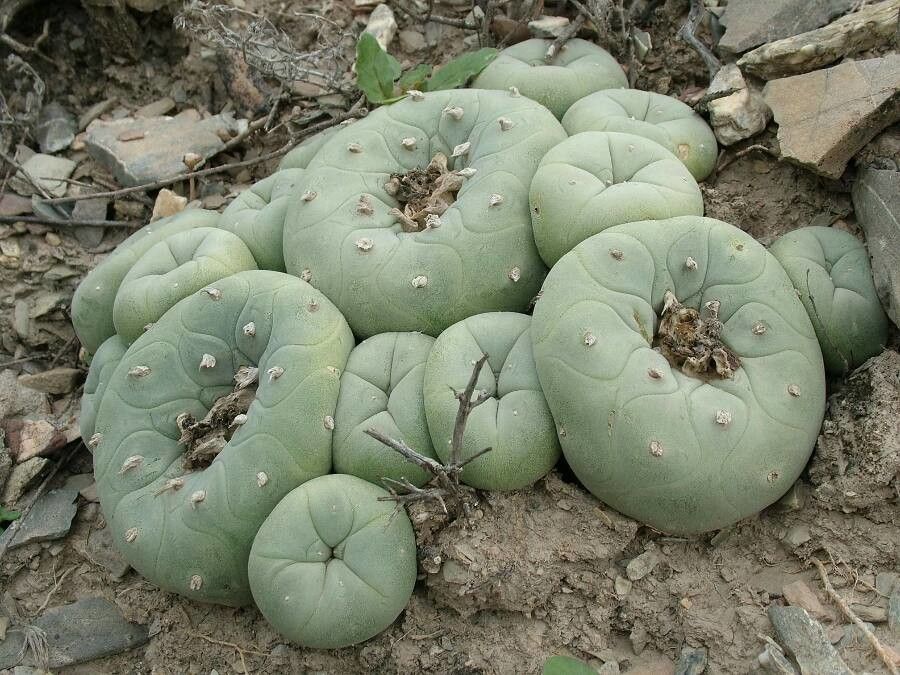
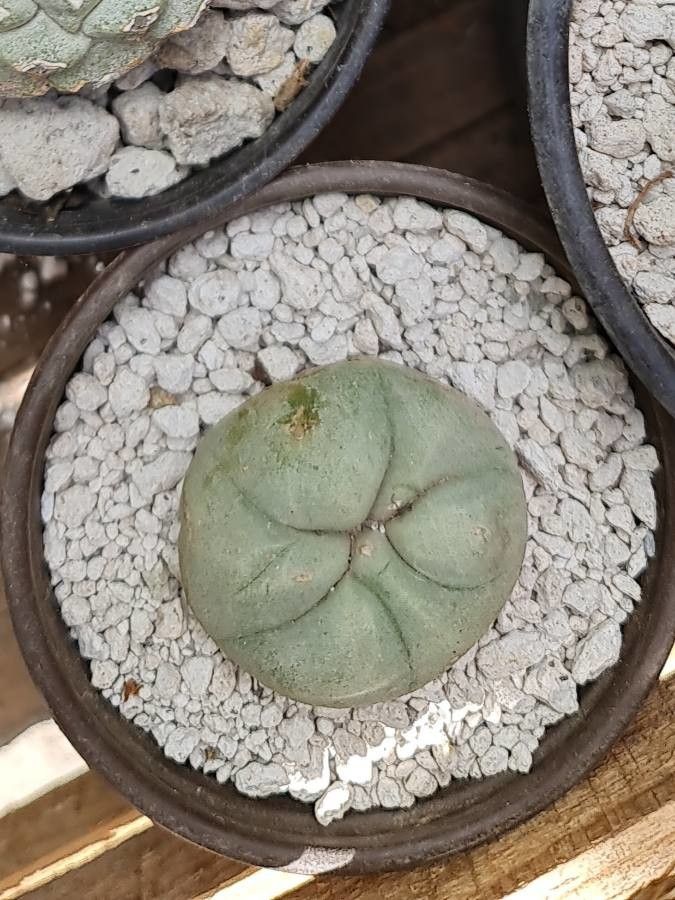
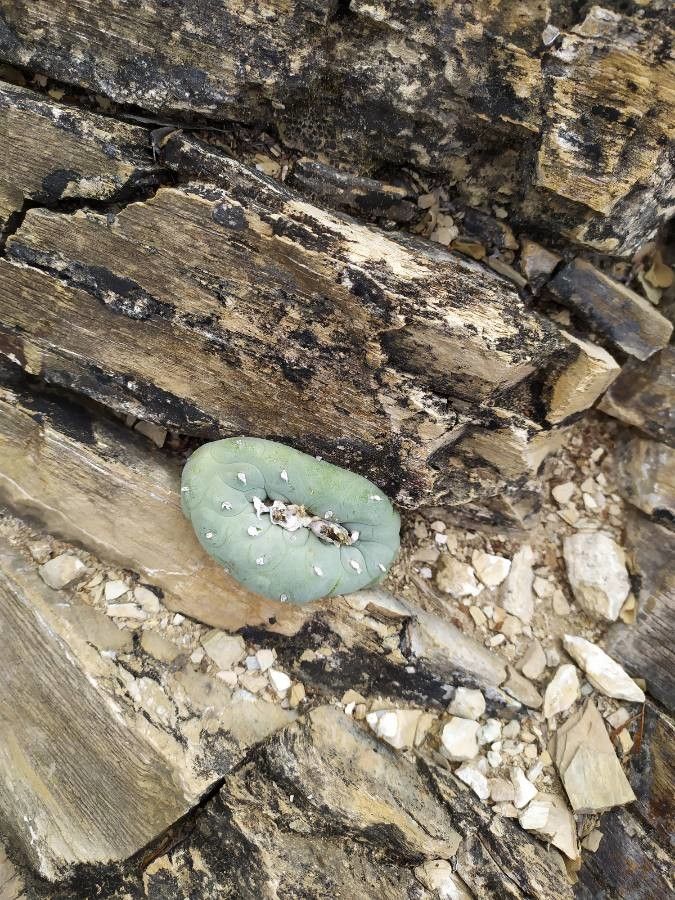
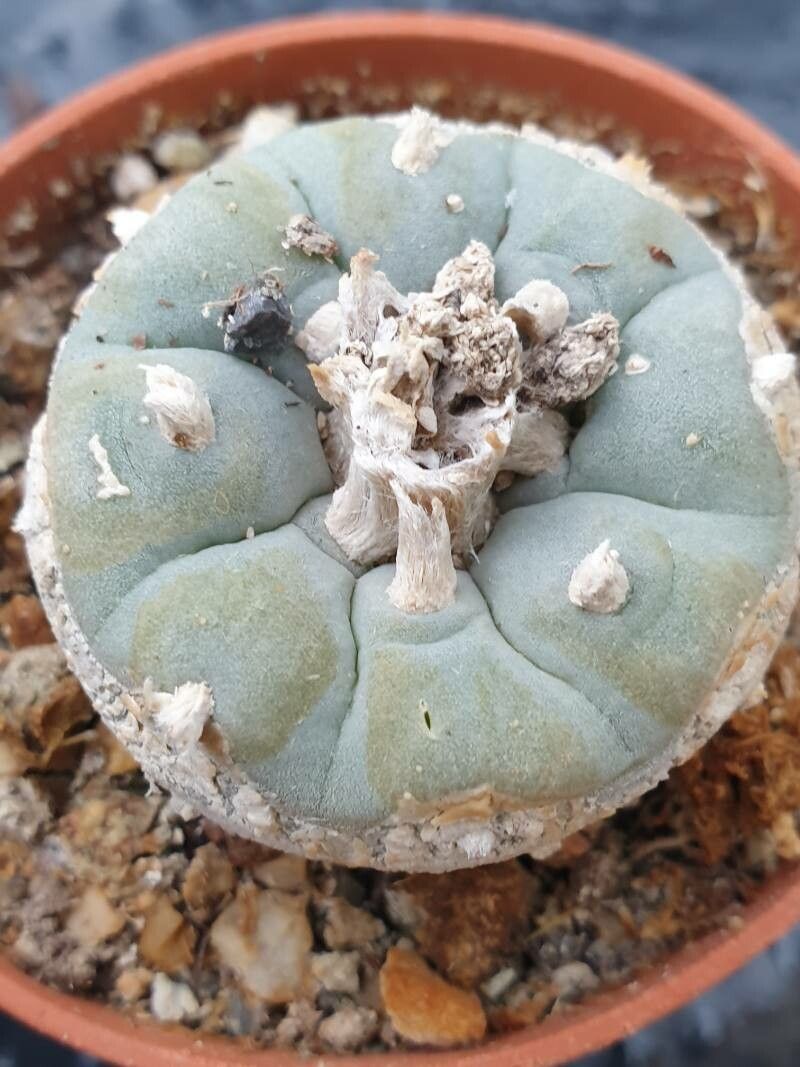
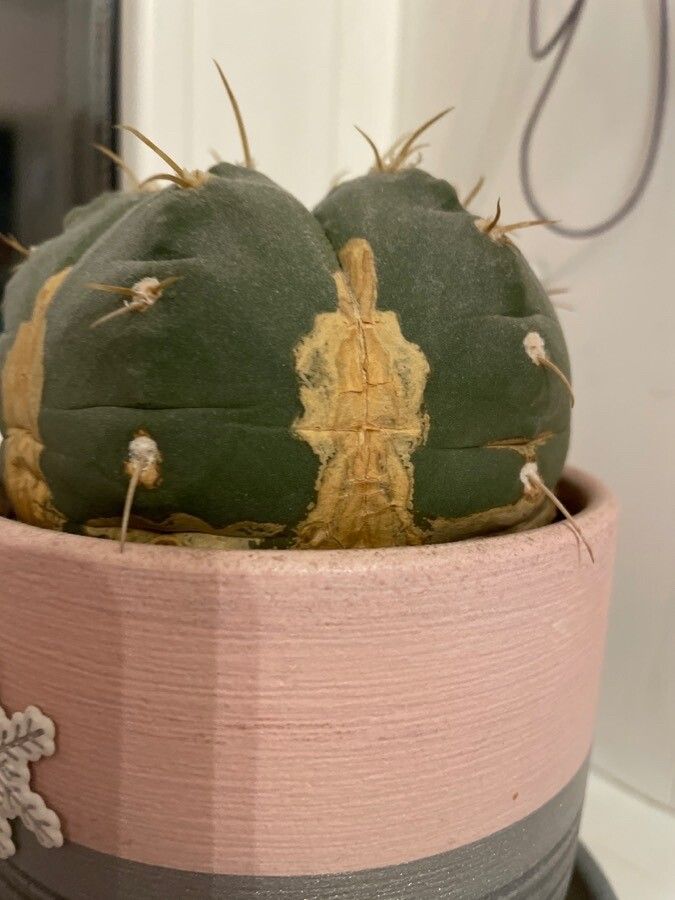
Lophophora diffusa, commonly known as false peyote, is a species of plant in the family Cactaceae and one of the only two species in the Lophophora genus. It is endemic to Mexico in the outskirts of Querétaro. This species contains zero to trace amounts of mescaline; pellotine, whose psychoactive effects are comparatively minimal, is the principal alkaloid. The species name diffusa refers to the flat tubercles that are outspread without the plant having prominent ribs.
False peyote has strong resistance to disease and can endure typical care conditions without becoming ill easily. That said, it can be vulnerable to mealybugs, which may inflict some harm but are usually not a major danger. Regarding care, False peyote is drought-tolerant and does not require frequent watering. It can go long periods without water and needs little fertilizer. Conversely, it is very prone to root rot if grown in poor light and given too much water. In general, False peyote is a good choice for people who prefer to spend less time on plant care, though it remains important to know and satisfy its basic needs. It is especially appropriate for those who are away for extended periods and might forget to water regularly.
How to keep Lophophora Diffusa.
Light
False peyote thrives in full sun but also does well in partial shade. Seasonal changes in light require flexible placement, especially for potted plants. Insufficient light can stunt growth or reduce vigor.
Water
False peyote is a succulent that thrives in arid conditions by storing water in its tissues. It should be watered sparingly, about once every three weeks, and requires well-draining soil. During the growing season, it's important to monitor soil moisture to prevent root rot caused by overwatering.
Temperature
False peyote does best in warm conditions and needs relatively high temperatures during the growing season to encourage growth and metabolic activity. It prefers abundant sunlight, adequate moisture, and good ventilation. However, it is vulnerable to harm from very low temperatures and from overwatering. It’s important to maintain balance and avoid both excessively high heat and overly dry conditions.
Fertilizer
False peyote needs only light fertilizer applications once or twice a year during the growing season. Do not fertilize in winter or summer when it is dormant. Cut back on fertilizer for repotted plants and wait a couple of months after repotting before you fertilize. Fertilizing supports healthy growth and encourages blooms.
Pruning
False peyote requires little pruning. To promote healthy growth, simply remove wilted flowers and branches so that the plant can direct its nutrients where they are needed most.
Pot & Repot
Repot False peyote in spring or summer, selecting a pot only slightly larger than the current one that provides good drainage. Use a well-draining, sandy or gritty cactus mix. Handle the plant gently to avoid its spines. Let the cactus dry out before repotting to help prevent root rot. After repotting, wait a week before watering so the roots can heal.
Botanical profile.
- Plant Type
- Succulent
- Life Cycle
- Perennial
- Genus
- Lophophora
- Family
- Cactaceae
- Hardiness Zone
- 9-11
- Mature Height
- 5 cm to 10 cm
- Mature Spread
- 5 cm to 8 cm
- Leaf Color
- Green Yellow, Light Green
- Leaf Type
- Deciduous
- Flower Color
- White, Pink
- Flower Size
- 2.03 cm to 3.05 cm
- Bloom Time
- Mid spring, Late spring, Summer
- Planting Time
- Spring, Summer
- Harvest Time
- Summer, Early fall, Mid fall
Other names.
Reader questions.
What are the sun requirements for False Peyote?
False Peyote, scientifically known as Lophophora diffusa, thrives in environments that offer full sun, having evolved in regions with strong sunlight and minimal shade. Full sun exposure implies the plant should receive above 6 hours of sunlight daily, while partial sun means about 3-6 hours of sunlight. It's important to observe the sunlight's movement through your garden to ensure plants receive the optimal balance of light and shade, promoting their health and happiness.
What are the essential care requirements for False Peyote?
False Peyote, known botanically as Lophophora diffusa, is a plant that thrives in warm environments. It requires higher temperatures during the growing season to promote growth and metabolism, enjoys ample sunlight, appropriate moisture levels, and good ventilation. Special attention should be paid to avoiding excessively low temperatures and overwatering, as the plant is susceptible to damage from these conditions. It also does not fare well in overly high temperatures and extremely dry conditions. When outdoor temperatures drop below 5°C, it's important to move False Peyote indoors and place it near a south-facing window to ensure it receives sufficient sunlight. If natural light is inadequate, supplemental lighting can be used. As the temperature dips below 20°C, the plant's growth slows, necessitating a reduction or complete stop in watering to prevent root rot. For those growing False Peyote outdoors, halt watering completely during lower temperatures. Protecting the plant with a temporary greenhouse or wrapping it with materials like plastic film or fabric can provide insulation against cold temperatures.
How can artificial lighting support False Peyote's growth indoors?
When natural sunlight is insufficient, especially during the winter or in less sunny indoor areas, artificial lighting can play a crucial role in the healthy growth of False Peyote plants. LED lights are recommended due to their ability to provide specific wavelengths of light needed by plants. For plants requiring full sun, 30-50W/sq ft of artificial light is necessary, while partial sun plants need 20-30W/sq ft, and full shade plants require 10-20W/sq ft. The light source should be positioned 12-36 inches above the plants for 8-12 hours daily to mimic natural sunlight conditions effectively.
What should I do if my False Peyote is exposed to low temperatures?
False Peyote prefers high temperatures and does not tolerate low temperatures well, thriving best when the temperature is above 20°C. To protect it during winter, keep the temperature above 5°C. Exposure to temperatures below 1°C may weaken the plant, causing it to wilt and become prone to root rot. There may not be immediate symptoms after mild frost damage, but the plant could gradually wither after a week. The solution involves trimming off frostbitten areas while checking for and removing any rotted roots. The plant can then be propagated through cuttings if necessary. It's crucial to move the plant to a warmer indoor environment promptly and position it near a south-facing window for ample sunlight. Supplement with artificial lighting if needed.
What symptoms appear on False Peyote due to insufficient light?
False Peyote plants can exhibit various symptoms when not receiving enough light, crucial for their survival and health. These symptoms include smaller new leaves, leggy or sparse growth, faster leaf drop, slower or halted growth, and lighter-colored or irregularly colored new leaves. Chlorosis, or the loss of green leaf color, sunscald leading to damaged leaves or stems, leaf curling as a defense against excessive sunlight, wilting from loss of water, and leaf scorching characterized by brown, dry edges on leaves, signify light deficiency as well.
How should I care for False Peyote during high temperatures?
In high-temperature conditions, especially during summer, it's important to ensure that False Peyote's temperature remains below 41°C. If the temperature exceeds 45°C, the plant will cease to grow, experience water loss, start wilting, and become more susceptible to sunburn. To manage such conditions, remove any parts of the plant that have become sunburned or rotten. Protect the plant from the harsh afternoon sunlight until it shows signs of recovery and begins to grow again. In cases of root rot, cease watering until new roots start to form. Implementing these strategies can help in safeguarding False Peyote against damage from extreme heat.
What are the solutions for overcoming light deficiency in False Peyote?
To address light deficiency in False Peyote, gradually moving the plant to a sunnier location can be beneficial; aim for at least 6 hours of direct sunlight daily, utilizing south-facing windows to maximize exposure. If relocating the plant isn't feasible, artificial light sources, such as desk or ceiling lamps left on for a minimum of 8 hours daily, can supplement light intake. Outdoors, the gradual transition to brighter areas prevents sunburn, while indoors, consider grow lights for sufficient illumination. Removing obstructions or transplanting to sunnier spots can also improve sunlight access. However, it's important to note that while future growth can be healthy with increased light, parts of the plant previously affected might not recover.