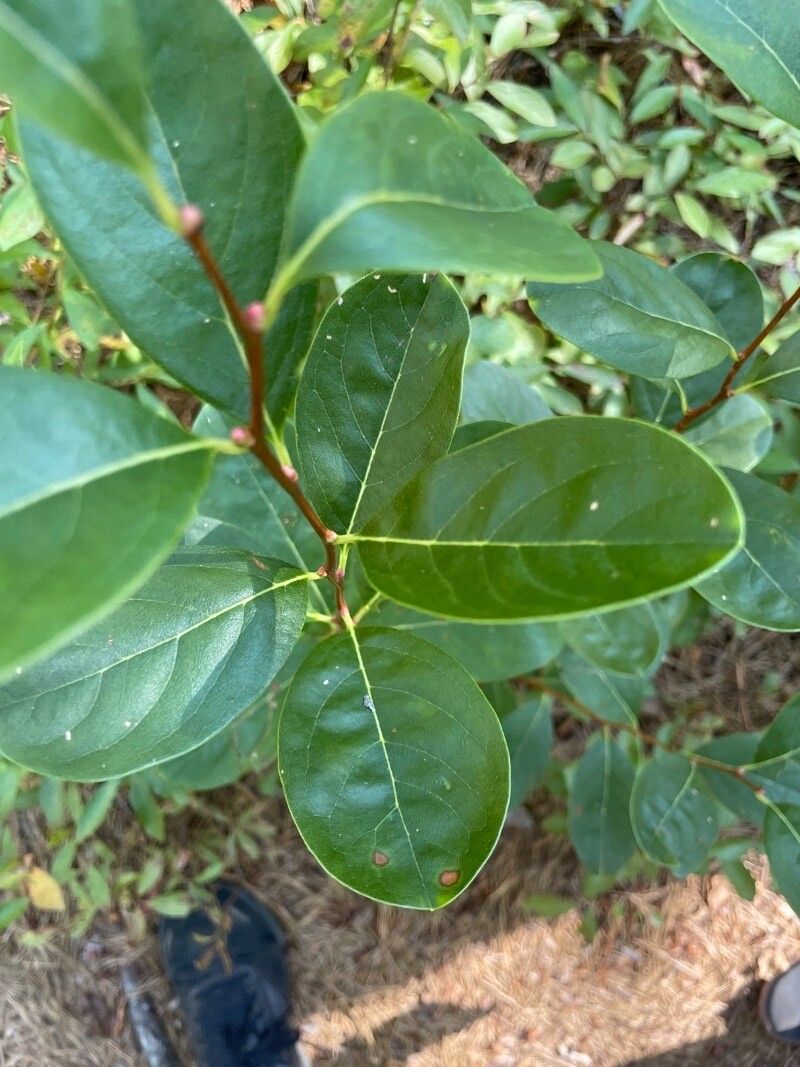
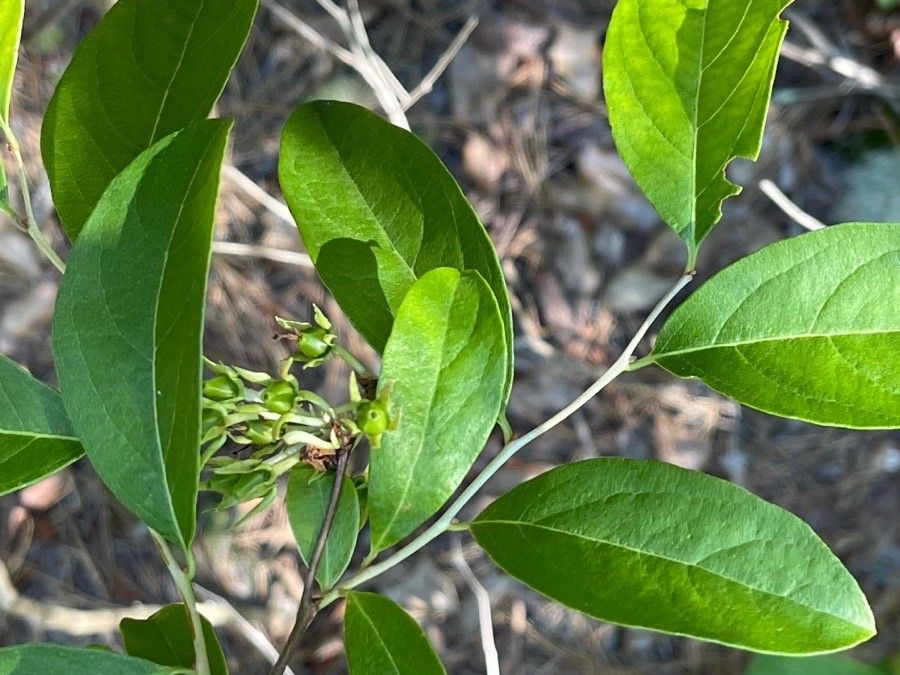
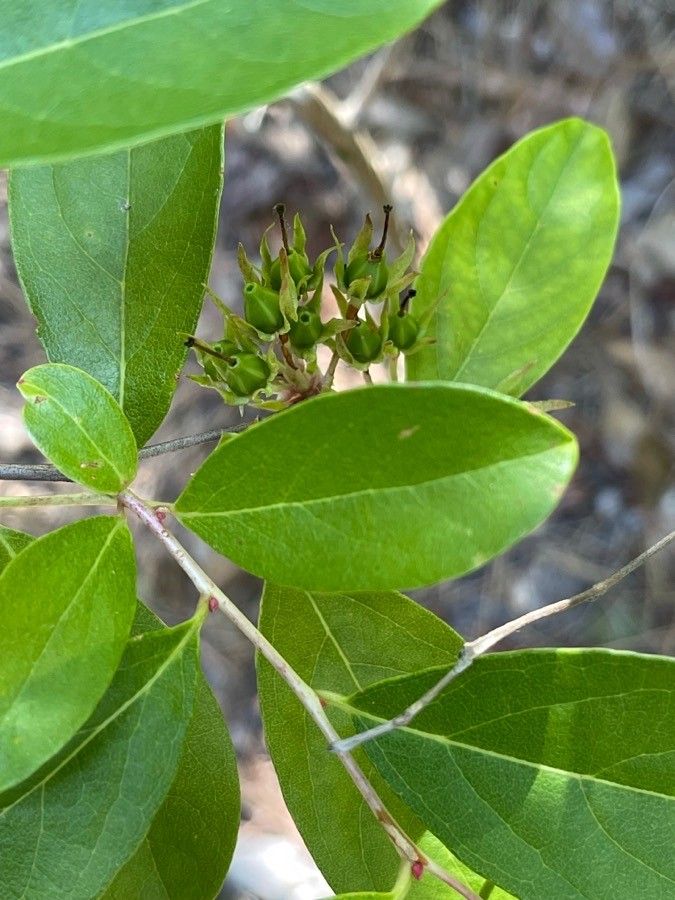
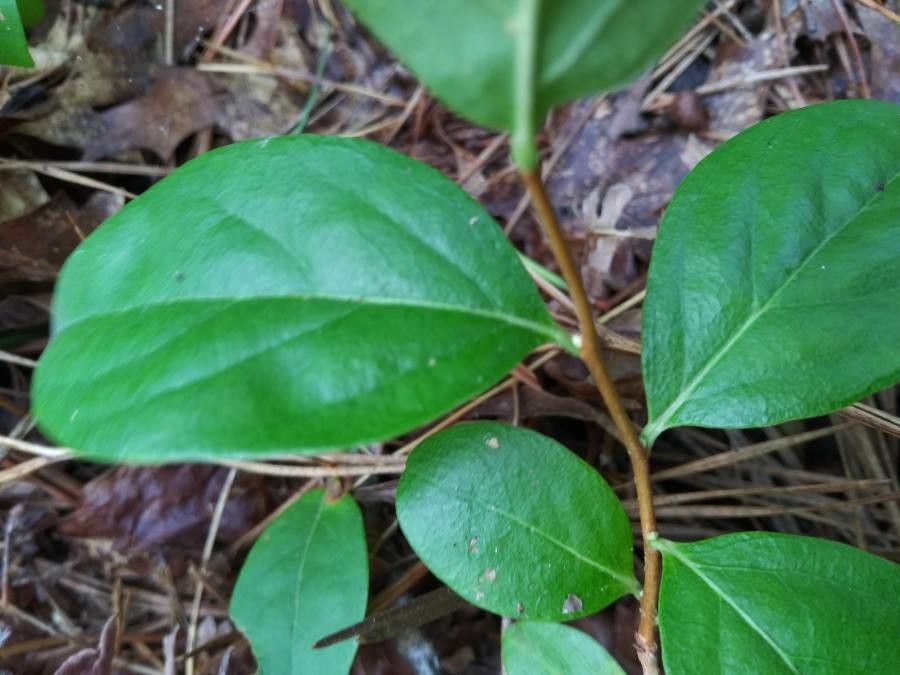
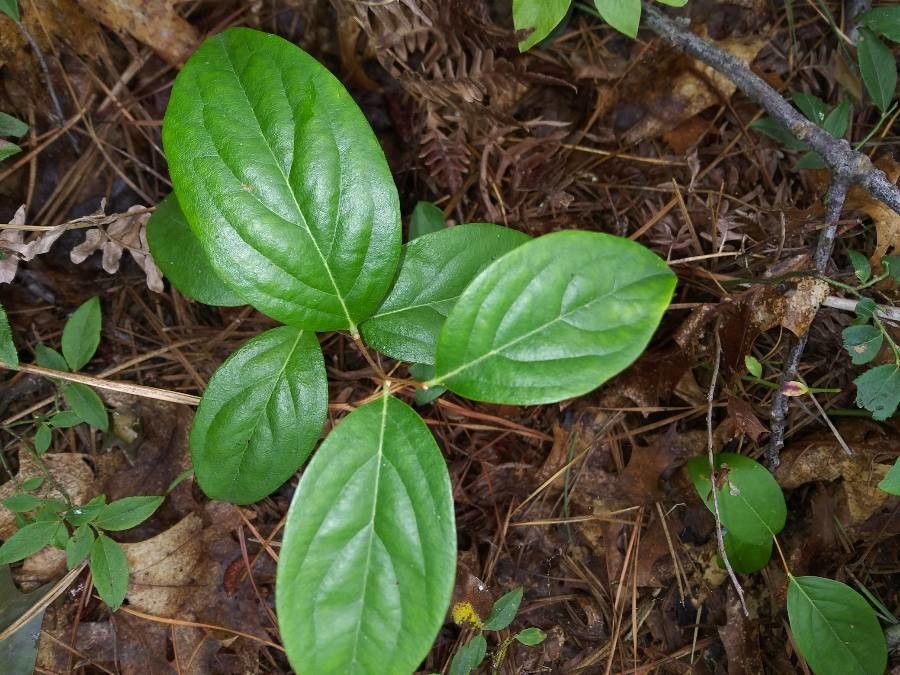
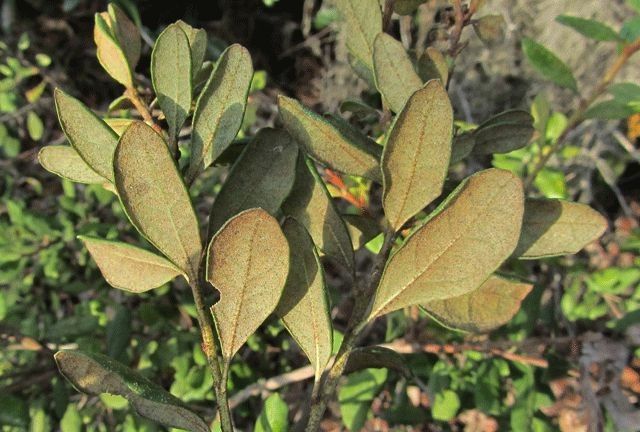
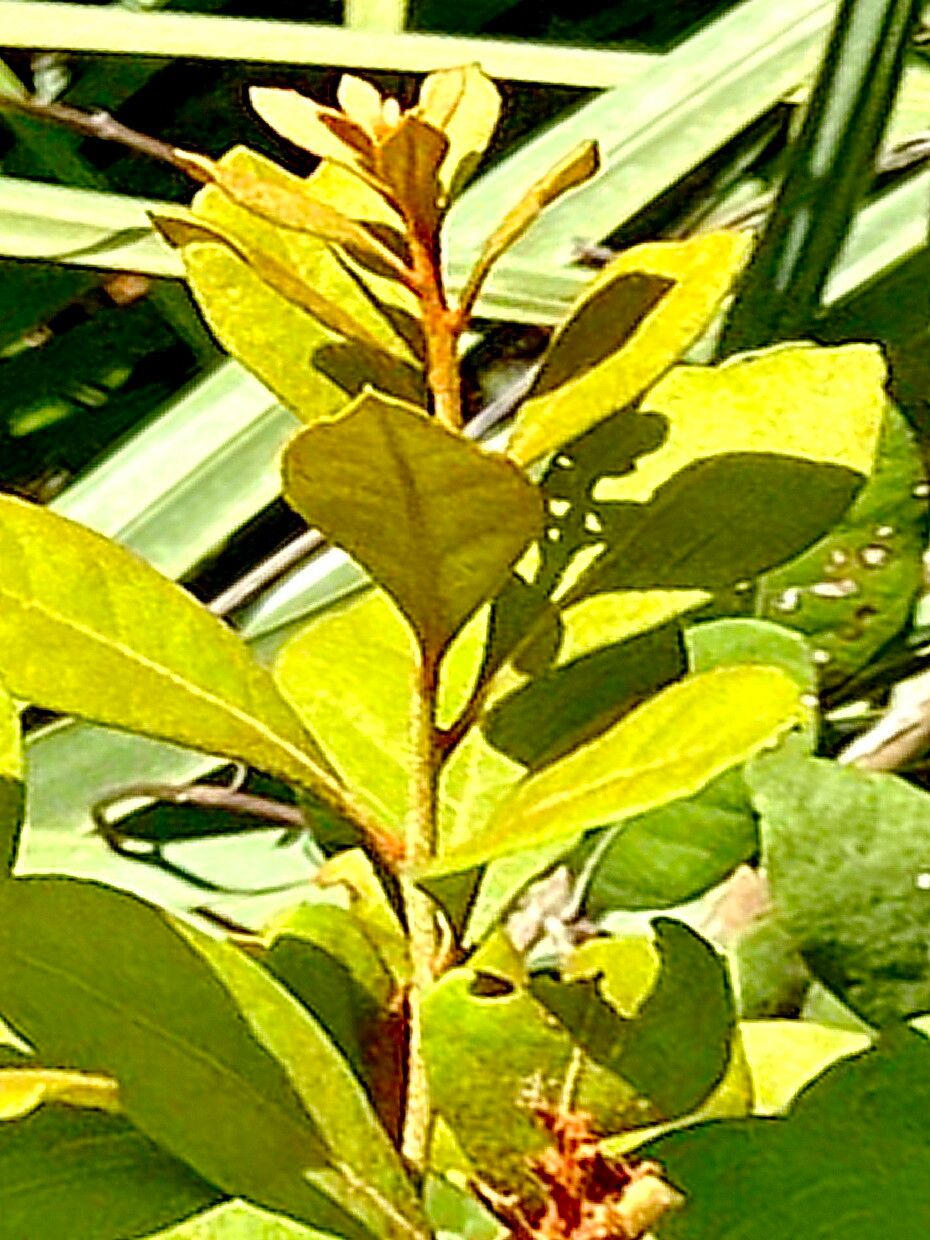
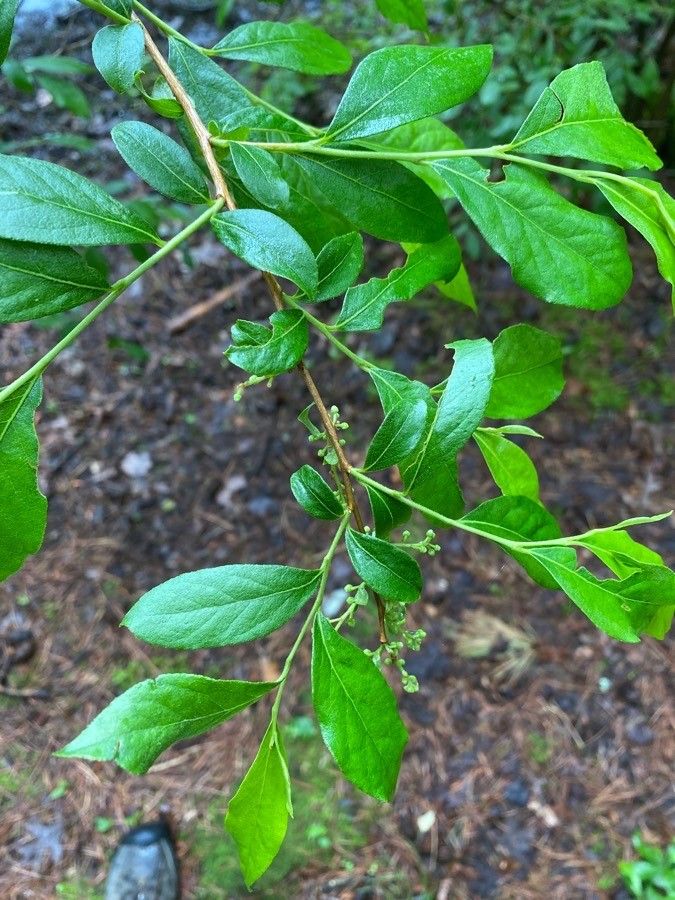
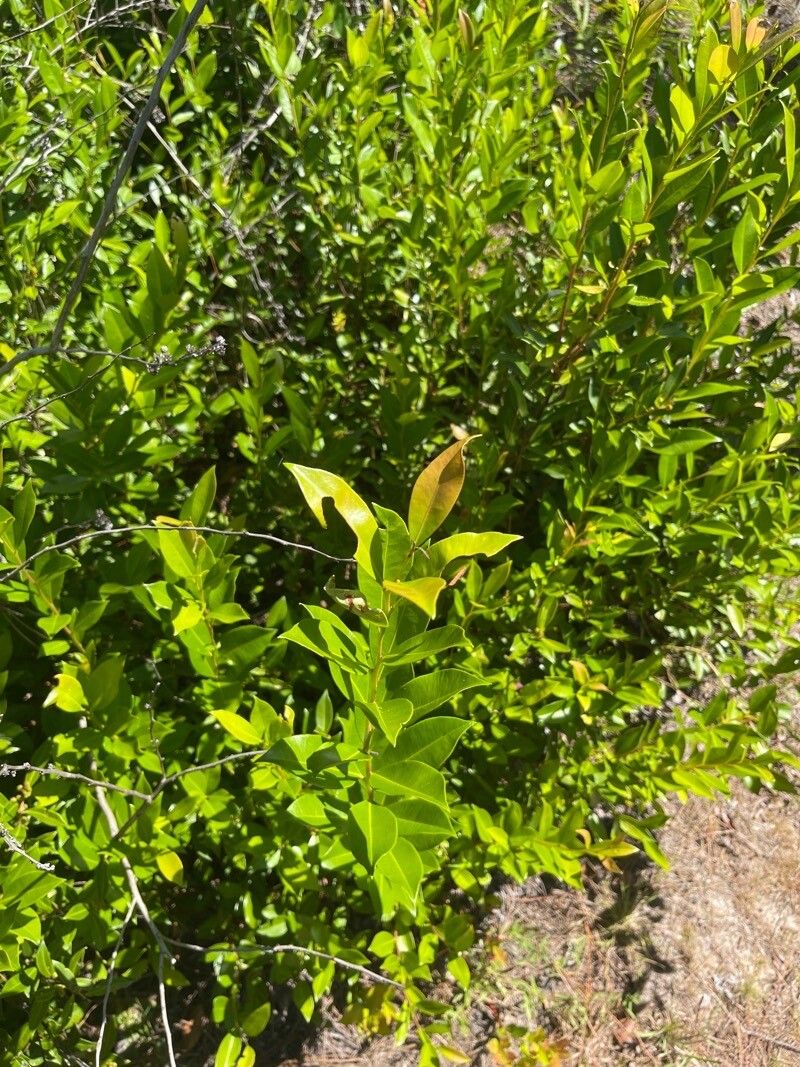
Lyonia mariana, commonly known as staggerbush or maleberry, is a deciduous shrub that belongs to the heath family. Native to the southeastern United States, it thrives in wetlands, bogs, and swamps. The plant typically grows up to 6 feet tall and features a spreading habit with arching branches. The leaves of Lyonia mariana are simple, alternate, and elliptical with finely serrated margins. They are dark green on top and lighter green underneath. The shrub produces small white or pink flowers that bloom from late spring to early summer. Lyonia mariana prefers acidic soils that are moist but well-drained. While it can tolerate partial shade, it grows best with full sun exposure. The plant is also notable for attracting pollinators such as bees and butterflies. In traditional Native American medicine, Lyonia mariana was used to treat various ailments, including fever and rheumatism, due to its anti-inflammatory properties. Overall, Lyonia mariana is not only an attractive shrub with ornamental value but also offers ecological benefits by attracting pollinators. Additionally, it has historical significance in traditional medicinal practices.
Staggerbush exhibits strong resistance to diseases and is typically not susceptible to them. Regarding care, this plant is fairly low-maintenance. When grown outdoors it needs only occasional watering, and mature specimens usually do not require pruning. Young or smaller plants, however, should be trimmed after flowering. Staggerbusht is appropriate for anyone who has an outdoor area, such as a garden or a deck, and it does not demand extensive gardening experience.
How to keep Lyonia Mariana.
Light
Staggerbush is native to open habitats, such as sunny meadows and forest edges, which offer plenty of light. It thrives in Full Sun but can also tolerate Partial Sun, adapting well to different sunlight conditions.
Water
Staggerbush flourishes in well-drained, sandy woodlands and is particularly tolerant of drought. It requires moderate humidity and should be watered every 2-3 weeks, allowing the soil to dry out between waterings. The plant's growth cycle is influenced by seasonal rainfall, needing less water during its dormant period in the colder months.
Temperature
Staggerbush shows strong adaptability to a range of climate conditions, whether in blazing summers or frigid winters. However, it does have an ideal temperature span for growth. If temperatures become overly high, the plant is susceptible to heat and humidity stress, which can lead to its death. In areas where temperatures approach the lower limit of its cold tolerance, it's important to provide insulation to protect the plant.
Fertilizer
Timing is important when fertilizing Staggerbush. Apply fertilizer in early spring and then monthly until early summer. Fertilizer encourages attractive blooms and supplies energy during both dormant periods and active growth.
Pruning
To maintain the health and shape of a staggerbush, it's important to prune it between early and late winter. Begin by removing any dead branches, and thinning out crowded areas to improve air circulation. Proper pruning practices will enhance both the growth and the quality of blooms. Always use clean, sharp tools to make smooth cuts and prevent disease.
Botanical profile.
- Plant Type
- Shrub
- Life Cycle
- Perennial
- Genus
- Lyonia
- Family
- Ericaceae
- Hardiness Zone
- 5-9
- Mature Height
- 0.91 m to 2.13 m
- Mature Spread
- 0.91 m to 1.52 m
- Leaf Color
- Green, Dark Green
- Leaf Type
- Evergreen
- Flower Color
- White, Pink
- Flower Size
- 2.54 cm
- Bloom Time
- Mid spring, Late spring
- Planting Time
- Spring, Summer
- Harvest Time
- Late summer, Early fall, Mid fall
Other names.
Reader questions.
What should I do if I give my Staggerbush too much or too little water?
Outdoor plants, especially newly planted ones or seedlings, can easily suffer from lack of watering. It's important to water them consistently for a few months when they are still small or recently planted. This is because once the roots have established, Staggerbush plants can rely on rain most of the time. If your Staggerbush is in a pot, overwatering is more likely to happen. If you accidentally overwater your Staggerbush, you should take immediate action to fix the issue. First, stop watering the plant right away to minimize the impact of overwatering. Then, remove the Staggerbush from its pot to check its roots. If there are no signs of root rot, you can return the plant to its pot. However, if root rot is present, trim away the affected roots and consider using a fungicide to prevent further damage. Finally, repot the Staggerbush in well-draining soil. On the other hand, if you underwater your Staggerbush, this is an easy problem to fix. The leaves of the plant will droop, dry out, and fall off. Providing sufficient water will quickly restore the fullness of the leaves. Make sure to adjust your watering frequency as soon as you notice underwatering.
What are the sunlight requirements for Staggerbush?
Staggerbush thrives best in environments with ample sunlight, such as open sunny meadows and forest edges. It requires full sun, which is above 6 hours of sunlight daily, but can also tolerate partial sun, approximately 3-6 hours of sunlight. It's essential to observe how sunlight moves through your garden to pick spots that offer a balanced light and shade, ensuring the plants' well-being.
Can Staggerbush grow under artificial lighting?
Yes, Staggerbush can grow under artificial lighting, especially when natural sunlight is insufficient, like during winter or in less sunny indoor spaces. For optimal growth under artificial lights, it's recommended to use LED lights tailored to provide specific wavelengths needed by the plants. Full sun plants generally require 30-50W per square foot, partial sun plants need 20-30W per square foot, and full shade plants require 10-20W per square foot of artificial light. The light source should be placed 12-36 inches above the plant and kept on for 8-12 hours per day to mimic natural sunlight conditions.
What are the symptoms of light deficiency in Staggerbush?
When Staggerbush experiences insufficient light, several symptoms might appear: smaller new leaves, leggy or sparse growth, faster leaf drop, slower or no new growth, lighter-colored new leaves, chlorosis, sunscald, leaf curling, wilting, and leaf scorching. These symptoms indicate the plant's struggle to access adequate sunlight, leading to reduced growth, health, and chlorophyll production.
How can I improve light conditions for Staggerbush indoors?
Improving light conditions for an indoor Staggerbush involves gradually moving the plant to a location with at least 6 hours of direct sunlight daily, ideally near a south-facing window. If the plant is large or difficult to move, consider using artificial lights such as desk lamps or professional plant grow lights for at least 8 hours daily to provide sufficient light. Keep curtains open during the day to maximize sunlight exposure.
What steps should be taken to increase sunlight for outdoor Staggerbush plants?
To enhance sunlight exposure for outdoor Staggerbush plants, gradually relocate them to sunnier spots by moving them each week to adjust to the light without sustaining sunburn. Though parts of the plant that suffered from insufficient light might not fully recover, new growth will be healthy post-adjustment.
How can I deal with obstructions blocking sunlight for my Staggerbush?
Dealing with light obstructions involves observing which areas might be blocking sunlight and taking action, such as pruning branches and leaves of trees that cast shade on your plants. For smaller plants, consider transplanting during their dormant period, usually late winter or early spring, to a location with ample sunlight and good drainage, after carefully moving the plant with its root ball and soil.