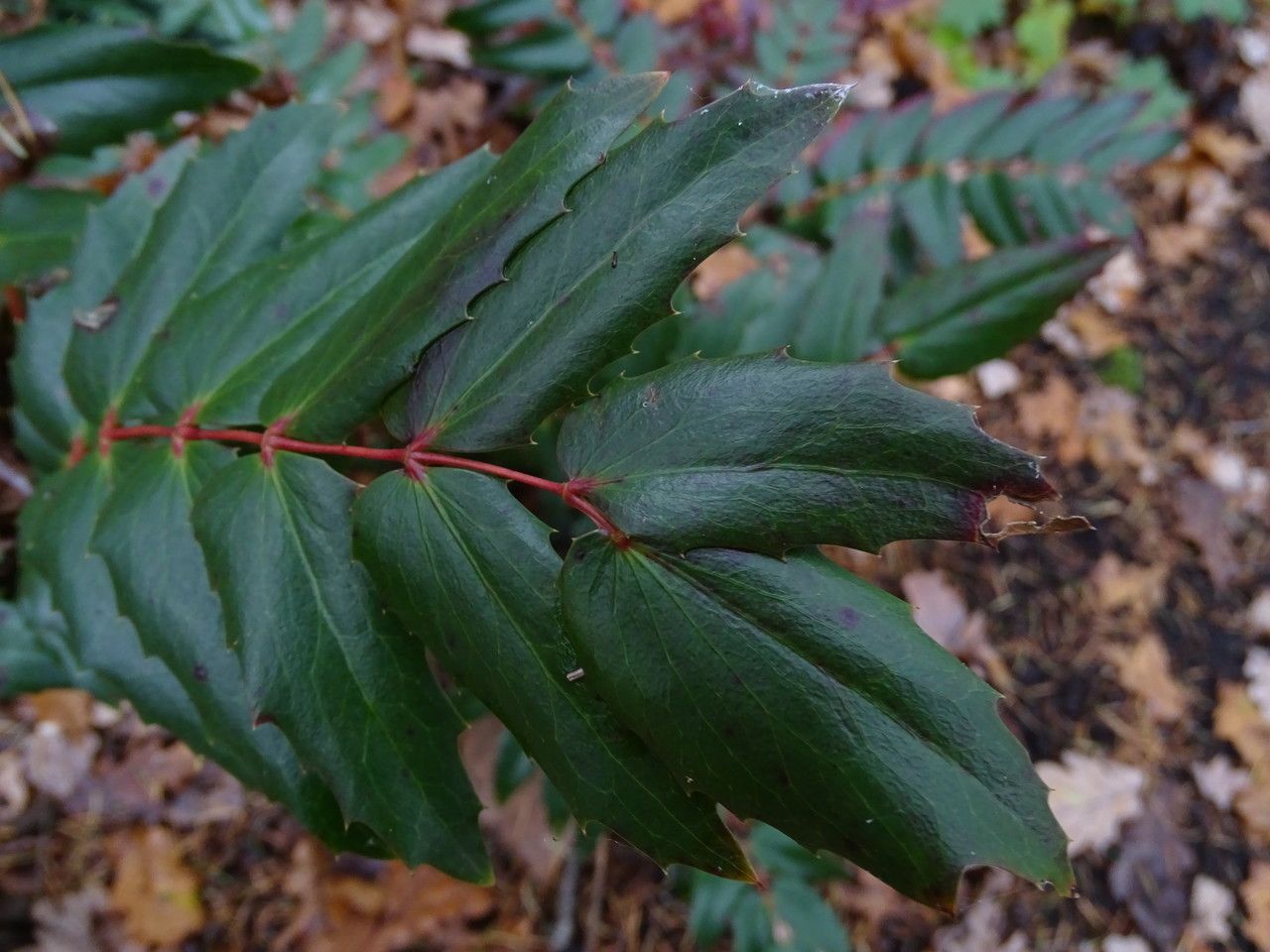
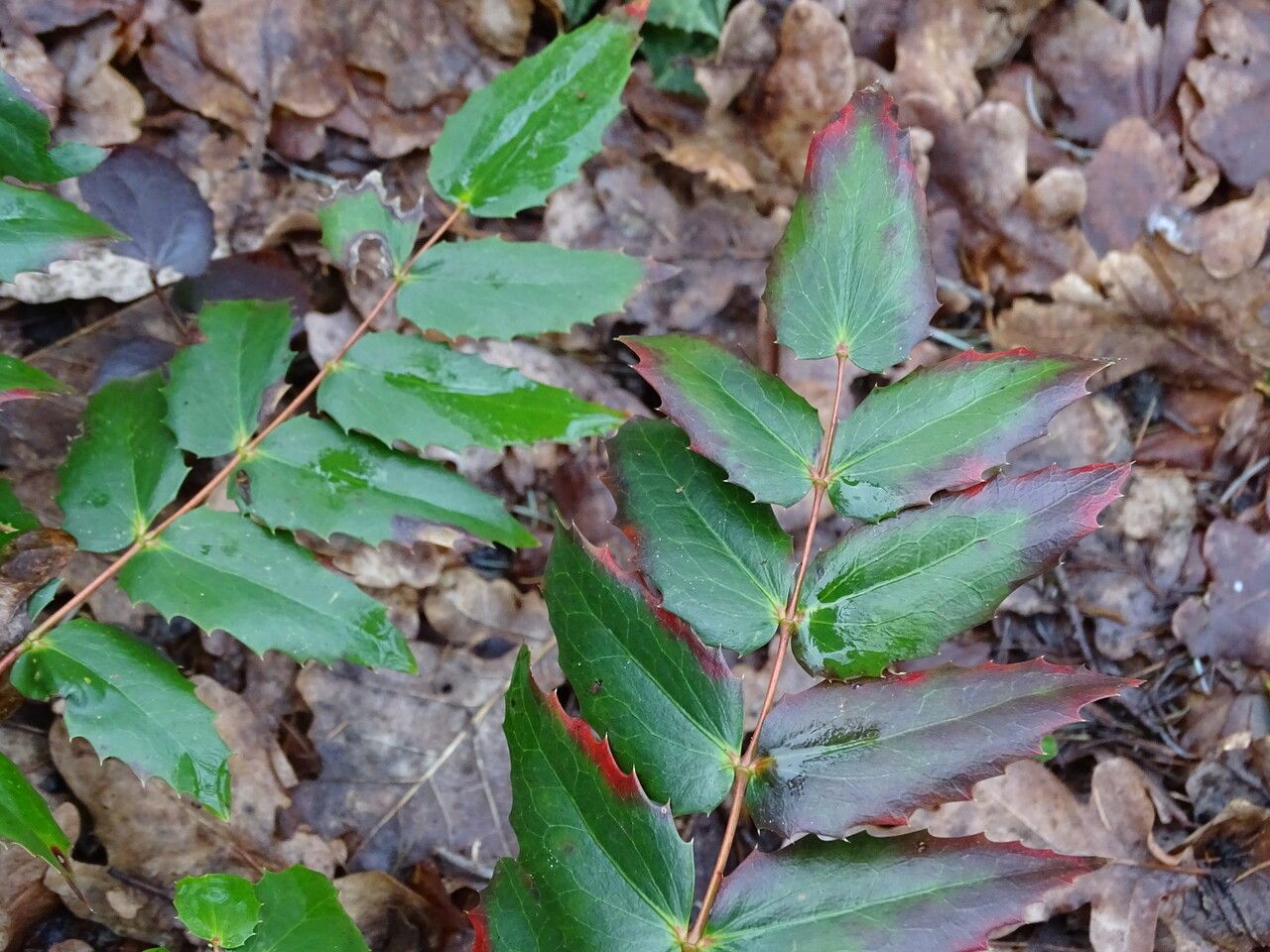
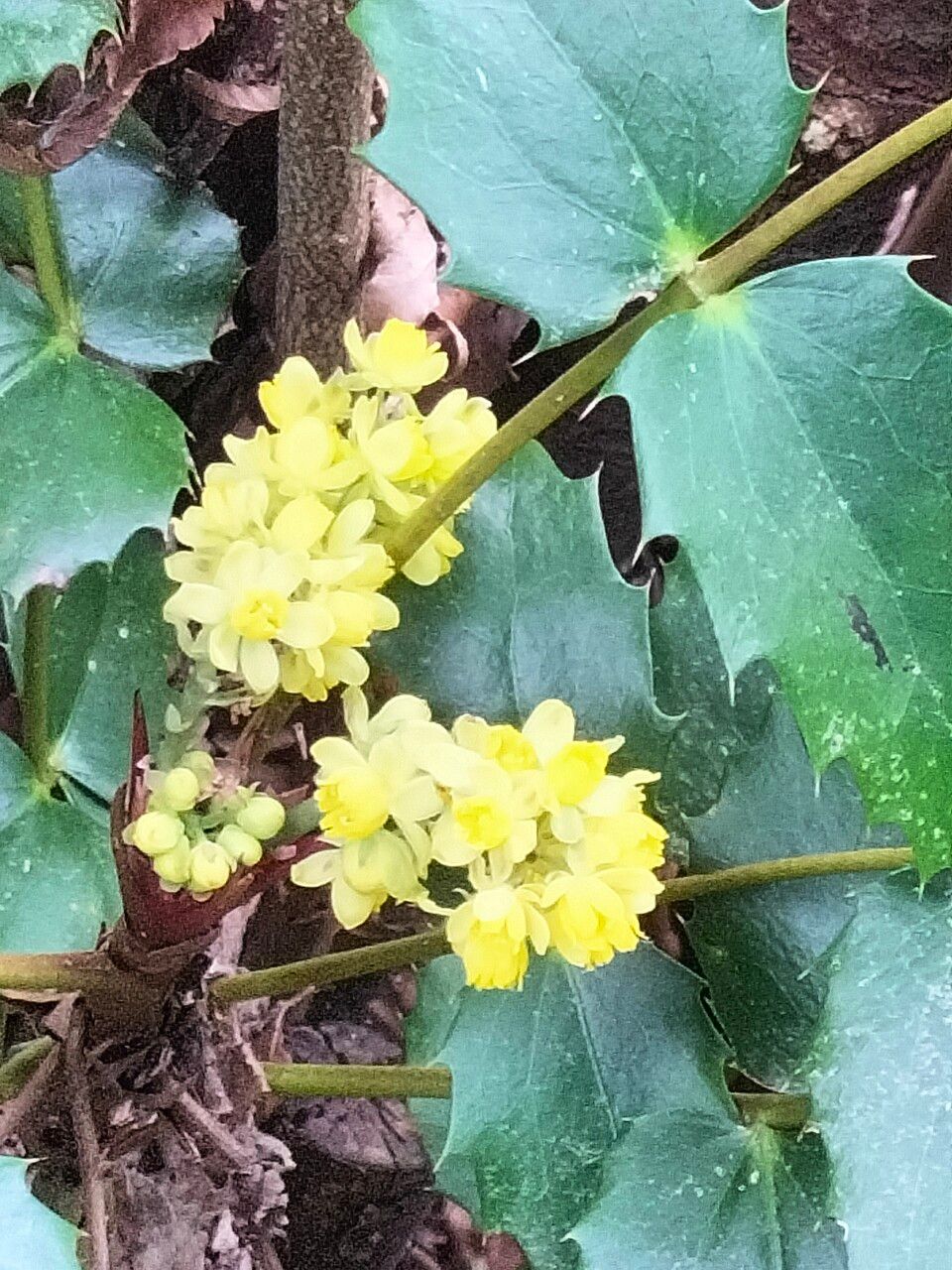
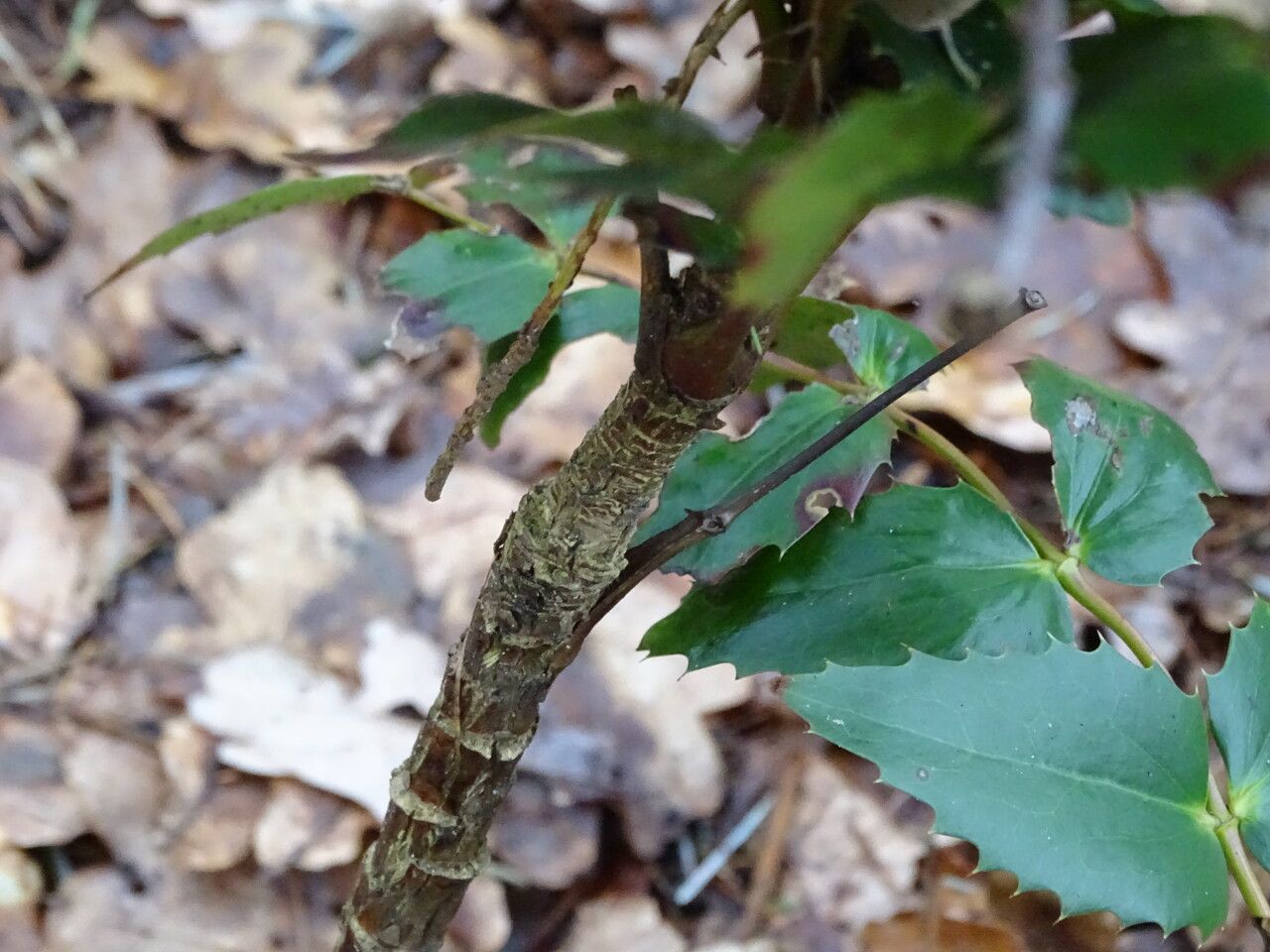
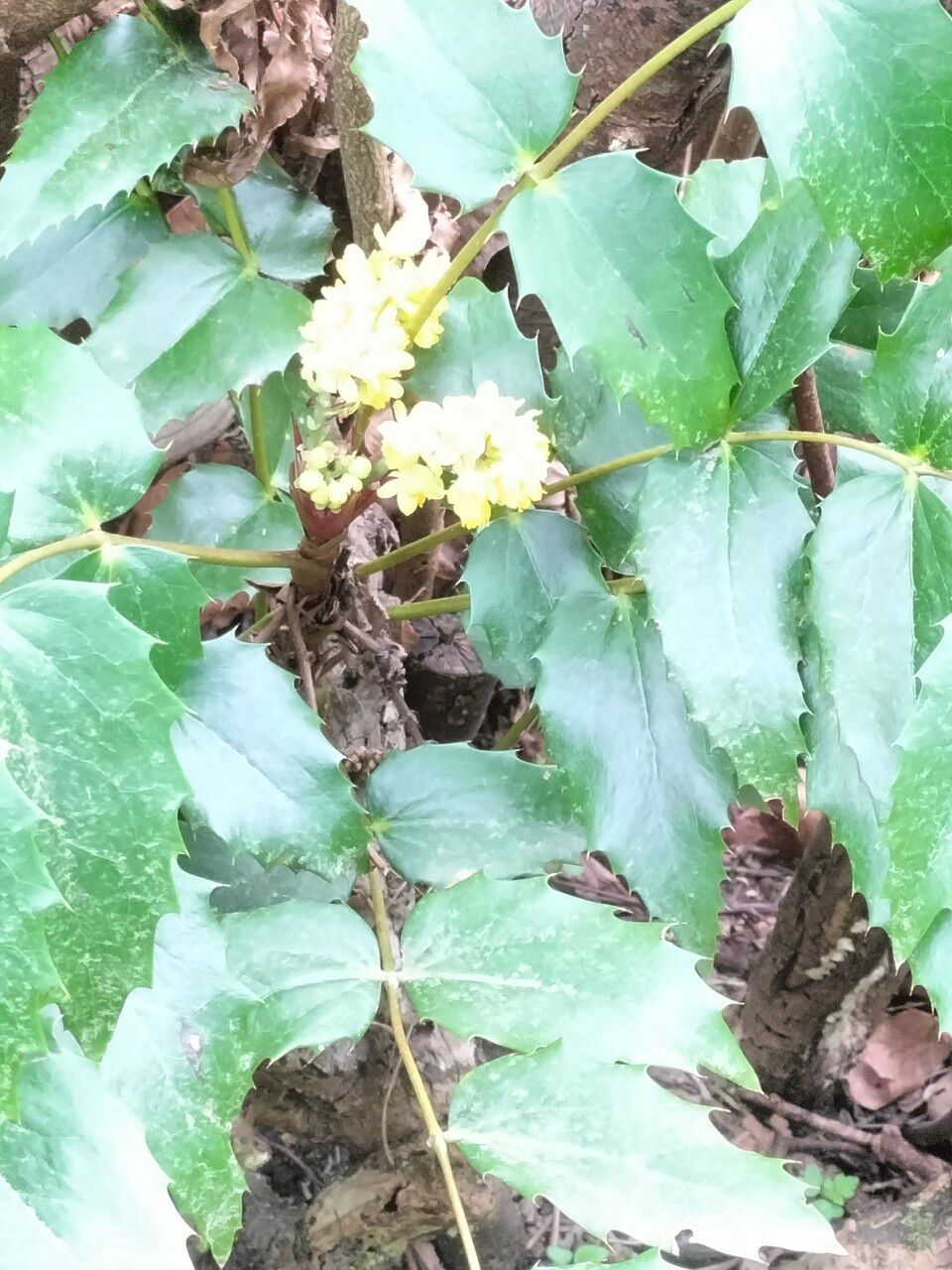
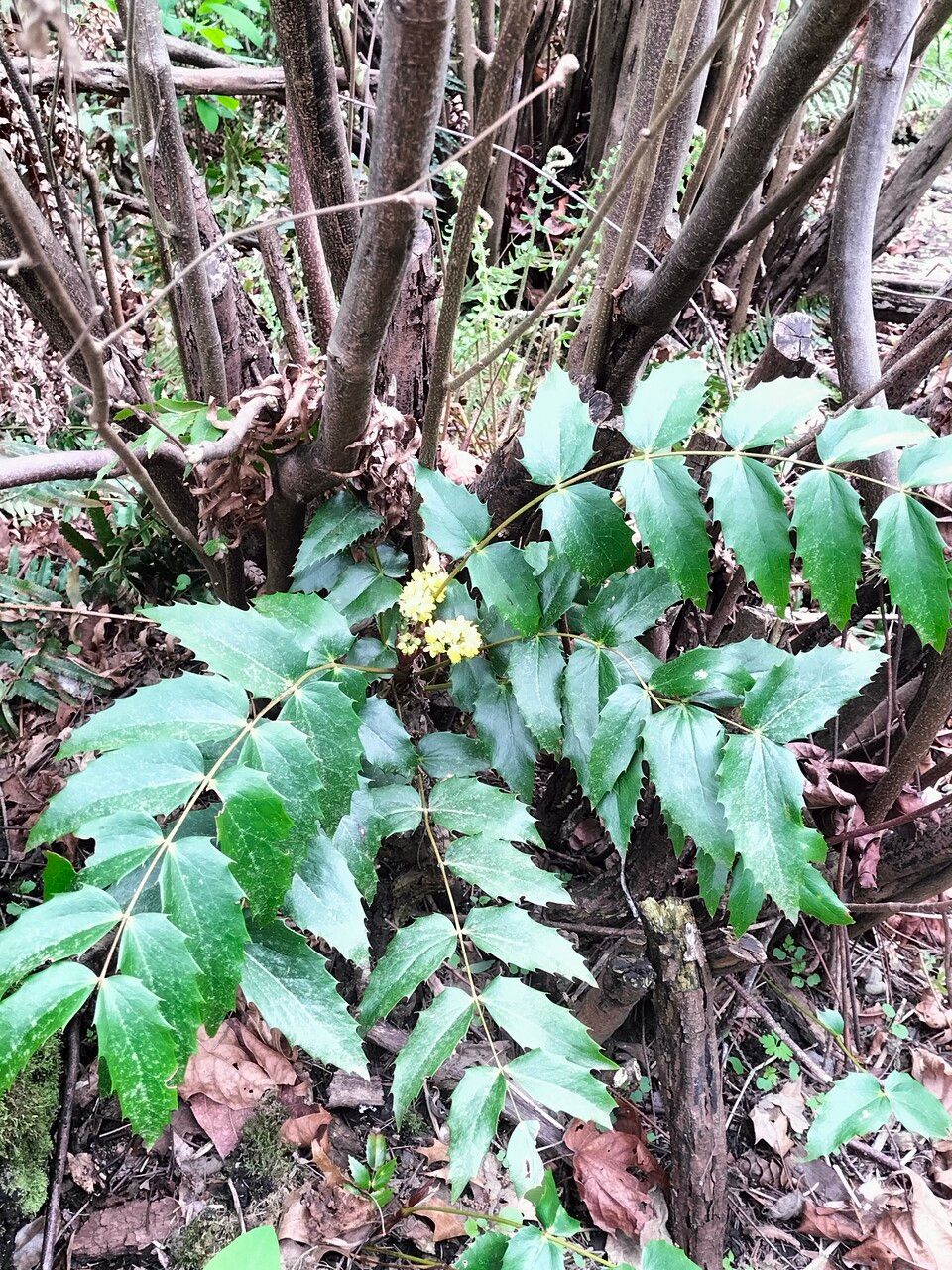
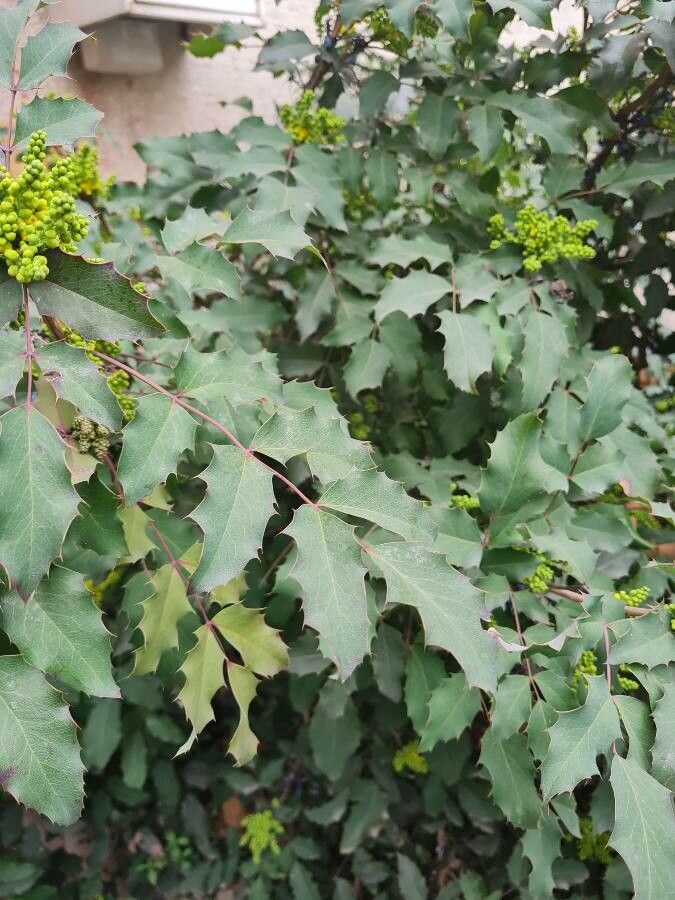
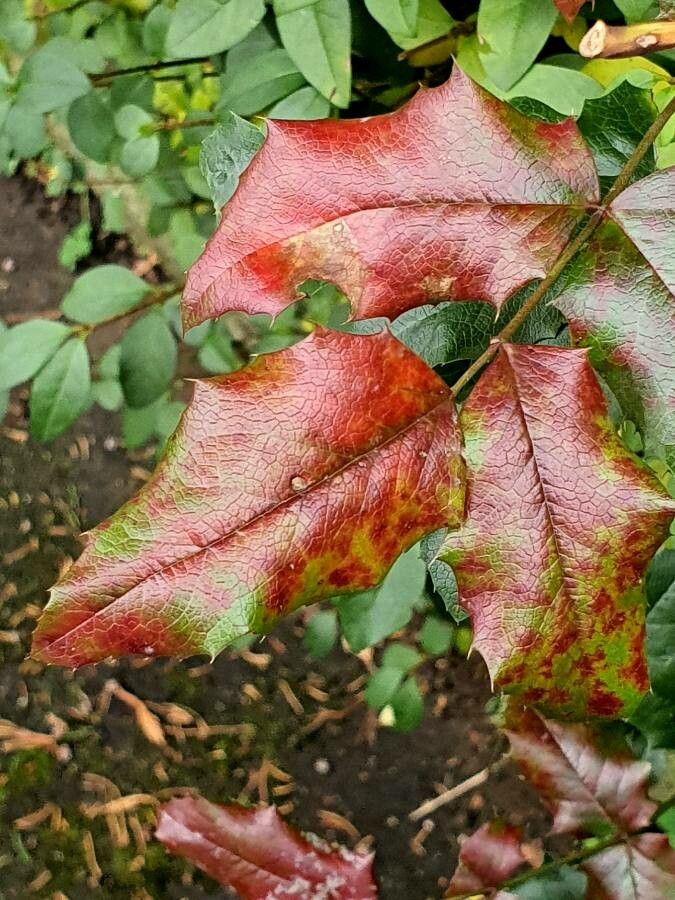
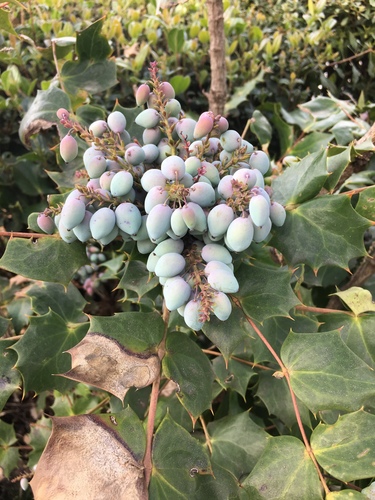
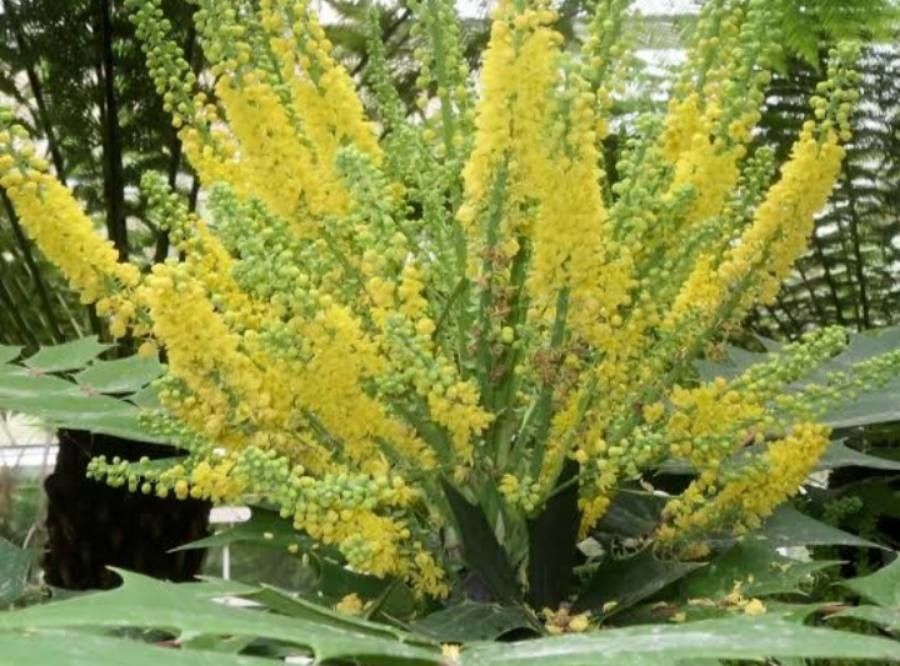
Mahonia nervosa, also known as the Cascade Oregon grape or dwarf Oregon grape, is a species of flowering plant in the Berberidaceae family. It is native to western North America, specifically the Pacific Northwest region of the United States and British Columbia in Canada. This evergreen shrub typically grows up to 1 meter tall and features dark green, glossy leaves that are pinnately compound with 5-9 leaflets. The leaves are spiny, giving them a holly-like appearance. In late winter or early spring, the plant produces clusters of bright yellow flowers, which are followed by small blue-black berries. Mahonia nervosa is popular as an ornamental plant due to its attractive foliage and flowers. It can be grown in full sun or partial shade, but it prefers moist soil with good drainage. Beyond its ornamental value, Mahonia nervosa has been used for medicinal purposes by indigenous peoples for centuries. The roots were traditionally used to treat various ailments, including stomach issues and skin conditions. Overall, Mahonia nervosa is an appealing evergreen shrub that not only enhances gardens with its beauty but also holds cultural significance due to its traditional medicinal uses by indigenous peoples of North America.
Dwarf Oregon-Grape has good disease resistance and is generally not susceptible to diseases. In terms of care, this plant is relatively low-maintenance. When grown outdoors, it requires minimal watering, and larger plants usually do not need pruning. However, smaller plants should be pruned after they have bloomed. Dwarf Oregon-Grape is suitable for anyone with an outdoor space, such as a garden or deck, and does not require much gardening experience.
How to keep Mahonia Nervosa.
Light
Dwarf Oregon-Grape performs best in moderate sunlight, though it can tolerate both strong sun and very low light. In its natural habitat it is commonly found in locations with fluctuating light, illustrating its adaptable sunlight habit. Too much or too little sun exposure can cause stunted growth.
Temperature
The dwarf Oregon-Grape is a temperate woody plant that prefers temperatures of 59 to 95 ℉ (15 to 35 ℃). It is native to habitats with temperatures in that range, such as temperate rainforests and mixed forests. During warmer months the plant can tolerate slightly higher temperatures, while in cooler seasons it may benefit from some protection from frost.
Fertilizer
Fertilize your Dwarf Oregon-Grape in early spring to encourage healthy growth. Regular feeding improves overall health, producing vigorous growth, greater tolerance of harsh conditions, and increased resistance to pests and diseases. Keep a consistent fertilization schedule for your Dwarf Oregon-Grape to preserve vibrant, deep-colored foliage and a lush appearance.
Pot & Repot
When repotting Dwarf Oregon-Grape, select a pot 1-2 inches (2.5–5.1 cm) larger that has ample drainage. Use a well-draining potting mix. Repot in spring or fall, making sure the root ball sits slightly lower than the rim of the flower pot. Water thoroughly after repotting and place in a warm spot with indirect sunlight.
Botanical profile.
- Plant Type
- Shrub
- Life Cycle
- Perennial
- Genus
- Mahonia
- Family
- Berberidaceae
- Hardiness Zone
- 8-9
- Mature Height
- 0.1 m to 2.13 m
- Mature Spread
- 91 cm
- Leaf Color
- Green
- Leaf Type
- Evergreen
- Flower Color
- Yellow
- Flower Size
- 0.76 cm to 1.02 cm
- Bloom Time
- Mid spring, Late spring, Early summer
- Planting Time
- Spring
- Harvest Time
- Mid summer
Other names.