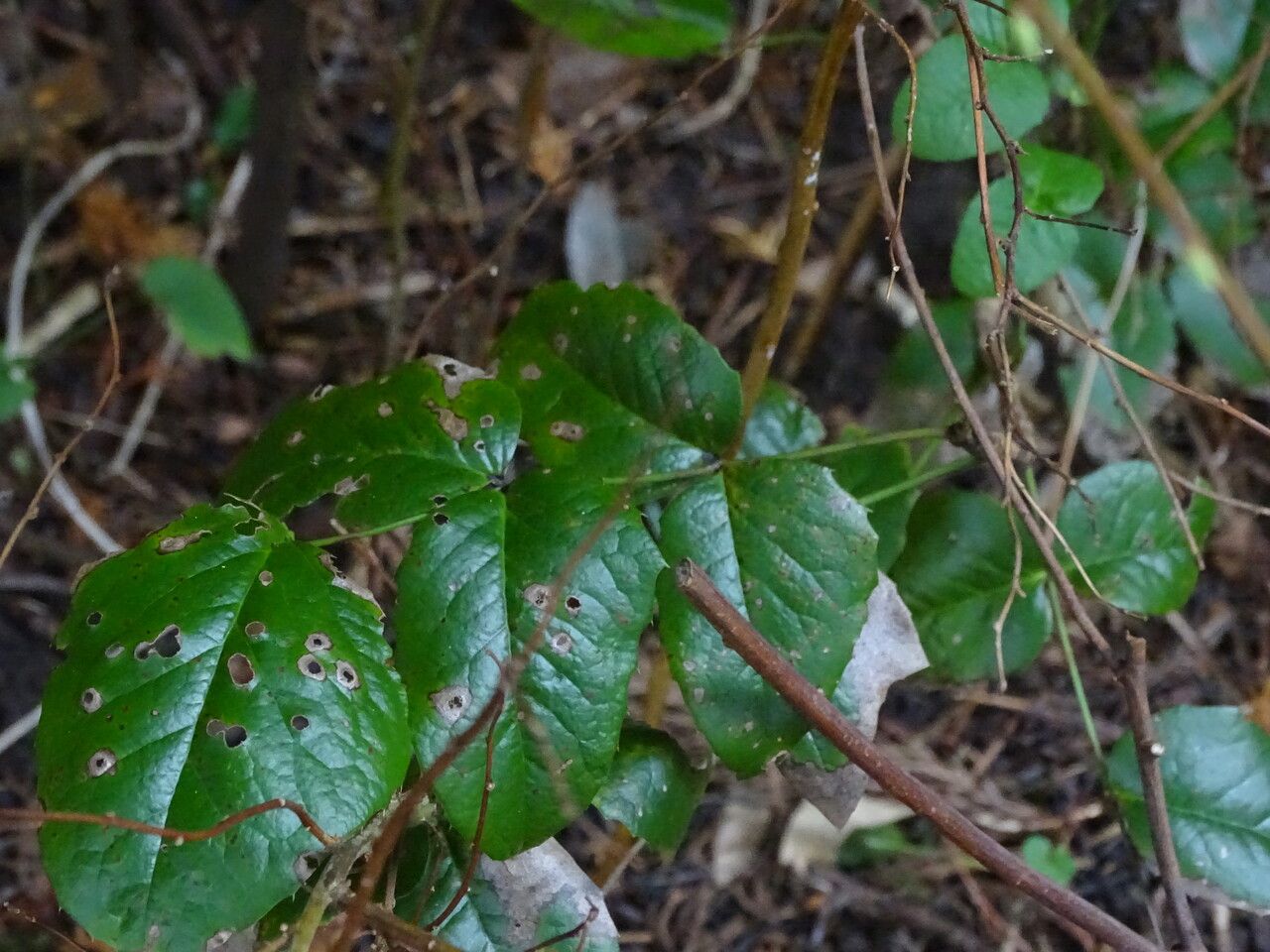
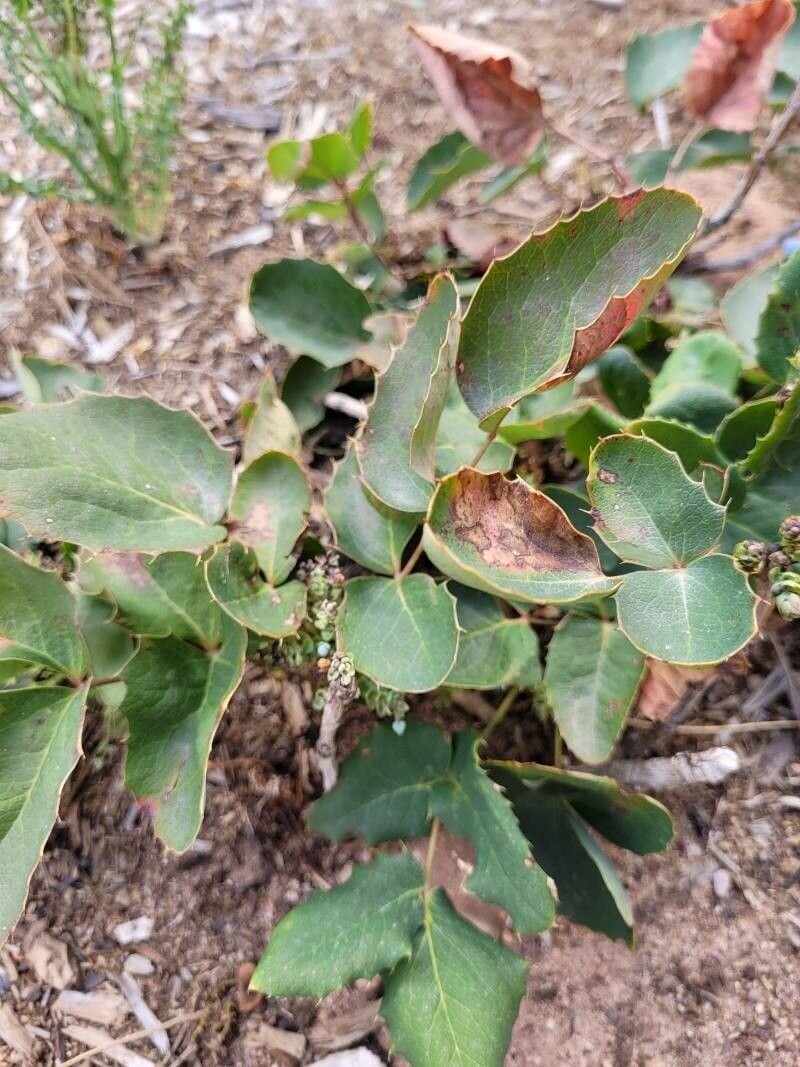
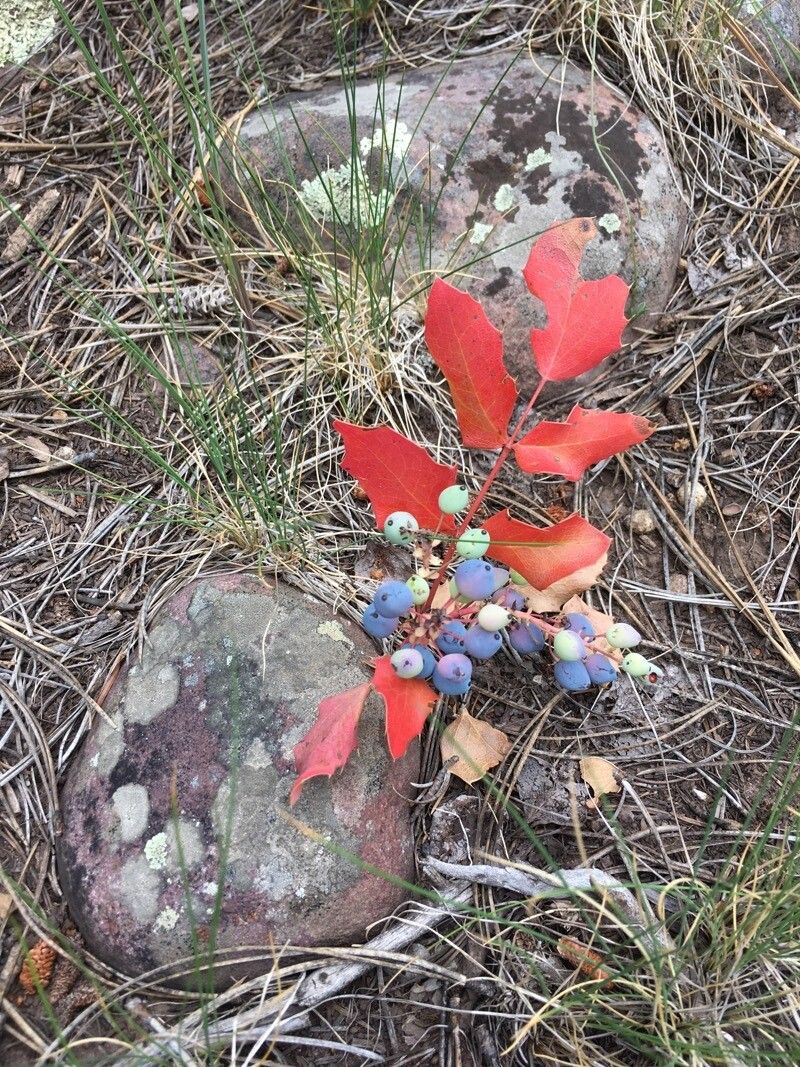
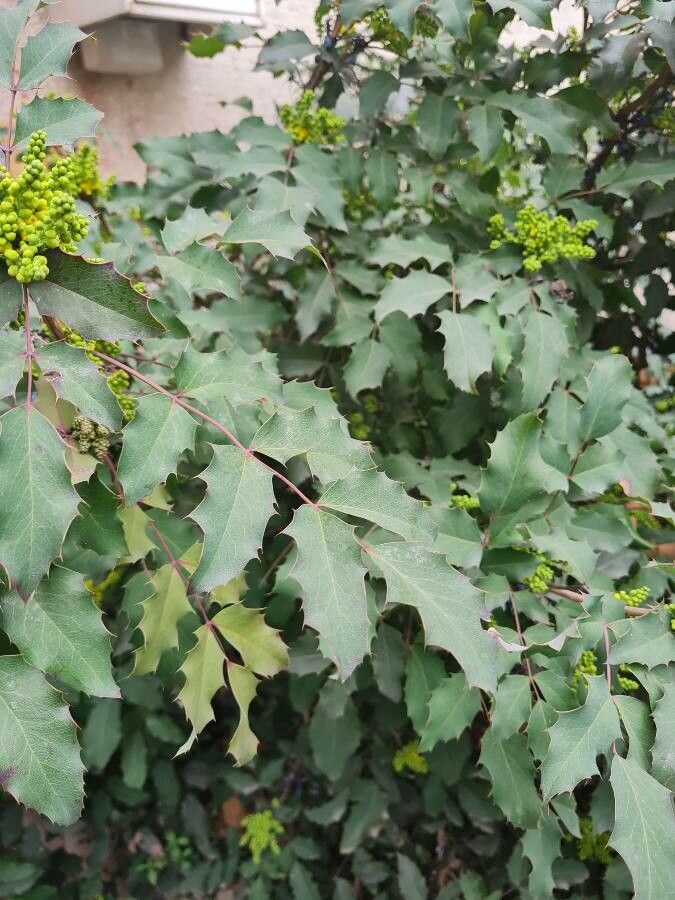
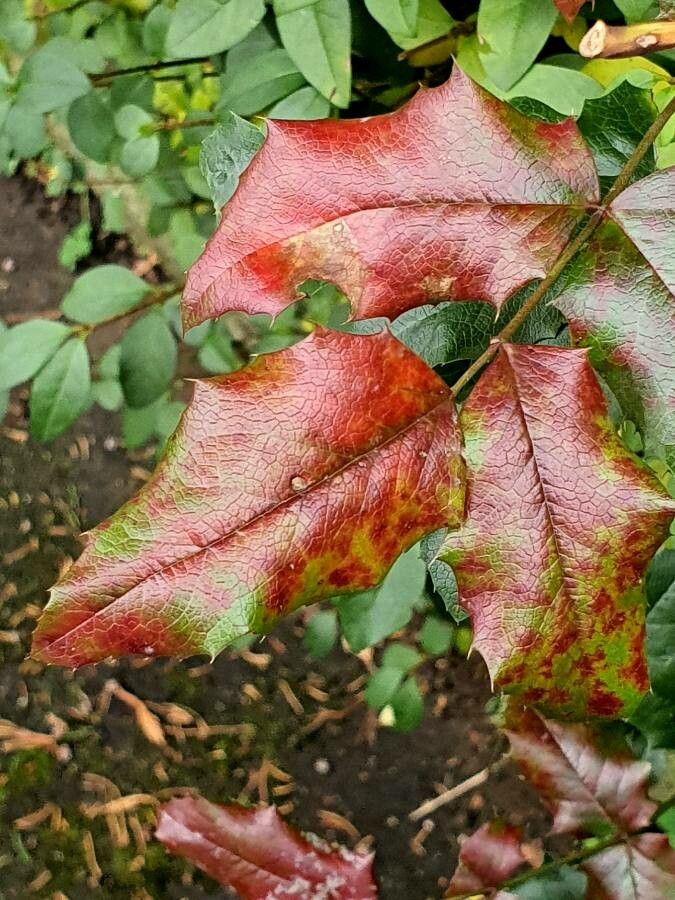
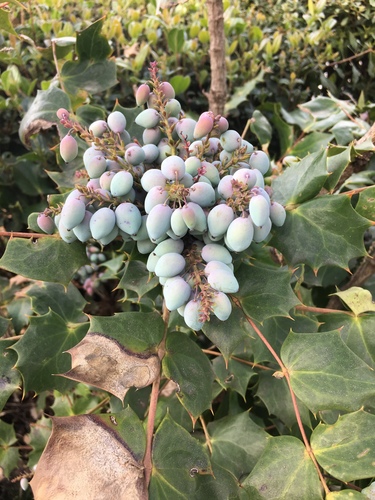
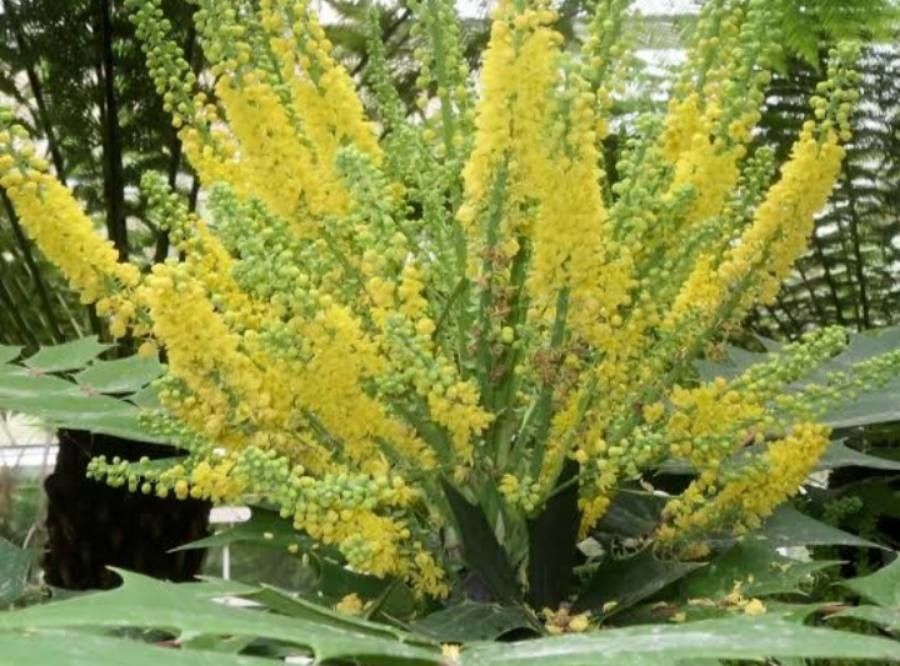
Mahonia repens, commonly known as creeping mahonia or Oregon grape, is a low-growing evergreen shrub native to western North America. Typically reaching a height of 1 to 3 feet, it spreads via underground stems to form dense colonies. The leaves are dark green, leathery, and have spiny edges. In the spring, Mahonia repens produces clusters of bright yellow flowers, which are followed by blue-black berries in the summer.
This plant is often used as groundcover or along garden borders due to its attractive foliage and low maintenance requirements. It prefers partial shade but can also tolerate full sun if provided with enough moisture. It thrives in well-drained soil rich in organic matter. Additionally, indigenous peoples have used Mahonia repens for medicinal purposes for centuries, due to its antibacterial properties.
Overall, Mahonia repens is an excellent choice for gardeners seeking an attractive evergreen shrub that provides year-round interest with minimal upkeep.
Creeping barberry has good resistance to disease and is generally not susceptible to illnesses. In terms of care, the plant is fairly low-maintenance. When grown outdoors it needs minimal watering, and larger plants typically do not require pruning. Smaller plants, however, should be trimmed after they finish blooming. Creeping barberry is suitable for anyone who has an outdoor area, such as a garden or deck, and does not demand extensive gardening experience.
How to keep Mahonia Repens.
Light
The creeping barberry flourishes in locations where it obtains partial daily sunlight exposure. While it is resilient enough to tolerate full-day sunlight presence or most of the day in shadow, a balanced sunlight exposure contributes to its healthy development. Too much sun exposure could potentially have a negative effect on the plant's robustness.
Temperature
Creeping barberry, a plant indigenous to North America, flourishes optimally in temperate zones where temperatures lie between 59 and 95 ℉ (15 to 35 ℃). The plant is recommended to adapt to variable temperatures across diverse seasons, experiencing cooler conditions during the autumn and winter, and warmer ones in spring and summer for it to prosper.
Fertilizer
Encourage the healthy development of your Creeping barberry by fertilizing it in the early spring. Consistent fertilization boosts general health, enabling vigorous growth, resistance to harsh conditions, and increased protection against disease and pests. Adhere to a particular fertilization routine for your Creeping barberry to guarantee lustrous foliage with vibrant coloration and a lush look.
Pot & Repot
When transplanting Creeping barberry, select a container that is 1-2 inches (2.5-5 cm) bigger with sufficient drainage provisions. Employ a potting mix that drains well. Carry out the repotting process either in spring or fall, making sure that the root ball is marginally lower than the edge of the pot. After the repotting process, water it comprehensively and position it in a warm location that receives indirect sunlight.
Botanical profile.
- Plant Type
- Shrub
- Life Cycle
- Perennial
- Genus
- Mahonia
- Family
- Berberidaceae
- Hardiness Zone
- 7-9
- Mature Height
- 20 cm to 46 cm
- Mature Spread
- 20 cm to 46 cm
- Leaf Color
- Green, Blue, Purple, Lavender
- Leaf Type
- Evergreen
- Flower Color
- Yellow
- Flower Size
- 3.05 cm to 10.16 cm
- Bloom Time
- Mid spring, Late spring, Early summer
- Planting Time
- Spring, Autumn
- Harvest Time
- Mid summer
Other names.