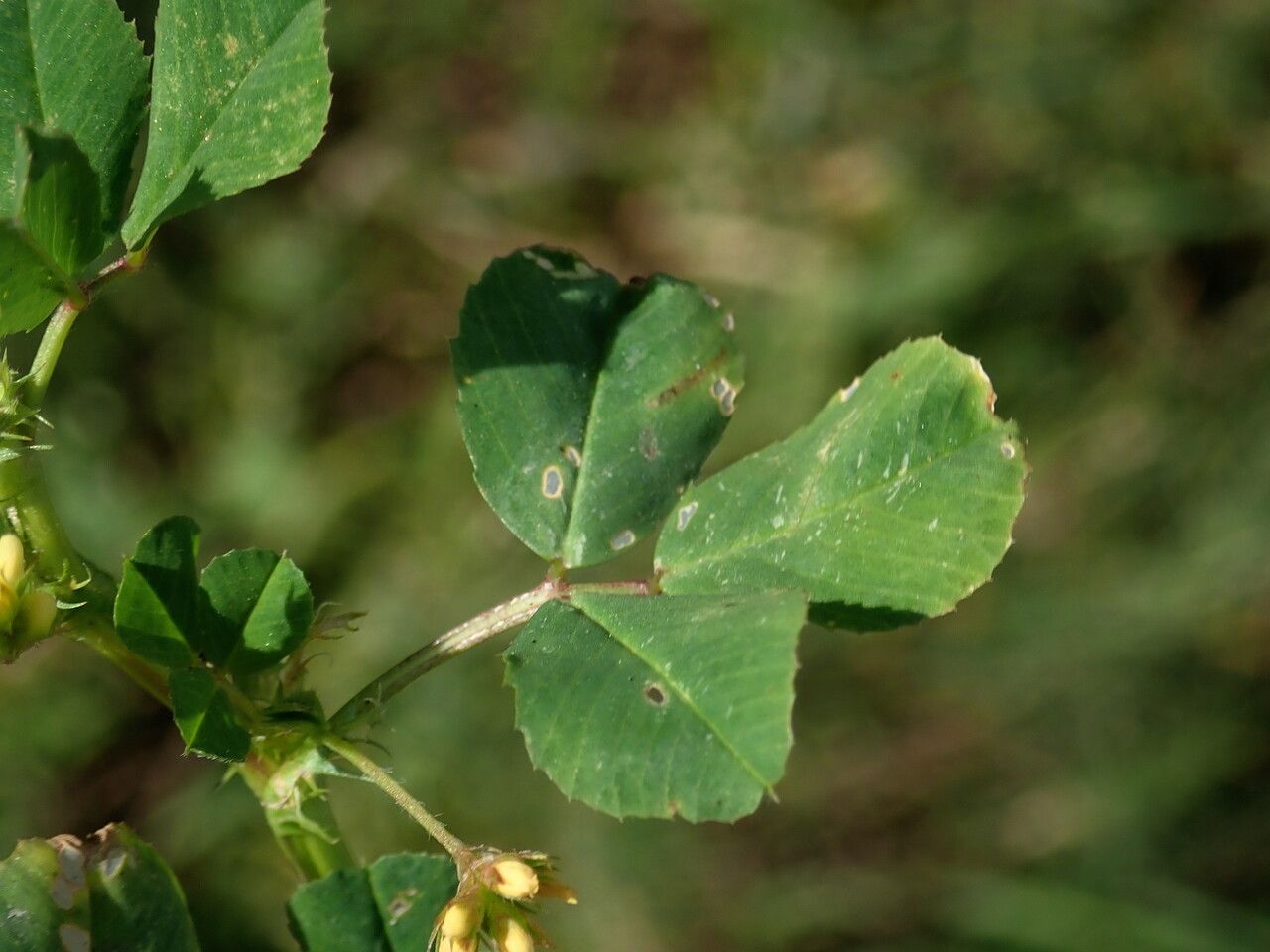
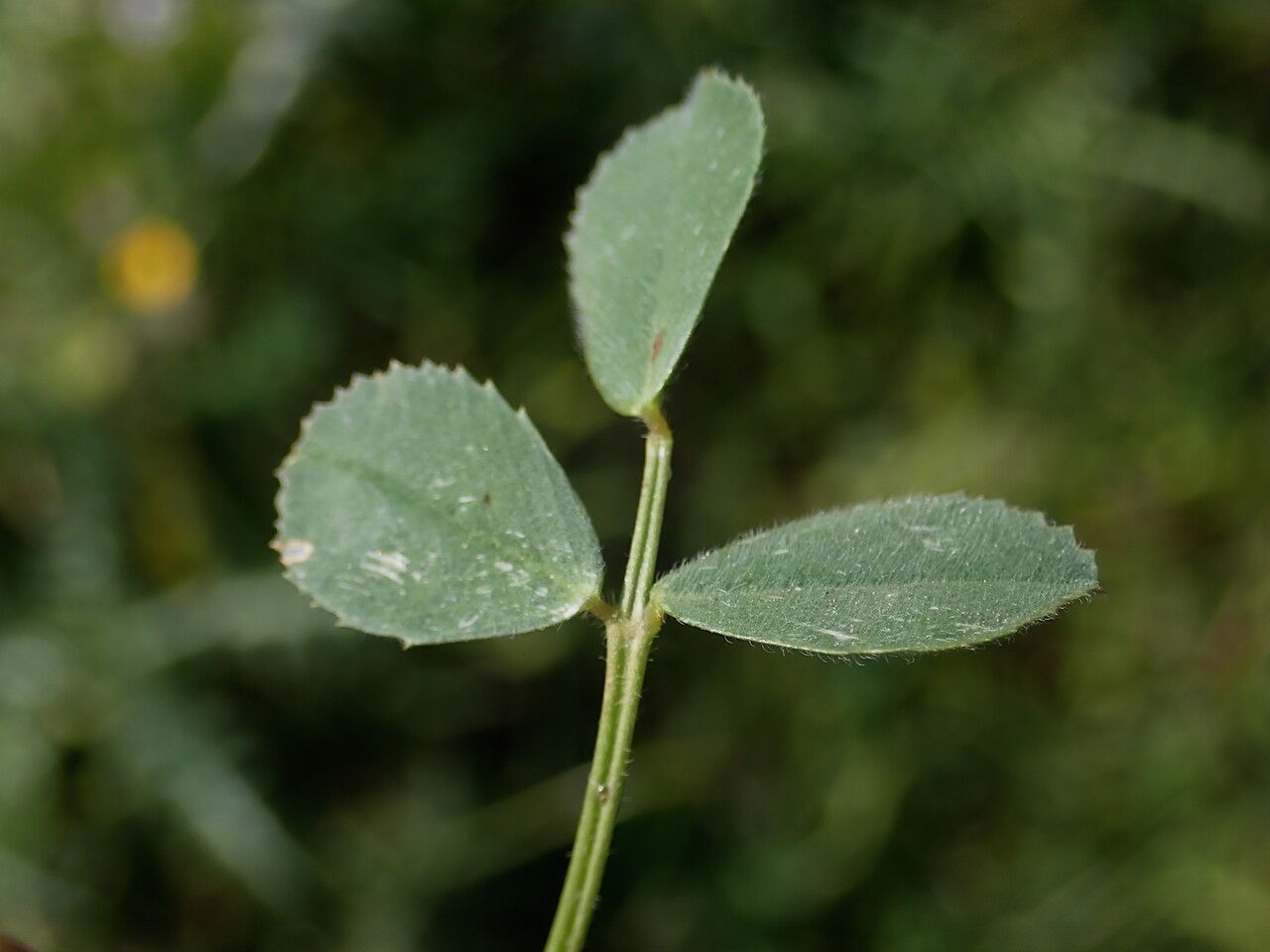
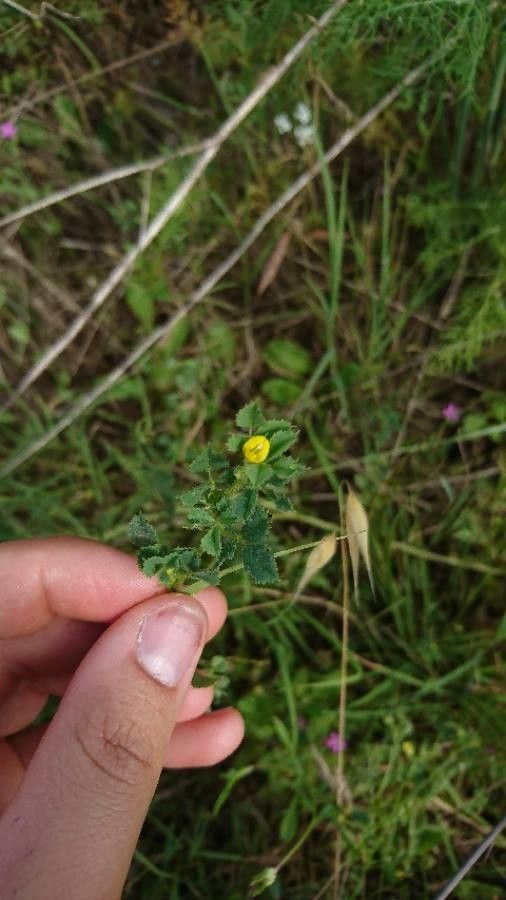
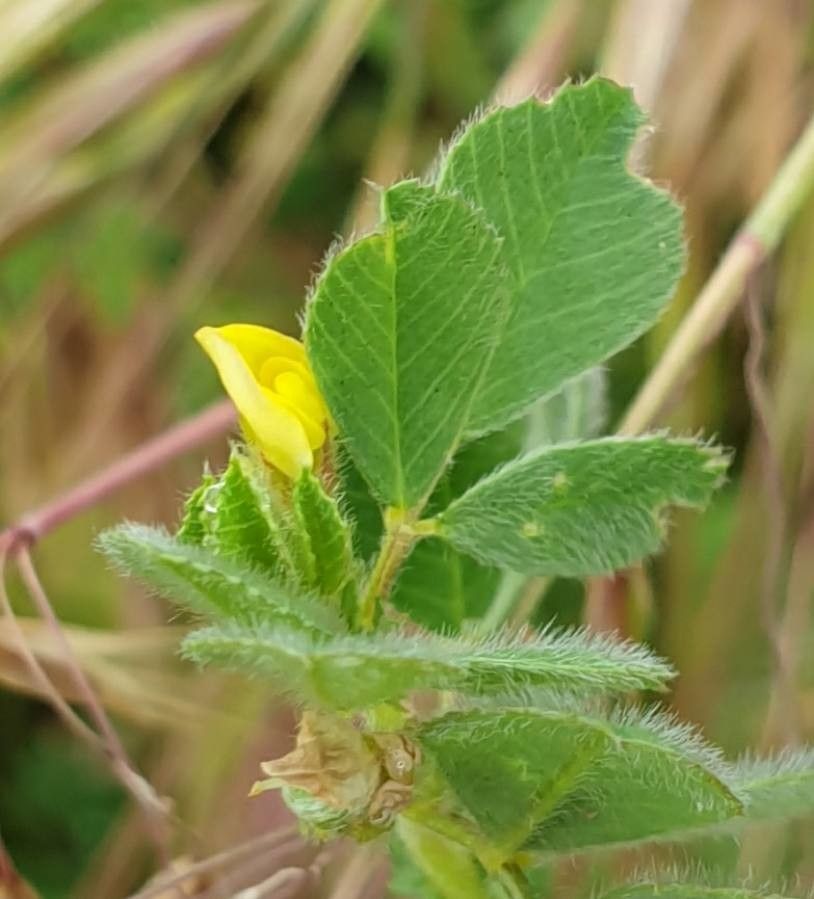
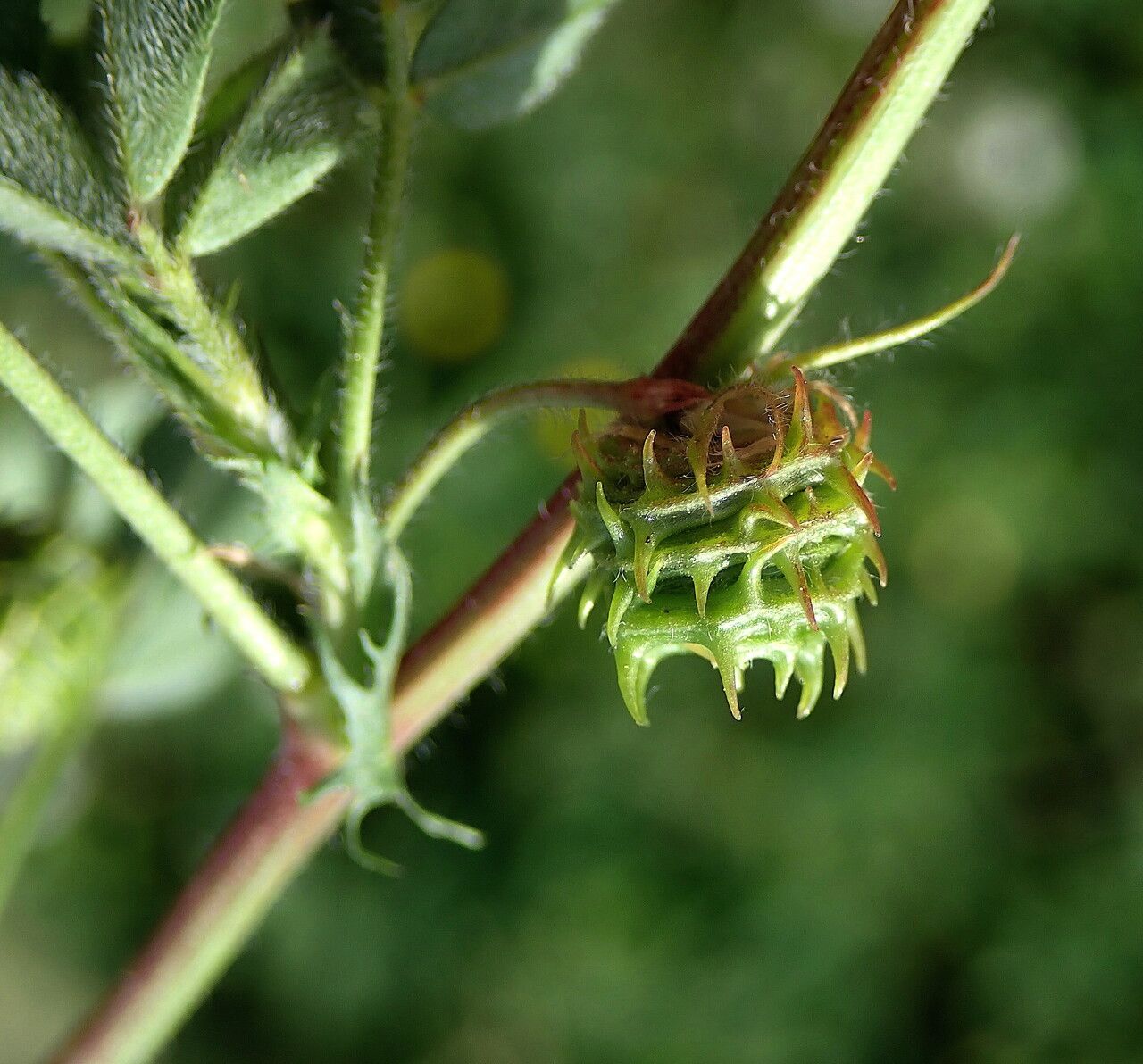
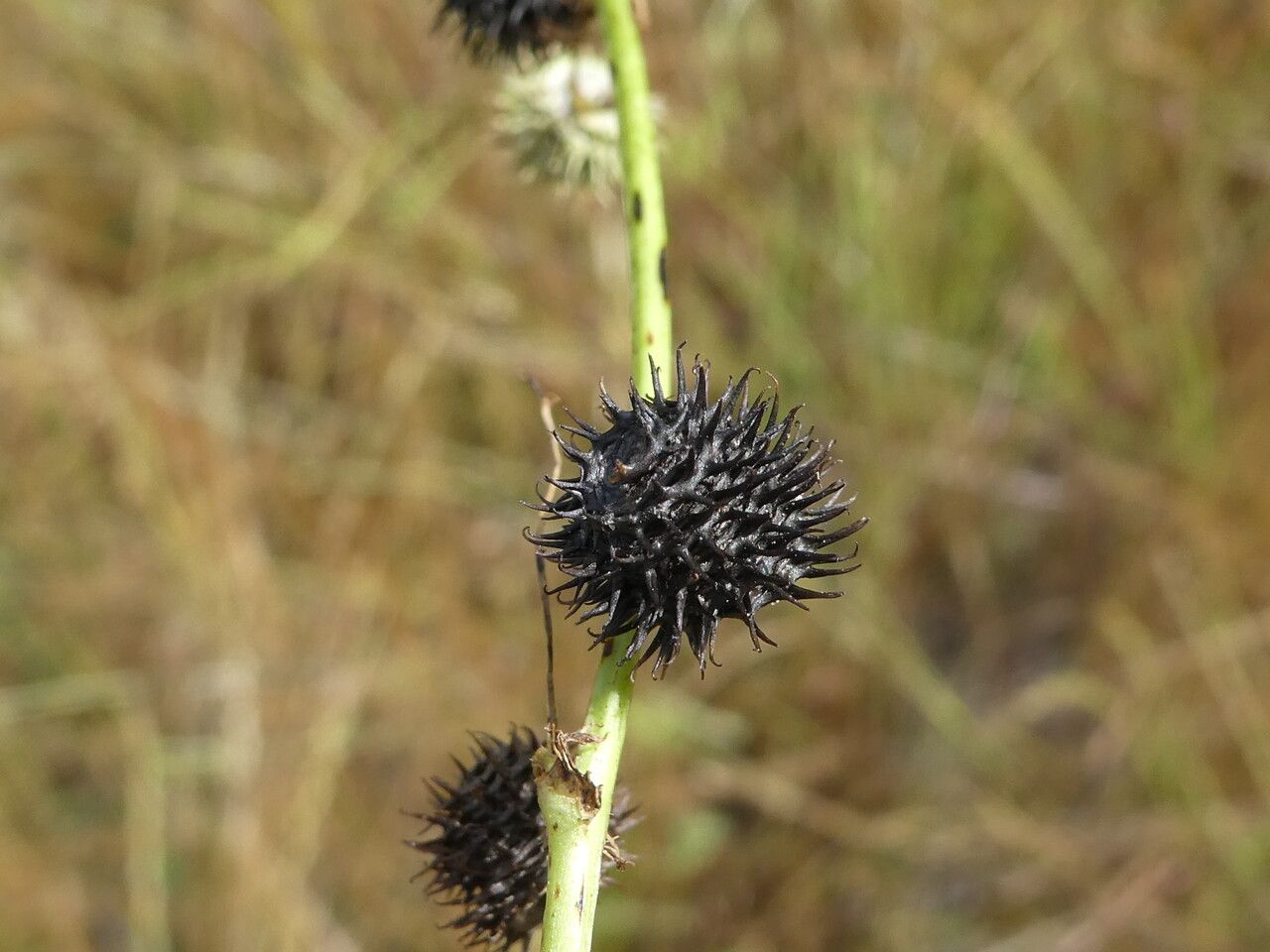
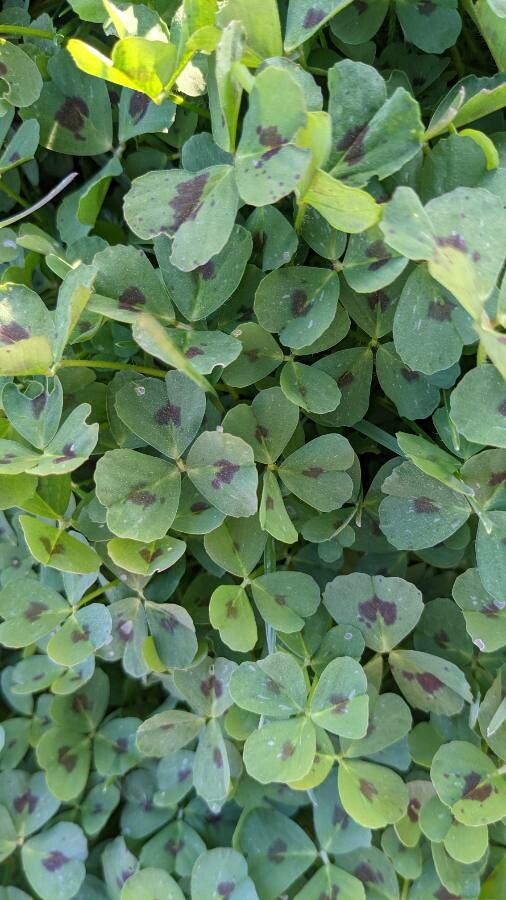
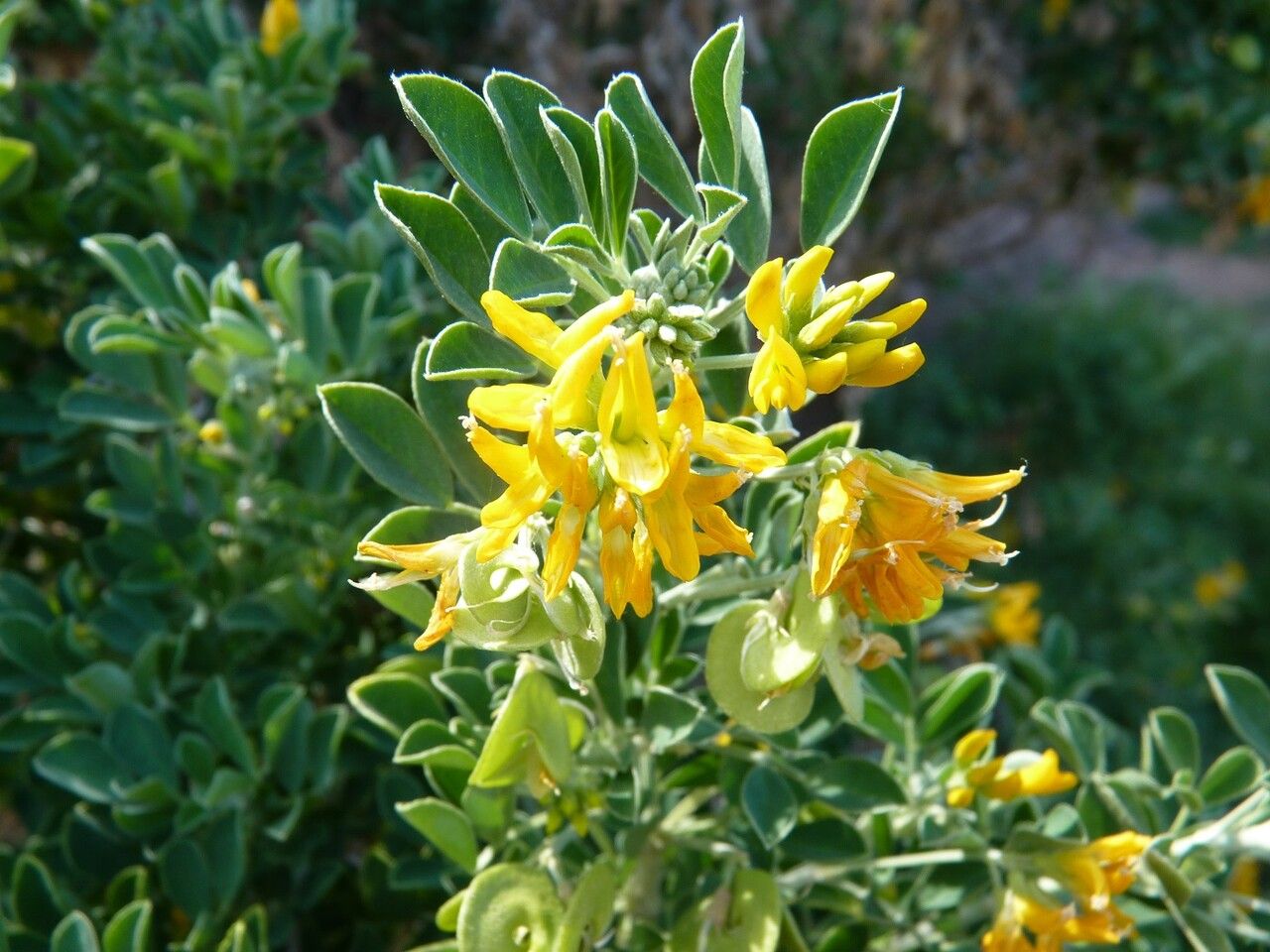
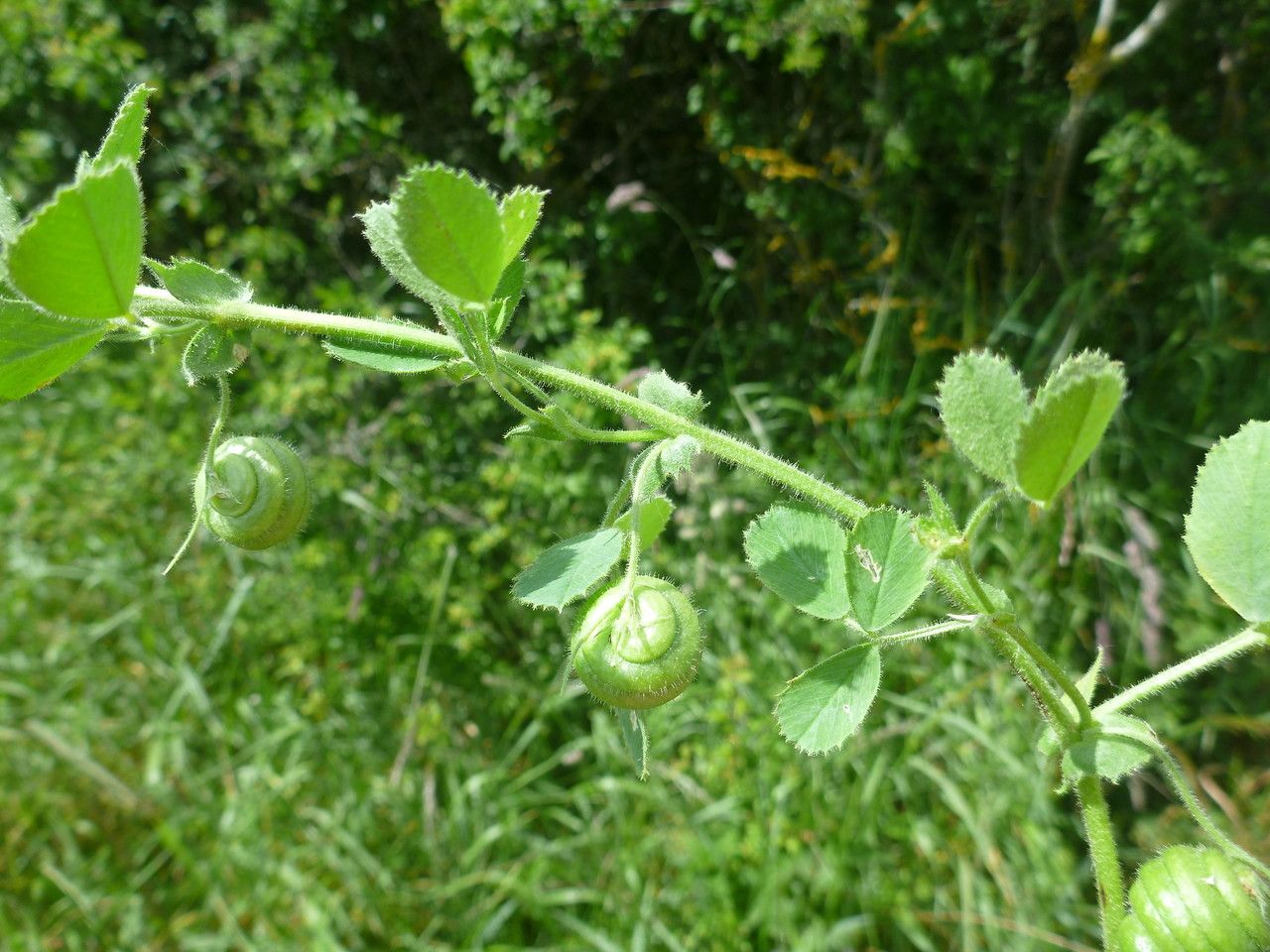
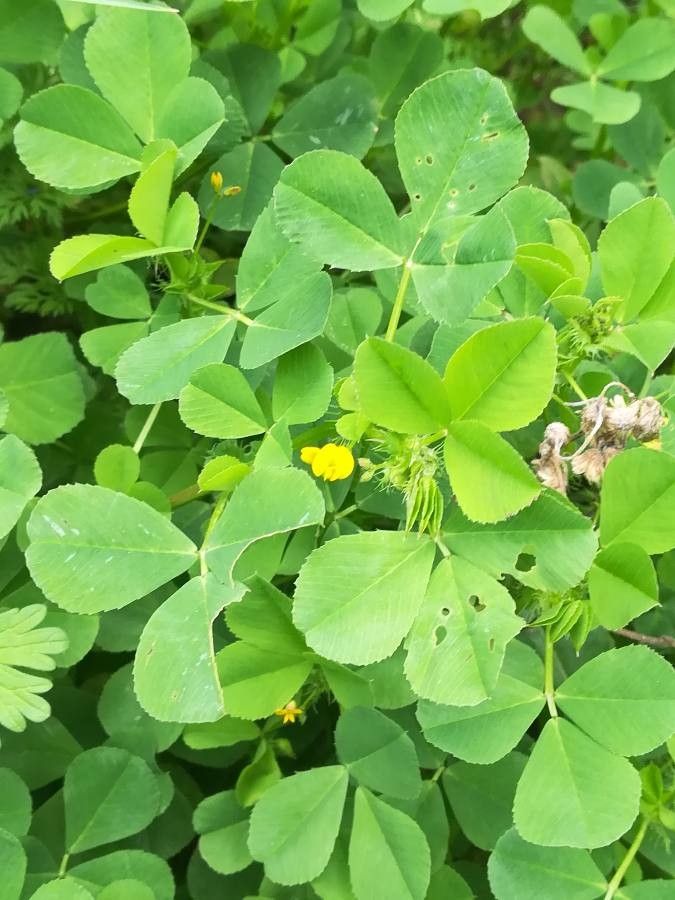
Medicago truncatula, the barrelclover, strong-spined medick, barrel medic, or barrel medick, is a small annual legume native to the Mediterranean region that is used in genomic research. It is a low-growing, clover-like plant 10–60 centimetres (3.9–23.6 in) tall with trifoliate leaves. Each leaflet is rounded, 1–2 centimetres (0.39–0.79 in) long, often with a dark spot in the center. The flowers are yellow, produced singly or in a small inflorescence of two to five together; the fruit is a small, spiny pod. This species is studied as a model organism for legume biology because it has a small diploid genome, is self-fertile, has a rapid generation time and prolific seed production, is amenable to genetic transformation, and its genome has been sequenced.It forms symbioses with nitrogen-fixing rhizobia (Sinorhizobium meliloti and Sinorhizobium medicae) and arbuscular mycorrhizal fungi including Rhizophagus irregularis (previously known as Glomus intraradices). The model plant Arabidopsis thaliana does not form either symbiosis, making M. truncatula an important tool for studying these processes. It is also an important forage crop species in Australia.
Barrel clover has strong disease resistance and is generally not susceptible to illnesses. Still, it can be affected by pests and diseases present in its surroundings. Those infections are typically mild. Regarding care, this plant needs moderate maintenance. It should be pruned regularly to preserve a good appearance and encourage healthy growth. Fertilizing can also aid in promoting blooms. Barrel clover is appropriate for anyone with outdoor space, such as a garden or patio, and does not demand much care experience. It may need extra attention when cultivated indoors.
How to keep Medicago Truncatula.
Light
Barrel clover originates in bright, open habitats where it flourishes in full sun. It can tolerate partial sun but prefers direct sunlight for optimal growth. This annual or biennial plant is noted for its sun-loving nature.
Water
Barrel clover, a plant native to the Mediterranean, thrives in moderately dry conditions. To keep it healthy, it's important to water it weekly to avoid over- or under-watering. This hardy herb uses water efficiently during its growing season and adapts well to periods of limited rainfall.
Temperature
Barrel clover can tolerate a wide range of temperatures, though its distribution may still be restricted by different combinations of moisture and heat. It performs best in warm summer conditions with sufficient rainfall or irrigation. Extended periods of cloudy, rainy weather or prolonged high temperatures increase the chance of Barrel clover dying. In winter, protecting it from the cold can enhance its survival.
Fertilizer
Barrel clover benefits from regular, light fertilizer applications to encourage healthy leaf growth. You should fertilize Barrel clover about once a month during the summer months. Nitrogen is important for foliage, and providing nitrogen-rich sources helps Barrel clover thrive.
Pruning
Barrel clover thrives best in well-draining soil and full sunlight. To encourage healthy growth and flowering, prune the plant from early to late spring to remove any dead stems. It's important to use clean, sharp tools during pruning. Regular maintenance will improve air circulation and light penetration, promoting the plant's overall health.
Botanical profile.
- Plant Type
- Herb
- Life Cycle
- Annual
- Genus
- Medicago
- Family
- Fabaceae
- Hardiness Zone
- 6-9
- Mature Height
- 10 cm to 61 cm
- Mature Spread
- 20 cm to 40 cm
- Leaf Color
- Green, Dark Green
- Leaf Type
- Deciduous
- Flower Color
- Purple, Violet
- Flower Size
- 0.51 cm to 0.76 cm
- Bloom Time
- Mid spring, Late spring, Early summer
- Planting Time
- Spring, Summer
- Harvest Time
- Summer
- Native Area
- Libya, Egypt, Turkey, Tunisia, Cyprus, Armenia, Greece, Croatia, Slovenia, Morocco, Lebanon, Portugal, Syria, Italy, Spain, Azerbaijan, Algeria, Turkmenistan, France
Other names.
Reader questions.
How should I water my Barrel clover plant?
To water Barrel clover, you have several options. You can use a garden hose with a spray nozzle, a watering can, or any other common watering tool. The good news is that Barrel clover is not too demanding when it comes to water. It can thrive off rainwater, tap water, or filtered water. However, it's best to avoid watering this plant from above, as it can harm the leaves and flowers and potentially cause disease. Instead, setting up a drip irrigation system is often the most effective way to water Barrel clover. These systems evenly distribute water directly to the soil. If you're dealing with a Barrel clover in a container, you can follow a similar watering approach but change the tools you use. You can use a cup, watering can, or even just your tap to apply water directly to the soil.
What are the sunlight requirements for Barrel clover?
Barrel clover is a plant that flourishes in bright, open environments, thriving best in full sun conditions which mean above 6 hours of direct sunlight daily. It can also tolerate partial sun, about 3-6 hours of sunlight, but for optimal growth, direct sunlight is preferred. The essence of choosing the right spot for your Barrel clover involves observing the movement of sunlight through your garden to ensure a harmonious balance of light and shade that guarantees the plant's well-being.
What should I do if I give my Barrel clover too much water or too little water?
Underwatering Barrel clover is easily remedied by consistently watering it when you notice it lacks moisture. Overwatering, on the other hand, can be a more serious issue if not caught early. It can lead to diseases and the decline and death of the plant. To prevent this, choose a location with ample sunlight to help dry the soil and good drainage to prevent excess water from pooling. If you overwater a potted Barrel clover, consider changing it to a new pot with better drainage. Use loose soil and a pot that drains efficiently when repotting an overwatered plant.
How can I use artificial lighting for Barrel clover indoors?
When natural sunlight is insufficient, especially during winter or in less sunlit spaces, artificial lighting can be a vital solution for growing Barrel clover indoors. Optimal growth under artificial lighting involves several considerations: selecting the right type of artificial light with LED lights being a popular and effective choice due to their ability to mimic the specific wavelengths needed by plants; adjusting the light source to be 12-36 inches above the plant to best simulate natural sunlight; and ensuring the light duration mimics natural daylight hours, typically 8-12 hours per day, depending on the plant species. Full sun plants require 30-50W per square foot, partial sun plants 20-30W per square foot, and full shade plants need 10-20W per square foot of artificial light.
How frequently should I water my Barrel clover?
Barrel clover requires regular watering throughout the growing season. In spring, you should water the plant around once per week. As the season progresses and gets warmer, you may need to water two to three times per week. It is harmful to exceed this watering frequency. Regardless of watering frequency, the soil for Barrel clover should be relatively moist but not wet. Watering Barrel clover in a pot is slightly different. Generally, you will need to water more often for potted plants as the soil in pots can dry out faster than ground soil. In most cases, plan to water a container-grown Barrel clover a few times per week, compared to just once per week for an in-ground plant.
What are the symptoms of light deficiency in Barrel clover when grown indoors?
When Barrel clover is grown indoors with inadequate light, several symptoms may indicate light deficiency: new leaves may grow smaller than previous ones; the plant may exhibit leggy or sparse growth with longer spaces between leaves or stems, giving it a stretched-out appearance; there may be faster leaf drop as the plant conserves resources; growth may slow down or stop altogether; new leaves might develop with lighter colors or irregular patterns, indicating a lack of chlorophyll and essential nutrients; symptoms like chlorosis (leaves turning yellow), sunscald, leaf curling, wilting, and leaf scorching can also occur due to excessive sunlight exposure or the inability of the plant to maintain optimal hydration.
How much water does my Barrel clover require?
Determining the appropriate amount of water for your Barrel clover can be done in a few different ways. Some gardeners prefer to assess the soil moisture by feeling it and watering until the top six inches feel moist. Another approach is to use a specific measurement, such as two gallons per week, depending on the temperature and soil drying speed. However, strict guidelines can sometimes lead to overwatering if your plant requires less water. When growing Barrel clover in a container, it is best to moisten all layers of dry soil by testing with your finger or noticing water trickling out of the drainage holes.
How can I address Barrel clover light deficiencies for both indoor and outdoor plants?
For indoor Barrel clover with light deficiency, gradually increase exposure to sunlight by moving the plant to a sunnier location each week until it receives at least 6 hours of direct sunlight daily. Using a south-facing window with open curtains during the day maximizes sunlight exposure. If moving the plant isn't feasible, consider using artificial light sources like a desk or ceiling lamp for at least 8 hours daily, or invest in professional plant grow lights. For outdoor plants, also incrementally relocate them to brighter spots to prevent sunburn, allowing gradual adaptation to the increased light intensity. Minimizing obstructions is crucial outdoors and may involve pruning overhanging branches. For ground-planted barrel clover, transplanting during the dormant period to a sunnier location with good drainage can address light deficiencies.
How can I know if I am giving enough water to my Barrel clover?
Avoiding overwatering can be a bit challenging for Barrel clover. While their deep roots need weekly watering, these plants are highly prone to root rot and browning if overwatered. Underwatering is less common, as Barrel clover can survive without extra water for a while. However, if they go too long without water, they may wilt and have dry leaves.
How do I correctly water my Barrel clover all year round?
As the season progresses, your Barrel clover's water needs will increase. In spring, watering once a week is sufficient. However, as summer arrives and the heat intensifies, you may need to water your Barrel clover more frequently, possibly up to three times a week. This is especially important for Barrel clover in containers, as the soil in containers tends to dry out faster in warm weather. In autumn, when the temperature cools down and the sun is not as strong, your Barrel clover may require less water even though it is still blooming.
How do I water my Barrel clover as it grows?
Barrel clover goes through different growth stages throughout the year, with some stages requiring more water than others. When starting your Barrel clover from a seed, it is important to provide extra water during the germination process and maintain consistent soil moisture. As the plant grows above the soil, it will require slightly less water than when it was a seedling. Once the plant is mature, watering once a week is sufficient. During flower development, a slightly increased amount of water may be needed to support the process.
What is the difference in how you water Barrel clover indoors versus outdoors?
Most barrel clover are best suited for outdoor growth rather than being grown indoors for a few reasons. First, these plants tend to grow quite tall, making indoor spaces less practical. Second, barrel clover requires more daily sunlight than most indoor locations can offer. If you are able to find a suitable indoor growing spot, be prepared to water your barrel clover more frequently compared to if it were growing outdoors. This is partly because indoor spaces, especially those with HVAC units, tend to be drier than outdoor environments. Additionally, soil in containers can dry out faster than soil in the ground, adding to the need for increased watering.