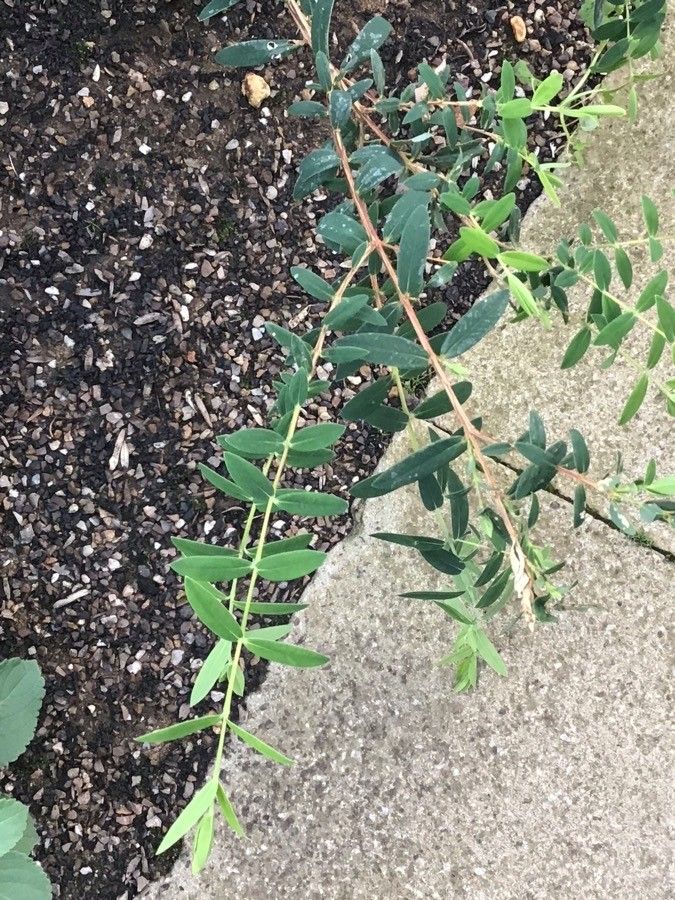
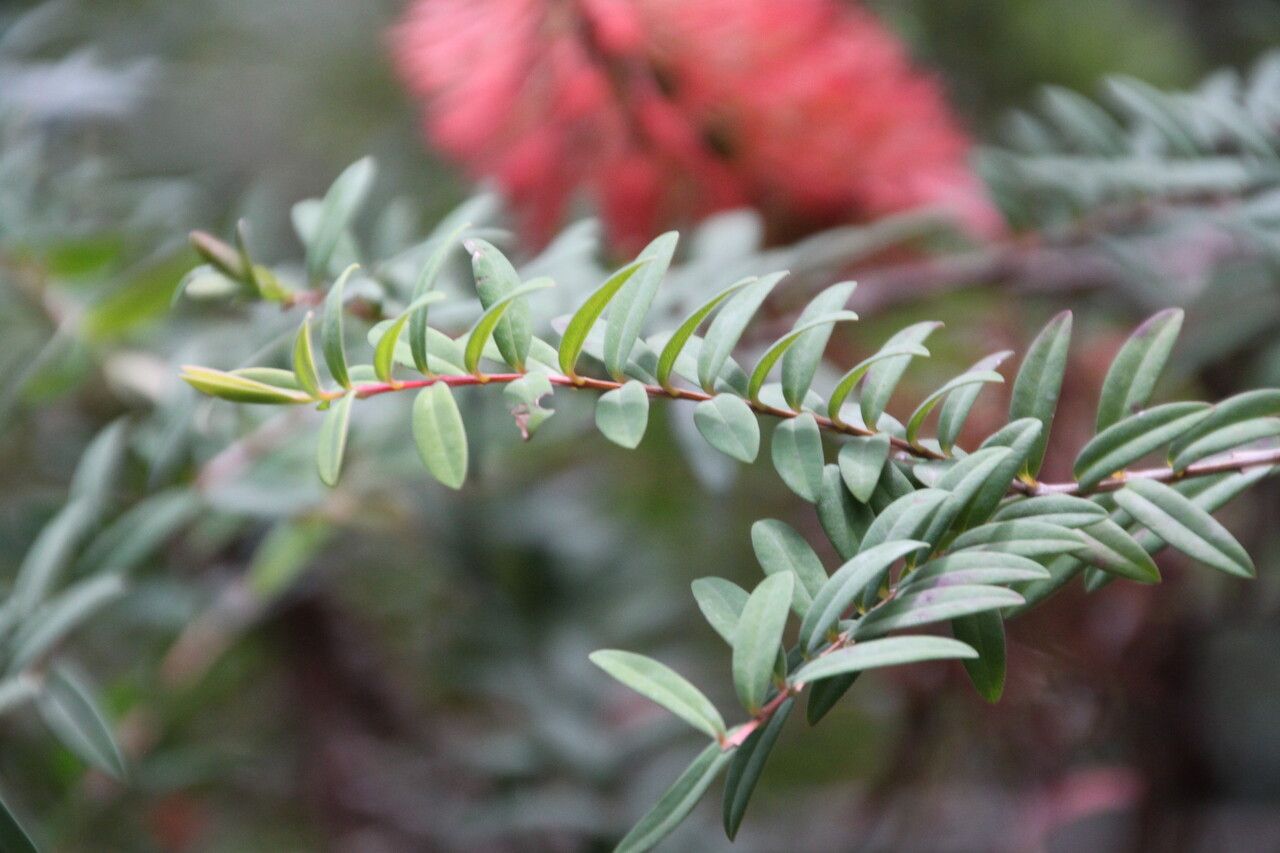
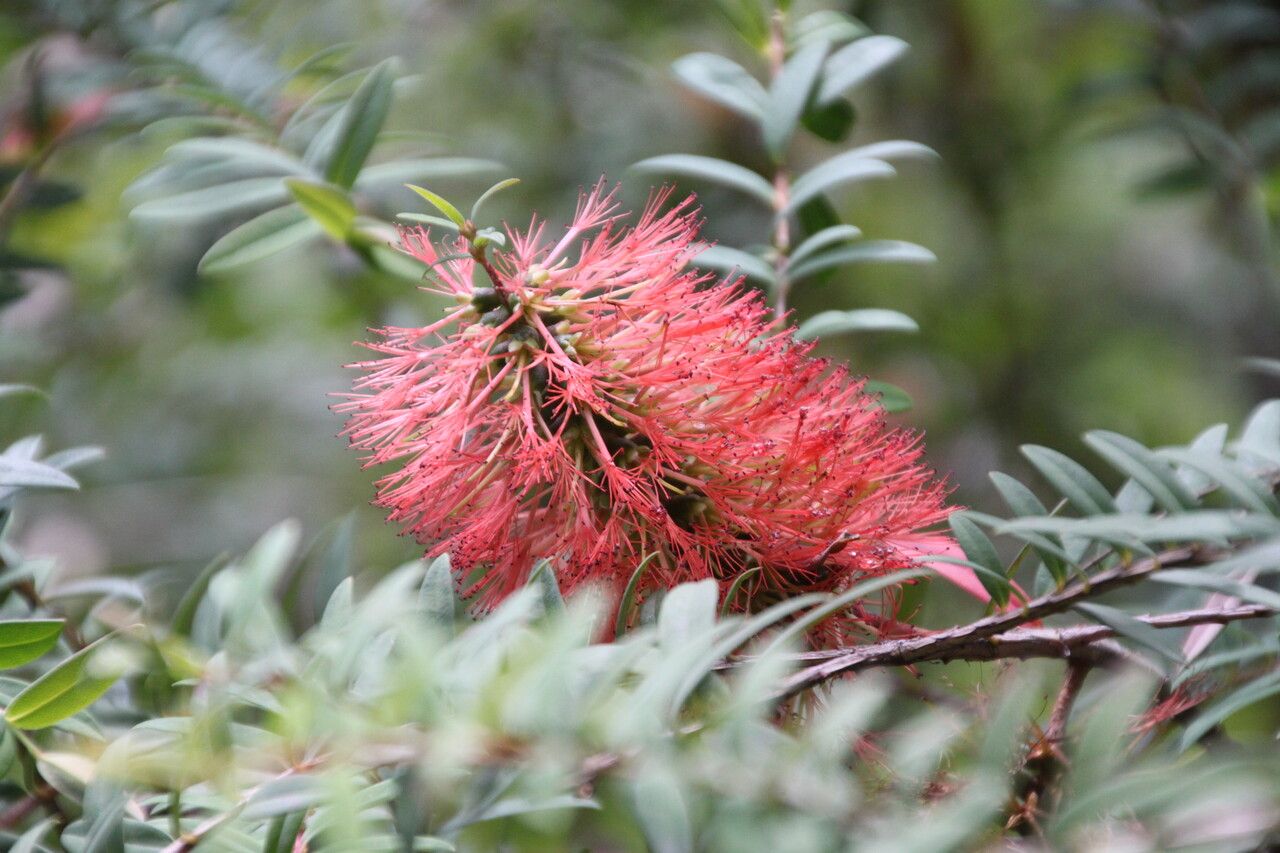
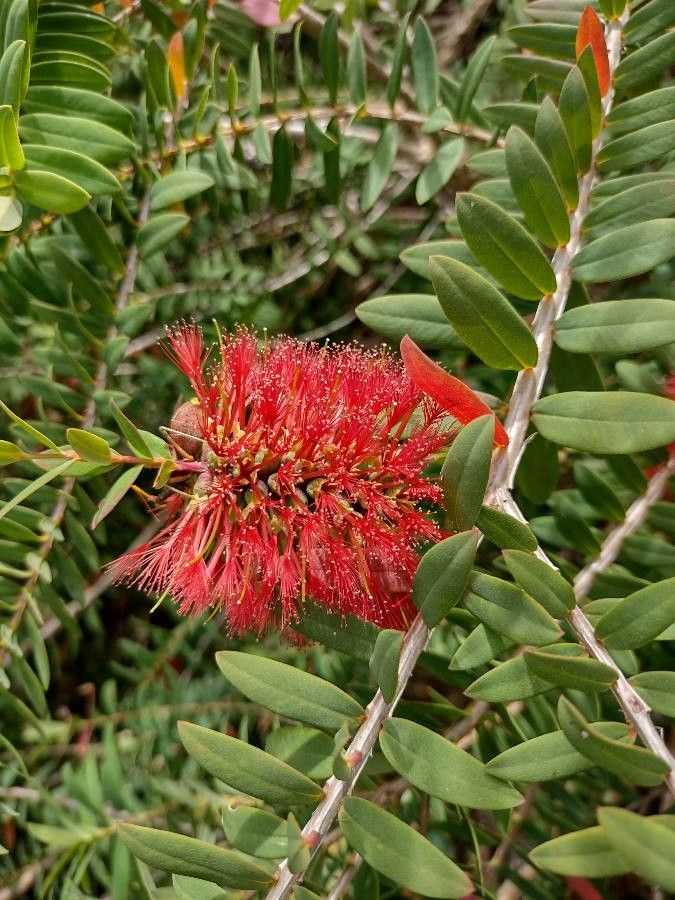
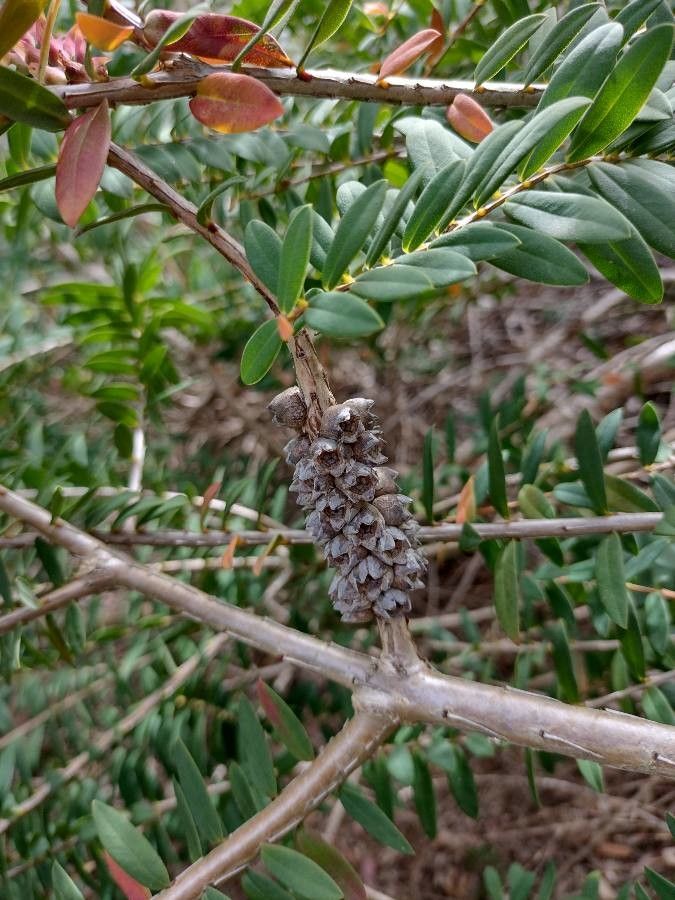
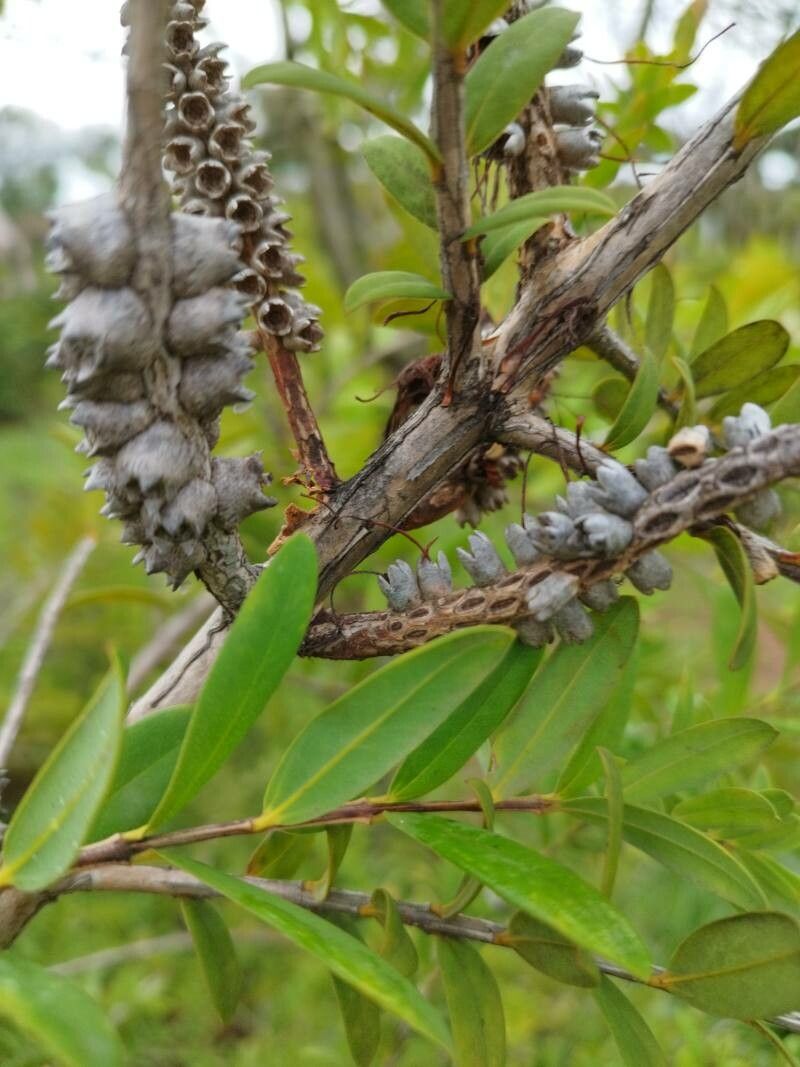
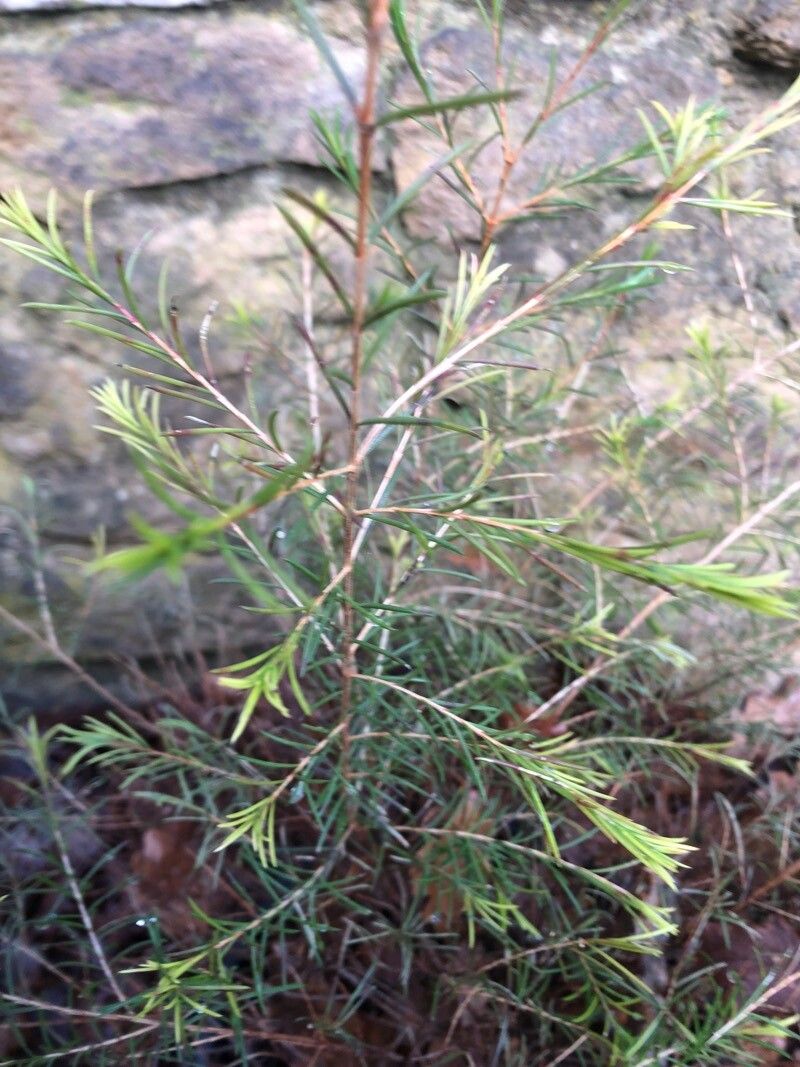
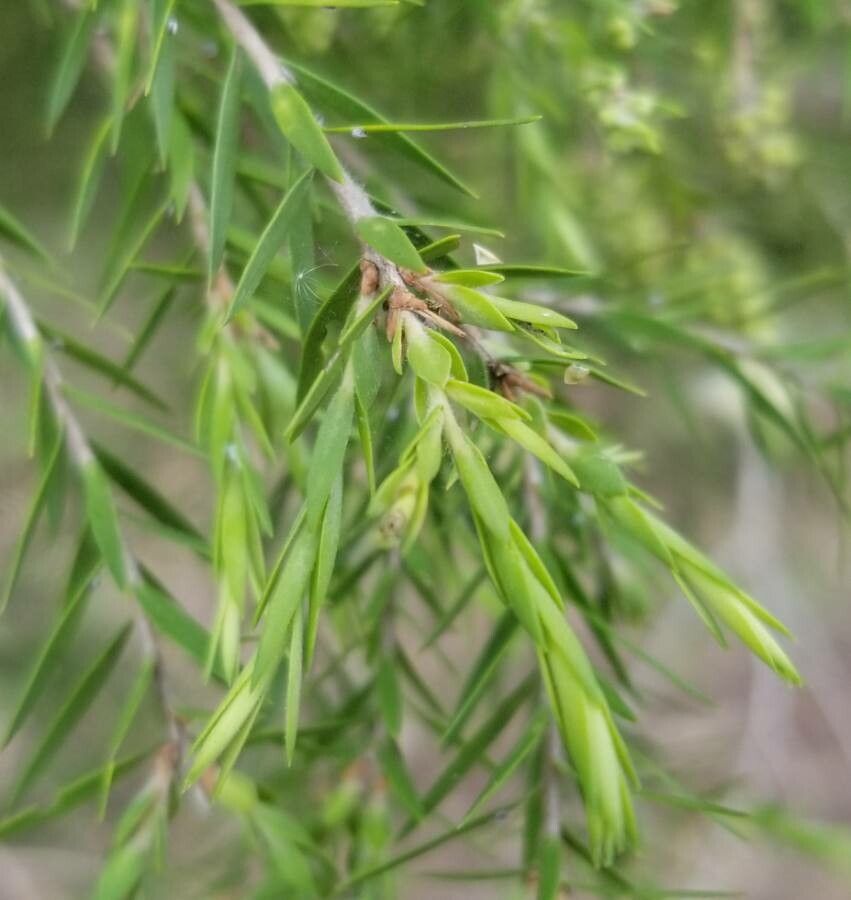
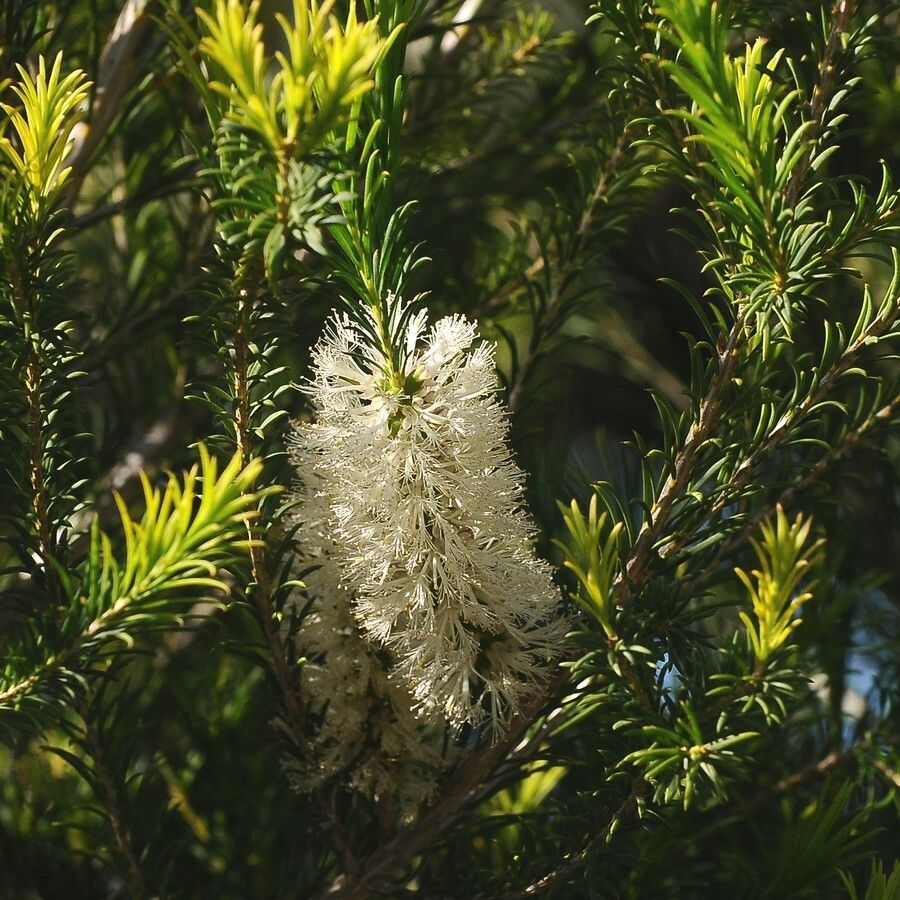
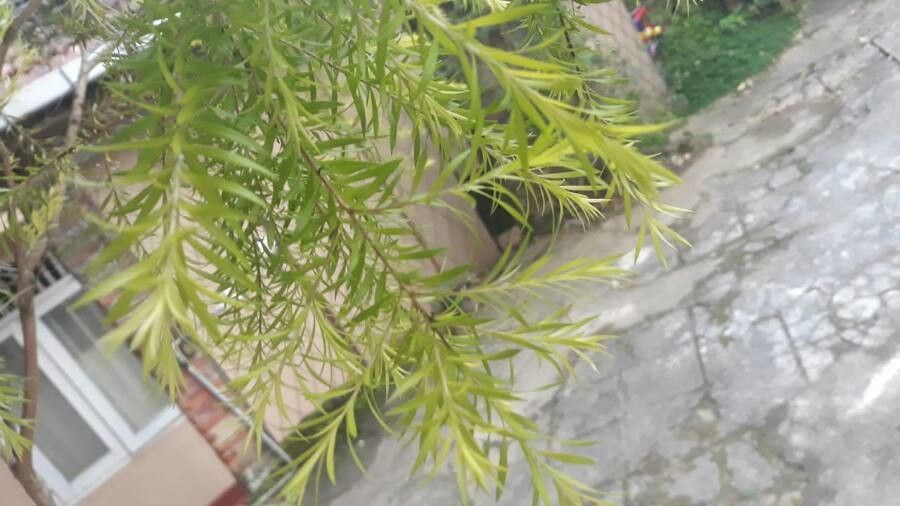
Melaleuca hypericifolia, commonly known as the Hillock Bush or St. John's Wort Honey Myrtle, is a small shrub belonging to the Myrtaceae family. Native to Australia, it is found in regions such as Western Australia, South Australia, and Victoria. The Hillock Bush can grow up to 2 meters in height and features dense foliage made up of small leaves that are 1-2 cm long. These narrow, pointed leaves have a glossy green upper surface and a whitish underside. During spring or summer, the plant produces clusters of small white flowers with yellow centers that attract bees for pollination. These flowers eventually give way to woody capsules containing numerous tiny seeds, which are dispersed by the wind. Melaleuca hypericifolia prefers well-drained soils and thrives in full sun or partial shade. Once established, it can tolerate drought conditions. This shrub is popular in landscaping because of its attractive foliage and flowers, and it also has medicinal properties, such as antibacterial qualities useful for treating skin infections. In summary, Melaleuca hypericifolia is an attractive shrub that offers both aesthetic appeal and medicinal benefits, making it an excellent addition to any garden or landscape design project.
The Hillock bush has strong resistance to disease and is generally not prone to illnesses. Regarding care, this plant is relatively low-maintenance. When grown outdoors it needs only minimal watering, and larger specimens typically do not require pruning. Smaller plants should be pruned after they have finished blooming. The Hillock bush is appropriate for anyone with an outdoor area, such as a garden or deck, and does not demand extensive plant-care experience.
How to keep Melaleuca Hypericifolia.
Light
Hillock bush is native to open habitats, such as sunny meadows and forest edges, which provide abundant light. It performs best in Full Sun but can also tolerate Partial Sun, adjusting well to a variety of sunlight conditions.
Temperature
The Hillock bush is highly adaptable to different climate conditions, from searing summers to cold winters. Still, it has an optimal temperature range for healthy growth. If temperatures become too high, the plant is susceptible to heat and humidity stress, which can lead to its death. In places where temperatures approach the lower limit of its cold tolerance, insulating the plant is important for protection.
Fertilizer
Timing is important for fertilizing the Hillock bush. Apply fertilizer in early spring and continue once a month until early summer. Fertilizer encourages attractive blooms and supplies energy during both dormant and active growth phases.
Pruning
Hillock bush is known for its dense growth and vibrant red flowers. To maintain its health and appearance, it's beneficial to prune the bush in early spring. During pruning, focus on removing dead branches and shaping the bush for balance, as this promotes better air circulation and blooming. Be sure to use clean, sharp tools to make precise cuts and prevent any damage to the plant.
Botanical profile.
- Plant Type
- Shrub
- Life Cycle
- Perennial
- Genus
- Melaleuca
- Family
- Myrtaceae
- Hardiness Zone
- 9-11
- Mature Height
- 2.13 m to 3.96 m
- Mature Spread
- 1.52 m to 3.05 m
- Leaf Color
- Dark Green
- Leaf Type
- Evergreen
- Flower Color
- Red
- Flower Size
- 5.08 cm to 6.35 cm
- Bloom Time
- Late spring, Summer
- Planting Time
- Spring, Autumn
- Harvest Time
- Late summer, Fall
Other names.
Reader questions.
What are the sunlight requirements for a Hillock Bush?
A Hillock Bush, or Melaleuca hypericifolia, requires specific amounts of sunlight depending on its growth stage or condition. For full sun exposure, it requires above 6 hours of sunlight daily, which facilitates optimal growth and health. Alternatively, for partial sun conditions, about 3-6 hours of sunlight daily is sufficient. It's important to observe how sunlight moves through your garden throughout the day. This observation helps in identifying spots that provide an ideal balance of light and shade, which is crucial for ensuring the plant's well-being.
What is the Hillock bush?
The Hillock bush, known botanically as Melaleuca hypericifolia, is a plant species without further provided details on its essentials or symptoms associated with it. The information available does not include specific characteristics or attributes beyond its common and botanical names.