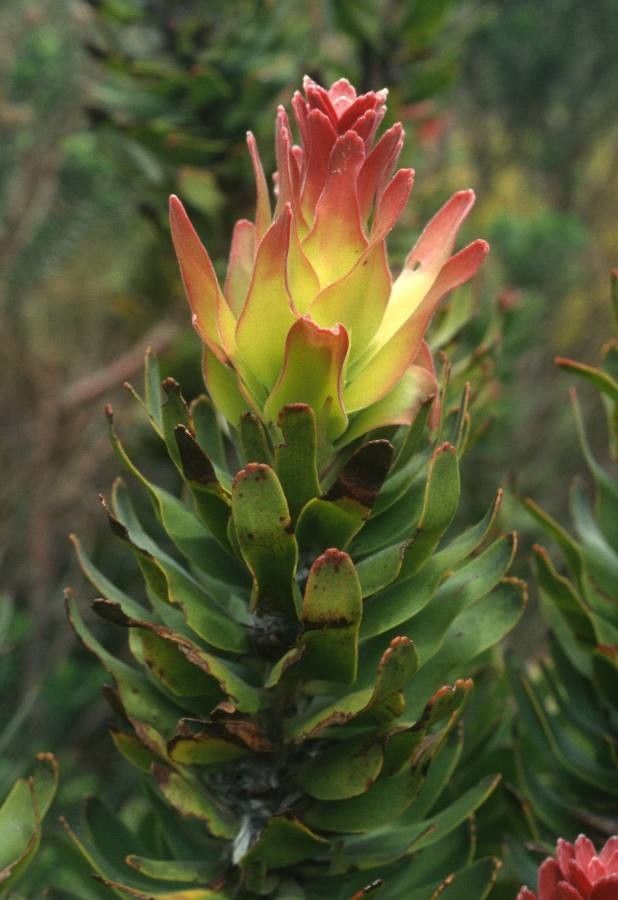
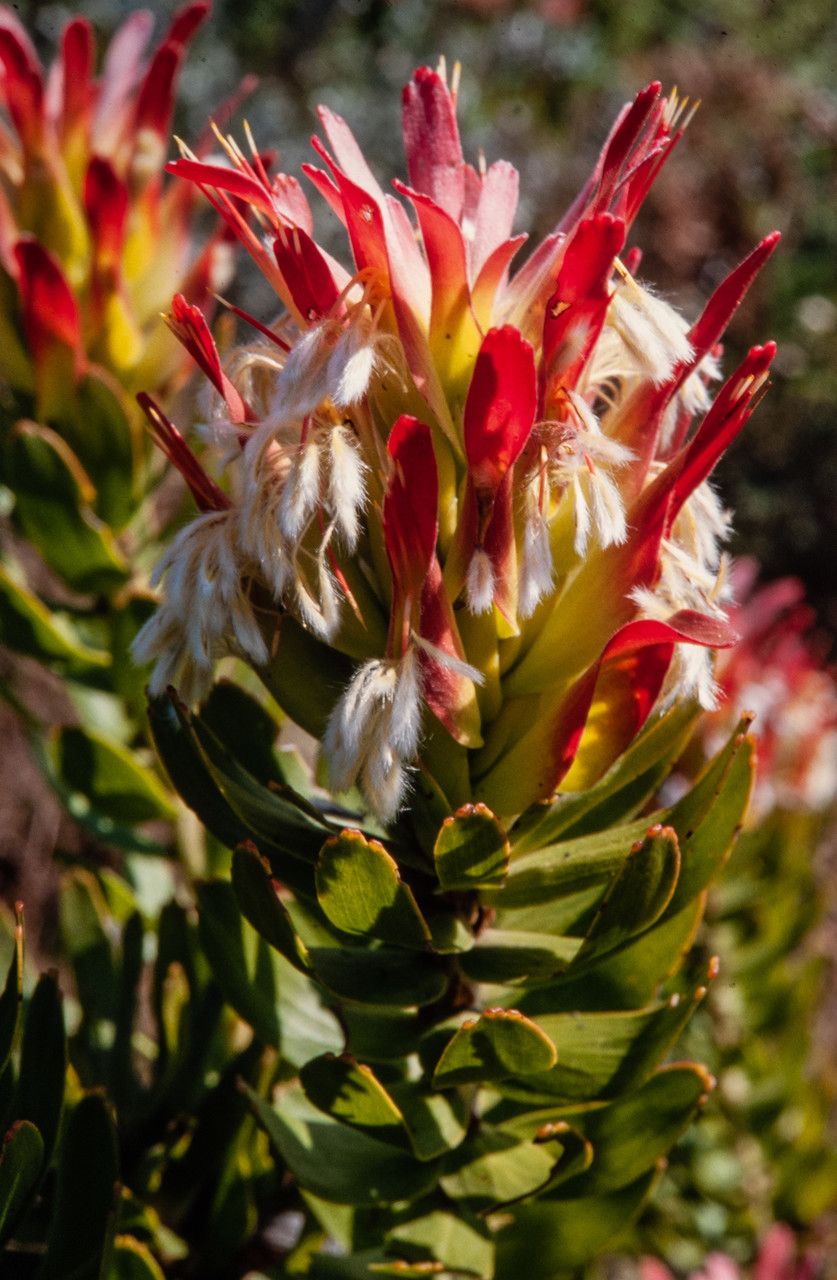
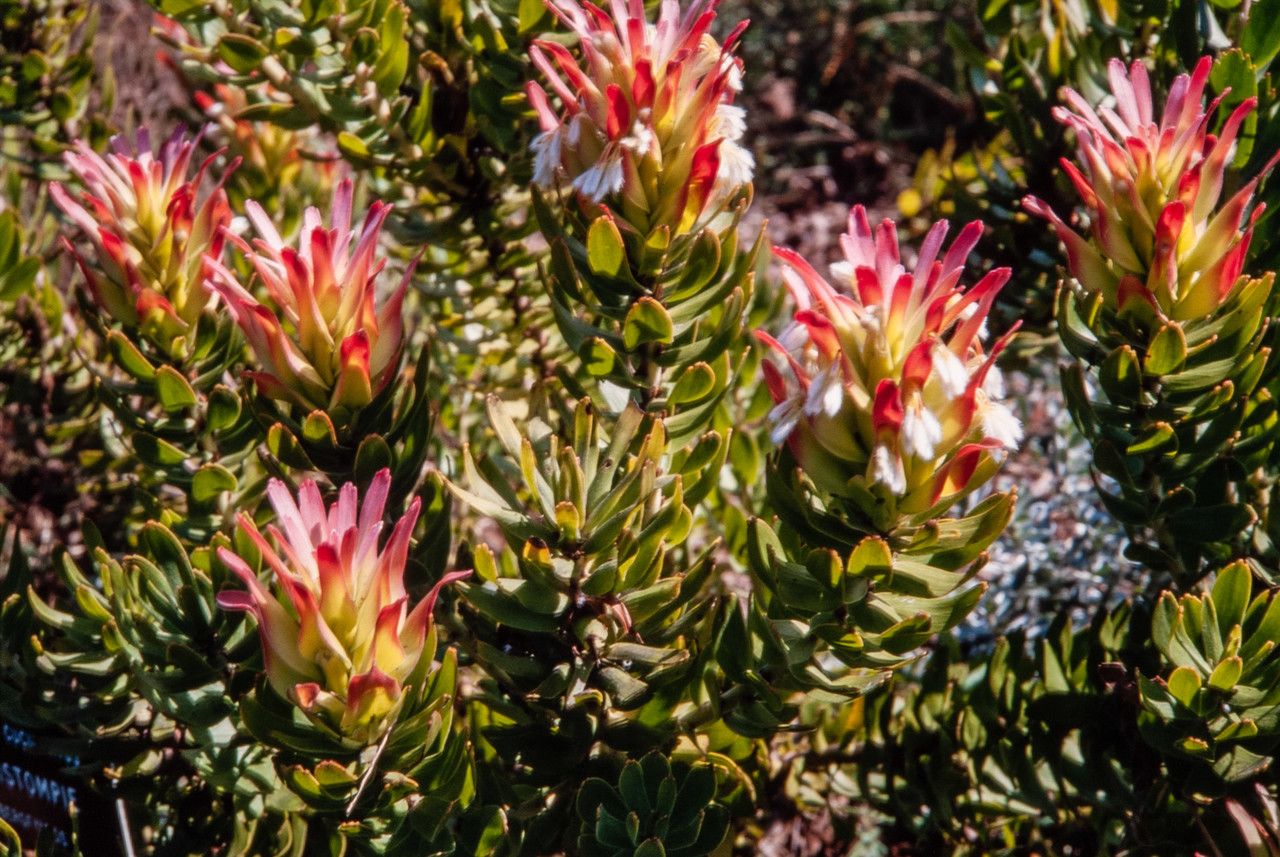
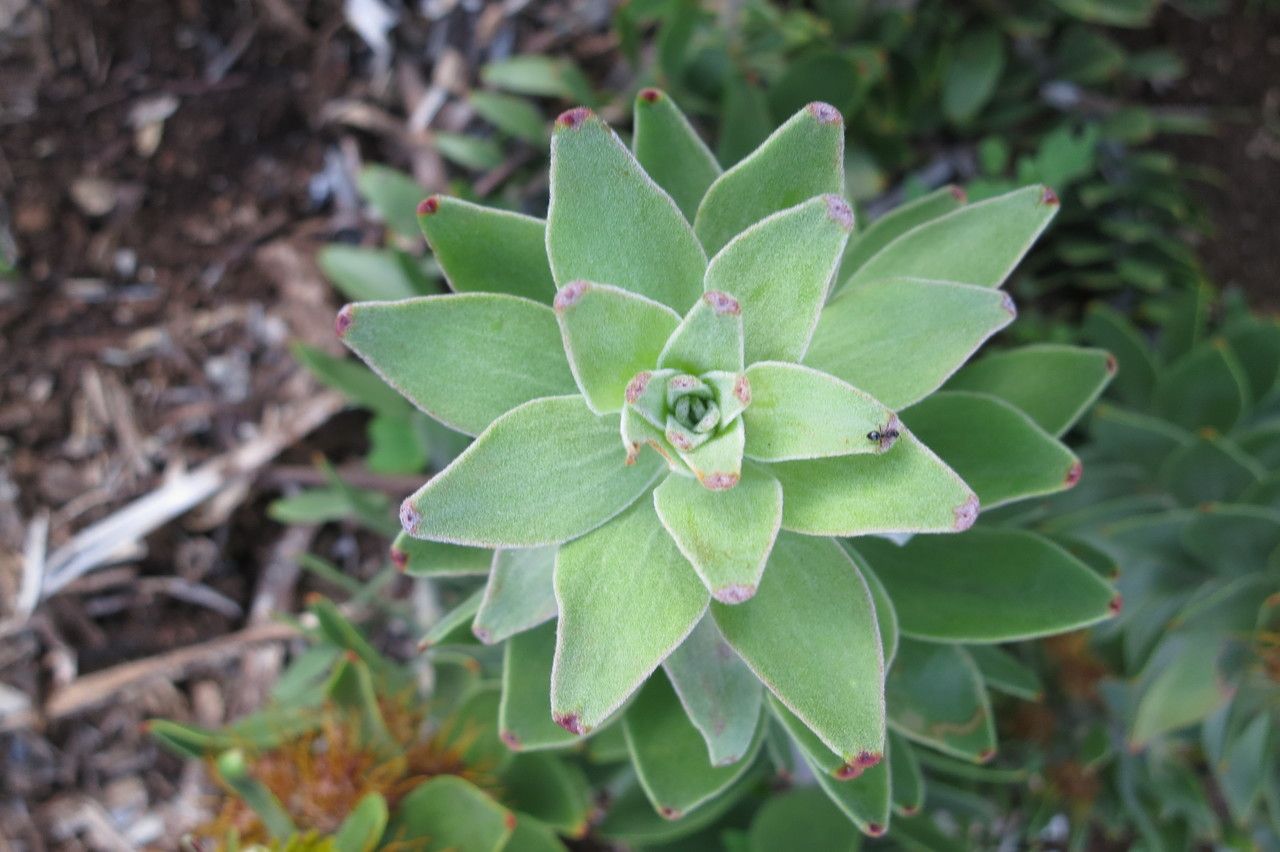
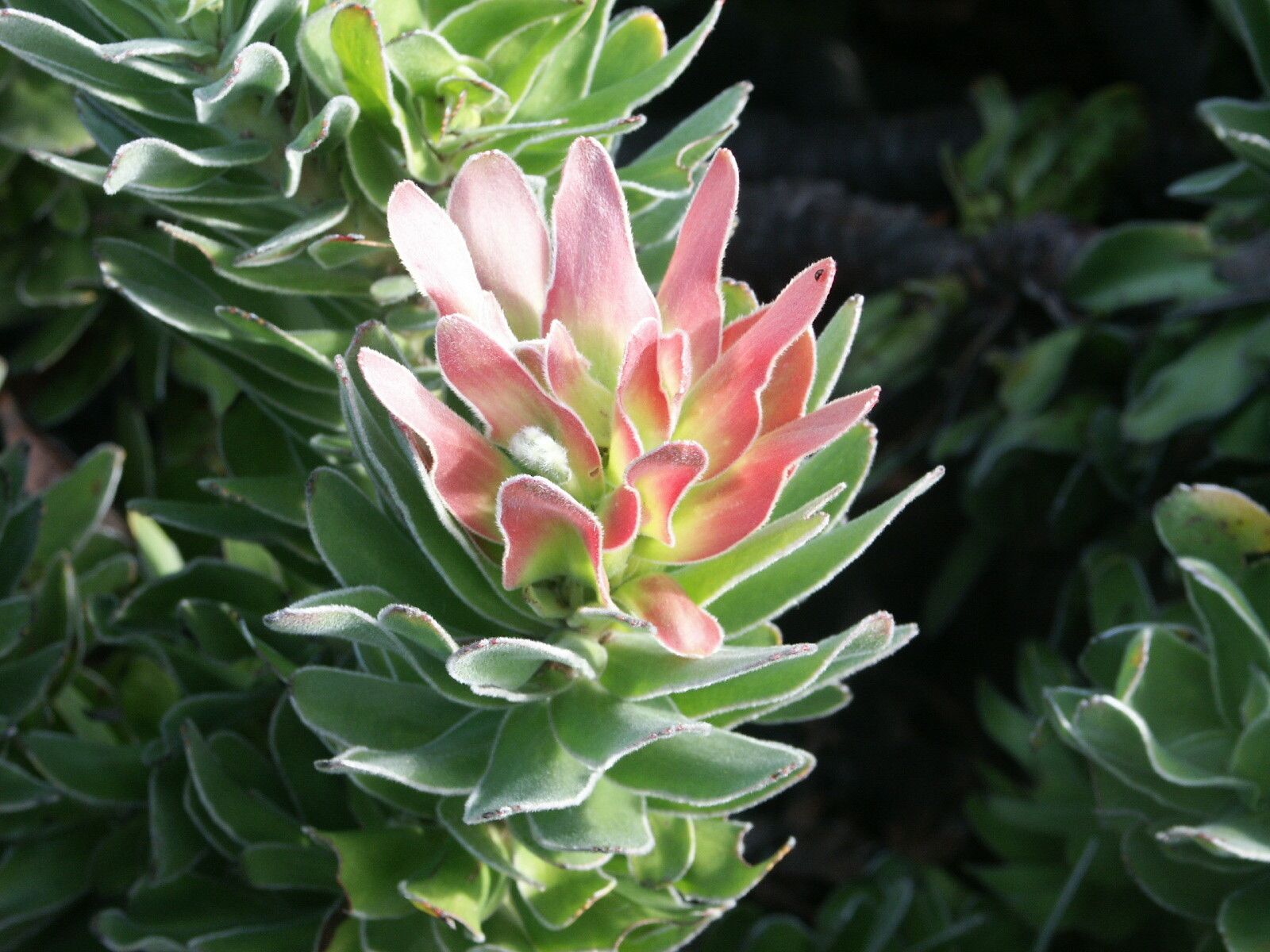
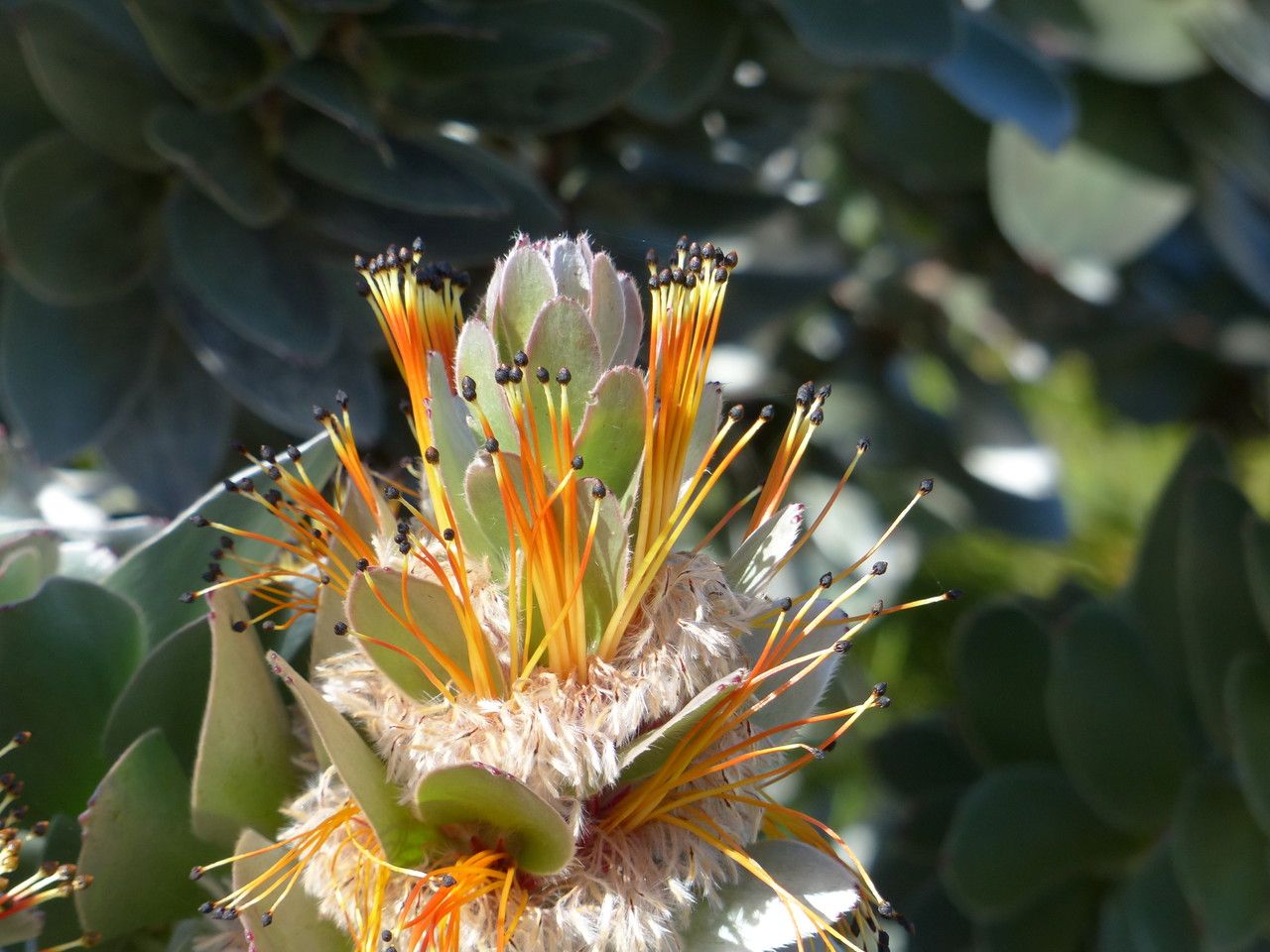
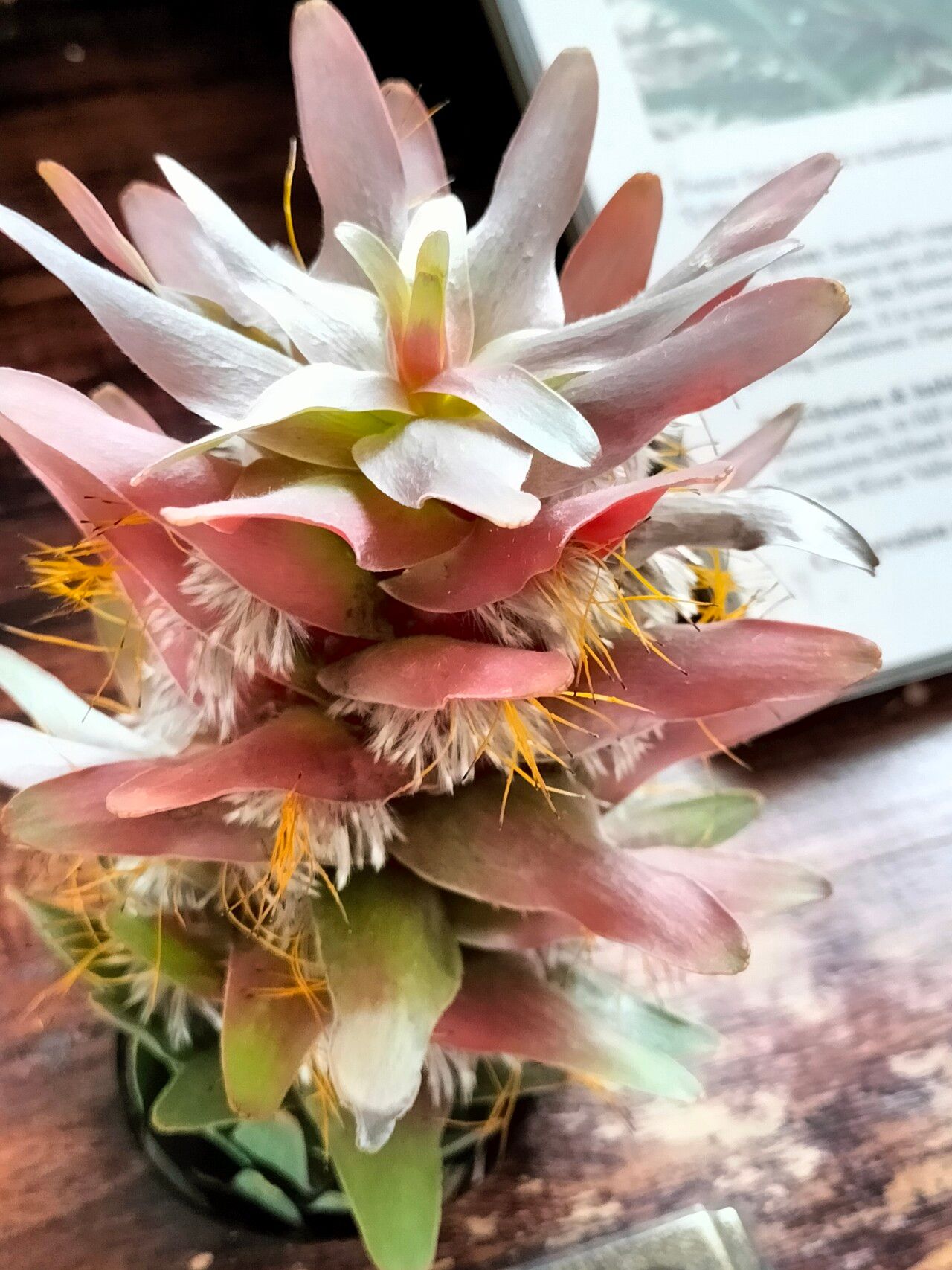
Mimetes cucullatus is an evergreen shrub with several, mostly not branching, upright stems of 1–2 m (3–7 ft) high, that has been assigned to the family Proteaceae. It is the most widespread and most common pagoda species that can cope with a relatively large range of environmental circumstances. It is known under several names including common pagoda in English and rooistompie in Afrikaans.
Red pagoda is highly resistant to disease and is generally not susceptible to illnesses. Regarding care, this plant is fairly low-maintenance. When grown outdoors it needs little watering, and larger specimens typically do not require pruning. However, smaller plants should be pruned after they have finished blooming. Red pagodat is suitable for anyone with an outdoor area, such as a garden or deck, and does not require much care experience.
How to keep Mimetes Cucullatus.
Light
Red pagoda requires plenty of sunlight for optimal growth and health. Its native habitat receives abundant sunlight. During different stages of development, strong sunlight is advantageous. However, both insufficient and excessive sunlight can harm its health.
Water
Native to South Africa's fynbos region, the red pagoda plant thrives in dry, drought-resistant conditions. It needs to be watered only once every one to two weeks. However, it's important to carefully monitor the moisture levels, especially during the active growing season, to prevent root rot, particularly in Mediterranean climates.
Temperature
Red pagoda is native to temperate regions and performs best in temperatures between 68 and 100°F (20 and 38°C). In cooler months, try to keep conditions toward the warmer side of that range, and gradually reduce temperatures during hotter seasons.
Fertilizer
The ideal time to fertilize a Red pagoda is in early spring, when it emerges from dormancy. This encourages overall growth and the development of flowers. Fertilization improves the foliage, stems, and branches, and promotes large, vibrant, long-lasting blooms. It helps move nutrients from the roots to the flowers and enhances the plant's health and resistance to disease.
Pruning
To keep the red pagoda looking its best, prune the plant from early to late winter. This will help remove any damaged stems and promote new growth. Trim the flowering stems to encourage fuller blooms. Make sure to use sterilized tools to prevent diseases. Pruning helps maintain the plant’s shape, control its size, improve air circulation, and encourage vigorous growth and vibrant flowers.
Botanical profile.
- Plant Type
- Shrub
- Life Cycle
- Perennial
- Genus
- Mimetes
- Family
- Proteaceae
- Hardiness Zone
- 9-11
- Mature Height
- 1.22 m to 1.83 m
- Mature Spread
- 91 cm
- Leaf Color
- Green
- Leaf Type
- Evergreen
- Flower Color
- Red, Orange
- Flower Size
- 4.06 cm to 6.35 cm
- Bloom Time
- Mid spring, Late spring, Early summer
- Planting Time
- Spring, Summer, Autumn
- Harvest Time
- Mid summer, Late summer, Early fall
- Native Area
- South Africa
Other names.
Reader questions.
What are the sunlight requirements for Red Pagoda?
Red Pagoda (Mimetes cucullatus) requires full sun, which means it needs above 6 hours of sunlight daily for optimal growth and health. It's essential to monitor how sunlight moves through your garden and choose spots that offer a good balance of light and shade, ensuring the plants' happiness. In its native environment, Red Pagoda is exposed to abundant sunlight, which is beneficial during various growth stages. However, both deficiency and excess in sun exposure can have adverse effects.
What is the ideal temperature range for Red Pagoda?
Red pagoda thrives best in temperate climates within a temperature range of 68 to 100\u00b0F (20 to 38\u00b0C). To ensure the health and growth of the plant, it's recommended to maintain environments at the warmer end of this spectrum during colder months, and gradually decrease temperatures in hotter seasons. During winter, keeping the temperature above 20\u00b0C is beneficial. It's also crucial to avoid exposing the plant to temperatures near or below 0\u00b0C, as cold conditions can cause significant harm.
How can artificial lighting benefit indoor Red Pagoda plants?
Indoor Red Pagoda plants require adequate lighting for optimal growth, especially when natural sunlight is insufficient, such as in winter or less sunny spaces. Artificial lights, including LED lights, provide a vital solution by offering the necessary wavelengths of light, promoting faster and healthier growth. The right kind of artificial light should offer 30-50W/sq ft for full sun plants, 20-30W/sq ft for partial sun plants, and 10-20W/sq ft for full shade plants. The light source should be placed 12-36 inches above the plant to mimic natural sunlight, for 8-12 hours per day to mimic natural daylight hours.
How should I care for my Red Pagoda during the colder months?
In the colder months, Red pagoda should be brought indoors to protect it from the cold, ideally placed near a bright window to ensure it still receives ample light. However, it's essential to keep the plant at a distance from heaters to prevent it from experiencing excessively dry air. The key is to maintain temperature levels above 20\u00b0C during winter, as cold temperatures, particularly those approaching 0\u00b0C, can be detrimental to the plant's health.
What are the symptoms of light deficiency in Red Pagoda?
Symptoms of light deficiency in Red Pagoda include smaller new leaves, leggy or sparse growth, faster leaf drop, slower or no new growth, lighter-colored new leaves, chlorosis, sunscald, leaf curling, wilting, and leaf scorching. These symptoms are noticeable when the plant is placed in rooms with insufficient lighting during winter or when improperly exposed to sunlight.
What should I do if my Red Pagoda is affected by low temperatures?
If your Red Pagoda experiences low temperatures, it may show symptoms such as a lightening of leaf color when the temperature falls below -5\u00b0C, eventually turning brown or black after frost damage, accompanied by wilting and drooping. To address this, trim off the frost-damaged parts of the plant and immediately move it to a warm environment indoors for protection against the cold. Place the plant near a south-facing window for ample sunlight, and ensure it's not too close to heaters or air conditioning vents, which can dry out the air excessively.
What solutions can address Red Pagoda's light deficiency symptoms?
To address light deficiency symptoms in Red Pagoda, indoor solutions include gradually moving plants to sunnier locations to receive at least 6 hours of direct sunlight daily, using south-facing windows, and possibly using artificial light for large or immovable plants for at least 8 hours daily. Outdoors, plants should be moved gradually to sunnier spots to avoid sunburn. If the sunlight is obstructed by trees, consider pruning to improve light penetration. For smaller plants, transplanting during the dormant period late winter or early spring to a location with ample sunlight and good drainage can be beneficial. It's important to note that parts of the plant affected by insufficient sun may not recover, but new growth should be healthy with improved light exposure.
How do I protect my Red Pagoda from high temperatures?
During summer, it's crucial to keep the Red Pagoda below 38\u00b0C to prevent heat stress. If temperatures exceed 43\u00b0C, the leaves may lighten in color and become susceptible to sunburn. In such cases, trim away the sunburned and dried-up parts of the plant. Move it to a location that provides shade, especially during the midday and afternoon sun, to prevent further damage. Watering the plant in the morning and evening helps keep the soil moist and supports the plant through high temperatures.