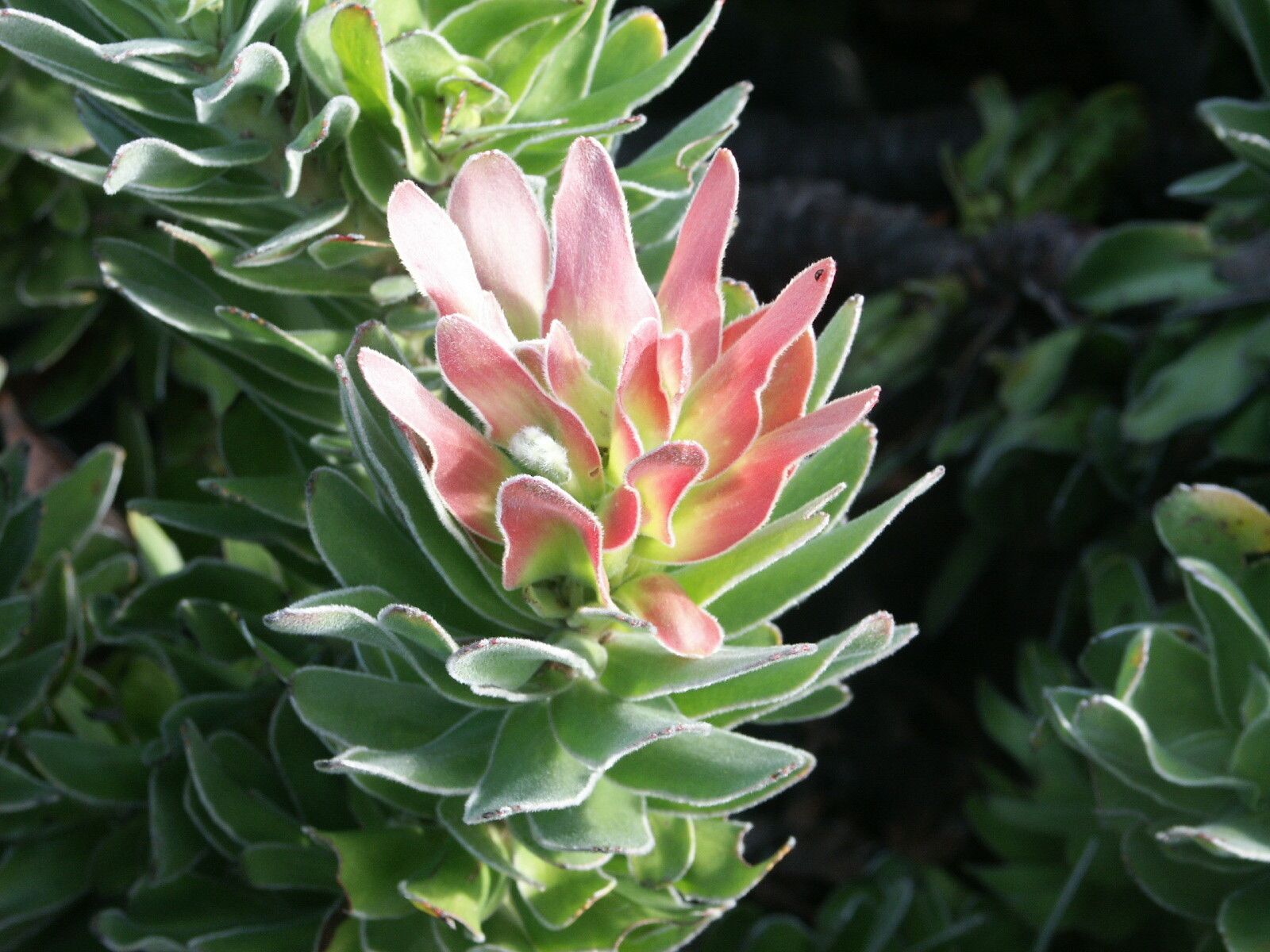
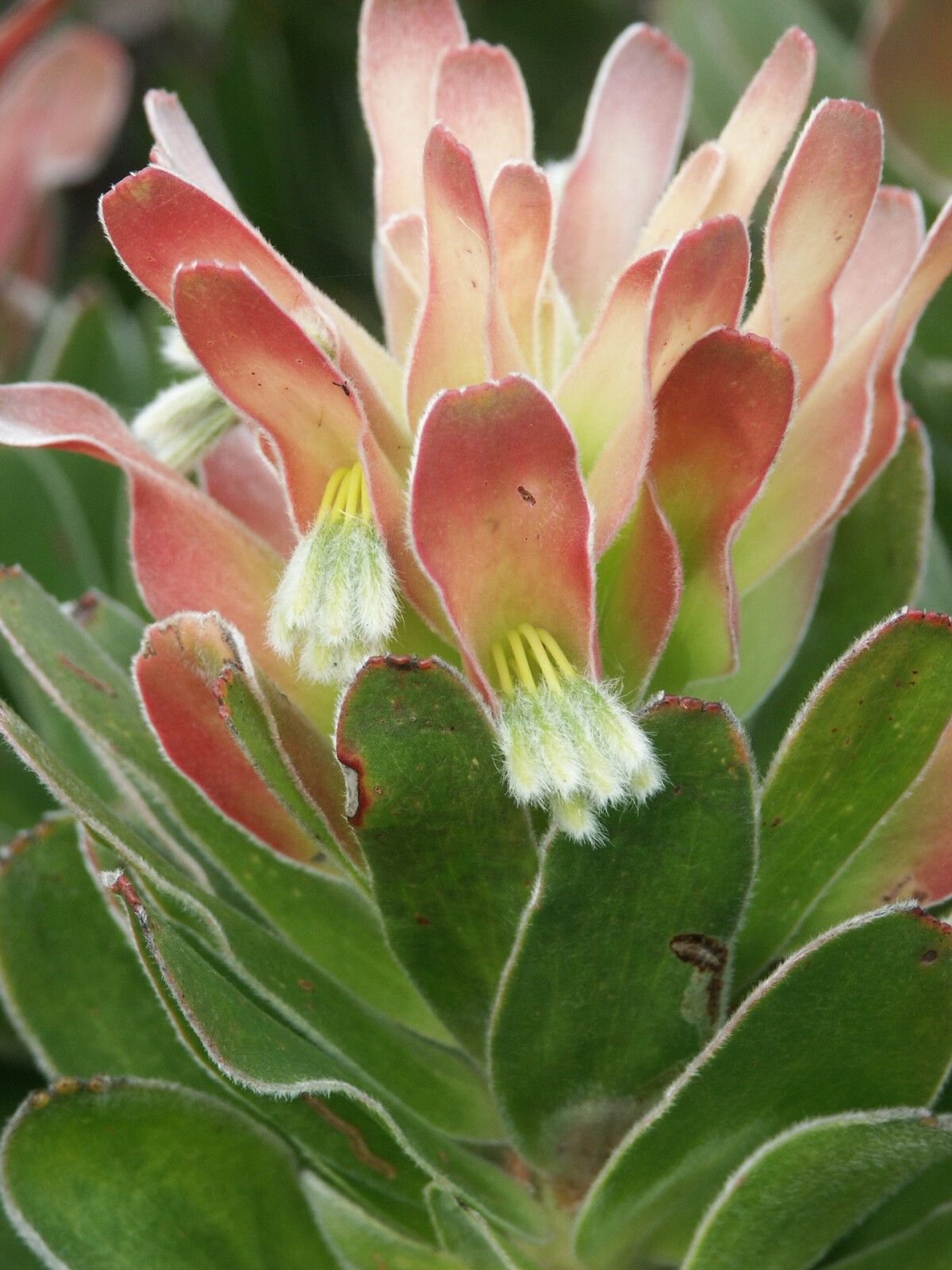
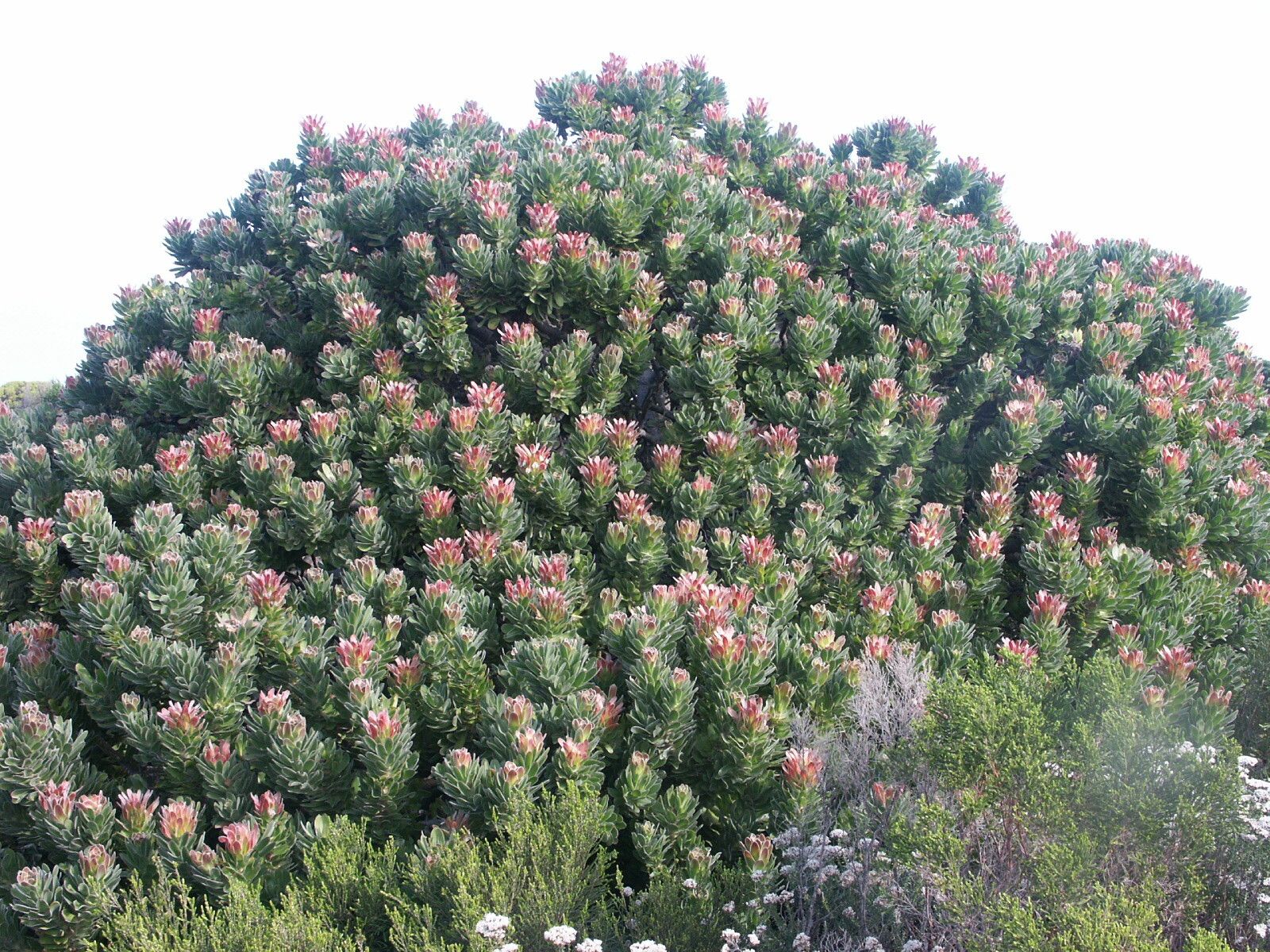
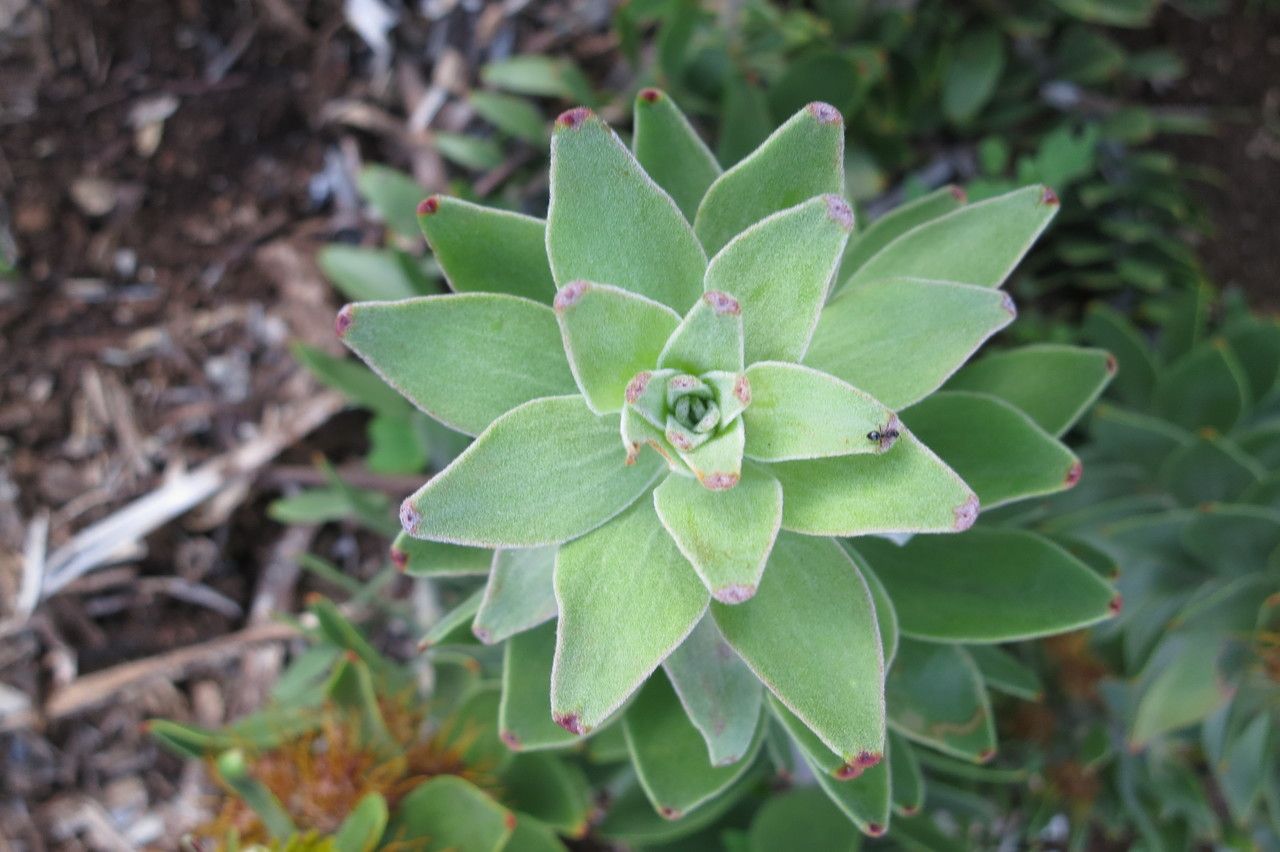
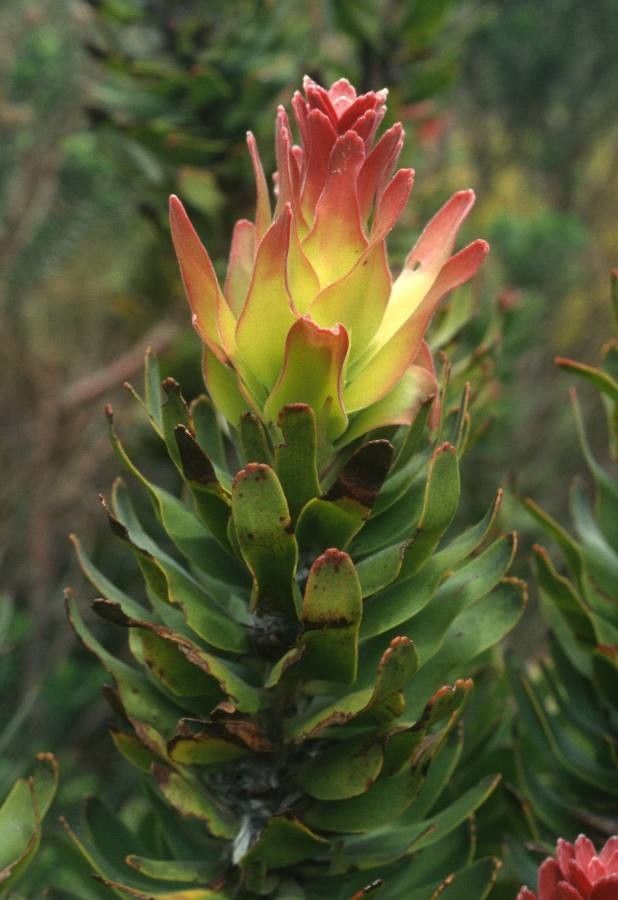
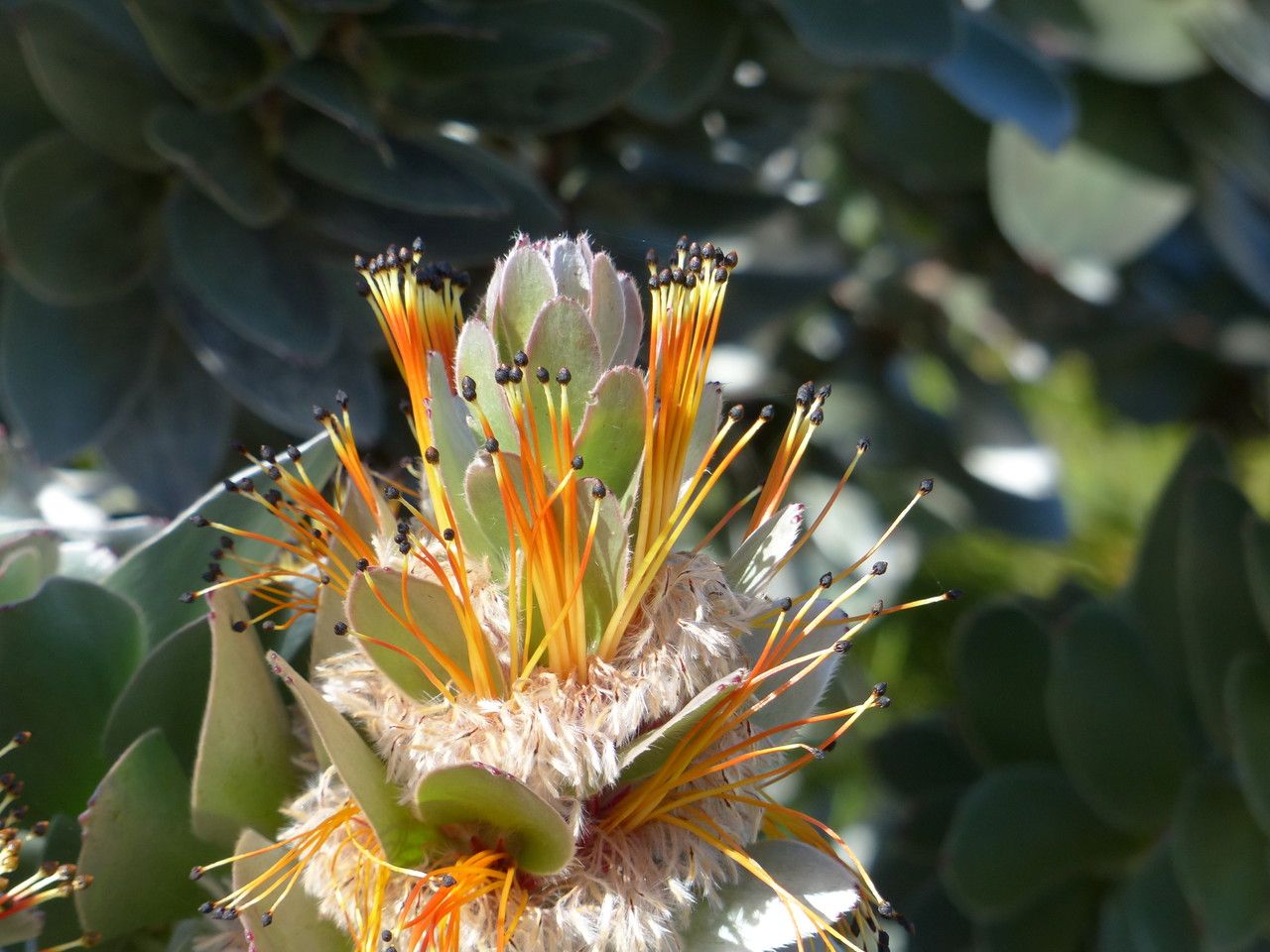
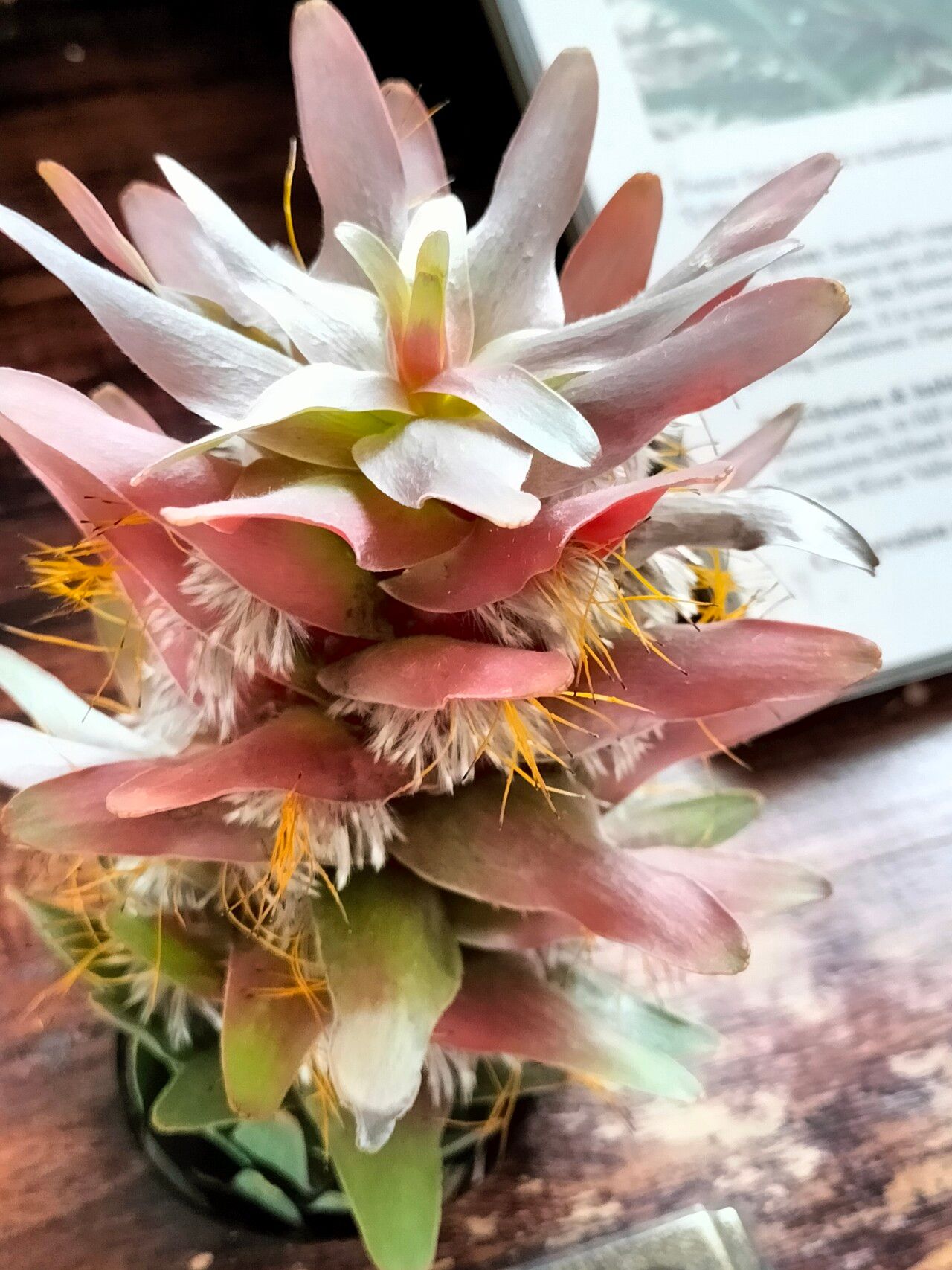
Mimetes fimbriifolius, also called cowl pagoda or the fringed pagoda, is a species of plant in the family Proteaceae. It is a dense, rounded, multi-branched tree that grows up to 4 metres (13 ft) in height. This attractive and striking plant flowers all year round, and produces red and yellow branch-heads and inflorescences. The nectar-rich flowers are pollinated by sunbirds and the seeds are distributed and taken underground by ants before germinating. It is endemic to the Table Mountain range in the city of Cape Town, South Africa.
Tree pagoda is fairly resistant to disease and generally not prone to illnesses. Regarding care, this plant is fairly low-maintenance. When grown outdoors it requires little watering, and larger plants typically do not need pruning. Smaller plants, however, should be pruned after they have finished blooming. Tree pagoda is suitable for anyone with an outdoor area, such as a garden or deck, and does not require extensive care experience.
How to keep Mimetes Fimbriifolius.
Light
Tree pagoda is native to habitats such as forest understories or rocky areas, where it grows in natural shade. Its preferred light exposure is partial sun, but it can adapt to both full sun and full shade, reflecting its versatile, hardy nature.
Temperature
Tree pagoda is highly adaptable to a range of climatic conditions, from blazing summers to frigid winters. However, it still requires an optimal temperature range for growth. If temperatures climb too high, the plant becomes susceptible to heat and humidity stress, which can cause it to die. In areas where temperatures approach the lower threshold of its cold tolerance, providing insulation to protect the plant is important.
Fertilizer
In early spring, apply fertilizer to your Tree pagoda to support healthy growth. Ongoing fertilization strengthens its overall health, promoting robust growth, improved tolerance of harsh conditions, and increased resistance to pests and diseases. Follow a defined fertilization schedule for your Tree pagoda so the foliage stays vibrant, richly colored, and lush in appearance.
Pruning
The tree pagoda flourishes when it is properly pruned. This includes removing dead branches and shaping the canopy. The best time to prune is in early spring, as this encourages recovery and new growth. Proper pruning techniques enhance air circulation, reduce the risk of disease, and maintain the plant's visual appeal.
Botanical profile.
- Plant Type
- Shrub
- Life Cycle
- Perennial
- Genus
- Mimetes
- Family
- Proteaceae
- Hardiness Zone
- 9-11
- Mature Height
- 0.91 m to 2.13 m
- Mature Spread
- 0.76 m to 1.22 m
- Leaf Color
- Dark Green
- Leaf Type
- Evergreen
- Flower Color
- Red, Orange
- Flower Size
- 5.08 cm to 6.35 cm
- Bloom Time
- Summer
- Planting Time
- Autumn, Winter
- Harvest Time
- Fall
- Native Area
- South Africa
Other names.