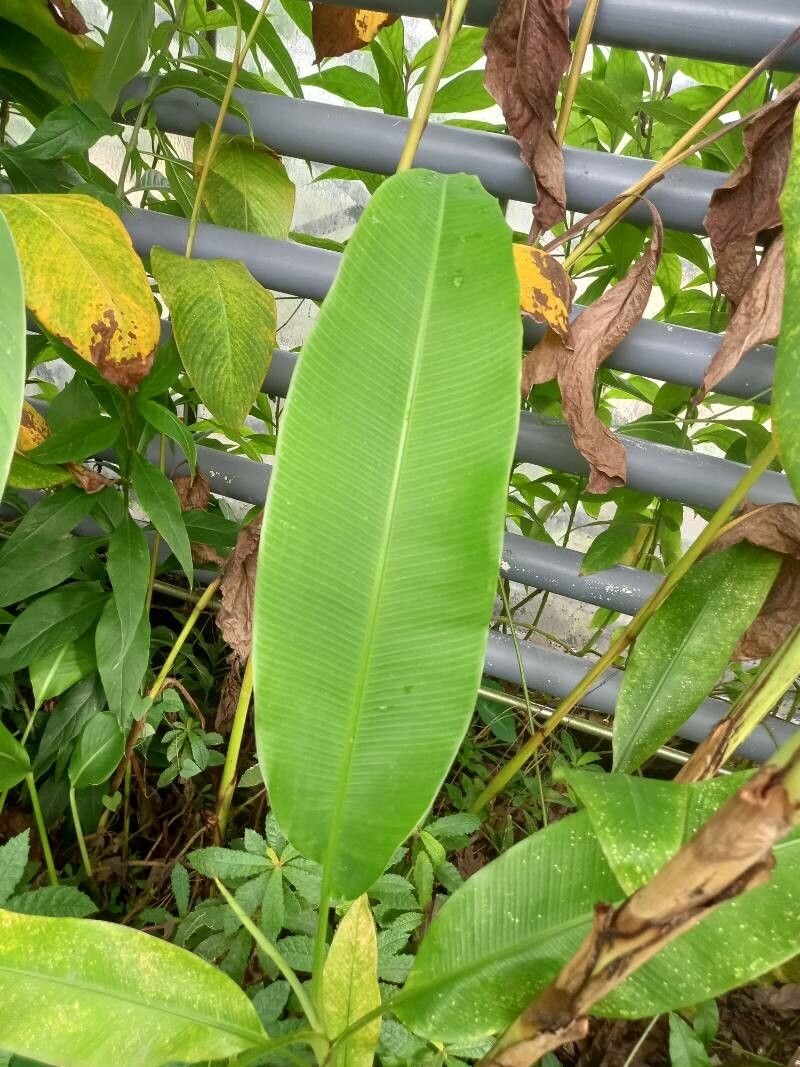
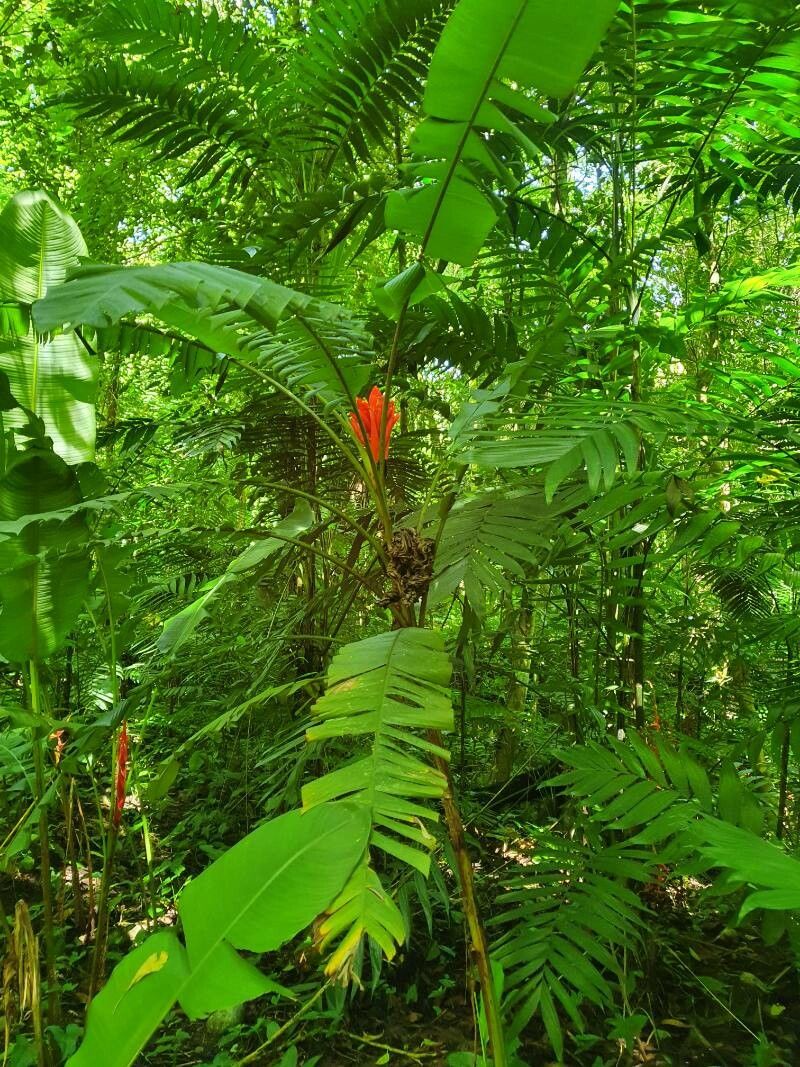
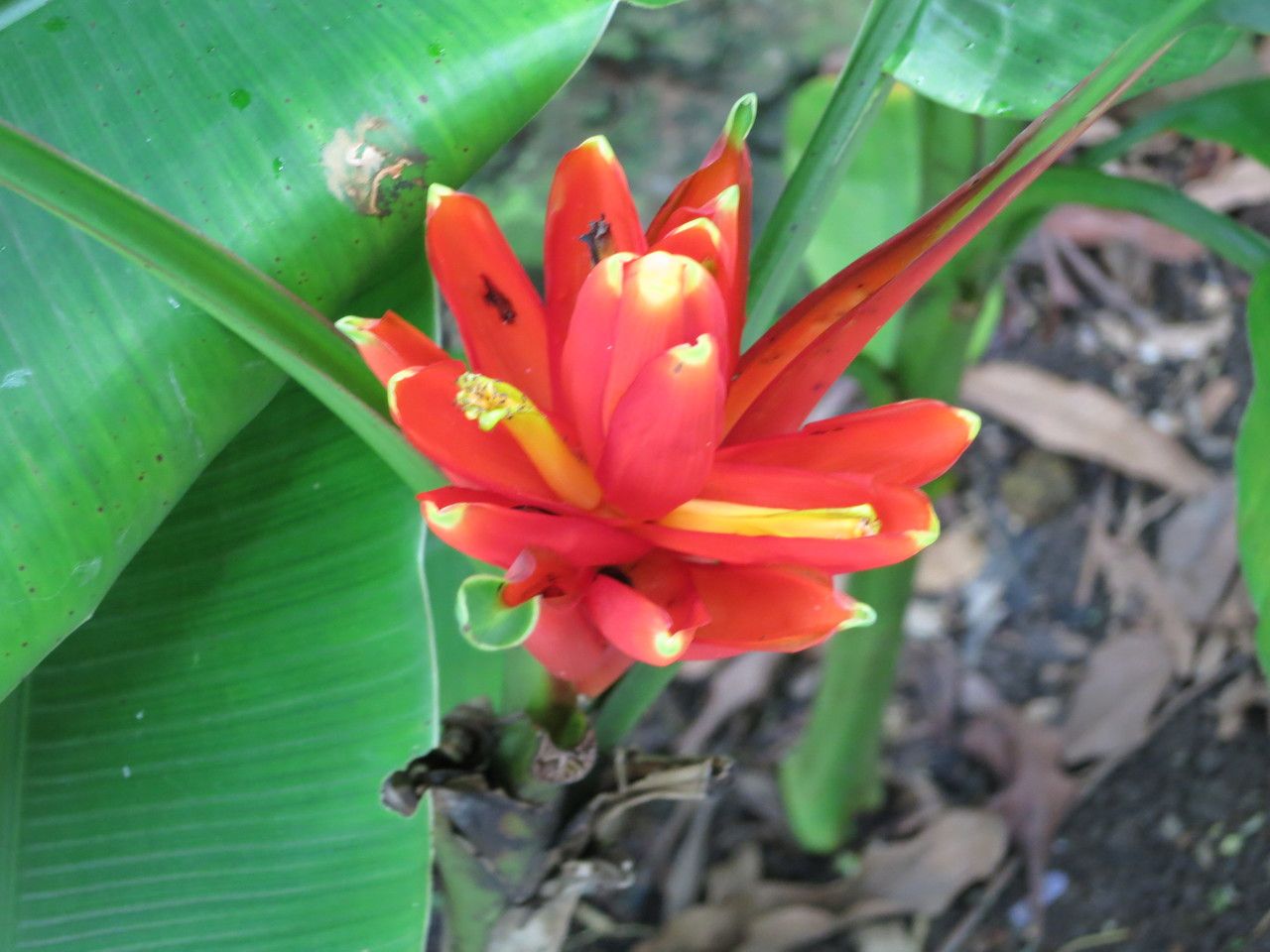
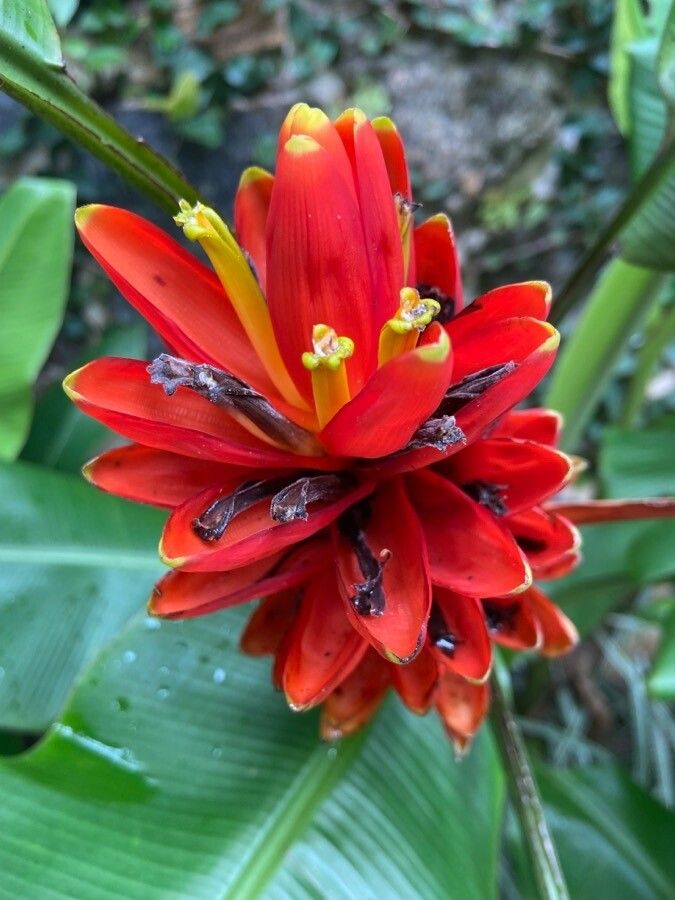
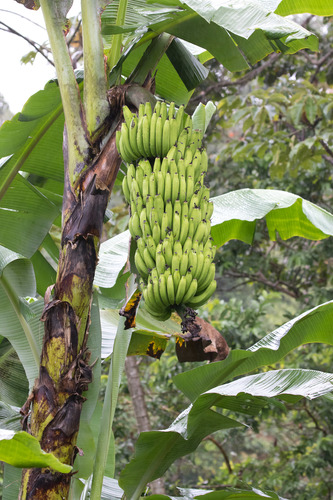
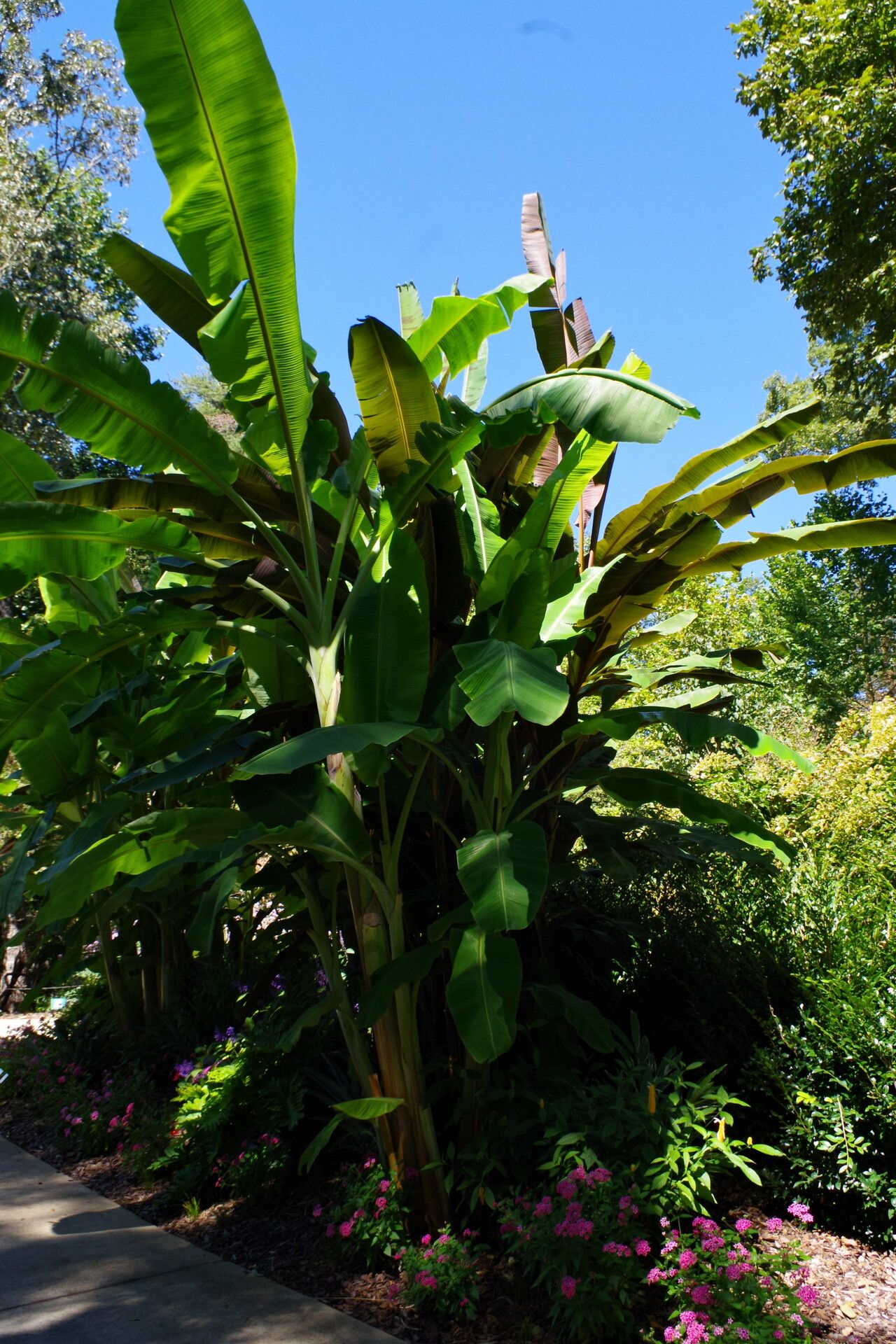
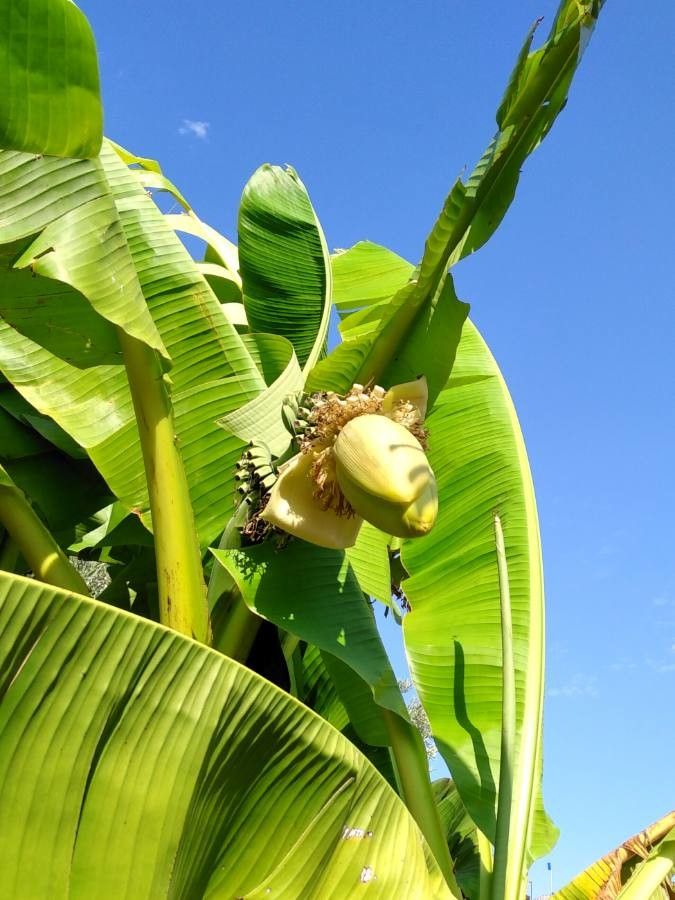
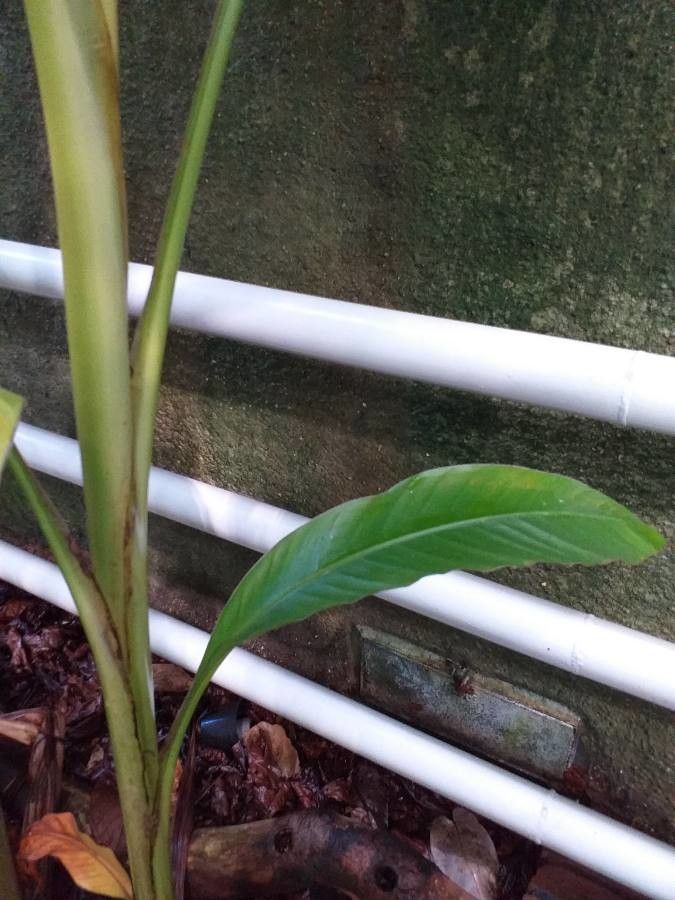
Musa coccinea, commonly known as scarlet banana or red-flowering banana, is a species of flowering plant in the banana and plantain family Musaceae, native to tropical China (in Guangdong, Guangxi, and southeastern Yunnan) and Vietnam. It is a bat-pollinated evergreen perennial, placed in section Callimusa (now including the former section Australimusa), having a diploid chromosome number of 2n = 20.The flower cluster is more rounded than in the related species M. beccarii. It is made up of erect spirals of red bracts which enclose tubular yellow flowers. The inedible fruits are orange, only about 2 cm (0.8 in) long, and contain seeds. The species is cultivated for its ornamental value, being grown, for example, along with heliconias in commercial farms in Hawaii. It does not tolerate temperatures below 10 °C (50 °F), so in temperate zones requires protection during the winter months. In the UK it has gained the Royal Horticultural Society’s Award of Garden Merit.M. coccinea is a known host in the New World of the red palm mite (Raoiella indica).
Scarlet banana is fairly disease-resistant and generally does not tend to get sick. However, it can be susceptible to pests and diseases present in its surroundings. When infections do occur, they are usually mild. In terms of care, this plant requires a moderate level of maintenance. It should be pruned regularly to keep a good appearance and support healthy growth. Fertilizing can also help encourage flowering. Scarlet banana is suitable for anyone with outdoor space, such as a garden or patio, and does not demand extensive gardening experience. It may need more attention when grown indoors.
How to keep Musa Coccinea.
Light
Scarlet banana naturally occurs in habitats such as forest understories and rocky areas, where it grows under natural shade. It prefers partial sun but can adjust to full sun or full shade, illustrating its versatile and hardy nature.
Water
The scarlet banana is native to tropical regions, where it thrives in high humidity and consistent moisture. It needs to be watered every two weeks and shows a moderate tolerance for drought. Although it is typically grown outdoors, it is important to monitor the soil moisture to prevent root rot, especially during its active growing season.
Humidity
This plant will thrive in moderate humidity, which is probably the level in your home. However, misting it a few times a week can be very beneficial. Make sure the room has good ventilation.
Temperature
Scarlet banana comes from tropical areas where the climate is usually warm and humid. Consequently, it is adapted to high temperatures and moisture. It is sensitive to rapid temperature changes and prefers a steady thermal environment, so avoiding indoor temperature fluctuations is important. It generally does not tolerate cold and needs warmer conditions to grow. If the surrounding temperature falls too low, the plant’s growth can stop or it may die.
Fertilizer
Proper fertilization is essential for the Scarlet banana's health and appearance. Feed the Scarlet banana in summer, applying fertilizer monthly throughout the season. Nutrients power growth and help maintain the plant's parts. Fertilizing improves the Scarlet banana's flower display, ensuring the best blooms.
Pruning
The scarlet banana thrives when it is consistently pruned from early to late spring, which is its growth period. During this time, remove dead leaves and trim back older stems to encourage vigorous new shoots. This also improves air circulation, reducing the likelihood of pests. By following these practices, you can ensure a lush and healthy scarlet banana plant.
Pot & Repot
Repot your scarlet banana every 2 to 3 years when you notice its growth slowing down. Choose a pot that is slightly larger to accommodate its root system. The best time to repot is in the spring. After repotting, make sure the plant receives high humidity and indirect light. Keep the soil consistently moist and provide warmth to encourage its striking red flowers, but be careful not to overwater, as this can cause root rot.
Toxicity
The banana plant is not toxic to humans or pets. In fact, the flowers and fruit are edible in many regions worldwide. Many consider this plant a safe alternative, especially for households with pets.
Further reading →
The toxicity and danger assessments provided are for reference only. We do not assure their accuracy, so it's crucial not to depend on them. Seek professional advice when necessary for accurate guidance.
Botanical profile.
- Plant Type
- Herb, Shrub
- Life Cycle
- Perennial
- Genus
- Musa
- Family
- Musaceae
- Hardiness Zone
- 9-11
- Mature Height
- 1.52 m to 3.05 m
- Mature Spread
- 0.91 m to 2.13 m
- Leaf Color
- Green
- Leaf Type
- Evergreen
- Flower Color
- Red
- Flower Size
- 10.16 cm to 15.24 cm
- Bloom Time
- All year round
- Planting Time
- Spring, Summer, Autumn
- Harvest Time
- All year round
- Native Area
- Vietnam, Laos, China
Other names.
Reader questions.
What are the sunlight requirements for Scarlet Banana (Musa coccinea)?
Scarlet Banana, or Musa coccinea, requires specific sunlight conditions to thrive. It needs full sun, which means the plant should receive more than 6 hours of direct sunlight daily. However, it can also tolerate partial sun conditions, where it gets about 3 to 6 hours of sunlight. It's important to observe the way sunlight moves through your garden to find an optimal location. This helps provide a balance of light and shade that ensures your Scarlet Banana plants are happy and healthy.
What is the Scarlet banana?
The Scarlet banana, known botanically as Musa coccinea, is a specific type of banana plant. Unlike the common banana plants known for their fruit, the Scarlet banana is appreciated for its ornamental qualities, especially its striking red flowers which contribute to its common name. It's a tropical plant that adds a vibrant splash of color to gardens or indoor spaces where conditions are suitable.