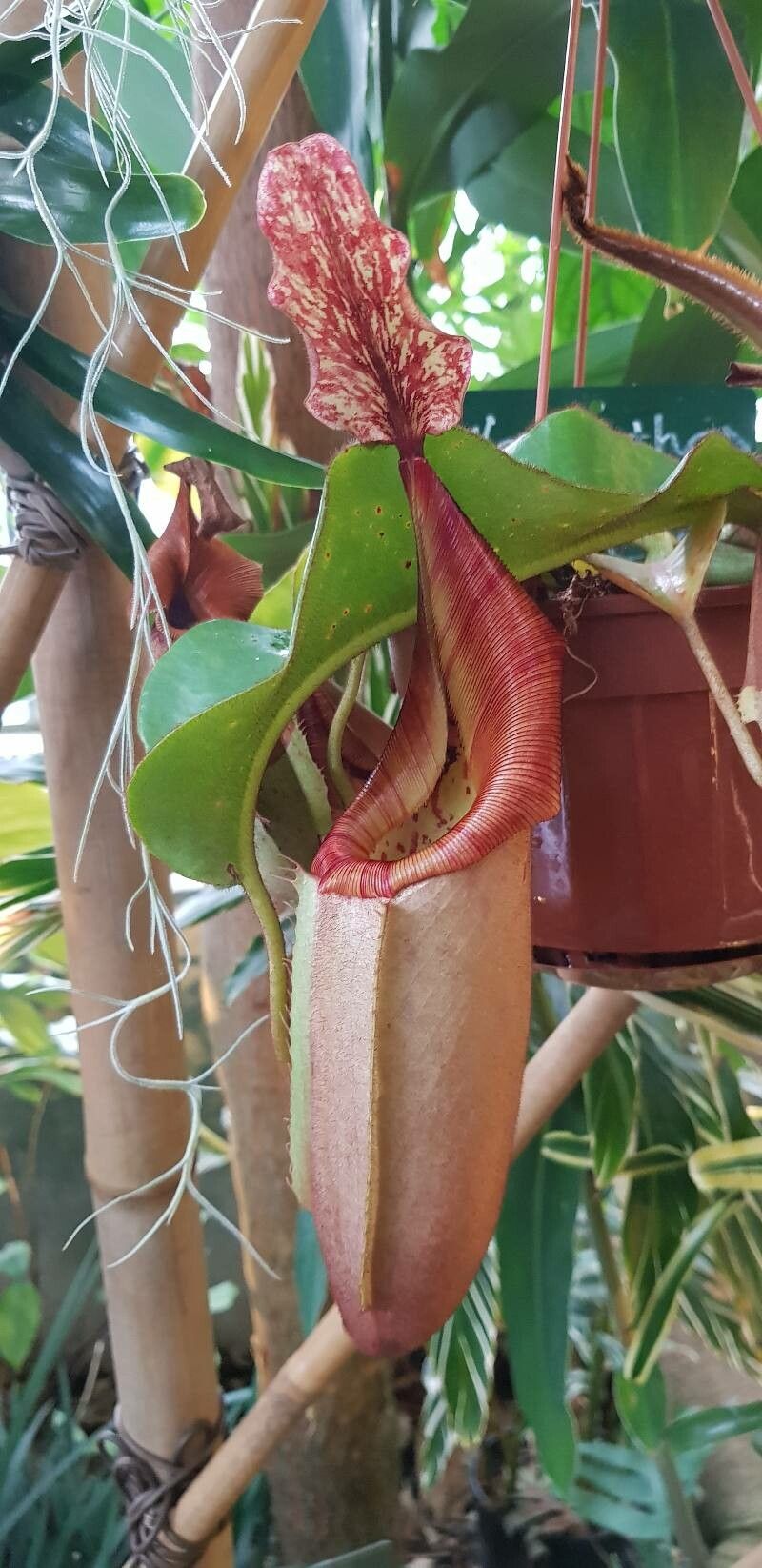
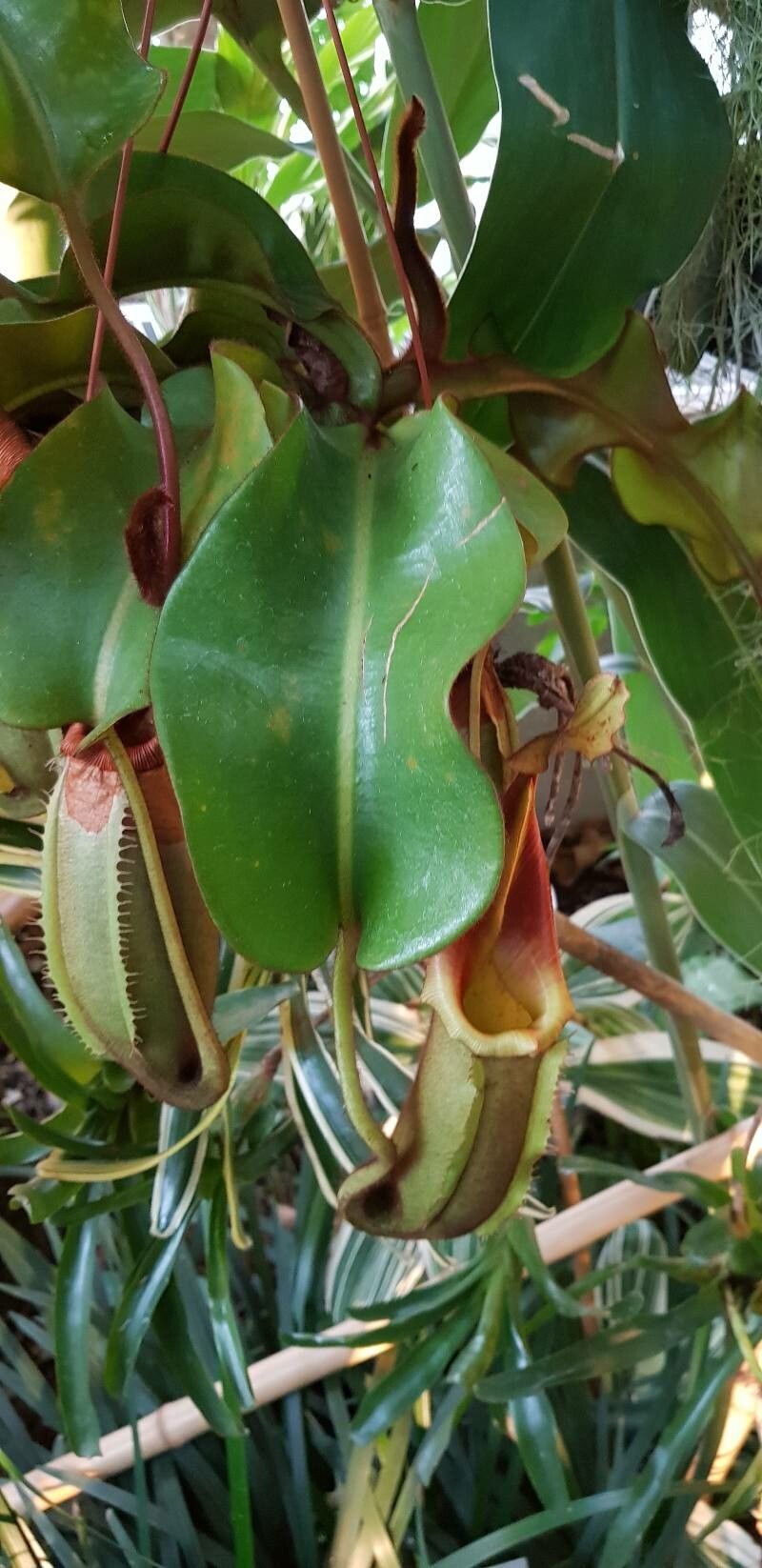
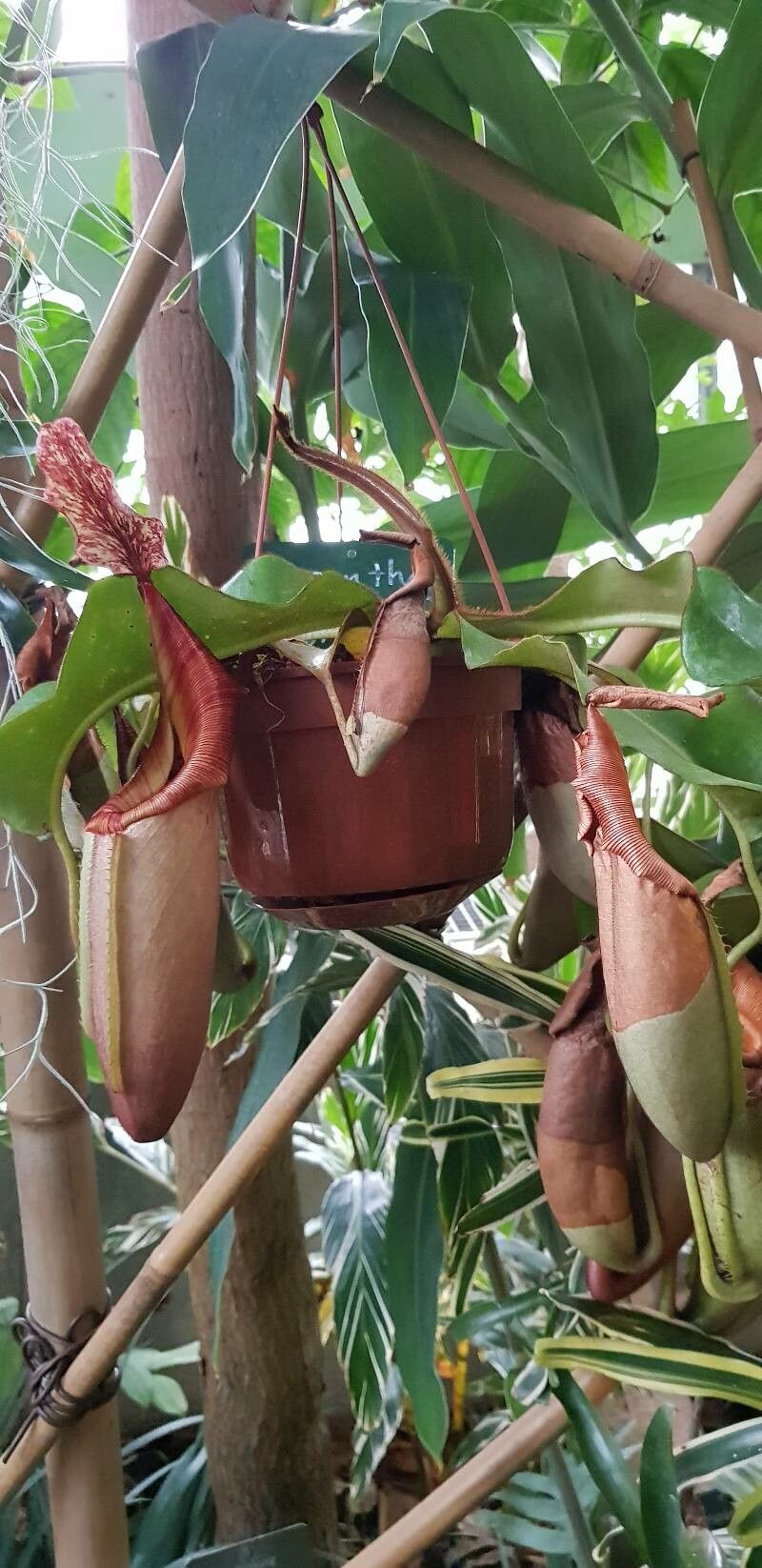
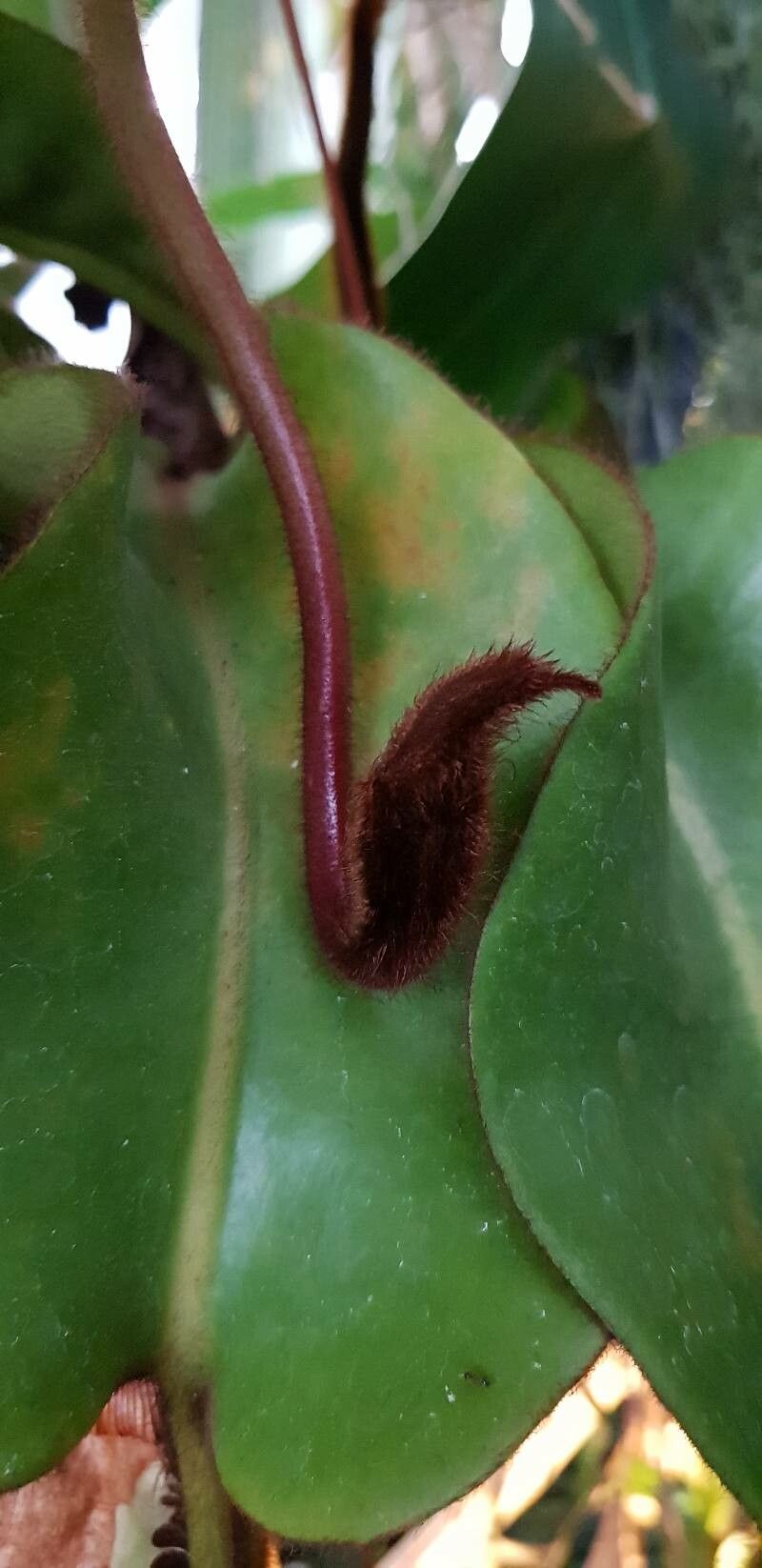
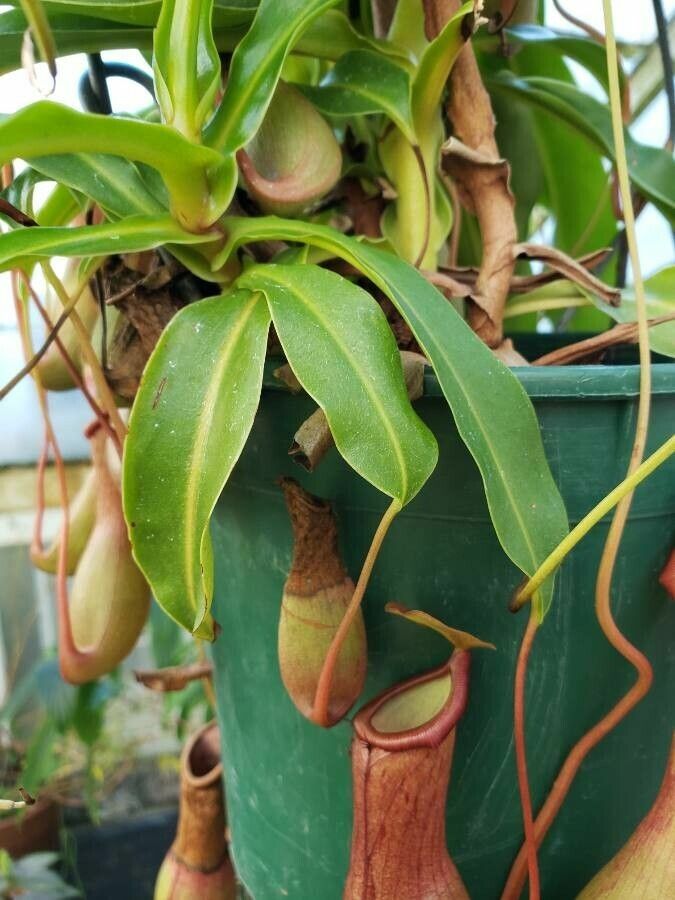
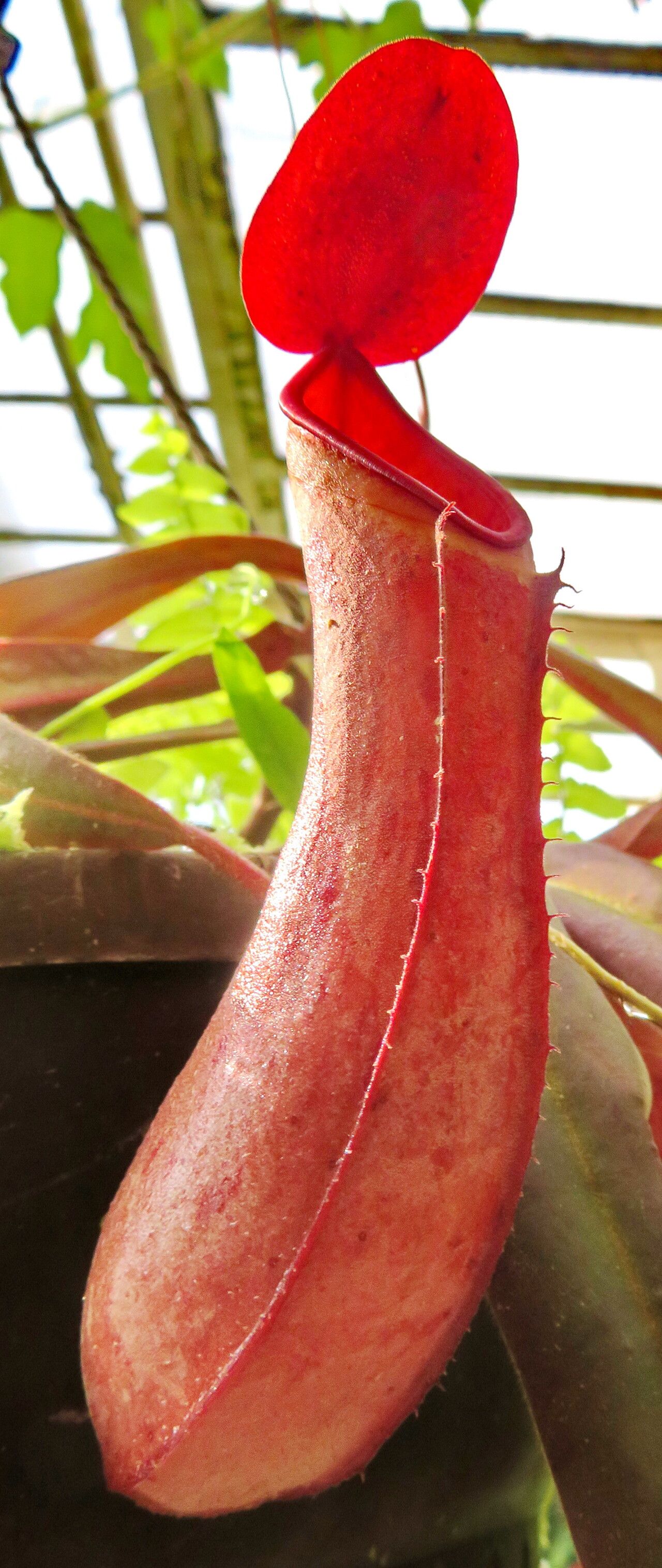
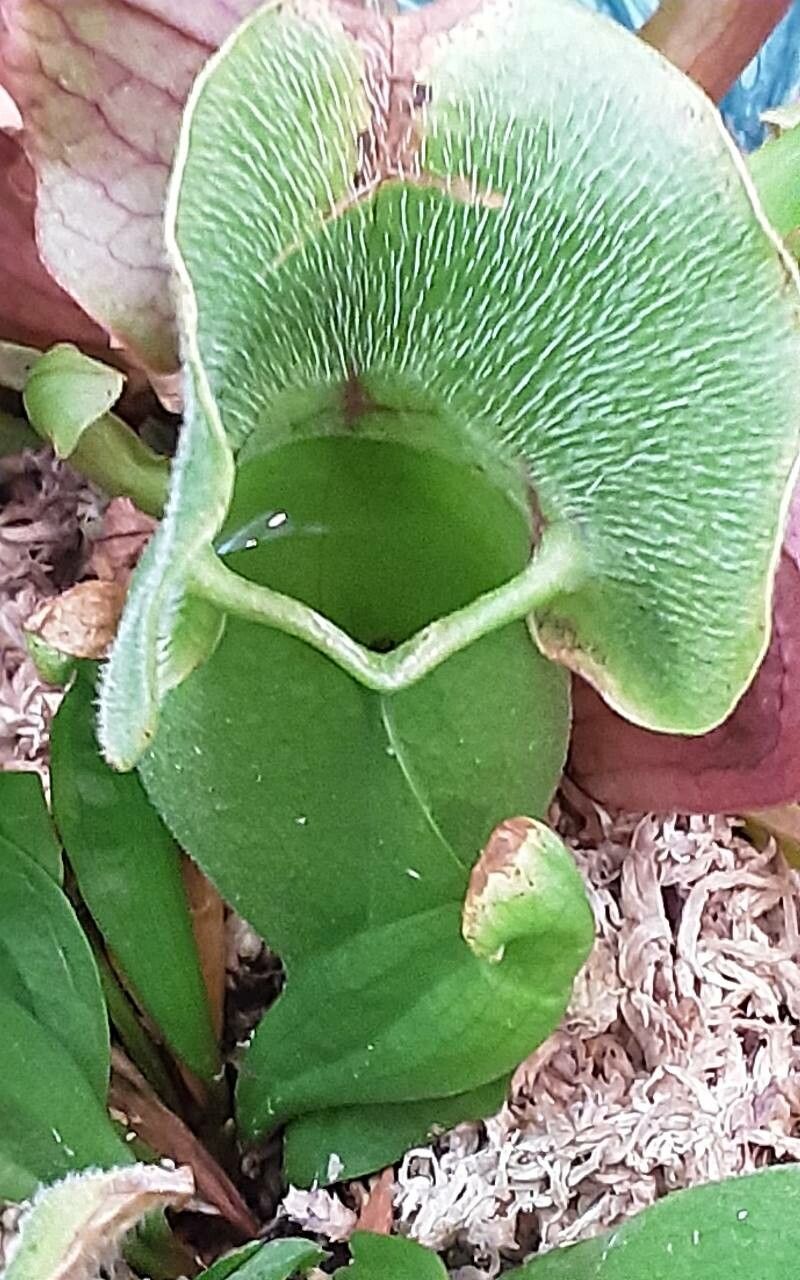
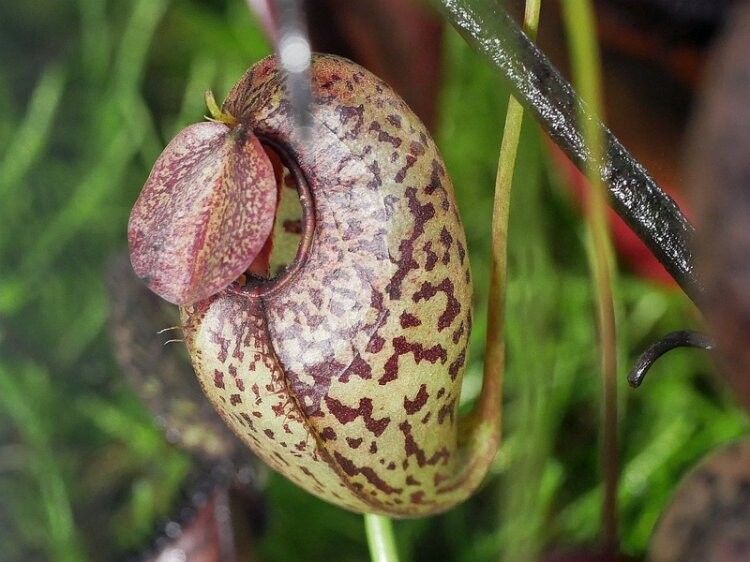
Nepenthes veitchii, or Veitch's pitcher-plant, is a Nepenthes species from the island of Borneo. The plant is widespread in north-western Borneo and can also be found in parts of Kalimantan. It grows in lowland Dipterocarp forest, typically near rivers, and on ridgetops in mossy forests, from 0 to 1,600 meters elevation. Nepenthes veitchii usually grows as an epiphyte, though the form from Bario seems to be strictly terrestrial and has not been observed to climb trees.
Veitch's pitcher-plant has moderate resistance to disease and requires a high-humidity environment. However, poor ventilation can make it prone to rot. Its care is considered difficult because it needs constant humidification to keep humidity levels high. The plant is also highly vulnerable to rot if kept in a poorly ventilated, overly warm setting. Veitch's pitcher-plant is best suited to more experienced growers who can provide an appropriate growing environment.
How to keep Nepenthes Veitchii.
Light
Veitch's pitcher-plant is native to areas with plentiful sunlight, such as open bogs and sunlit wetlands. It favors full sun but can also tolerate partial sun.
Water
The Veitch's pitcher plant can tolerate hard water with mineral concentrations up to 200 ppm, but it thrives best when watered with distilled, filtered, or rainwater. To prevent pests and root rot, ensure there’s no standing water around the plant. Water it regularly to keep the soil properly saturated, and mist the plant frequently in low-humidity conditions to maintain its optimal health.
Temperature
Veitch's pitcher-plant does best at moderate temperatures, similar to what people usually find comfortable. It flourishes in conditions that are neither overly hot nor overly cold. The main problem with high temperatures is the risk of sunburn, so providing some shade in summer is advisable to prevent excessive heat. When temperatures decline, the plant goes into dormancy. If continuous growth is wanted, it is necessary to keep temperatures higher through the winter. Frost can damage the plant and should be avoided.
Pruning
Veitch's pitcher plant is known for its distinctive, pitcher-shaped leaves. To keep the plant healthy and looking its best, it requires periodic pruning in early spring. Start by removing any damaged leaves to improve airflow. Then, trim the long vines to make the plant more manageable. Be sure to use clean tools during the process to prevent infections. Following these expert horticultural tips will enhance both the plant's vitality and its aesthetic appeal.
Pot & Repot
When repotting Veitch's pitcher-plant, pick a pot 1-2 inches (2.5–5.1 cm) larger with good drainage. Use a well-draining potting mix. Repot in spring or fall, making sure the root ball sits just below the rim of the flower pot. Water thoroughly after repotting and keep it in a warm spot with indirect sunlight.
Botanical profile.
- Plant Type
- Herb, Vine
- Life Cycle
- Perennial
- Genus
- Nepenthes
- Family
- Nepenthaceae
- Hardiness Zone
- 10-11
- Mature Height
- 4.57 m
- Mature Spread
- 49 cm to 76 cm
- Leaf Color
- Green
- Leaf Type
- Evergreen
- Flower Color
- Yellow, Green
- Flower Size
- 0.25 cm to 0.51 cm
- Bloom Time
- All year round
- Planting Time
- Spring, Summer, Autumn
- Harvest Time
- All year round
- Native Area
- Brunei