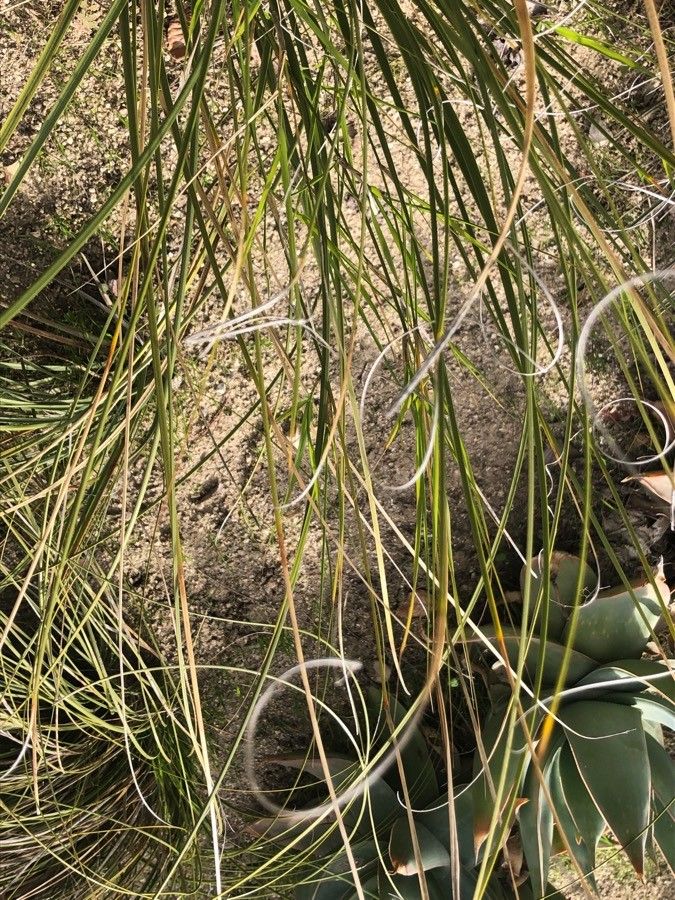
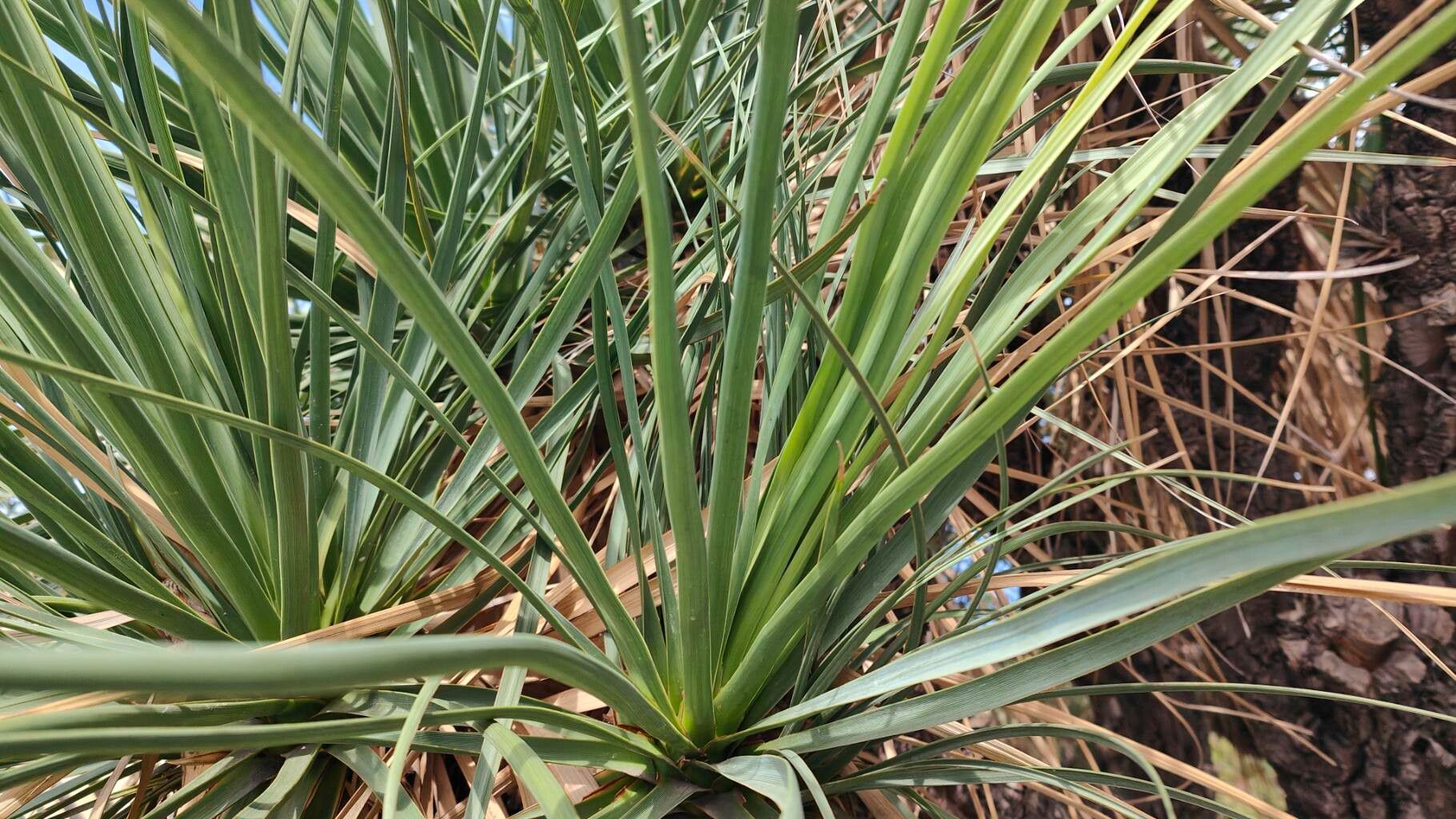
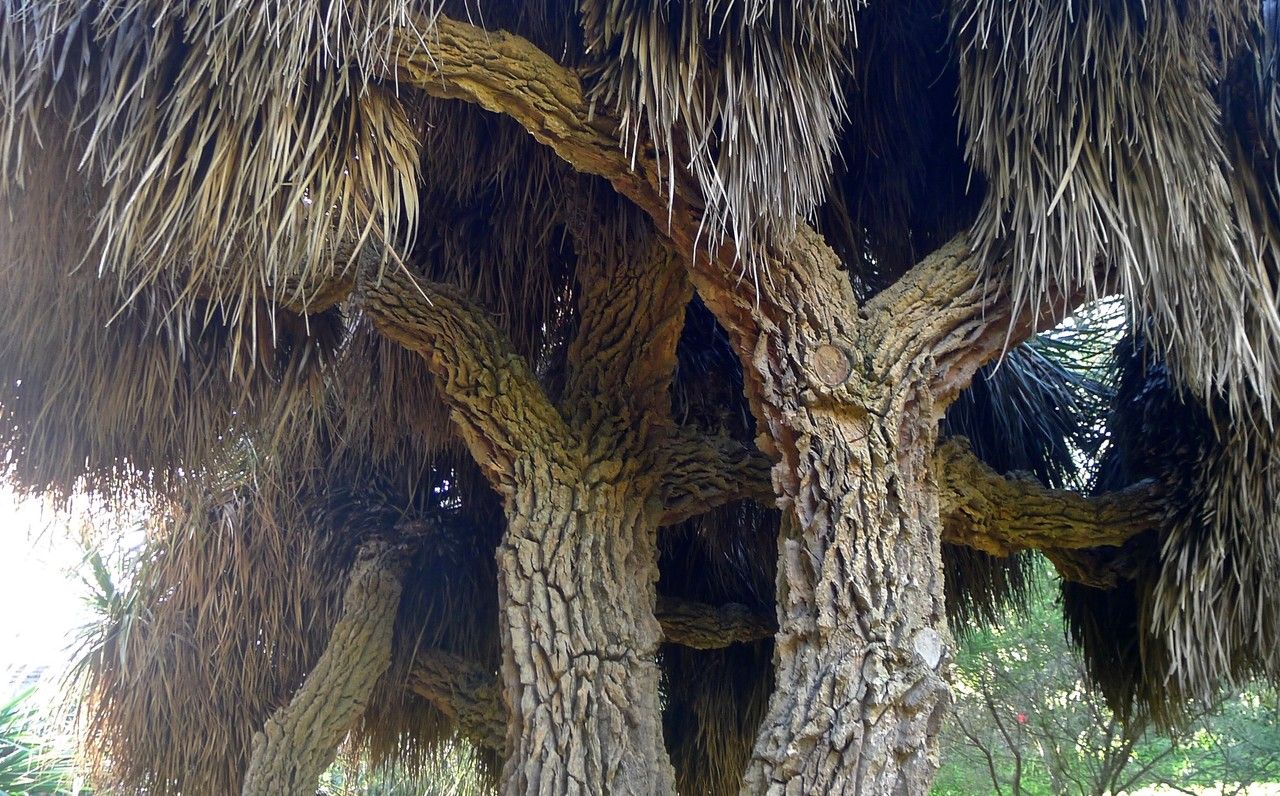
Nolina microcarpa, commonly known as sacahuista or bear grass, is a perennial plant species in the Asparagaceae family. Native to the southwestern United States and northern Mexico, it thrives in arid regions such as deserts, grasslands, and rocky slopes.
This plant exhibits a distinctive appearance with its long, narrow leaves that grow in a rosette pattern from its base. The leaves are greenish-blue and can extend up to 3 feet in length. Additionally, Nolina microcarpa produces tall flower stalks that can reach heights of up to 10 feet, topped with small white flowers.
Nolina microcarpa plays a vital role in wildlife ecosystems, offering food for various animals such as deer, bighorn sheep, rabbits, rodents, and birds. It also holds cultural significance for Native American tribes, who utilize its fibers for weaving baskets and making ropes.
With minimal care requirements once established, Nolina microcarpa is an excellent choice for xeriscaping gardens or landscapes with limited water availability. It prefers full sun exposure but can also tolerate partial shade.
In summary, Nolina microcarpa is an attractive ornamental plant that adds unique texture to any landscape while providing ecological benefits by supporting wildlife populations.
Sacahuista is resistant to disease and usually not affected by illnesses. However, it can be vulnerable to pests and diseases present in its surroundings. Those infections are typically mild. For care, this plant requires moderate maintenance. It should be pruned regularly to keep a neat appearance and support healthy growth. Fertilizing can also help encourage flowering. Sacahuista is suitable for anyone with outdoor space, like a garden or patio, and does not demand extensive gardening experience. It may need more attention if grown indoors.
How to keep Nolina Microcarpa.
Light
Sacahuista does best when it gets unobstructed sunlight every day. In its native habitat the sun shines all day long. While the plant can survive with less light, continuous sunlight ensures optimal growth. Too much or too little sun can interfere with its development, leading to stunted growth or unsuccessful reproduction.
Water
Sacahuista is well-suited to arid environments due to its high drought tolerance and ability to store water, allowing it to survive with infrequent rainfall. To mimic its natural dry conditions, water the plant every 1-2 weeks. During its dormant periods, which are typical in its native xeric landscapes, reduce the frequency of irrigation.
Temperature
Sacahuista comes from areas where temperatures fall between 41 and 95 °F (5 and 35 ℃). It favors warmth and can do well in temperatures up to 95 °F (35 ℃). Modify its surroundings to match this range, particularly during extreme seasons.
Fertilizer
One fertilizer application in spring is generally adequate for Sacahuista, though repeated feedings can maximize growth. Apply fertilizer every month to a month and a half. Fertilizing improves leaf appearance and function, helping maintain even color and a healthy texture. It also promotes root development and nutrient uptake, supporting the plant's long-term health.
Pruning
Sacahuista has long, grass-like leaves. For optimal care, prune it from early to late spring. During pruning, remove dead foliage, trim brown tips, and cut back old flower stalks. Ensure that you use clean tools to prevent the spread of disease. Regular pruning enhances air circulation and light penetration, prolongs the plant's life, and improves its overall aesthetic appeal.
Botanical profile.
- Plant Type
- Herb
- Life Cycle
- Perennial
- Genus
- Nolina
- Family
- Asparagaceae
- Hardiness Zone
- 5-10
- Mature Height
- 1.83 m to 2.13 m
- Mature Spread
- 1.22 m to 1.83 m
- Leaf Color
- Green, Blue
- Leaf Type
- Evergreen
- Flower Color
- White, Yellow, Green, Brown
- Flower Size
- 0.51 cm
- Bloom Time
- Late spring, Early summer
- Planting Time
- Spring, Summer
- Harvest Time
- Mid summer, Late summer, Early fall
- Native Area
- Mexico
Other names.
Reader questions.
What are the sunlight requirements for Sacahuista (Nolina microcarpa)?
Sacahuista thrives in full sun, needing above 6 hours of sunlight daily for optimum growth. Its natural habitat is characterized by unobstructed sunlight exposure throughout the day. While it can survive with less sunlight, continuous exposure to ample sunlight is essential for its growth and health. It's important to observe how sunlight moves through your garden to find spots that offer a good balance of light and shade, which is crucial for the plant's happiness. Furthermore, the right amount of sunlight prevents issues such as stunted growth or unsuccessful reproduction.
How can artificial lighting be used for Sacahuista's growth indoors?
For Sacahuista growing indoors where natural sunlight is insufficient, especially during winter or in less sunny spaces, artificial lighting becomes essential. Using the right type of artificial light such as LED lights, which can be customized to provide specific wavelengths, promotes healthier growth. The general guidance for artificial lighting is 30-50W/sq ft for full sun plants, 20-30W/sq ft for partial sun plants, and 10-20W/sq ft for full shade plants. The artificial light source should be placed 12-36 inches above the plant, mimicking the distance of natural sunlight, and kept on for 8-12 hours per day to simulate natural daylight hours.
What are the symptoms of inadequate sunlight for Sacahuista?
Symptoms of inadequate sunlight in Sacahuista include smaller new leaves, leggy or sparse growth due to longer spaces between leaves or stems, early dropping of older leaves, slower or halted growth, paler new leaves indicating a lack of chlorophyll, and conditions such as chlorosis, where leaves lose their green color. Excessive sunlight can cause symptoms like sunscald, leaf curling as a defense mechanism to reduce surface area exposed to sunlight, wilting due to loss of turgor pressure, and leaf scorching characterized by brown, dry edges or patches on leaves.
What solutions are available for Sacahuista experiencing insufficient sunlight?
If your Sacahuista is not getting enough sunlight, gradually moving it to a sunnier location can help, aiming for at least 6 hours of direct sunlight daily. For indoor plants that are large or hard to move, consider using a desk or ceiling lamp for at least 8 hours daily or invest in professional grow lights. For outdoor plants, gradually acclimate them to brighter conditions to avoid sunburn. If obstructions like trees block sunlight, consider pruning to improve exposure. For smaller plants, transplanting them during their dormant period to a better-lit location may be beneficial. Note that parts of the plant already affected by light deficiency may not recover, but new growth should be healthy with improved light conditions.