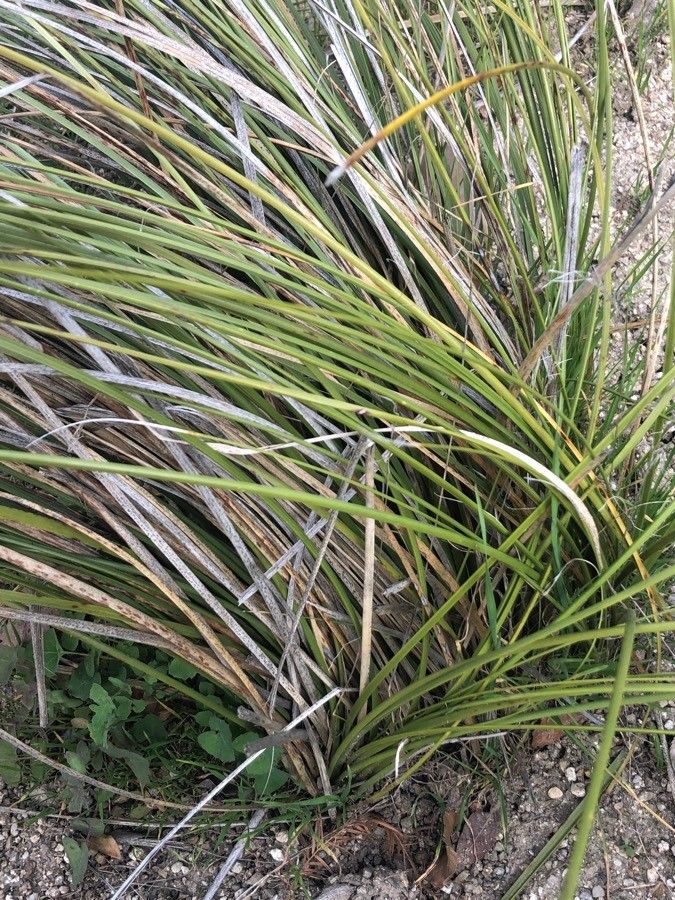
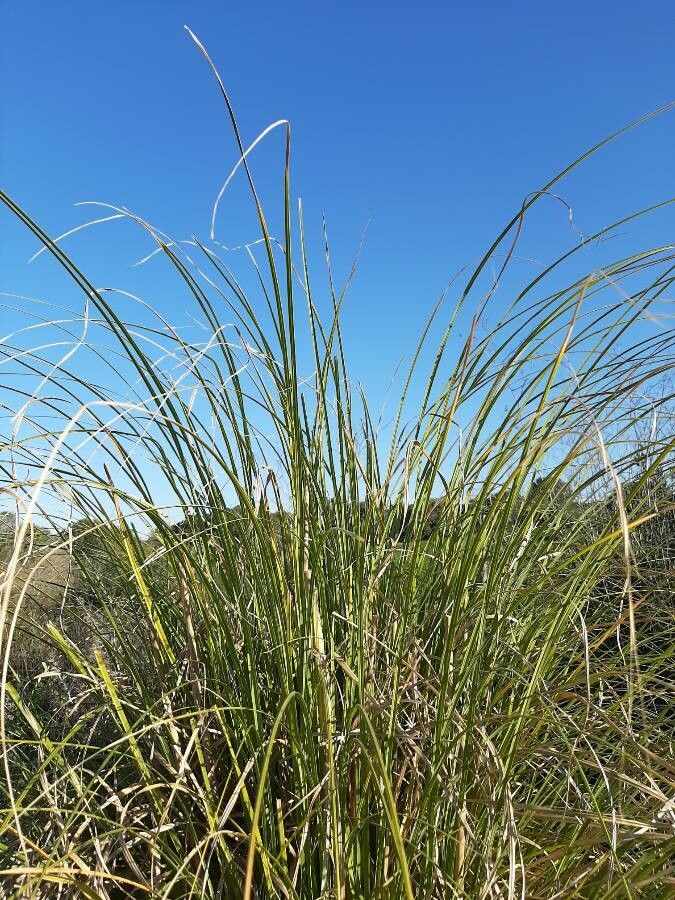
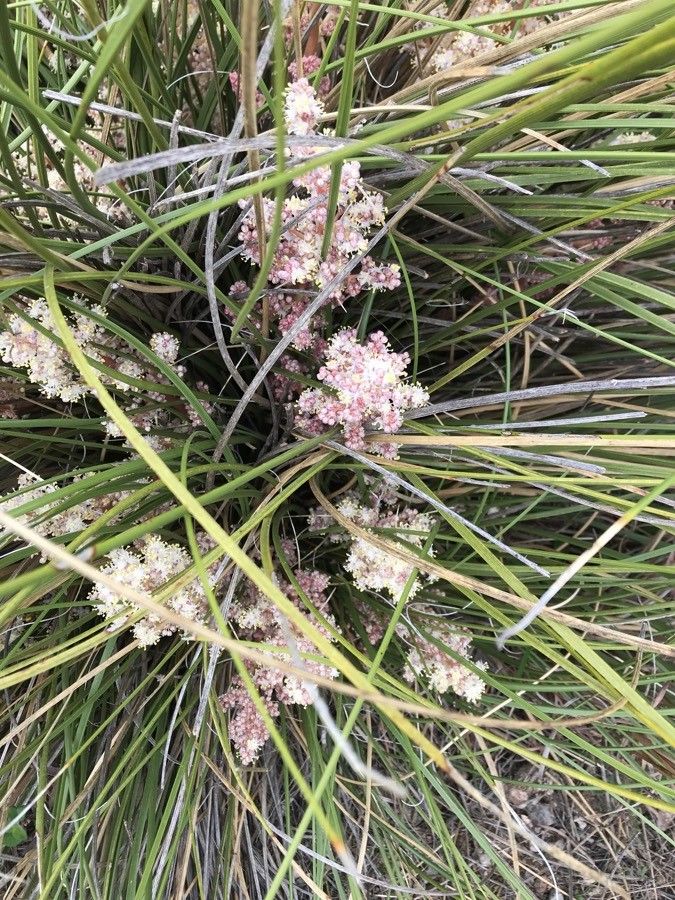
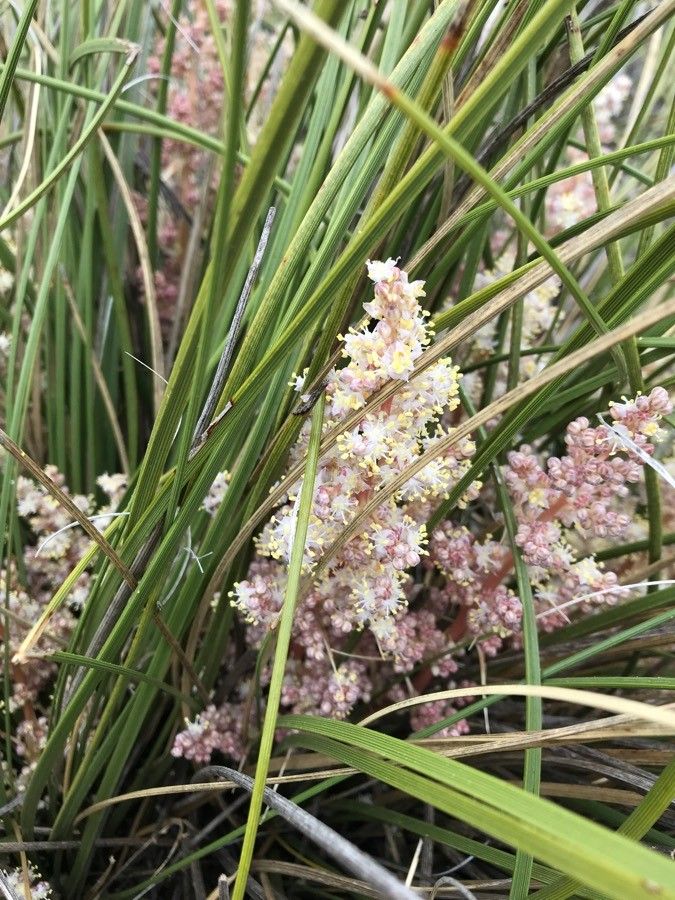
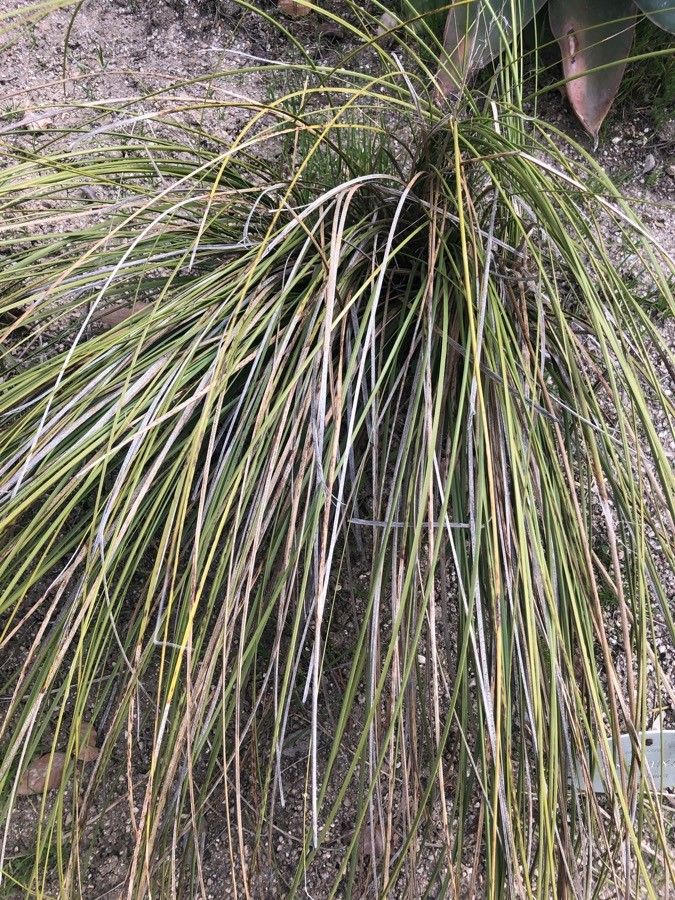
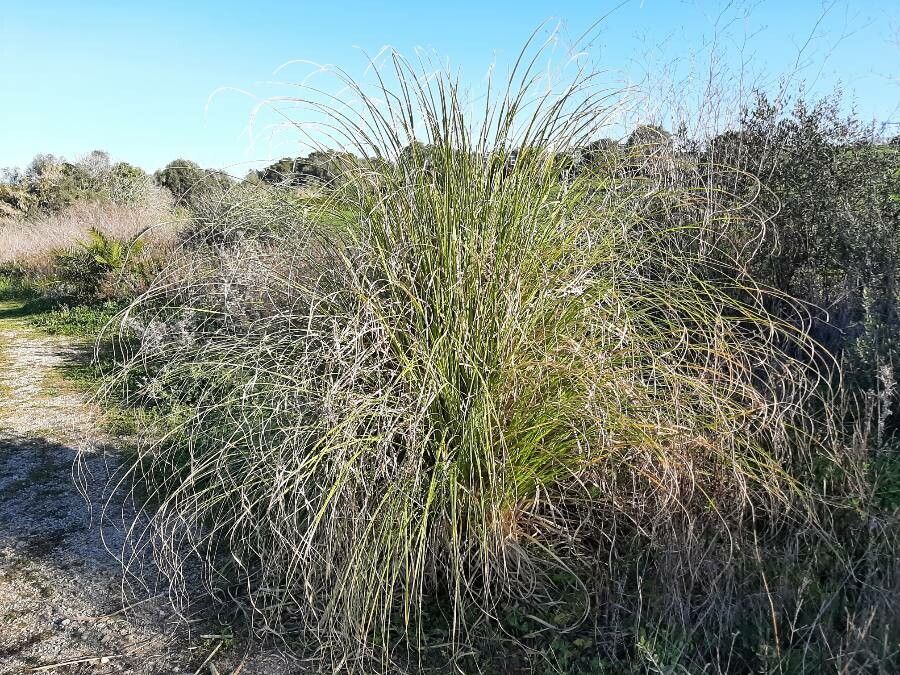
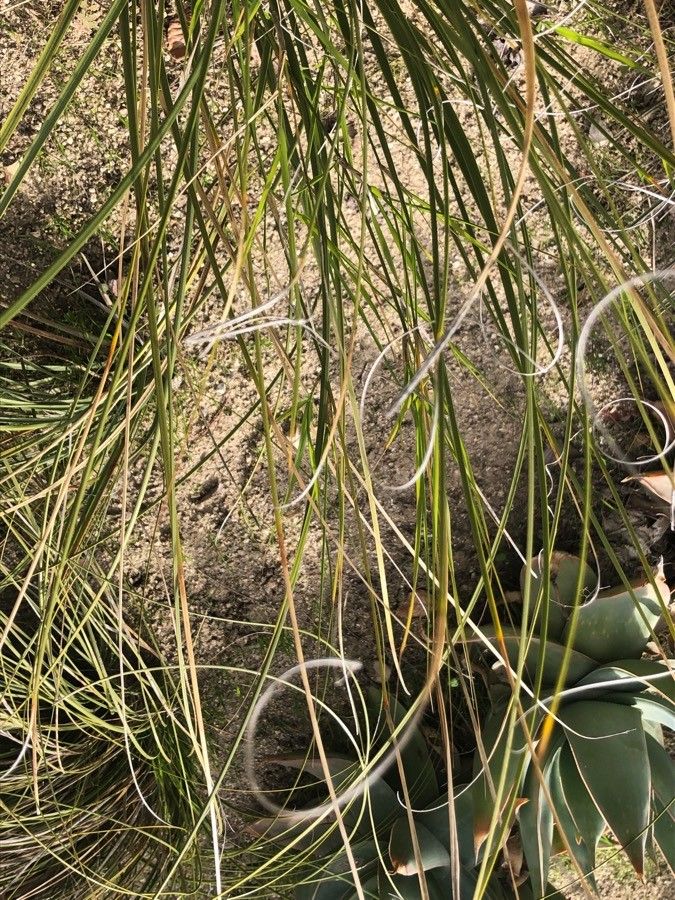
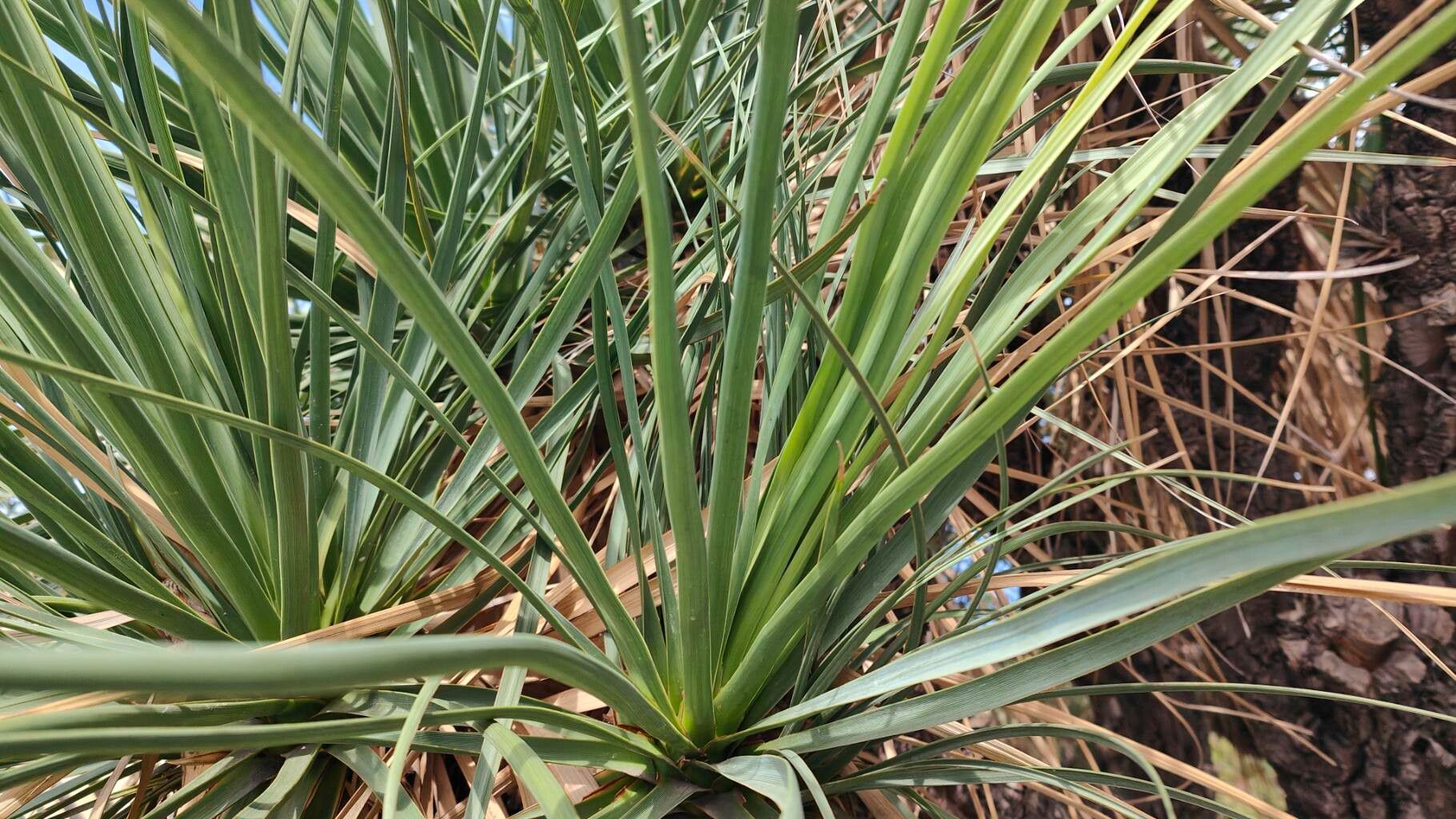
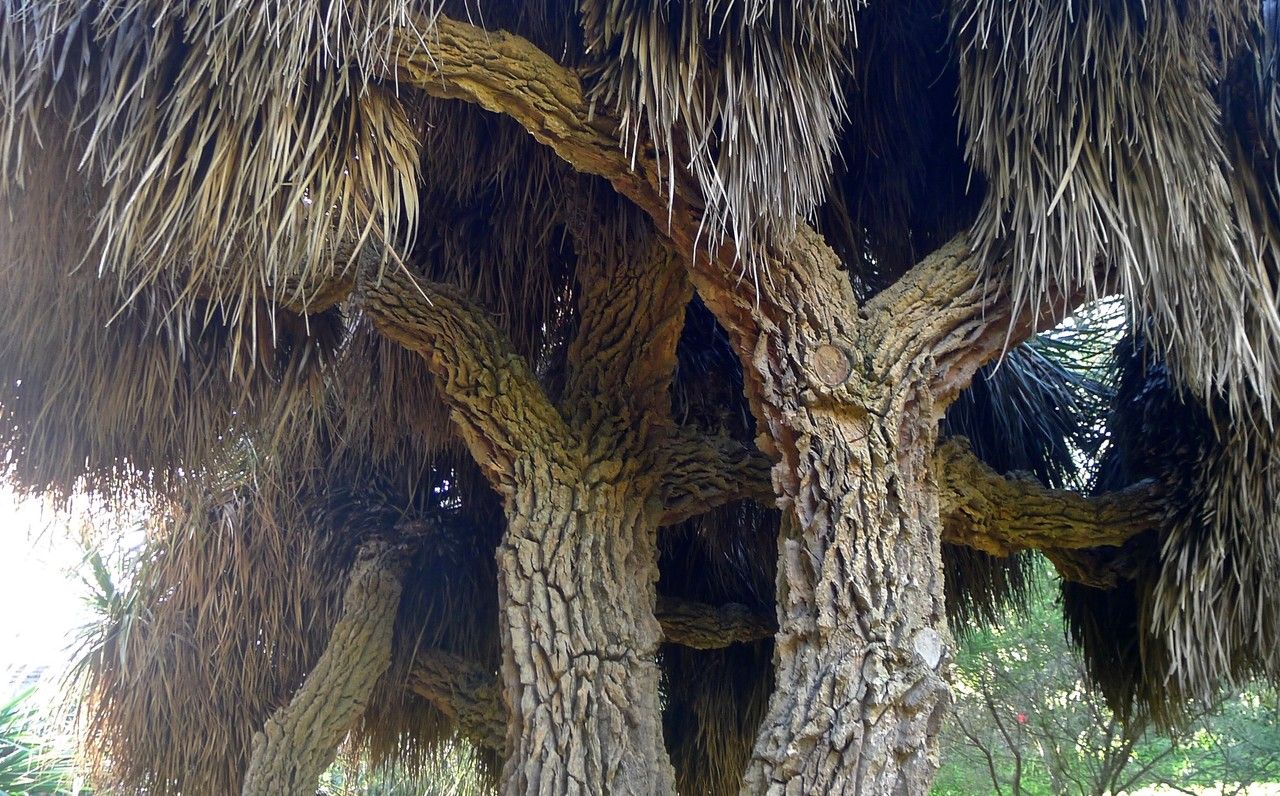
Nolina texana, commonly known as Texas sacahuista or Texas beargrass, is a perennial plant native to the southwestern United States and northern Mexico. It belongs to the Asparagaceae family and is distinguished by its long, narrow leaves that grow in a rosette pattern emanating from a central base. The leaves are typically green or bluish-green and can reach up to 3 feet in length.
Nolina texana produces tall flower stalks that can grow up to 10 feet high. The flowers are small and white or yellowish-green, appearing from late spring through early summer.
This plant commonly thrives on rocky slopes, mesas, and prairies throughout its native range. It is drought-tolerant and prefers well-drained soils with full sun exposure.
In addition to its ornamental value in landscaping, Nolina texana has been used for various medicinal purposes by indigenous peoples of the region for centuries. Its fibrous leaves have also been employed in weaving baskets and other crafts.
Overall, Nolina texana is an attractive desert plant with unique foliage that enhances any landscape design. It also holds cultural significance due to its historical uses by the indigenous peoples of the region.
Texas sacahuista is disease-resistant and generally not susceptible to illnesses. With regard to care, this plant is fairly low maintenance. Planted outdoors, it needs little watering, and larger plants typically do not require pruning. Smaller plants, however, should be pruned after they have finished blooming. Texas sacahuistat is appropriate for anyone with an outdoor area, such as a garden or deck, and does not demand extensive plant-care experience.
How to keep Nolina Texana.
Light
Texas sacahuista generally does best in locations with prolonged sunlight, similar to the light received during a summer day from sunrise to sunset. It can, however, tolerate lower light levels, like those beneath a leafy tree. Excessive or insufficient light can cause stunted growth or increase susceptibility to disease.
Water
Adapted to arid environments, the Texas sacahuista is an excellent drought-tolerant plant that retains moisture and requires minimal watering, typically just once a week. It thrives in rocky terrains and prefers well-draining soil, making it ideal for xeriscaping and low-water garden designs.
Temperature
Texas sacahuista is indigenous to habitats where temperatures vary between 50 and 100.4 °F (10 to 38 ℃). It favors temperate climates. When seasons change, making appropriate adjustments to meet these temperature requirements helps the plant flourish.
Fertilizer
Fertilize your Texas sacahuista in early spring to encourage healthy growth. Regular feeding improves overall health, producing vigorous growth, greater tolerance of harsh conditions, and enhanced resistance to diseases and pests. Stick to a consistent fertilization schedule for your Texas sacahuista to maintain vibrant, deeply colored foliage and a lush appearance.
Pruning
The Texas sacahuista thrives in dry environments and is known for its long, grass-like leaves. To maintain its health and prevent disease, prune any dead or damaged leaves during the plant's dormant winter phase. Using clean, sharp tools will ensure precise cuts, improving both the appearance and vitality of the plant.
Pot & Repot
Repot Texas sacahuista every 2 to 3 years during the spring. Use a larger container filled with well-draining soil. After repotting, place the plant in bright, indirect light. Resume watering only when the soil has dried out to prevent root rot. Consistent care is essential for its optimal growth.
Botanical profile.
- Plant Type
- Shrub
- Life Cycle
- Perennial
- Genus
- Nolina
- Family
- Asparagaceae
- Hardiness Zone
- 6-11
- Mature Height
- 46 cm to 61 cm
- Mature Spread
- 0.61 m to 1.22 m
- Leaf Color
- Green, Blue, Bronze
- Leaf Type
- Evergreen
- Flower Color
- White
- Flower Size
- 0.76 cm to 1.27 cm
- Bloom Time
- Mid spring, Late spring
- Planting Time
- Spring, Summer, Autumn
- Harvest Time
- Early summer, Mid summer
- Native Area
- Mexico
Other names.
Reader questions.
What are the sun requirements for Texas Sacahuista?
Texas Sacahuista requires full sun, defined as over 6 hours of sunlight daily, or partial sun, which is about 3-6 hours of sunlight. It's crucial to observe how sunlight moves through your garden to find spots offering the right balance of light and shade, ensuring your plants thrive.
What is Texas sacahuista and where is it native to?
Texas sacahuista, botanically known as Nolina texana, is native to regions where temperatures range between 50 to 100.4 °F (10 to 38 °C). This plant thrives in temperate climates, preferring environments that accommodate its need for fluctuating temperatures as the seasons change. Its strong cold resistance means it generally does not require special frost protection measures during winter, even in its native habitat.
What are the essentials for growing Texas Sacahuista?
Texas Sacahuista thrives under extensive light exposure, similar to the sunlight experienced from dawn to dusk on a typical summer day. The plant can also grow under lesser light conditions, akin to those beneath a leafy tree. Insufficient or excessive light may impede growth or increase susceptibility to diseases. If natural sunlight is lacking, especially in winter or dimly lit areas, artificial lighting can be an essential supplement. For optimal growth indoors, provide adequate artificial lighting by selecting the appropriate type and amount of light (30-50W/sq ft for full sun plants, 20-30W/sq ft for partial sun plants, and 10-20W/sq ft for full shade plants), placing the light source 12-36 inches above the plant, and ensuring 8-12 hours of light per day.
How should Texas sacahuista be protected during extremely cold winters?
While Texas sacahuista exhibits strong cold resistance, in scenarios where winter temperatures are expected to plummet below -25°C, implementing cold protection measures becomes crucial. Wrapping the trunk and branches with non-woven fabrics or cloths can provide the necessary defense against extreme cold. Additionally, it's advisable to water the plant abundantly before the first freeze of autumn to keep the soil moist. This preparation helps the plant avoid drought and water scarcity throughout the winter and early spring months.
What are the symptoms of light deficiency in Texas Sacahuista?
When Texas Sacahuista is grown in suboptimal lighting, it may display symptoms such as smaller new leaves, leggy or sparse growth, faster leaf drop, halted or no new growth, lighter-colored new leaves indicating a chlorophyll and nutrient deficiency, and chlorosis where leaves turn yellow due to chlorophyll breakdown. Excessive sunlight can cause sunscald, leaf curling as a defense against sunlight, wilting due to water loss, and leaf scorching with brown, crispy leaf edges.
What are the symptoms and solutions if Texas sacahuista is exposed to low temperatures?
Texas sacahuista is known for its cold tolerance, thriving best when temperatures remain above 10°C. However, if temperatures descend below -25°C, the plant might not show immediate damage during winter but expect the branches to become brittle and dry by spring, with no new shoots emerging. The best solution in spring for such damage is to prune away any dead branches that have failed to produce new leaves, promoting the growth of new, healthy shoots.
What are the solutions for light deficiency or excess in Texas Sacahuista?
For indoor Texas Sacahuista with light deficiency, gradually increase sunlight exposure to at least 6 hours daily or use artificial lighting like desk lamps or plant grow lights for 8 hours a day. Outdoors, move plants gradually to sunnier spots to avoid sudden light intensity changes that can cause sunburn. Addressing obstructions can help; for example, prune trees to let sunlight through or transplant smaller plants to sunnier locations with good drainage during their dormant period. Note that damaged parts of the plant may not recover, but new growth will be healthy after adjusting light exposure.
How does Texas sacahuista react to high temperatures and what are the solutions?
During the summer months, Texas sacahuista should ideally be kept below 38°C. Exposure to temperatures above 43°C can cause the leaves to lighten in color, tips to become dry and withered, and the plant to become more susceptible to sunburn. To mitigate these issues, trim away the sunburned and dried-up parts of the plant. Relocating the plant to a shaded area or using a shade cloth can protect it from the midday and afternoon sun. Moreover, watering the plant in the morning and evening will help keep the soil moist and prevent further damage.