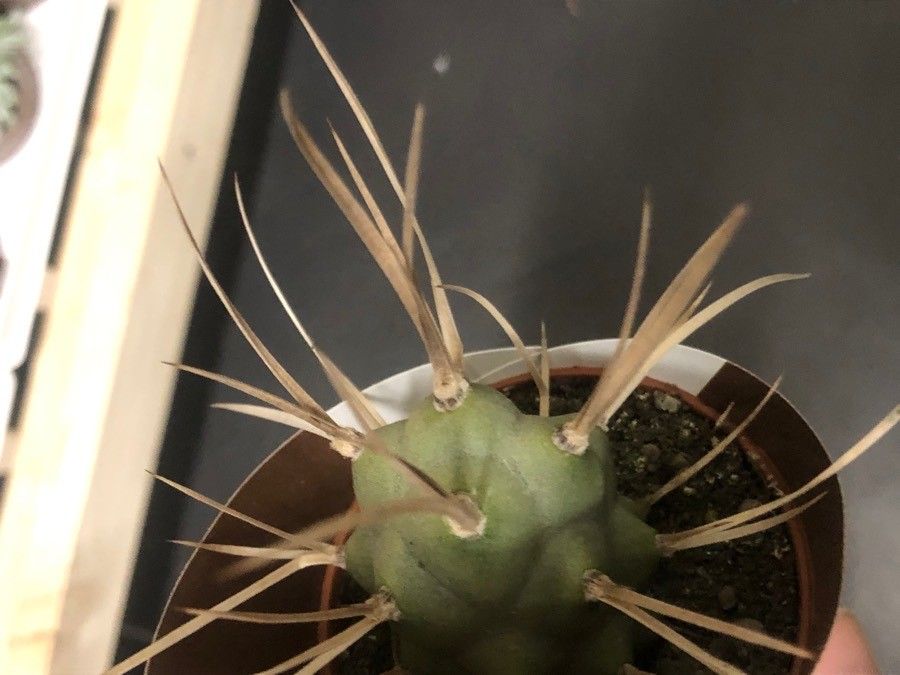
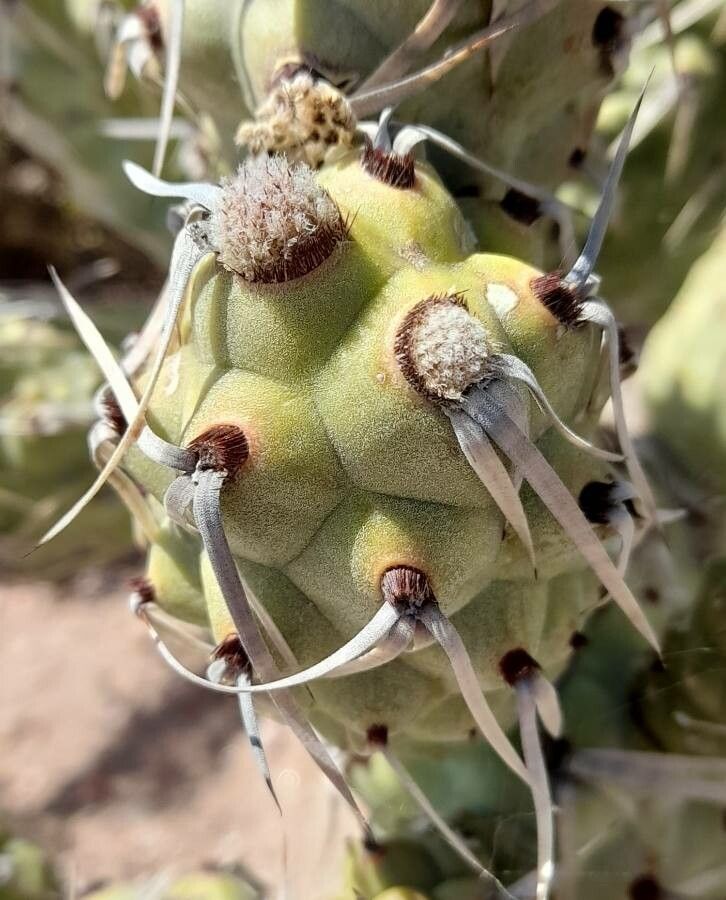
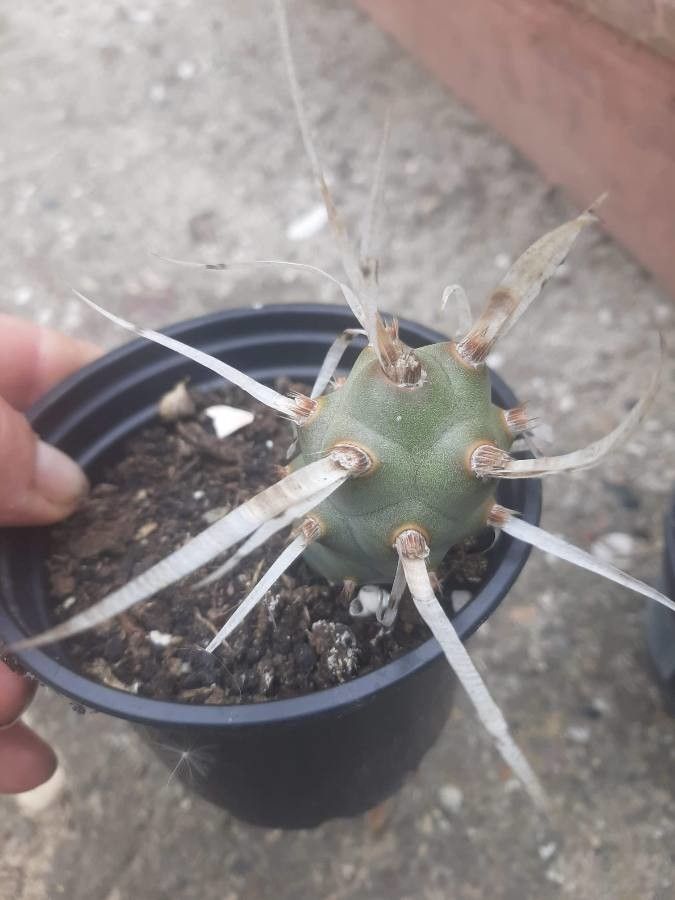
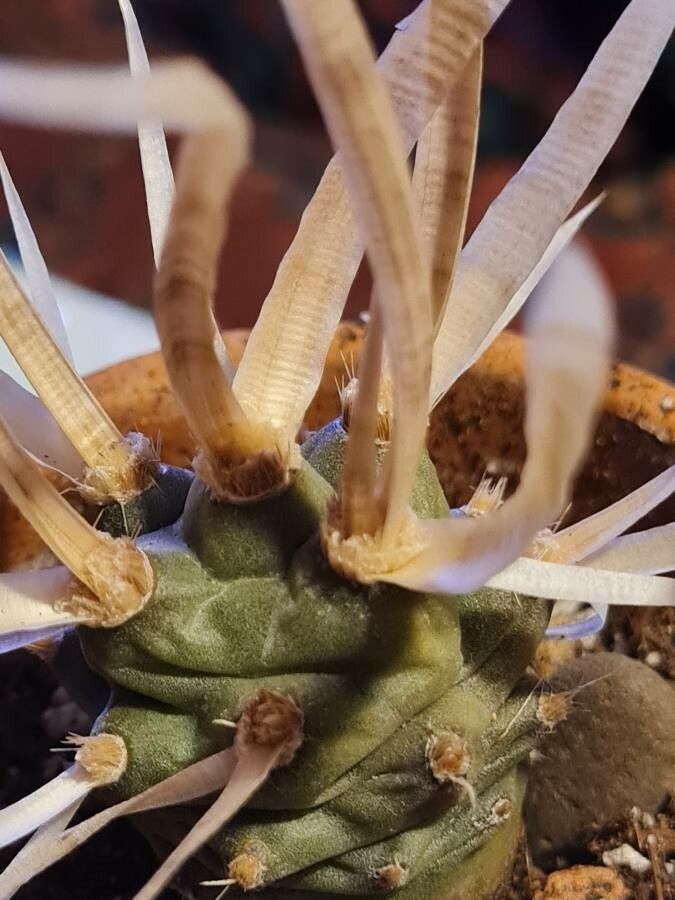
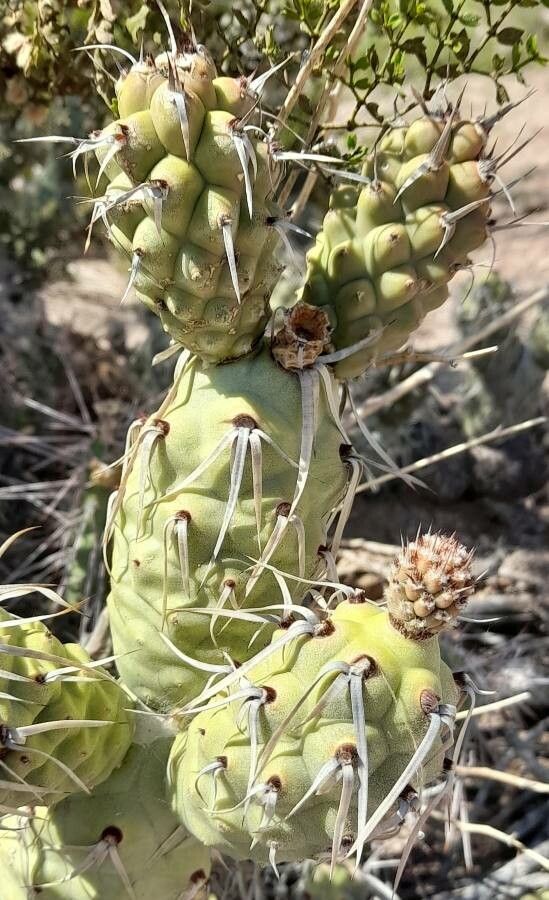
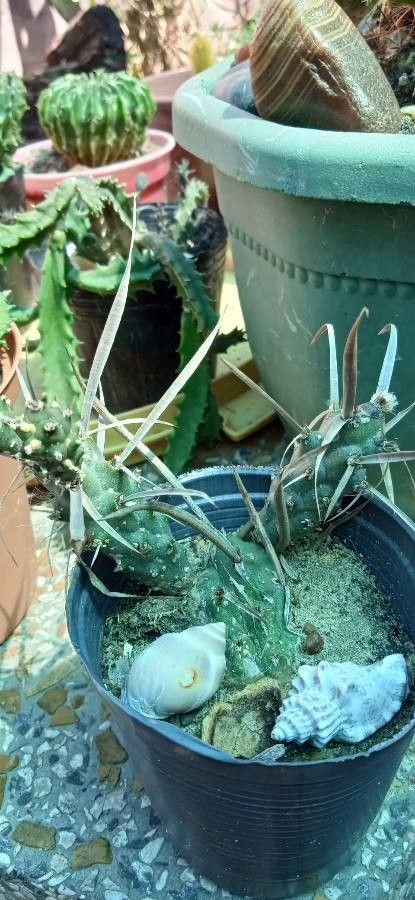
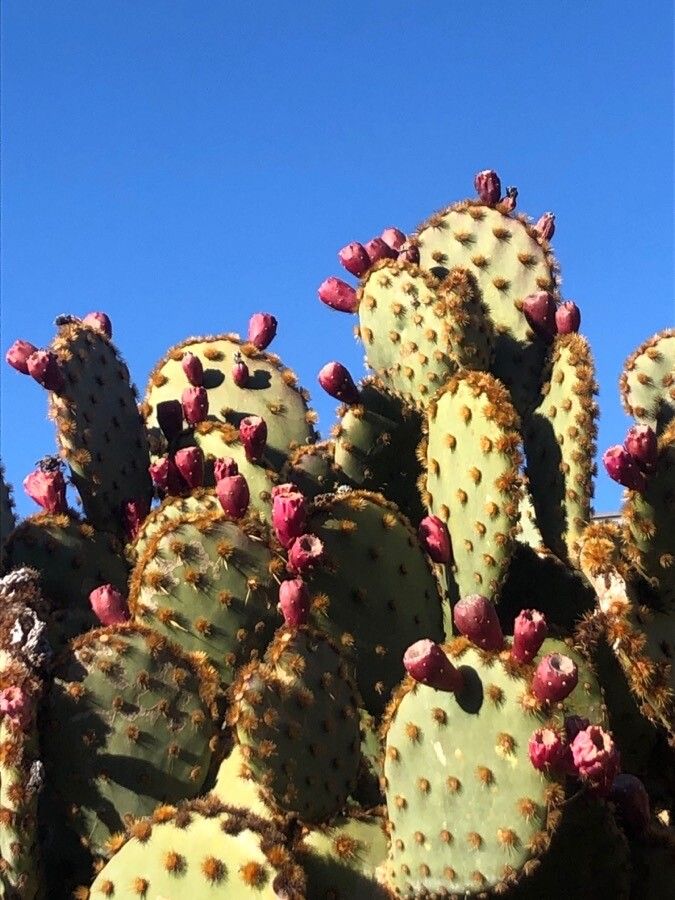
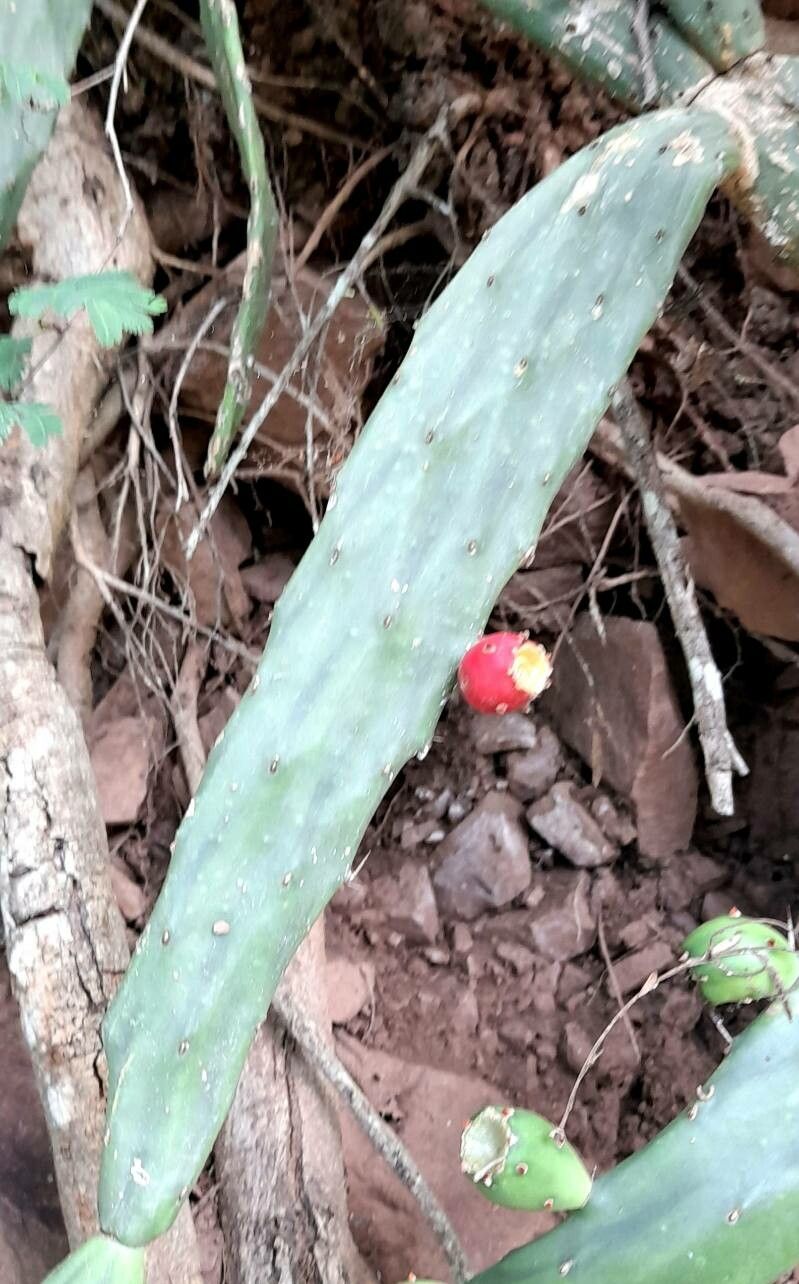
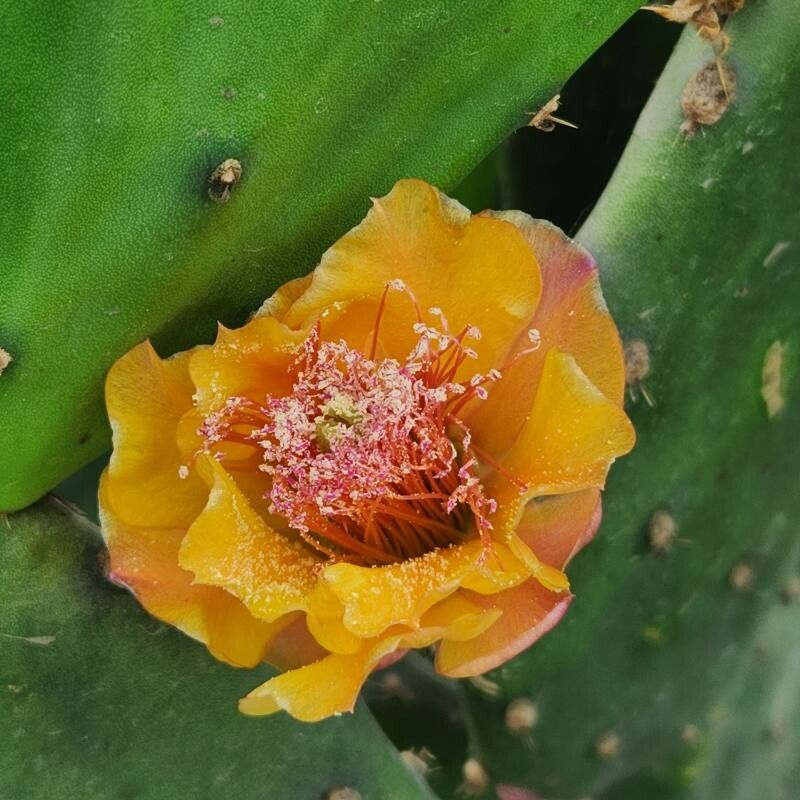
Opuntia articulata, commonly known as the jointed prickly pear, is a cactus species native to Mexico and the southwestern United States. This low-growing plant typically reaches heights of 1-2 feet and spreads to form dense mats. It features flattened, oval-shaped pads covered in spines and small hairs known as glochids. In the spring and summer months, Opuntia articulata produces bright yellow flowers that give way to edible red fruits called tunas. These fruits are sweet and juicy with a slightly tart flavor. This cactus is well adapted to arid environments thanks to its ability to store water in its pads for extended periods. Additionally, it has an extensive root system that allows it to absorb water from deep within the soil. For centuries, indigenous peoples have utilized Opuntia articulata for medicinal purposes, such as treating wounds, reducing inflammation, and relieving pain. In contemporary times, it is also popular in landscaping due to its attractive appearance and low maintenance requirements. Overall, Opuntia articulata is a fascinating plant with unique adaptations that enable it to thrive in harsh environments while also offering benefits for human use.
Cholla cactus has strong resistance to disease and can tolerate normal care without becoming sick easily. Still, it can be vulnerable to mealybugs; these pests may cause some harm but are usually not a major danger. Regarding care, Cholla cactus is drought-tolerant and does not need frequent watering. It can go long stretches without water and requires little fertilizer. However, if light is inadequate and it is overwatered, it is highly prone to root rot. In general, Cholla cactus is a good choice for people who prefer to spend less time on plant care, though it remains important to know and meet its basic needs. It is especially suitable for people who are away for long periods and might forget to water their plants regularly.
How to keep Opuntia Articulata.
Light
The cholla cactus thrives under ample levels of light exposure during the day. It can endure partly shaded environments, but it favours well-lit conditions that promote vigorous growth and a strong structure. Its hardy characteristics stem from environments with extensive daylight. Excessive sunlight or insufficient lighting could affect the plant, impacting its development and liveliness.
Humidity
This plant prefers dry conditions, so don't mist it. However, watering it less often can also thrive in higher humidity.
Temperature
The Cholla cactus thrives in environments where temperatures range from 59 to 95 °F (15 to 35 ℃), as it is indigenous to such warm climates. Typically, it doesn't require seasonal modifications, although minimal adjustments might be advantageous if the heat or cold becomes extreme.
Fertilizer
For the Cholla cactus, it is adequate to provide mild amounts of fertilizer 1-2 instances annually during the growth phase. Refrain from fertilizing during its dormant periods in the winter and summer. After repotting, limit the amount of fertilizer and allow a few months to pass before fertilizing again. The nutrient boost from fertilizing promotes robust growth and stimulates blooming.
Botanical profile.
- Plant Type
- Succulent
- Life Cycle
- Perennial
- Genus
- Opuntia
- Family
- Cactaceae
- Hardiness Zone
- 8-10
- Mature Height
- 30 cm to 61 cm
- Mature Spread
- 49 cm
- Leaf Color
- Light Green, Pale Green
- Leaf Type
- Evergreen, Deciduous
- Flower Color
- White
- Flower Size
- 3.05 cm to 7.62 cm
- Bloom Time
- Summer
- Planting Time
- Spring
- Harvest Time
- Late summer, Early fall, Mid fall
Other names.