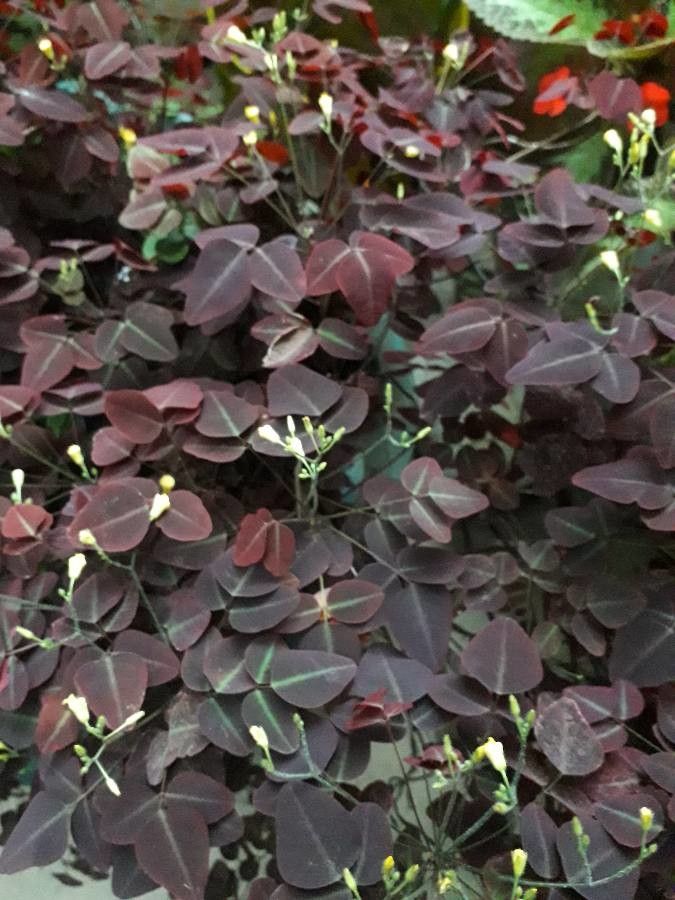
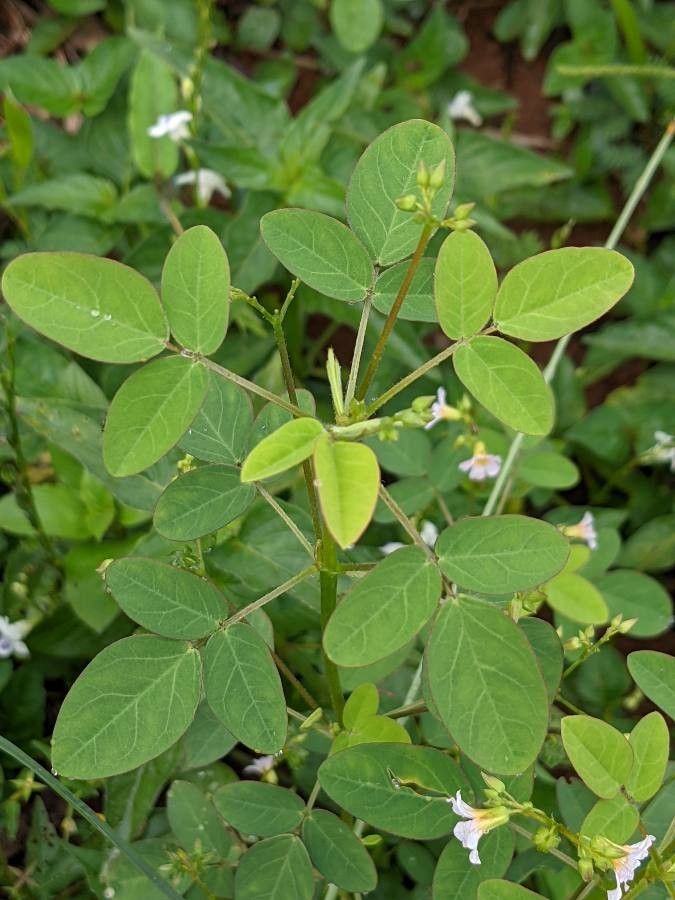
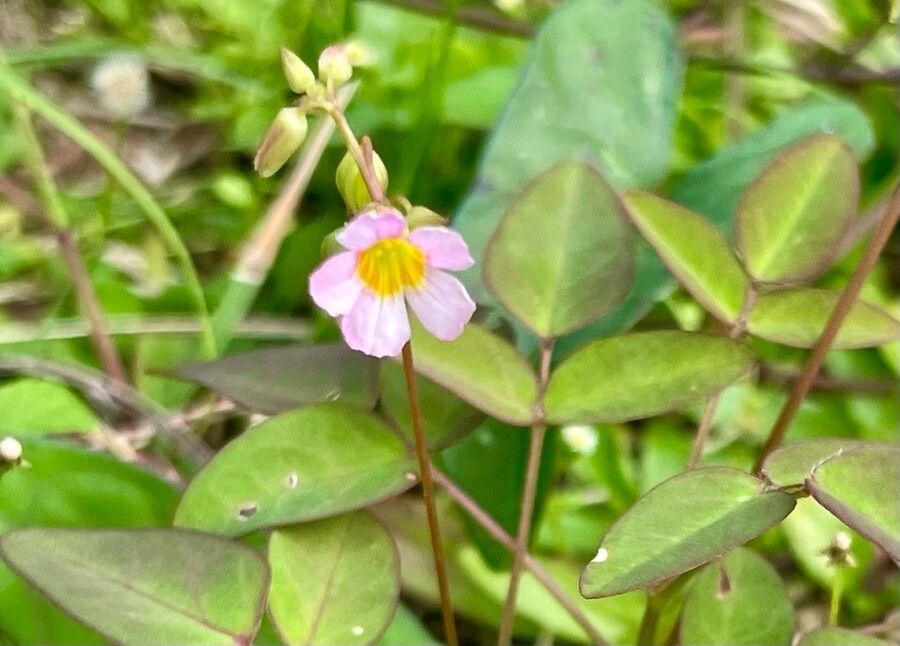
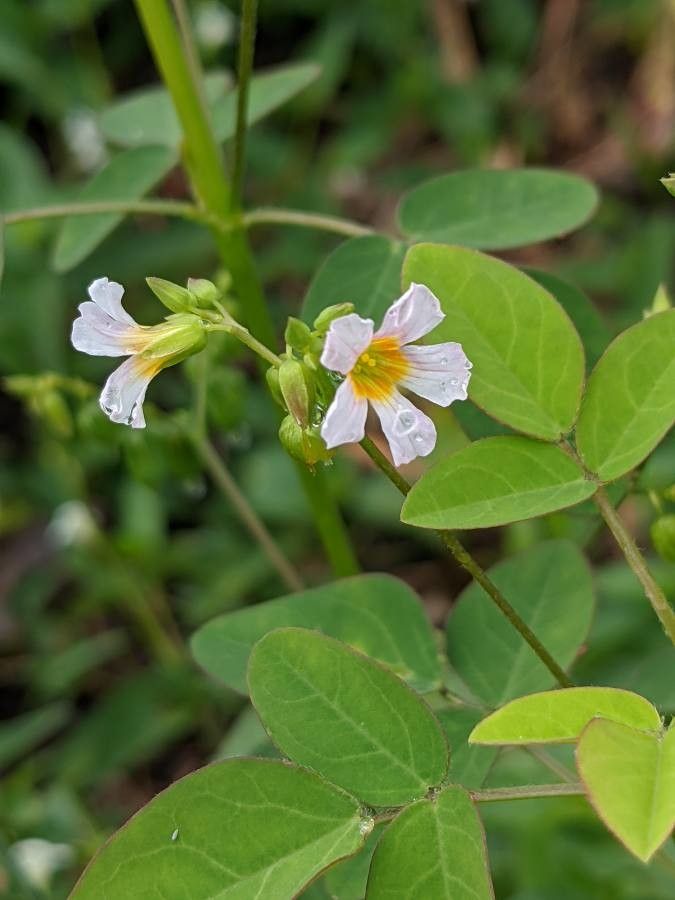
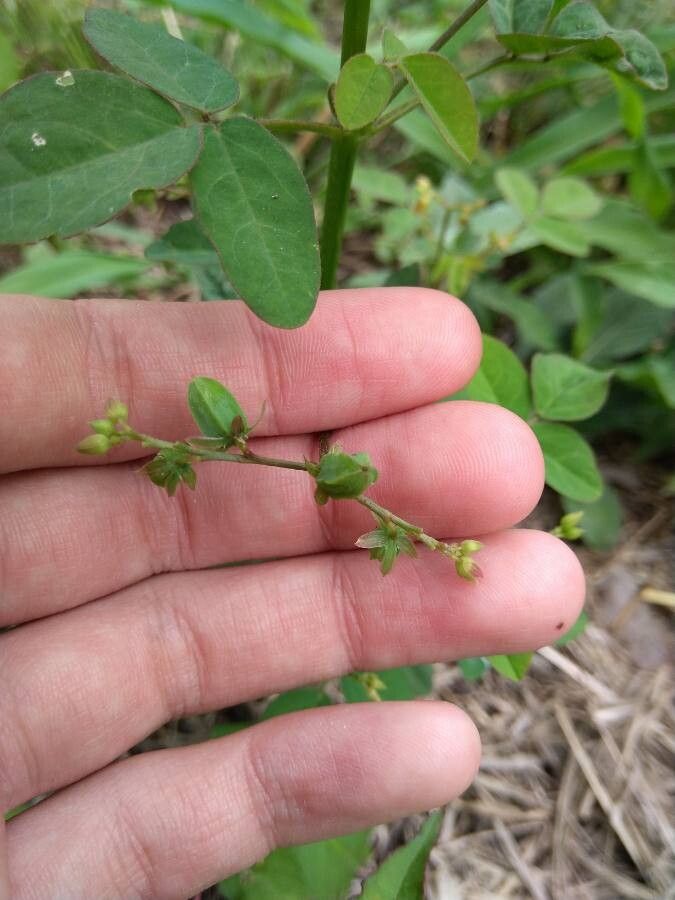
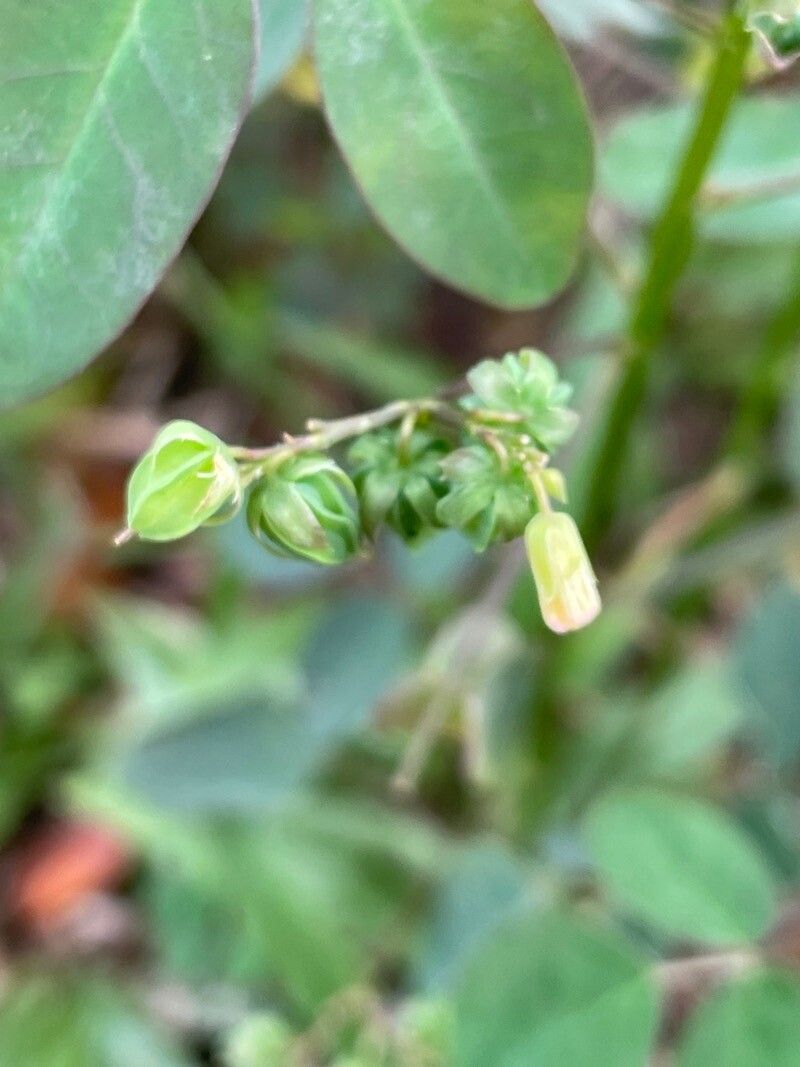
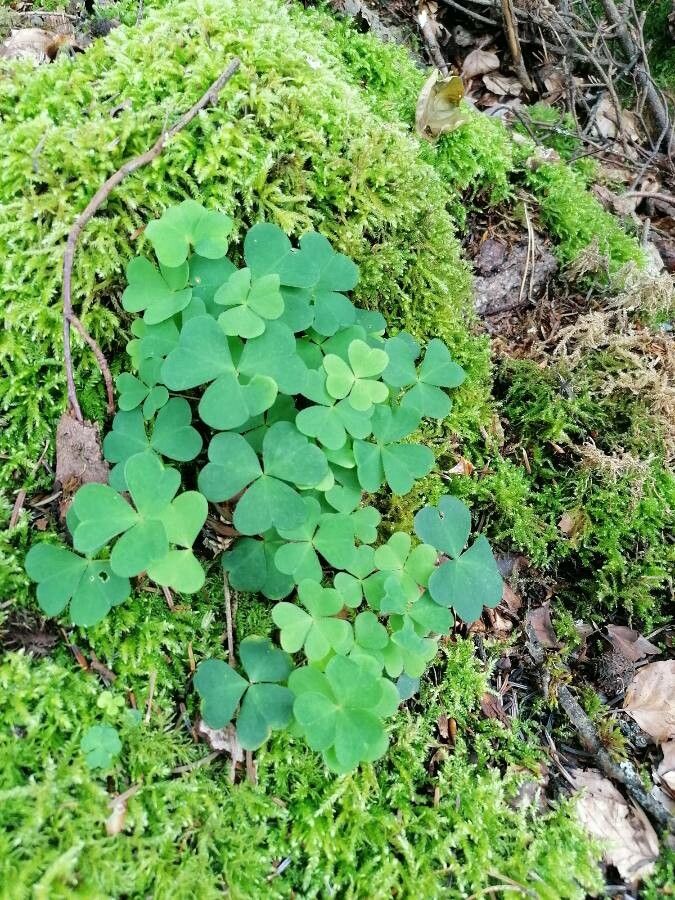
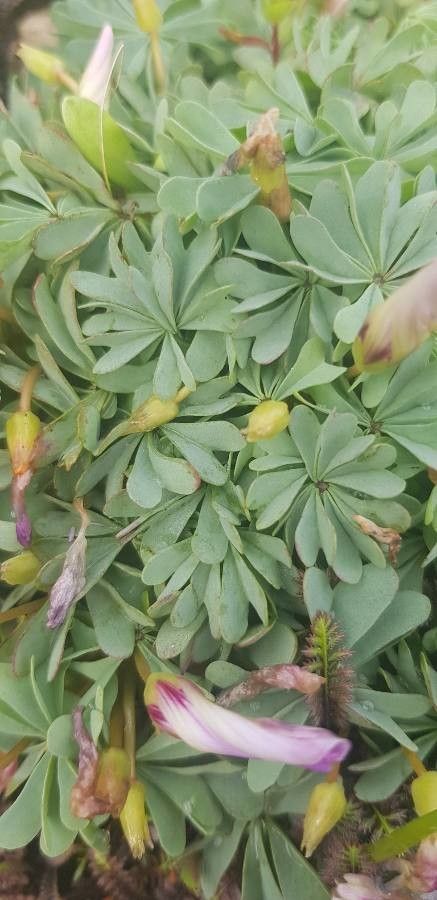
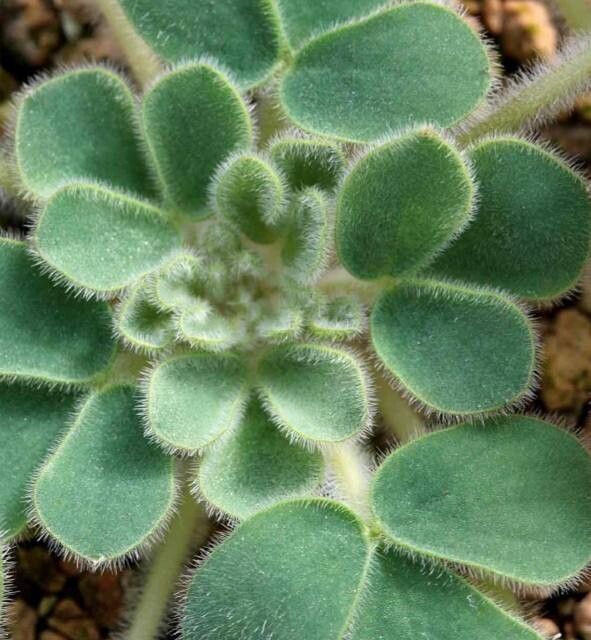
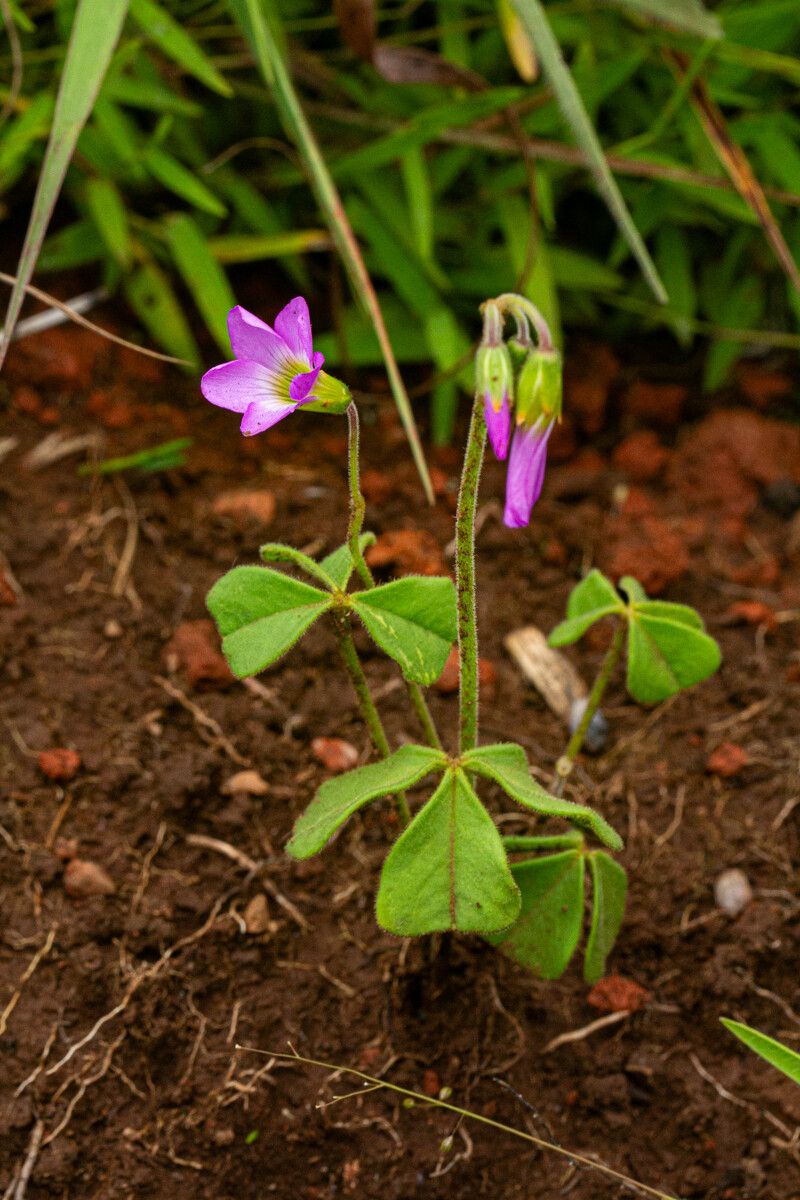
Oxalis barrelieri, the Barrelier's woodsorrel, or lavender sorrel, also commonly called in French trèfle, oseille-marron, or oseille-savane, is a plant from the genus Oxalis. It also bears the Latin synonym, Oxalis bahiensis. It is native to the West Indies and to Central America and South America (Smith, 1985; pp. 624–625). It was introduced into parts of Africa, Ceylon, and Malesia (Smith, 1985; pp. 624–625). It is considered a weed in the Caroline and Mariana Islands and in Samoa (Smith, 1985; pp. 624–625). The plant grows to a height of 20–150 cm and has pink flowers with a greenish or yellow base (Smith, 1985; pp. 624–625). Leaflets on the stems generally have three leaves attached to the center (Smith, 1985; pp. 624–625).
Barrelier's woodsorrel is fairly disease-resistant and generally not vulnerable to illnesses. That said, it can be affected by pests and diseases present in its environment. Such infections are typically mild. In terms of care, the plant requires a moderate level of maintenance. Regular pruning is needed to keep a tidy appearance and support healthy growth. Fertilizing can also help encourage flowering. Barrelier's woodsorrel is well suited to anyone with outdoor space, like a garden or patio, and does not demand extensive care experience. It may need more attention if grown indoors.
How to keep Oxalis Barrelieri.
Light
Barrelier's woodsorrel does best with plenty of sunlight; its growth and vigor are strongly influenced by light. Its native habitat receives abundant sun. Too little sunlight restricts growth, while too much can damage the plant.
Water
Barrelier's woodsorrel thrives in conditions similar to its native subtropical habitat, which provide moderate humidity and consistent moisture. To care for this plant, water it once a week, making sure the soil stays evenly moist. It can tolerate short periods of dryness. In dry climates, additional watering is essential to maintain healthy growth and vibrant foliage.
Temperature
Barrelier's woodsorrel originates from temperate areas and grows best in temperatures of 68 to 95 °F (20 to 35 ℃). In cooler months, its location should be adjusted to satisfy its preference for warmth.
Fertilizer
When most of Barrelier's woodsorrel flowers have opened to their full size, resume fertilizing. As the blooms reach peak production, apply fertilizer every three to four weeks, weather permitting. Then, after the plant begins producing fewer new flowers, stop fertilizing; there's no reason to feed it when it can no longer produce more blooms.
Pruning
For the best growth of Barrelier's woodsorrel, proper pruning is essential from early to late spring. Begin by trimming dead stems and thinning out any overgrown areas to improve airflow. Pinching back new growth can encourage a bushier appearance. Regular pruning not only helps prevent disease but also promotes healthy growth. Always make sure to use clean, sharp tools to minimize stress and reduce the risk of infection.
Botanical profile.
- Plant Type
- Herb
- Life Cycle
- Annual, Perennial
- Genus
- Oxalis
- Family
- Oxalidaceae
- Hardiness Zone
- 8-10
- Mature Height
- 0.2 m to 1.52 m
- Mature Spread
- 20 cm to 40 cm
- Leaf Color
- Green, Dark Green
- Leaf Type
- Deciduous
- Flower Color
- White, Yellow, Pink, Gold
- Flower Size
- 2.54 cm to 5.08 cm
- Bloom Time
- All year round
- Planting Time
- Spring, Summer
- Harvest Time
- All year round
- Native Area
- Colombia, Honduras, Guatemala, Bolivia, Venezuela, Peru, Guyana, Brazil, Nicaragua, Ecuador, Costa Rica, Panama
Other names.
Reader questions.
How should I water my Barrelier's woodsorrel?
Watering Barrelier's woodsorrel is easy and flexible. You can use a garden hose with a spray nozzle, a watering can, or any other common watering tool. This plant can thrive with rainwater, tap water, or filtered water. However, it's best to avoid watering from overhead as it can harm the leaves and flowers, and potentially cause disease. A drip irrigation system is recommended for watering, as it applies water evenly and directly to the soil. For a Barrelier's woodsorrel in a container, you can use similar watering methods, such as using a cup, watering can, or tap to water the soil directly.
What type of sun exposure is required for Barrelier's woodsorrel?
Barrelier's woodsorrel thrives in full sun, requiring above 6 hours of sunlight daily for optimal growth and health. Its origin supports significant sun exposure. However, it can also survive with partial sun, about 3-6 hours of sunlight. Insufficient sunlight hampers its growth, while too much exposure can be detrimental. It's crucial to observe your garden's sunlight pattern and choose locations that offer the right balance of light and shade, ensuring the plant's happiness and well-being.
What is the native climate for Barrelier's woodsorrel?
Barrelier's woodsorrel, botanically known as Oxalis barrelieri, is native to regions with temperate climates. It thrives in temperatures ranging from 68 to 95 °F (20 to 35 °C). Ideally, it flourishes in warm conditions and requires adjustments during cooler months to maintain its warmth preference.
What should I do if I give my Barrelier's woodsorrel plant too much or too little water?
To remedy underwatering of Barrelier's woodsorrel, simply start watering it more regularly when you notice it is lacking moisture. Overwatering, on the other hand, can be a more serious issue. If not caught early, it can lead to diseases and the decline and death of the plant. To prevent this, choose a suitable growing location with ample sunlight to dry the soil and good drainage to avoid waterlogged soil. If you overwater your potted Barrelier's woodsorrel, consider changing it to a new pot with better drainage and loose soil.
What are the essentials for growing Barrelier's woodsorrel successfully?
Successfully growing Barrelier's woodsorrel hinges on ample sun exposure. The plant's health and growth are directly affected by the amount of sunlight it receives, which should mirror its natural habitat's conditions. In environments where natural sunlight is insufficient, especially during winter or in less sunlit areas, using artificial lighting is essential. Indoor plants benefit from artificial lights like LED, which should be customized to deliver specific light wavelengths. The recommended artificial light intensity is 30-50W/sq ft for full sun plants, 20-30W/sq ft for partial sun plants, and 10-20W/sq ft for full shade plants. The artificial light source should be placed 12-36 inches above the plant for 8-12 hours per day, simulating natural daylight conditions.
How does Barrelier's woodsorrel cope with cold temperatures?
Barrelier's woodsorrel has a moderate cold tolerance and generally does not require any additional protection when temperatures are above 0°C. However, if temperatures are expected to drop below freezing, temporary measures for cold protection are necessary. This includes wrapping the plant in materials such as plastic film, fabric, or other insulating materials to keep it warm. Once temperatures rise, these protective measures should be removed promptly.
How frequently should I water my Barrelier's woodsorrel?
Barrelier's woodsorrel requires regular watering throughout the growing season. In spring, water it once a week. As the season progresses and gets warmer, you may need to increase watering to two or three times a week. However, be careful not to exceed this rate as it can harm the plant. Regardless of how often you water, make sure the soil remains moist but not wet. When it comes to watering Barrelier's woodsorrel in a pot, you'll need to water it more frequently. Potted soil tends to heat up and dry out faster than ground soil. Typically, you should plan to water a container-grown Barrelier's woodsorrel a few times per week, compared to just once per week for an in-ground plant.
What symptoms indicate inadequate sunlight for Barrelier's woodsorrel when grown indoors?
Barrelier's woodsorrel may exhibit several symptoms when it doesn't receive enough sunlight, especially when grown indoors. Some of these symptoms include smaller new leaves compared to mature ones, leggy or sparse growth due to longer spaces between leaves or stems, faster leaf drop as the plant conserves resources by shedding older leaves, and slower or halted growth as the plant enters survival mode. Additionally, lighter-colored new leaves and chlorosis, where leaves lose their green hue and turn yellow due to insufficient sunlight, indicate a lack of chlorophyll and essential nutrients. Conversely, excessive sunlight can lead to sunscald, leaf curling, wilting, and leaf scorching, which are harmful to the plant's health.
What should you do if Barrelier's woodsorrel experiences low temperatures?
When Barrelier's woodsorrel experiences low temperatures, particularly below -10°C, and the leaves start to droop or wilt, it's essential to take action. In mild cases of frost damage, the plant can recover. For its care, trim off the frost-damaged parts. To protect the plant from recurring low temperatures, wrap it with materials like non-woven fabric or cloth and construct a wind barrier to shield it from cold winds.
How much water does my Barrelier's woodsorrel plant need?
Determining how much water to give your Barrelier's woodsorrel can be approached in a few different ways. Some gardeners prefer to use a soil moisture test, where they water until the top six inches of soil feel moist. Another option is using a set measurement, like giving two gallons of water per week, depending on temperature and soil dryness. However, strict guidelines may cause overwatering if your plant needs less. For potted Barrelier's woodsorrel, you should water enough to moisten all dry soil layers, which can be tested by feeling the soil or seeing excess water draining from the pot.
How can I address the issue of insufficient or excessive sunlight for Barrelier's woodsorrel?
To address insufficient sunlight for Barrelier's woodsorrel, gradually move the plant to a sunnier location each week until it receives at least 6 hours of direct sunlight daily. For indoor plants, consider using artificial light sources like desk lamps or professional plant grow lights for at least 8 hours daily if moving the plant is not feasible. For outdoor plants, it's important to gradually shift them to sunnier spots to avoid sunburn, adjusting location weekly. If sunlight is blocked, consider pruning obstructions or transplanting smaller plants to sunnier areas with ample sunlight and good drainage. Remember, while parts of the plant affected by low light may not recover, new growth should be healthy with increased light exposure.
How should you care for Barrelier's woodsorrel in high temperatures?
In high temperatures, specifically when the thermometer climbs above 35°C, Barrelier's woodsorrel requires special attention. The plant's leaves may exhibit signs of stress, such as lighter color, dry and withered leaf tips, curling leaves, and increased susceptibility to sunburn. To mitigate these effects, trim away sunburned and dried-up parts of the plant. Relocate the plant to a shaded area or use a shade cloth to protect it from the midday and afternoon sun. Watering the plant in the morning and evening helps to keep the soil adequately moist and supports the plant's health.