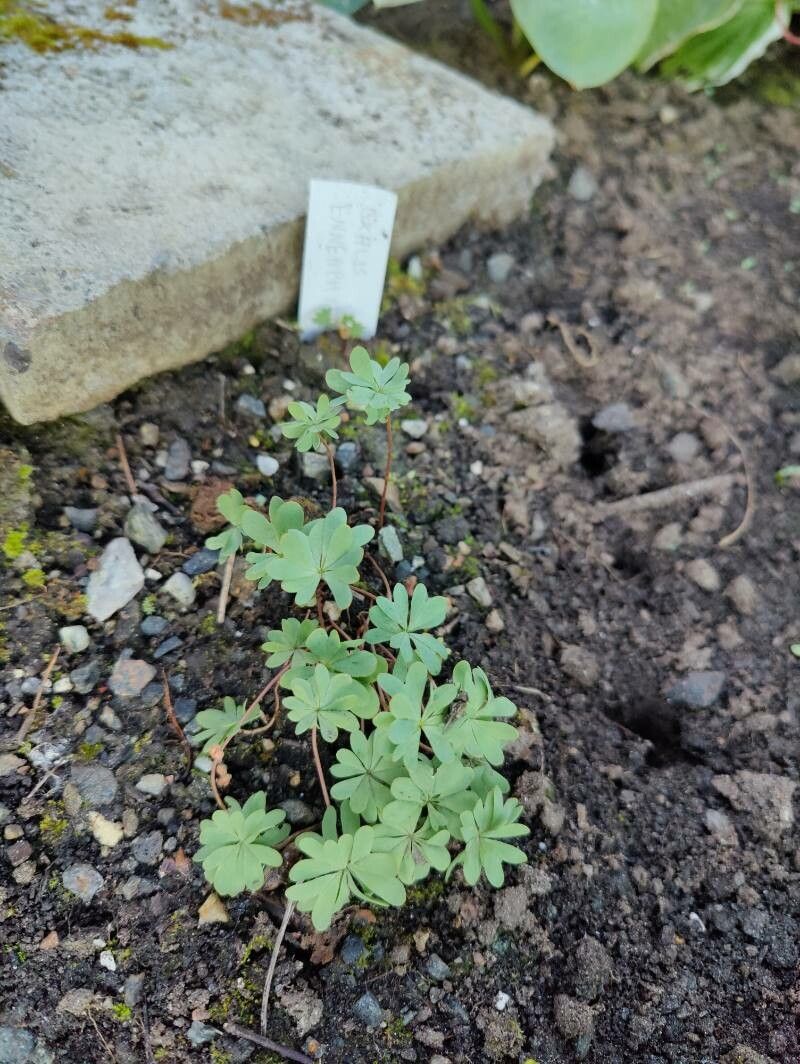
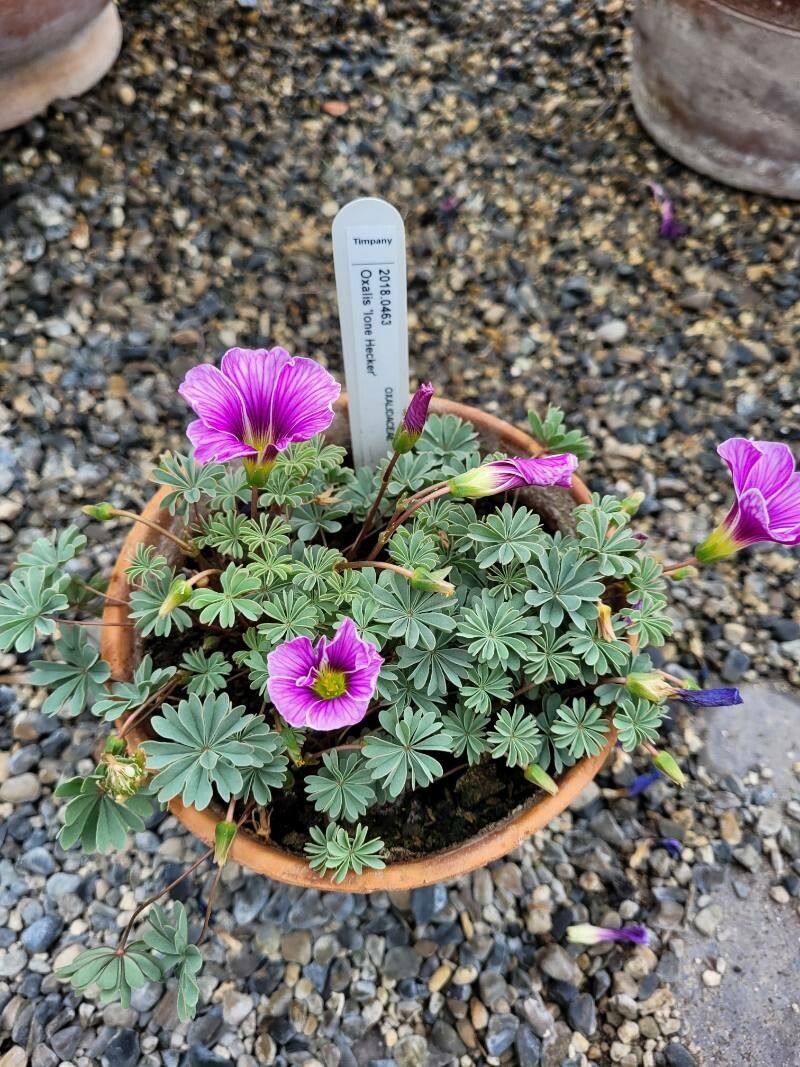
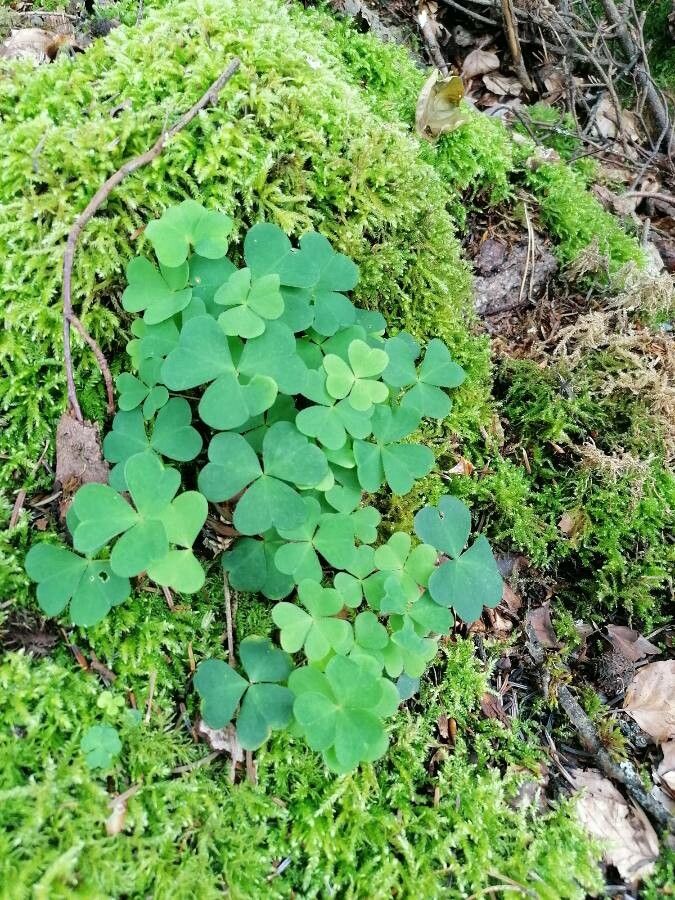
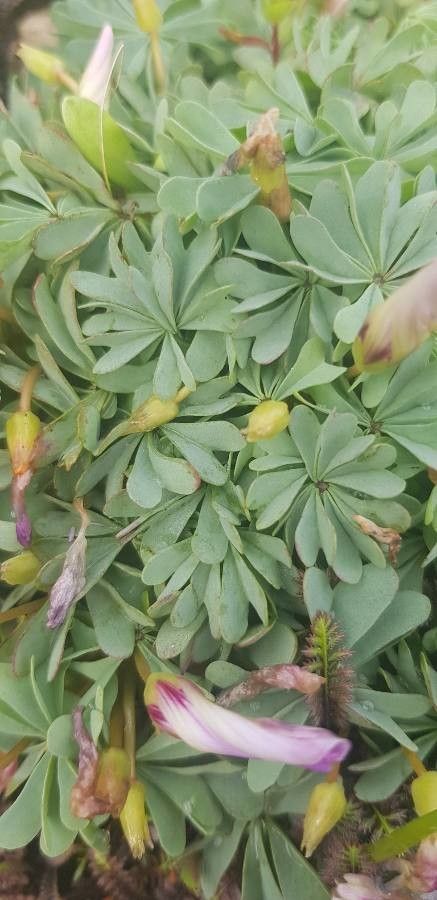
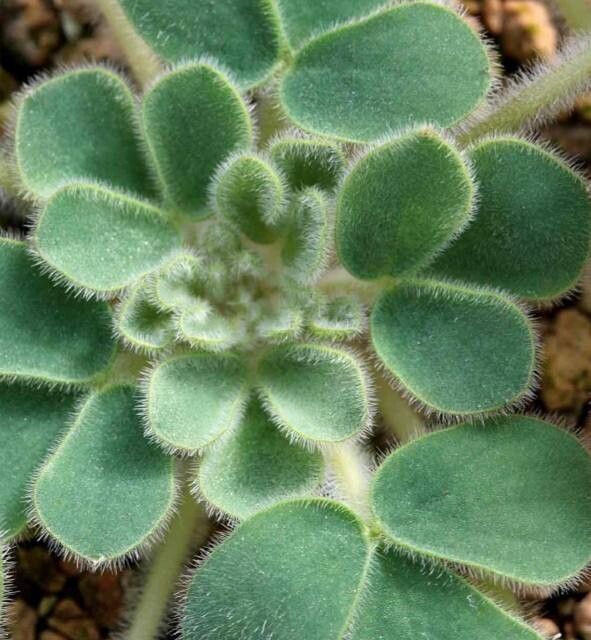
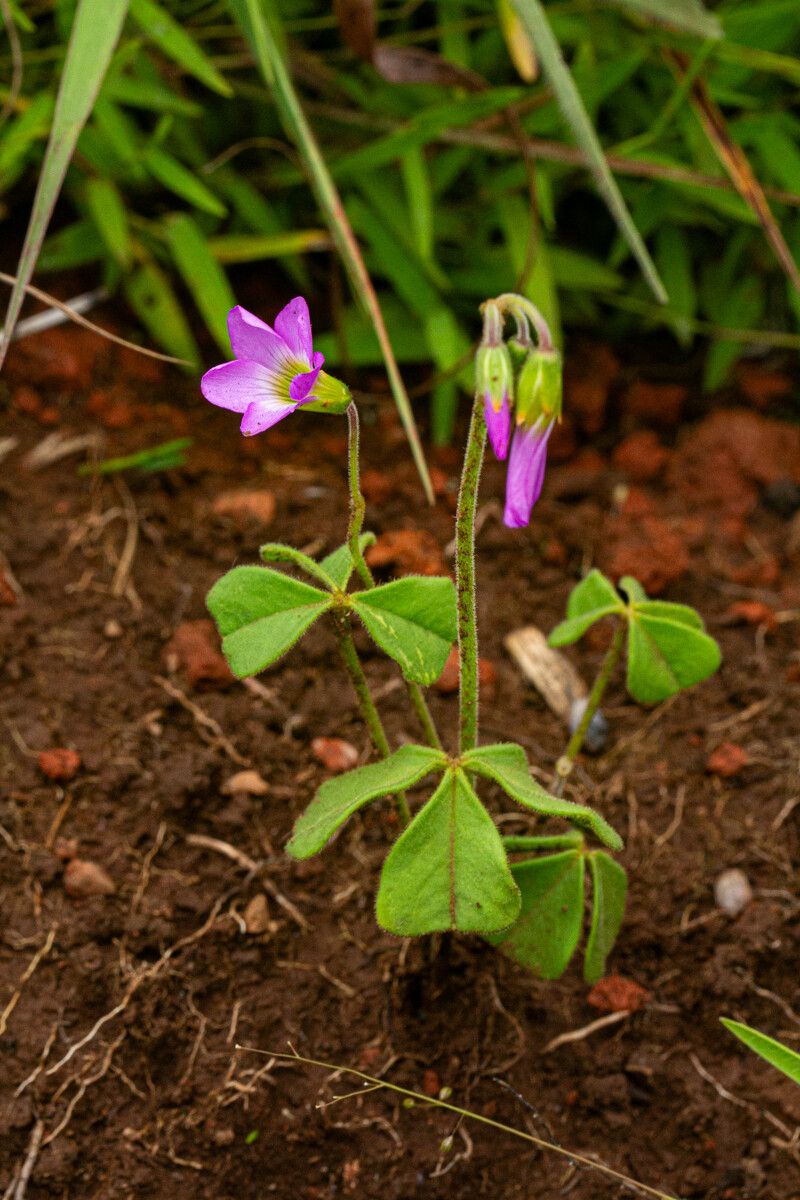
Oxalis enneaphylla, or scurvy grass, is a late spring- and summer-flowering, rhizomatous, alpine perennial herbaceous plant native to the grasslands of Patagonia and the Falkland Islands. It is a small plant that grows to 7 cm (2.8 in) high and 10 cm (3.9 in) across, with slightly fleshy, hairy, blue-grey leaves, which are edible but have a sharp taste due to their high oxalic acid content. The name enneaphylla comes from the Greek εννεα (ennea), "nine" and φυλλον (phyllon), "leaf". The almond-scented, five-petalled flowers are pink shading to white. They are hermaphrodite and pollinated by Lepidoptera (moths and butterflies). The plant gets its common name "scurvy grass" from the fact that its leaves are rich in vitamin C. It is not closely related to the other plant known as scurvy-grass (Cochlearia), nor is either plant a grass (Poaceae). Sailors travelling around Cape Horn would consume the leaves to avoid scurvy. This is illustrated by this extract from the Journal of Syms Covington, who sailed aboard HMS Beagle with Charles Darwin. Here he describes the Falkland Islands, and refers to Oxalis enneaphylla as "wild thyme":
While laying here we found it very squally, and at times very cold. The island is in general mountainous. Not a single tree to be seen but there are low brushes with red berries which are very good eating. Here are bullocks horses and pigs that run wild, rabbits, wild geese and ducks and most excellent snipe shooting on the marshy ground and long grass, of which the island in general has very little else. Likewise there is the tea plant, which bears very sweet berry, and wild thyme which we used as tea, and is very good and much more plentiful than the former.
This plant is cultivated in temperate regions, and is suitable for rockeries or alpine gardens. The species and the hybrid cultivar 'Ione Hecker' have gained the Royal Horticultural Society's Award of Garden Merit.
How to keep Oxalis Enneaphylla.
Water
Scurvygrass, a plant native to cool temperate regions, thrives in environments with moderate moisture levels. It prefers consistently moist soil but not overly saturated. For optimal growth, water the plant weekly, particularly in outdoor alpine gardens. This regular watering helps maintain even soil moisture, which is crucial for preventing freeze damage to the roots.
Pruning
Scurvygrass is a resilient perennial plant characterized by its clover-like leaves and pink or white flowers. To maintain its health and appearance, prune the plant in early spring. This helps remove dead foliage and spent flower stems, promoting a tidy appearance and encouraging potential re-blooming. Regular pruning also enhances the plant's vigor and prevents overcrowding. Be sure to use clean, sharp tools to minimize the risk of disease.
Botanical profile.
- Plant Type
- Herb
- Life Cycle
- Perennial
- Genus
- Oxalis
- Family
- Oxalidaceae
- Mature Height
- 10 cm
- Mature Spread
- 20 cm
Other names.
Reader questions.
What are the sunlight requirements for Scurvygrass (Oxalis enneaphylla)?
Scurvygrass (Oxalis enneaphylla) thrives in different sunlight conditions depending on what you can provide. For those looking to maximize their plant's growth, aiming for full sun, which means the plant should receive above 6 hours of sunlight daily, is ideal. However, if your garden design or geographic location limits the amount of direct sunlight, Scurvygrass can still prosper under partial sun conditions, which equates to about 3-6 hours of sunlight each day. It's important to observe how sunlight moves throughout your garden over the day, allowing you to identify spots that offer a harmonious balance of light and shade. Selecting the right location will ensure your plants remain healthy and happy.