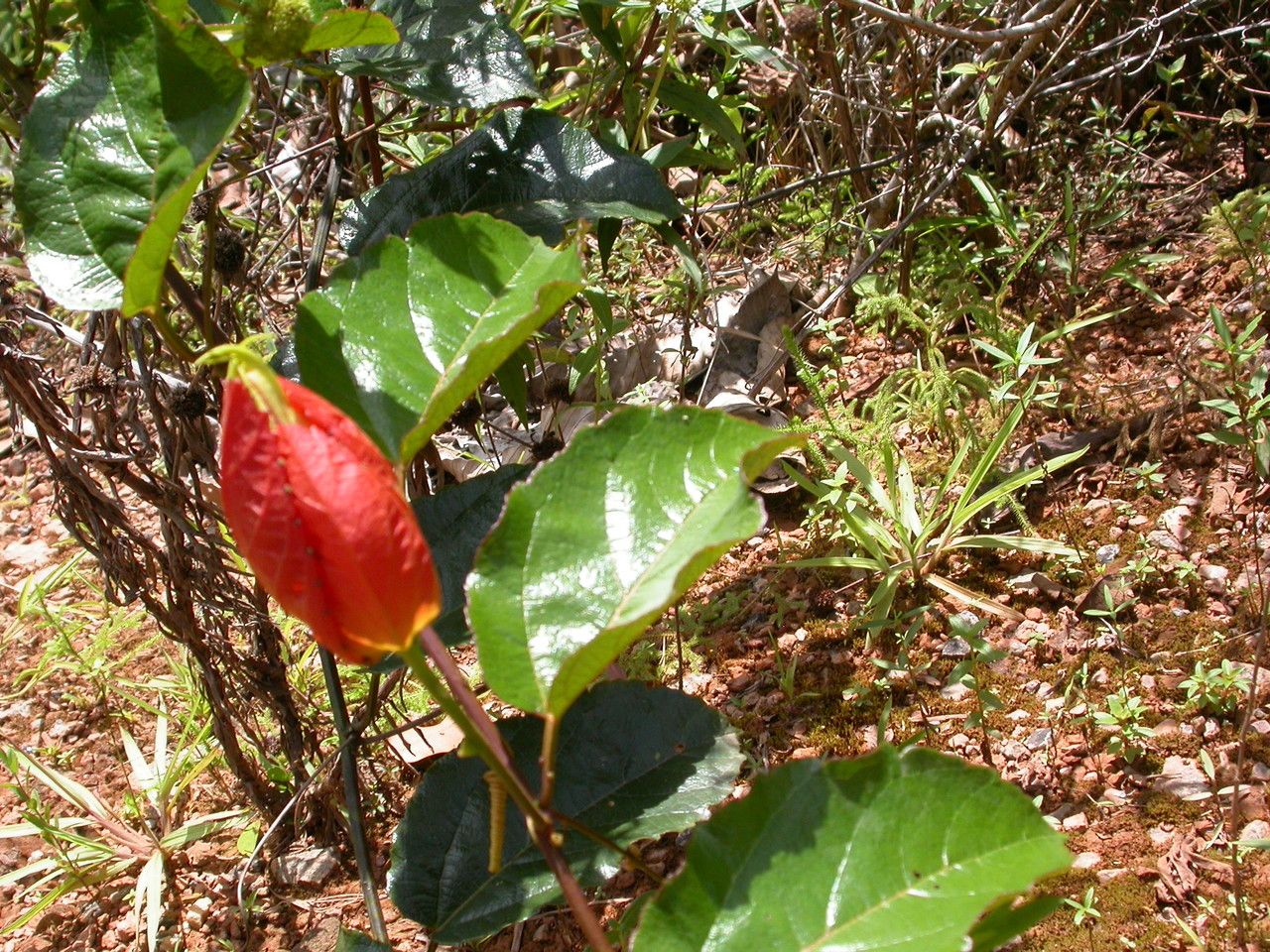
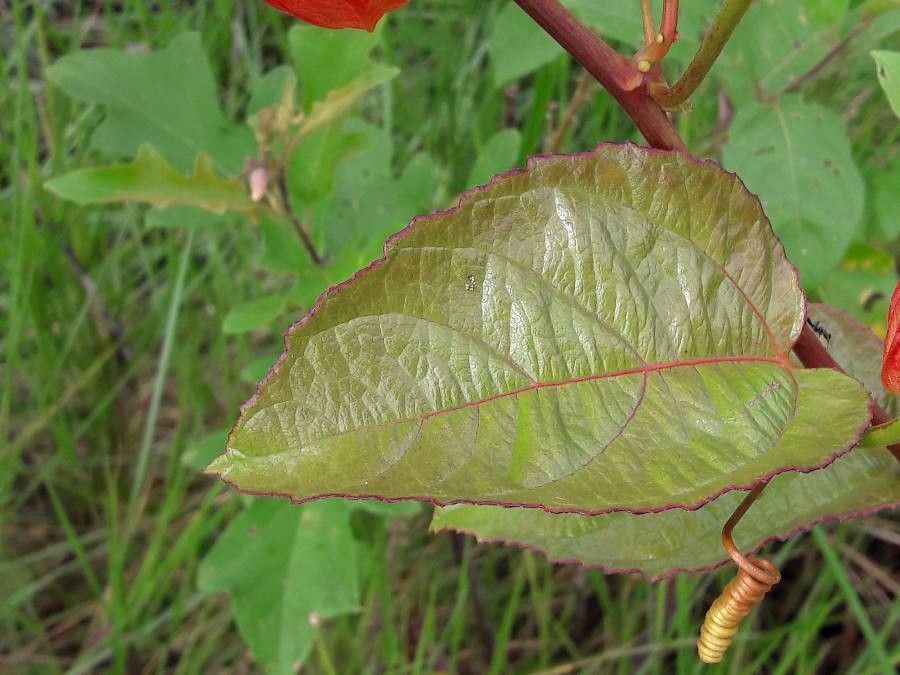
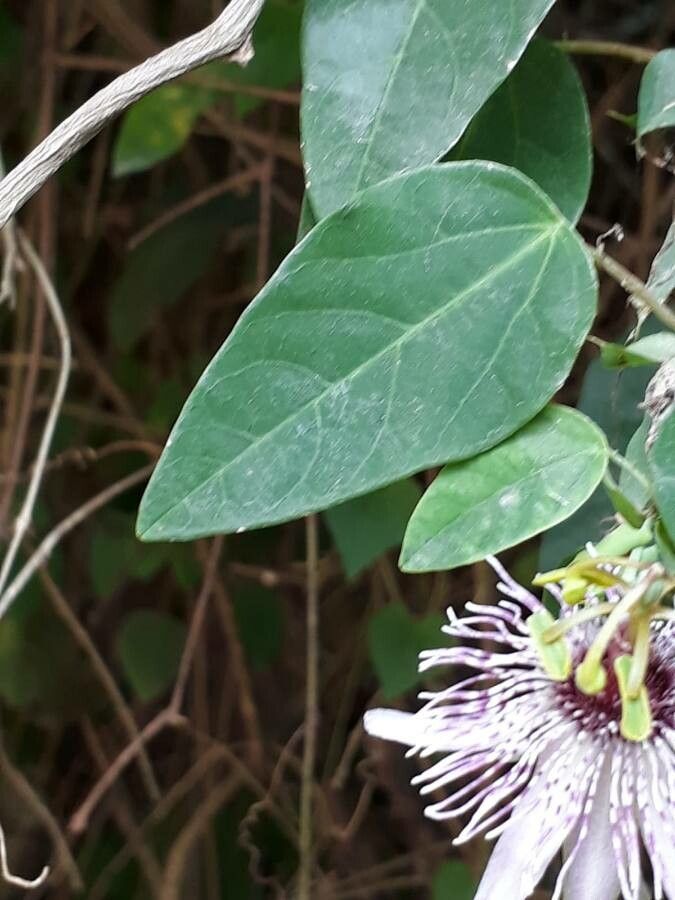
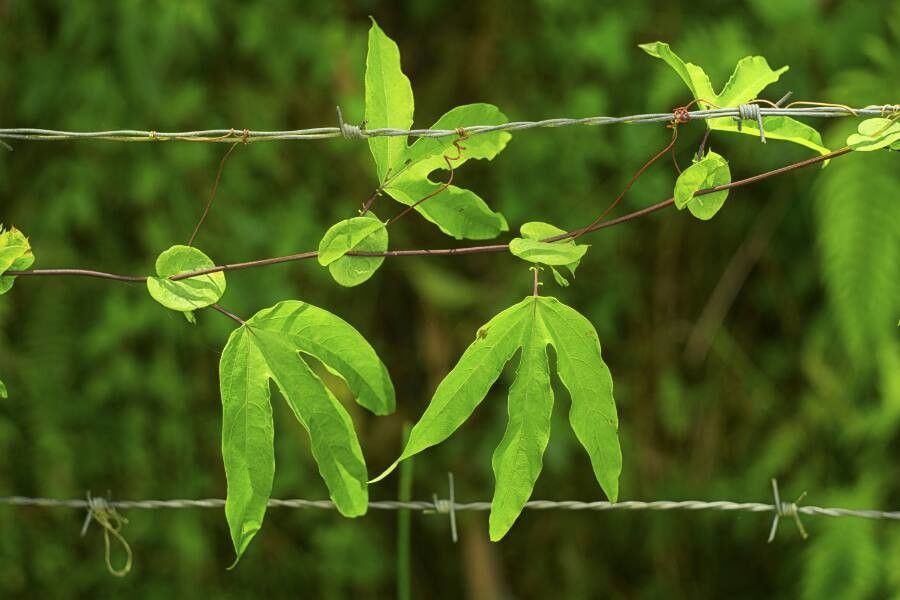
Passiflora coccinea, commonly known as the Scarlet Passionflower, is a species of flowering plant in the Passiflora genus. Native to South America, it can be found in countries such as Brazil, Colombia, and Venezuela. This plant is a vigorous climber, capable of growing up to 10 meters long, using tendrils to cling to other plants or structures for support.
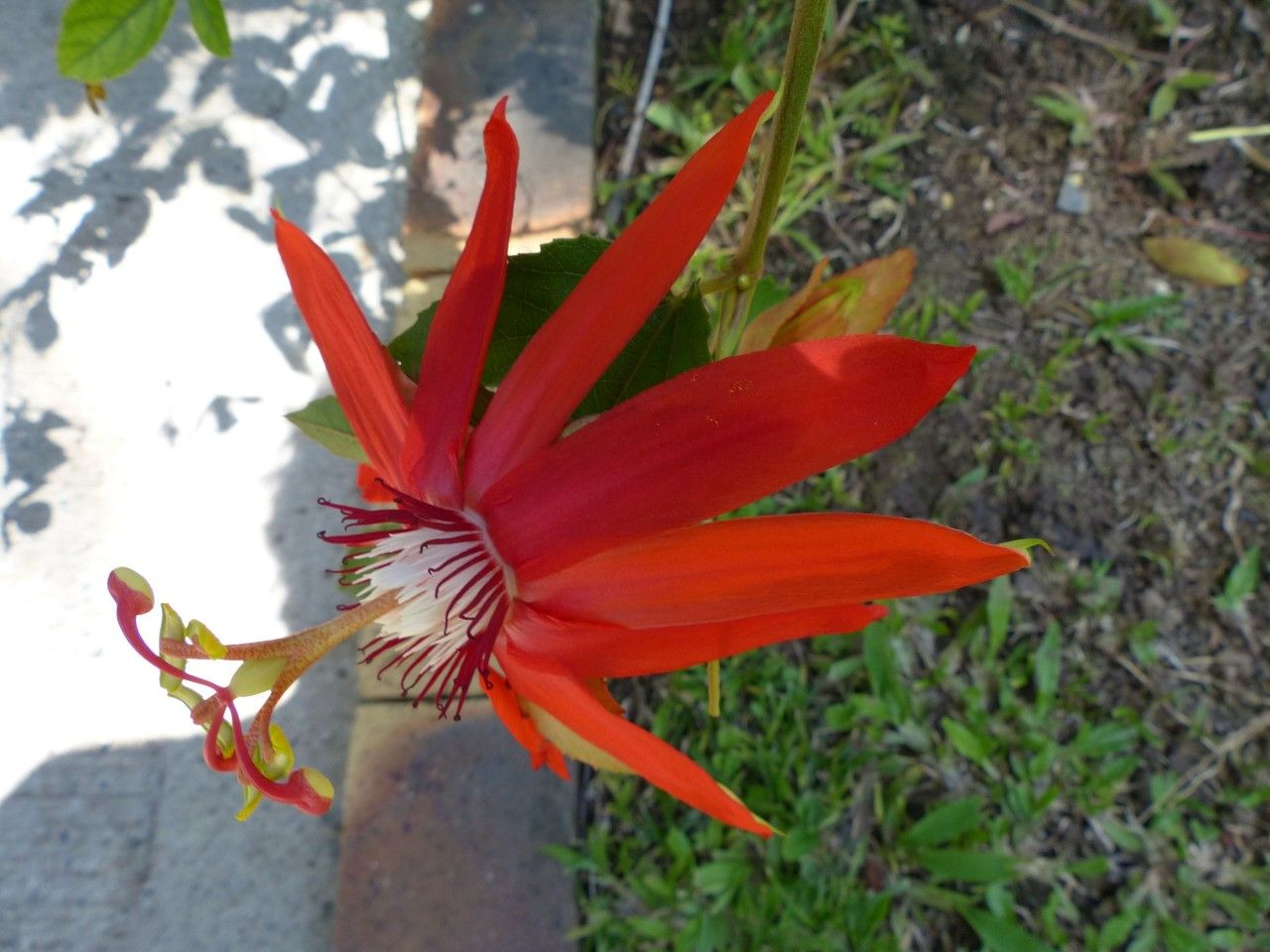
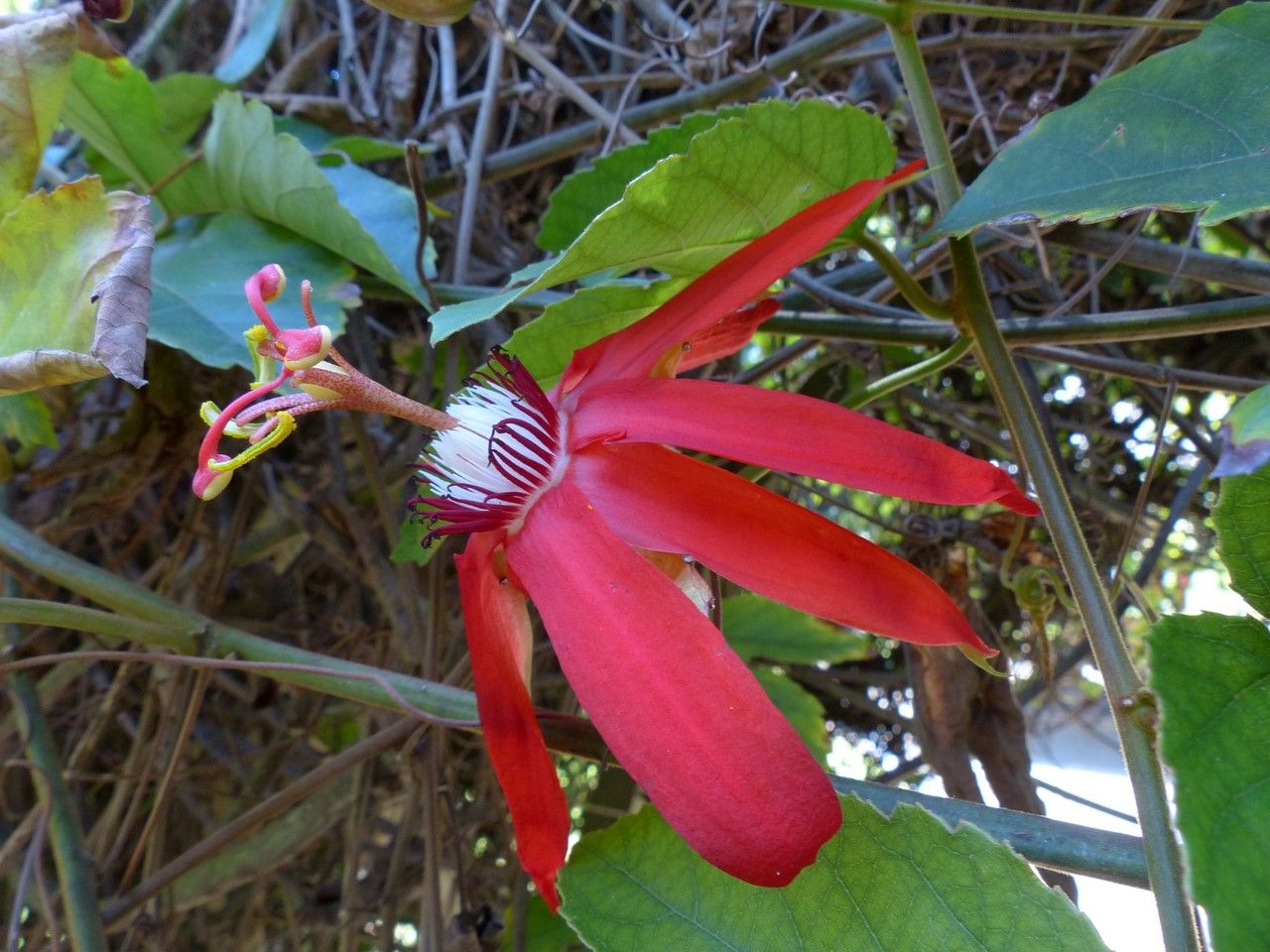
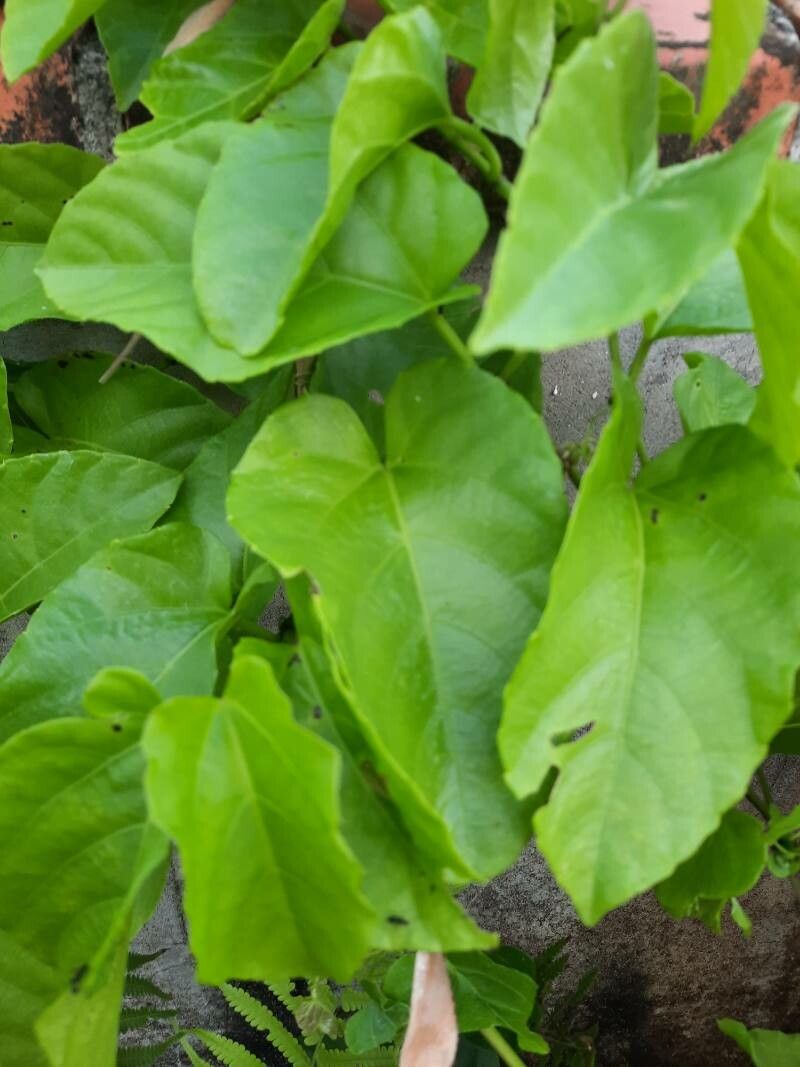
The leaves of Passiflora coccinea are dark green, glossy, and have three lobes. Its flowers are large and striking, with bright red petals surrounding a central structure composed of five stamens and three stigmas. These flowers bloom from spring to fall, attracting pollinators such as bees, butterflies, and hummingbirds.
Though the plant produces edible fruit, it is not commonly consumed due to its small size, approximately 2 cm, compared to other passionfruit species. However, it has been used in traditional medicine for its anti-inflammatory properties.
Passiflora coccinea prefers well-drained soil in full sun or partial shade but can tolerate some drought conditions once established. Regular pruning is needed to control its growth rate, but otherwise, it requires minimal maintenance. This makes it an ideal choice for gardeners seeking an easy-to-grow ornamental vine with beautiful blooms throughout the growing season.
Scarlet Passion Flower is highly resistant to disease and typically does not suffer from illnesses. In terms of maintenance, this plant is fairly low-maintenance. When grown outdoors it needs little watering, and larger specimens usually do not require pruning. Smaller plants, however, should be pruned after they have finished blooming. Scarlet Passion Flowert is appropriate for anyone with outdoor space, such as a garden or deck, and does not demand much care experience.
How to keep Passiflora Coccinea.
Light
The scarlet Passion Flower does best with ample light throughout the day, though it can tolerate reduced sun during parts of the day. Native to bright tropical environments, it has evolved to maximize light capture. Lack of sunlight causes weak growth, while too much exposure can burn the leaves.
Water
The scarlet passion flower, originally from tropical areas, thrives in high humidity and needs to be watered weekly for optimal growth. Although it prefers consistent moisture, it can tolerate short periods of dryness. As an evergreen climber, this plant benefits from being grown outdoors where it can receive natural rainfall.
Temperature
Scarlet Passion Flower comes from regions where temperatures typically range from 68 to 100 °F (20 to 38 ℃). It does best in warm conditions but can adjust with the seasons. More temperate indoor settings may need added warmth during cold months.
Fertilizer
The best time to fertilize a Scarlet Passion Flower is in early spring, as it breaks dormancy. Fertilizing at this stage promotes overall growth and flower development. It improves the foliage, stems, and branches, while encouraging flowers that are large, bright, and long-lasting. It also helps transport nutrients from the roots to the blooms and enhances the plant’s health and resistance to disease.
Pruning
The Scarlet Passion Flower features vibrant red blooms and lush foliage. To maintain its shape and manage its size, prune the plant in early spring by removing weak stems. This practice not only improves air circulation but also reduces the risk of disease and enhances flowering. For the best results, use clean, sharp tools when pruning.
Pot & Repot
To encourage growth, re-pot your scarlet passion flower every 2 to 3 years during the spring. Choose a pot that allows the roots to expand and use a well-draining soil mix that maintains consistent moisture. Make sure to provide a trellis for support, and place the plant in a location with plenty of warmth and sunlight for optimal flowering.
Botanical profile.
- Plant Type
- Vine
- Life Cycle
- Perennial
- Genus
- Passiflora
- Family
- Passifloraceae
- Hardiness Zone
- 10-12
- Mature Height
- 3.05 m to 3.66 m
- Mature Spread
- 91 cm
- Leaf Color
- Green
- Leaf Type
- Evergreen
- Flower Color
- Red
- Flower Size
- 7.62 cm to 10.16 cm
- Bloom Time
- All year round
- Planting Time
- Spring, Summer, Autumn
- Harvest Time
- All year round
- Native Area
- Colombia, Venezuela, Peru, Guyana, Brazil
Other names.
Reader questions.
How should I water my Scarlet Passion Flower?
Here are some tips for watering your plants effectively: - Place a garden hose at the base of the plant to promote root development. Avoid spraying the leaves directly, as this can cause issues. - If your plants are outdoors and exposed to direct sunlight, remember that the leaves will need more water. Consider using bubblers to keep the roots moist. - Soaker hoses are great for covering the entire garden or bed, especially when adding or removing plants. This helps to ensure that the roots are deeply watered. - After watering, make sure to drain any excess water and allow the soil to dry before watering again. - To prevent diseases, water at ground level and avoid wetting the leaves. - On a sunny day, it can be beneficial to spray the entire bush with water. - Whether your plants are potted or in the ground, keep in mind that Scarlet Passion Flower prefers deep watering rather than light sprinkling.
Why should I put fertilizer on my Scarlet Passion Flower?
Fertilization plays a key role in the overall health and well-being of a Scarlet Passion Flower. Providing the right amount of energy and nutrients enables the plant to develop a healthy foliage, sturdy stems, and branches. The flowers of the Scarlet Passion Flower hold immense value for gardeners, and fertilization is fortunate because it helps produce large, vibrant, and long-lasting blooms. This is because the appropriate fertilizer facilitates the efficient transfer of fuel from the plant's roots to its flowers through the stems. Proper fertilization also enhances the plant's overall health, empowering it to better combat diseases.
What are the sunlight requirements for Scarlet Passion Flower?
Scarlet Passion Flower requires full sun, which means it thrives in locations that receive more than 6 hours of direct sunlight daily. However, it can also tolerate partial sun, receiving about 3-6 hours of sunlight. It's important to observe how sunlight moves through your garden to ensure your plants receive the ideal balance of light and shade for optimal growth. Originating from bright, tropical habitats, the Scarlet Passion Flower has adapted to maximize light capture, but insufficient sunlight can lead to weak growth, while too much direct sun may cause leaf burn.
What is the ideal climate for Scarlet Passion Flower?
The Scarlet Passion Flower thrives in climates where temperatures are typically between 68 to 100 °F (20 to 38 °C), indicating its preference for warm conditions. However, during colder months or in more temperate indoor environments, additional heat may be necessary to mimic these conditions. It's extremely sensitive to cold temperatures, and care should be taken to maintain temperatures above 20°C, especially during winter, to ensure optimal growth. Temperatures nearing 5°C can be harmful to the plant.
What do I do if I give Scarlet Passion Flower too much or too little water?
An overwatered Scarlet Passion Flower can show signs of yellowing, wilting, and dropping leaves. The plant may also appear dull and unhealthy, with mushy stems. When these signs appear, it's best to adjust your watering schedule. On the other hand, wilting can also be a sign of under watering. Underwatered leaves may become crispy and dry, while overwatered leaves will be soft and wilted. If the soil is dry and simply watering is not enough, give the plant a thorough watering. However, even after sufficient watering, the Scarlet Passion Flower may still have dry and yellow leaves due to a damaged root system. Once the plant returns to normal, the yellowing of leaves will stop. When growing a Scarlet Passion Flower indoors, always check the moisture levels in the pot and avoid overwatering. Look out for black spots, and if present, allow the soil to dry in the pot by refraining from watering for a few days. Overwatering can lead to root rot, so if you notice discolored and slimy roots, consider transferring the plant to a different pot. It's important to prevent root rot and avoid overly soggy soil. If you're planting the Scarlet Passion Flower outdoors, dig a little deeper and check the soil moisture with your fingers. If the soil is too dry, it may indicate underwatering, and sufficient watering is needed to aid the plant's recovery.
When should I fertilize my Scarlet Passion Flower for the best results?
The best time to fertilize a Scarlet Passion Flower is in early spring as it is coming out of dormancy and preparing to bloom. This will provide the plant with the energy it needs for growth and flower development. However, fertilizing in the fall can also be beneficial, though a smaller amount is sufficient. Some gardeners also choose to fertilize when planting, but this is not always required.
Can Scarlet Passion Flower grow with artificial lighting?
Yes, Scarlet Passion Flower can grow under artificial lighting, which becomes crucial especially when natural sunlight is inadequate, such as during winter or in spaces that receive less sunlight. Indoor plants benefit from artificial lights that support faster, healthier growth by mimicking natural sunlight conditions. LED lights are recommended due to their ability to provide specific wavelengths needed by plants. Full sun plants require 30-50W per square foot, partial sun plants 20-30W per square foot, and full shade plants 10-20W per square foot. The light source should be placed 12-36 inches above the plant, ensuring it receives 8-12 hours of light daily.
How do you care for a Scarlet Passion Flower during cold weather?
During the autumn and cold weather, it's recommended to bring outdoor-grown Scarlet Passion Flowers indoors to protect them from the cold. Placing them near a bright window ensures they receive enough light, but they should not be placed too close to heaters to avoid harm. The plant should be maintained in temperatures above 20°C during winter for optimal health. If exposed to temperatures below 1°C, the leaves may change color, indicating damage which necessitates trimming off the frost-damaged parts and moving the plant to a warmer, indoor location.
How often should I water my Scarlet Passion Flower?
The Scarlet Passion Flower prefers deep, infrequent watering. When planted in pots, it's best to soak them with a gallon of water each time to account for limited water storage and faster soil drying. In cold regions, watering is needed every 3 to 5 days. Watering should be done early in the morning when the soil is dry, both indoors and outdoors. To determine if watering is needed, check the soil. Once the top 2-3 inches are dry, it's time for a full watering. On hot days, it's important to check the moisture daily as the heat can quickly dry out the pot's soil. In garden settings, irrigation is necessary. In hot climates, watering once a week may be sufficient. Pay attention to dryness of about 2 to 3 inches of soil and consider existing rainwater to prevent root rot. If there's ample rainfall, additional watering may not be necessary. Scarlet Passion Flower tends to grow during spring and fall. Adding 3 to 4 inches of mulch outdoors helps conserve water. Sandy soil requires more frequent watering as it drains faster, while clay soil can be watered less often to avoid root rot. Keeping track of watering dates on a calendar can prevent delay. Drooping leaves may indicate the need for watering, so prompt action should be taken.
When is the wrong time to fertilize my Scarlet Passion Flower?
During the winter, you don't need to fertilize your Scarlet Passion Flower since it is in a dormant phase and does not require much energy from the soil. Overfertilizing during this time can lead to negative outcomes. The two main feeding times for this plant are in early spring and fall. Therefore, during most of spring and summer, fertilizer is not necessary. Additionally, it's advisable to refrain from fertilizing if the plant is exposed to excessively hot or dry conditions.
What are the symptoms of light deficiency in Scarlet Passion Flower?
Symptoms of light deficiency in Scarlet Passion Flower include small new leaves, leggy or sparse growth, faster leaf drop, slower or halted new growth, lighter-colored new leaves, chlorosis (yellowing of leaves), sunscald, leaf curling, wilting, and leaf scorching. These symptoms indicate that the plant is not receiving adequate sunlight, leading to decreased energy, weaker growth, and reduced overall health.
What are the symptoms and solutions for Scarlet Passion Flower exposed to low temperatures?
Exposure to low temperatures causes the leaves of the Scarlet Passion Flower to lighten in color, and in cases of frost damage, they gradually turn brown or black. Symptoms include wilting and drooping. To mitigate these effects, frost-damaged parts should be trimmed off, and the plant should be moved indoors to a warm environment. Placing the plant near a south-facing window ensures ample sunlight while avoiding placement near heaters or air conditioning vents that could cause excessive dryness.