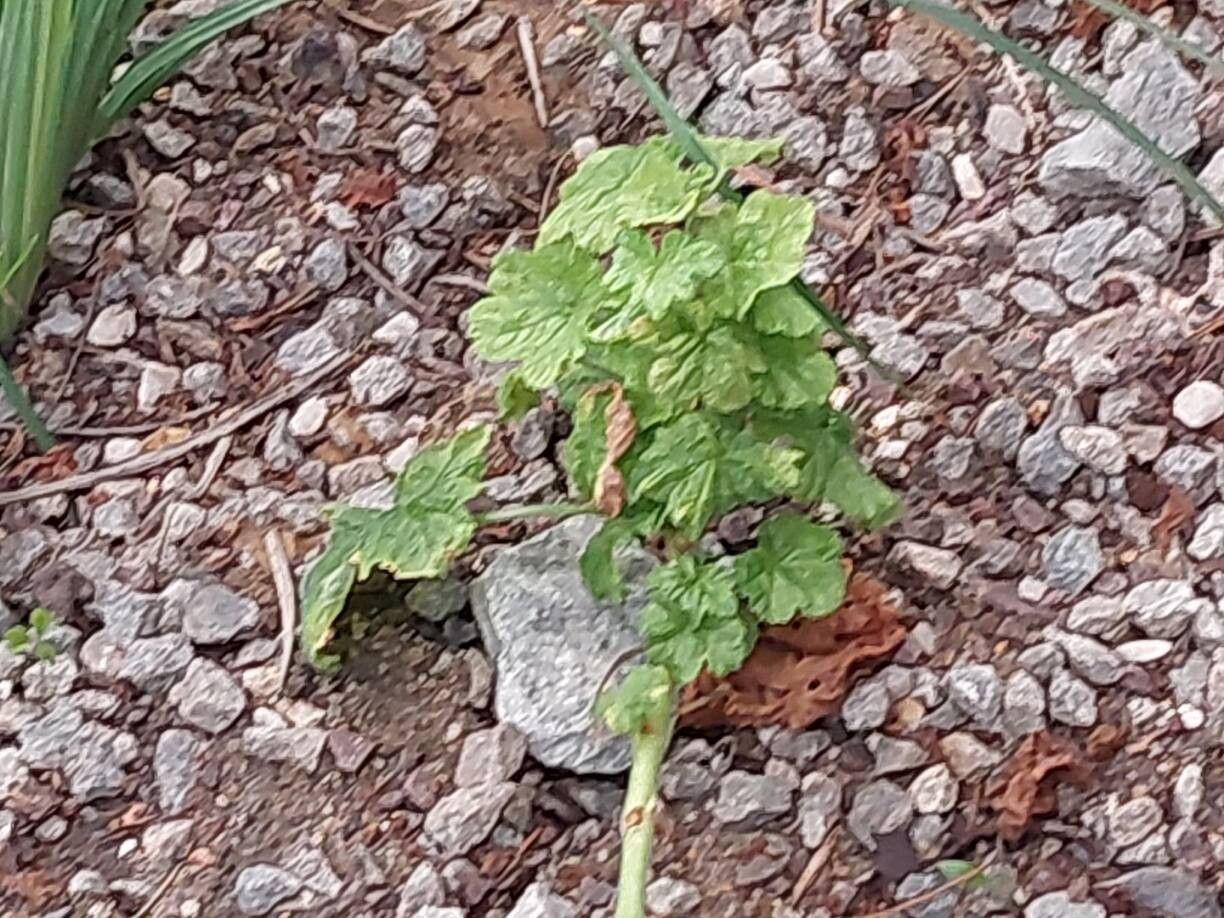
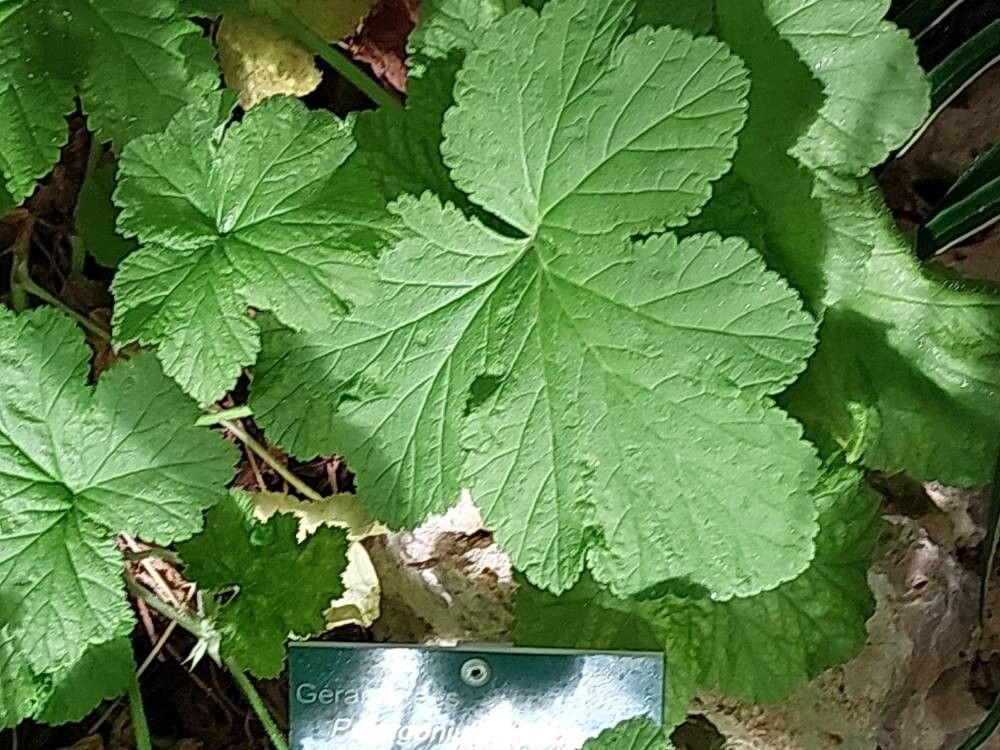
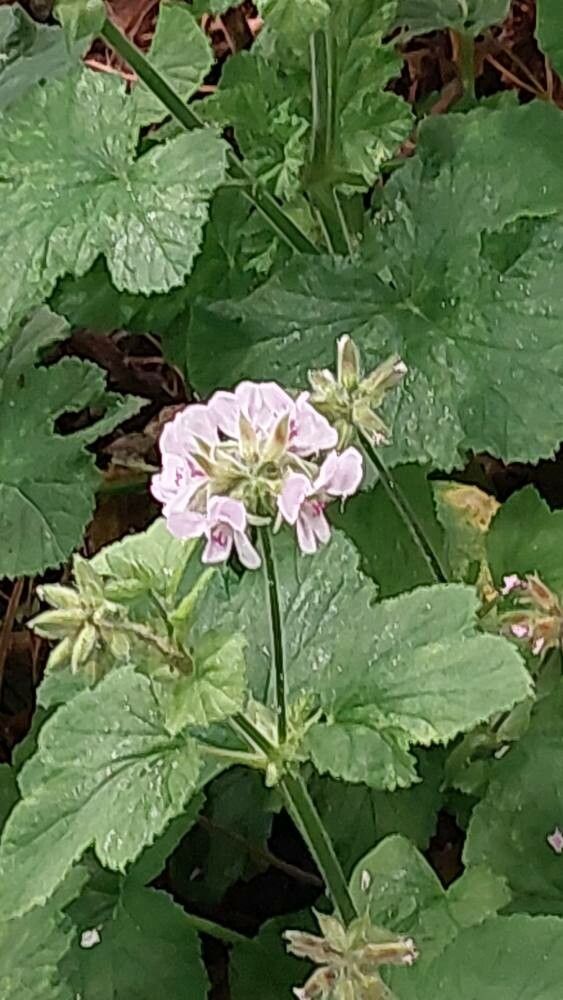
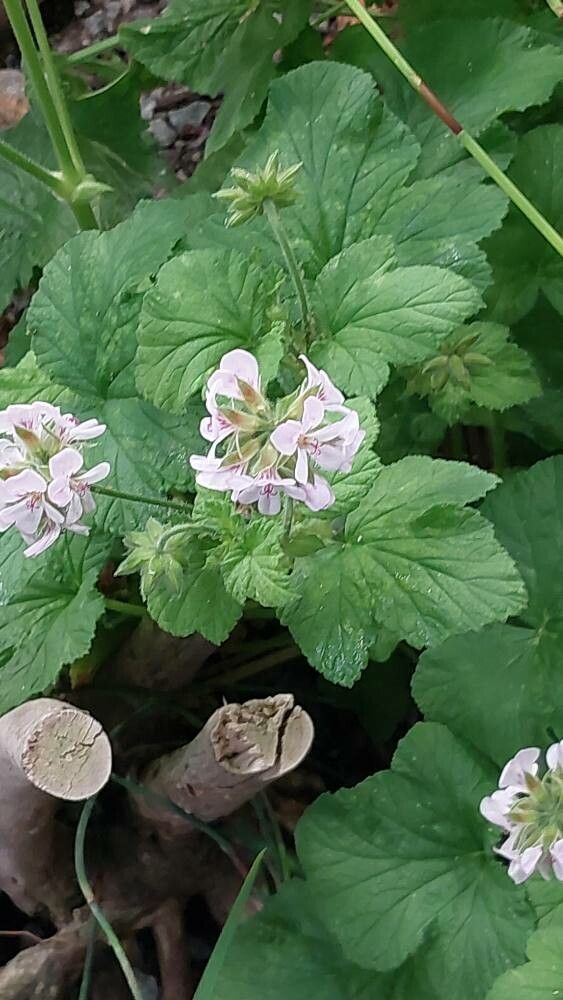
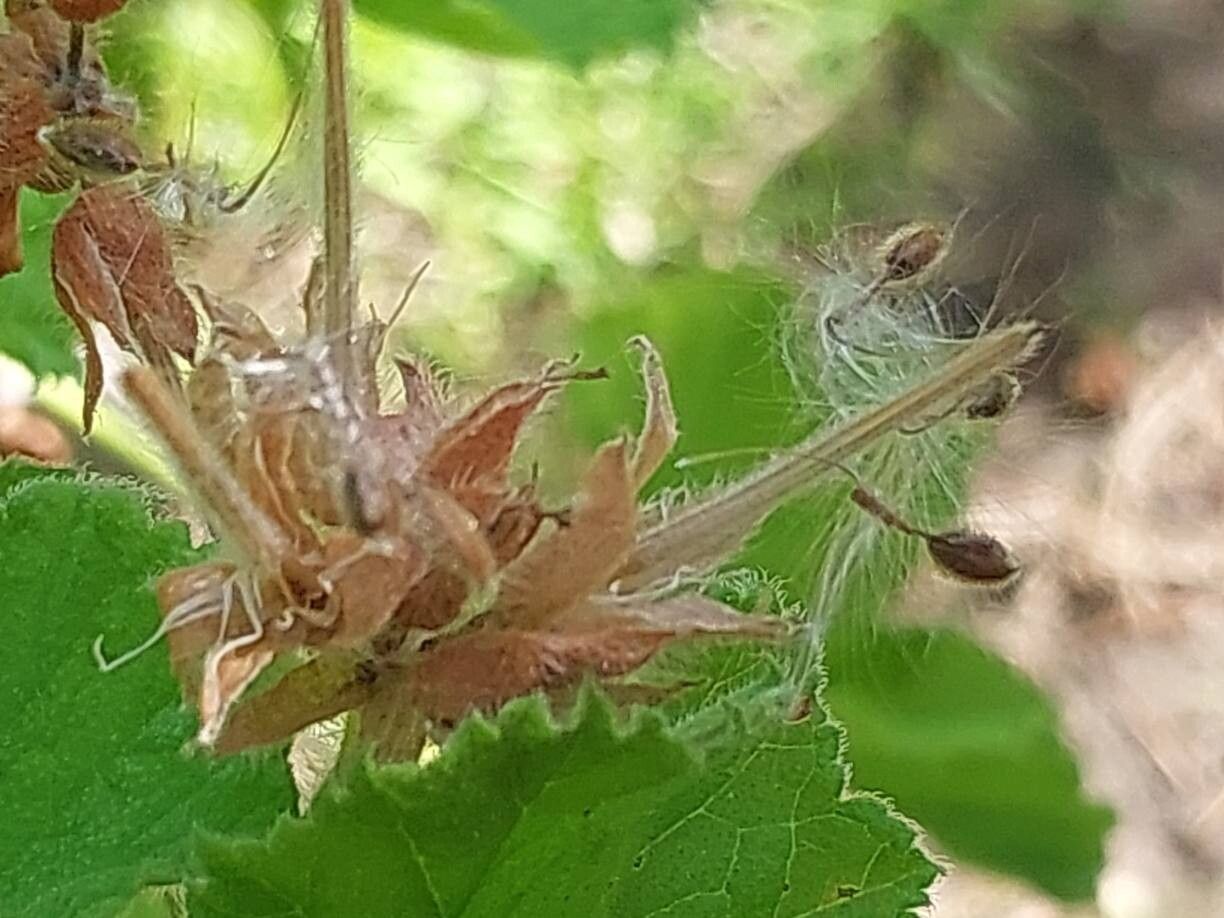
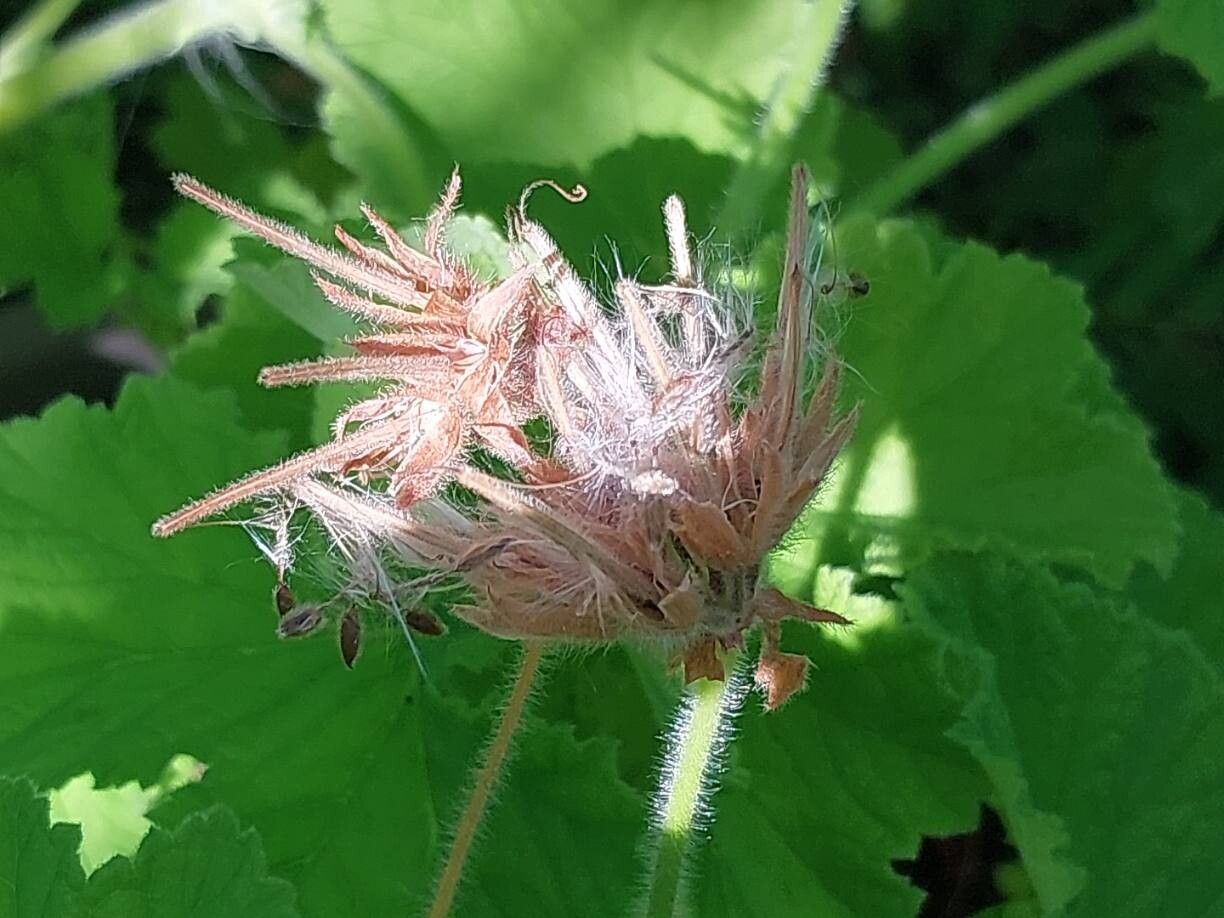
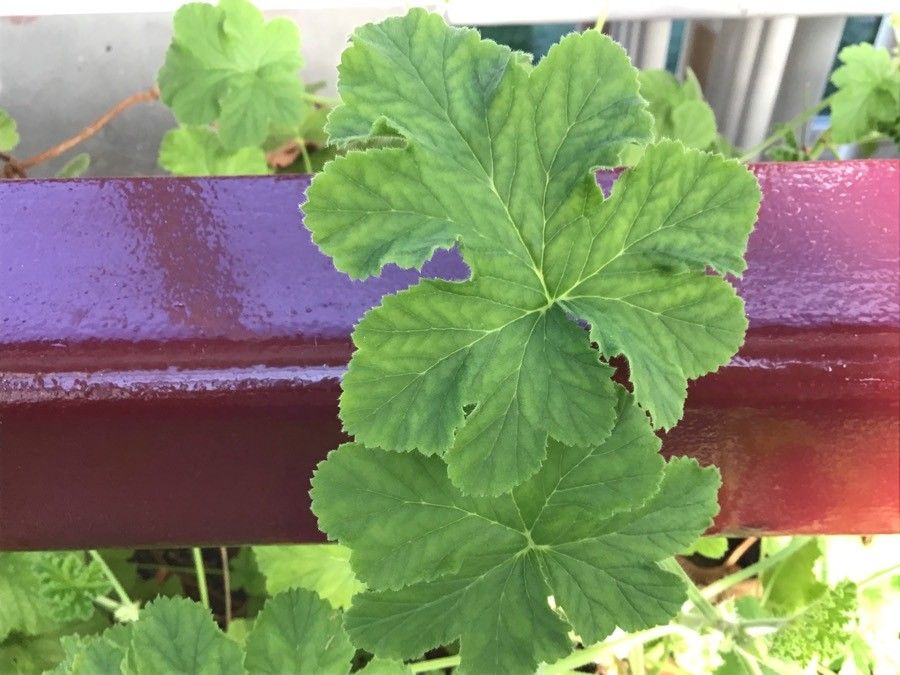
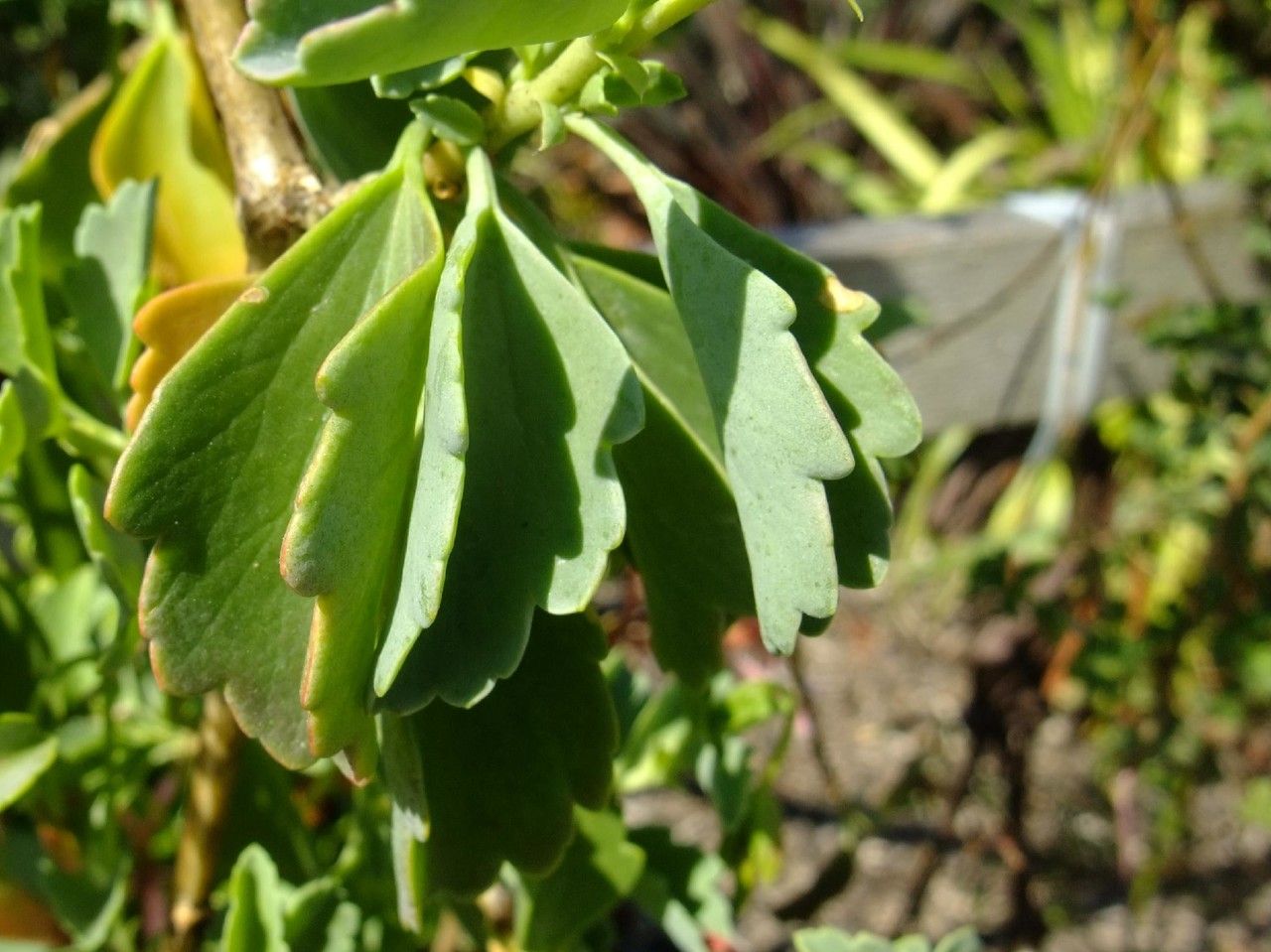
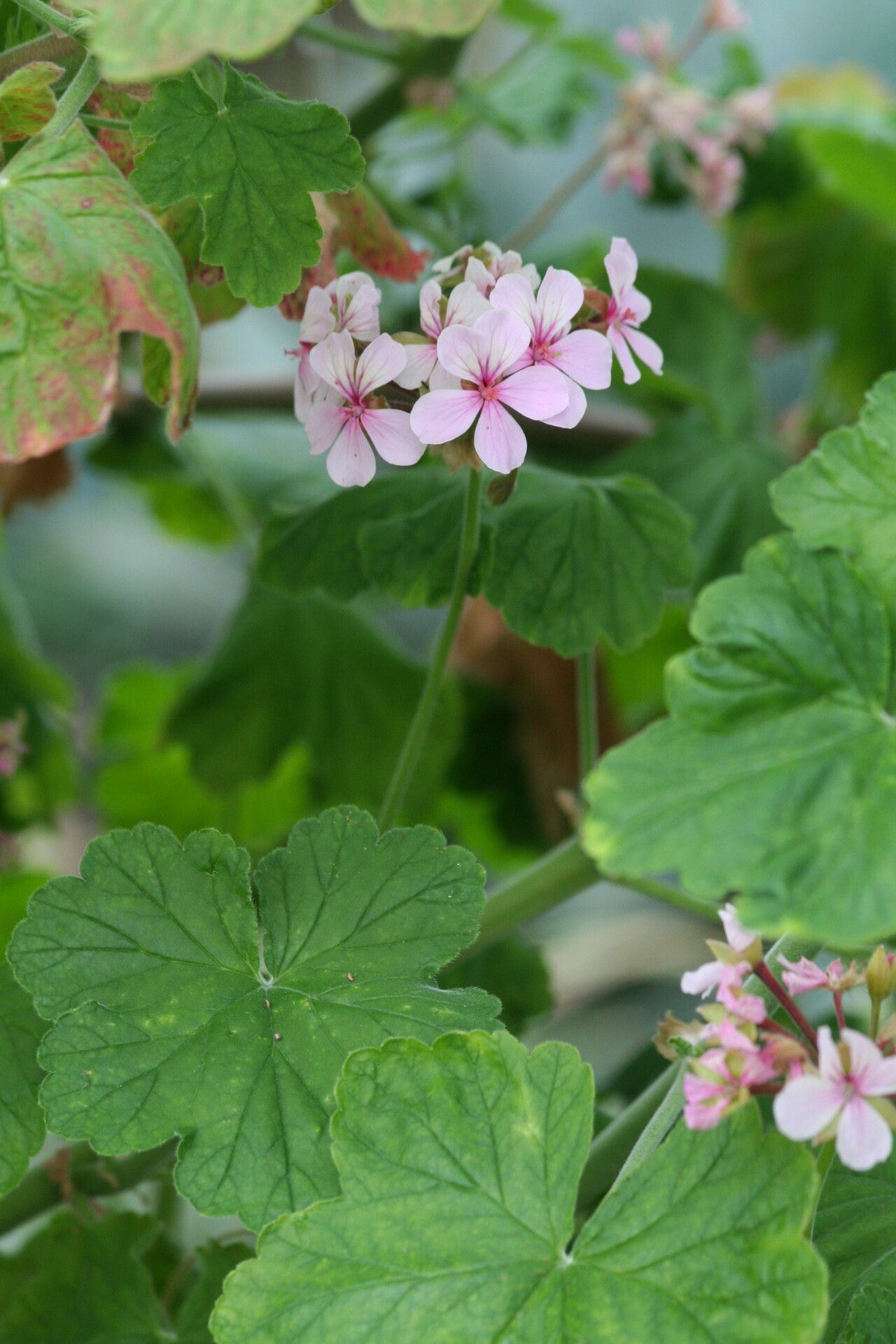
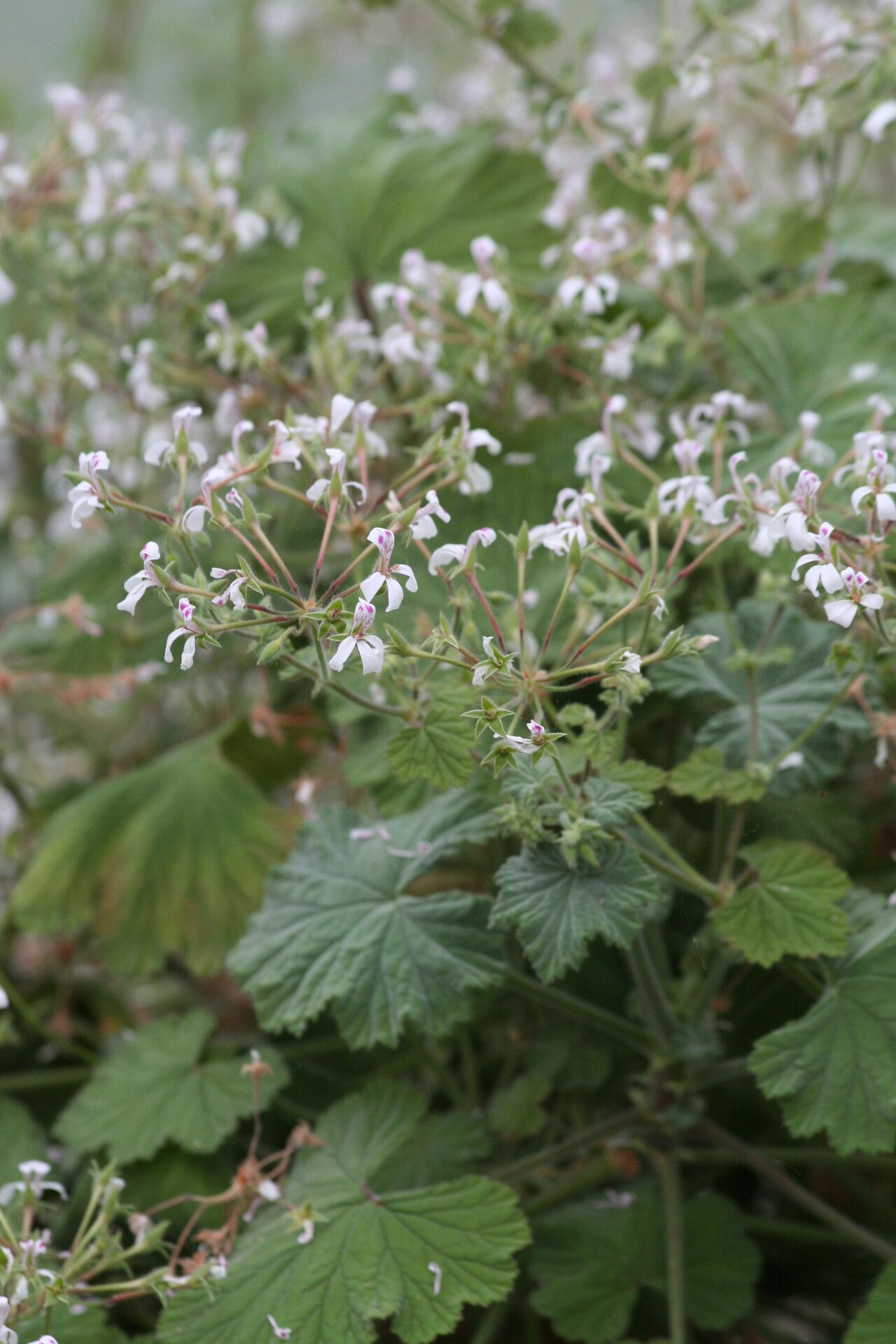
Pelargonium vitifolium is a species of geranium known by the common name grapeleaf geranium. It is a shrub endemic to the Cape Provinces of South Africa. it is a commonly grown ornamental plant. This is a mostly erect, branching shrub approaching one meter in maximum height. The stems are soft and coated in soft hairs when young and become more woody with age. The glandular, stiffly-hairy aromatic leaves are about 6 centimeters long and 8 wide, divided into 5 or 7 toothed, heart-shaped lobes. The inflorescence is a dense umbel of several flowers with five petals each around a centimeter long. The flowers are pink with purplish markings.
Grapeleaf geranium has moderate disease resistance and is more vulnerable to humidity and excess watering. It is also more prone to disease when it receives insufficient light and is overwatered. Regarding care needs, Grapeleaf geranium withstands drought and can go long periods without water. It requires little fertilizer and needs pruning only occasionally. This makes it appropriate for people of all experience levels, especially those who prefer to spend less time tending their plants and who may sometimes be away from home for extended periods. It is a suitable option for anyone who does not want to devote a lot of time to plant care but still wants an easy-to-maintain plant.
How to keep Pelargonium Vitifolium.
Light
Grapeleaf geranium is native to habitats with dappled light, such as the understory of forests or rocky areas that offer natural shade. It favors partial sun but can also tolerate full sun.
Water
To care for grapeleaf geraniums, regularly check the soil's moisture levels. Water the plant if the soil is dry at a depth of 0.8 inches. During the spring and fall, water the plant thoroughly, allowing excess water to drain away. In the summer and winter, use minimal amounts of water and apply it at specific times. It's best to use soft water, such as rainwater, for watering. If using tap water, let it sit for a while before using it on the plants.
Temperature
Grapeleaf geranium does best in warm settings and needs relatively high temperatures during the growing season to encourage growth and metabolic activity. It prefers abundant sunlight, proper moisture levels, and good air circulation. However, it can be harmed by very low temperatures and by overwatering. Maintaining balance is crucial; it should also be protected from excessively high temperatures and from conditions that are too dry.
Fertilizer
For Grapeleaf geranium, light applications of fertilizer once or twice a year during the growing season are adequate. Avoid fertilizing in winter and summer when it's dormant. Reduce fertilizer for repotted plants and wait a couple of months after repotting before fertilizing. Fertilizing promotes healthy growth and encourages blooms.
Pruning
The grapeleaf geranium showcases grape-like leaves and vibrant flowers. To encourage healthy growth, improve air circulation, and enhance flowering while preventing legginess, it's beneficial to prune the plant in early spring to remove dead stems. Using clean, sharp tools for pruning is crucial to prevent disease and maintain a bushier appearance.
Botanical profile.
- Plant Type
- Shrub
- Life Cycle
- Perennial
- Genus
- Pelargonium
- Family
- Geraniaceae
- Hardiness Zone
- 9-11
- Mature Height
- 61 cm to 91 cm
- Mature Spread
- 61 cm to 91 cm
- Leaf Color
- Forest Green, Dark Green
- Leaf Type
- Evergreen
- Flower Size
- 2.03 cm to 3.05 cm
- Bloom Time
- All year round
- Planting Time
- Spring, Summer, Autumn, Winter
- Harvest Time
- All year round
- Native Area
- South Africa
Other names.