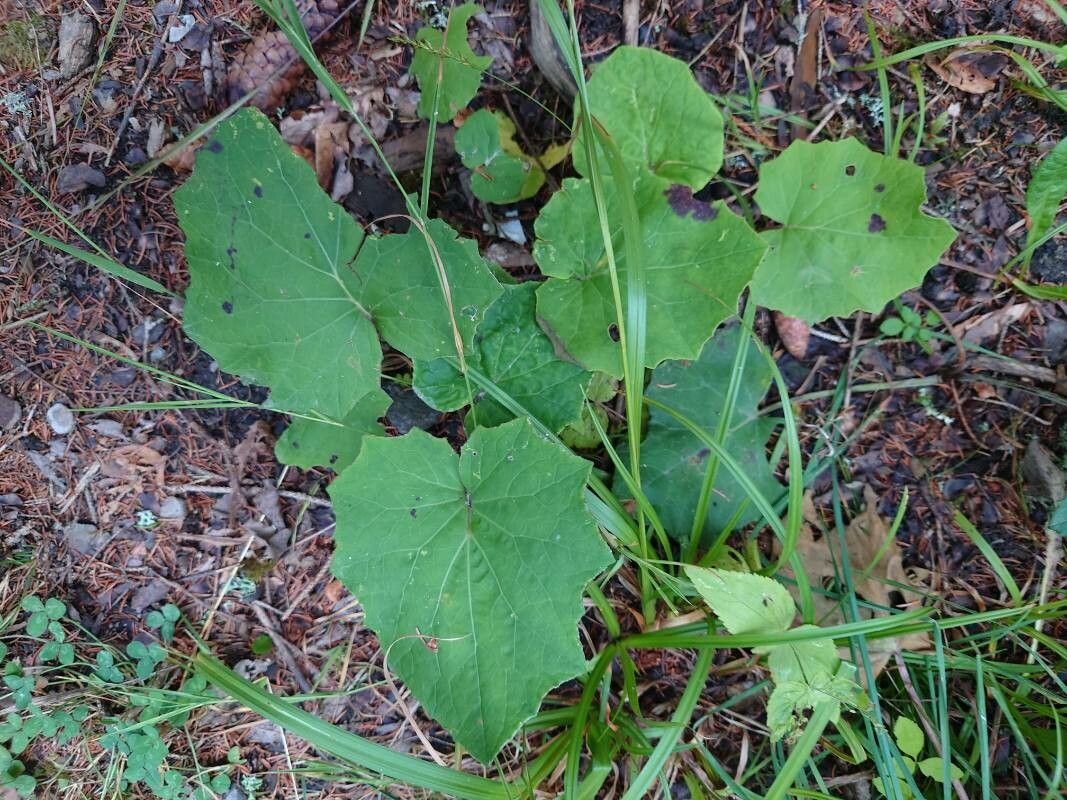
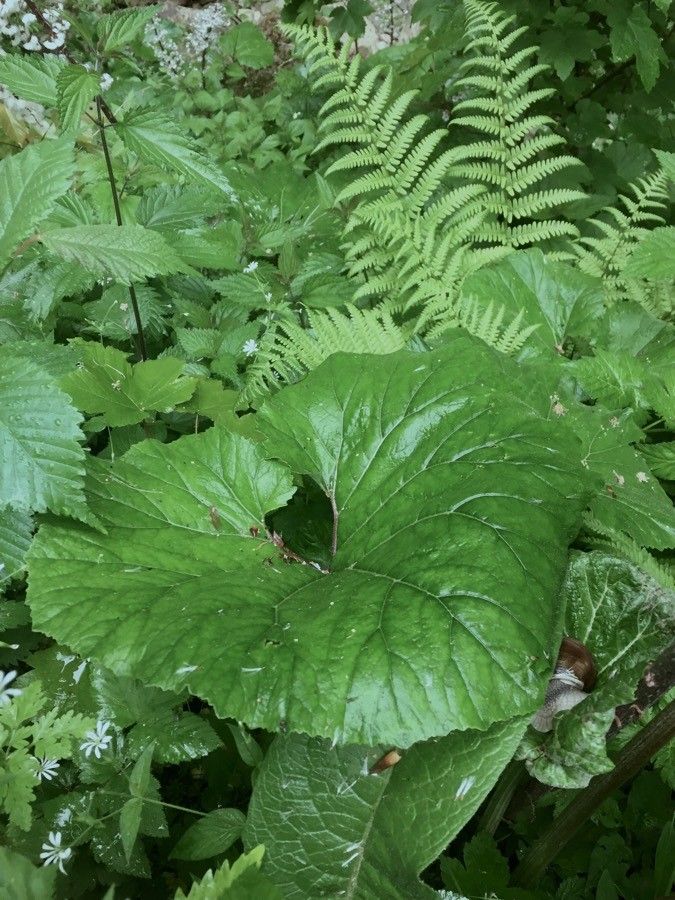
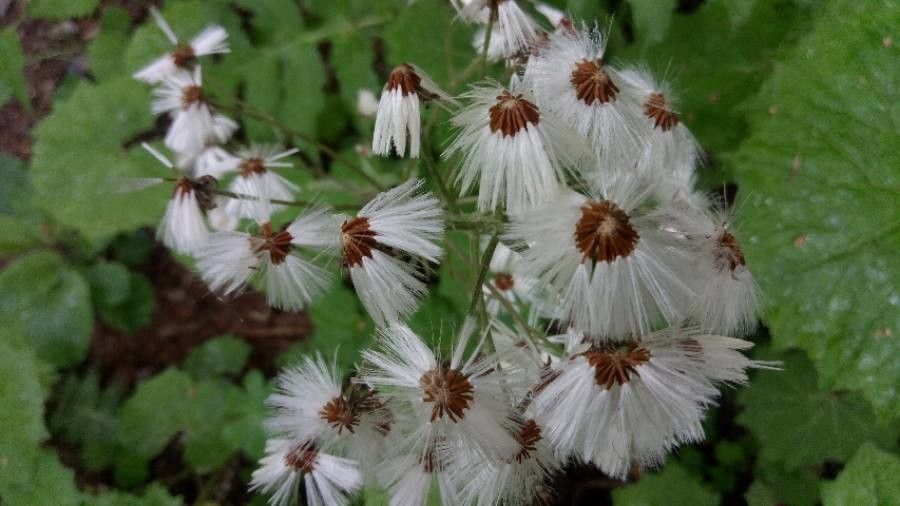
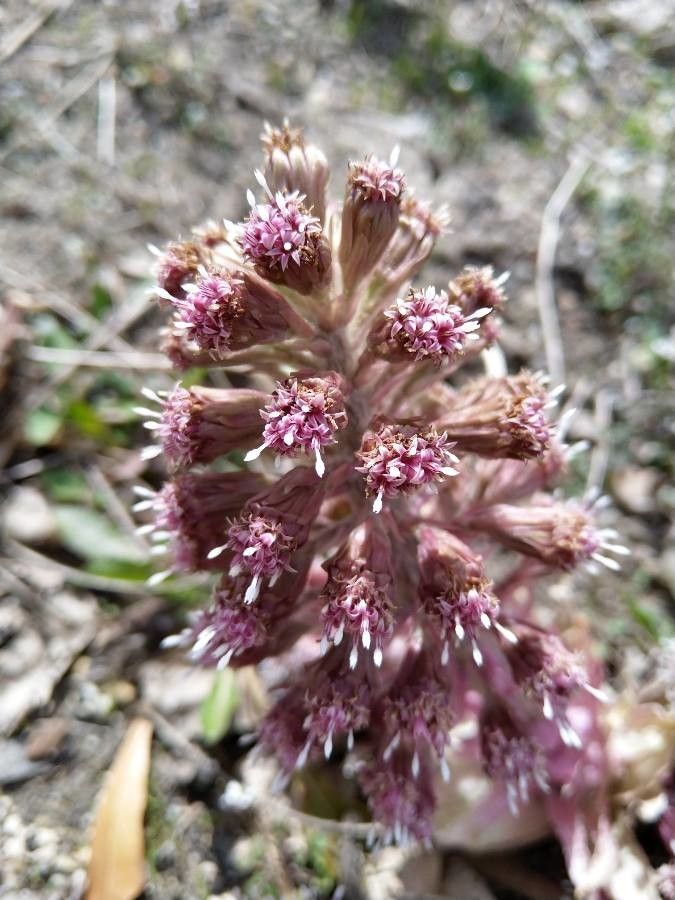
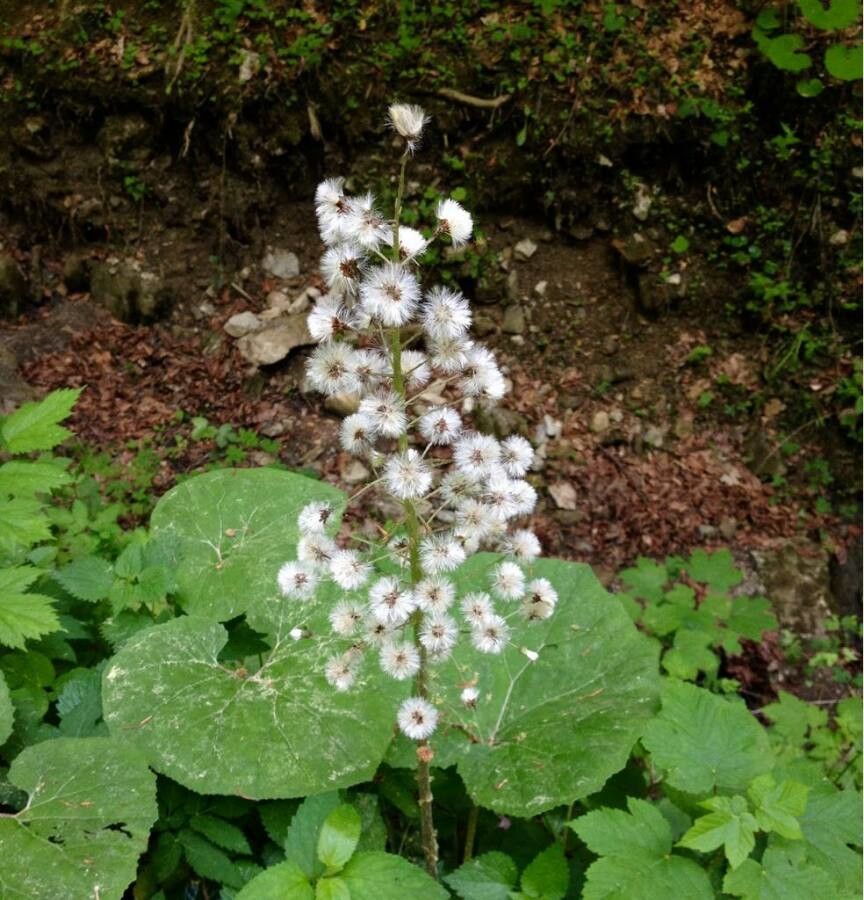
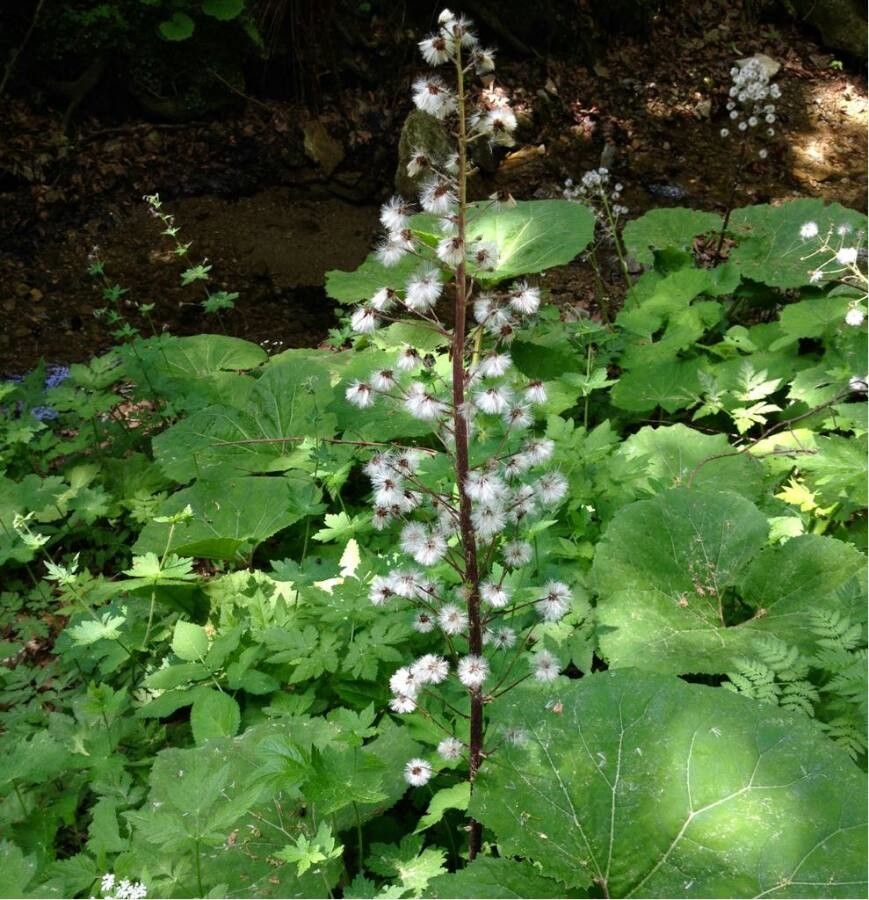
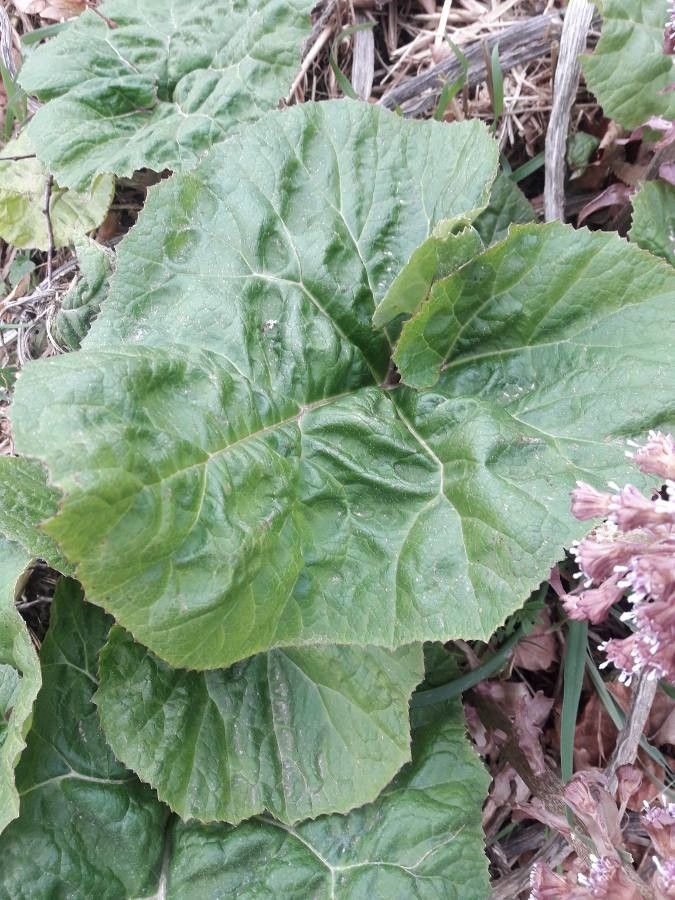
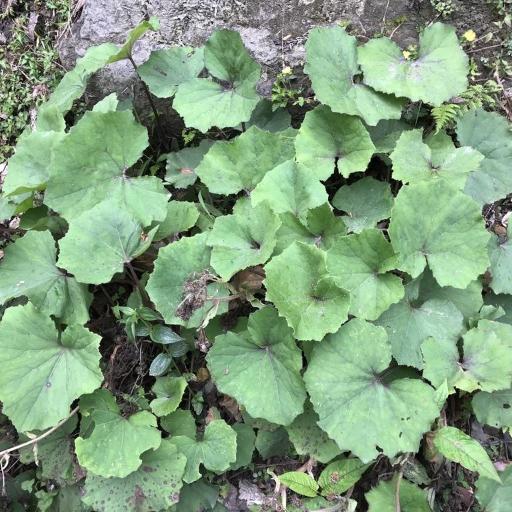
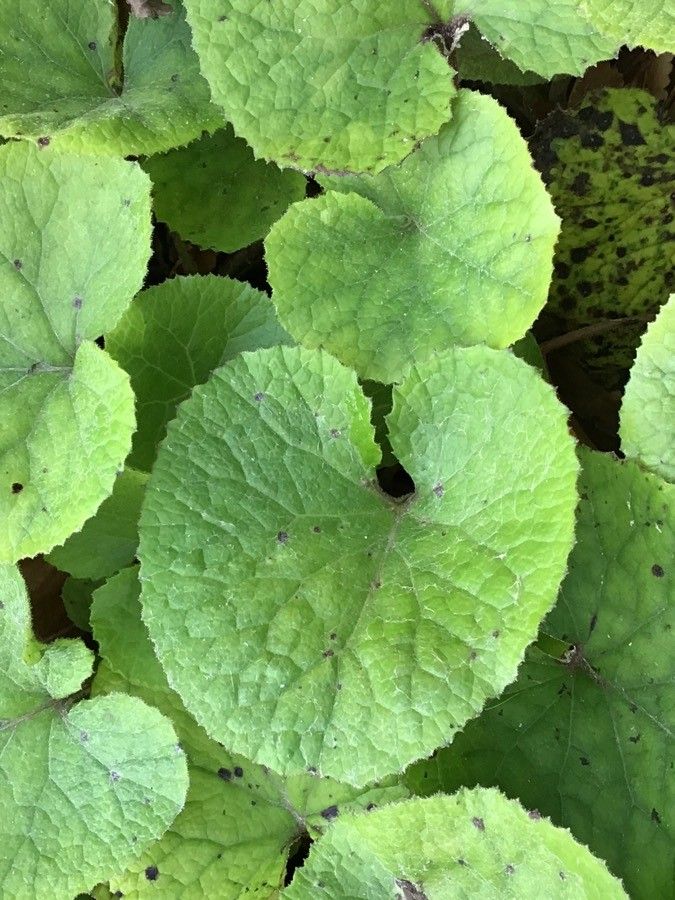
Petasites paradoxus, commonly known as the giant butterbur, is a perennial herbaceous plant in the Asteraceae family. Native to Europe and Asia, it can grow up to 2 meters in height. Its large, heart-shaped leaves can reach up to 1 meter in diameter and have a velvety texture on the underside. The plant blooms small pink or white flowers from February to April, before its leaves appear. The giant butterbur has been used medicinally for centuries due to its anti-inflammatory properties. It has been employed as a treatment for migraines, allergies, asthma, coughs, colds, and other ailments. However, it is important to note that Petasites paradoxus contains pyrrolizidine alkaloids, which can be toxic if ingested in large quantities over an extended period. The plant prefers damp soil conditions, such as riverbanks or wet meadows, but can also thrive in gardens with moist soil. It is often grown ornamentally because of its impressive size and also serves an important ecological role by providing habitat for insects like bees, which pollinate its flowers. Overall, Petasites paradoxus is a fascinating plant with both medicinal properties and ecological importance, making it worth considering when planning your garden or exploring natural remedies for certain ailments (with caution).
Botanical profile.
- Plant Type
- Herb
- Life Cycle
- Perennial
- Genus
- Petasites
- Family
- Asteraceae
- Hardiness Zone
- 4-8
- Mature Height
- 30 cm
- Mature Spread
- 49 cm
- Leaf Color
- White, Green, Gray, Silver
- Leaf Type
- Semi-evergreen
- Flower Color
- White
- Flower Size
- 1.02 cm to 2.03 cm
- Bloom Time
- Early spring, Mid spring
- Planting Time
- Spring, Summer, Autumn, Winter
- Harvest Time
- Late spring, Early summer
- Native Area
- Germany, Austria, Italy, Spain, Switzerland, Croatia, Slovenia, France
Other names.