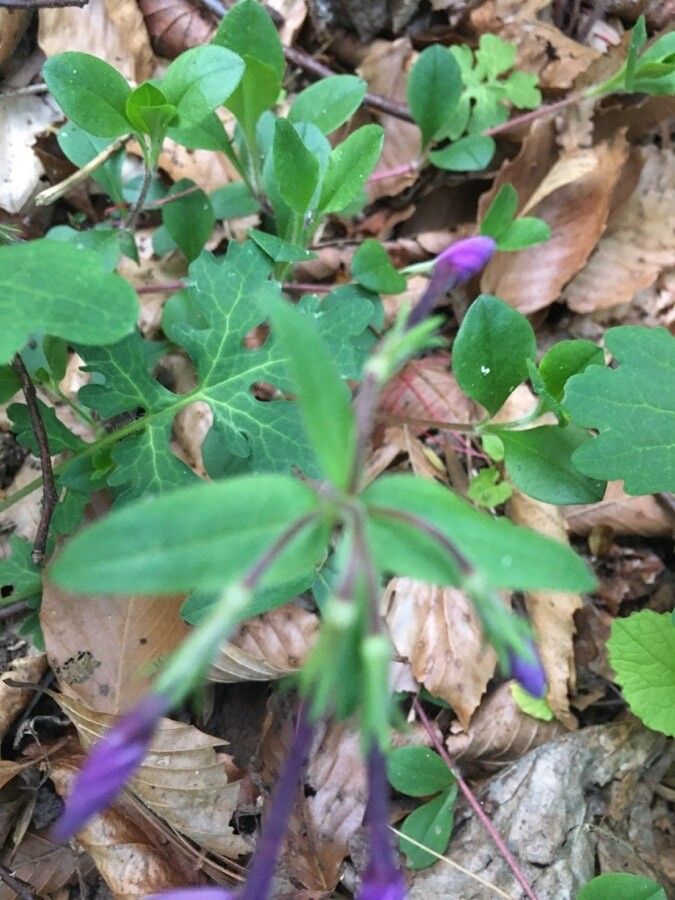
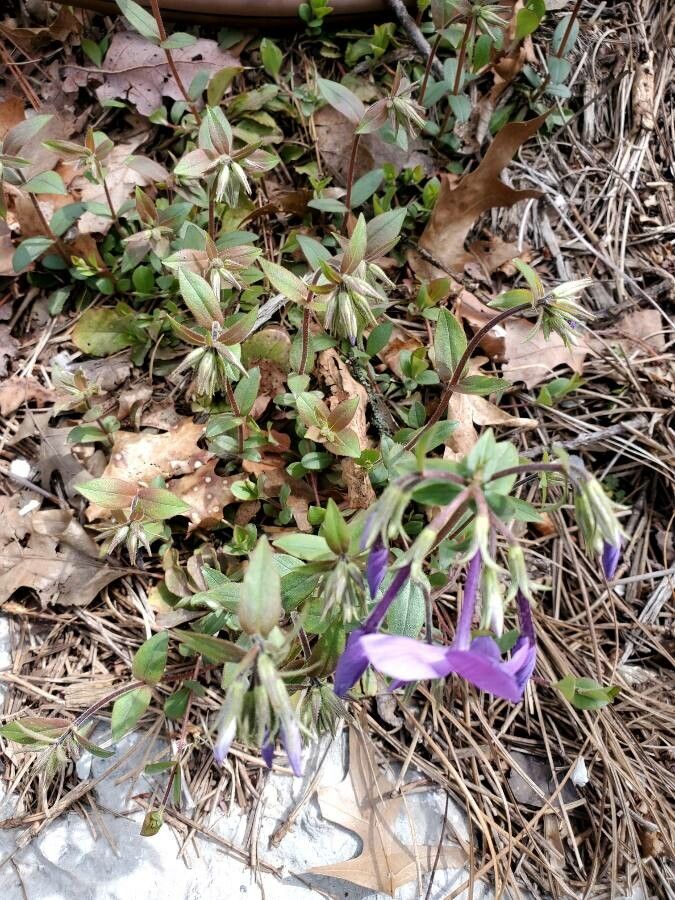
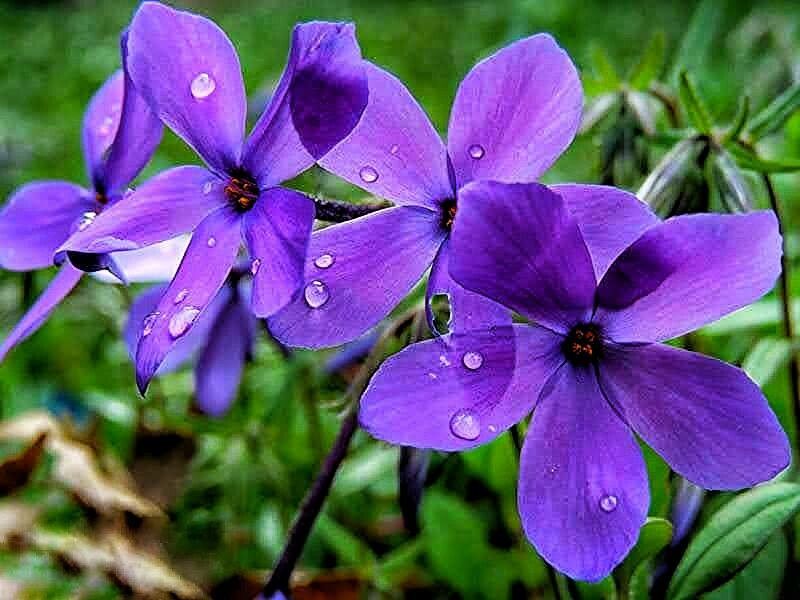
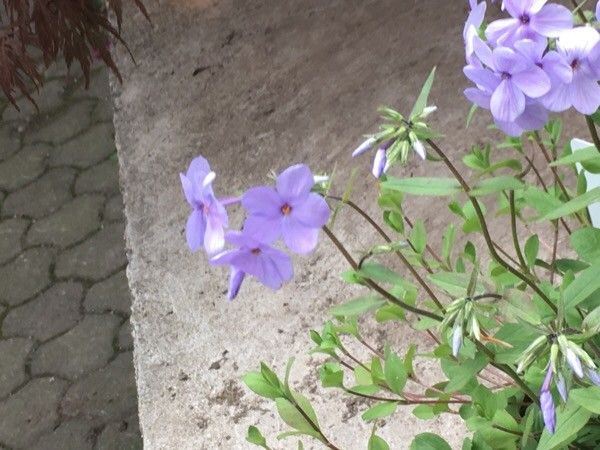
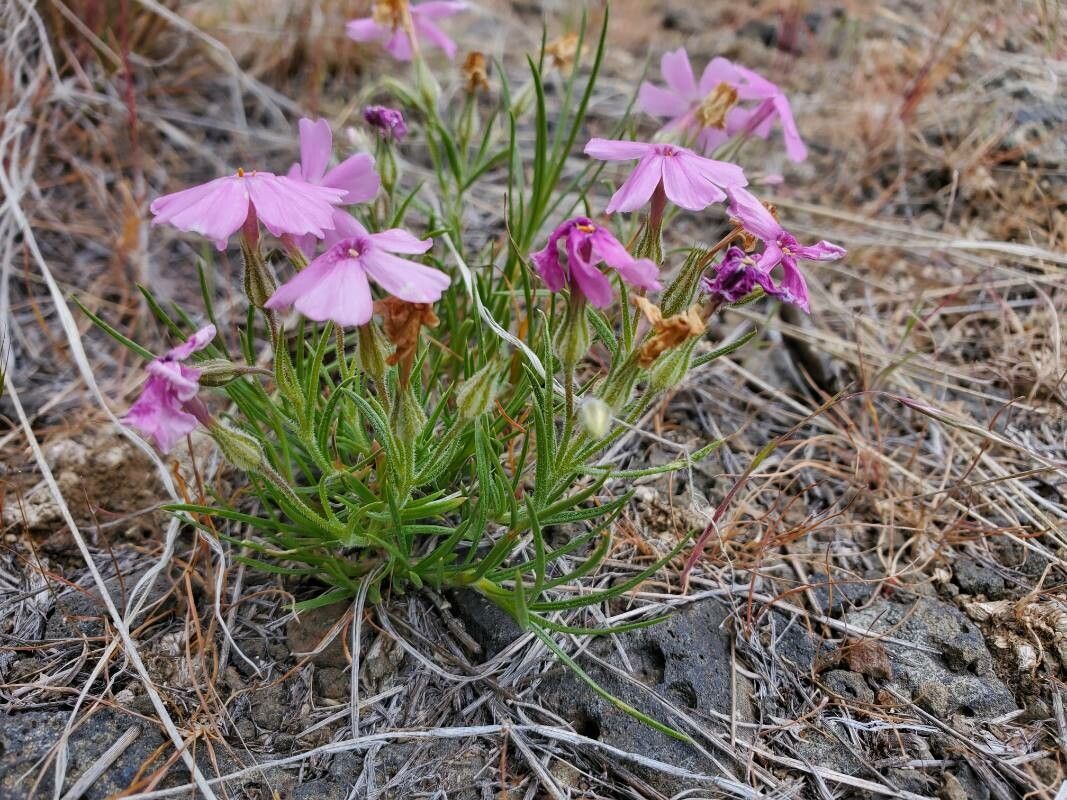
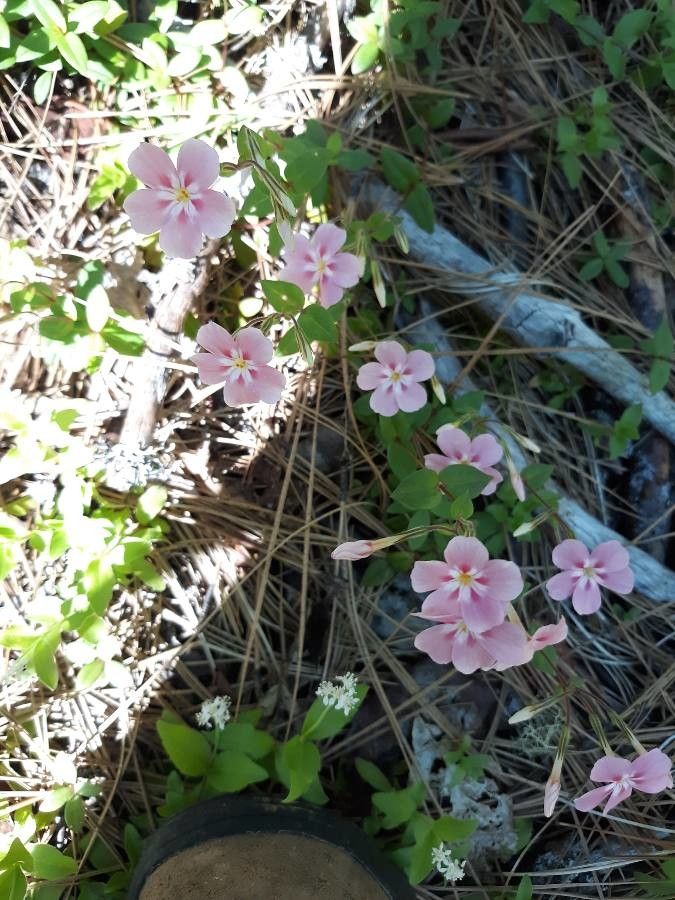
Phlox stolonifera, commonly known as Creeping Phlox or Moss Phlox, is a low-growing perennial belonging to the Polemoniaceae family. Native to eastern North America, it thrives in woodlands, meadows, and rocky slopes.
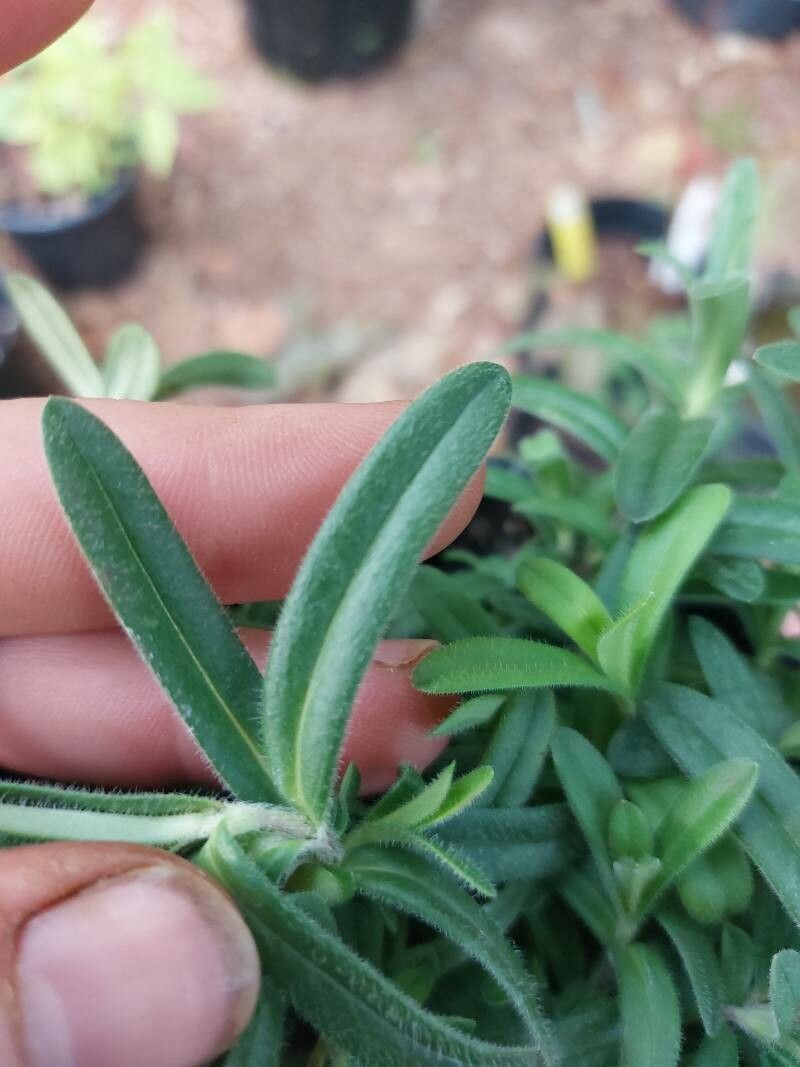
This plant typically reaches a height of up to 6 inches and can spread up to 2 feet wide through its stolons or runners. The leaves are small, green, and lance-shaped, growing in opposite pairs along the stems. The star-shaped flowers, with five petals, come in shades of pink, lavender-blue, or white.
Phlox stolonifera prefers well-drained soil with a slightly acidic pH level between 5.5 and 7.0. While it thrives in partial shade, it can also tolerate full sun if adequate moisture is provided.
Due to its spreading habit, this plant is commonly used as ground cover. It also adds charm to rock gardens and borders with its attractive flowers, which bloom from late spring through early summer.
Overall, Phlox stolonifera is an easy-to-grow perennial that adds color and texture wherever it’s planted, while requiring minimal maintenance once established in the garden landscape.
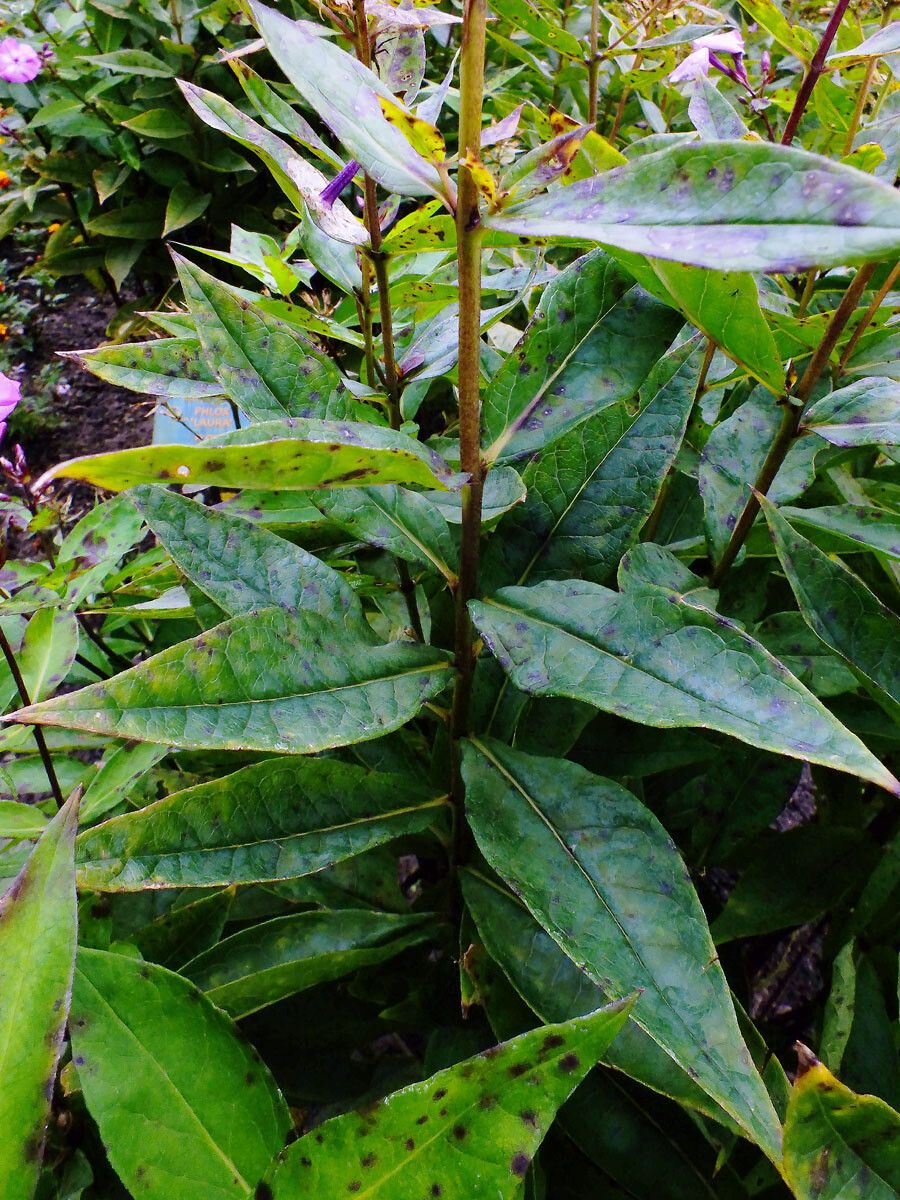
Creeping phlox is fairly disease-resistant and typically not highly prone to illnesses. Still, it can be affected by pests and diseases present in its surroundings. These infections are usually mild. In terms of care, the plant needs moderate maintenance. Regular pruning is necessary to keep it looking neat and to support healthy growth. Fertilizing can also help encourage flowering. Creeping phlox is suitable for anyone with outdoor space, such as a garden or patio, and does not require extensive gardening experience. It may need more attention when grown indoors.
How to keep Phlox Stolonifera.
Light
Creeping phlox usually does best with moderate sun exposure, but it can also tolerate both abundant sunlight and limited light. Growth can suffer if it receives too much or too little light, causing poor plant health. Native to woodland edges, it is adapted to a range of light conditions.
Water
Creeping phlox flourishes in moist woodland settings, where it benefits from consistent moisture. For optimal growth, water it weekly. In garden settings, creeping phlox serves as an evergreen ground cover. To ensure it spreads well and produces vibrant flowers during the growing season, make sure it receives enough moisture.
Temperature
Creeping phlox originates from temperate areas and performs best in temperatures of 68 to 95°F (20 to 35℃). For best results, keep temperatures within that range throughout the year. Small adjustments might be required during extreme weather.
Fertilizer
The ideal time to fertilize a Creeping phlox is early in the spring, as it comes out of dormancy and begins active growth. Fertilization supplies key nutrients for healthy development. Although Creeping phlox has relatively low fertilization needs, applying fertilizer once a year can enhance its survival and promote better, longer-lasting flowers.
Pruning
Creeping phlox is a low-growing perennial celebrated for its vibrant blooms. To keep it healthy and looking its best, prune in early spring to remove any dead stems. After the flowering period, trim it lightly to maintain its shape. Doing so improves air circulation, reduces the risk of disease, and encourages abundant blooming, resulting in a thriving and attractive garden feature.
Botanical profile.
- Plant Type
- Herb
- Life Cycle
- Perennial, Annual
- Genus
- Phlox
- Family
- Polemoniaceae
- Hardiness Zone
- 5-9
- Mature Height
- 15 cm to 30 cm
- Mature Spread
- 23 cm to 46 cm
- Leaf Color
- Green
- Leaf Type
- Semi-evergreen
- Flower Color
- Purple, Violet, Pink
- Flower Size
- 2.54 cm
- Bloom Time
- Mid spring, Late spring
- Planting Time
- Spring
- Harvest Time
- Early summer, Mid summer
- Native Area
- Georgia
Other names.
Reader questions.
What are the sunlight requirements for Creeping Phlox?
Creeping Phlox requires partial sun for about 3-6 hours of sunlight per day but can also thrive in conditions offering more than 6 hours, which are considered full sun or full shade. It's important to watch how sunlight moves through your garden to choose spots that offer a balance of light and shade, ensuring optimal growth and health of the plants.
What temperatures are ideal for the growth of Creeping Phlox?
Creeping Phlox, botanically known as Phlox stolonifera, thrives in temperate regions with ideal temperatures ranging between 68 to 95°F (20 to 35°C) across all seasons. It can withstand cold temperatures, and typically, special frost protection measures are not necessary during winter. However, if temperatures are expected to fall below -25°C, protective measures such as covering the plant with soil or straw are recommended. Additionally, watering the plant abundantly before the first freeze in autumn to ensure the soil remains moist can help prevent drought and water scarcity during the colder months.
What are the essentials for growing Creeping Phlox successfully?
Creeping Phlox thrives under moderate sun exposure, and can adapt to both abundant sunlight and limited light. However, too much or too little light can negatively affect the plant's growth. Native to woodland edges, Creeping Phlox has adapted to a variety of light conditions. For indoor plants lacking natural sunlight, especially in winter or less sunny spaces, using artificial lights such as LEDs can provide the necessary wavelengths of light. The amount of artificial light needed varies: full sun plants require 30-50W per square foot, partial sun plants need 20-30W per square foot, and full shade plants need 10-20W per square foot. Position the light source 12-36 inches above the plant and ensure 8-12 hours of light per day to mimic natural sunlight conditions.
How does Creeping Phlox react to low temperatures?
Creeping Phlox is quite cold-tolerant and prefers temperatures above 20°C for optimal growth. During the winter season, it's crucial to ensure the temperature stays above 0°C. In the event that temperatures plummet below -25°C, Creeping Phlox may show no noticeable changes at the time, but there could be a reduction or absence of sprouting in the spring. If such a situation occurs, it is suggested to remove any parts of the plant that have failed to sprout come spring.
What are the symptoms of inadequate light for Creeping Phlox?
When Creeping Phlox is grown indoors with insufficient light, several symptoms may develop, including smaller new leaves, leggy or sparse growth, faster leaf drop, slower or no new growth, paler new leaves, chlorosis (leaves turning yellow due to chlorophyll breakdown from excessive sunlight), sunscald, leaf curling as a defense mechanism against intense sunlight, wilting due to increased water loss, and leaf scorching. These symptoms indicate that the plant is not receiving the optimal light level for healthy growth.
What should be done if Creeping Phlox experiences high temperatures?
During the summer months, it's important to keep Creeping Phlox's surrounding temperatures below 35°C. If temperatures soar beyond 38°C, the plant's leaves may start to lighten in color, curl, suffer from sunburn, and in extreme cases, the entire plant might wilt and dry out. To mitigate these effects, trim away any sunburned or dried-up parts of the plant. Moving the plant to a shaded area or using a shade cloth to protect it from the midday and afternoon sun can help. Additionally, watering the plant in the morning and evening can assist in keeping the soil moist and cool.
How can I address light-related issues for Creeping Phlox?
To optimize Creeping Phlox growth in response to light-related issues, gradually adapt plants to the desired sunlight exposure. For indoor plants, transition them to sunnier spots each week until they receive 3-6 hours of direct sunlight daily or use artificial lighting sources for at least 8 hours a day. For outdoor plants, move them gradually to sunnier locations each week to prevent sunburn. If obstructions cause low light, consider pruning or moving the plants to areas with better sunlight and drainage. Remember, parts of the plant that have suffered might not recover, but new growth will be healthy with adjusted light exposure.