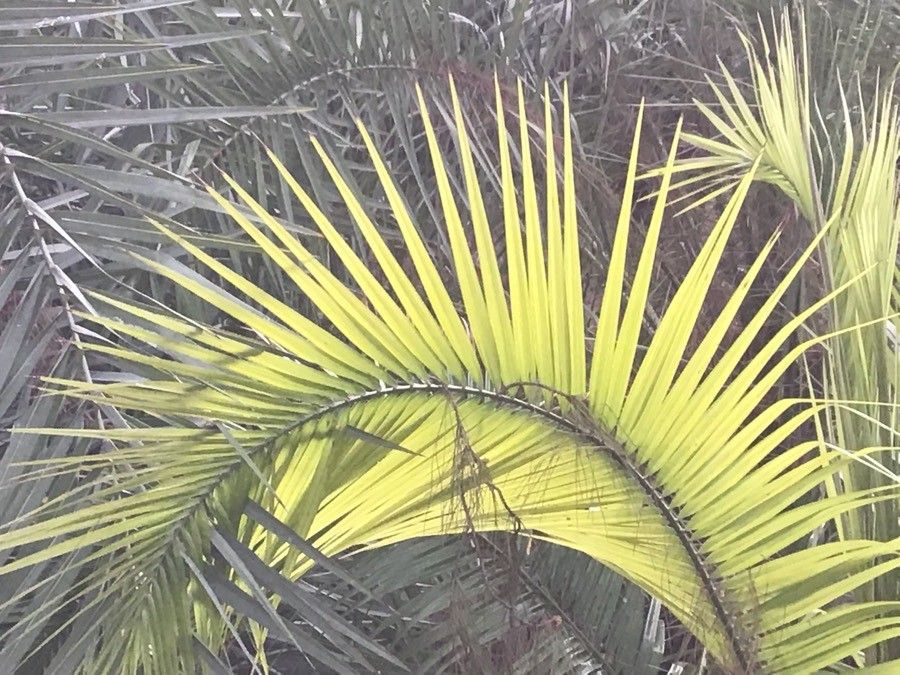
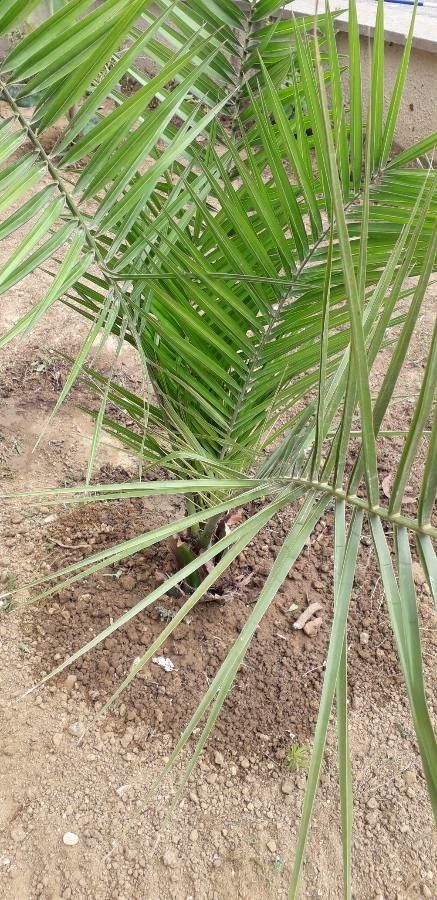
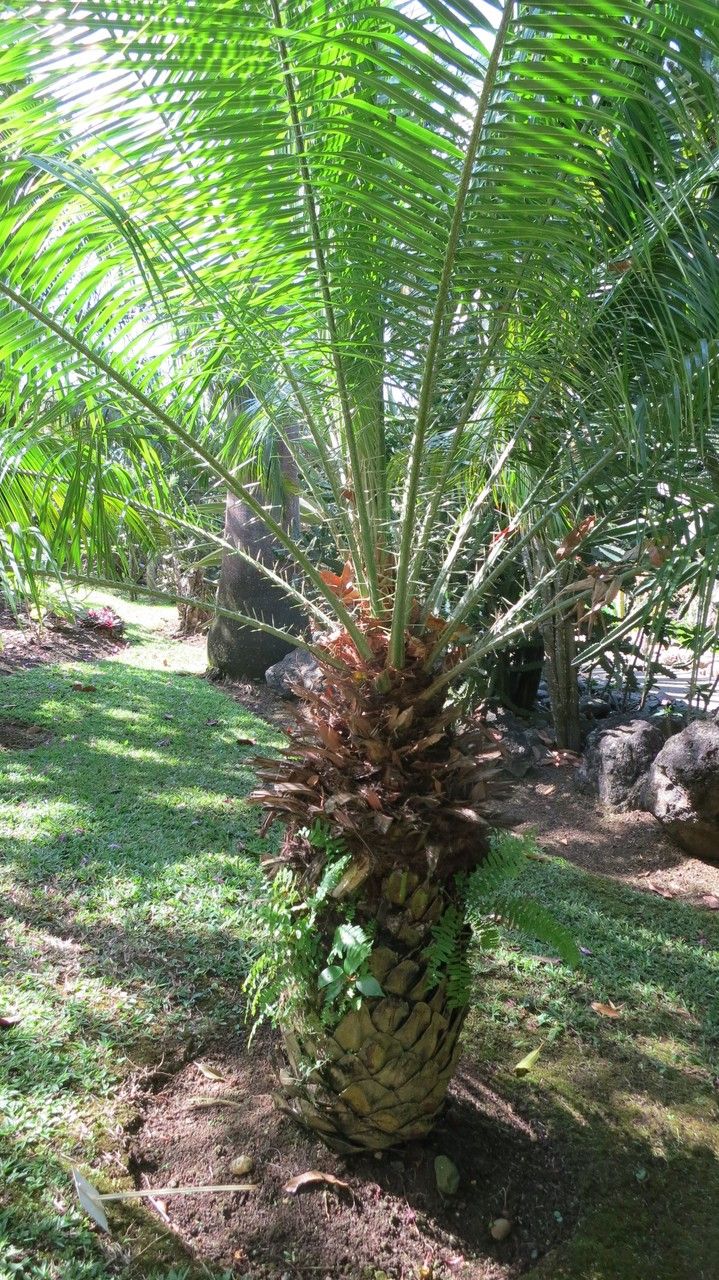
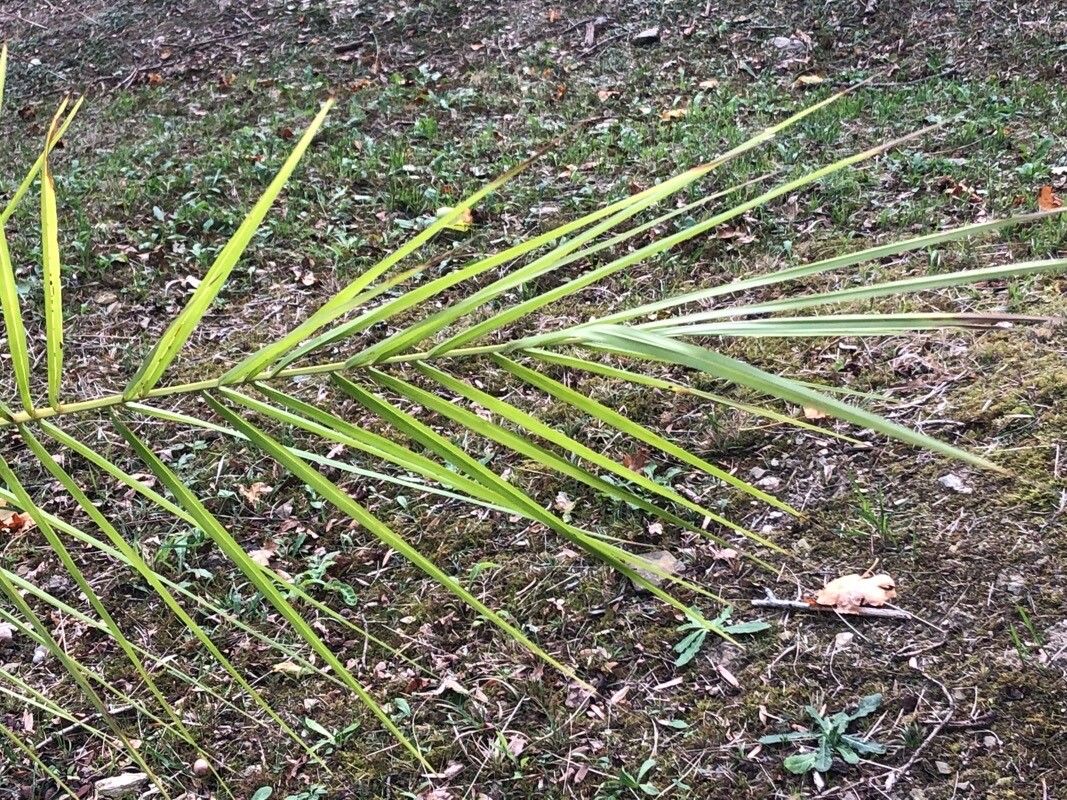
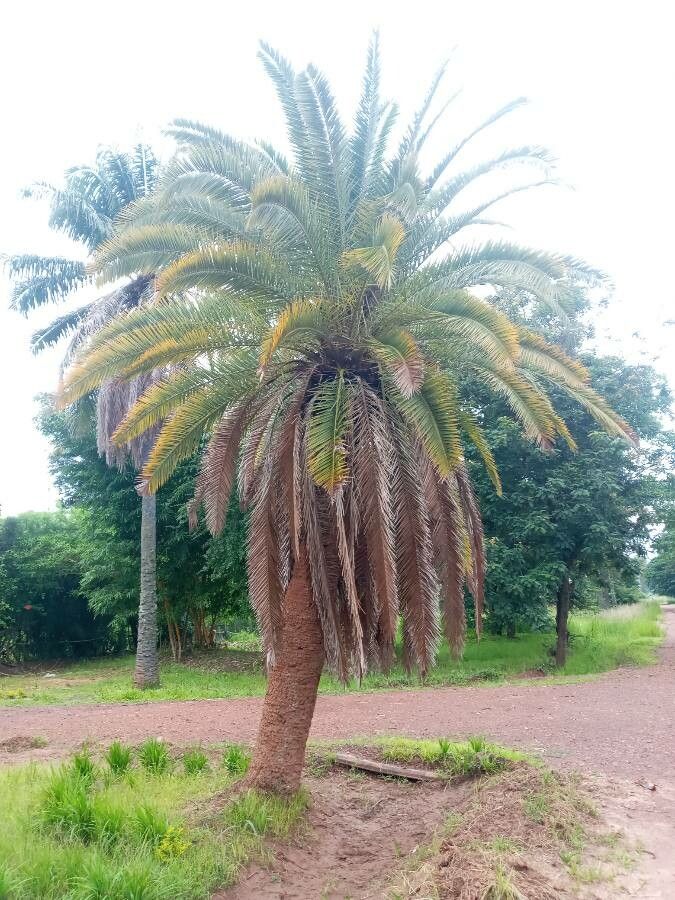
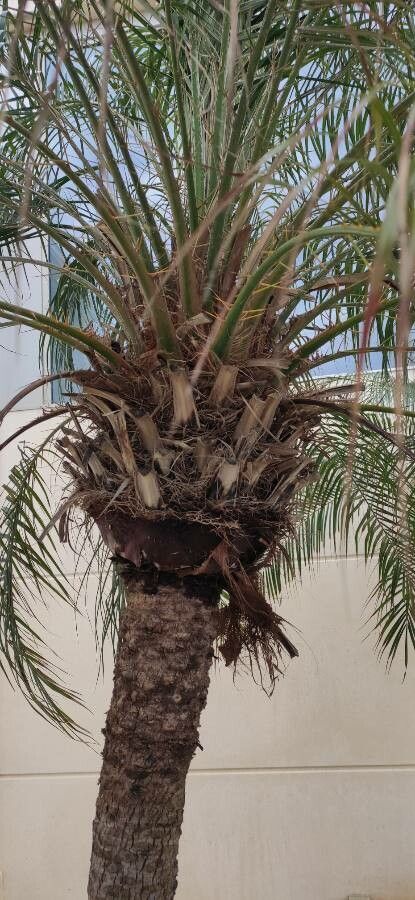
Phoenix rupicola, commonly known as the cliff date palm, is a species of palm tree native to the rocky slopes and cliffs of the Himalayan region. This slow-growing tree can reach heights of up to 15 meters and features a slender trunk marked with distinctive diamond-shaped leaf scars. The pinnate leaves, which can be up to 3 meters long, consist of up to 100 dark green leaflets. The plant produces small yellow flowers in clusters on long stalks, which later develop into small black fruits. Phoenix rupicola is often used as an ornamental plant for landscaping due to its attractive appearance and ability to tolerate drought conditions. It thrives in well-drained soil and full sun but can also tolerate partial shade. Once established, the plant requires minimal maintenance, although occasional pruning of dead or damaged leaves may be necessary. Beyond its ornamental value, Phoenix rupicola holds cultural significance. Local communities use various parts of the plant for multiple purposes, including food (the fruit), medicine (the sap), fiber (the leaves), and fuelwood (the trunk). In summary, Phoenix rupicola is an attractive, slow-growing palm with significant cultural value, making it an ideal choice for landscaping projects or gardens that can accommodate its growth requirements.
Botanical profile.
Other names.