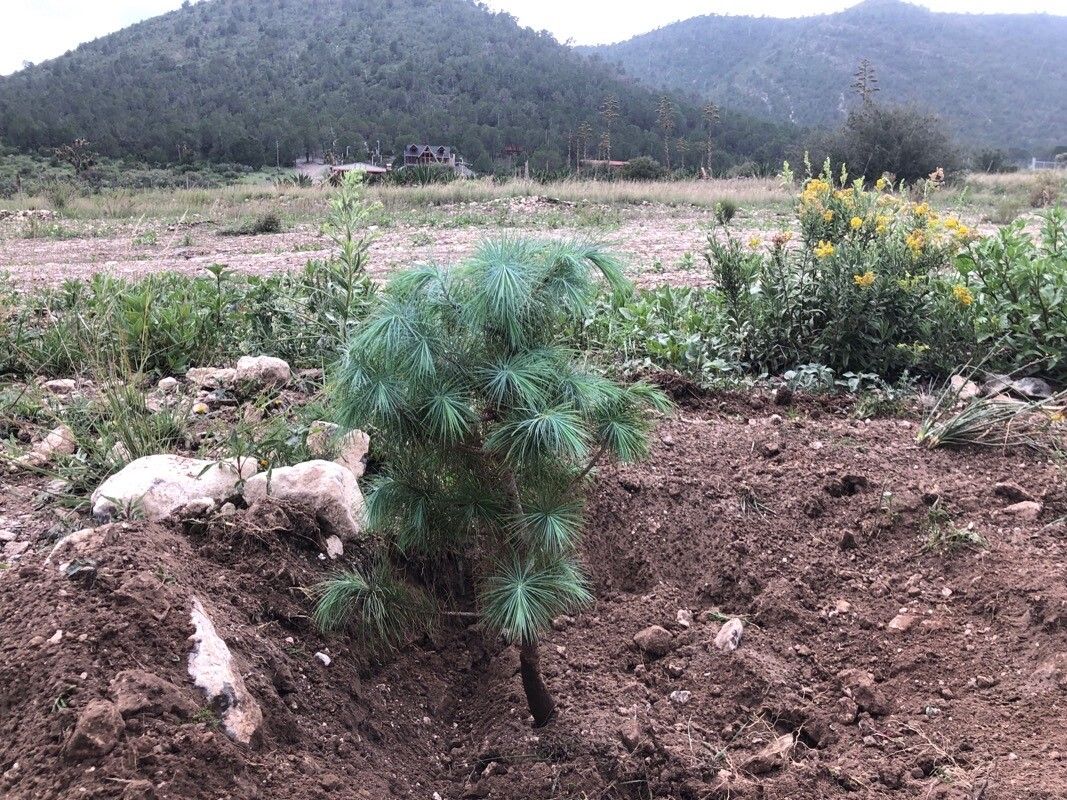
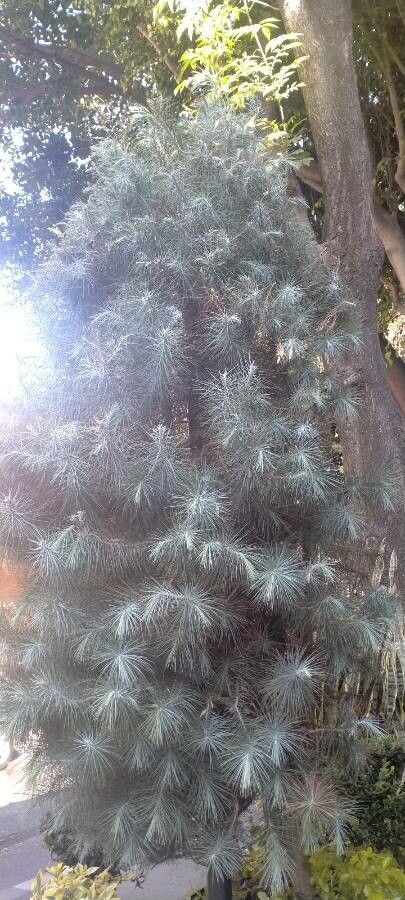
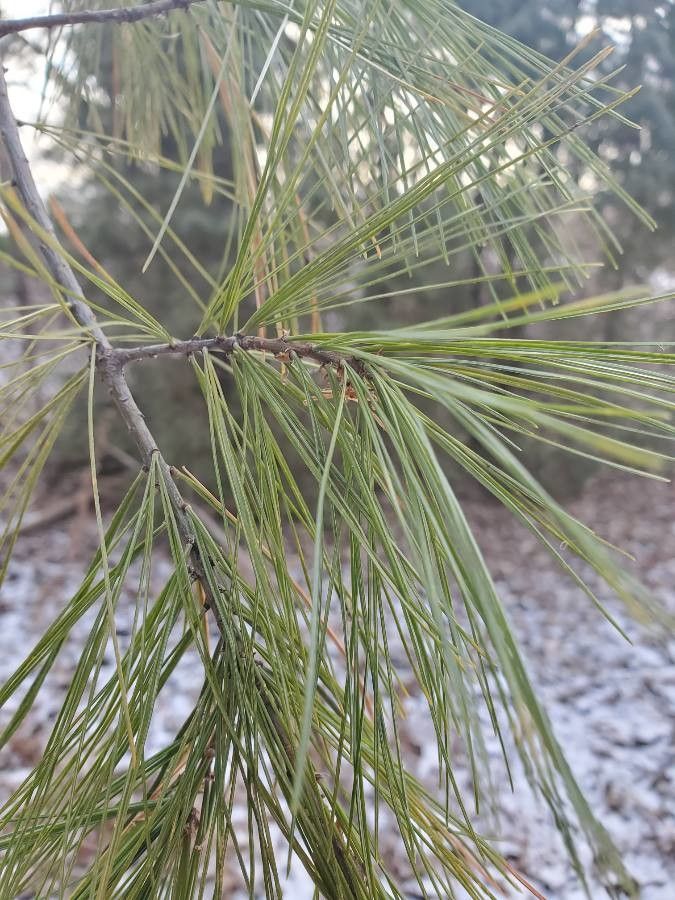
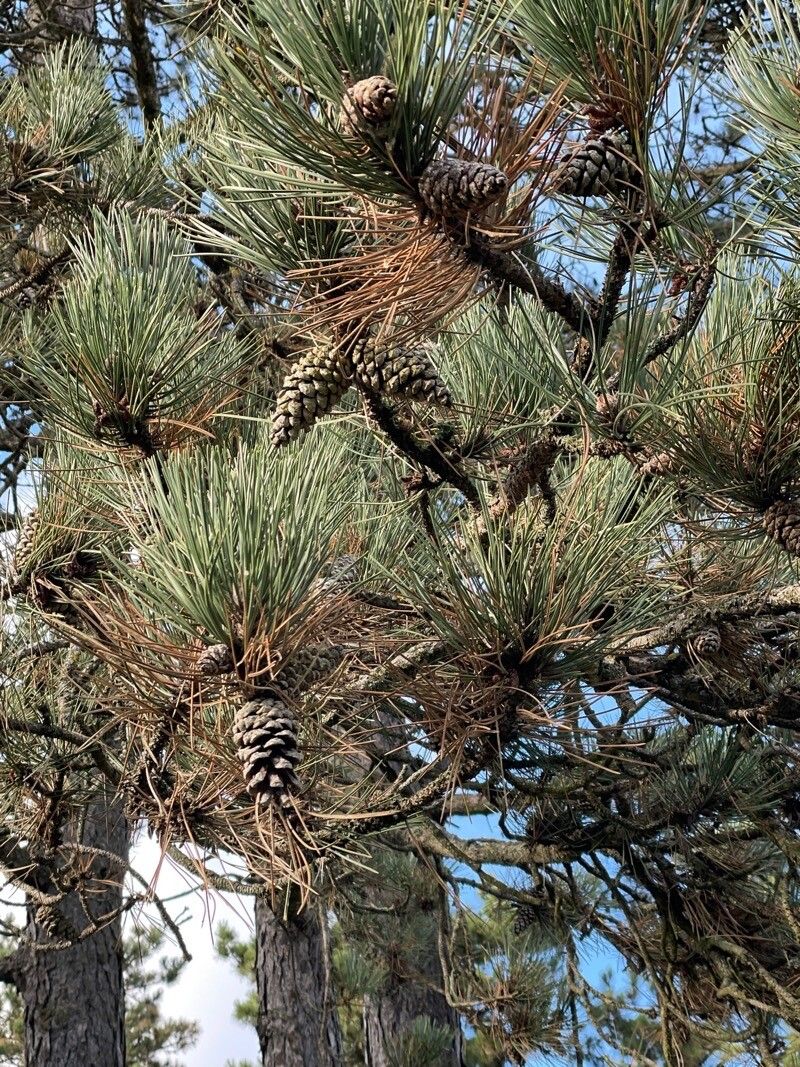
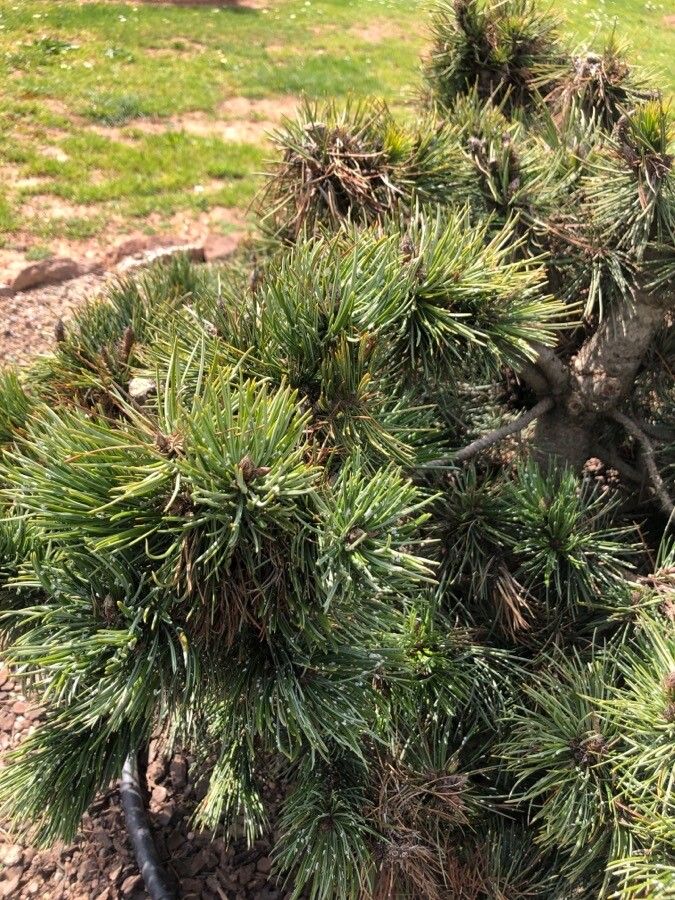
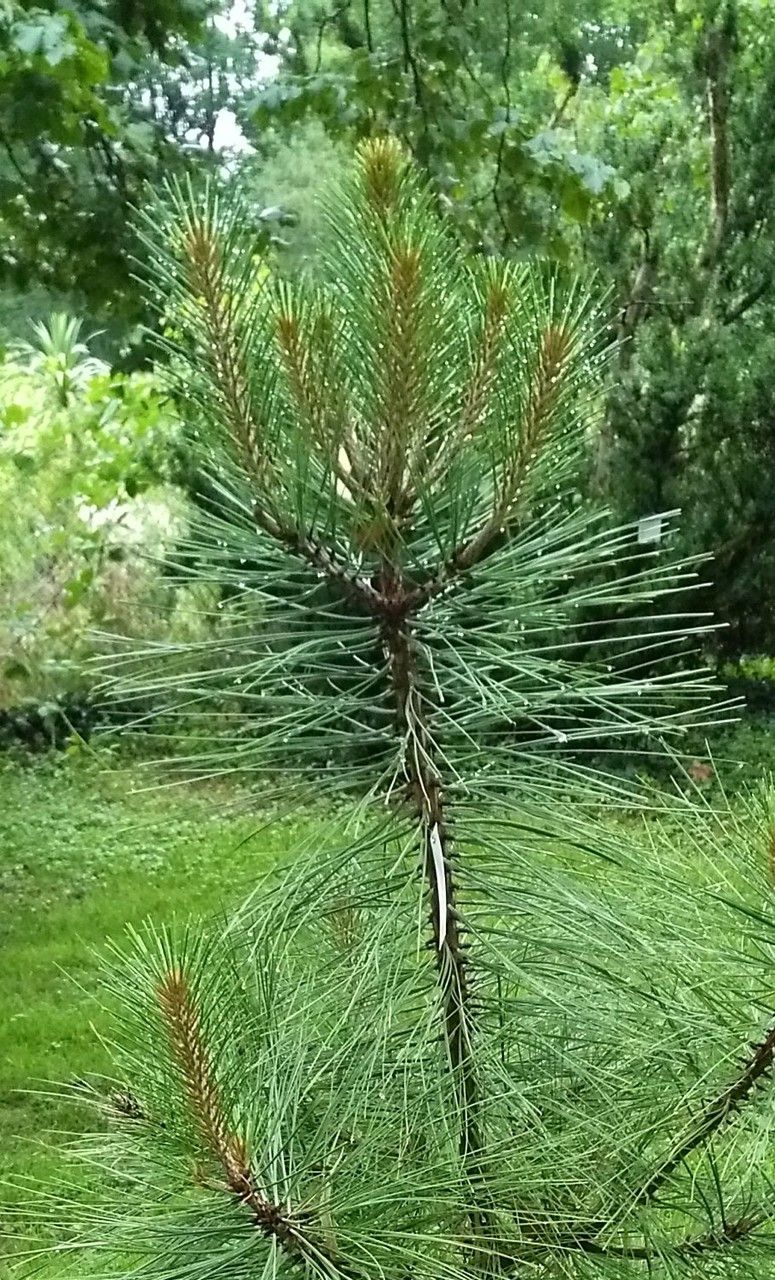
Pinus maximartinezii, commonly known as the big-cone pine, is a species of pine tree native to Mexico. This large evergreen can grow up to 30 meters tall and is characterized by its distinct cone shape. The tree's bark is thick, deeply furrowed, and has a reddish-brown hue.
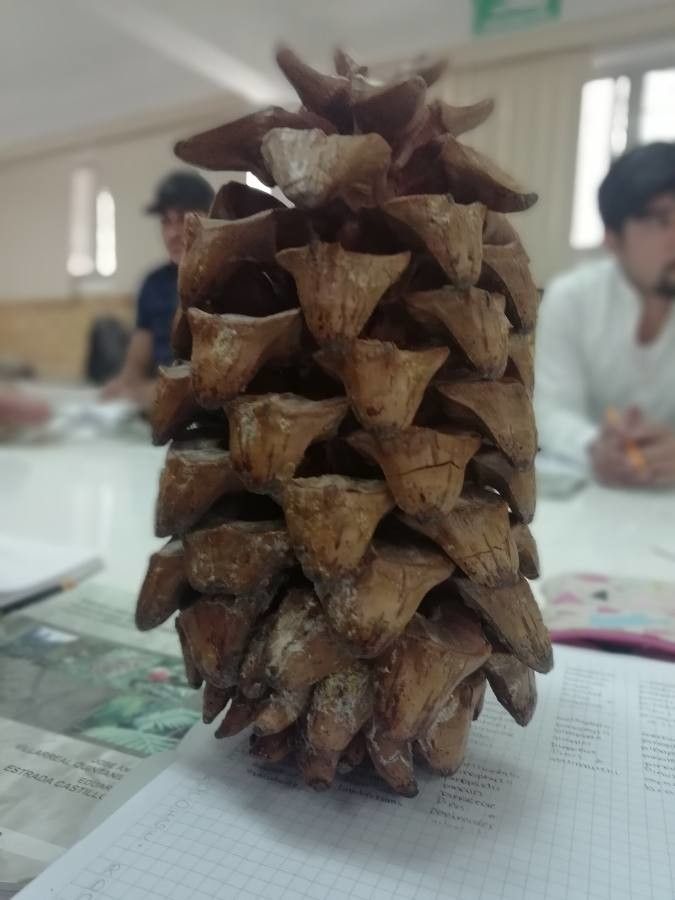
The big-cone pine gets its name from its sizable cones, which can reach up to 30 centimeters in length and weigh over two kilograms. These cones are covered in sharp spines that protect the seeds inside from predators.
This species thrives in dry, rocky soils at high elevations in mountainous regions. It has adapted to these harsh conditions by developing deep roots that allow it to access water from deep underground.
The big-cone pine plays a crucial role in its ecosystem by providing habitat for wildlife such as birds and squirrels, and serving as an important food source for many animals.
Unfortunately, Pinus maximartinezii faces threats from deforestation caused by human activities like logging and land development. Conservation efforts are underway in Mexico to protect this unique species from further decline.
Botanical profile.
Other names.