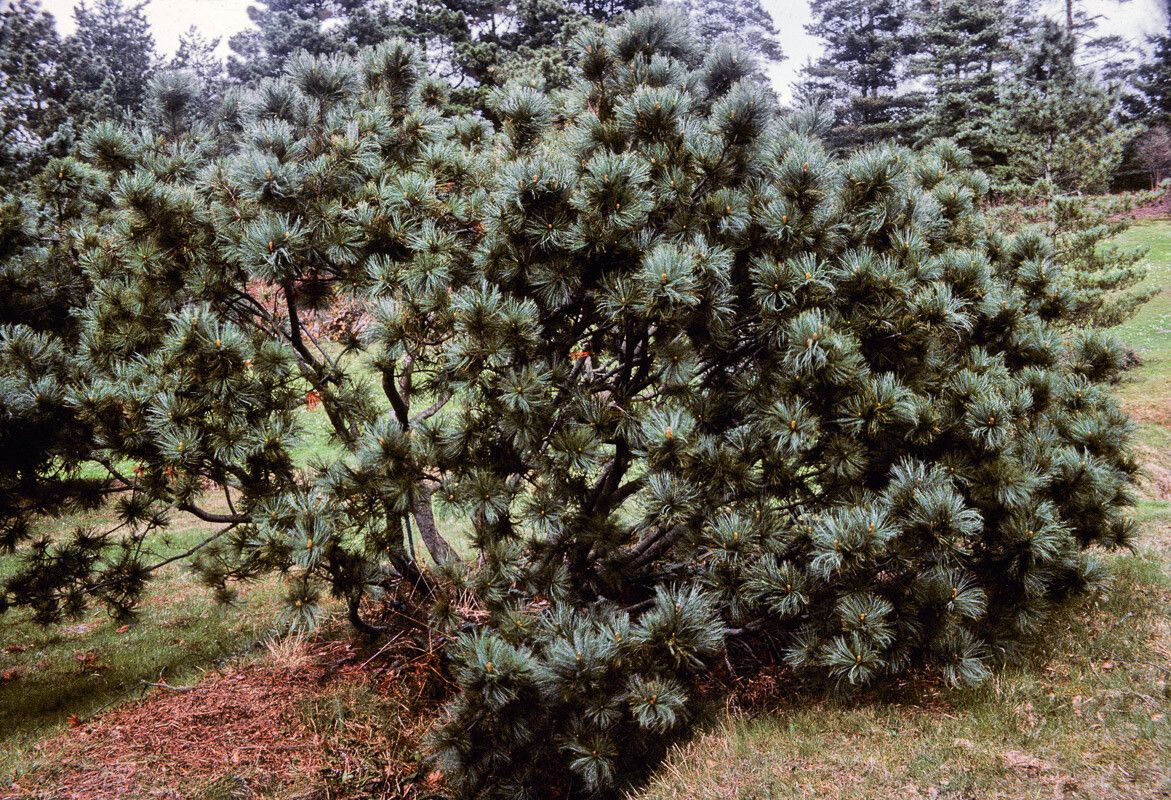
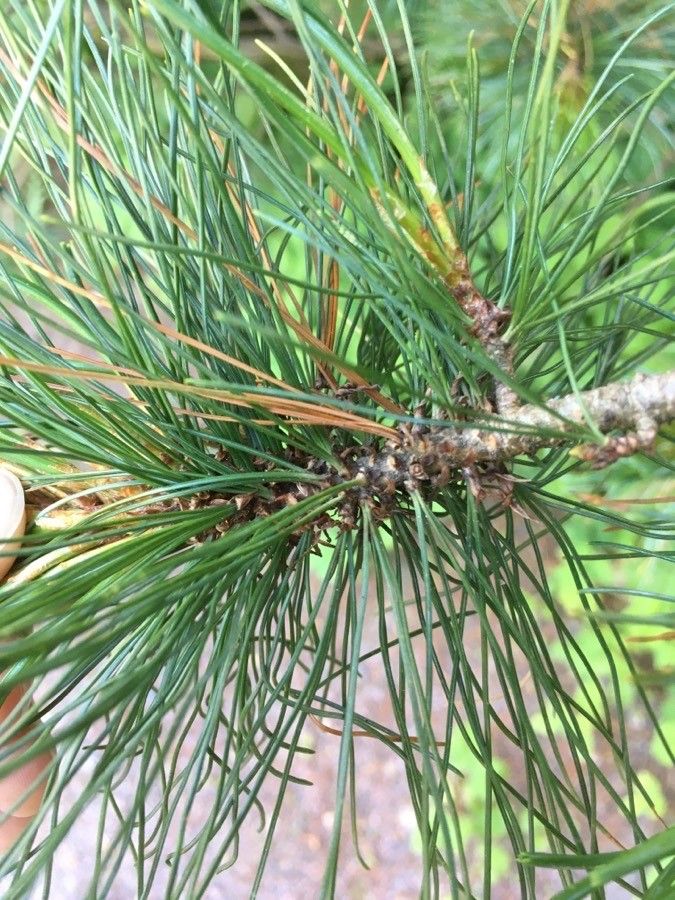
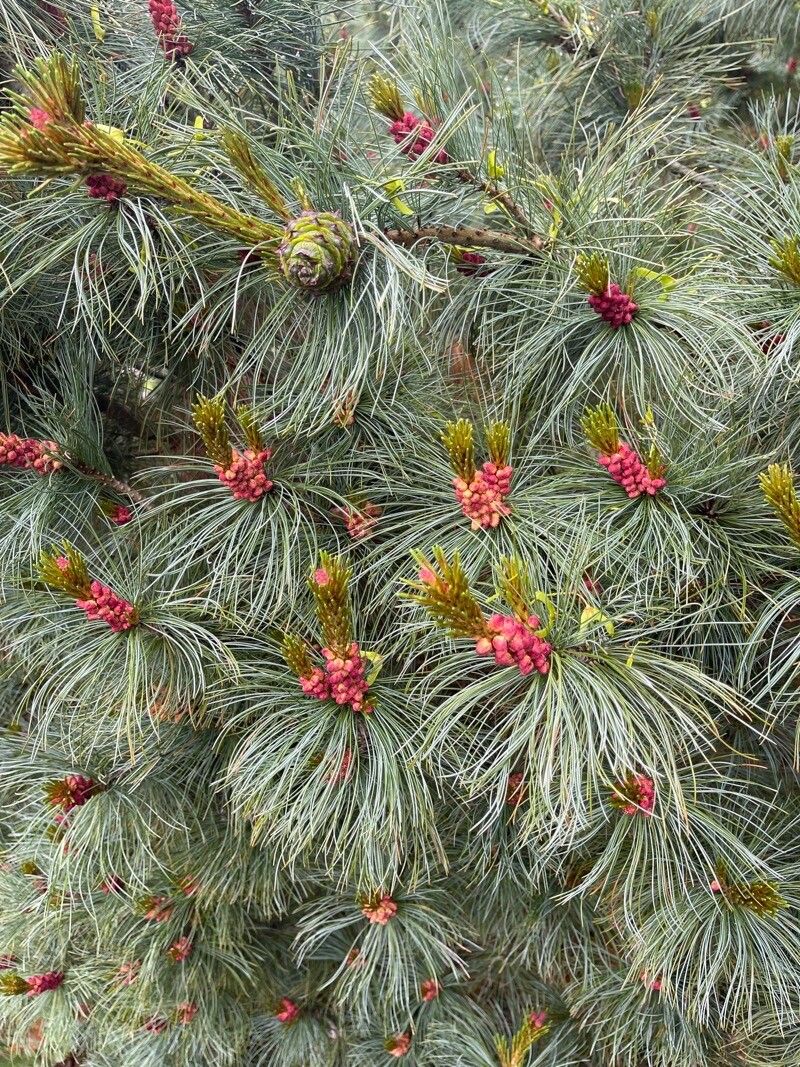
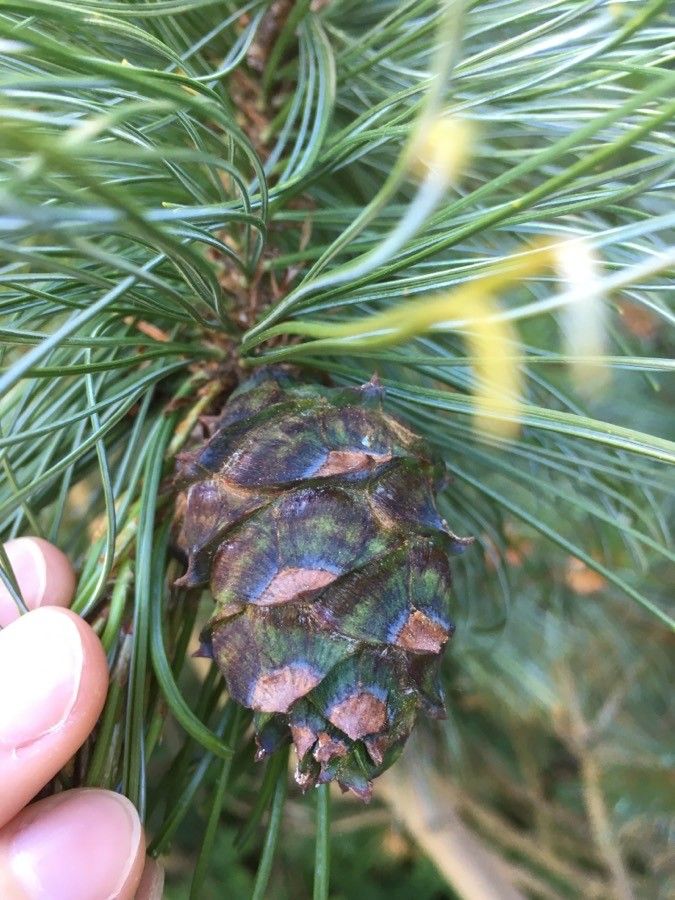
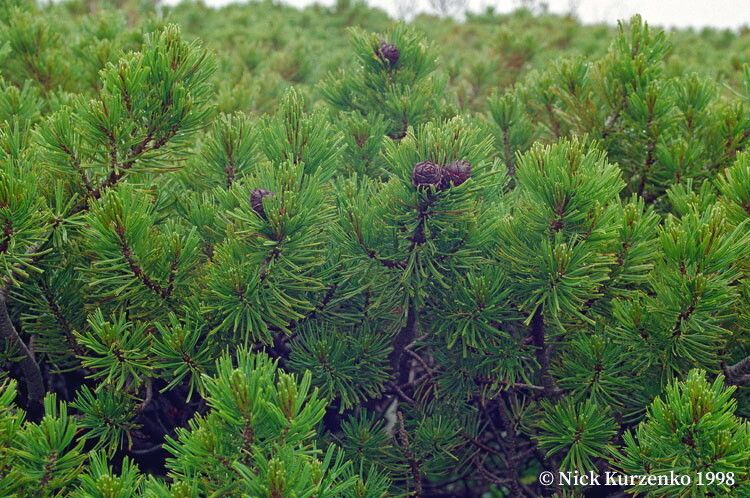
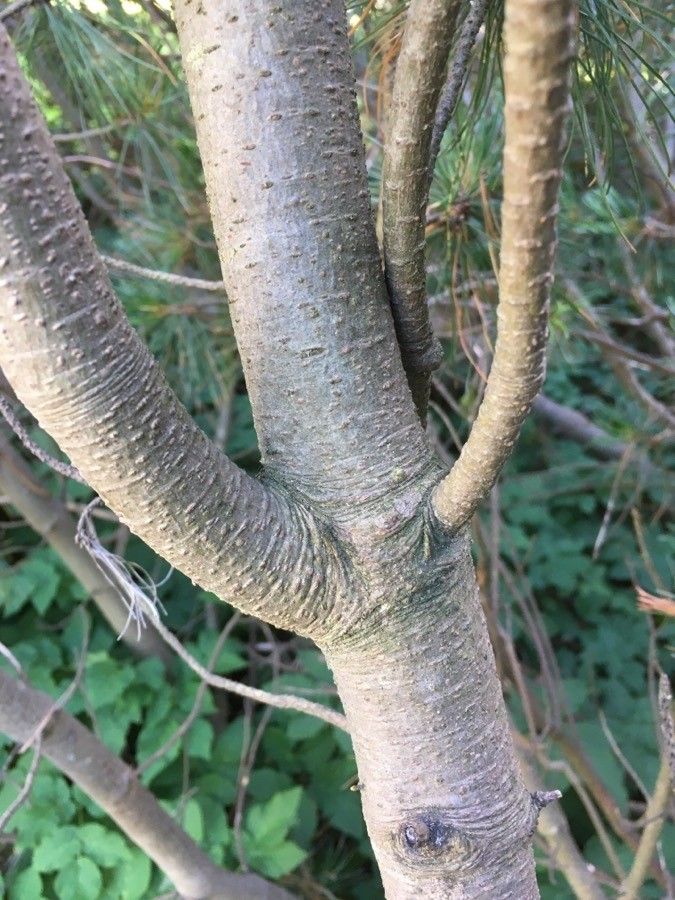
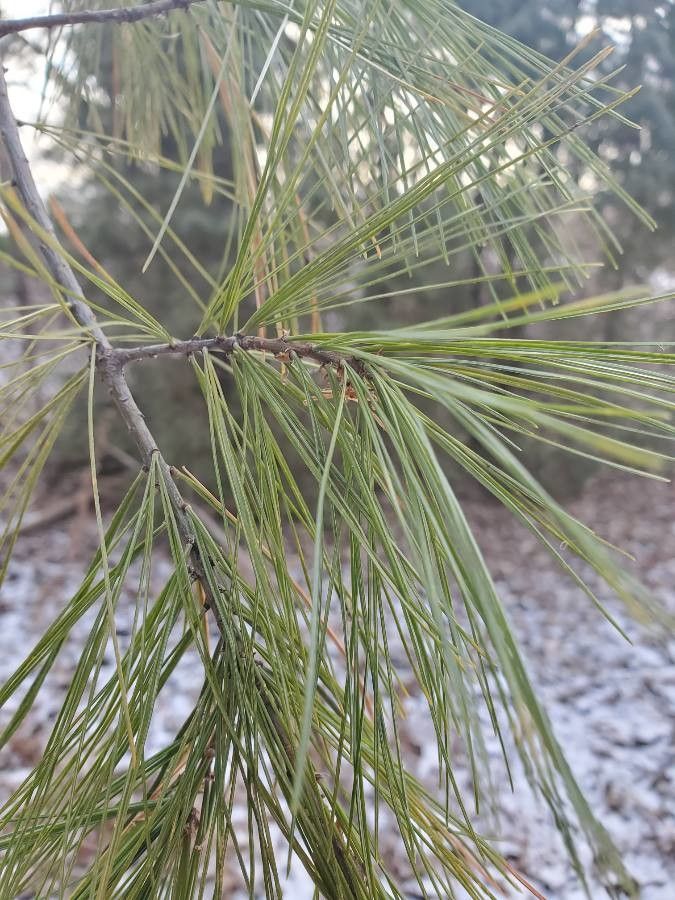
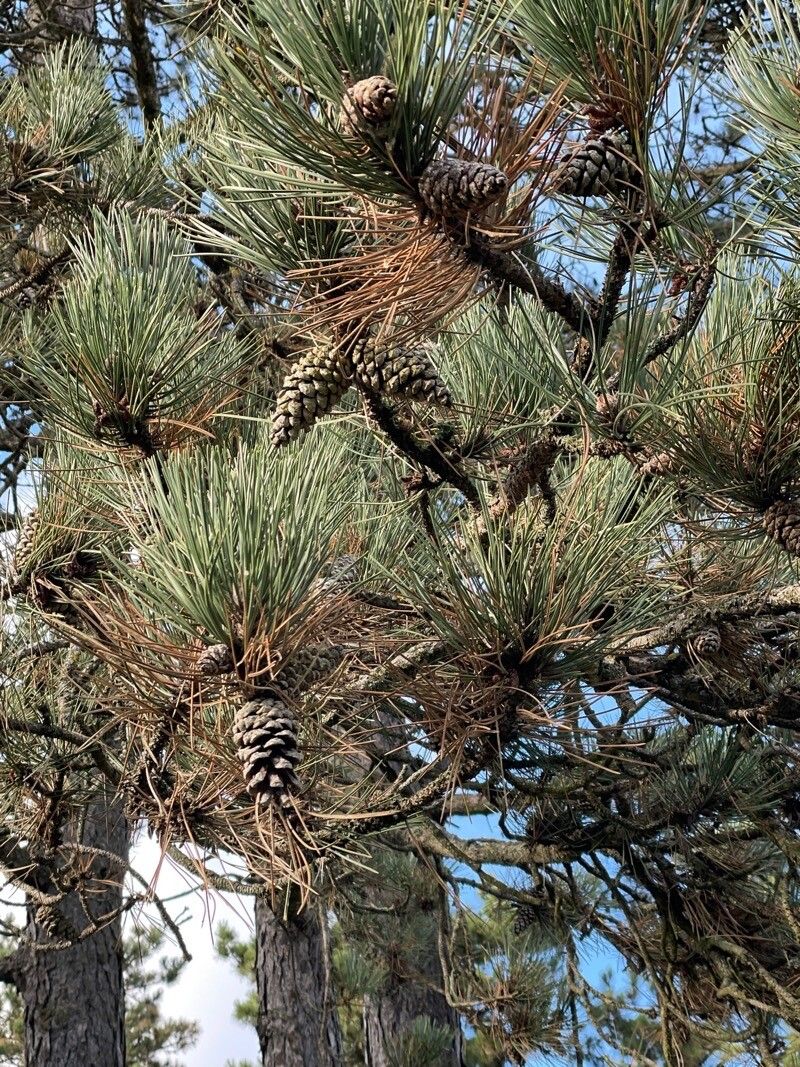
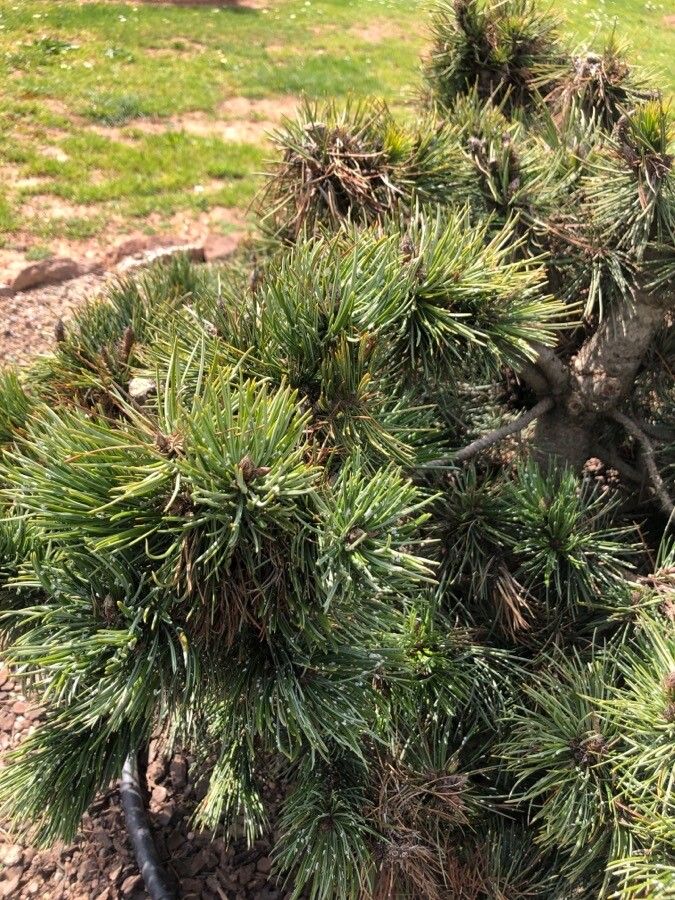
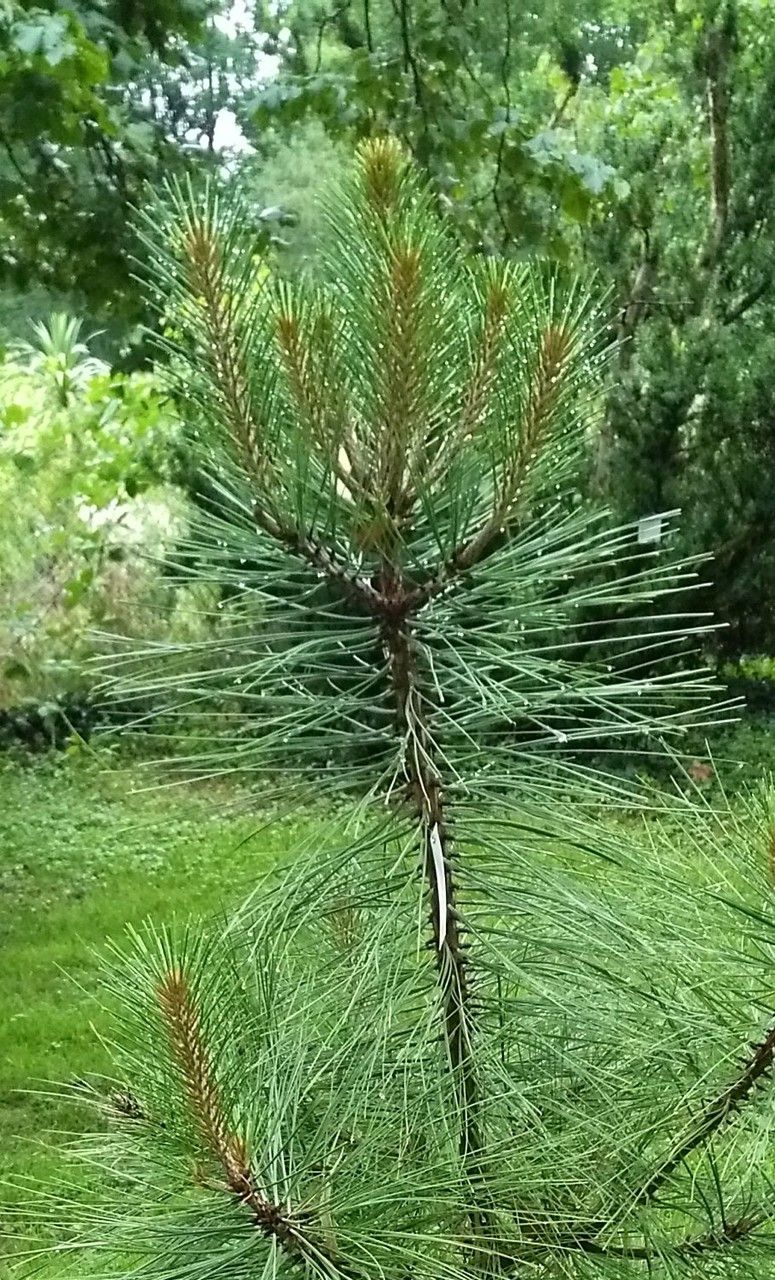
Pinus pumila, commonly known as the Siberian dwarf pine or Japanese stone pine, is a species of coniferous tree native to the mountainous regions of northeastern Asia. This slow-growing evergreen typically reaches heights of 1-3 meters and has a dense, bushy growth habit. Its short, stiff needles measure only 2-4 cm in length and are arranged in bundles of five. The cones are small and oval-shaped, measuring just 3-5 cm in length. Pinus pumila thrives in well-drained soils with good moisture retention but can also tolerate poorer soils. It prefers full sun exposure but can adapt to partial shade as well. This plant has several uses, including ornamental purposes due to its attractive appearance. Its timber is utilized in construction, furniture making, and paper pulp production. Ecologically, Pinus pumila is significant for providing habitat to various wildlife species, such as birds and small mammals, and helping prevent soil erosion on steep slopes through its extensive root system. Overall, Pinus pumila is an important plant species with both ecological and practical value, making it a vital component of the mountainous regions throughout northeastern Asia.
Botanical profile.
- Plant Type
- Shrub
- Life Cycle
- Perennial
- Genus
- Pinus
- Family
- Pinaceae
- Hardiness Zone
- 3-6
- Mature Height
- 2.44 m
- Mature Spread
- 3.96 m
- Leaf Color
- Green, Blue, Silver
- Leaf Type
- Evergreen
- Flower Color
- Blue, Red
- Bloom Time
- Early summer, Mid summer
- Planting Time
- Spring, Summer, Autumn
- Harvest Time
- Late summer, Early fall, Mid fall
- Native Area
- Japan, Mongolia, Koppen, South Korea, China
Other names.