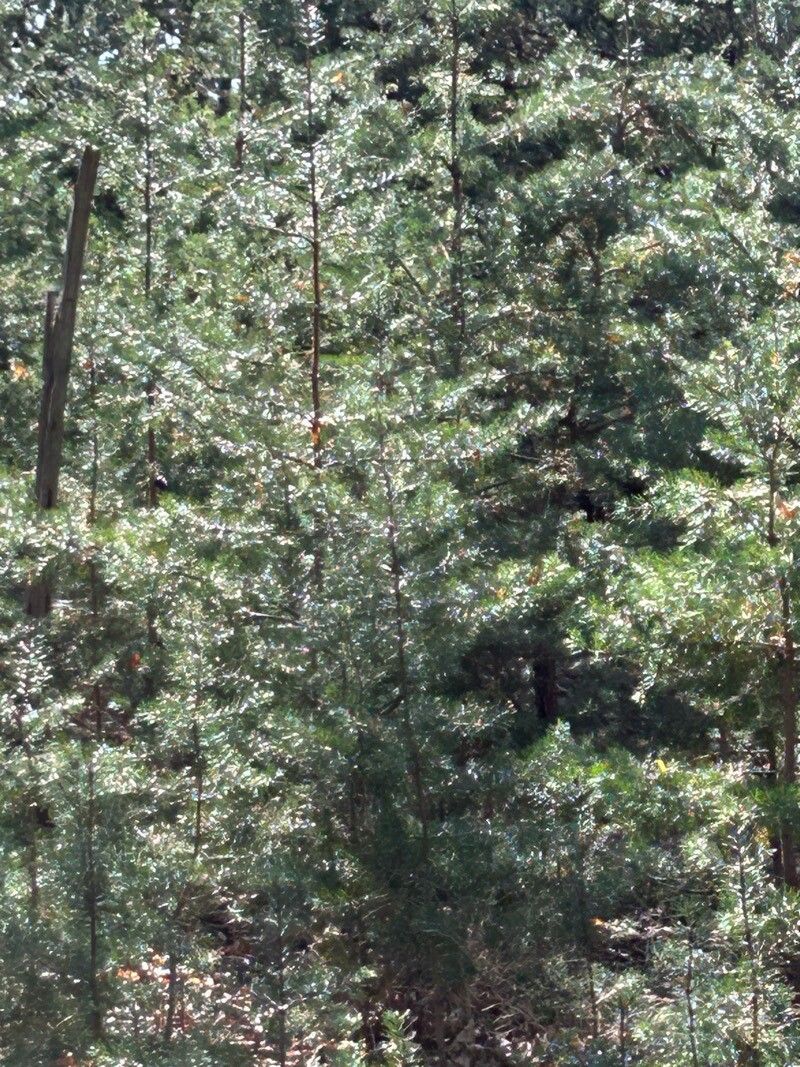
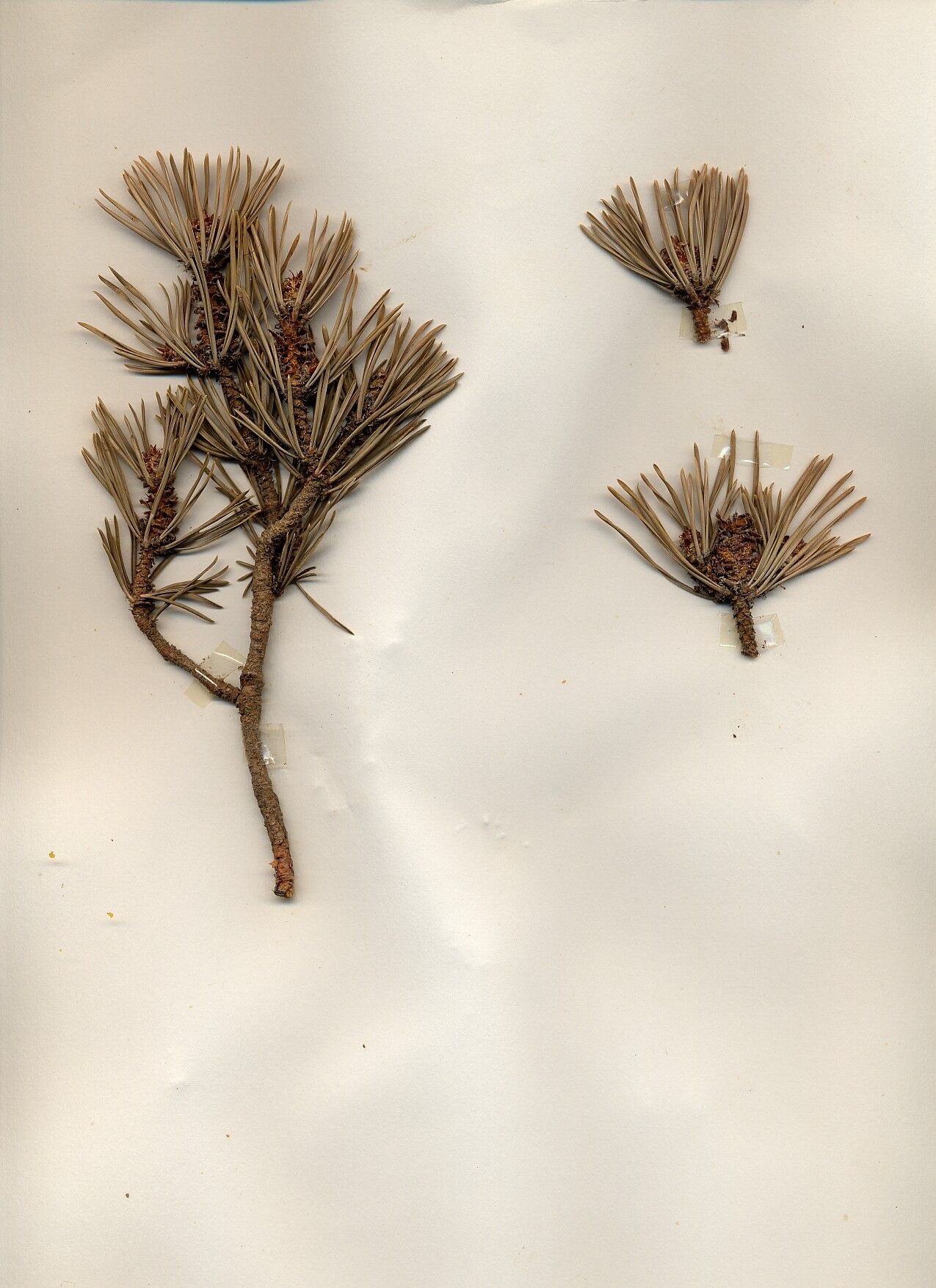
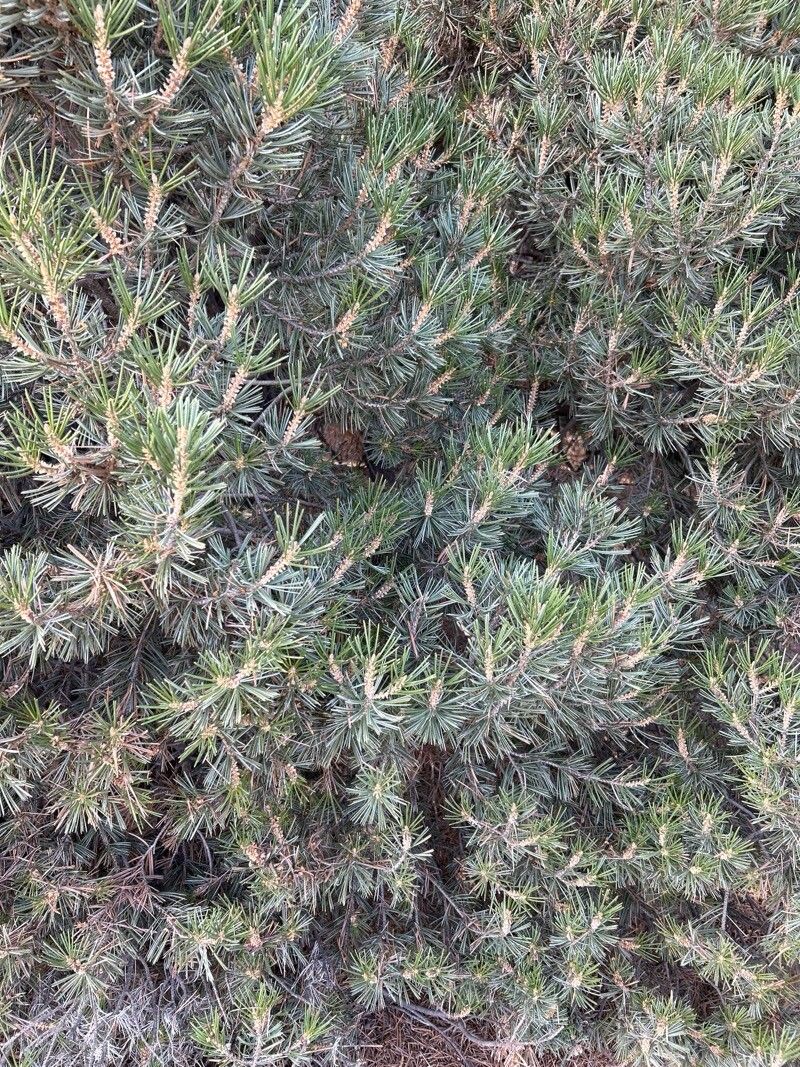
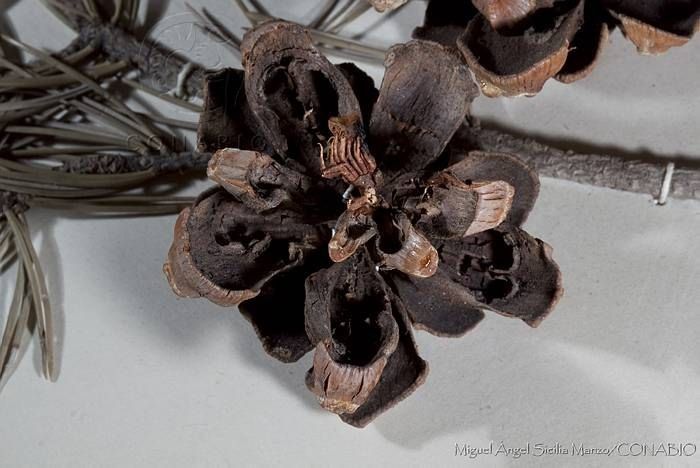
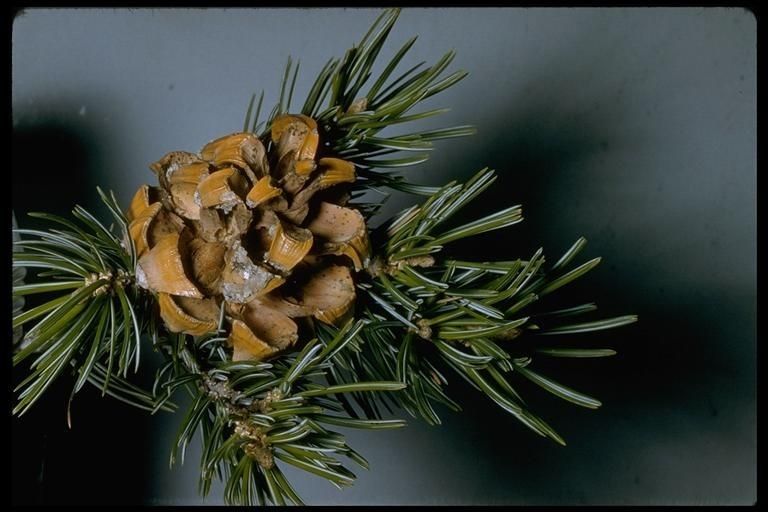
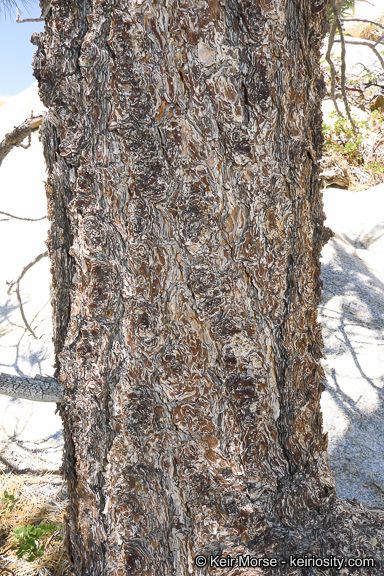
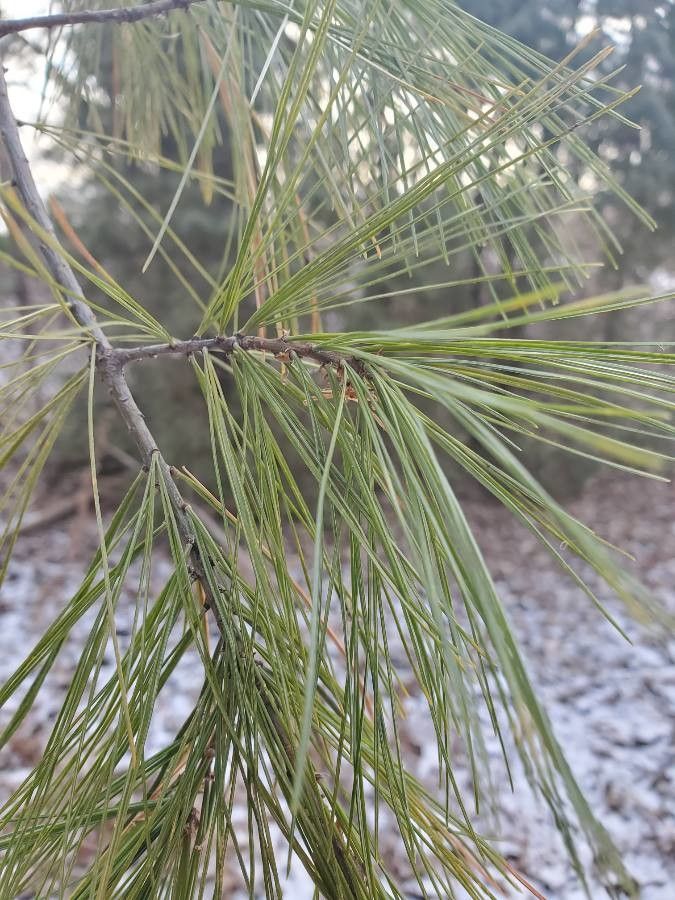
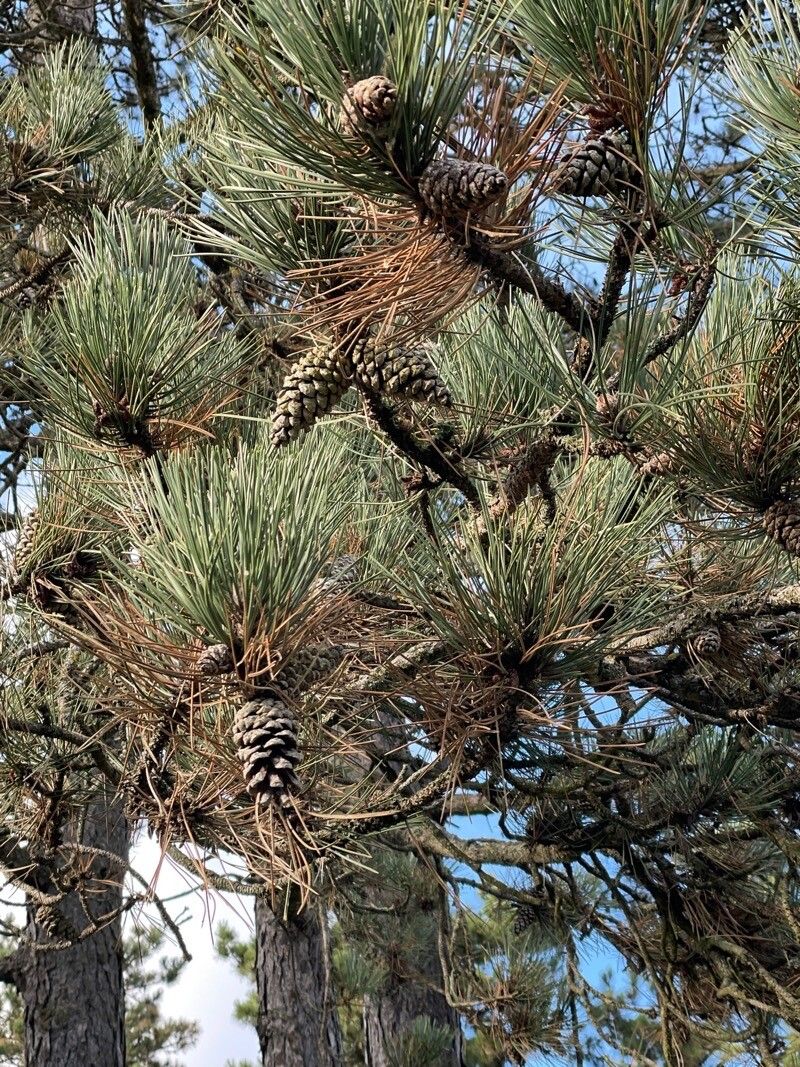
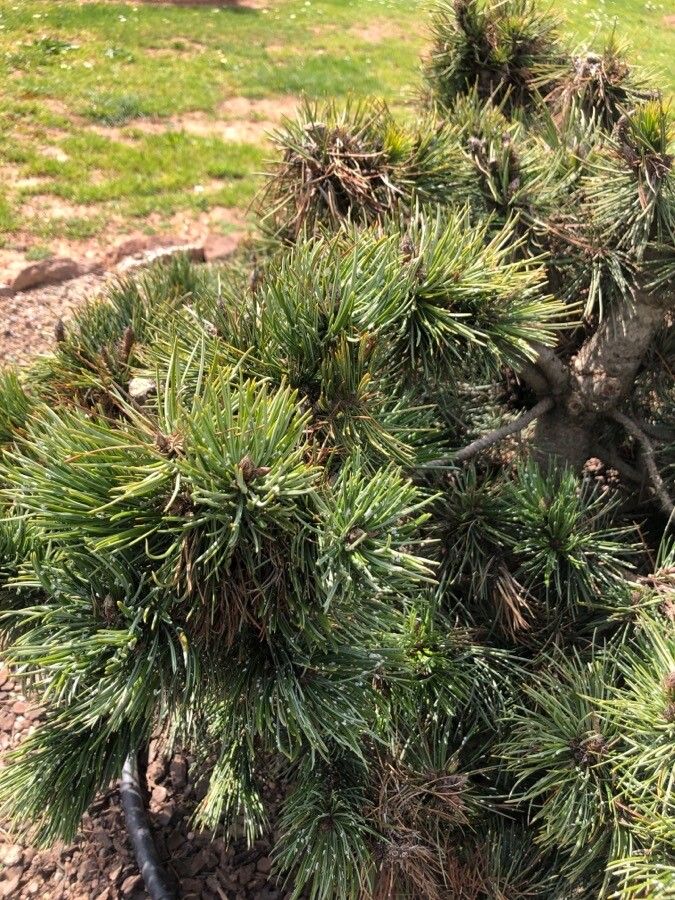
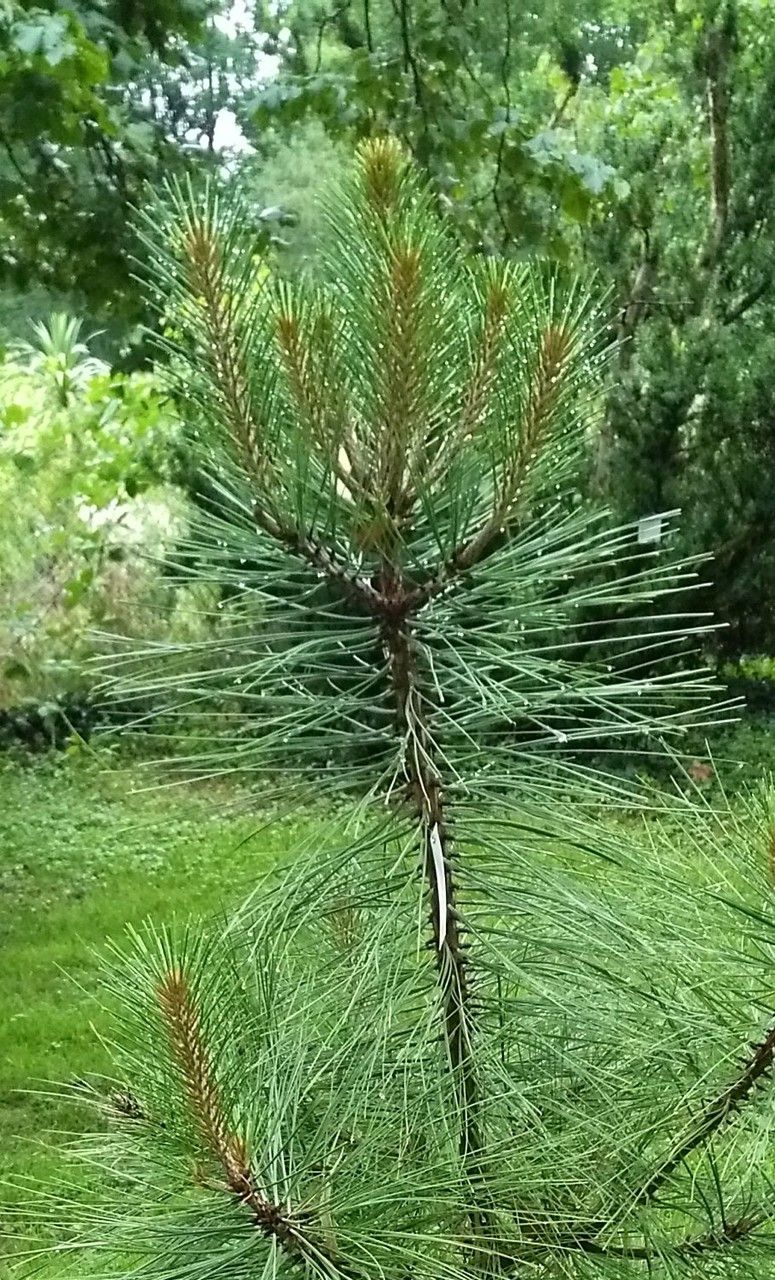
Pinus quadrifolia, commonly known as the Parry Pinyon or Nut Pine, is a species of pine tree native to California and Baja California. Belonging to the Pinaceae family, this tree can grow up to 10 meters tall. It has a distinctive appearance, featuring short needles that grow in clusters of four, which gives it the name "quadrifolia." The cones produced by this species are small and round, with a diameter of about 3 cm.
In its native range, Pinus quadrifolia is an important plant, providing food for various wildlife such as birds, squirrels, and chipmunks. It also plays a crucial role in stabilizing soil on steep slopes due to its deep root system.
The wood from this tree has been used for various purposes, such as fuelwood or construction material, due to its durability. However, over-harvesting has led to a decline in its population.
Conservation efforts, including reforestation programs by organizations like the US Forest Service, aim to restore the degraded habitats where Pinus quadrifolia once thrived.
Parry pinyon exhibits strong resistance to disease and is generally not vulnerable to illnesses. With respect to upkeep, this plant is fairly low-maintenance. Planted outdoors it needs little watering, and larger specimens typically do not require pruning; however, smaller plants should be trimmed after they finish blooming. Parry pinyont is suitable for anyone with an outdoor area, such as a garden or deck, and does not call for extensive gardening experience.
How to keep Pinus Quadrifolia.
Light
Parry pinyon comes from open habitats, such as sunlit meadows and forest margins, which supply plenty of light. It performs best in Full Sun but can also tolerate Partial Sun, showing adaptability to different light conditions.
Water
To care for newly planted parry pinyon during the summer heat, water them twice a day, but avoid doing so at midday. For mature parry pinyon, water only when the soil feels dry. Indoor parry pinyon should have their leaves sprayed twice daily. Be cautious not to overwater, as it is crucial to maintain proper air circulation and prevent issues like root rot and wilting.
Temperature
Parry pinyon tolerates a wide range of climate conditions, from scorching summers to chilly winters. However, it has an optimal temperature range for growth. If temperatures become excessively high, the plant is susceptible to heat and humidity stress, which can cause its death. In areas where temperatures near the lower limit of its cold tolerance, it is important to provide insulation to protect the plant.
Fertilizer
Parry pinyon has specific nutrient needs and does not require heavy fertilization. Spring is the best time to fertilize for optimal growth. Supplying nutrients improves its health, increases resistance to pests and diseases, and helps sustain its long lifespan.
Pruning
Prune your Parry pinyon in early spring, concentrating on removing dead or damaged branches. This helps improve air circulation and allows more light to penetrate, promoting healthy growth and maintaining the tree’s shape. Be sure to sanitize your tools before pruning to prevent infection, and make cuts close to the branch collar for the best results.
Botanical profile.
- Plant Type
- Tree
- Life Cycle
- Perennial
- Genus
- Pinus
- Family
- Pinaceae
- Hardiness Zone
- 7-10
- Mature Height
- 3.66 m to 10.97 m
- Mature Spread
- 4.88 m to 7.92 m
- Leaf Color
- Dark Green
- Leaf Type
- Evergreen
- Bloom Time
- Early spring, Mid spring
- Planting Time
- Spring, Summer, Autumn
- Harvest Time
- Late summer, Early fall, Mid fall
- Native Area
- Mexico
Other names.
Reader questions.
What are the sunlight requirements for Parry Pinyon (Pinus quadrifolia)?
Parry Pinyon, or Pinus quadrifolia, thrives in conditions that provide sufficient sunlight. The tree requires 'Full sun,' which is defined as receiving above 6 hours of sunlight daily, to flourish appropriately. Additionally, it can also tolerate 'Partial sun' conditions, meaning it can grow well with about 3-6 hours of sunlight each day. It's essential to observe how sunlight moves through your garden throughout the day. This observation will help in selecting spots that offer an optimal balance of light and shade, ensuring the plants remain healthy and happy.