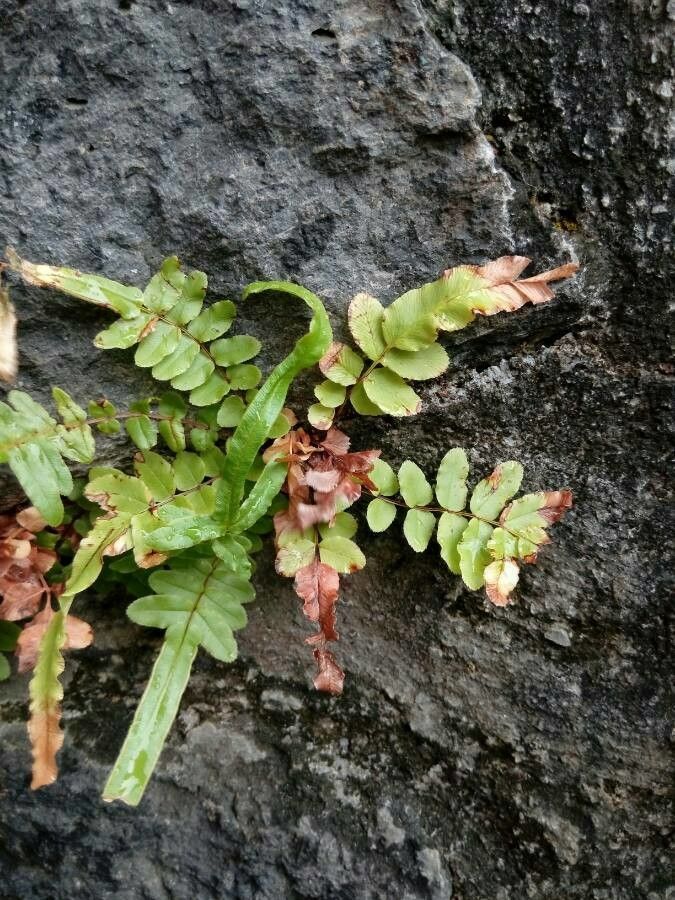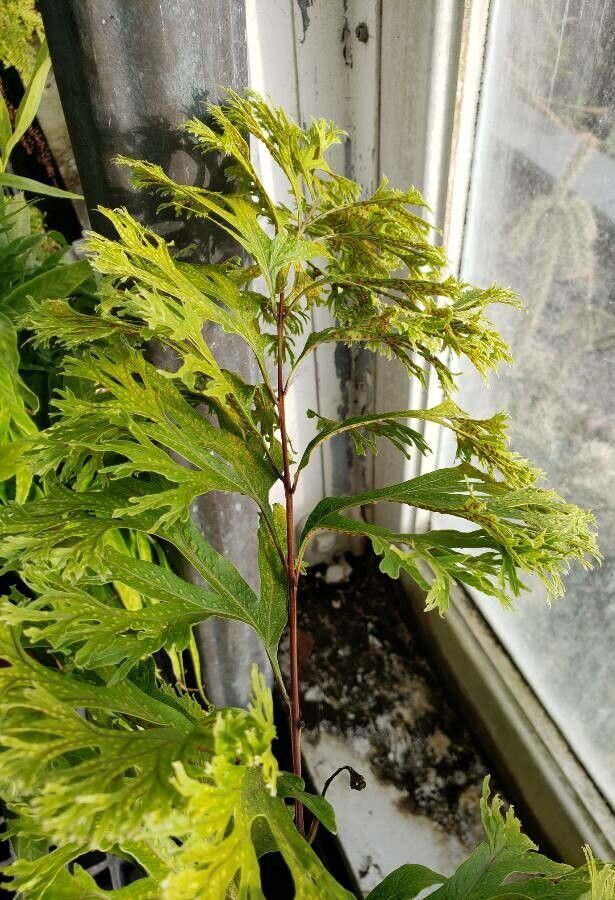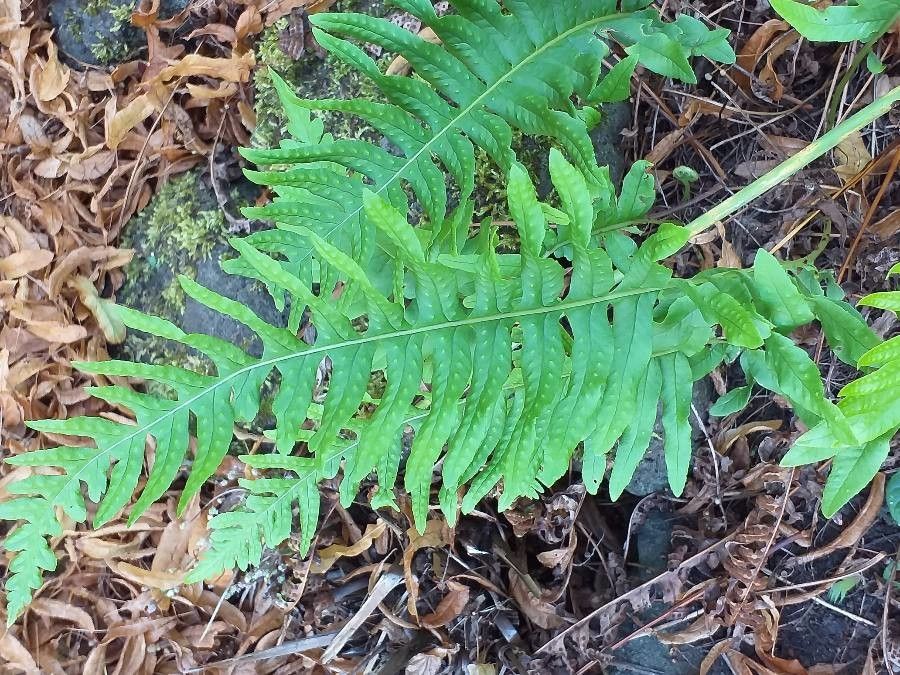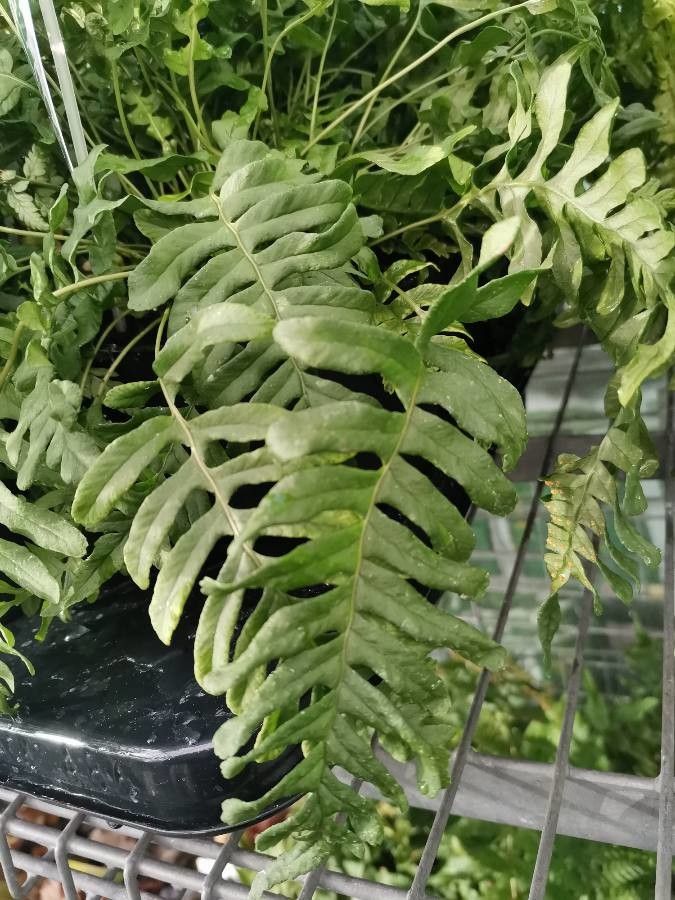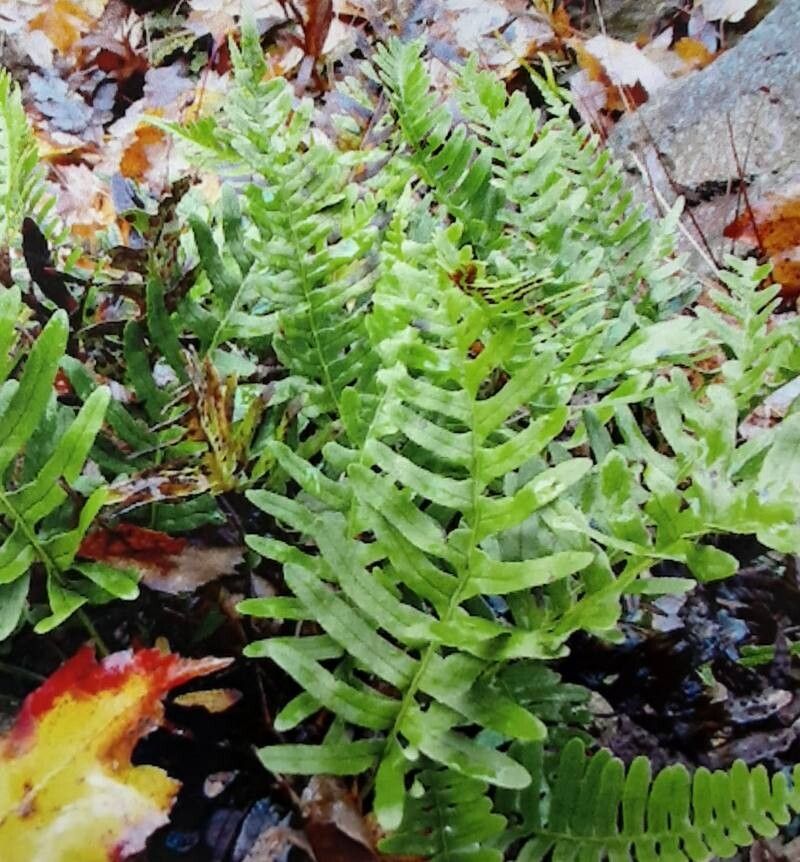
Polypodium appalachianum is a fern species native to eastern North America. Sometimes called the Appalachian polypody or Appalachian rockcap fern, it is very similar in appearance to Polypodium virginianum. For years, P. virginianum—long considered a variety of the British Polypodium vulgare—was recognized as having cryptic races, with diploid, triploid, and tetraploid representatives. Since the triploid specimens bore abortive spores, it was apparently the hybrid between the diploid and tetraploid groups. In 1991, it was resolved that the type of P. virginianum was the tetraploid series, and that it is an allotetraploid species of hybrid origin, with the diploid species as one parent. The diploid species was then named P. appalachianum. The other parent of P. virginianum was found to be Polypodium sibiricum. The tetraploid of hybrid derivation tolerates warmer climates than either parent.
Appalachian polypody has strong disease resistance and generally does not develop illnesses. However, it can be vulnerable to pests and diseases present in its surroundings. These infections are typically mild. For care, this plant requires a moderate level of maintenance. It should be pruned regularly to preserve a neat appearance and support healthy growth. Fertilizing can also help encourage flowering. Appalachian polypody is well suited for anyone with outdoor space, such as a garden or patio, and does not demand extensive experience in plant care. It may need more attention when kept indoors.
How to keep Polypodium Appalachianum.
Light
The Appalachian polypody flourishes in settings where there is limited sunlight, demonstrating its most robust growth in these habitats. It needs little light exposure throughout all phases of its development. It comes from areas characterized by thick underbrush and substantial canopy cover. Its health might suffer from either too much or too little light exposure.
Water
The Appalachian polypody flourishes in humid woodland settings, where it needs consistent moisture and can tolerate moderate drought. Watering it weekly simulates its natural rainfall patterns, while ensuring it gets sufficient light helps it use water efficiently. Its adaptability to different light conditions affects how much water it needs, striking a balance between retaining moisture and allowing for drainage.
Temperature
Appalachian polypody possesses a certain flexibility in adjusting to varied temperature ranges, though its prevalence can still be constrained by a mix of hydric and thermal conditions. This plant flourishes maximally in summertime under warm climates given sufficient water provision or rainfall. Lengthy instances of cloudy and wet weather, along with enduring high temperatures, can potentially elevate the risk of the Appalachian polypody perishing. During winters, equipping the plant with appropriate cold protection can enhance its chances of survival.
Fertilizer
Typically, an annual spring fertilization is enough for Appalachian polypody, although its growth can be maximized with regular feedings every month to six weeks. Fertilizing helps improve the look and function of the leaves, ensuring constant color and a healthy texture, while also promoting the expansion of roots and the intake of nutrients for enduring plant wellness.
Pruning
Appalachian polypody flourishes in shady and moist environments, boasting elegant fronds. To promote healthy growth, improve air circulation, and prevent disease, prune the plant from early to late spring by removing dead fronds. Be sure to use sterilized tools to reduce the risk of infection.
Botanical profile.
- Plant Type
- Herb
- Life Cycle
- Perennial
- Genus
- Polypodium
- Family
- Polypodiaceae
- Hardiness Zone
- 3-8
- Mature Height
- 15 cm to 30 cm
- Mature Spread
- 20 cm to 40 cm
- Leaf Color
- Dark Green, Forest Green
- Leaf Type
- Evergreen
- Planting Time
- Spring, Autumn
- Native Area
- Georgia