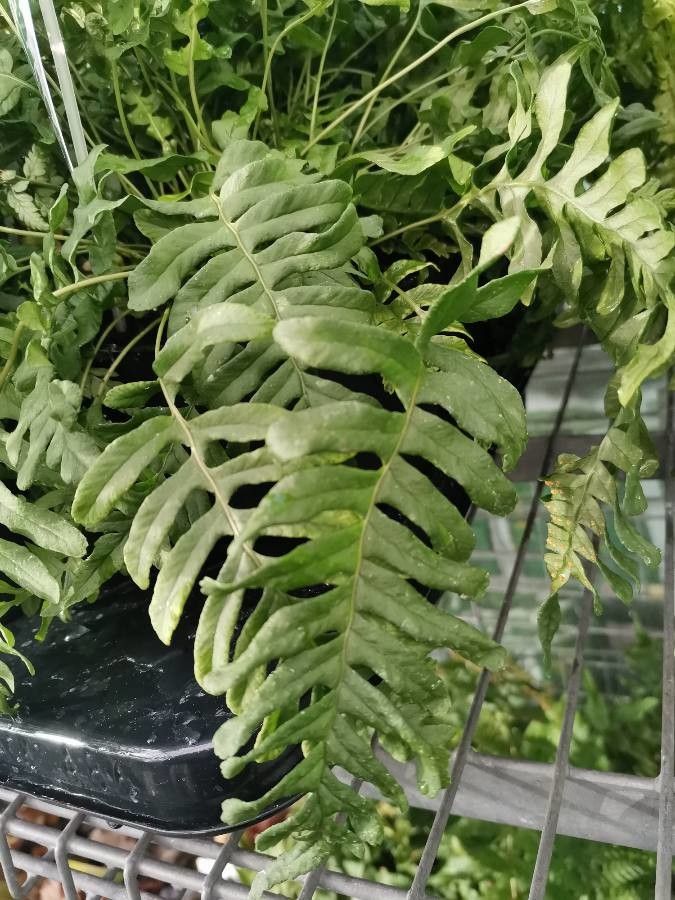
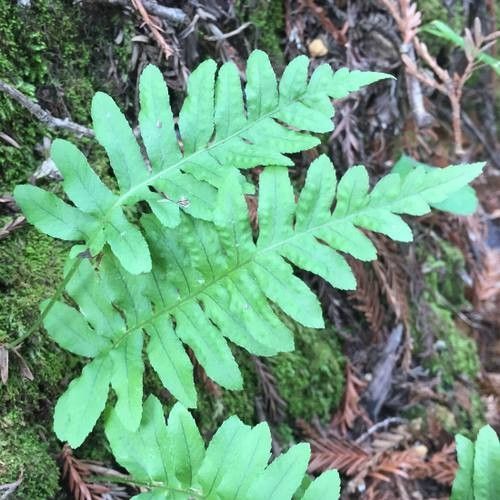
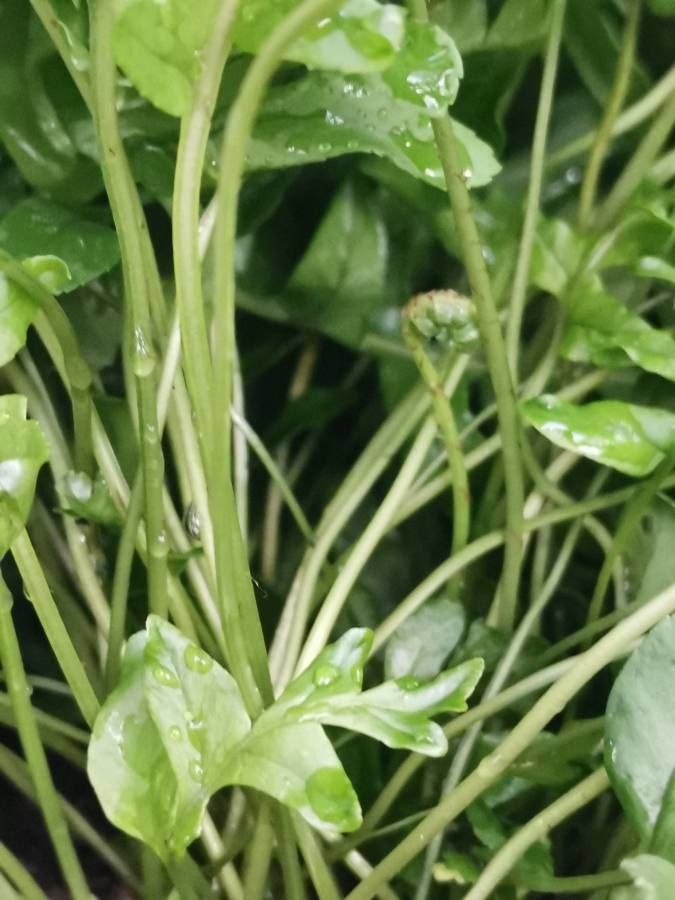
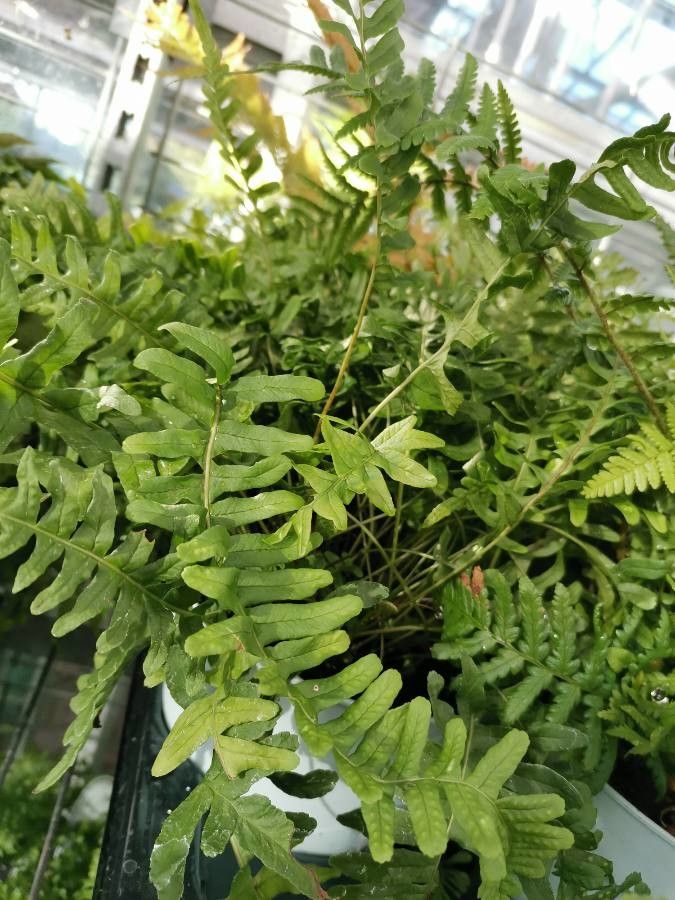
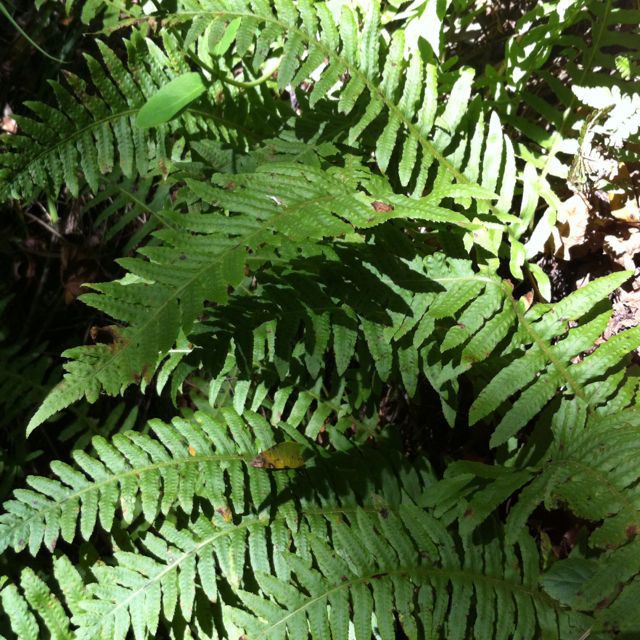
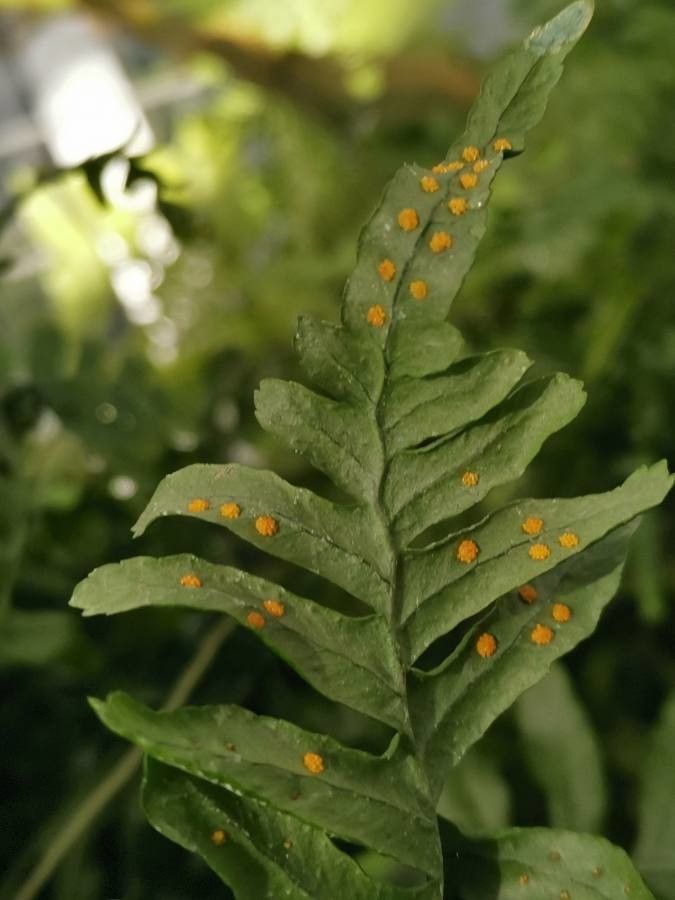
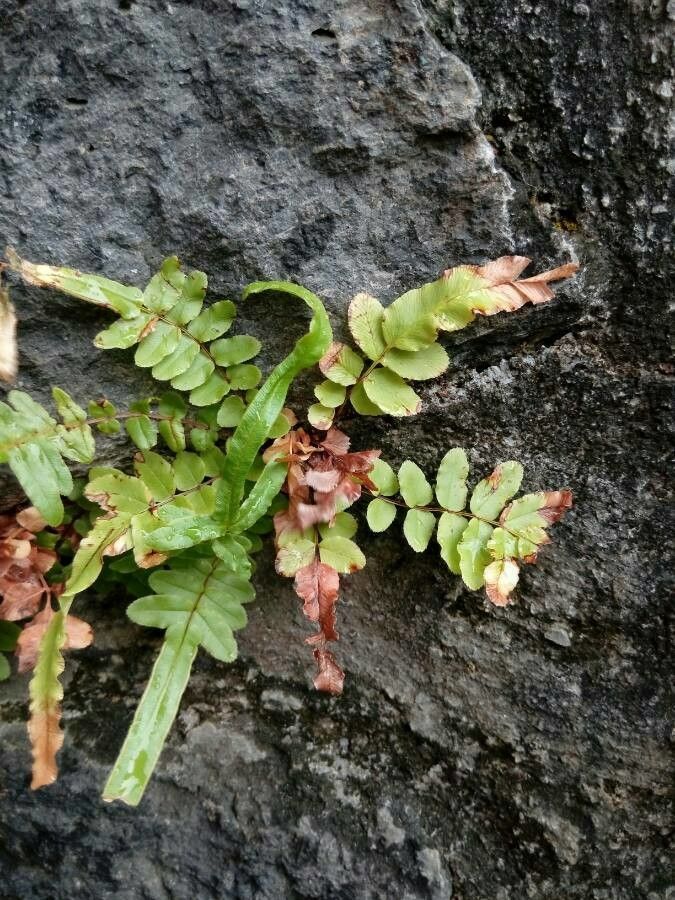
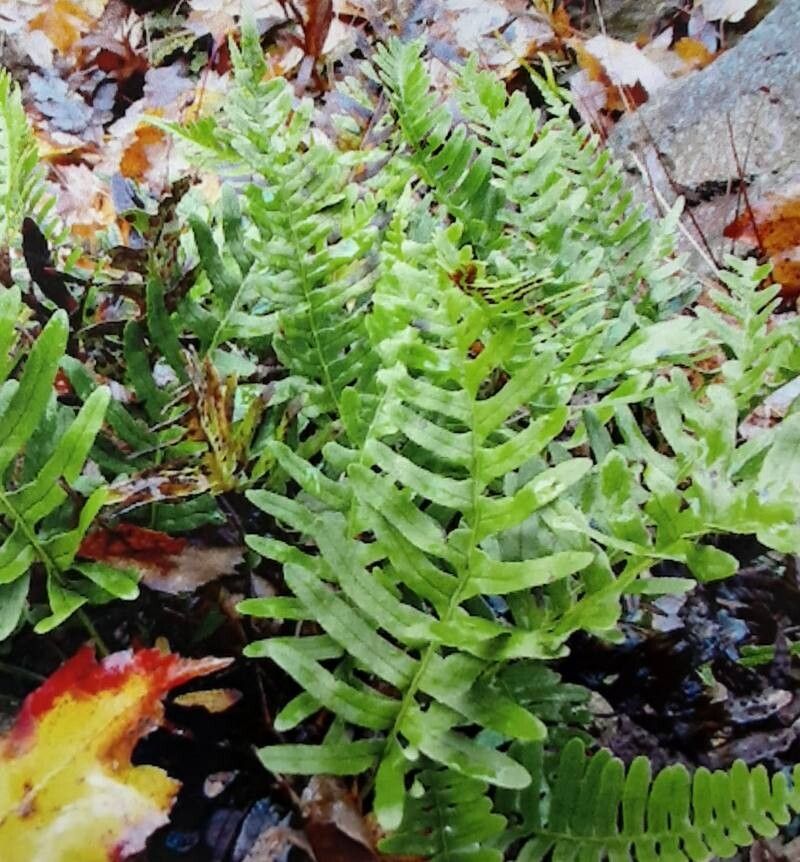
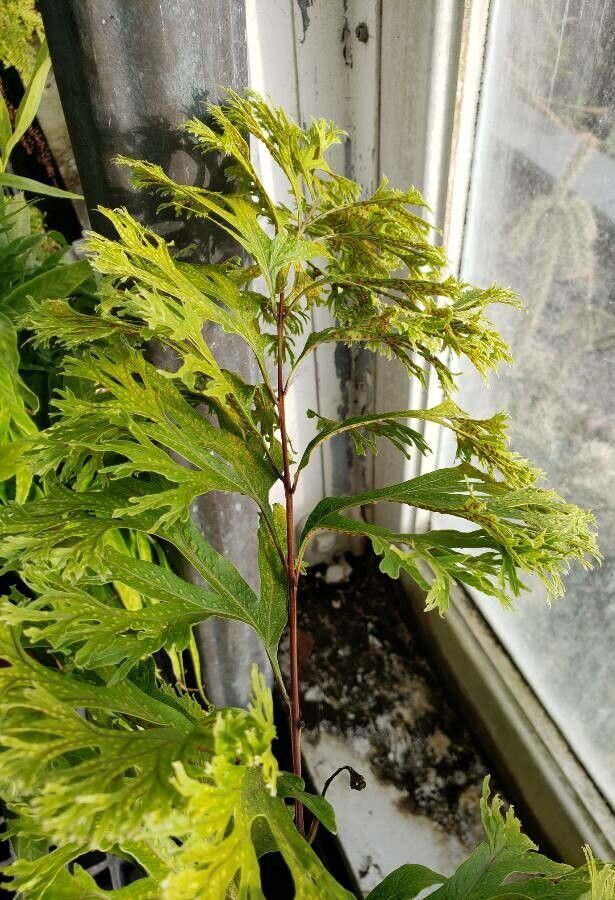
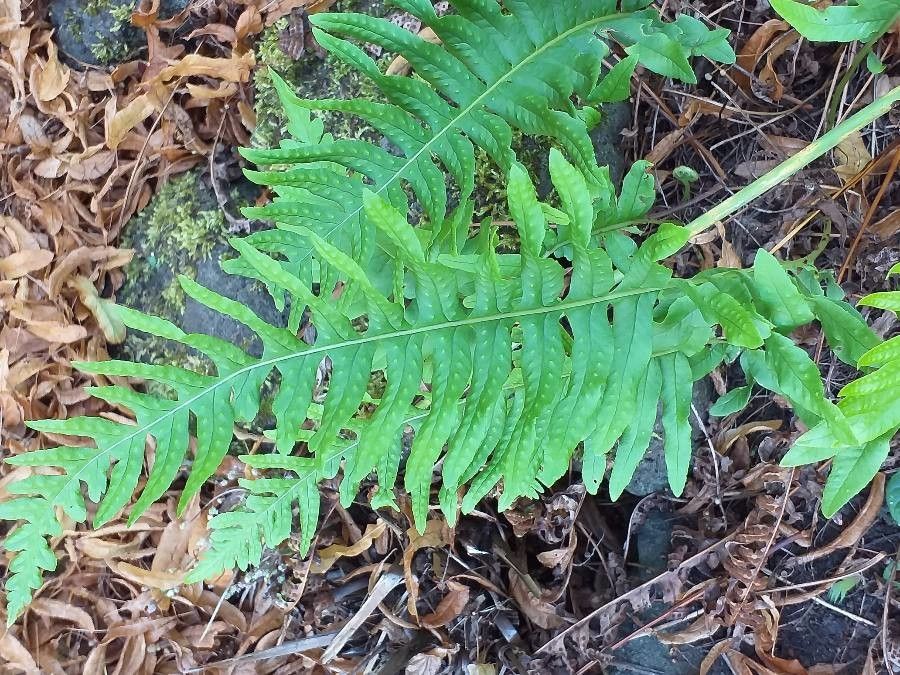
Polypodium californicum, commonly referred to as California polypody or California rock fern, is a fern species native to the western United States. This small evergreen fern thrives in rocky areas and canyons. Its fronds, which are dark green, leathery, and glossy, can reach up to 30 centimeters in length. The plant reproduces via spores produced on the underside of the fronds.
California polypody favors well-drained soil and grows best in partial shade or filtered sunlight. Although it becomes drought-tolerant once established, it requires regular watering during its initial growth period. Native American tribes have historically used this plant for medicinal purposes, treating ailments such as skin rashes, stomach issues, and headaches.
Overall, Polypodium californicum is an attractive ornamental plant that adds texture to rock gardens or shaded areas in gardens and landscapes. Additionally, it provides ecological benefits, such as erosion control on slopes and habitat for wildlife like lizards and insects.
California polypody is fairly disease-resistant and typically does not suffer from many illnesses. Still, it can be affected by pests and diseases present in its environment. Such infections are generally mild. Regarding maintenance, this plant needs moderate care. Regular pruning is necessary to keep it looking good and to support healthy growth. Applying fertilizer can also encourage flowering. California polypody is appropriate for anyone with outdoor areas like a garden or patio and does not demand extensive gardening experience. It may need extra attention when cultivated indoors.
How to keep Polypodium Californicum.
Light
The California polypody prefers a moderate amount of sunlight but can tolerate lower light levels. This preference comes from its original surroundings, which were moderately sunlit environments. Interrupting this light condition can result in damage or reduced growth.
Water
The California polypody is well-adapted to its natural environment and has a moderate tolerance for drought. When cultivated, however, it requires consistent moisture and should ideally be watered once a week. This evergreen fern maintains its foliage throughout the year, so it needs a stable supply of water even during the cooler months, especially when indoor humidity levels drop.
Humidity
This plant needs special care because it loves high humidity levels of 60-80% or more. The best way to achieve this is by placing a humidifier near the plant. Daily misting is also essential! Make sure the room has good ventilation.
Temperature
California polypody prefers cool to mild conditions and grows best in temperatures of 59 to 95 °F (15 to 35 °C). As seasons change, provide it with shade during the hotter months to prevent overheating.
Fertilizer
One application of fertilizer in spring is typically enough for California polypody, though repeated feedings can boost growth. Feed it every month to month and a half. Fertilizing improves the leaves’ appearance and function, helping maintain consistent color and a healthy texture. It also promotes root growth and nutrient uptake, supporting long-term plant health.
Pruning
The California polypody is a fern with lacy fronds that grows from a rhizome. To encourage new growth and maintain its health, prune it lightly between early and late spring to remove any dead leaves. Make sure to use clean, sharp tools to prevent damage and promote good air circulation, which can help reduce pest problems. Avoid heavy pruning to ensure lush development.
Botanical profile.
- Plant Type
- Herb
- Life Cycle
- Perennial
- Genus
- Polypodium
- Family
- Polypodiaceae
- Hardiness Zone
- 7-10
- Mature Height
- 30 cm to 61 cm
- Mature Spread
- 61 cm to 91 cm
- Leaf Color
- Green, Dark Green
- Leaf Type
- Semi-evergreen
- Planting Time
- Spring, Summer, Autumn
- Native Area
- Mexico
Other names.
Reader questions.
How should I water my California polypody?
When watering the California polypody, it is best to use filtered water at room temperature. Tap water may have particles that can harm the plant, so filtered water is preferred. The water should be at room temperature or slightly warmer because the California polypody is used to warm conditions and cold water can be a shock to its system. Avoid overhead watering as it can cause leaf problems. Instead, apply the filtered room temperature water directly to the soil until it is completely soaked. Soaking the soil is beneficial for the plant as it helps moisten the roots and allows them to spread and collect necessary nutrients.
What are the sunlight requirements for California Polypody?
California Polypody thrives best in conditions with about 3-6 hours of sunlight, preferring moderate sun exposure but able to tolerate less. It's important to observe the movement of sunlight through your garden to find the ideal balance of light and shade. Sudden changes in light exposure may adversely affect the plant, leading to issues such as damage or stunted growth. Indoor plants can benefit from artificial lighting, especially when natural sunlight is insufficient. LED lights, mimicking the specific wavelengths needed, can support plant health by providing 30-50W/sq ft for full sun plants, 20-30W/sq ft for partial sun plants, and 10-20W/sq ft for full shade plants.
What climate does the California polypody thrive in?
The California polypody thrives in a cool and mild climate, ideally within a temperature range of 59 to 95 °F (15 to 35 °C). It is important to provide shade during the hotter months to prevent the plant from overheating. Despite its strong cold resistance, in very cold winters with temperatures dropping below -15°C, protective measures are recommended, such as covering the plant with soil or straw. Additionally, watering the plant abundantly before the first freeze of autumn ensures that the soil remains moist throughout winter and early spring.
What should I do if I give too much or too little water to my California polypody plant?
Overwatering is a more common issue for California polypody and can cause wilting, turning leaves yellow, root rot, mold, and mildew. Underwatering is less common but can cause brittle and brown leaves. It is vital to notice signs of overwatering early, as some diseases may become irreversible. Reduce watering and check soil drainage. If underwatering is observed, water more regularly until signs subside.
What are the common symptoms of light deficiency or overexposure in California Polypody?
California Polypody exhibits several symptoms when faced with inadequate light or overexposure. Symptoms of light deficiency include smaller new leaves, leggy or sparse growth, faster leaf drop, slower or no growth, lighter-colored new leaves, and potential leaf scorching due to excessive sunlight. Overexposure can cause chlorosis, sunscald, leaf curling, wilting, and leaf scorching, with leaves showing signs of damage such as pale, bleached areas, or curled and twisted appearances in extreme sunlight conditions. These symptoms indicate a need to adjust the plant's light exposure for optimal health.
What should I do if the temperature falls below -15°C for California polypody?
California polypody is quite cold-tolerant and usually thrives best above 15°C. However, if temperatures fall below -15°C, there may not be noticeable changes during winter, but a decrease in sprouting or a lack of sprouting might occur in spring. It is advised to remove any parts of the plant that have failed to sprout as the weather warms in spring.
How frequently should I water my California polypody plant?
If your plant is in a pot, you can determine if your California polypody needs water by checking the soil. Stick your finger into the soil and if you find the first two to three inches have dried out, water is needed. For those growing their California polypody outdoors in the ground, the same method can be used. If you find that the top few inches of soil have dried out, it's time to water. Typically, during spring and early fall, watering once a week is sufficient. However, during extremely hot weather, watering may need to be increased to twice or more per week. It's worth noting that mature, well-established California polypody plants can tolerate drought conditions quite well.
How can you provide artificial lighting for indoor California Polypody?
When natural sunlight is insufficient, especially in less sunny spaces or during winter, artificial lights can be a vital solution for indoor California Polypody plants. Selecting the right type of artificial light, like LED lights, is crucial as they can be customized to provide specific wavelengths required by the plant. For optimal growth, the light source should be placed 12-36 inches above the plant and kept on for 8-12 hours per day, depending on the plant's specific needs. The wattage should range from 10-50W/sq ft based on whether the plant needs full sun, partial sun, or full shade conditions.
How do high temperatures affect California polypody and how can I mitigate those effects?
During the summer, it's important to ensure the California polypody is kept below 35°C. Temperatures exceeding 41°C may cause the leaves to become lighter in color, curl, be prone to sunburn, or in severe cases, cause the entire plant to wilt and dry. To mitigate these effects, trim away the sunburned and dried-up parts of the plant. Moving the plant to a location that offers shade during the midday and afternoon sun, or using a shade cloth, can help protect it from excessive heat. Remember to water the plant in the morning and evening to keep the soil moist.
How much water does my California polypody plant need?
When watering your California polypody, don't hold back on the amount of water you give. Wait until the top layer of soil is dry, about two to three inches, and then water generously until the soil is soaked through. Make sure to add enough water so that it drains out of the bottom of the pot. If you don't see any excess water draining, you may have not given enough water. However, be careful not to let water accumulate in the soil as this can harm the plant. If there is no drainage, it could be a sign of poorly draining soil, which is not good for the plant's health. If the plant is outside, one inch of rain per week should be enough.
What solutions are there for managing California Polypody plants in low light or excessive sun?
To optimize California Polypody growth in varying light conditions, gradually adapt the plant to increasing sunlight by moving it to sunnier spots each week until it gets 3-6 hours of direct sunlight daily. For indoor plants that are large or not easily movable, using artificial light like desk or ceiling lamps for at least 8 hours daily can supplement their light intake. Outdoor plants should also be moved gradually to avoid shock from sudden sunlight intensity changes. Additionally, for ground plants, reducing obstructions by pruning or transplanting can improve sunlight access. It's important to note that parts of the plant damaged by insufficient sunlight may not recover, but new growth should be healthy with better light conditions.
How should I water my California polypody at different stages of growth?
The water needs of the California polypody can vary depending on its growth stages. When the plant is in its early years or has recently been transplanted, it will require more water than usual. During these stages, the energy of the California polypody is focused on developing new roots that will support future growth. To ensure optimal performance, the roots need slightly more moisture compared to later stages of growth. However, after a few seasons, the California polypody will require less water. Another growth stage that may require increased watering is during the bloom period. Flower development uses a significant amount of moisture, so it's important to provide extra water during this time for your California polypody.