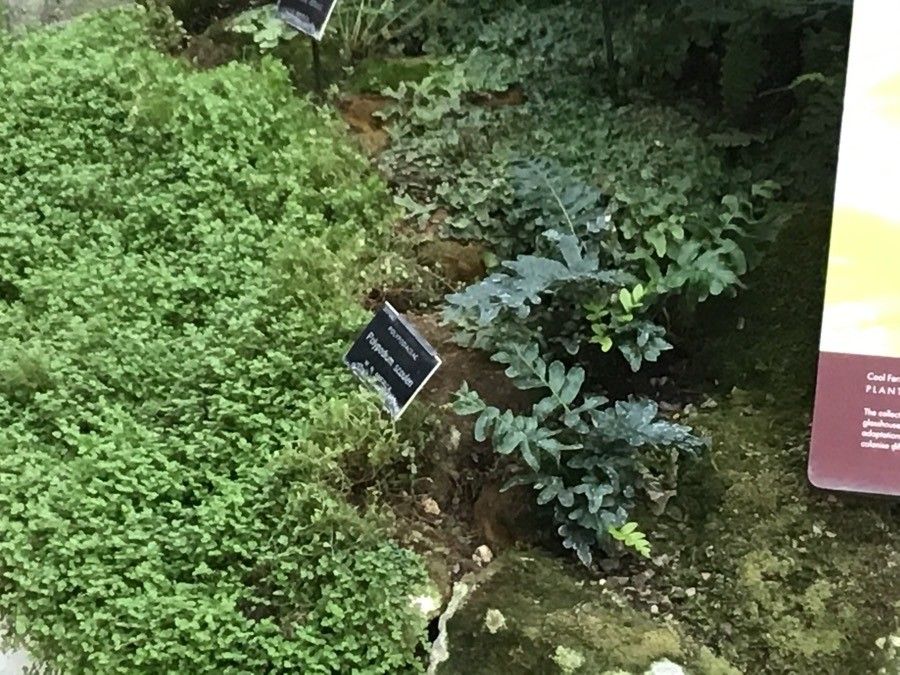
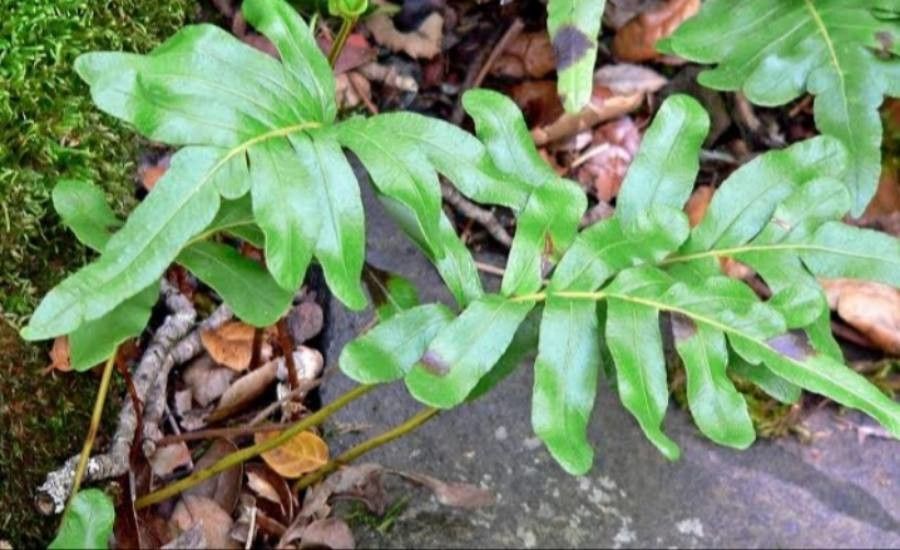
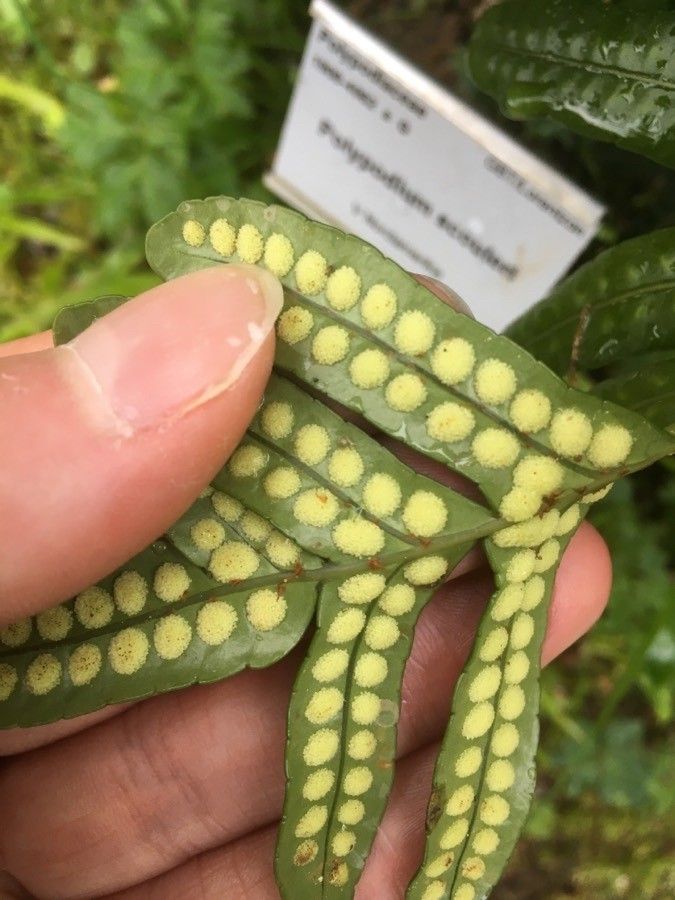
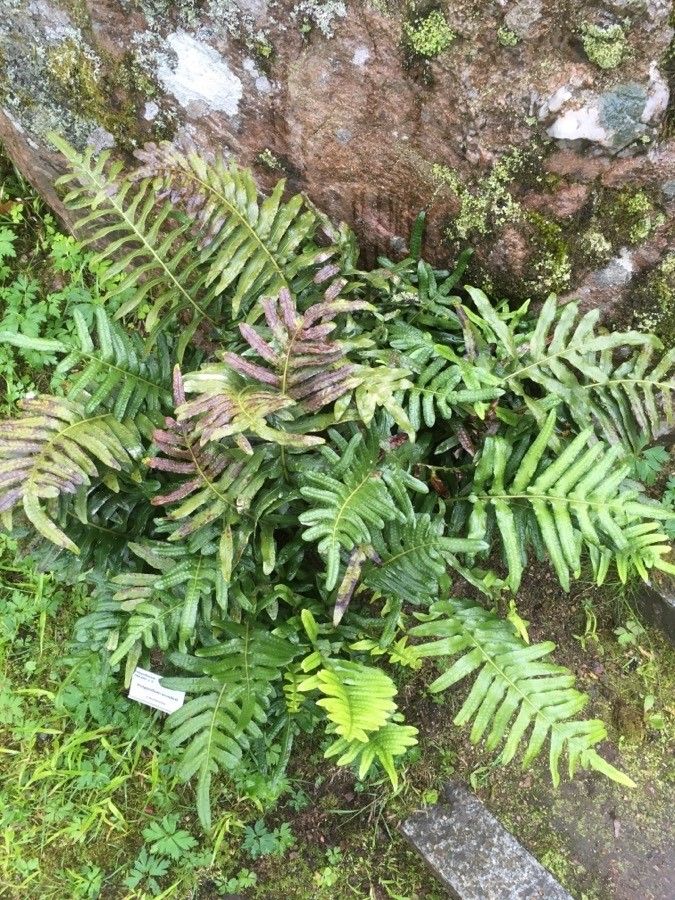
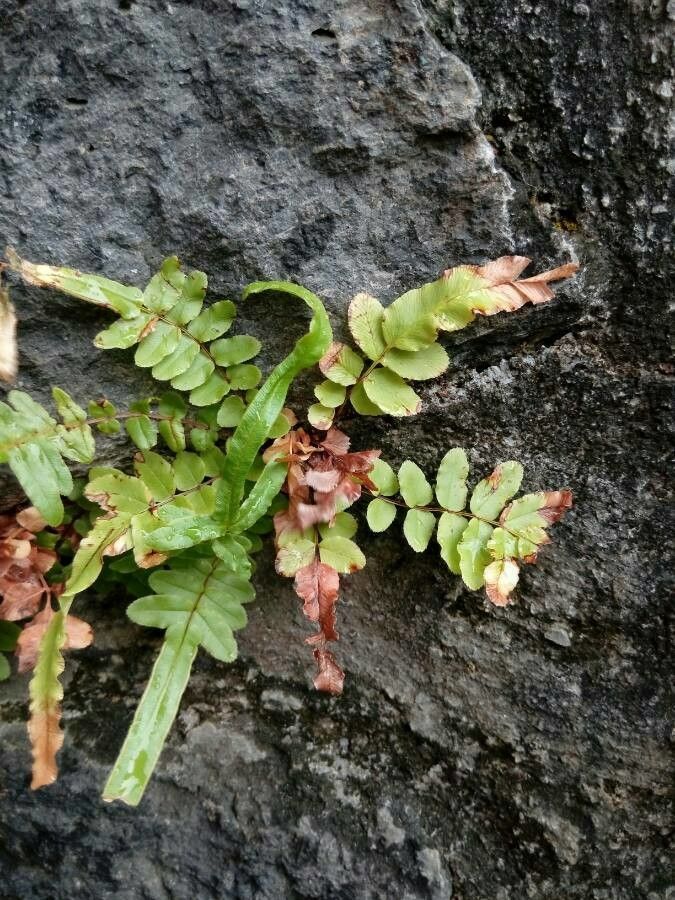
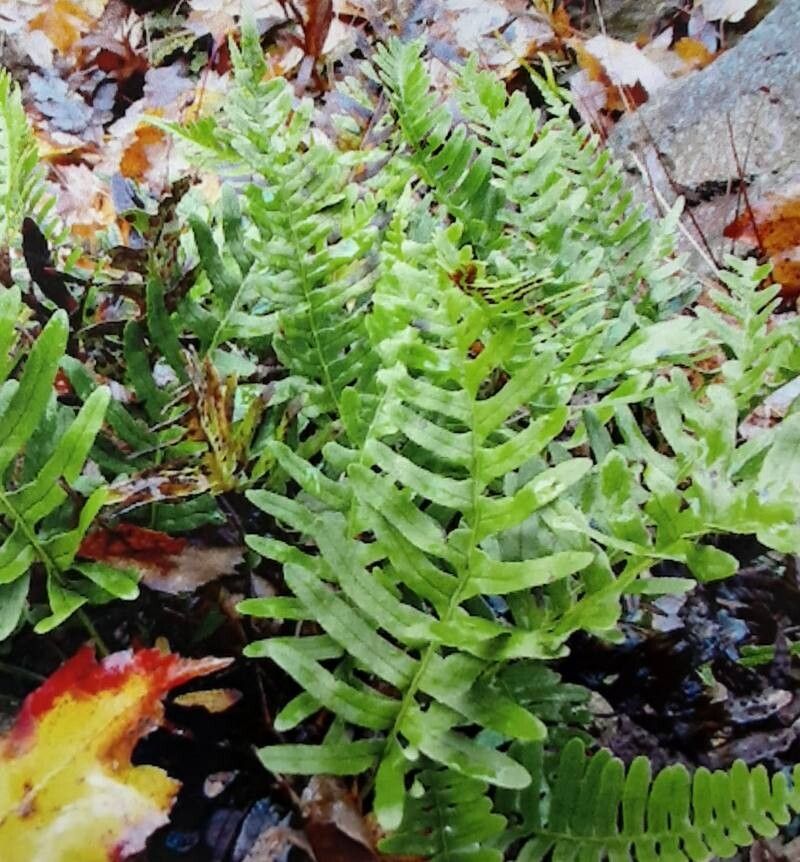
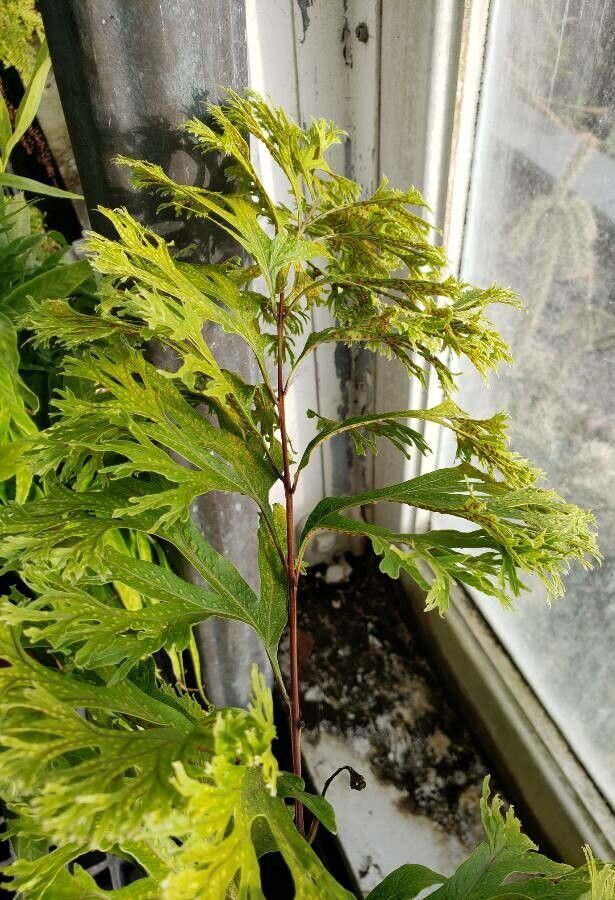
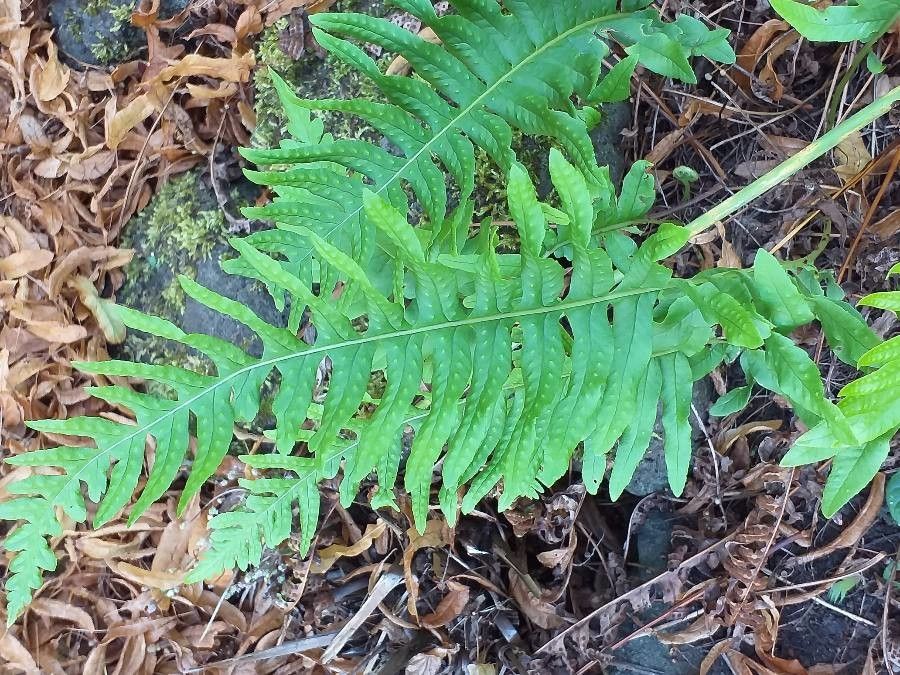
Polypodium scouleri is a species of fern known by the common names leathery polypody, Scouler's polypody, coast polypody and leather-leaf fern. It is native to coastal western North America from British Columbia to Guadalupe Island off Baja California. It is a plant of the coastline, growing in cracks on coastal bluffs, in oceanside forests, beach dunes, and similar habitat. It is often affected by heavy fogs and sea spray. This polypody anchors with a waxy, scaly rhizome. It produces triangular or oblong leaves up to 85 centimeters in maximum length and 27 in width. Each leaf is made up of many round-tipped linear or oblong segments which are usually stiff and leathery in texture and edged with shallow, rounded teeth. The underside of each leaf segment is crowded with rounded sori each up to half a centimeter wide. The sori contain the spores.
Leathery polypody has strong resistance to disease and is generally not susceptible to illnesses. Nevertheless, it can be affected by pests and diseases present in its environment. Such infections are typically mild. Regarding care, this plant requires moderate maintenance. It should be trimmed regularly to preserve a neat appearance and support healthy growth. Applying fertilizer can also encourage flowering. Leathery polypody is appropriate for anyone with outdoor areas like a garden or patio and does not demand extensive care experience. It may need more attention when cultivated indoors.
How to keep Polypodium Scouleri.
Light
Leathery polypody grows best with moderate sunlight and without exposure to intense rays. It can also tolerate lower-light areas, so its growth is not hindered. Excessive sun can damage it, while it will still survive in reduced light. This resilience comes from the variable sunlight conditions of its native habitat.
Water
Leathery polypody flourishes in coastal forests, needing soil that remains consistently moist and benefits from weekly watering. Although it has moderate drought tolerance, it is well-suited for indoor environments that have high humidity, such as terrariums or bathrooms. In these settings, it avoids waterlogging while still requiring sufficient moisture.
Temperature
Leathery polypody comes from temperate regions, matching its preferred temperature range of 59 to 95 °F (15 to 35 °C). Seasonal temperature adjustments can improve its growth, indicating that a controlled environment is beneficial for its cultivation.
Fertilizer
Generally, a single fertilizer application in spring is enough for Leathery polypody, though repeated feedings can optimize growth. Apply fertilizer once every month to a month and a half. Fertilizing improves the leaves' appearance and function, maintaining even color and a healthy texture. It also promotes root development and nutrient uptake for the plant's long-term health.
Pruning
Leathery polypody features tough, leathery fronds and thrives in coastal regions. To promote healthy growth, prune the plant in early to mid-spring, concentrating on removing dead or damaged fronds. Minor, selective pruning helps improve air circulation, reduces the risk of disease, and enhances the plant's overall vigor and appearance.
Pot & Repot
When repotting Leathery polypody, choose a pot 1-2 inches (2.5–5.1 cm) larger with ample drainage. Use a well-draining potting mix. Repot in spring or fall, making sure the root ball is slightly lower than the rim of the flower pot. Water thoroughly after repotting and place in a warm spot with indirect sunlight.
Botanical profile.
- Plant Type
- Herb
- Life Cycle
- Perennial
- Genus
- Polypodium
- Family
- Polypodiaceae
- Hardiness Zone
- 8-10
- Mature Height
- 15 cm
- Mature Spread
- 1.52 m
- Leaf Color
- Green
- Leaf Type
- Evergreen
- Planting Time
- Summer, Autumn
- Native Area
- Mexico
Other names.
Reader questions.
What are the sunlight requirements for Leathery Polypody?
Leathery Polypody requires partial sun to thrive, which means about 3-6 hours of sunlight daily. However, it can also grow in full shade, where it receives less than 3 hours of sunlight. It's important to observe the movement of sunlight through your garden to find spots that provide the perfect balance for your plants. Excessive exposure to the sun could harm the plant, but it's adaptable to lower light conditions, reflecting its native habitat's variable sunlight.
What is the optimal temperature range for Leathery Polypody?
Leathery polypody thrives in temperate regions and prefers temperatures ranging from 59 to 95 °F (15 to 35 °C). Seasonal temperature adjustments can promote its growth, and while it has some cold tolerance, special care is needed when temperatures are expected to drop below -5°C.
How can artificial lighting benefit indoor plants like Leathery Polypody?
Indoor plants, including Leathery Polypody, require adequate lighting for optimal growth, especially when natural sunlight is insufficient, such as in winter or less sunny spaces. Artificial lights, such as LED lights, are beneficial as they can provide specific wavelengths needed for plant growth. For full sun plants, 30-50W per square foot is recommended; partial sun plants need 20-30W per square foot, and full shade plants require 10-20W per square foot. It's crucial to place the light source 12-36 inches above the plant and mimic natural daylight hours, generally 8-12 hours per day, to promote healthier growth.
What should be done if temperatures drop below -5°C for Leathery Polypody?
When the temperature is forecasted to drop below -5°C, it's important to take temporary protective measures for your Leathery polypody. Wrapping the plant with plastic film, fabric, or other insulating materials can help prevent cold damage. Remember to remove these protective measures once the temperature warms up.
What are the key symptoms of light deficiency or excessive exposure in Leathery Polypody?
Symptoms in Leathery Polypody due to light deficiency include smaller new leaves, leggy or sparse growth, faster leaf drop, slower or no new growth, lighter-colored new leaves, and symptoms of chlorosis. Excessive light exposure can lead to sunscald, leaf curling, wilting, leaf scorching, and the breakdown of chlorophyll, negatively affecting photosynthesis and plant health. Monitoring these symptoms can help in adjusting the plant's light exposure accordingly.
How does Leathery Polypody react to low temperatures, and what are the solutions?
Leathery polypody has a moderate tolerance to low temperatures, thriving best above 15°C. For temperatures dropping below -10°C, you may notice drooping leaves which can recover in mild cases; in severe cases, leaves might wilt and fall off. The solution includes trimming off frost-damaged parts, wrapping the plant with non-woven fabric or cloth, and constructing a wind barrier for future protection against cold winds.
What solutions can mitigate light deficiency or excessive exposure for Leathery Polypody?
To mitigate light deficiency, for indoor plants, gradually move them to sunnier spots each week to receive 3-6 hours of sunlight daily or use artificial light, like a desk or ceiling lamp for at least 8 hours daily. For outdoor plants, also move them gradually to sunnier spots while avoiding sudden light intensity changes to prevent sunburn. Removing obstructions that block sunlight and considering transplanting smaller plants during their dormant period can improve light access. It's noted that parts of the plant affected by insufficient sunlight might not recover, but new growth will be healthy with improved light conditions.
What happens when Leathery Polypody is exposed to high temperatures, and what are the countermeasures?
During the summer, it's crucial to keep Leathery polypody below 35°C. Exposure to temperatures above 41°C can result in lighter leaf colors, dry and withered leaf tips, curled leaves, and an increased risk of sunburn. Countermeasures include trimming sunburned and dried parts, relocating the plant to shade, particularly from midday and afternoon sun, or using a shade cloth, and ensuring the soil remains moist with watering in the morning and evening.
What is the scientific name of Leathery Polypody?
The scientific name of Leathery polypody is Polypodium scouleri.