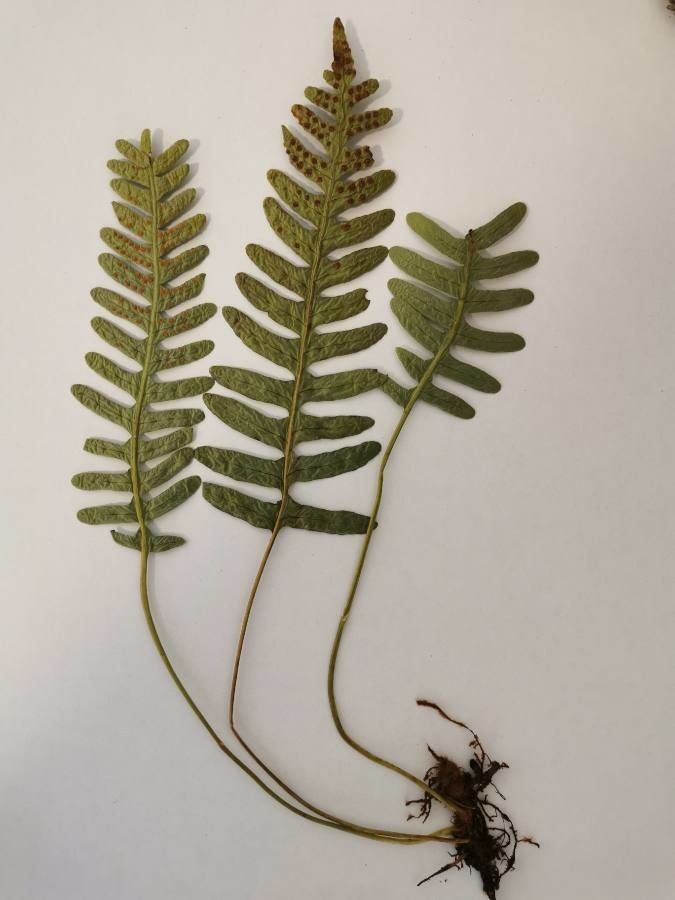
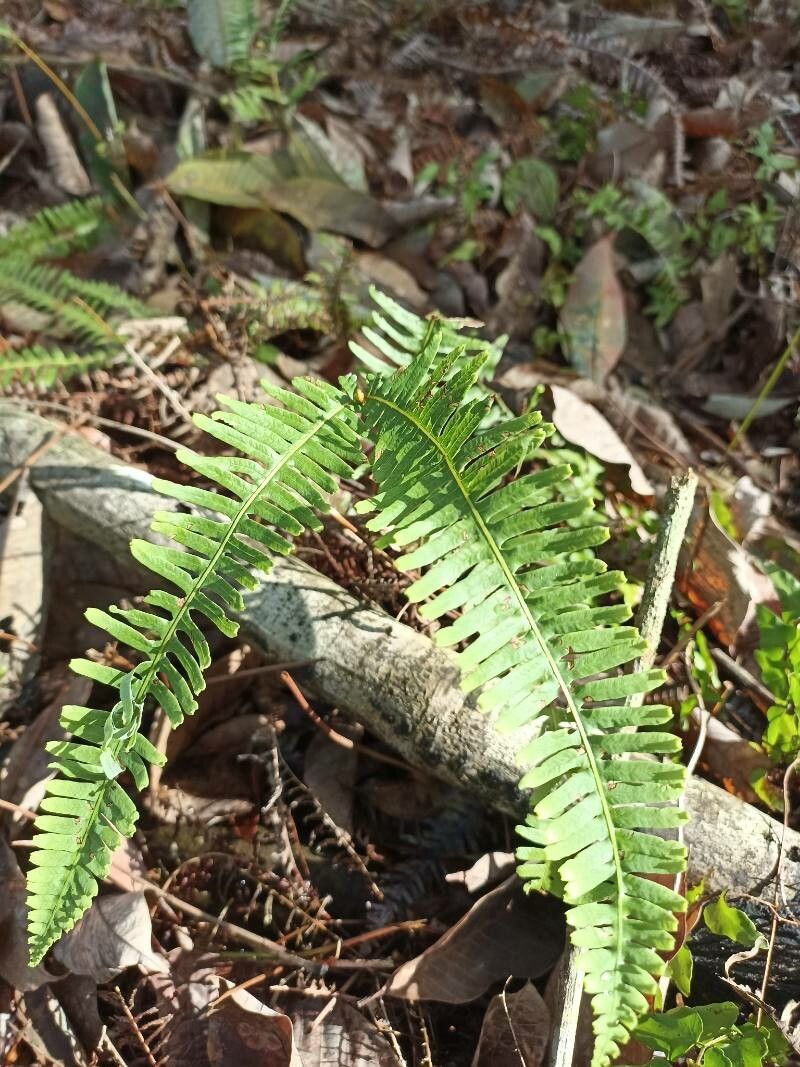
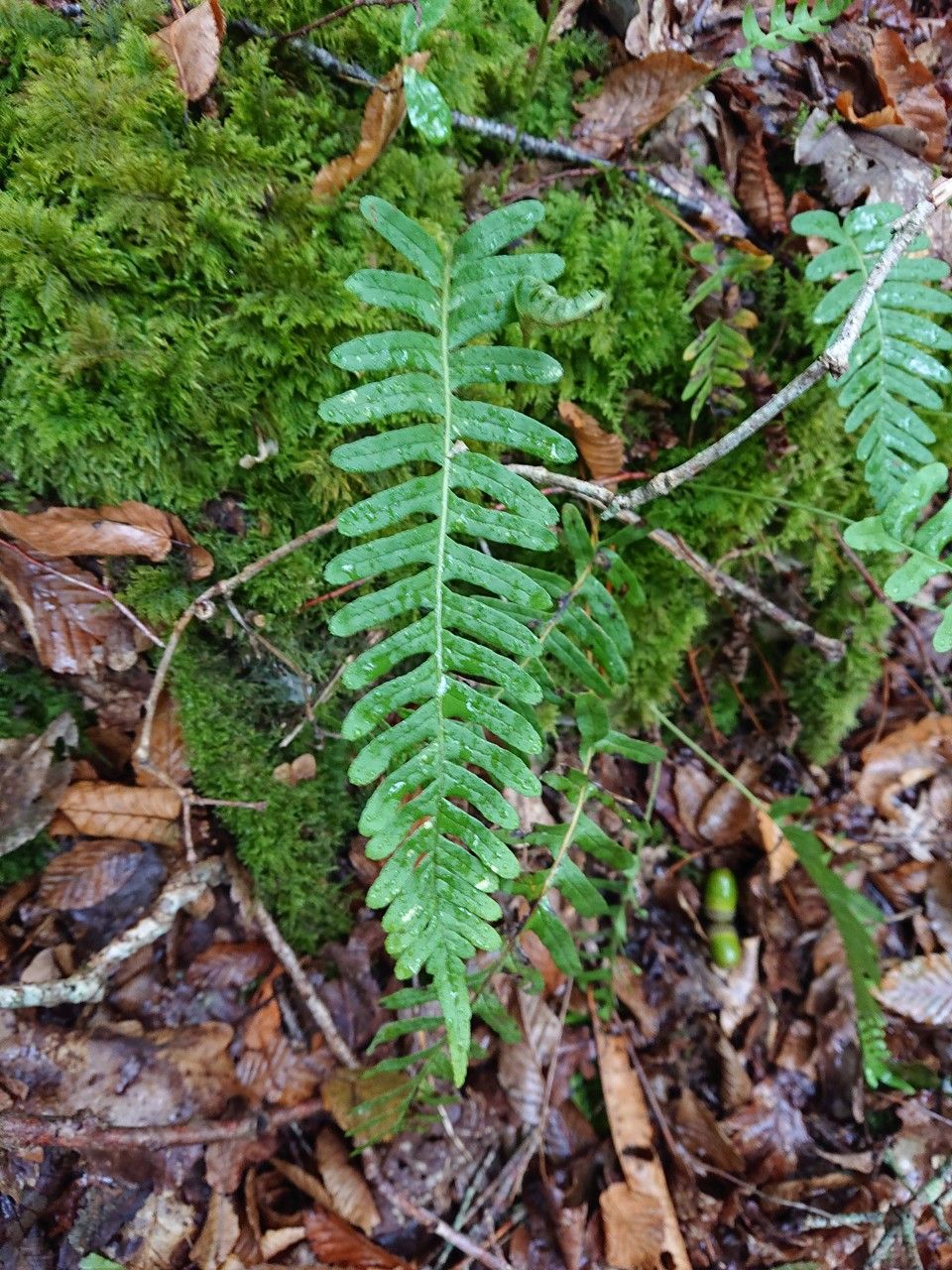
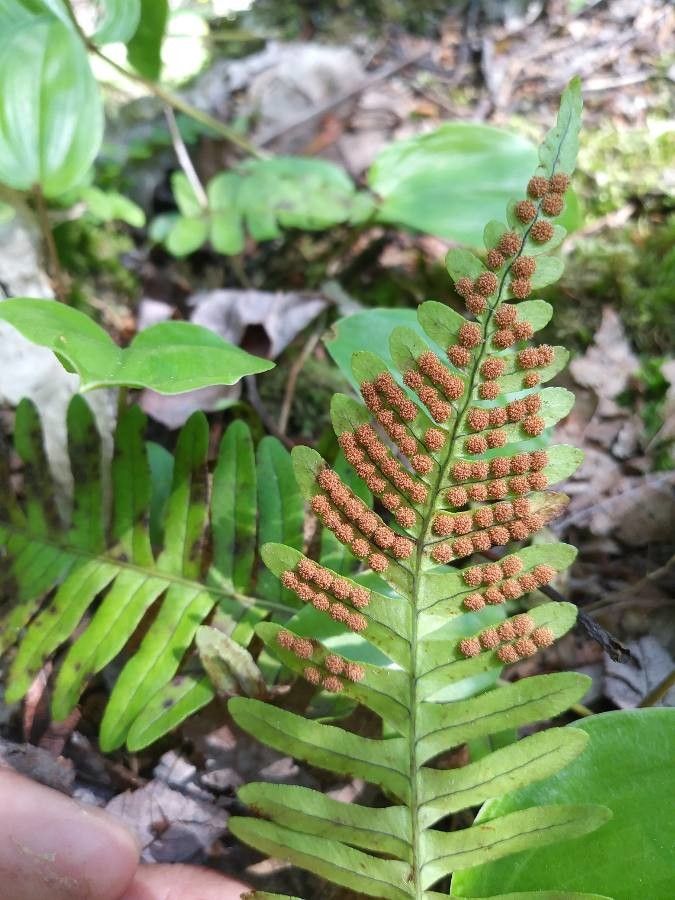
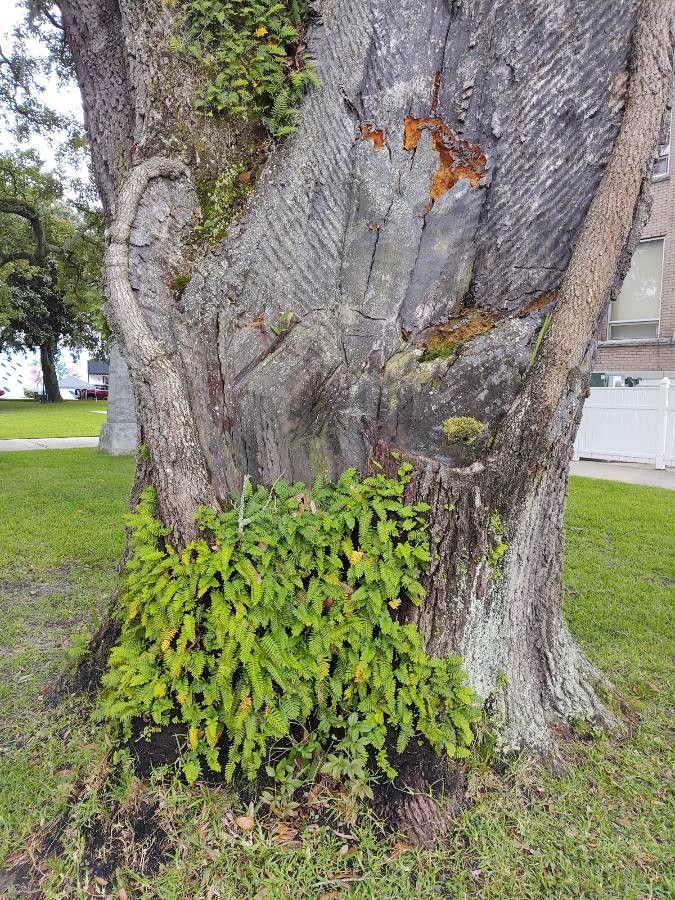
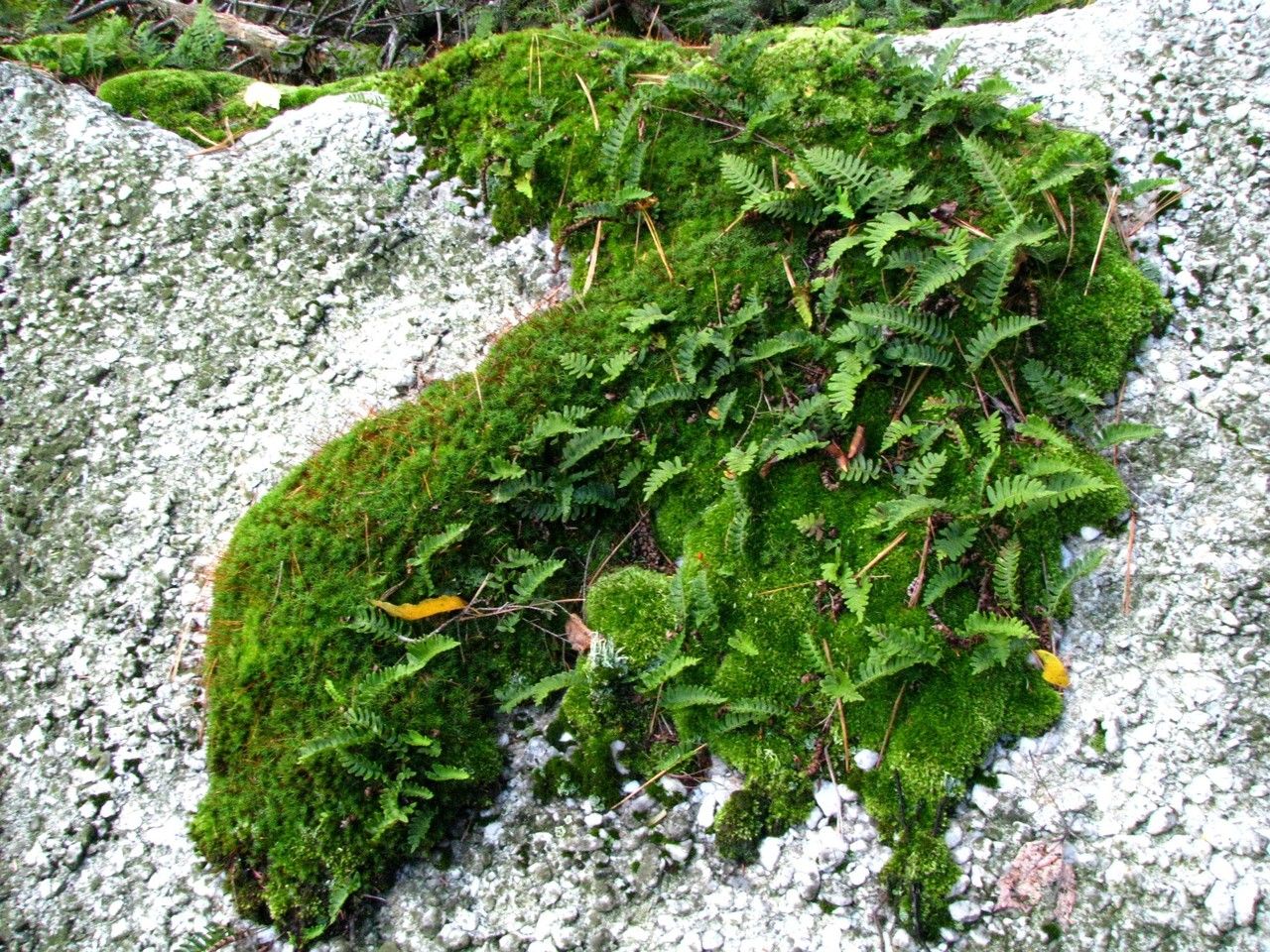
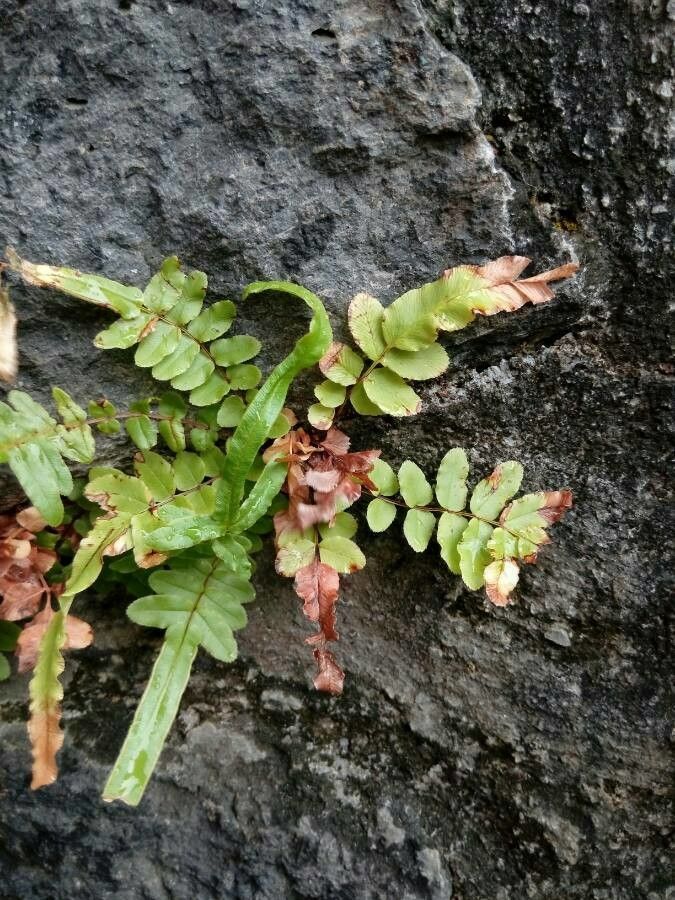
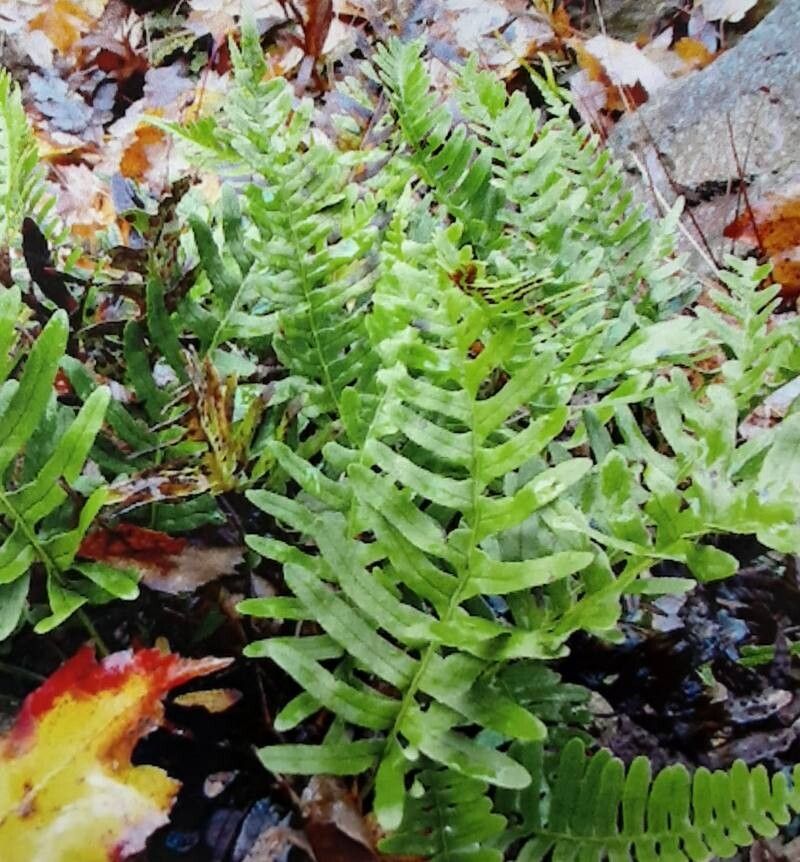
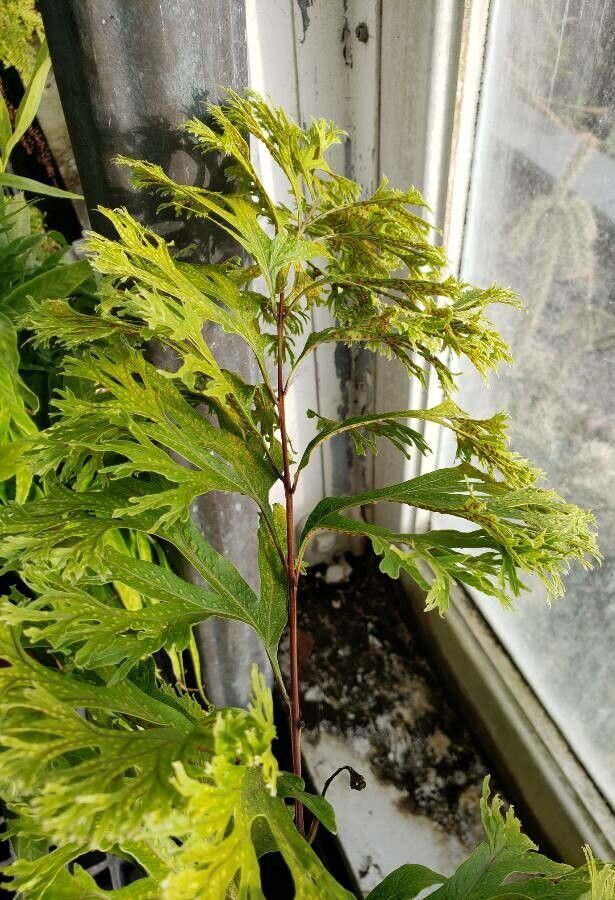
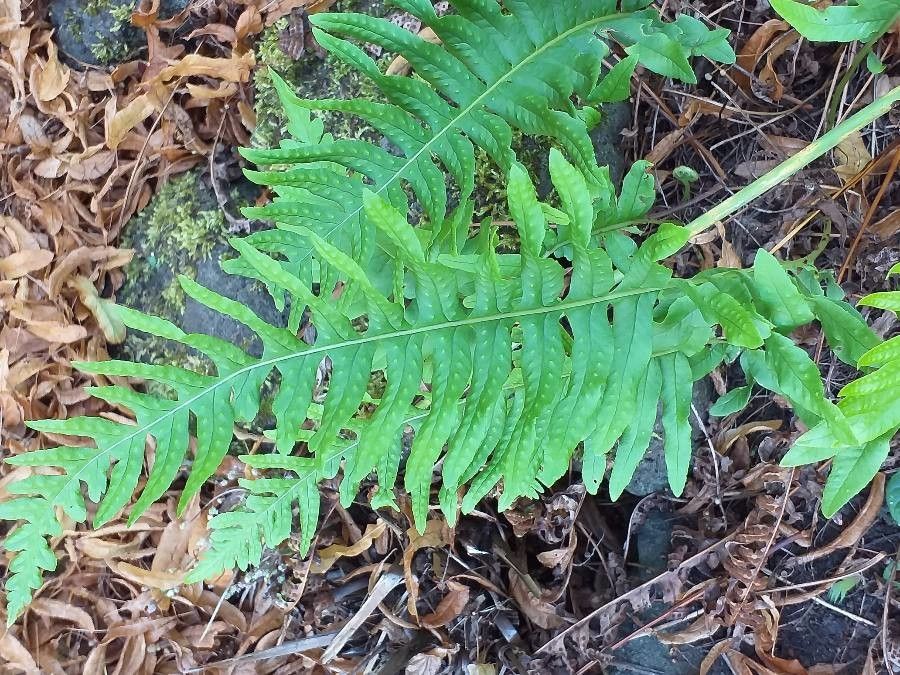
Polypodium virginianum, commonly known as the rock polypody or Virginia polypody, is a fern species native to eastern North America. This small evergreen fern thrives in rocky environments such as cliffs, boulders, and rocky outcrops. Its fronds are leathery and dark green with a glossy texture, and they are divided into several leaflets arranged alternately along the stem. The plant features rhizomes that grow horizontally along the ground, producing new fronds each year. It can reach up to 30 cm in height and spread up to 60 cm in width. Polypodium virginianum plays a crucial role in soil conservation by helping to prevent erosion on steep slopes. Its rhizomes anchor firmly into rocks or crevices, stabilizing the soil. Historically, Native Americans have utilized this plant for medicinal purposes, treating various ailments such as skin diseases, stomach problems, and respiratory issues. In summary, Polypodium virginianum is not only an attractive evergreen fern but also a vital component of its native ecosystem, contributing to both ecological balance and traditional medicine.
Rock polypody has strong disease resistance and is generally not prone to illnesses. However, it can be vulnerable to pests and diseases present in its environment. These problems are usually mild. In terms of care, this plant requires moderate maintenance. It should be pruned regularly to maintain its appearance and healthy growth. Fertilizing can also help encourage flowering. Rock polypody is suitable for anyone with outdoor space, such as a garden or patio, and does not require extensive caretaking experience. It may need more attention when grown indoors.
How to keep Polypodium Virginianum.
Light
Rock polypody flourishes in dim light typically found beneath tree canopies, indicating a preference for less bright environments. It can, however, tolerate some exposure to sunny areas. Too much or too little light can impede its growth. This sunlight tolerance reflects the plant’s native habitat.
Water
Rock polypody is native to temperate woodlands and thrives in moist, well-drained conditions. Once it is established, this plant becomes drought-tolerant and only needs weekly watering. Since rock polypody is an evergreen, it keeps its foliage throughout the year. During the cooler months, when its growth slows, it requires less frequent watering.
Humidity
This plant will thrive in moderate humidity, which is probably the level in your home. However, misting it a few times a week can be very beneficial. Make sure the room has good ventilation.
Temperature
Rock polypody is native to habitats with temperatures from 32 to 90 °F (0 to 32 °C), and it grows best in moderate climates. Across different seasons, temperature adjustments may be necessary to simulate its natural environment.
Fertilizer
A single fertilizer application in spring is typically adequate for Rock polypody, though repeated feedings can enhance growth. Feed about once every month to a month and a half. Fertilization improves the leaves’ appearance and performance, helping them keep uniform color and a healthy texture. It also promotes root development and nutrient uptake, supporting the plant’s long-term health.
Pruning
The rock polypody is a plant with leathery, evergreen fronds that requires minimal pruning. The best time to prune is from early to late spring. To promote healthy growth and improve airflow, remove only the dead or damaged fronds. Make sure to use sterilized tools to avoid infection, which will enhance the plant's appearance and reduce the risk of disease for optimal growth throughout the season.
Botanical profile.
- Plant Type
- Herb
- Life Cycle
- Perennial
- Genus
- Polypodium
- Family
- Polypodiaceae
- Hardiness Zone
- 3-8
- Mature Height
- 15 cm to 30 cm
- Mature Spread
- 30 cm
- Leaf Color
- Green
- Leaf Type
- Evergreen
- Planting Time
- Spring
- Native Area
- Georgia, Denmark
Other names.
Reader questions.
How should I water my Rock polypody plant?
To properly water the Rock polypody, it is best to use filtered water at room temperature. This is because tap water may contain harmful particles for this plant. Additionally, it is important to use water that is not too cold, as the Rock polypody is accustomed to warm environments and cold water can be a shock to its system. Avoid watering the plant from above, as this can cause issues with its foliage. Instead, it is recommended to directly water the soil with filtered, room temperature water until it is completely soaked. This method is beneficial as it allows the roots to absorb the moisture and spread throughout the soil to gather essential nutrients.
What are the sunlight requirements for Rock polypody?
Rock polypody thrives in conditions where the light is obscured, typically beneath tree canopies, embodying its preference for shady to partially sunny spots. Despite this preference, it can tolerate some exposure to direct sunlight. Being originated from habitats that offer diffused light has made this plant adaptable to varying degrees of sunlight exposure. Notably, it requires less than 3 hours of sunlight in full shade conditions, and about 3-6 hours of sunlight under partial sun conditions. It's advised to observe the movement of sunlight through your garden, selecting locations that ensure an adequate balance of light and shade to promote the plant's health.
What is the natural habitat of Rock polypody?
Rock polypody, or Polypodium virginianum, is native to environments where temperatures vary between 32 to 90 °F (0 to 32 °C), flourishing best in moderate climates. Its strong cold resistance means it doesn’t usually require special frost protection measures in winter, although if temperatures are expected to drop below -35°C, it is crucial to provide cold protection by covering the plant with materials such as soil or straw. Moreover, ensuring the plant is watered abundantly before the first freeze in autumn helps prevent drought and water scarcity during the colder months.
What do I do if I give my Rock polypody plant too much or too little water?
Overwatering and underwatering can both harm your Rock polypody, but overwatering is more common. When this species gets too much water, its stems and leaves may droop and turn yellow. Overwatering for a long time can also lead to diseases like root rot, mold, and mildew, which can be fatal. Underwatering is less likely for the Rock polypody because it can tolerate dry conditions, but it can still happen. When it does, the leaves may become dry and brown. It's important to recognize the signs of overwatering early so you can take action. Some of the diseases caused by overwatering, such as root rot, can't be reversed if you wait too long. If you see early signs of overwatering, reduce your watering immediately. Check the soil quality too; if it drains poorly, replace it with a loose, well-draining potting mix. If you notice signs of underwatering, simply water more regularly until the signs go away.
How do I use artificial lighting for indoor Rock polypody plants?
When natural sunlight is insufficient, especially during winter or in less sunny areas, artificial lighting becomes essential for the growth of indoor Rock polypody plants. LED lights are recommended as they can be adjusted to provide specific light wavelengths needed by the plant. For full sun plants, 30-50W/sq ft of artificial light is needed; partial sun plants require 20-30W/sq ft; and full shade plants need 10-20W/sq ft. The light source should be placed 12-36 inches above the plant, simulating the natural sunlight, and it should remain on for 8-12 hours per day to mimic natural daylight hours and ensure healthy plant growth.
How does low temperature affect Rock polypody, and what are the remedies?
Rock polypody is highly tolerant to cold conditions, thriving best when temperatures stay above 0°C. However, during winter, it's advisable to keep the plant above -30°C. When temperatures fall below -35°C, there may not be visible changes during winter, but this could lead to a decreased sprouting rate or even no sprouting in spring. To help the plant recover in spring, remove any parts that have failed to sprout.
How often should I water my Rock polypody plant?
If your Rock polypody is potted, you can use this method to determine if it needs water: stick your finger into the soil and check if the top two to three inches are dry. If they are, then it's time to water your plant. For those who grow their Rock polypody in the ground, you can also use this method to test the soil. If you find that the first few inches of soil have dried out, it's time to water your plant. Typically, during the spring and early fall, watering once a week is sufficient. However, in extremely hot weather, you may need to water it twice or more per week. Despite this, mature and well-established Rock polypodies have shown an admirable ability to withstand drought.
What are the symptoms of insufficient light in Rock polypody when grown indoors?
When Rock polypody is grown indoors under insufficient light, it may display several symptoms indicating its struggle with the lighting conditions. These indicators include smaller new leaves, leggy or sparse growth, quicker leaf drop, stunted or halted growth, paler new leaves, and specific conditions such as chlorosis, sunscald, leaf curling, wilting, and leaf scorching. These symptoms reflect the plant's inability to adapt to low light, highlighting the necessity for optimizing lighting conditions either through natural or artificial light sources.
What impact does high temperature have on Rock polypody, and how can it be managed?
During the summer, it's crucial to keep the Rock polypody below 32°C. Exposure to temperatures over 35°C can lead to its leaves becoming lighter in color, curling, becoming prone to sunburn, and, in severe cases, the entire plant wilting and drying out. To manage this, trim away any sunburned or dried-up parts. Move the plant to a spot that offers shade during the midday and afternoon sun, or use a shade cloth for protection. Additionally, watering the plant in the morning and evening helps keep the soil moist and supports its wellbeing.
How much water does my Rock polypody plant need?
When watering your Rock polypody, don't be timid with the amount of water you use. Make sure the top two to three inches of soil are dry, and then give the plant a good, thorough watering. The goal is to saturate the soil completely, so enough water should be added to allow for excess water to drain out through the pot's drainage holes. If you don't see any excess water draining, it likely means you haven't watered enough. On the other hand, be careful not to let water accumulate within the soil, as this can harm the plant. Additionally, if water doesn't drain properly through the pot, it may indicate that the soil doesn't drain well, which is bad for the plant's health. To ensure proper hydration for an outdoor Rock polypody, aim for 1 inch of rain per week.
What solutions can help Rock polypody plants with insufficient sunlight?
To counter insufficient sunlight for Rock polypody plants, different strategies can be employed based on the plant's location. Indoors, moving the plant to spots where it can receive ample filtered light, including some direct morning sunlight positioned 1-2 meters away from a window, is recommended. Using a desk or ceiling lamp for at least 8 hours daily or investing in professional plant grow lights can provide additional light. Outdoors, gradually moving your plants to sunnier spots weekly helps them adapt without risking sunburn. If sunlight is blocked by obstacles like trees, consider pruning to allow more light through. For smaller plants, transplanting during their dormant period (late winter or early spring) to a sunnier location with good drainage can be beneficial. It’s crucial to note, while some parts affected by insufficient sunlight may not recover, new growth will be healthier following these adjustments.
How do I water my Rock polypody at different stages of growth?
The water requirements of the Rock polypody can vary based on its growth stages. In the early years and when it is first transplanted, it will need more water than usual because it is focused on developing new roots for future growth. These roots require more moisture compared to a more mature phase. As time passes, the Rock polypody will require less water. Additionally, during the bloom period, when the plant is producing flowers, it will need extra water to support the development of the blooms.