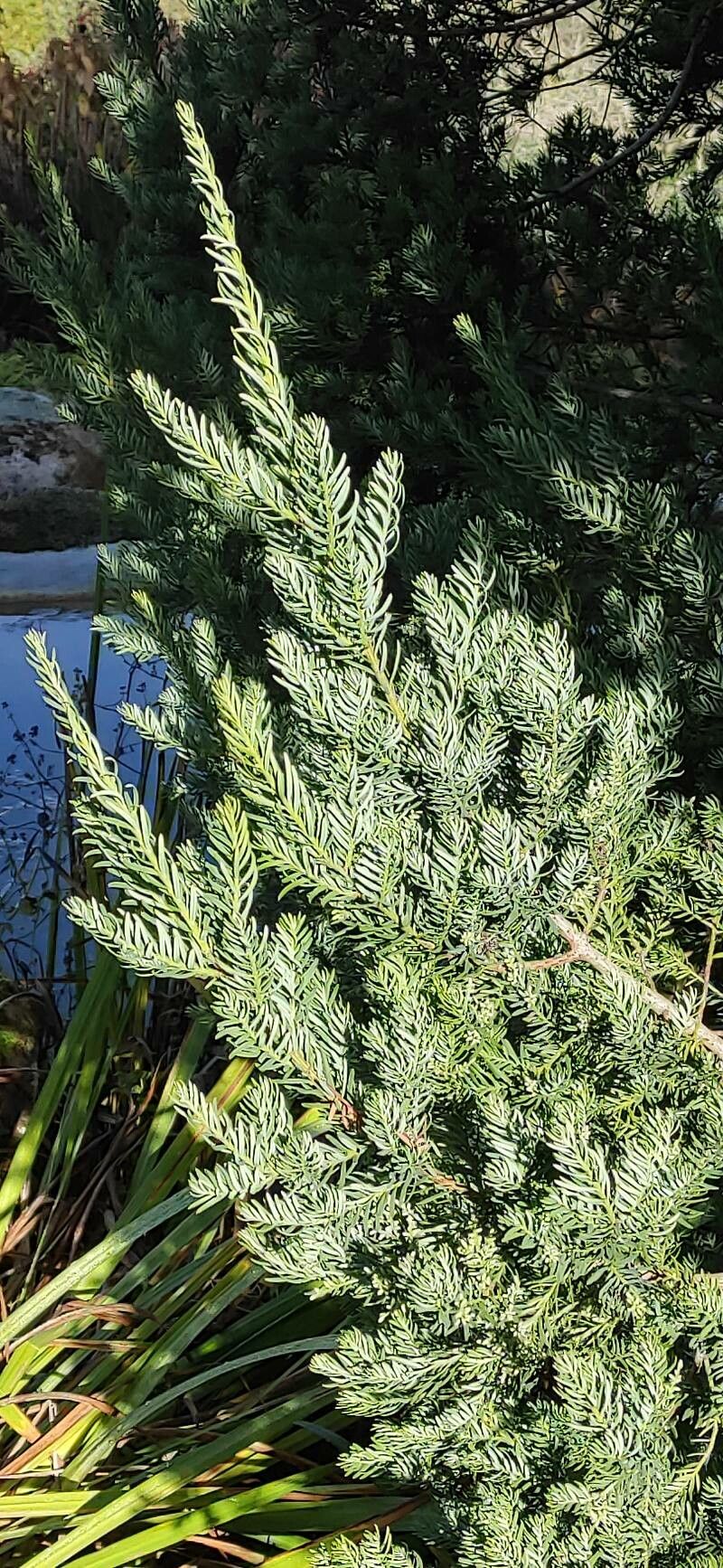
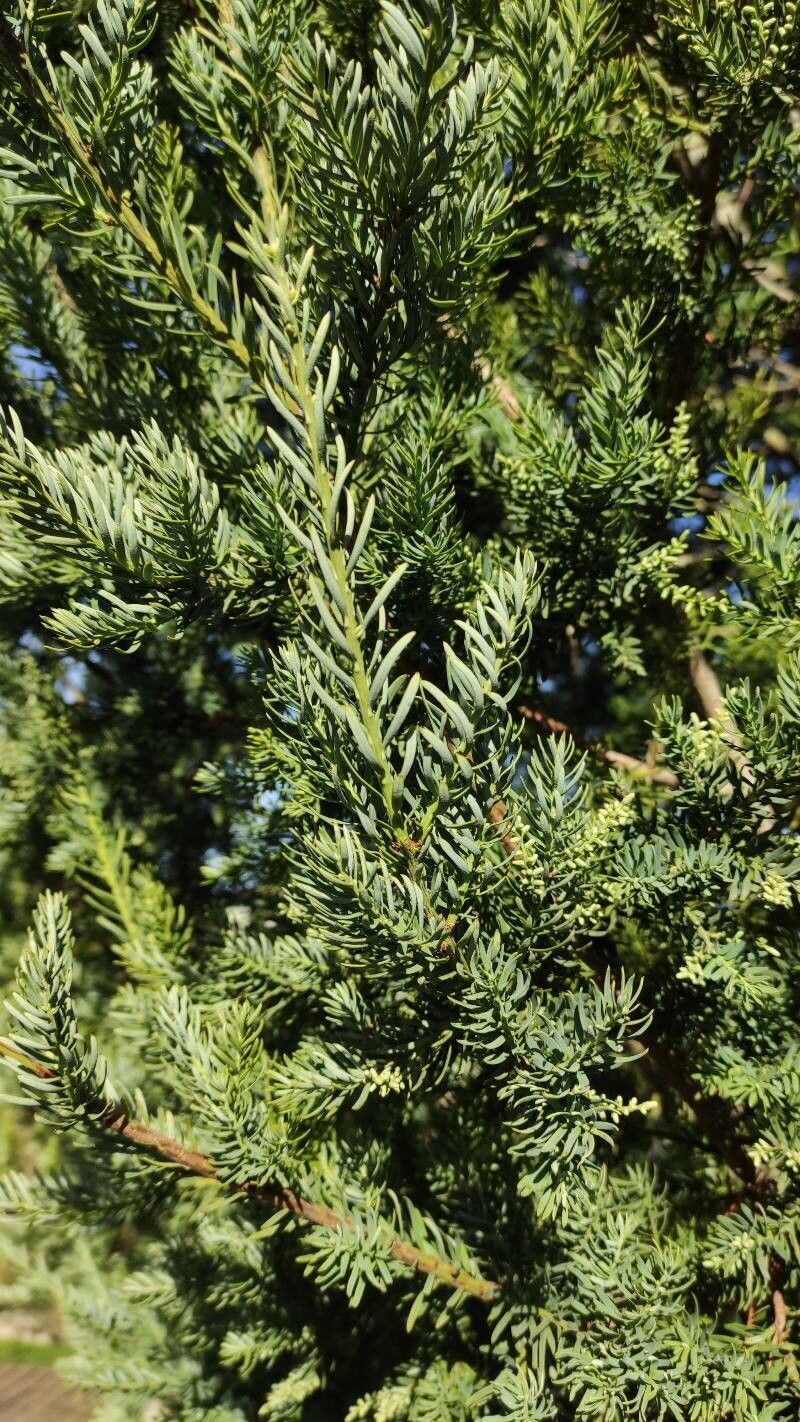
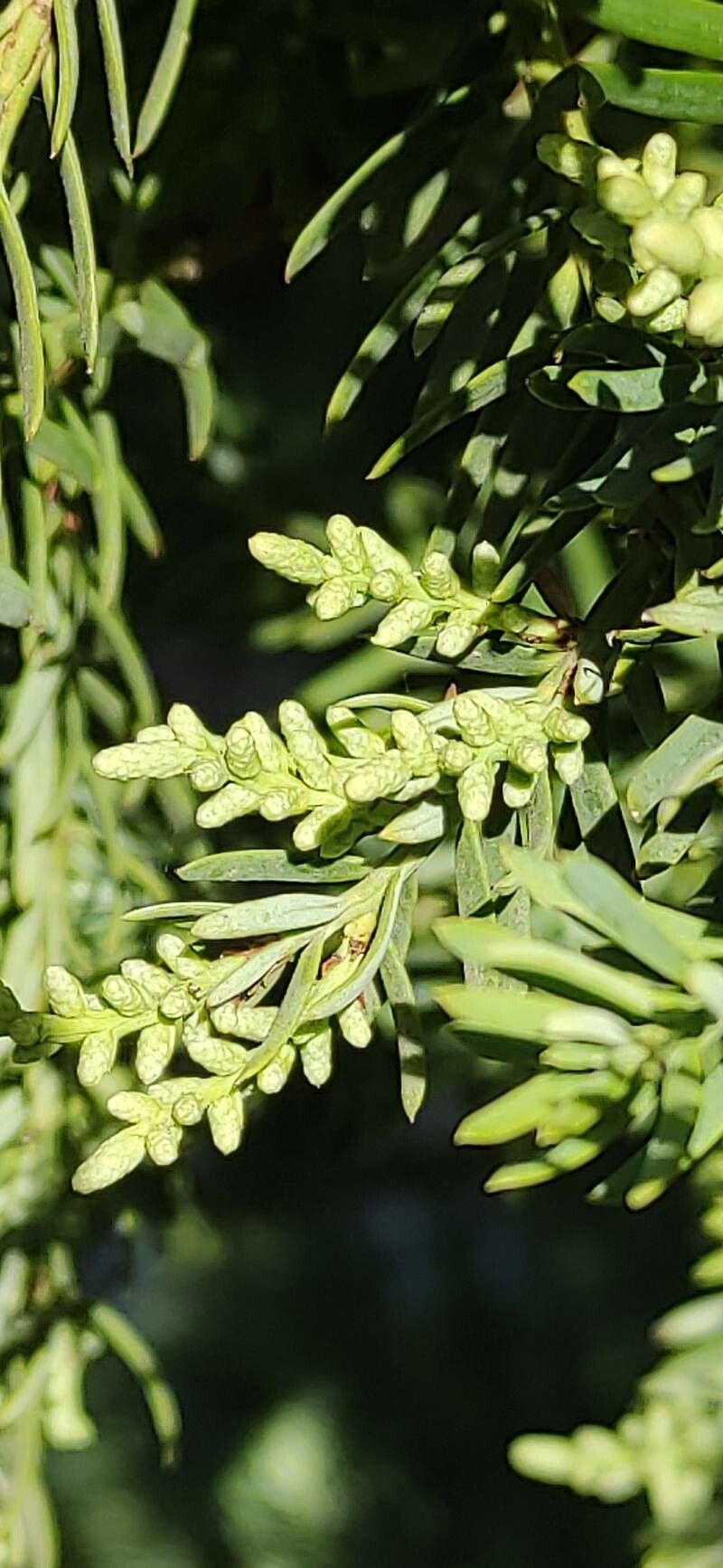
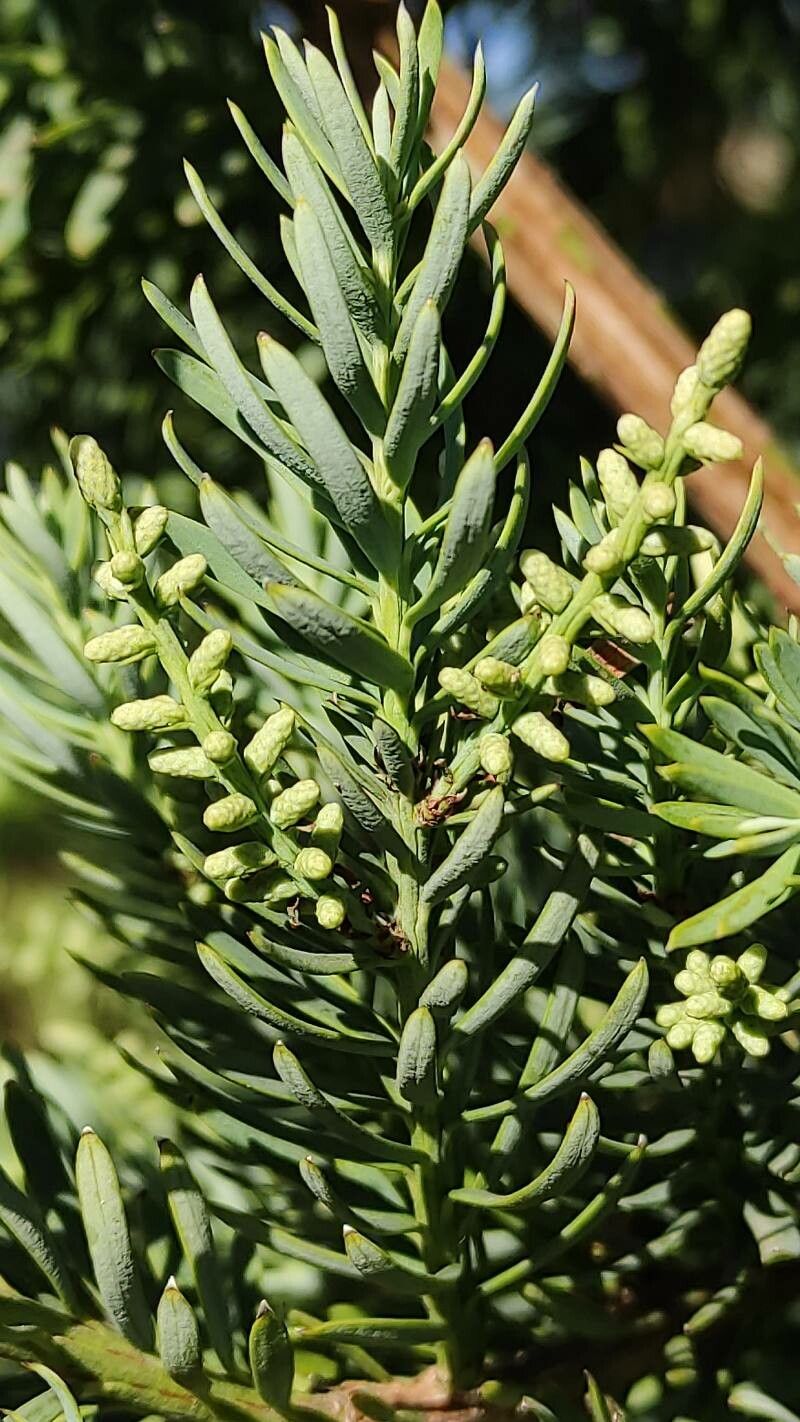
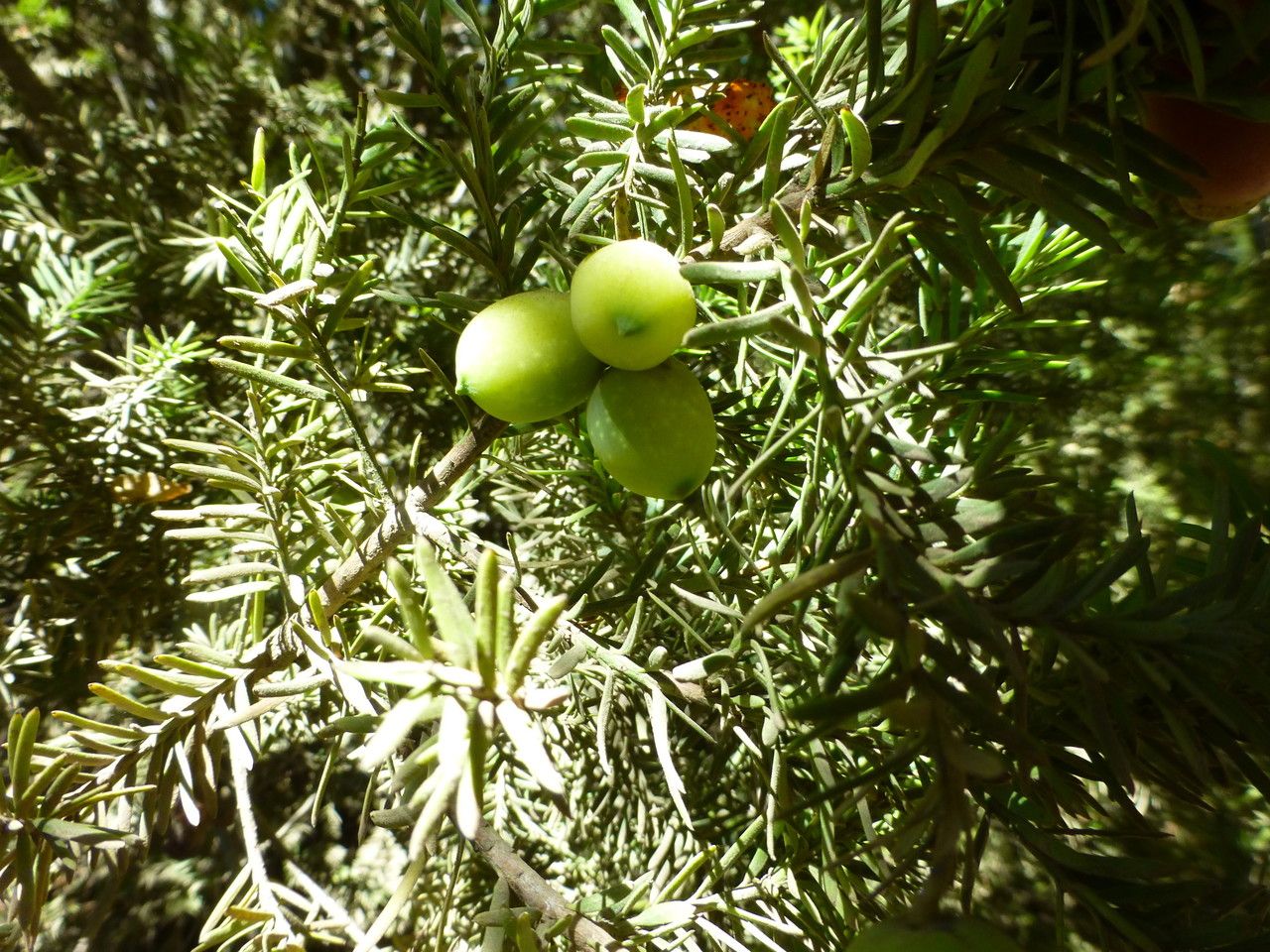
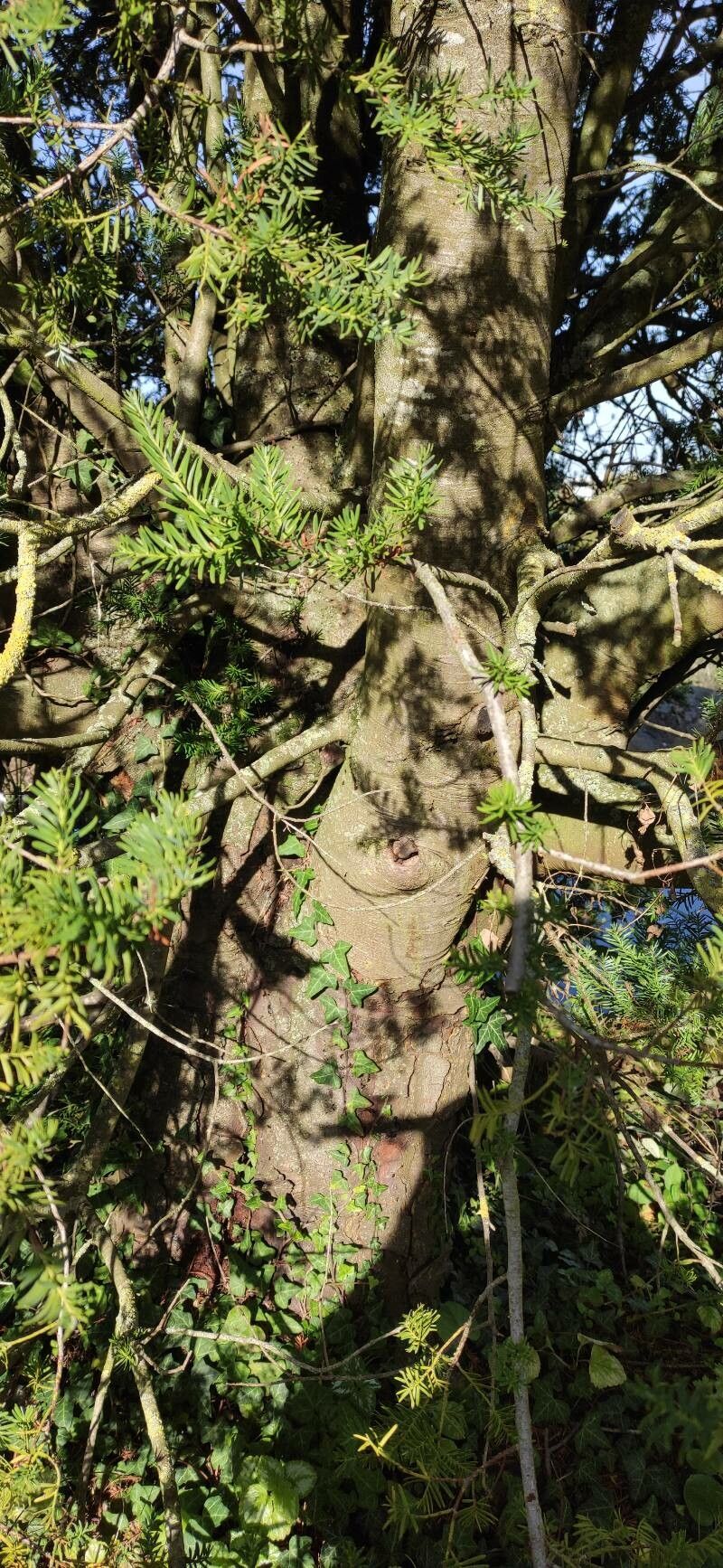
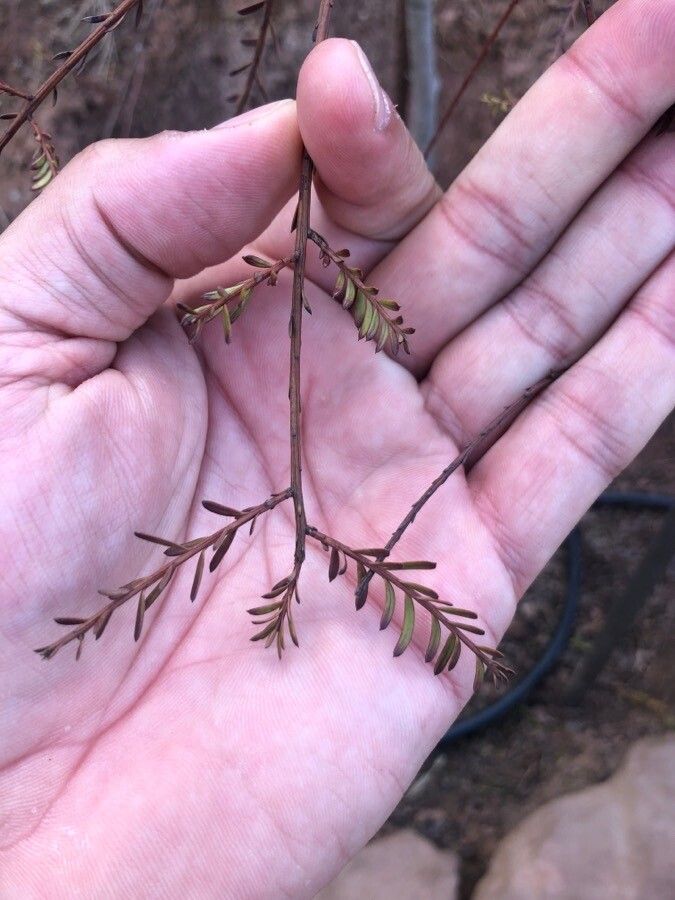
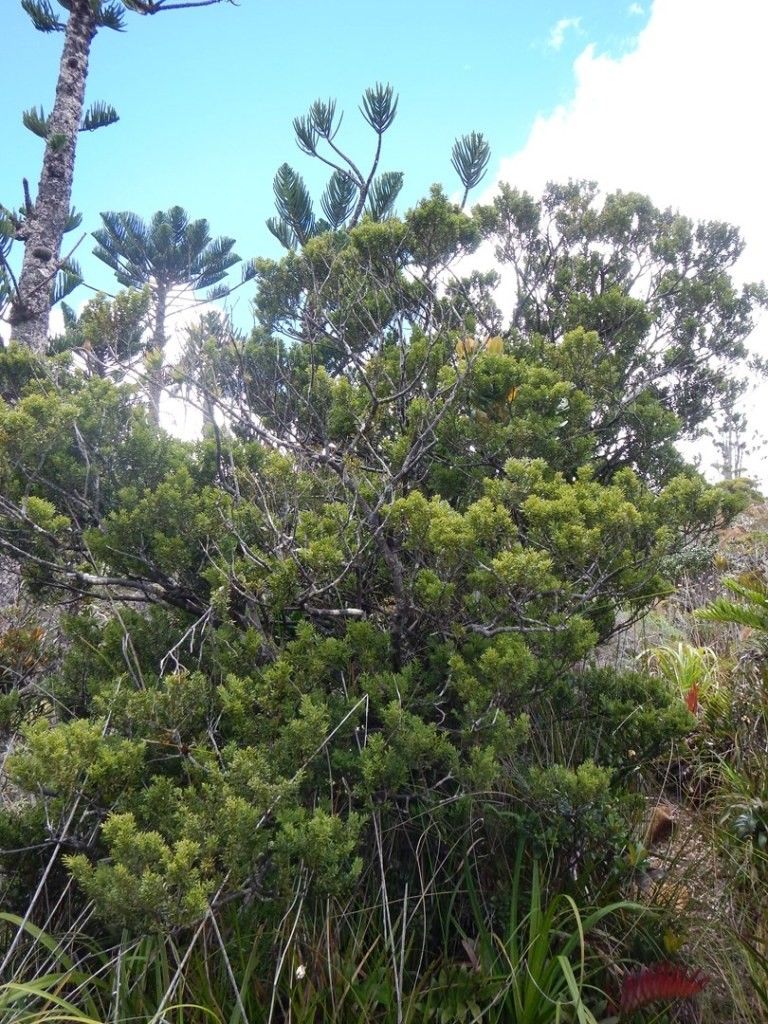
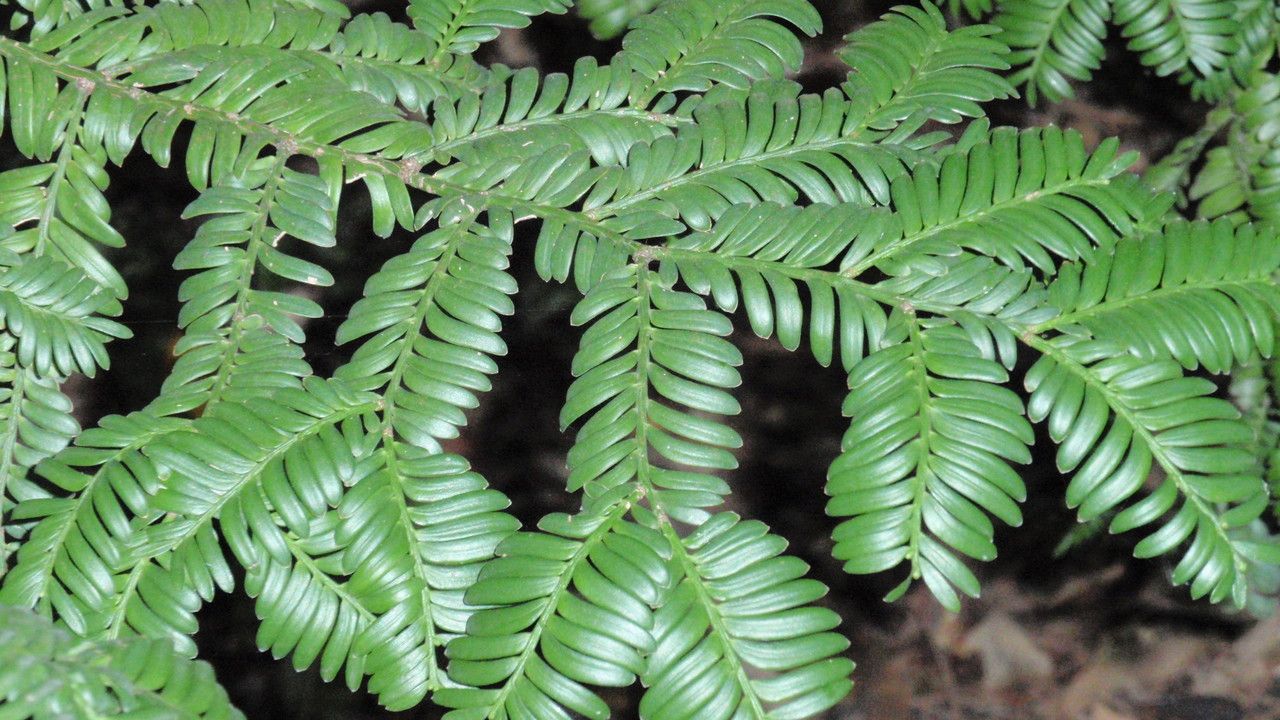
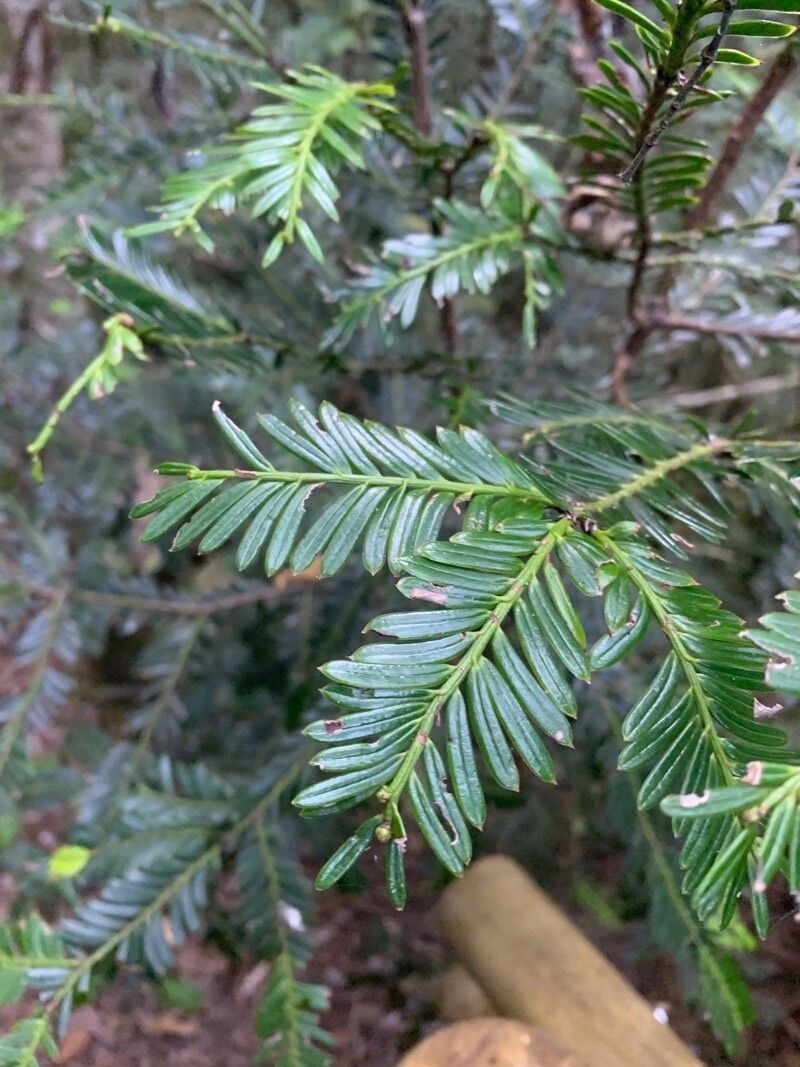
Prumnopitys andina, the lleuque or Chilean plum yew, is an evergreen coniferous tree native to south-central Chile and a few areas in adjacent parts of westernmost Argentina from 36 to 40° South latitude. It lives on moderately wet soils, preferably on Andean slopes from 500–1,100 meters (1,600–3,600 ft). It grows up to 30 m (98 ft) high, with a trunk up to 2 m (6.6 ft) in diameter. The leaves are linear to sickle-shaped, 15–30 mm long and 2 mm broad. The seed cones are highly modified, reducing to a central stem 2–4 cm long bearing 1-4 scales, each scale maturing berry-like, oval, 10–15 mm long and 10 mm broad, green maturing dark purple, with a soft edible pulp covering the single seed. The seeds are dispersed by birds, which eat the 'berries' and pass the seeds in their droppings. Seeds are very difficult to germinate. It has a straight and cylindrical trunk, with gray and shiny bark. Before the genus Prumnopitys was distinguished, it was treated in the related genus Podocarpus as Podocarpus andinus. It has also been treated by some botanists as Prumnopitys spicata (Molloy & Muñoz-Schick 1999); however this name is illegitimate (Mill & Quinn 2001). Prumnopitys elegans (Phil) is a synonym for Prumnopitys andina.The fruit (an aril) are tasty, 1.5 cm (0.59 in) long, blue-purple in color, are eaten by Native American people in Chile, and a marmalade is produced with them. The tree is also occasionally grown as an ornamental tree and a hedge in oceanic climate areas in northwest Europe and the Pacific Northwest of North America. In these areas, it is also sometimes known as "plum-yew" or "plum-fruited yew", though these names are more commonly applied to plants in the genus Cephalotaxus. The wood is a yellowish color and has a good quality. It is used in furniture and construction. Evidence suggests that very little regeneration is occurring to replace current ageing trees in populations. In 2007, the Forestry Commission planted large numbers of young trees at Bedgebury Pinetum in the UK as part of a project aiming to conserve the genetic resources of endangered conifers.
Plum-fruited yew is well resistant to disease and typically does not suffer from illnesses. Regarding maintenance, this plant is fairly low-maintenance. When grown outside it needs only minimal watering, and larger specimens usually do not require pruning. Smaller specimens, however, should be trimmed after flowering. The plum-fruited yew is appropriate for people who have outdoor areas like a garden or a deck and does not demand extensive care experience.
How to keep Prumnopitys Andina.
Light
The plum-fruited yew prefers to receive plentiful sunlight. Coming from a habitat with abundant sun, it grows best when those conditions are reproduced. Too little light can limit its development, while excessive exposure may scorch it.
Temperature
Plum-fruited yew originates from temperate climates with temperatures between 59 and 95 °F (15 to 35 ℃). It favors warmer conditions but can tolerate cooler temperatures. Depending on the season, adjust its exposure to reflect its natural climate conditions.
Fertilizer
Plum-fruited yew has distinctive nutrient needs and does not require heavy fertilization. Fertilizing in spring is best for promoting optimal growth. Supplying nutrients enhances its health, increases its resistance to pests and diseases, and helps maintain a long lifespan.
Pruning
The plum-fruited yew benefits from winter pruning, which involves removing dead or overcrowded branches to improve air circulation and light penetration. This plant grows slowly, so it requires only minimal pruning. Making clean cuts is important, as it helps prevent disease and promotes healing, enhancing both the resilience and aesthetic appeal of the plum-fruited yew.
Pot & Repot
When repotting Plum-fruited yew, select a pot 1-2 inches (2.5–5.1 cm) larger with good drainage. Use a well-draining potting mix. Repot in spring or fall, making sure the root ball sits slightly lower than the pot rim. Water thoroughly after repotting and place in a warm spot with indirect sunlight.
Botanical profile.
- Plant Type
- Tree
- Life Cycle
- Perennial
- Genus
- Prumnopitys
- Family
- Podocarpaceae
- Hardiness Zone
- 7-10
- Mature Height
- 29.87 m
- Mature Spread
- 4.57 m to 9.14 m
- Leaf Color
- Green, Blue
- Leaf Type
- Evergreen
- Flower Color
- Yellow, Cream, Orange
- Flower Size
- 2.54 cm
- Bloom Time
- Mid spring, Late spring
- Planting Time
- Spring, Summer, Autumn
- Harvest Time
- Late summer, Early fall, Mid fall
- Native Area
- Argentina, Chile
Other names.
Reader questions.
What are the sunlight requirements for Plum-fruited Yew?
Plum-fruited Yew, scientifically known as Prumnopitys andina, thrives in conditions where it can receive more than 6 hours of sunlight daily. It is crucial to observe the movement of sunlight through your garden to find spots that offer a harmonious balance of light and shade, which ensures the well-being of your plants. Proper sunlight is essential as it significantly impacts the plant's growth, influencing both its health and productivity.
What is the native climate for Plum-fruited Yew?
Plum-fruited Yew, also known as Prumnopitys andina, thrives in moderate climates where temperatures range from 59 to 95 °F (15 to 35 °C). It prefers warmer conditions but has the ability to adapt to cooler temperatures as well. To mimic its natural climate, adjusting its exposure based on the season is recommended. Although it has strong cold resistance and typically does not require special frost protection methods during winter, precautions should be taken if temperatures are expected to fall below -15°C by wrapping the plant's trunk and branches with insulating materials. Additionally, watering the plant abundantly before the first freeze in autumn is crucial to ensure the soil is moist and freezes, which helps prevent drought and water scarcity during the colder months.
How does insufficient or excessive sunlight affect Plum-fruited Yew?
The Plum-fruited Yew is accustomed to abundant sunlight in its native habitat and thus, requires similar conditions to flourish. Insufficient sunlight can stunt its growth, whereas too much sunlight may cause scorching. Symptoms of light deficiency include smaller leaves, leggy growth, quicker leaf drop, halted new growth, lighter-colored leaves, and chlorosis. Excessive sunlight, on the other hand, may lead to symptoms such as sunscald, leaf curling, wilting, and leaf scorching. Each of these symptoms indicates the plant's struggle in non-ideal light conditions.
How does the Plum-fruited Yew react to low temperatures?
The Plum-fruited Yew is cold-tolerant, performing best in temperatures above 15°C and should ideally be kept above -10°C during winter. If temperatures drop below -15°C, the plant may not show immediate damage in winter, but you can expect the branches to become brittle and dry with no new shoots emerging in spring. To combat this, it's advised to prune away any dead branches that fail to produce new leaves during the spring season. This helps encourage healthy growth and maintains the plant's strength.
What are the recommendations for using artificial lighting with Plum-fruited Yew?
In scenarios where natural sunlight is inadequate, especially during winter or in less sunny locations, artificial lighting can be a lifesaver for indoor plants. It promotes healthier and faster growth by compensating for the lack of natural light. Ideal artificial lighting setups include LED lights tailored to provide necessary wavelengths, with intensity varying based on plants' sunlight needs (30-50W/sq ft for full sun plants, 20-30W/sq ft for partial sun, and 10-20W/sq ft for full shade plants). The light source should be placed 12-36 inches above the plant and kept on for 8-12 hours daily to imitate natural daylight exposure.
What should I do if my Plum-fruited Yew experiences high temperatures?
During summer, it's crucial to ensure the Plum-fruited Yew does not endure temperatures above 35°C. Exposure to temperatures exceeding 41°C can cause the leaves to lighten in color and the tips to become dry and withered, increasing susceptibility to sunburn. To mitigate this, prune the sunburned and dried-up parts of the plant. Additionally, repositioning the plant to a shadier location or using a shade cloth can protect it from the harsh midday and afternoon sun. Ensuring the soil remains moist by watering the plant during the morning and evening will also help in keeping it healthy during higher temperatures.
How can I address Plum-fruited Yew's light-related problems?
To optimize Plum-fruited Yew's growth in insufficient lighting conditions, you can gradually move it to a sunnier spot, ensuring it receives at least 6 hours of direct sunlight daily. For indoor plants, keeping them near a south-facing window or using artificial plant grow lights can provide the necessary light exposure. When outdoors, it's crucial to transition plants slowly to sunnier spots to avoid sunburn. Additionally, for plants on the ground, reducing obstructions like pruning trees or transplanting during dormant periods can enhance sunlight access. Note that parts of the plant affected by inadequate light might not recover, but new growth will show improvement once these adjustments are made.