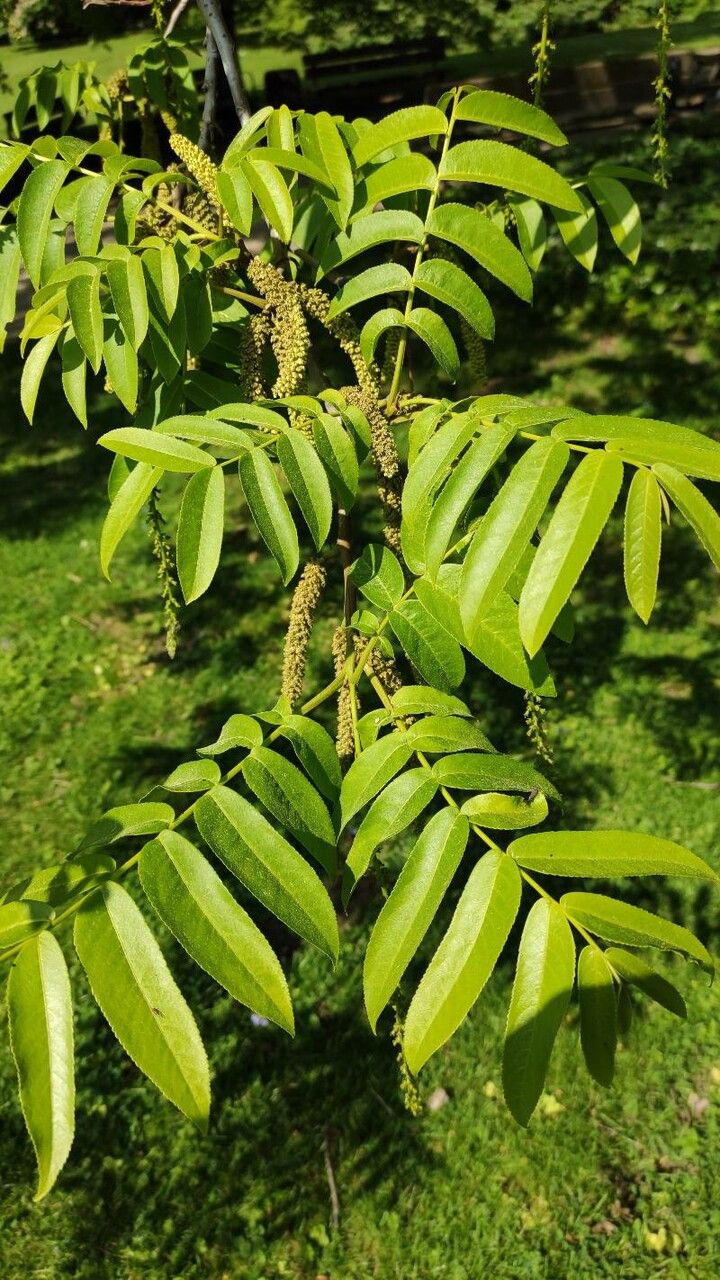
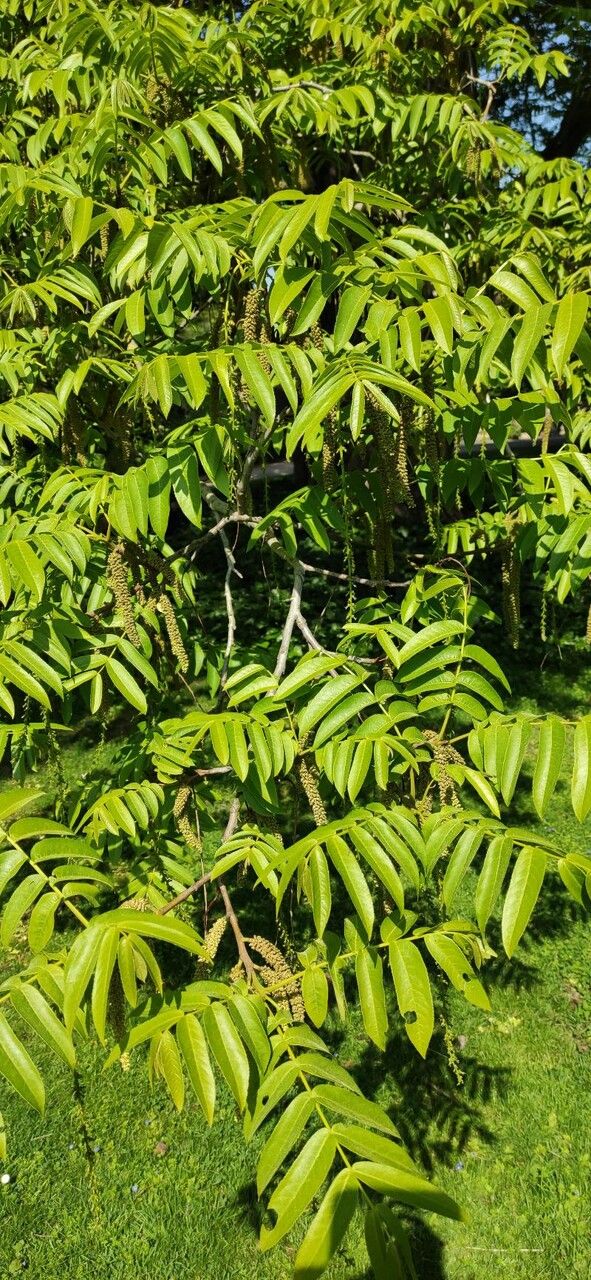
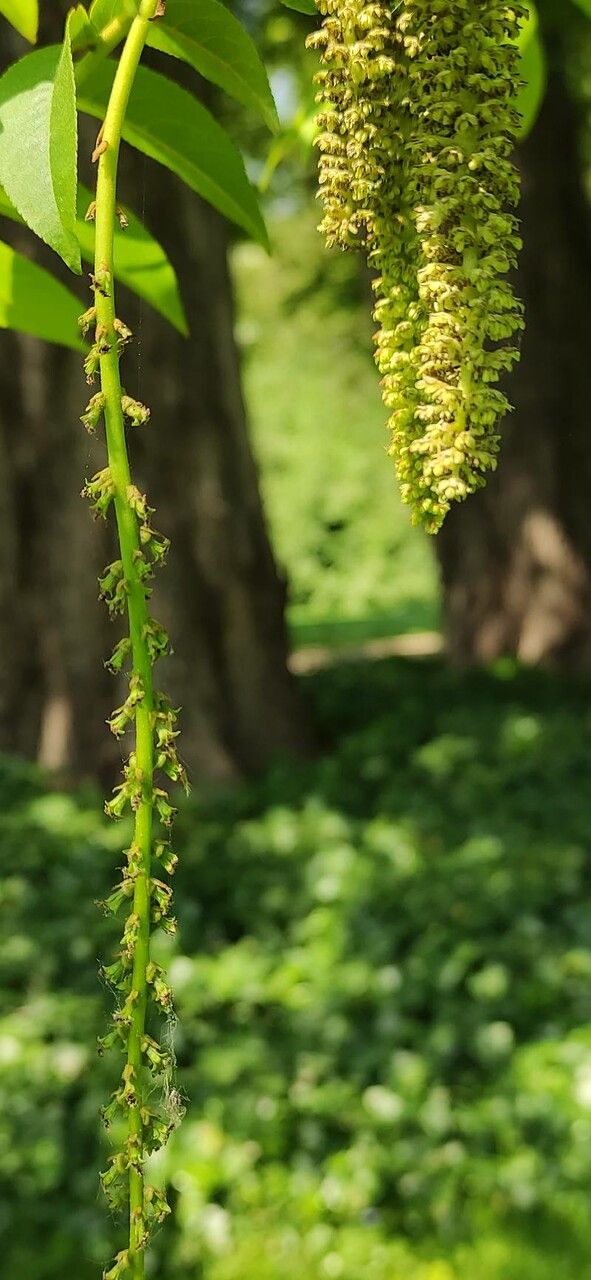
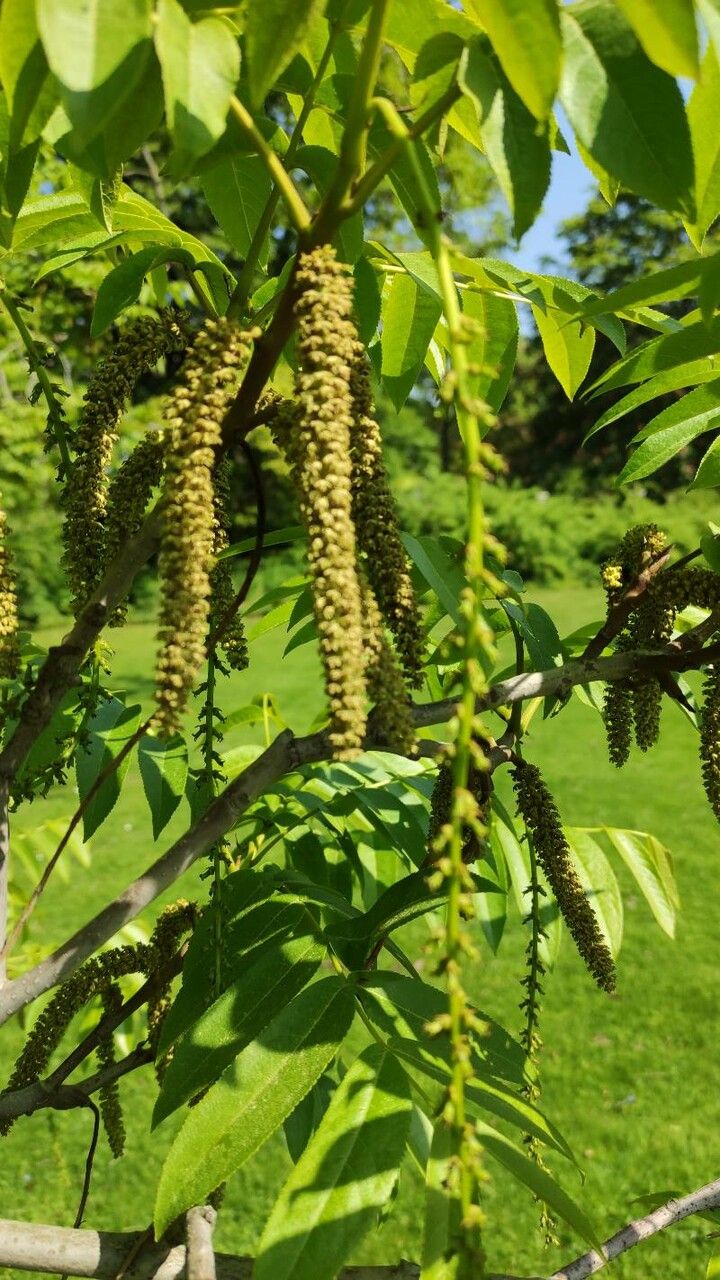
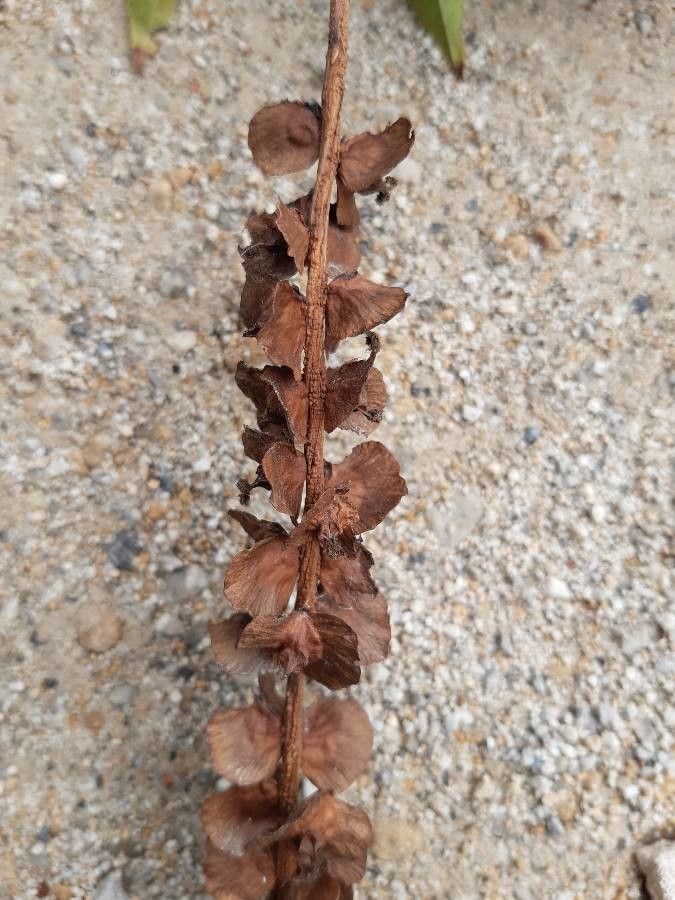
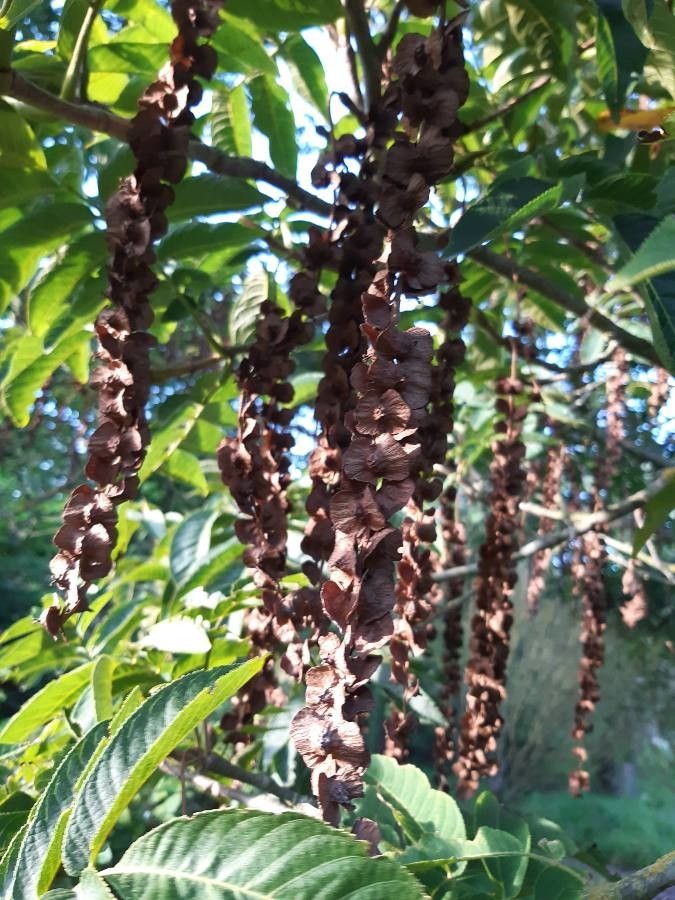
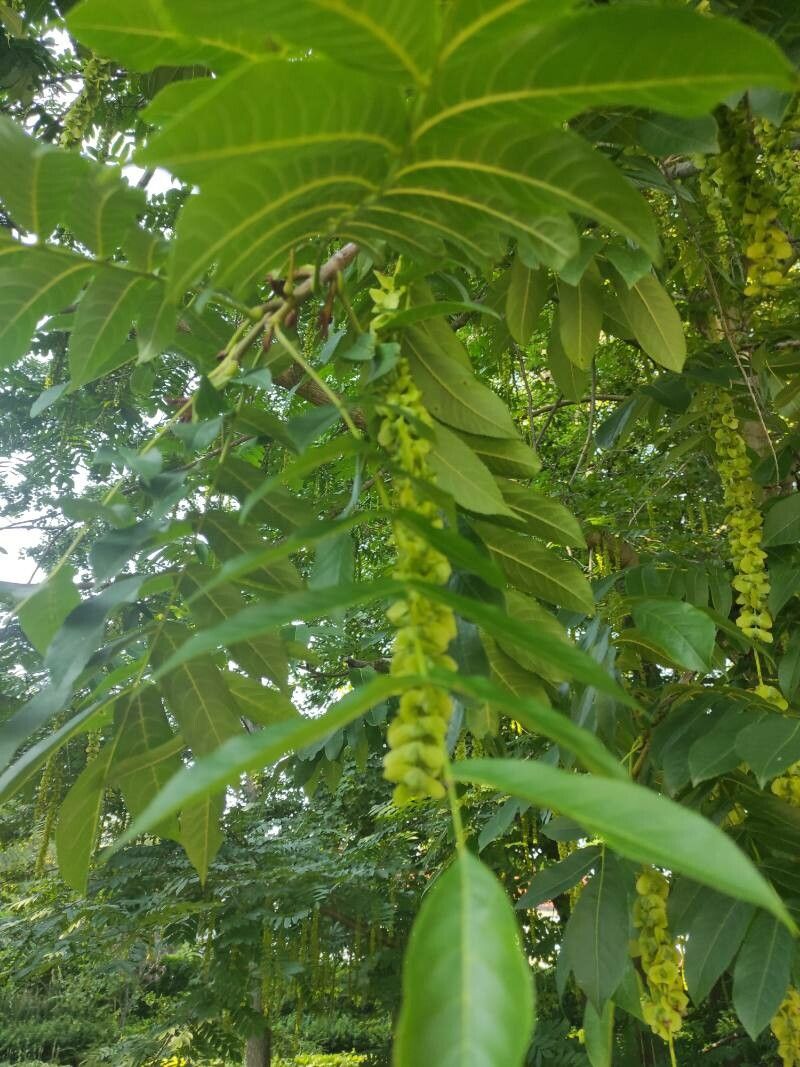
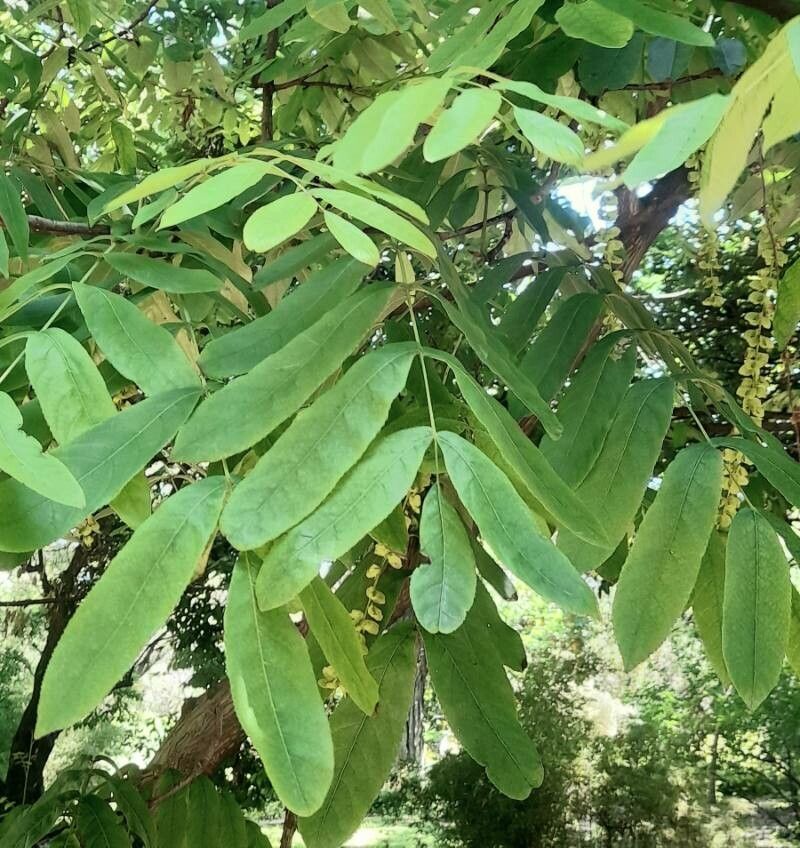
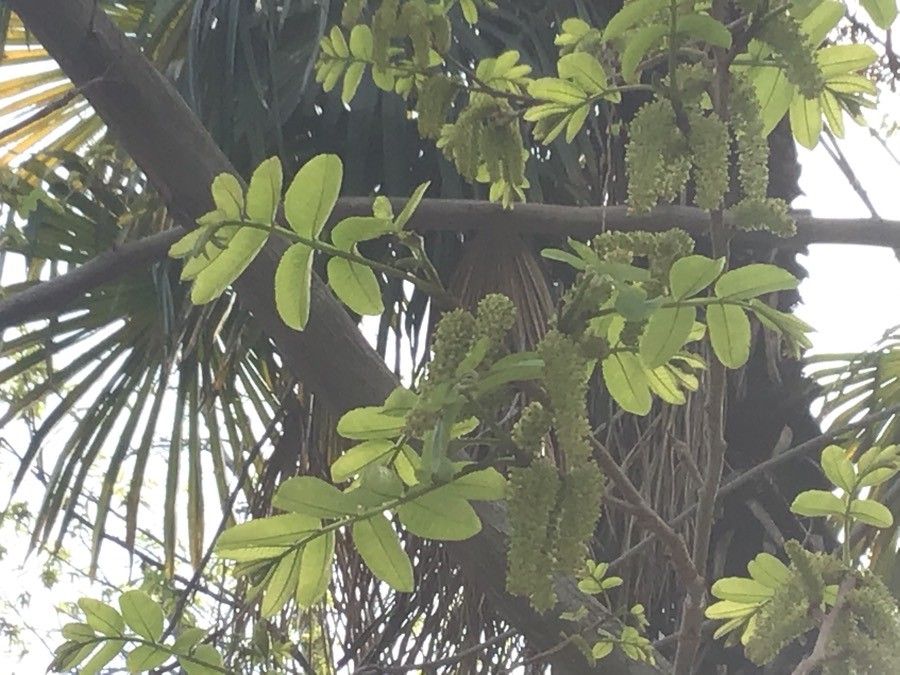
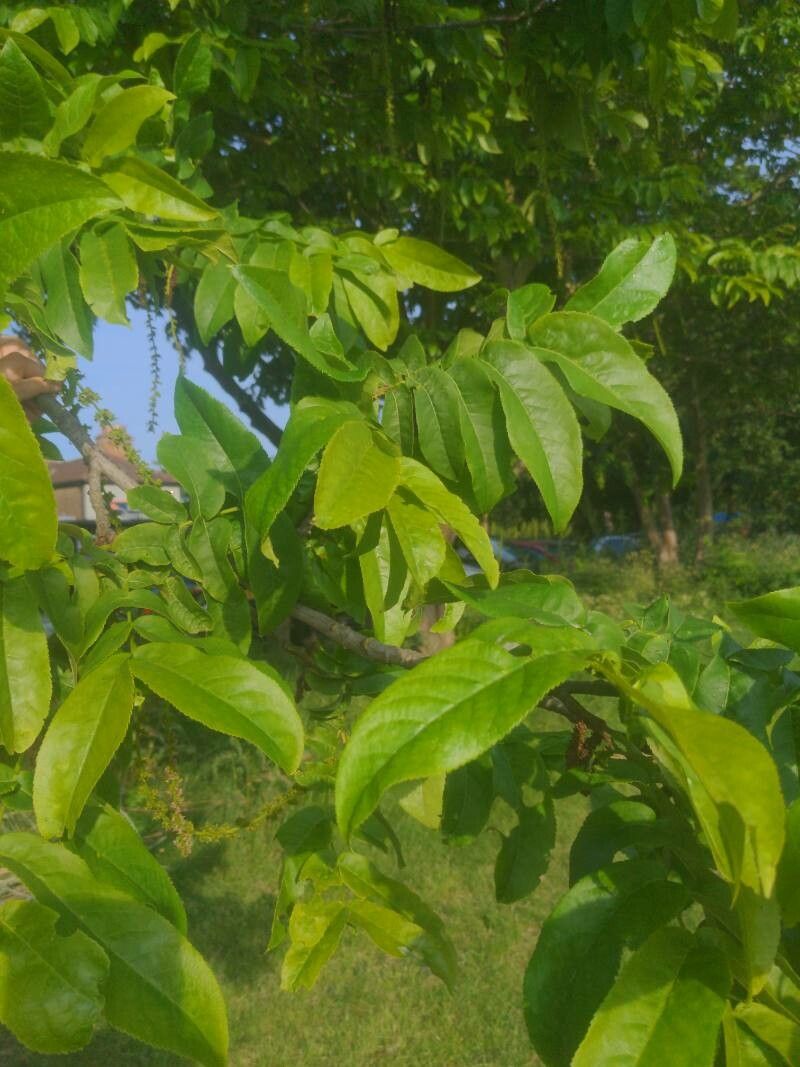
Pterocarya rhoifolia (Japanese wingnut, Japanese: sawagurumi) is a species of tree in the Juglandaceae family that is widely distributed throughout Japan, and also found native to China in the Laoshan District in eastern Shandong Province.
The tree flourishes in moist areas along riverbanks and mountain streams, and attains 30 m (98 ft) in height, flowering from May–July.It is a soft light wood, with the heartwood yellowish-white in color, which has been used as a substitute of kiri (Paulownia tomentosa), for example, to make geta clogs that are imitations of kiri-geta. It is straight-grained and the pore pattern on the surface provides the wood with a handsome appearance.
The Japanese wing nut has strong disease resistance and is generally not susceptible to illnesses. Regarding care, this plant is fairly low-maintenance. Planted outdoors, it needs only minimal watering, and larger specimens usually do not require pruning. Smaller specimens, however, should be pruned after flowering. The Japanese wing nut is appropriate for anyone with an outdoor area, such as a garden or deck, and does not demand extensive gardening experience.
How to keep Pterocarya Rhoifolia.
Light
Japanese wing nut is native to open habitats, such as sunny meadows and forest edges, that provide abundant light. It flourishes in Full Sun but can also tolerate Partial Sun, adapting well to different sunlight conditions.
Temperature
The Japanese wing nut shows strong adaptability to a variety of climate conditions, from scorching summers to chilly winters. However, it does have an optimal temperature range for growth. When temperatures become too high, the plant is vulnerable to heat and humidity stress, which can lead to its death. In areas where temperatures approach the lower limit of its cold tolerance, it is important to use insulation measures to protect the plant.
Fertilizer
Fertilize your Japanese wing nut in early spring to encourage healthy growth. Regular feeding improves overall health, producing vigorous growth, greater resilience to adverse conditions, and increased resistance to diseases and pests. Maintain a specific fertilization schedule for your Japanese wing nut to achieve foliage that is vibrant, richly colored, and lush in appearance.
Pruning
The Japanese wing nut is a deciduous tree that features compound leaves and distinctive winged nuts. To maintain its health and structure, prune the tree in early spring. Focus on removing any dead or crossing branches, and make your cuts just above outward-facing buds. Regular pruning enhances air circulation, lowers the risk of disease, and strengthens the tree's branch structure. For the best results, use clean and sharp tools during pruning.
Botanical profile.
- Plant Type
- Tree
- Life Cycle
- Perennial
- Genus
- Pterocarya
- Family
- Juglandaceae
- Hardiness Zone
- 4-8
- Mature Height
- 20.12 m
- Mature Spread
- 14.94 m
- Leaf Color
- Green, Dark Green
- Leaf Type
- Deciduous
- Flower Size
- 0.51 cm to 0.76 cm
- Bloom Time
- Mid spring, Late spring
- Planting Time
- Spring
- Harvest Time
- Late summer, Early fall, Mid fall
- Native Area
- South Korea, Japan, China
Other names.