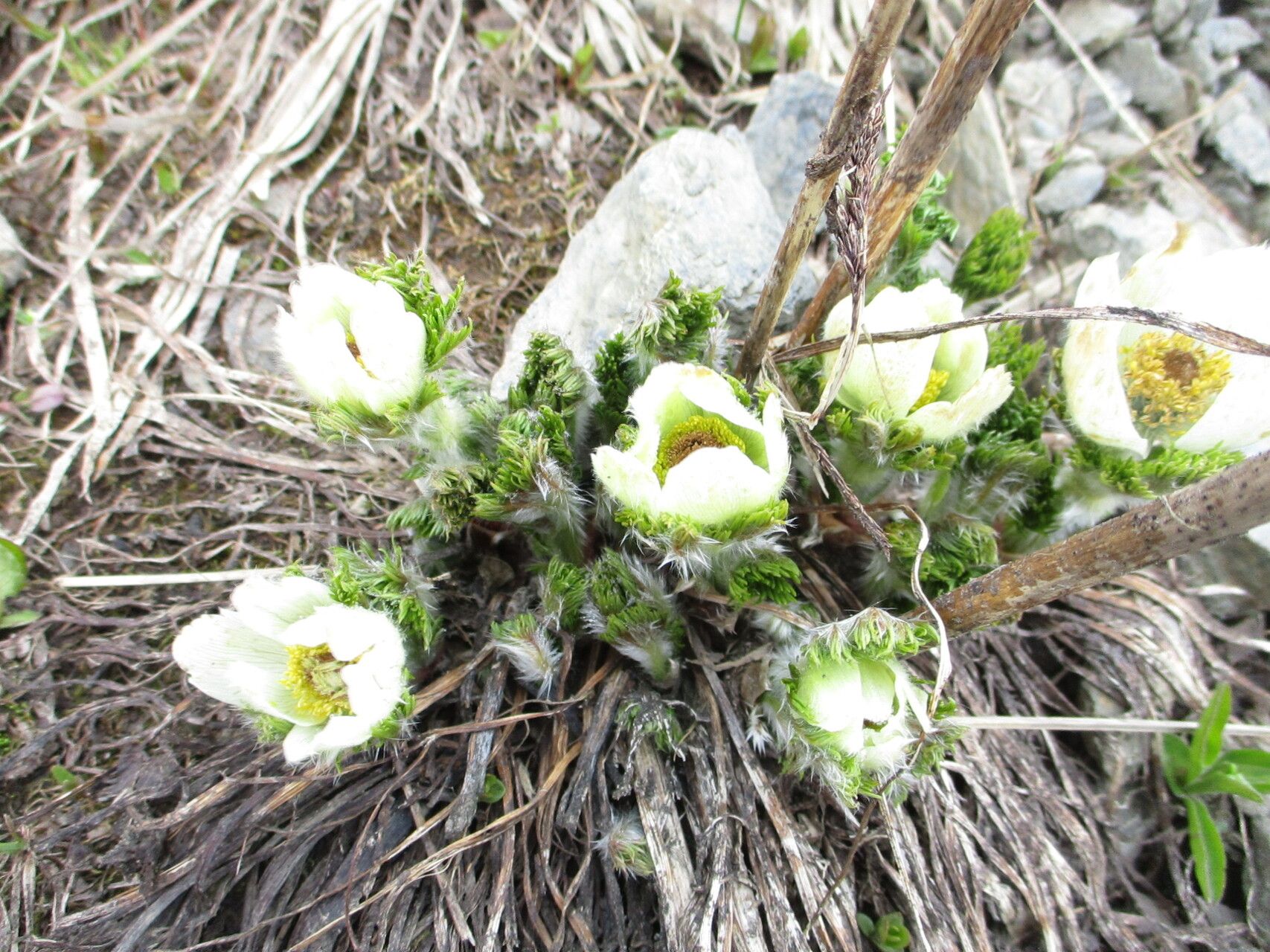
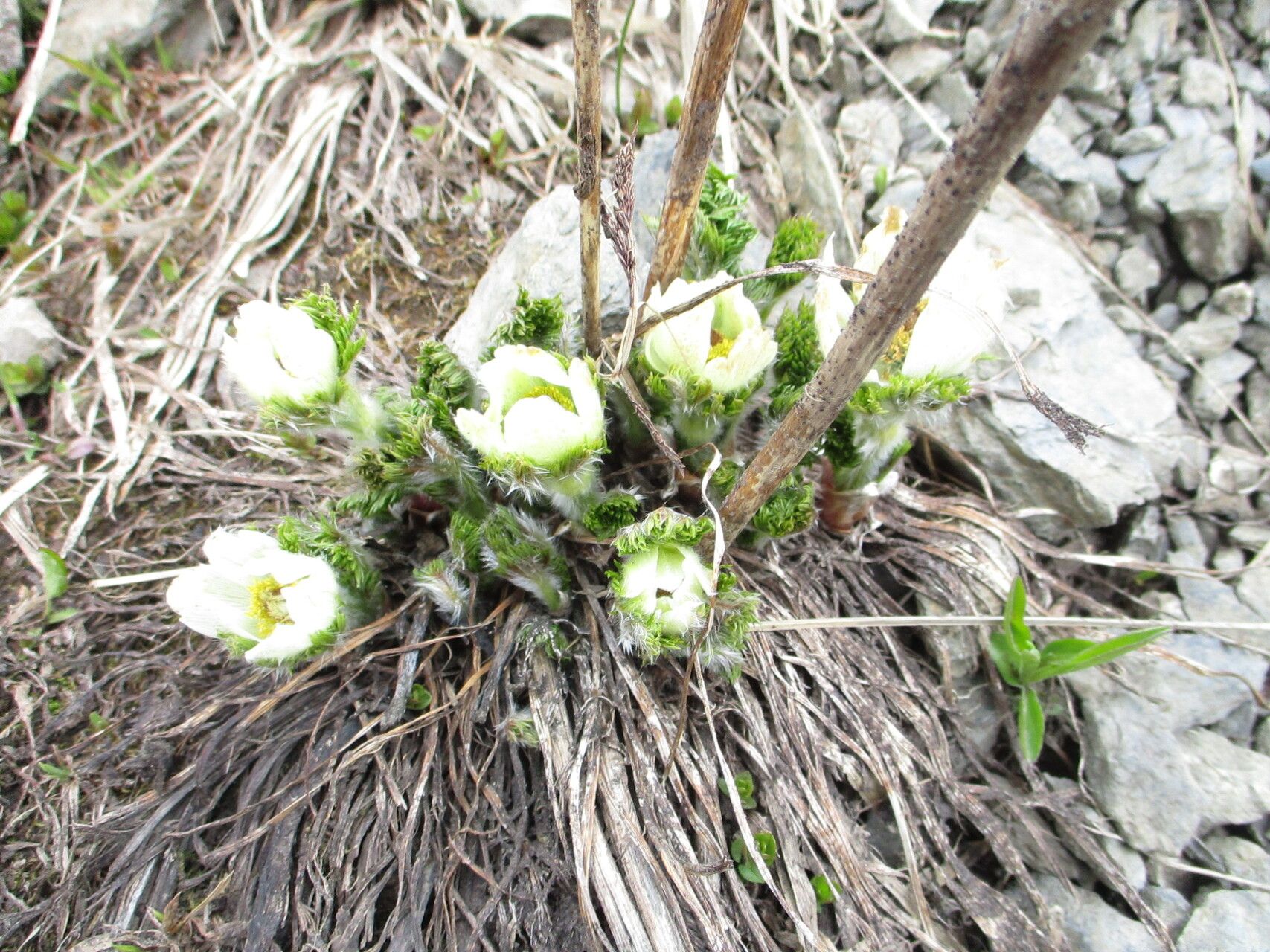
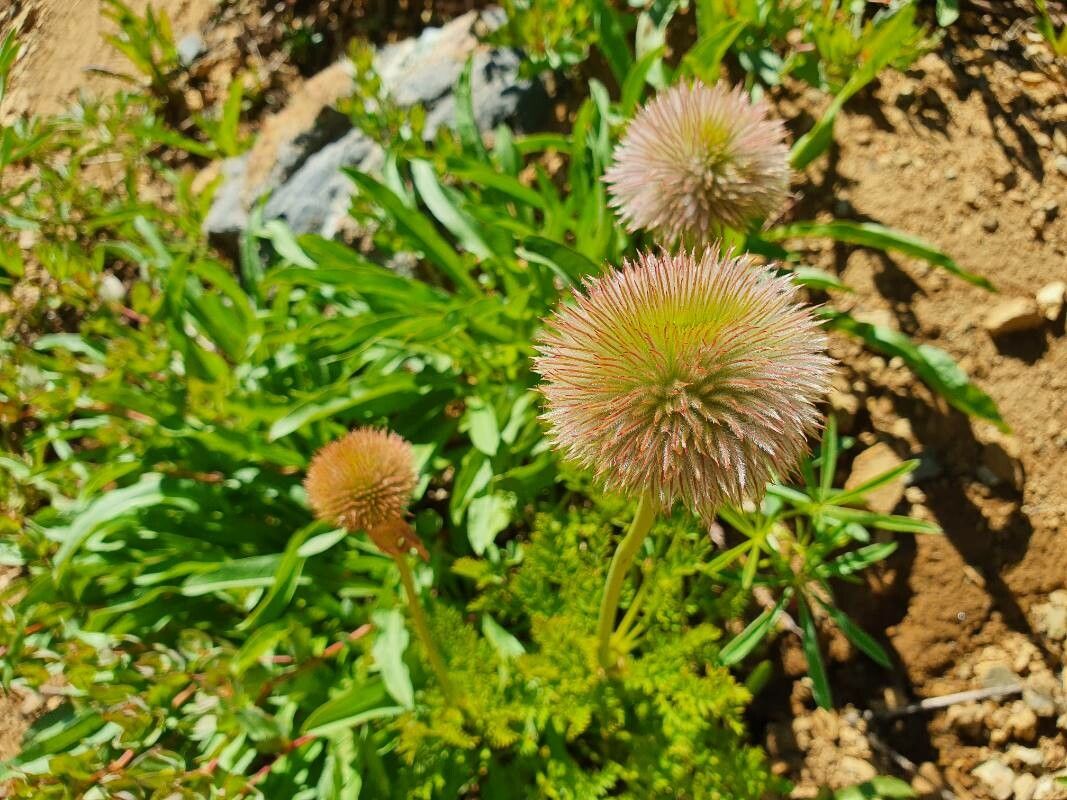
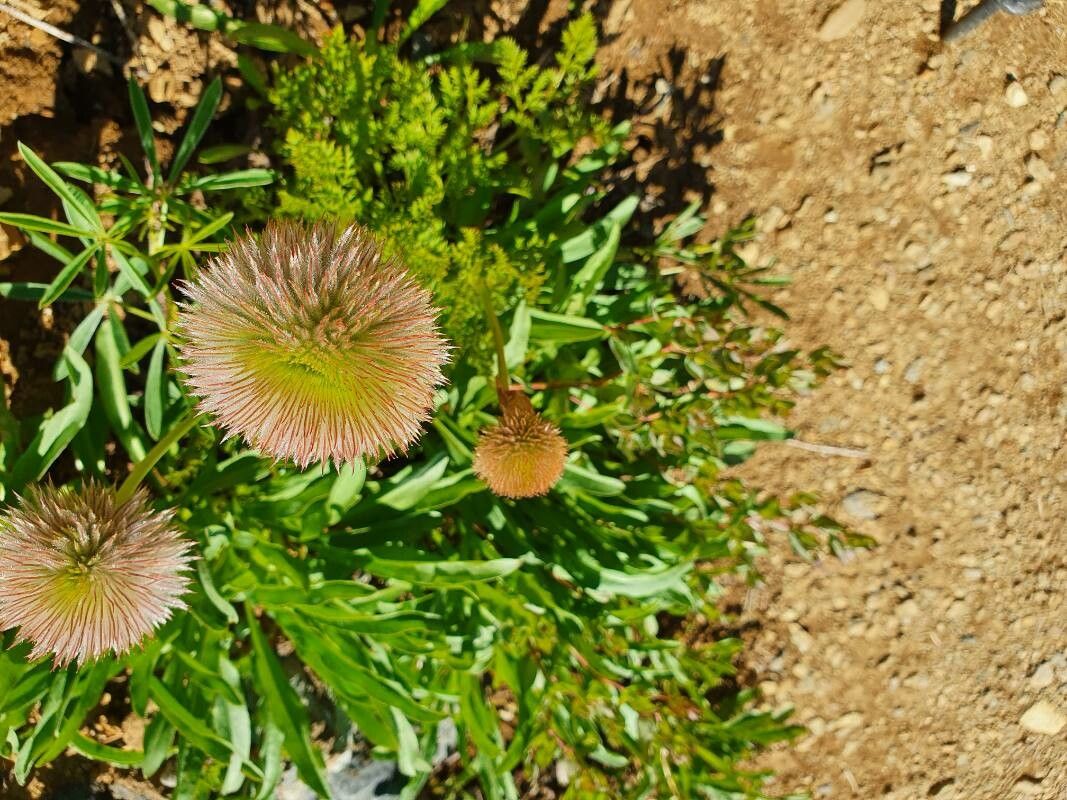
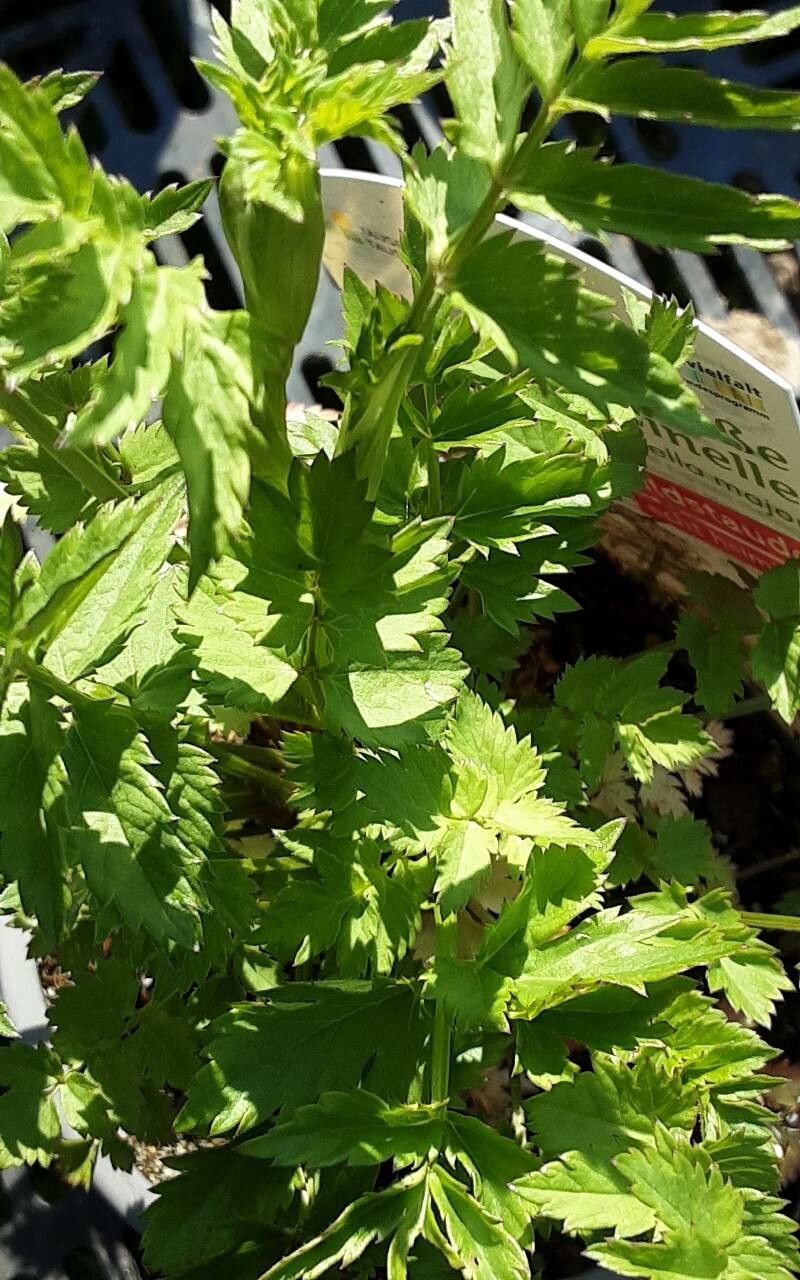
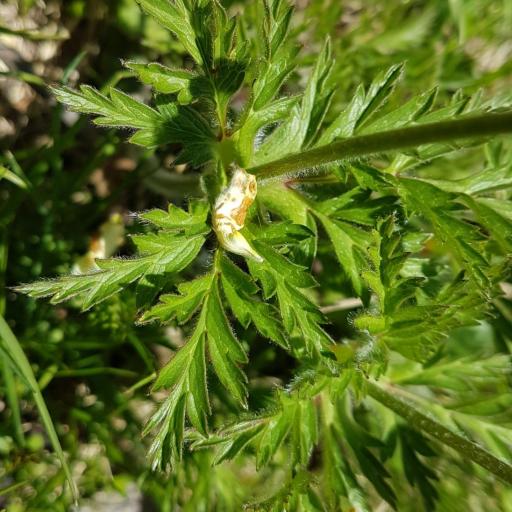
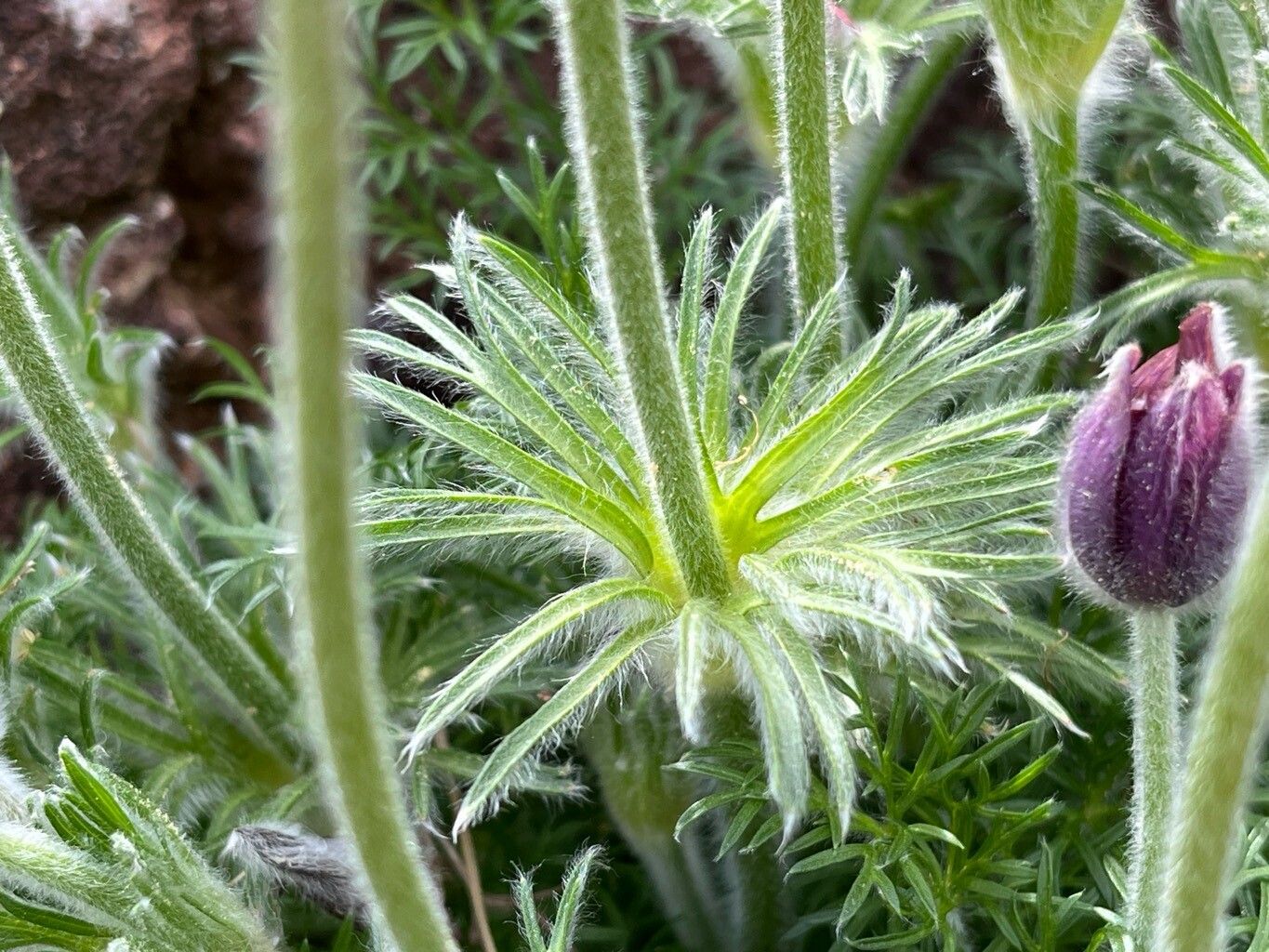
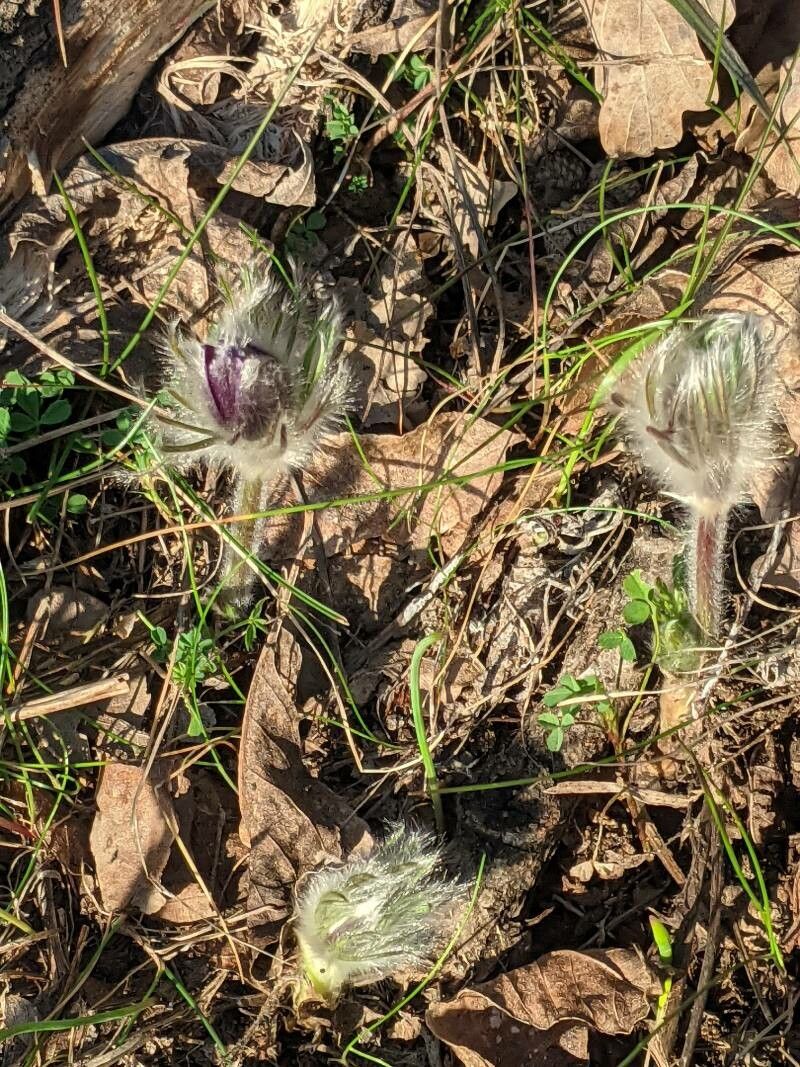
Anemone occidentalis, the white pasqueflower or western pasqueflower, is a herbaceous species of flowering plant in the buttercup family Ranunculaceae. Other authorities place it in the genus Pulsatilla. Individuals are 10–60 cm (3.9–23.6 in) tall, from caudices, with three to six leaves at the base of the plant that are 3-foliolate, each leaflet pinnatifid to dissected in shape. Leaf petioles are 6–10 cm (2.4–3.9 in) long. Leaves have villous hairs and their margins are pinnatifid or dissected. Plants flower briefly mid-spring to mid-summer, usually soon after the ground is exposed by melting snow. The flowers are composed of five to seven sepals (sometimes called tepals), normally white or soft purple, also mixed white and blueish purple, one flower per stem. The sepals are 15–30 mm (0.59–1.18 in) long and 10–17 mm (0.39–0.67 in) wide. Flowers have 150–200 stamens. The fruit occurs in heads rounded to subcylindric in shape, with pedicels 15–20 cm (5.9–7.9 in) long. The achenes are ellipsoid in shape, not winged, covered with villous hairs, with beaks curved that reflex as they age and 20–40 mm (0.79–1.57 in) long, feather-like. Generally, the fruit persists into fall. Native to far western North America including British Columbia to California and Montana, it is found growing in gravelly soils on slopes and in moist meadows.
Western pasqueflower resists disease well and is generally not vulnerable to illnesses. However, it can be affected by pests and diseases present in its environment. Such infections are usually mild. Regarding care, this plant needs moderate maintenance. It should be pruned regularly to maintain a neat appearance and support healthy growth. Applying fertilizer can also help encourage flowering. Western pasqueflower is appropriate for anyone with outdoor space, such as a garden or patio, and does not require much gardening experience. It may need more attention when grown indoors.
How to keep Pulsatilla Occidentalis.
Light
For healthy growth, western pasqueflower does best in locations that provide a large amount of sunlight during the day, imitating its native habitat. Insufficient light can cause poor growth, whereas light levels that exceed its tolerance do not cause harm.
Water
The western pasqueflower thrives in rocky alpine environments and is well-suited to dry conditions, preferring well-drained soils. To simulate its natural habitat, it should be watered weekly. When grown outdoors at high elevations, it requires consistent soil moisture during the growing season but must be protected from waterlogging, especially due to changing temperatures.
Temperature
Western pasqueflower naturally occurs in habitats with temperatures from 32 to 90°F (0 to 32°C). It prefers cooler conditions, and in warmer weather it may need extra shading or additional watering.
Fertilizer
For Western pasqueflower, the primary time to fertilize is in early spring when the flowers are forming. The proper fertilizer promotes better blooms and helps Western pasqueflower produce attractive flowers. Fertilizing in early spring ensures strong flowering during the season and provides energy for dormant growth phases.
Pruning
The Western pasqueflower is known for its beautiful late-spring blossoms and fern-like foliage. To promote healthy growth and prevent legginess, prune the plant from early to late spring, after it has finished blooming. Removing any dead material will help improve air circulation and enhance the plant’s appearance. Ensure you use clean, sharp shears to maintain the health and beauty of the plant.
Botanical profile.
- Plant Type
- Herb
- Life Cycle
- Perennial
- Genus
- Pulsatilla
- Family
- Ranunculaceae
- Hardiness Zone
- 3-8
- Mature Height
- 15 cm to 61 cm
- Mature Spread
- 15 cm to 25 cm
- Leaf Color
- Green, Dark Green
- Leaf Type
- Deciduous
- Flower Color
- White, Yellow
- Flower Size
- 2.54 cm to 5.08 cm
- Bloom Time
- Mid spring, Late spring
- Planting Time
- Spring, Summer, Autumn
- Harvest Time
- Early summer, Mid summer
Other names.
Reader questions.
What are the sunlight requirements for a Western Pasqueflower?
The Western Pasqueflower requires above 6 hours of sunlight to thrive, highlighting the importance of choosing gardening spots that ensure a balance of light and shade. This ensures that the plant receives the full sun it needs for healthy growth. Observing how sunlight moves through your garden can help in selecting the perfect location to meet these requirements.
What is the native environment of the Western pasqueflower?
The Western pasqueflower, botanically known as Pulsatilla occidentalis, thrives in environments where temperatures range from 32 to 90°F (0 to 32°C). It prefers cooler climates and may require additional shade or watering in warmer temperatures to stay healthy.
What is essential for the healthy growth of Western Pasqueflower?
For healthy growth, Western Pasqueflower needs to be exposed to a substantial amount of sunlight throughout the day, reflecting its native habitat conditions. Inadequate light can lead to poor growth, whereas the plant is generally tolerant of excessive light conditions. When natural sunlight is not sufficient, especially during winter or in less sunny spaces, artificial lighting becomes crucial. It's recommended to choose the right type of artificial light, such as LED lights, and ensure it provides 30-50W per square foot for full sun plants. The artificial light source should be placed 12-36 inches above the plant for 8-12 hours a day to best mimic natural sunlight conditions.
Does the Western pasqueflower require special frost protection measures?
Western pasqueflower exhibits strong cold resistance, negating the need for special frost protection measures in most cases. However, if winter temperatures are expected to drop below its growth limit temperature, it's crucial to provide cold protection by covering the plant with soil or straw. Additionally, abundantly watering the plant before the first freeze in autumn is recommended to ensure the soil remains moist and enters a frozen state, helping prevent drought and water scarcity during the colder seasons.
What are the symptoms of inadequate lighting for Western Pasqueflower?
Symptoms of light deficiency in Western Pasqueflowers include smaller new leaves, leggy or sparse growth, faster leaf drop, slower or no new growth, lighter-colored new leaves, and specific conditions such as chlorosis, sunscald, leaf curling, wilting, and leaf scorching. These signs indicate that the plant is not receiving the appropriate amount of light it requires to maintain its normal growth and development processes.
How does low temperature affect the Western pasqueflower?
The cold-tolerant Western pasqueflower thrives best in temperatures above its suitable growth minimum. During winter, temperatures should be kept above its tolerable growing temperature minimum. If temperatures fall below its growth limit, while there may not be noticeable changes during winter, there's a risk of decreased sprouting or no sprouting at all come springtime. The solution to this problem is to remove any parts that have failed to sprout in spring.
What are the recommended solutions for light deficiency in Western Pasqueflower?
To combat light deficiency, gradually expose your Western Pasqueflower to more light until it receives at least 6 hours of direct sunlight daily, considering both indoor and outdoor settings. For indoor plants, use a south-facing window or artificial light sources like desk or ceiling lamps or professional grow lights for at least 8 hours daily. For outdoor plants, gradually move them to sunnier spots while avoiding sudden changes to prevent sunburn. If sunlight is obstructed, consider pruning or transplanting the plants during their dormant period to a location with ample sunlight and good drainage. It is important to remember that parts of the plant previously affected by insufficient light may not recover, but new growth should be healthy.
What should be done when the Western pasqueflower is exposed to high temperatures?
In summer, it's essential to keep the Western pasqueflower below its suitable growth maximum temperature. Exceeding its tolerable growing maximum temperature can cause the plant's leaves to lighten in color, become prone to curling, suffer from sunburn, or in severe cases, cause the entire plant to wilt and dry up. To mitigate this, trim away any sunburned and dried-up parts. Moving the plant to a location with shade during the midday and afternoon sun or using a shade cloth can help, as does watering the plant in the morning and evening to maintain soil moisture.