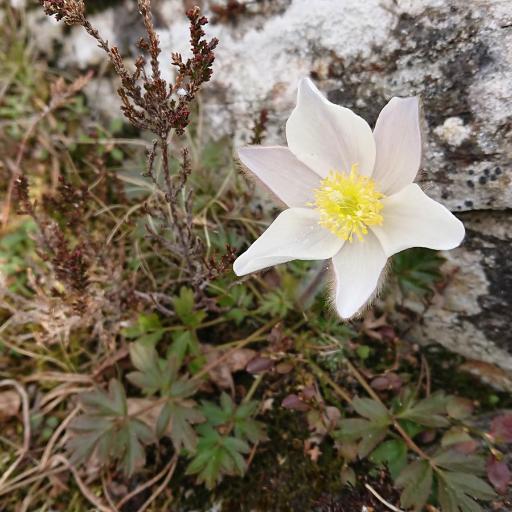
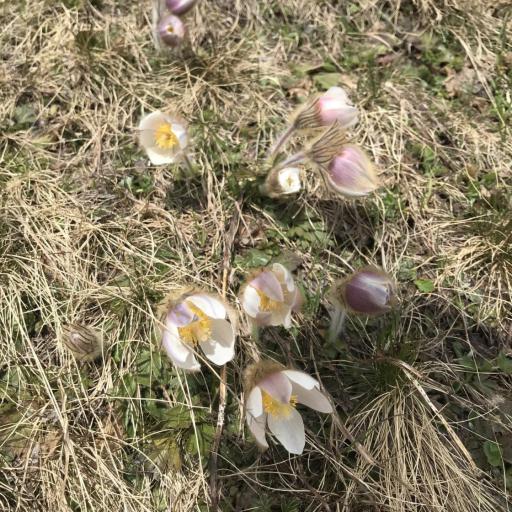
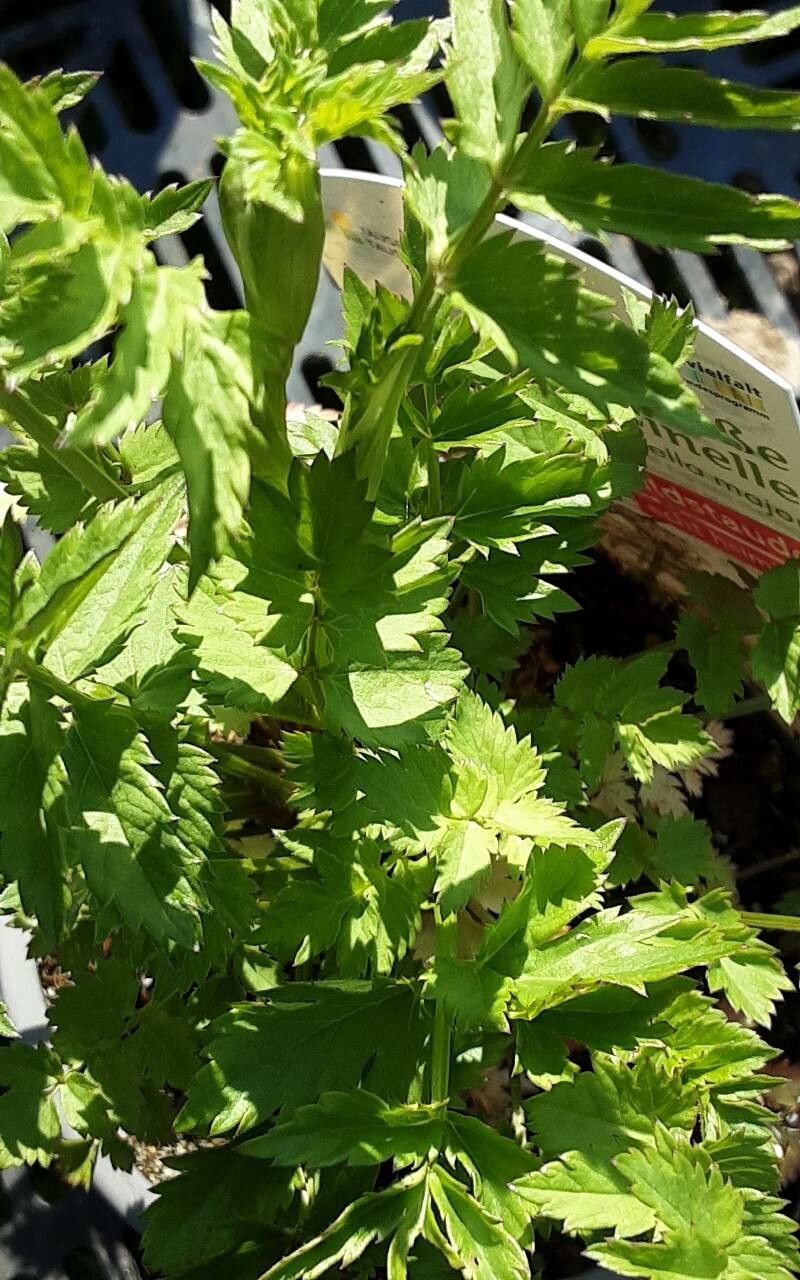
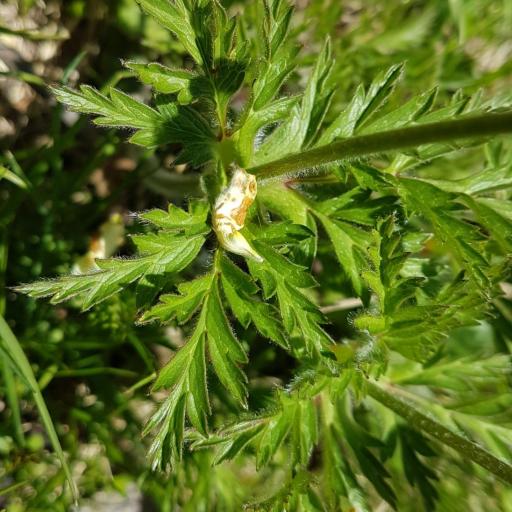
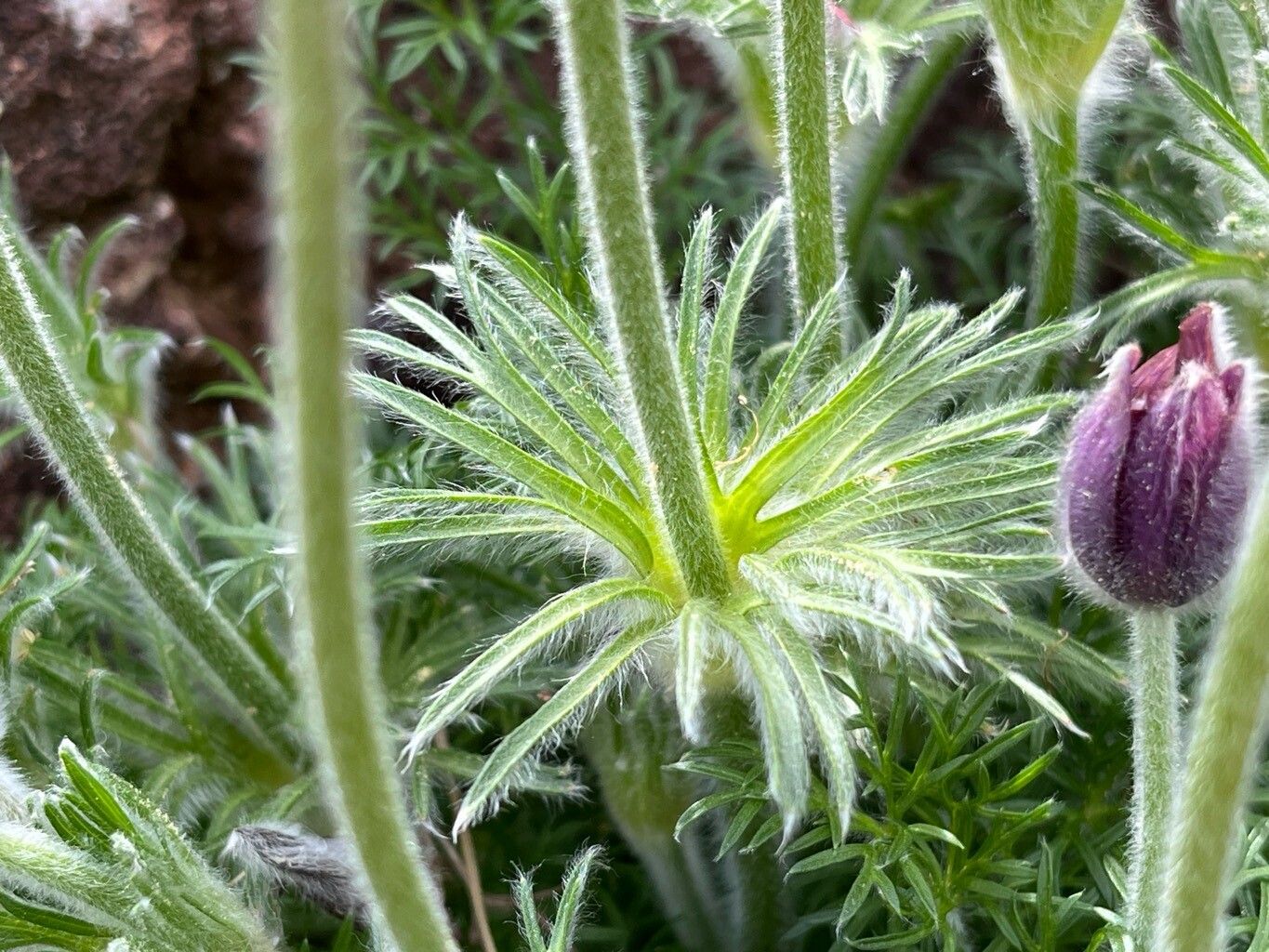
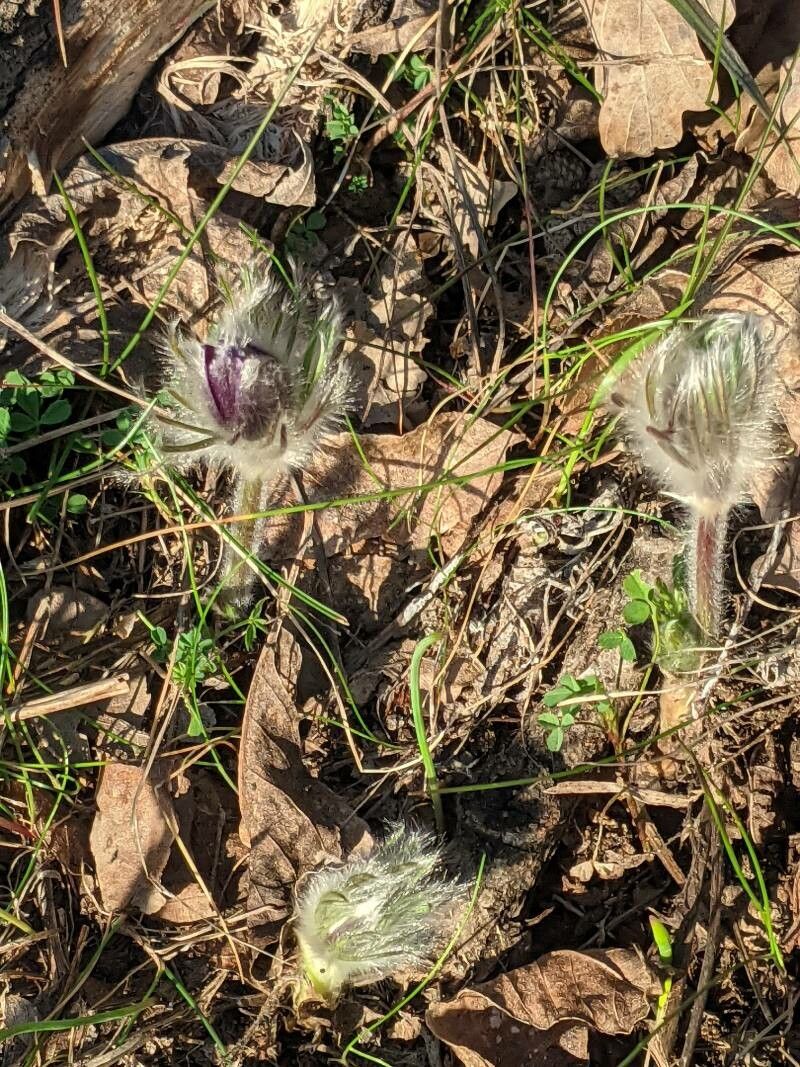
Pulsatilla vernalis (spring pasqueflower, arctic violet, lady of the snows) is a species of flowering plant in the family Ranunculaceae, native to mountainous habitats in Europe. Growing to 10 cm (4 in) high and wide, it is a semi-evergreen perennial with hairy, divided leaves. In early spring it bears anemone-like flowers which are up to 6 cm (2 in) in diameter, white flushed with violet on the outer surface of the petals, and prominent yellow stamens. The specific epithet vernalis means "of spring". In cultivation it is suitable for an alpine garden or alpine house, with sharply drained soil in full sun. Though very hardy it dislikes winter wetness. It has gained the Royal Horticultural Society's Award of Garden Merit. It is the county flower of Oppland, Norway and is depicted in the county coat of arms. It is also the county flower of Härjedalen, Sweden and South Karelia, Finland.
The Eastern pasque flower has strong disease resistance and is generally not prone to illnesses. However, it can be vulnerable to pests and diseases present in its environment. Such infections are usually mild. Regarding care, this plant needs moderate maintenance. It requires regular pruning to preserve a neat appearance and support healthy growth. Fertilizing can also help encourage flowering. The Eastern pasque flower is appropriate for anyone with outdoor space, like a garden or patio, and does not demand extensive gardening experience. It may need more attention when cultivated indoors.
How to keep Pulsatilla Vernalis.
Light
The eastern pasque flower does best with ample light, which is essential for its healthy cultivation. From its earliest growth stage it requires unobstructed illumination. A lack of light will inhibit the plant’s development, while too much can lead to burned foliage. Although it originates from an area with strong lighting, it does not tolerate extreme light conditions.
Water
The Eastern pasque flower thrives in well-drained soil with moderate moisture, which means it needs to be watered weekly. During the colder months, this alpine species goes dormant, so it's important to adjust the watering schedule to prevent overwatering. To care for the plant properly, it's crucial to understand its natural growth cycle and dormancy period.
Temperature
The eastern pasque flower naturally occurs in habitats where temperatures range from 41 to 89.6 °F (5 to 32 ℃). It does best in temperate conditions. In hotter or colder seasons, moderate adjustments may be necessary to keep temperatures within the eastern pasque flower's preferred range.
Fertilizer
The primary time to fertilize Eastern pasque flower is in early spring, when the blooms are forming. Using the proper fertilizer promotes stronger flowering and helps the plant produce attractive blossoms. Fertilizing at that early-spring stage supports excellent seasonal blooms and supplies energy for dormant phases of growth.
Pruning
The Eastern pasque flower displays delicate, bell-shaped blooms and finely divided leaves. To keep the plant healthy, prune it after it finishes flowering in early to late spring. This helps remove dead stems and prevents overcrowding, improving air circulation. Be careful not to prune too heavily, as this can disrupt its naturally compact growth. For specific pruning tips, consult reliable sources.
Pot & Repot
When repotting Eastern pasque flower, select a pot 1–2 inches (2.5–5.1 cm) larger with good drainage. Use a well-draining potting mix. Repot in spring or fall, making sure the root ball sits slightly below the rim of the pot. Water thoroughly after repotting and place it in a warm spot with indirect sunlight.
Botanical profile.
- Plant Type
- Herb
- Life Cycle
- Perennial
- Genus
- Pulsatilla
- Family
- Ranunculaceae
- Hardiness Zone
- 4-7
- Mature Height
- 5 cm to 20 cm
- Mature Spread
- 6 cm to 10 cm
- Leaf Color
- Green
- Leaf Type
- Semi-evergreen
- Flower Color
- White, Purple
- Flower Size
- 2.54 cm to 5.08 cm
- Bloom Time
- Early spring, Mid spring
- Planting Time
- Spring
- Harvest Time
- Late spring, Early summer
- Native Area
- Sweden, Austria, Czech Republic, Slovakia, Montenegro, Bulgaria, Poland, Croatia, Slovenia, Serbia, Russia, Norway, Germany, Italy, Spain, Switzerland, Denmark, Finland, France
Other names.