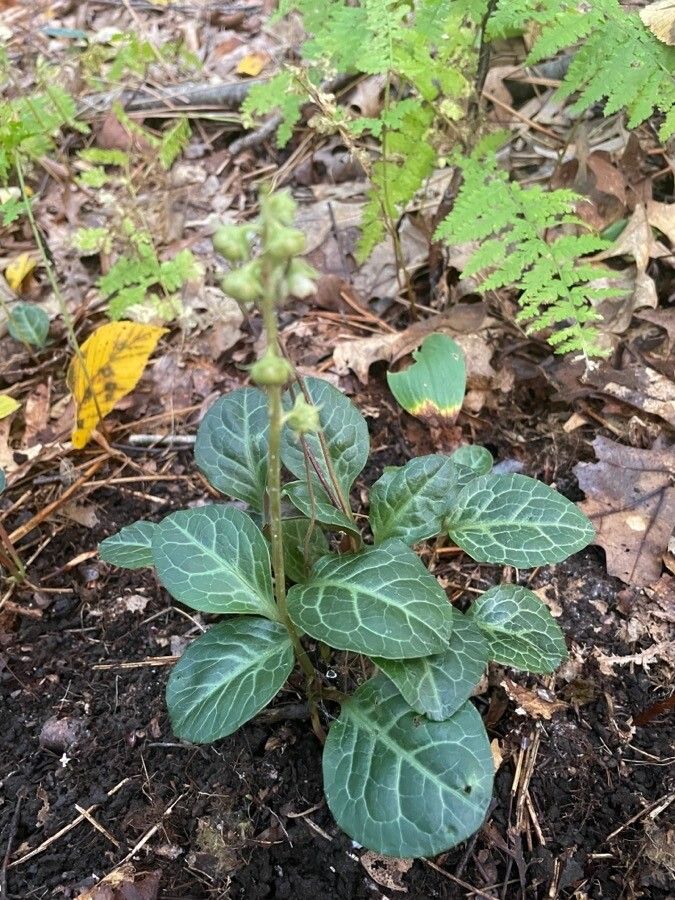
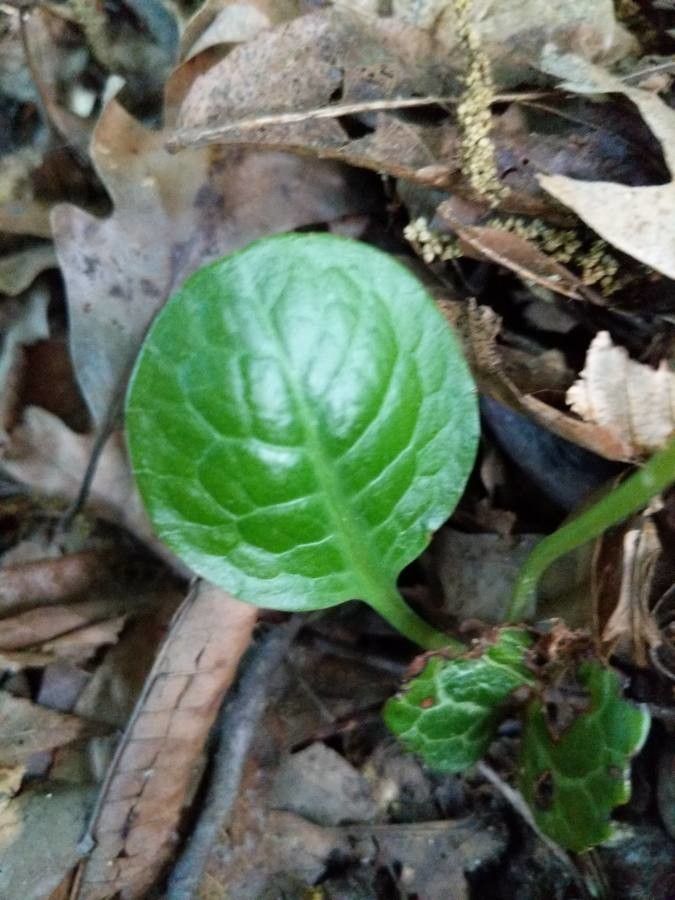
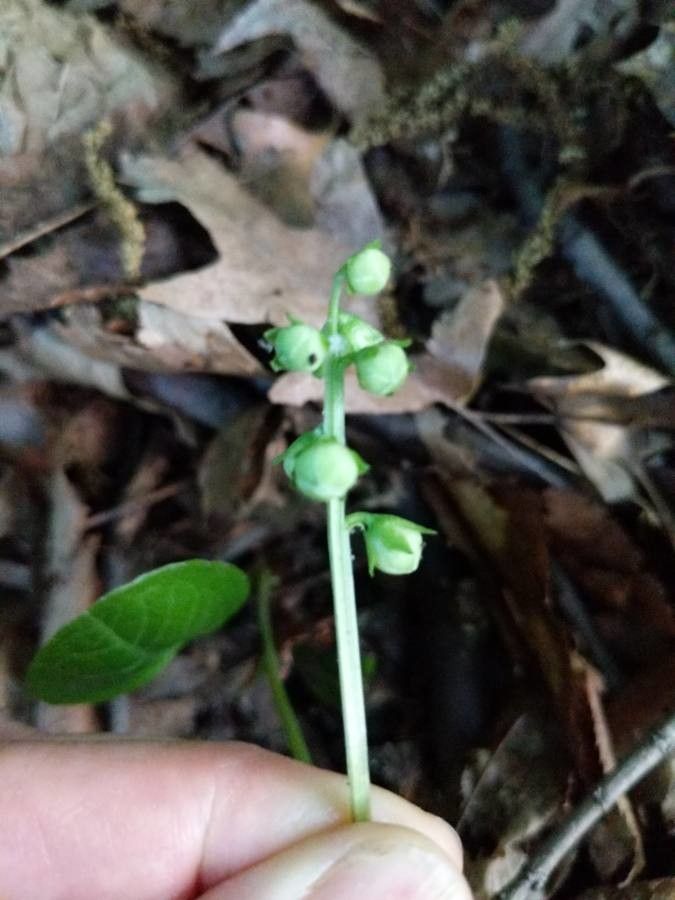
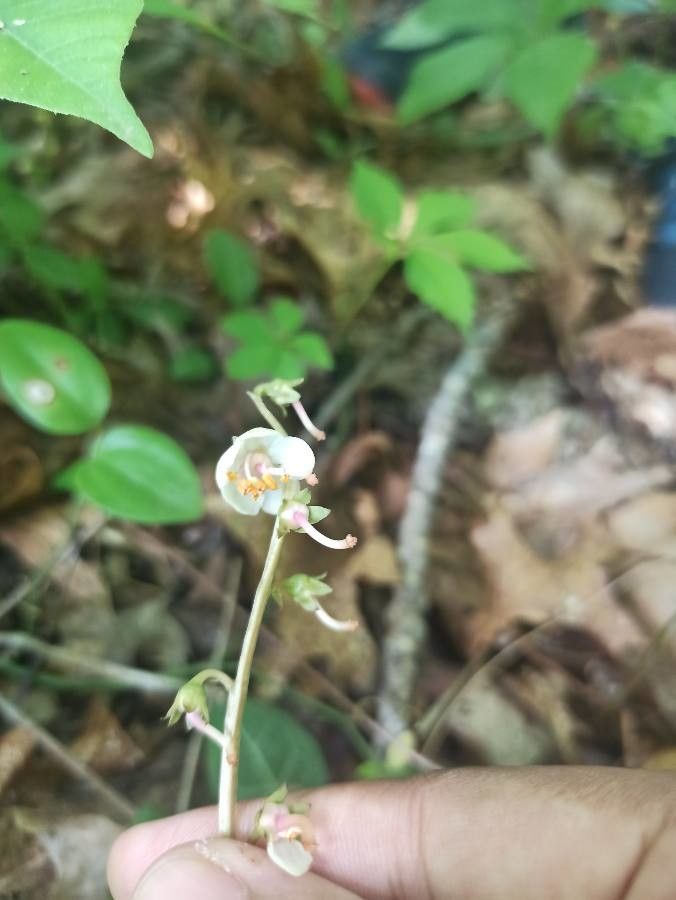
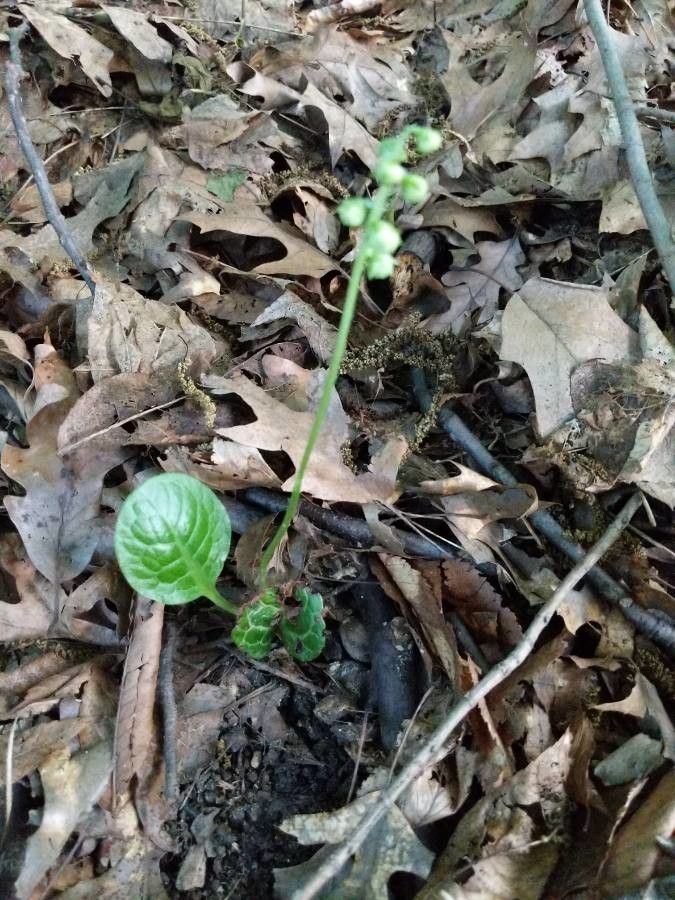
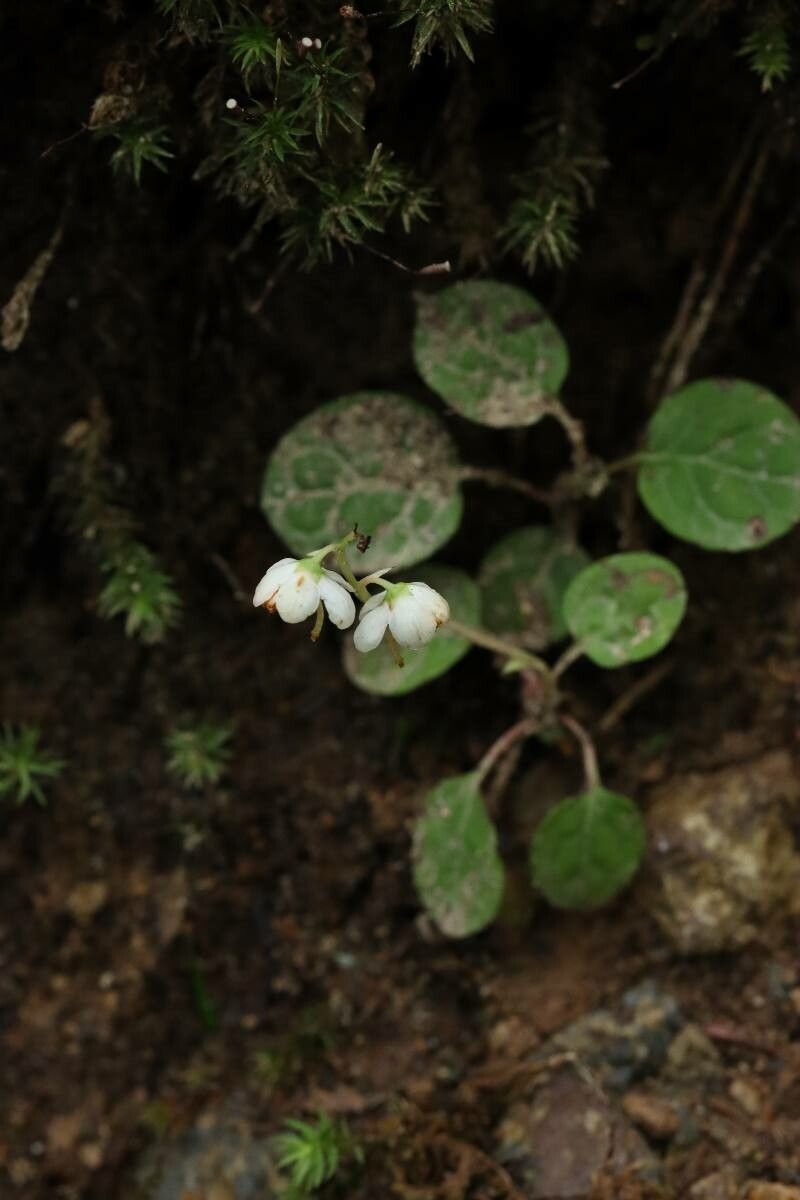
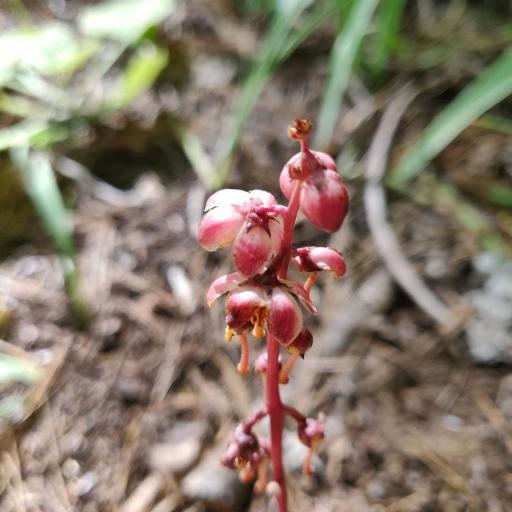
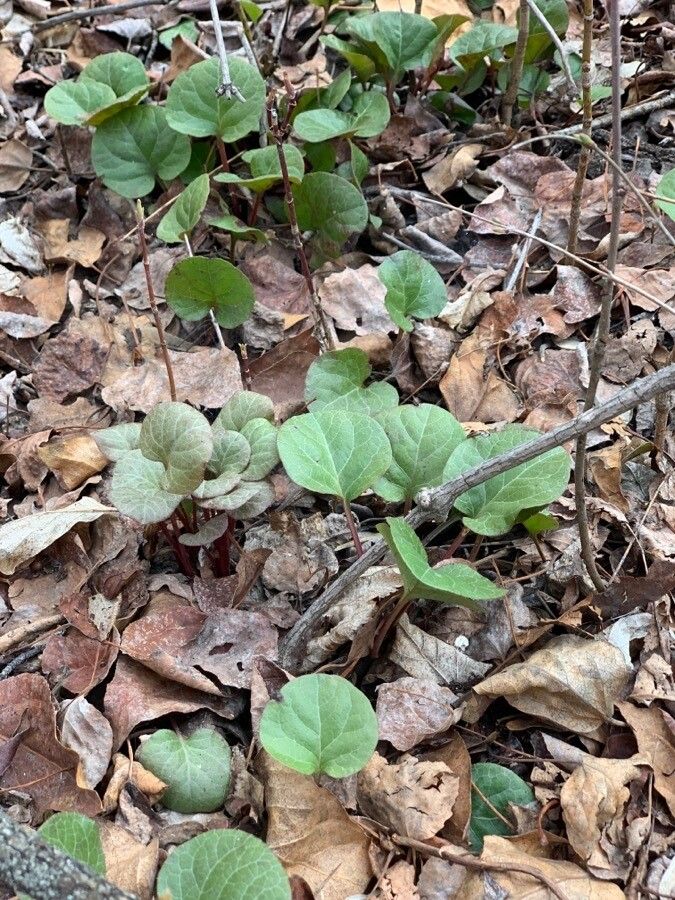
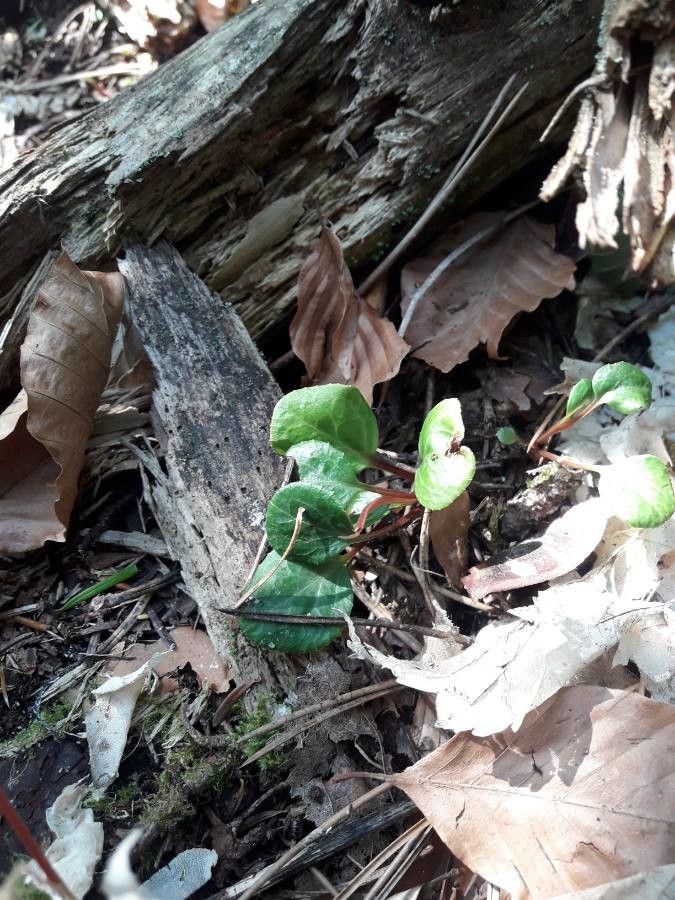
Pyrola americana, the American wintergreen, is a plant species native to Canada and the United States. It has been reported from every Canadian province from Newfoundland to Manitoba, as well as from St. Pierre & Miquelon plus the northeastern US from Maine south along the Appalachian Mountains to extreme northeastern Tennessee. It also occurs in all the Great Lakes states and in the Black Hills of South Dakota. It grows in moist forests up to an elevation of 2100 m.Pyrola americana is a small herb rarely more than 4 cm tall, spreading by means of underground rhizomes. Leaves are round to egg-shaped, up to 8 cm long, usually dark green with whitish tissue along the veins. Flowers are white to pinkish. Fruit is a dry capsule about 4 mm across.
American wintergreen is fairly disease-resistant and usually not easily affected by illnesses. It can, however, be vulnerable to pests and diseases present in its environment. These issues are typically mild. For care, this plant needs a moderate amount of maintenance. Regular pruning is required to preserve a tidy appearance and support healthy growth. Fertilizing can also encourage more flowering. American wintergreen is appropriate for anyone with outdoor space like a garden or patio and does not demand extensive gardening experience. It may need extra attention when kept indoors.
How to keep Pyrola Americana.
Light
American wintergreen grows best with a moderate amount of sunlight but can tolerate reduced light levels. In its native setting it receives dappled, mild sun, which encourages strong growth. Its various growth stages do not demand markedly different lighting. However, too little or too much sun can impede growth or cause damage.
Temperature
American wintergreen is native to areas where temperatures range from 32 to 77 °F (0 to 25 ℃). It prefers mild climates and may require temperature adjustments during periods of extreme seasonal change.
Fertilizer
The best time to fertilize an American wintergreen is in early spring, when it is ending dormancy and starting active growth. Fertilizing supplies important nutrients needed for healthy development. Although American wintergreen has fairly low fertilizer requirements, feeding it once a year can improve its survival and encourage better, longer-lasting flowers.
Pruning
American wintergreen is characterized by its glossy evergreen leaves and small white flowers. For healthy growth, prune in early to late spring by trimming away any dead stems. After the plant has finished blooming, remove the flower stems to promote vigor. Pruning at the right time not only enhances flowering but also helps maintain a compact form and overall plant health.
Botanical profile.
- Plant Type
- Herb
- Life Cycle
- Perennial
- Genus
- Pyrola
- Family
- Ericaceae
- Hardiness Zone
- 3
- Mature Height
- 5 cm to 52 cm
- Mature Spread
- 15 cm to 25 cm
- Leaf Color
- Dark Green
- Leaf Type
- Evergreen
- Flower Color
- White
- Flower Size
- 2.54 cm
- Bloom Time
- Early summer, Mid summer
- Planting Time
- Spring, Autumn
- Harvest Time
- Late summer, Early fall, Mid fall
Other names.
Reader questions.
What are the sunlight requirements for American wintergreen (Pyrola americana)?
American wintergreen requires a moderate amount of sunlight but can tolerate lower light levels, thriving best in dappled, gentle sun typical of its native habitat. It does not require distinct lighting disparities during different growth stages, but both inadequate and excessive sunlight can be detrimental to its growth. The plant needs about 3-6 hours of sunlight if categorized as "Partial sun" and less than 3 hours if under "Full shade" conditions. It's important to observe how sunlight moves through your garden to pick spots offering a balance of light and shade, ensuring the plants' well-being.
What is the native temperature range for American wintergreen?
American wintergreen, also known as Pyrola americana, naturally thrives in regions where temperatures fluctuate between 32 to 77 °F (0 to 25 °C). It favors mild climates and might necessitate adjustments to cope with extreme seasonal temperature variations.
How can artificial lighting be used for American wintergreen indoors?
Indoor American wintergreen plants can benefit from artificial lighting, especially when natural sunlight is insufficient. Adequate lighting is crucial for optimal growth. During periods with restricted natural light, like winter, or in spaces receiving minimal sunlight, using artificial lights becomes essential. LED lights are preferred due to their ability to be customized to provide specific wavelengths that plants need. The intensity of artificial light required varies with the plant's sunlight needs: full sun plants require 30-50W/sq ft, partial sun plants need 20-30W/sq ft, and full shade plants need 10-20W/sq ft. The correct positioning involves placing the light source 12-36 inches above the plant, mimicking natural sunlight's distance, and ensuring the duration reflects natural daylight hours, generally 8-12 hours per day for most plants.
Does American wintergreen require frost protection in winter?
American wintergreen is remarkably resilient to cold and does not need additional frost protection during the winter months. To prepare for the first freeze of autumn, it is advised to water the plant abundantly. This ensures the soil remains moist and freezes in this state, helping to prevent drought and water scarcity for the plant throughout the winter and early spring.
What are the symptoms of light deficiency in American wintergreen?
When American wintergreen experiences insufficient light, several symptoms may manifest, indicating light deficiency. These include smaller new leaves compared to previous ones, leggy or sparse growth characterized by longer spaces between leaves or stems making the plant appear thin, faster leaf drop as a resource conservation measure, slower or halted new growth, and lighter-colored new leaves indicating a lack of chlorophyll. Chlorosis, or the loss of green color turning leaves yellow, sunscald revealed by pale, bleached, or necrotic patches on plant tissue, leaf curling as a defense against excessive sunlight by reducing surface area, wilting due to increased water loss and difficulty in maintaining hydration, and leaf scorching identified by brown, dry, crispy edges or patches on leaves due to excessive sunlight, can also occur. These symptoms highlight the plant's struggle with inadequate light conditions.
How does American wintergreen respond to low temperatures?
Despite its extreme cold tolerance, American wintergreen should not be exposed to temperatures below -35°C. While there might not be noticeable changes during the winter at such low temperatures, there could be a decrease in or absence of sprouting in the following spring. If this occurs, removing parts of the plant that have failed to sprout in the spring is recommended.
What solutions can be implemented for American wintergreen suffering from insufficient sunlight?
To address insufficient sunlight for American wintergreen, gradual adaptation methods are crucial. For indoor plants, transitioning them to increasingly sunnier spots each week until they receive the ideal 3-6 hours of direct sunlight daily will help. If moving the plant isn't feasible, consider artificial lighting solutions, such as keeping a desk or ceiling lamp on for at least 8 hours daily, or investing in professional plant grow lights. Outdoor plants should be carefully moved to sunnier locations on a weekly basis to gradually accustom them to the increased light, preventing sunburn. Reducing obstructions that block sunlight is another strategy, which might include pruning nearby trees. For smaller plants, transplanting during their dormant period, late winter or early spring, to a sunnier spot with good drainage is recommended. It's important to note that while affected plant parts may not recover, new growth will be healthy following improved light exposure.
What should be done if American wintergreen is exposed to high temperatures?
American wintergreen struggles in high temperatures, particularly above 25°C, leading to halted growth and an increased risk of rot. To mitigate damage from excessive heat, sunburned and dried parts of the plant should be trimmed. It's also beneficial to relocate the plant to a shaded area during the peak sun hours or to use a shade cloth. Keeping the soil moist by watering in the morning and evening can further protect the plant.