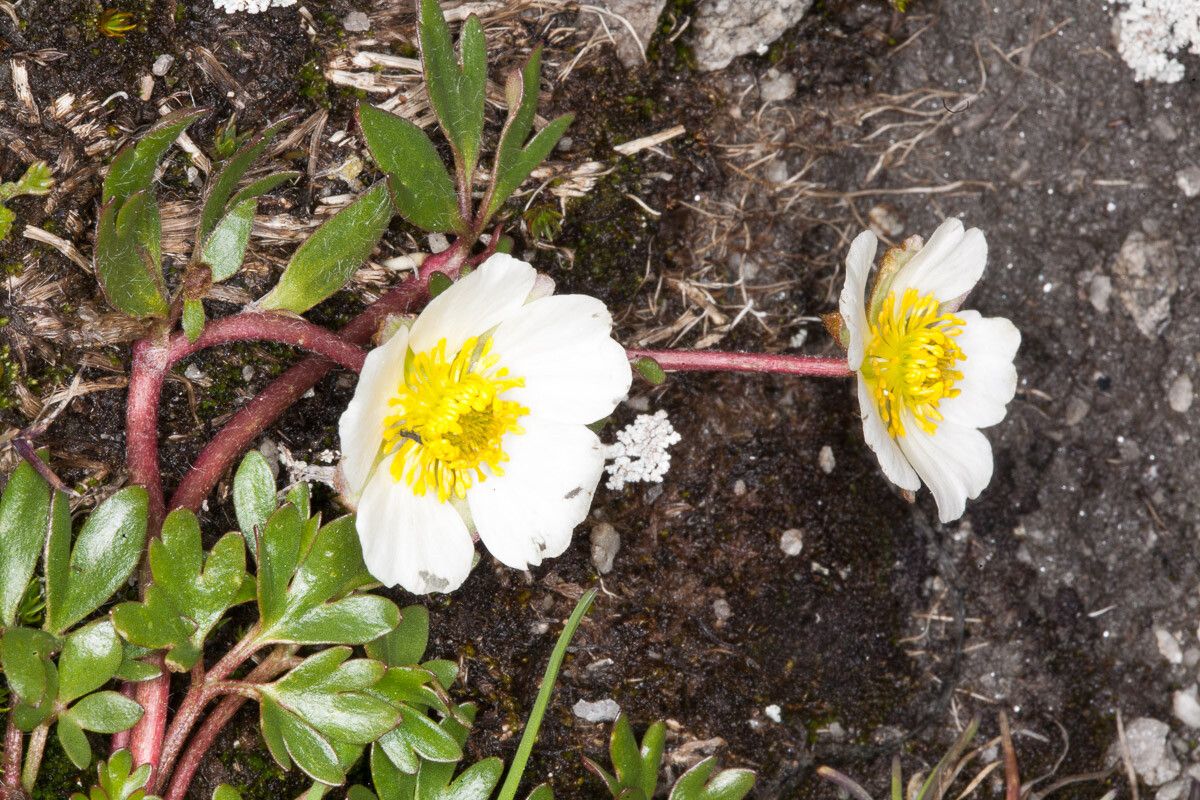
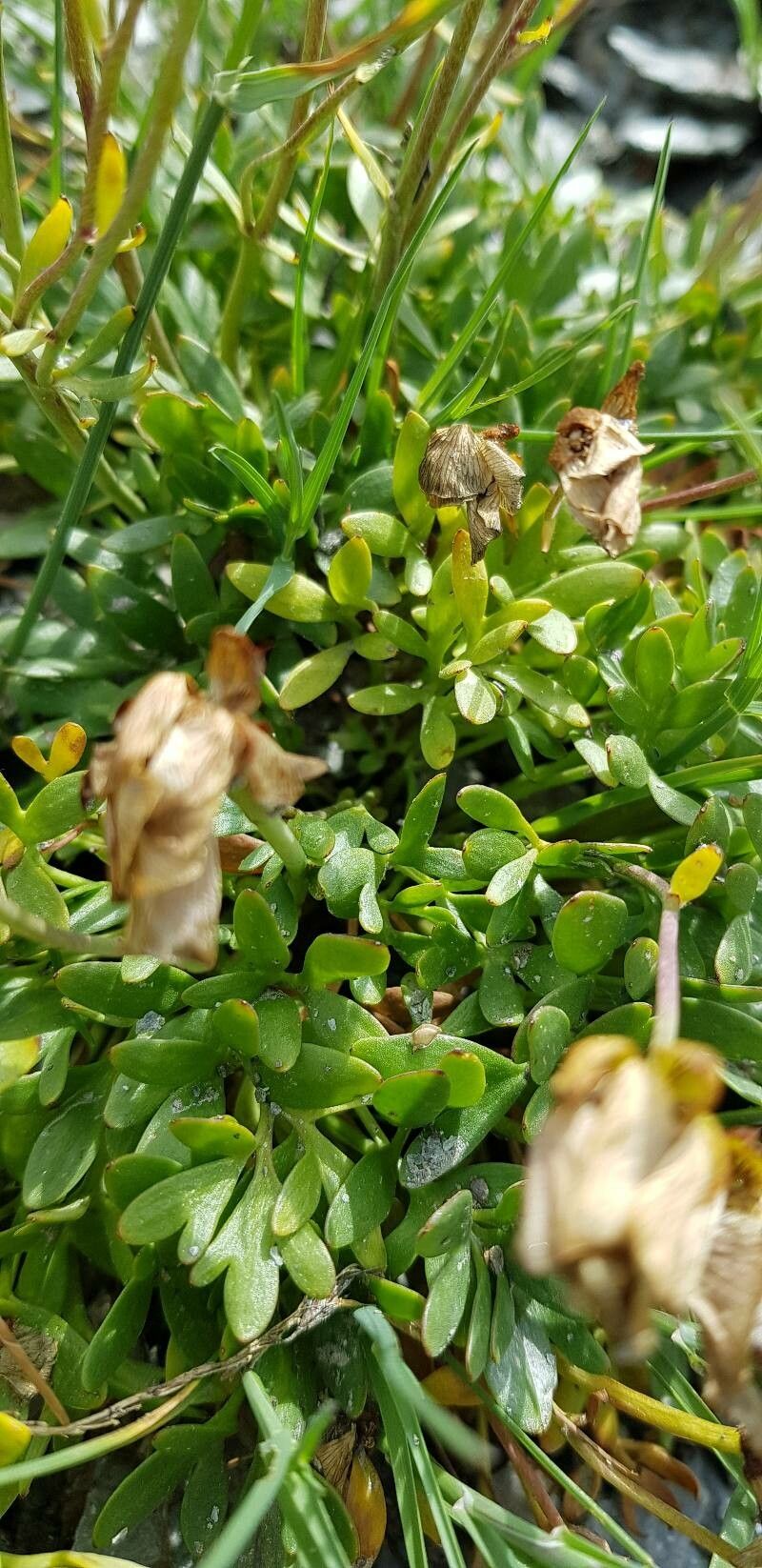
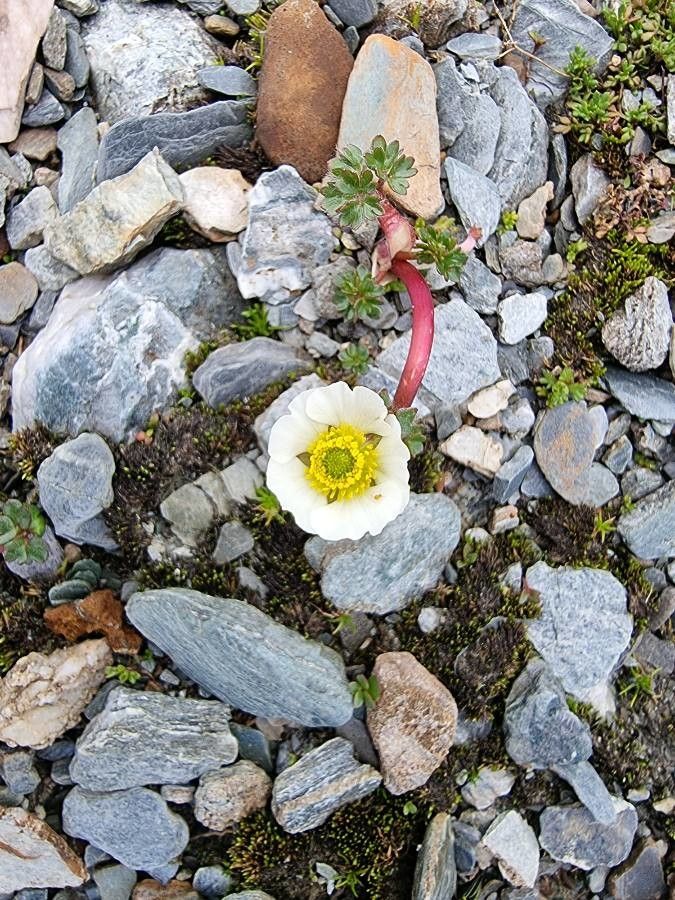
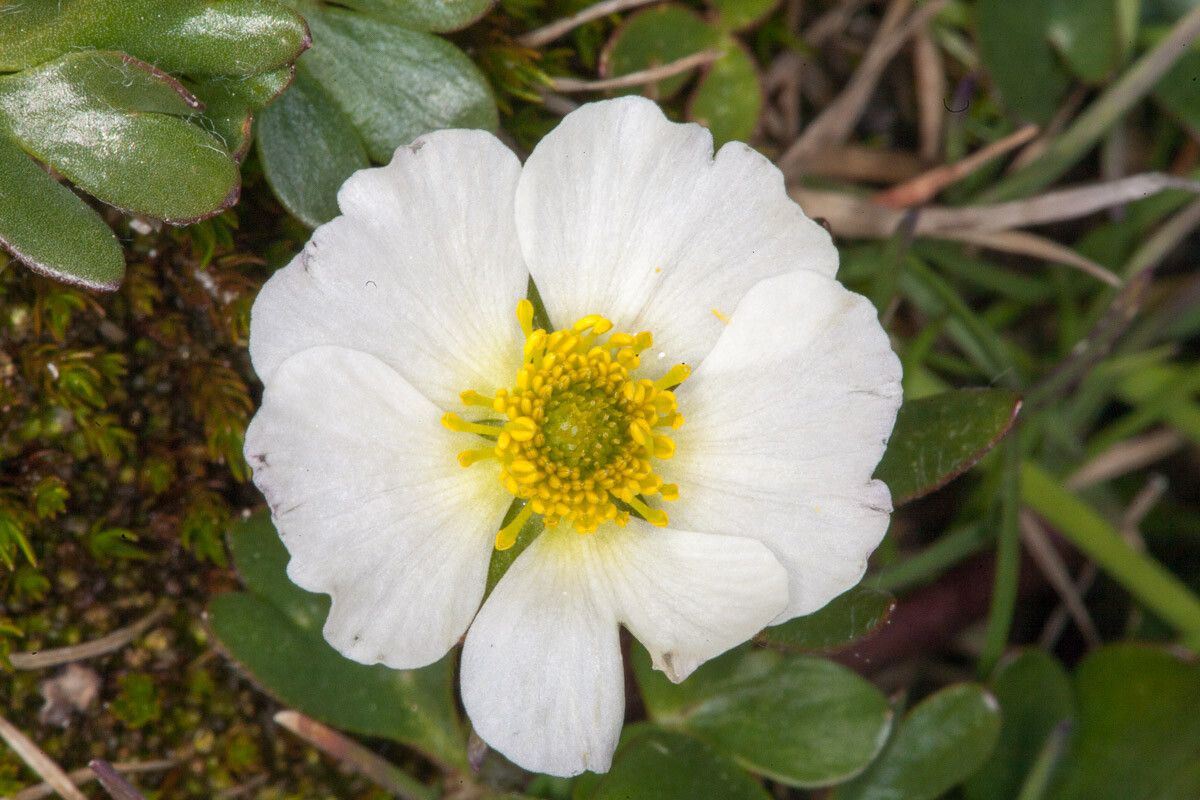
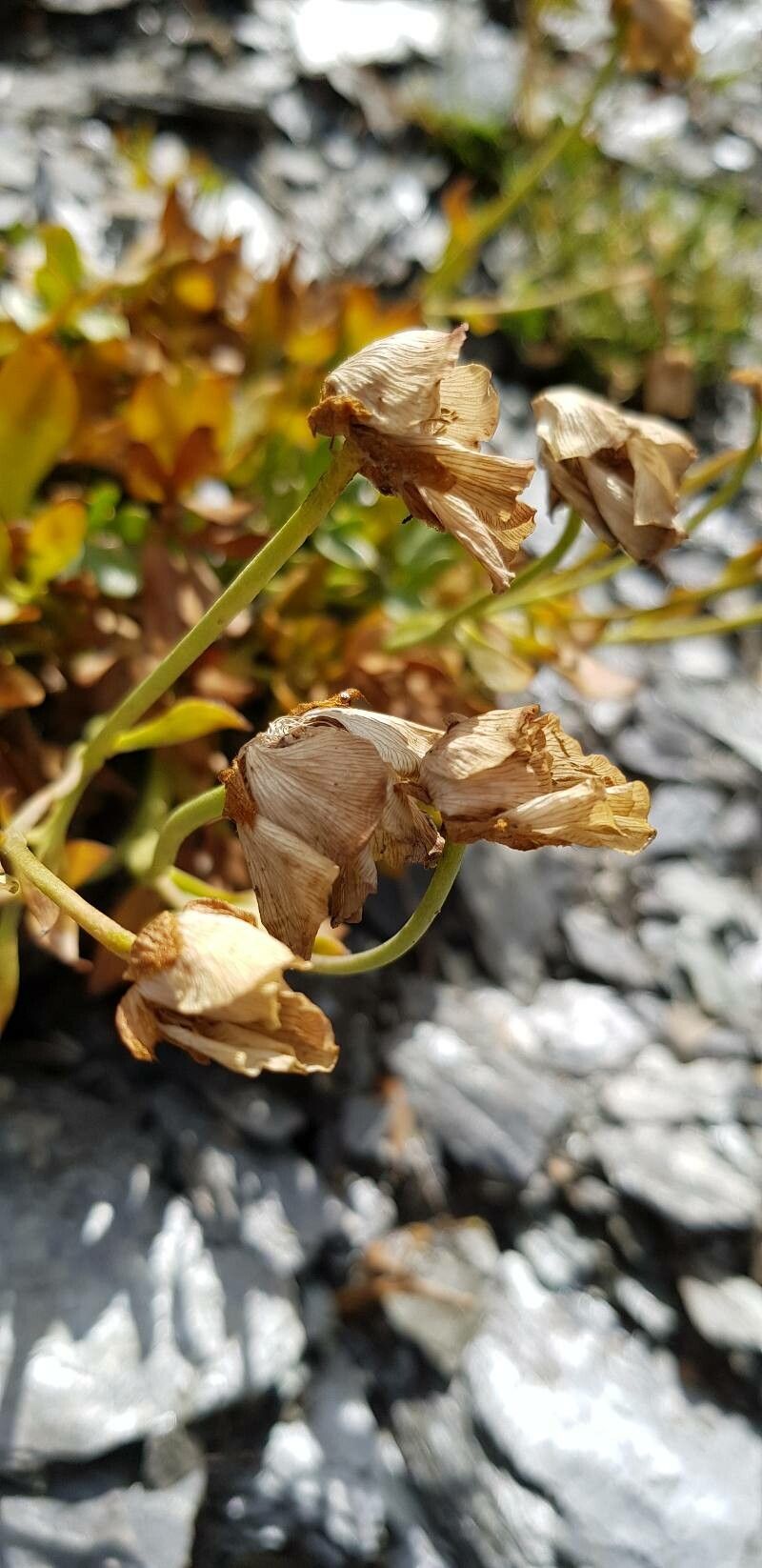
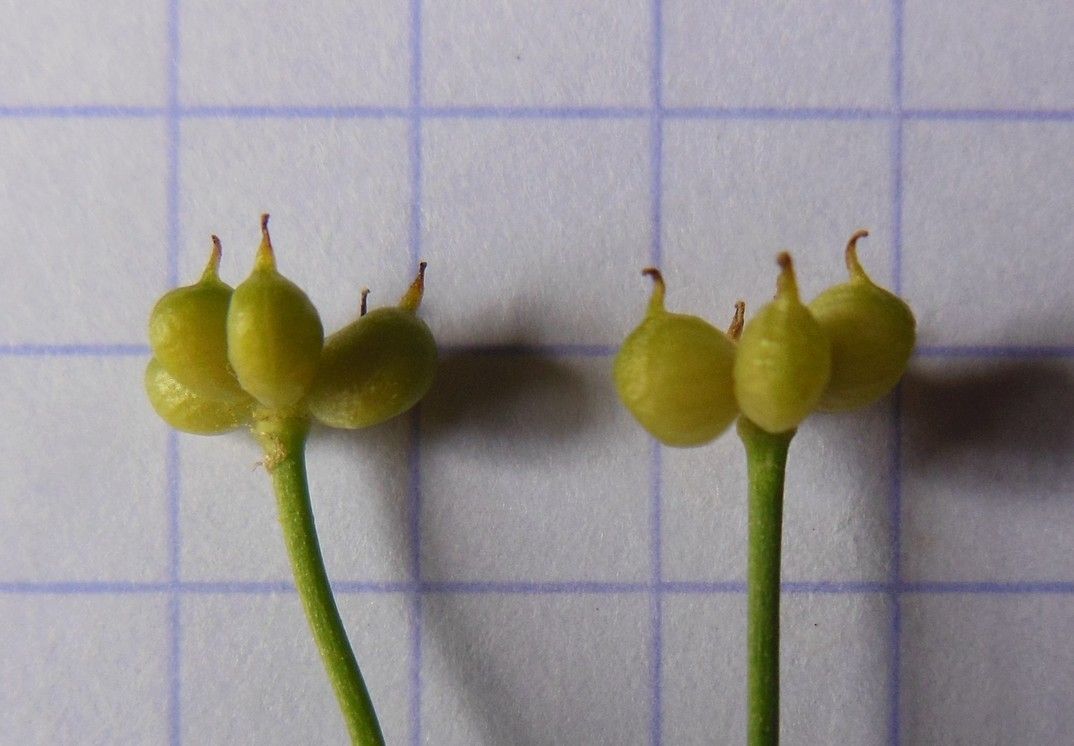
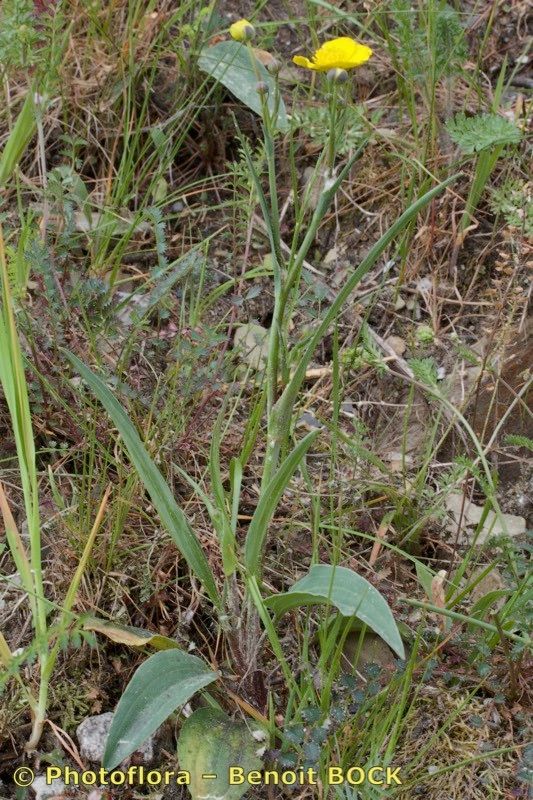
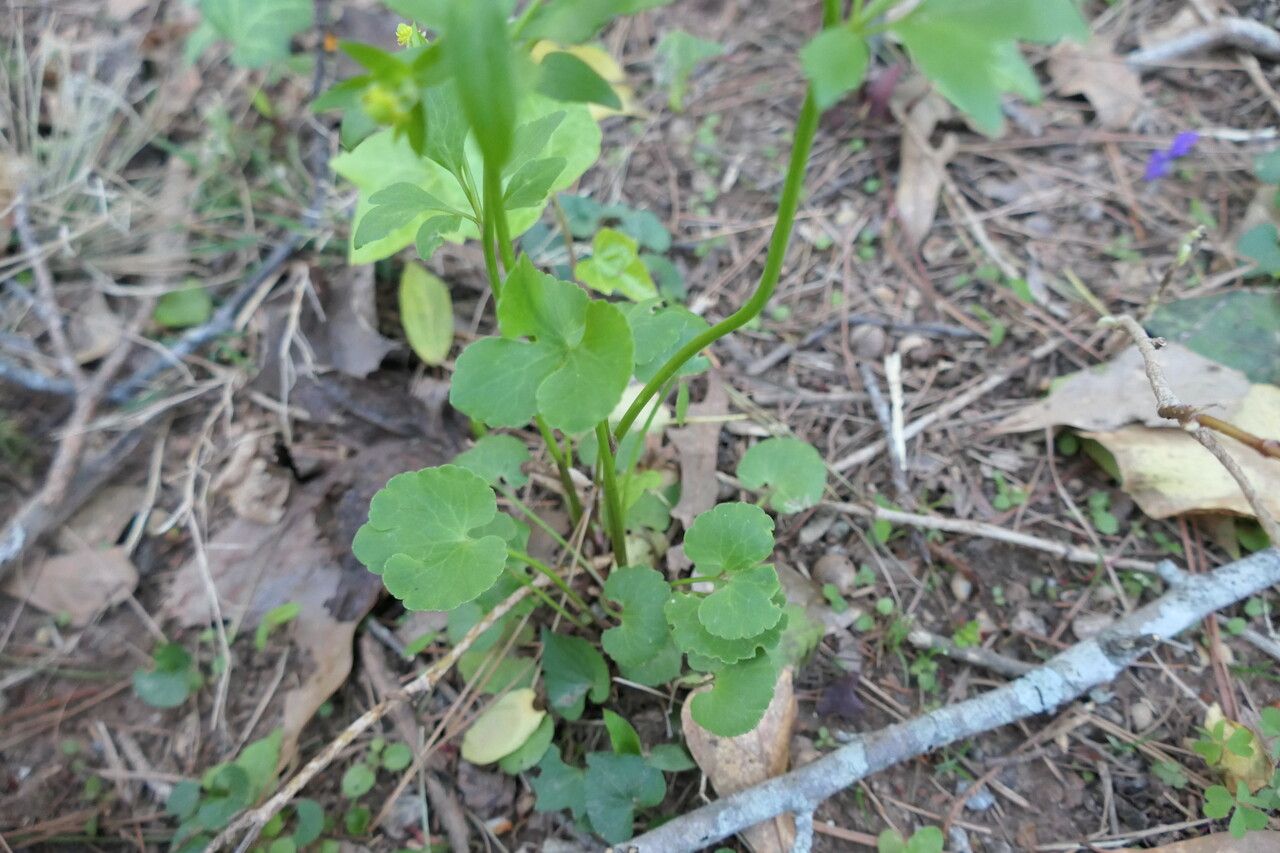
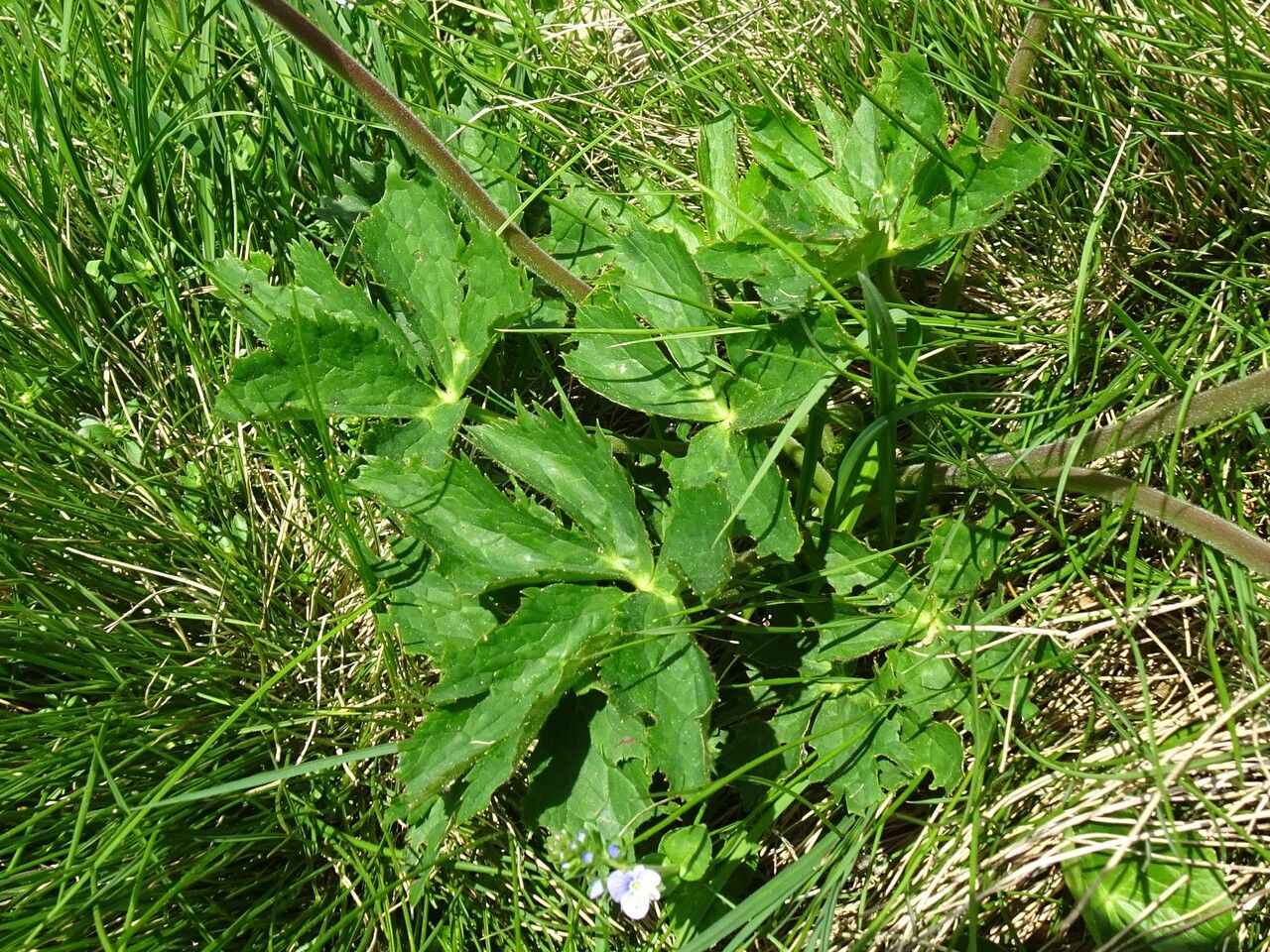
The Ranunculus glacialis, commonly known as the glacier buttercup, is a perennial herbaceous plant belonging to the Ranunculaceae family. It is native to high-altitude regions of Europe and Asia, where it thrives in rocky and gravelly soils found in alpine meadows and on mountain slopes. The plant features a short stem that can grow up to 10 cm tall, complemented by basal leaves deeply divided into three lobes. Its bright yellow flowers, each with five petals, can reach up to 3 cm in diameter and bloom from June to August. Ranunculus glacialis is well-adapted to the harsh alpine environments, capable of withstanding extreme cold, strong winds, and intense sunlight. It reproduces both through seeds and vegetatively via its rhizomes. For centuries, indigenous people have utilized this plant for its anti-inflammatory properties in traditional medicine. However, due to its limited distribution and vulnerability to climate change-induced habitat loss, Ranunculus glacialis is considered a threatened species by the International Union for Conservation of Nature (IUCN).
Glacier buttercup has strong disease resistance and is generally unlikely to suffer from illnesses. Nevertheless, it can be vulnerable to pests and diseases found nearby. Such infections are typically mild. Regarding maintenance, this plant needs a moderate amount of care. It should be pruned regularly to preserve an attractive appearance and encourage healthy growth. Applying fertilizer can also aid in boosting flowering. Glacier buttercup is appropriate for anyone with outdoor areas like a garden or patio and does not demand extensive gardening experience. It may need more attention when cultivated indoors.
How to keep Ranunculus Glacialis.
Light
Glacier buttercup performs best when exposed to the sun without obstruction. Its growth reaches its fullest potential in settings with abundant sunlight. Too little light can hinder its development, while too much light may cause damage. This need for light is consistent across all stages of its growth. Originating from areas with plentiful light, glacier buttercup is adapted to thrive under such conditions.
Water
The glacier buttercup thrives in alpine environments with limited moisture. It prefers regular weekly watering but should not be oversaturated. Adapted to cold, rocky terrains, it is hardy against temperature fluctuations and benefits from seasonal rains that support its growth.
Temperature
Glacier buttercup is native to harsh environments where temperatures range from 32 to 92°F (0 to 32℃). Favoring cooler conditions, these plants are well adapted to winter. It is recommended to recreate similar temperature conditions for optimal growth.
Fertilizer
For Glacier buttercup, the primary time to fertilize is in early spring as the flowers are forming. The appropriate fertilizer promotes better blooms and helps Glacier buttercup produce attractive flowers. Fertilizing in early spring ensures excellent flowers throughout the season and supplies energy for periods of dormant growth.
Pruning
The glacier buttercup flourishes in alpine environments, showcasing white flowers with pink or purple veins. To promote healthy growth and vibrant blooms, it's best to prune the plant from early to late spring. Be sure to remove any damaged leaves to prevent disease. Regular light pruning enhances the plant's vigor and increases flower production, ensuring it remains strong and healthy.
Botanical profile.
- Plant Type
- Herb
- Life Cycle
- Perennial
- Genus
- Ranunculus
- Family
- Ranunculaceae
- Hardiness Zone
- 3-8
- Mature Height
- 5 cm to 20 cm
- Mature Spread
- 2 cm to 5 cm
- Leaf Color
- Dark Green
- Leaf Type
- Deciduous
- Flower Color
- White, Pink
- Flower Size
- 2.03 cm to 3.05 cm
- Bloom Time
- Early summer, Mid summer
- Planting Time
- Spring, Summer
- Harvest Time
- Late summer, Early fall
- Native Area
- Russia, Norway, Germany, Sweden, Italy, Austria, Spain, Switzerland, Slovakia, Iceland, Finland, Poland, Romania, France
Other names.
Reader questions.
How should I water my Glacier buttercup plant?
To ensure the optimal health of the Glacier buttercup plant, it is recommended to water it with filtered water at room temperature. Tap water may contain harmful particles, hence it is best to use filtered water. Moreover, it is important to use water that is at room temperature or slightly warmer because the Glacier buttercup plant is accustomed to warm environments and cold water can be a shock to its system. Additionally, it is advised to avoid overhead watering as it can lead to issues with the foliage. Instead, it is best to fully saturate the soil with the filtered room temperature water, allowing the roots to absorb the moisture and enable them to spread throughout the soil to gather the necessary nutrients.
What are the sunlight requirements for Glacier Buttercup?
Glacier Buttercup requires full sun, which means it needs above 6 hours of sunlight daily to thrive. It's important to observe how sunlight moves through your garden to pick spots that provide a perfect balance of light and shade, ensuring the plant's happiness. Originating from habitats with plentiful light exposure, Glacier Buttercup has adapted to flourish under such conditions. However, be mindful that both lack of light and excessive exposure can harm the plant.
What is the native environment of the Glacier buttercup?
The Glacier buttercup, or Ranunculus glacialis, is native to harsh climates with temperatures fluctuating between 32 to 92°F (0 to 33°C). It thrives in cooler conditions and has adapted well to winter environments, indicating a preference for climates with a wide-ranging temperature spectrum that encompasses both frosty and moderately warm conditions.
What do I do if I give my Glacier buttercup too much or too little water?
Overwatering is a common issue that can harm your Glacier buttercup. It causes the stems and leaves to wilt and turn yellow. Over time, it can also lead to diseases like root rot, mold, and mildew, which can kill the plant. On the other hand, underwatering is less common because the Glacier buttercup can tolerate drought well. However, it is still possible and can cause the leaves to become brittle and brown. It's important to recognize the signs of overwatering early on, as some of the resulting diseases may be irreversible if not addressed promptly. If you notice these signs, reduce your watering schedule and check the soil's drainage. Replace it with a loose, well-draining potting mix if needed. Conversely, if your Glacier buttercup shows signs of not getting enough water, water it more regularly until those signs go away.
How can artificial lighting be used for Glacier Buttercup when natural sunlight is insufficient?
When natural sunlight is insufficient, especially during winter or in less sunny spaces, artificial lighting can be vital for Glacier Buttercup's growth. For optimal growth indoor, choose the right type of artificial light such as LED lights, which can be customized to provide specific wavelengths needed by your plants. Full sun plants require 30-50 W/sq ft of artificial light, partial sun plants need 20-30 W/sq ft, and full shade plants 10-20 W/sq ft. The light source should be placed 12-36 inches above the plant to mimic natural sunlight, and plants most often need 8-12 hours of light per day.
How can I protect my Glacier buttercup during extremely cold winters?
The Glacier buttercup possesses a strong resistance to cold and doesn't usually require special frost protection measures during the winter. However, if temperatures are expected to fall below -35°C, it's essential to offer some form of cold protection. This can be done by covering the plant with insulating materials such as soil or straw. Moreover, watering the plant abundantly before the first freeze in autumn helps to ensure the soil remains moist and enters a frozen state, which is crucial for preventing drought and water scarcity for the plant during winter and early spring.
How often do I need to water my Glacier buttercup?
If your Glacier buttercup plant is in a pot, the best way to check if it needs water is to stick your finger into the soil. If you find that the top two to three inches of soil are dry, it's time to water it. If you have your Glacier buttercup planted outdoors in the ground, you can use the same method to test the soil. Once again, when you notice the top few inches of soil have dried out, it's time to add water. Typically, during the spring and early fall, you will need to water this plant about once a week using this method. However, during extremely hot weather, you may need to increase the frequency to twice a week or even more. It's worth noting that mature, well-established Glacier buttercup plants are quite resilient and can handle periods of drought.
What symptoms indicate Glacier Buttercup is receiving inadequate light?
Symptoms of light deficiency in Glacier Buttercup include smaller new leaves compared to previous ones, leggy or sparse growth, faster leaf drop, slower or no new growth, lighter-colored new leaves, and conditions like chlorosis, sunscald, leaf curling, wilting, and leaf scorching. These symptoms can indicate either insufficient sunlight or excessive exposure, which affects the plant’s ability to photosynthesize and maintain overall health.
What should I do if my Glacier buttercup is exposed to very low temperatures?
Glacier buttercup is highly tolerant of cold and typically does well when temperatures stay above 0°C. In winter, keeping the plant above -30°C is advised. If temperatures dip below -35°C, the plant might not show immediate distress, but there could be a noticeable decline in sprouting, or it might not sprout at all during spring. To manage this, in spring, you should remove any parts of the plant that have failed to sprout.
How much water does my Glacier buttercup plant need?
To properly water your Glacier buttercup, don't hold back on the amount of water you give. Make sure the top two to three inches of soil are dry before watering. When you do water, make sure to thoroughly soak the soil, allowing excess water to flow out of the drainage holes at the bottom of the pot. If you don't see water draining, it means you haven't given enough water, but be careful not to let the water accumulate inside the soil. On the other hand, if water doesn't drain through the pot, it could mean the soil doesn't drain well, which is unhealthy for the plant. If the plant is located outside, it will only need 1 inch of rain per week.
What solutions can be applied to correct inadequate lighting conditions for Glacier Buttercup?
To correct inadequate lighting conditions for Glacier Buttercup, gradually move plants to receive at least 6 hours of direct sunlight daily, using a south-facing window for indoor plants and keeping curtains open during the day. For outdoor plants, move them to sunnier locations week by week to avoid sunburn. If obstruction like trees blocks sunlight, consider pruning or transplanting smaller plants to areas with ample sunlight and good drainage. For indoor large or immovable plants, consider using artificial light such as desk or ceiling lamps for at least 8 hours daily, or invest in professional plant grow lights.
How should I care for my Glacier buttercup during hot temperatures?
During the hotter parts of the year, it's important to ensure that temperatures around the Glacier buttercup remain below 32°C. Exposure to temperatures above 35°C can cause the plant's leaves to lighten in color, become prone to curling, suffer sunburn, and in severe cases, the entire plant may wilt and dry out. To help the plant cope with high temperatures, trim away any sunburned or dried-up parts. Moving the plant to a shaded location or using a shade cloth to protect it from the midday and afternoon sun can also be beneficial. Watering the plant in the morning and evening helps keep the soil moist, further aiding in its health and growth during hot weather.