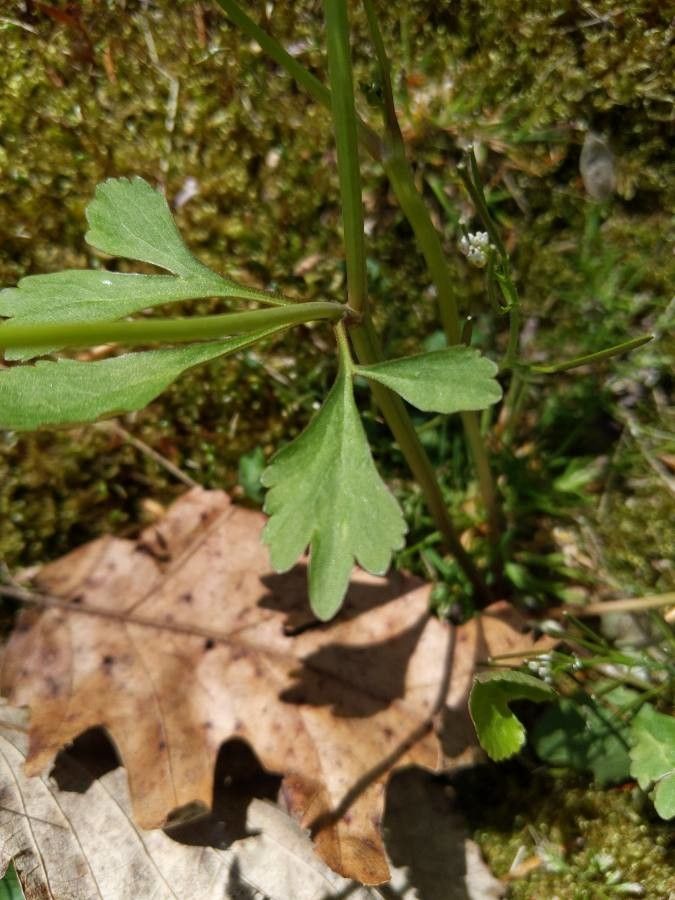
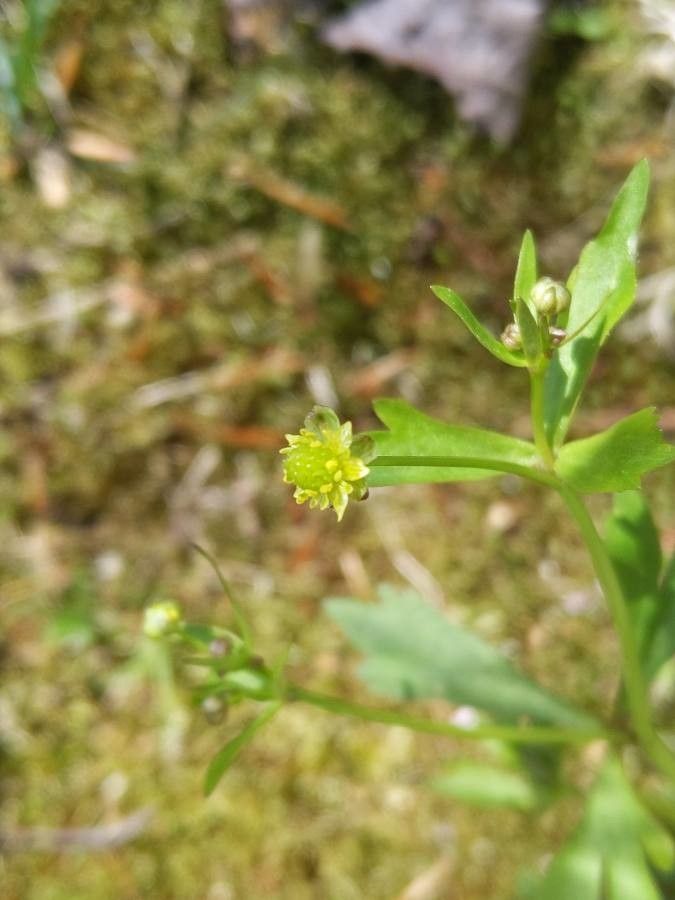
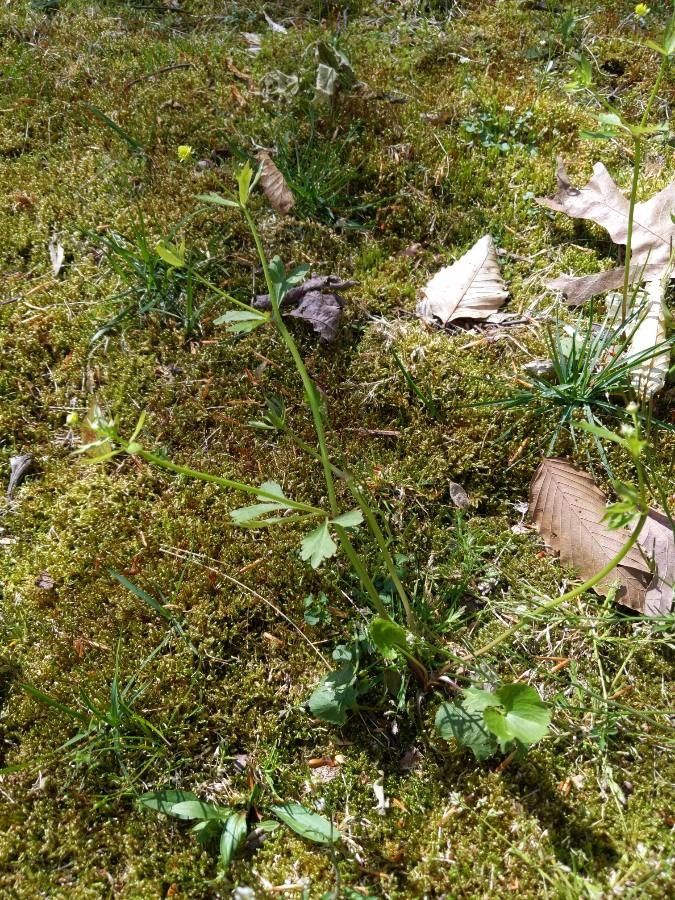
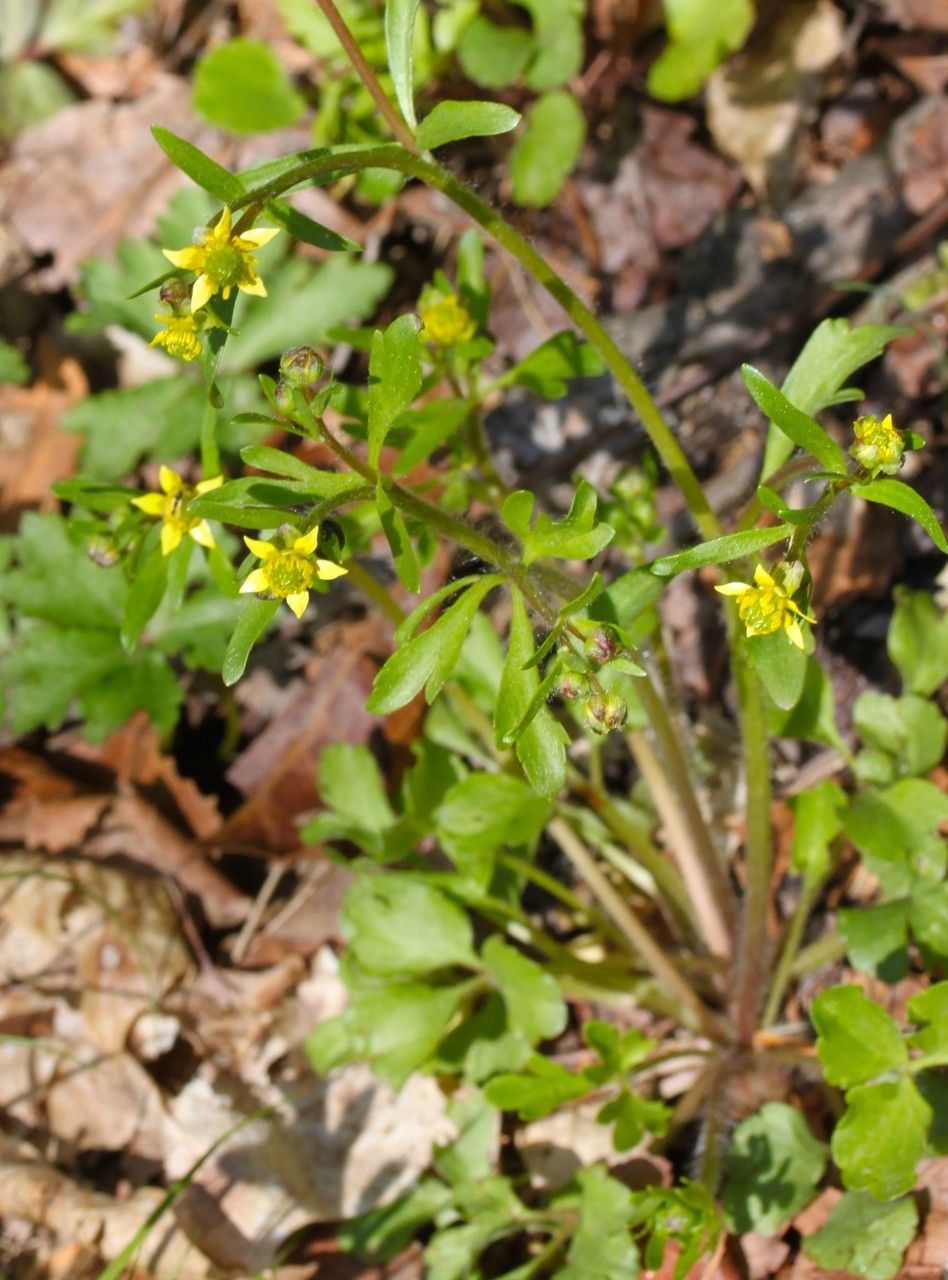
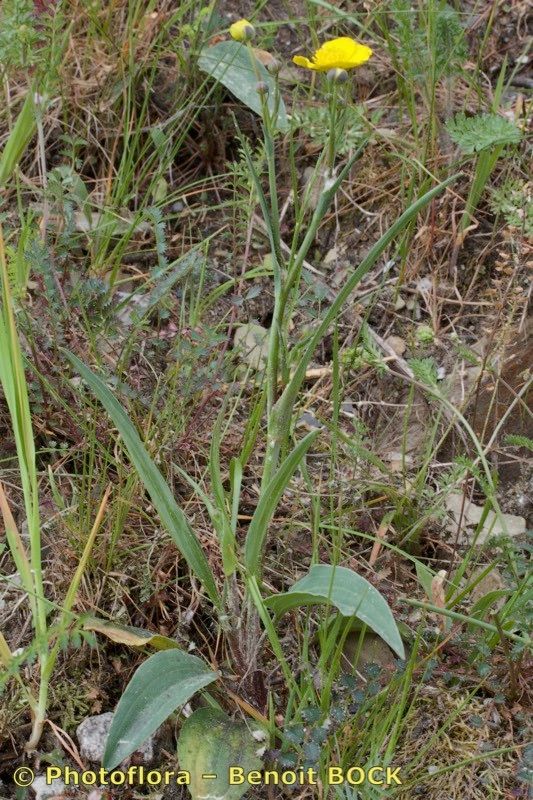
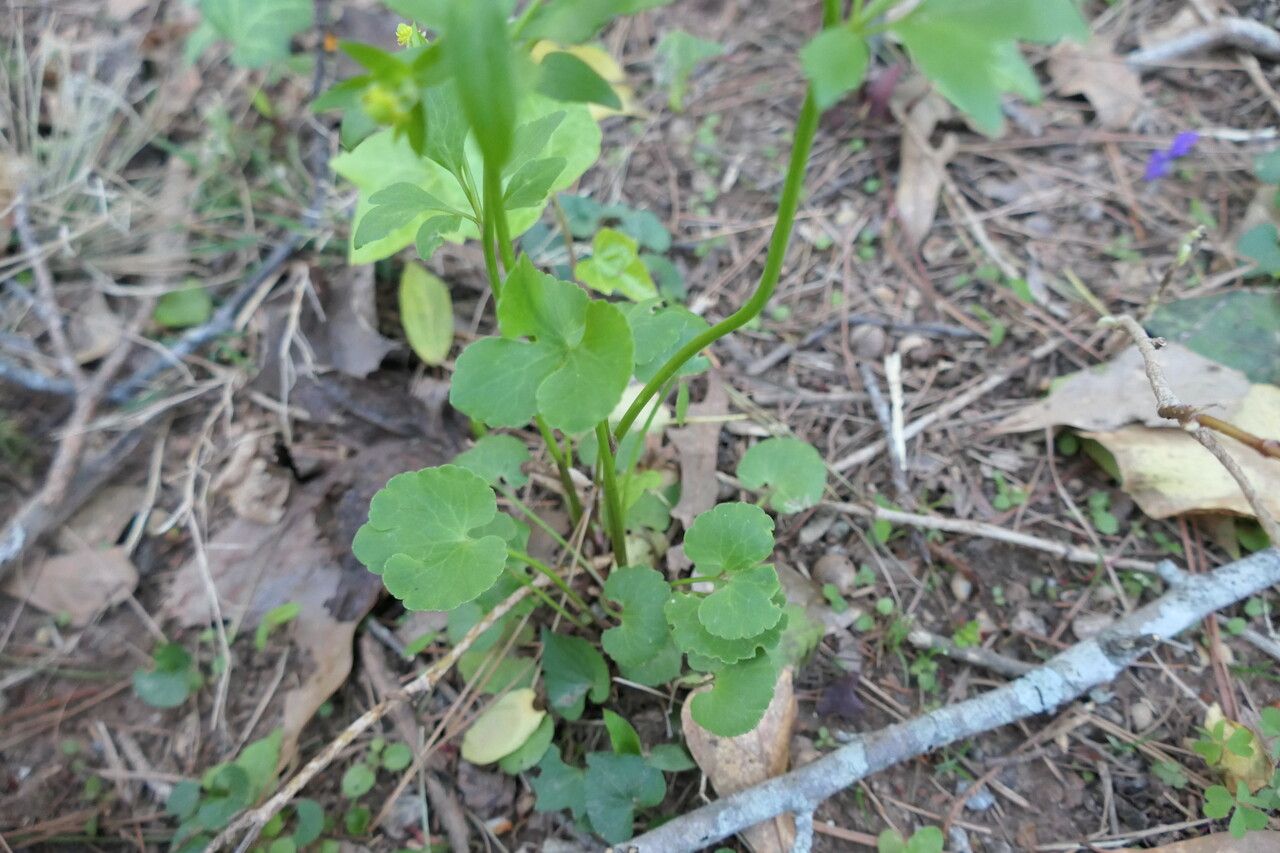
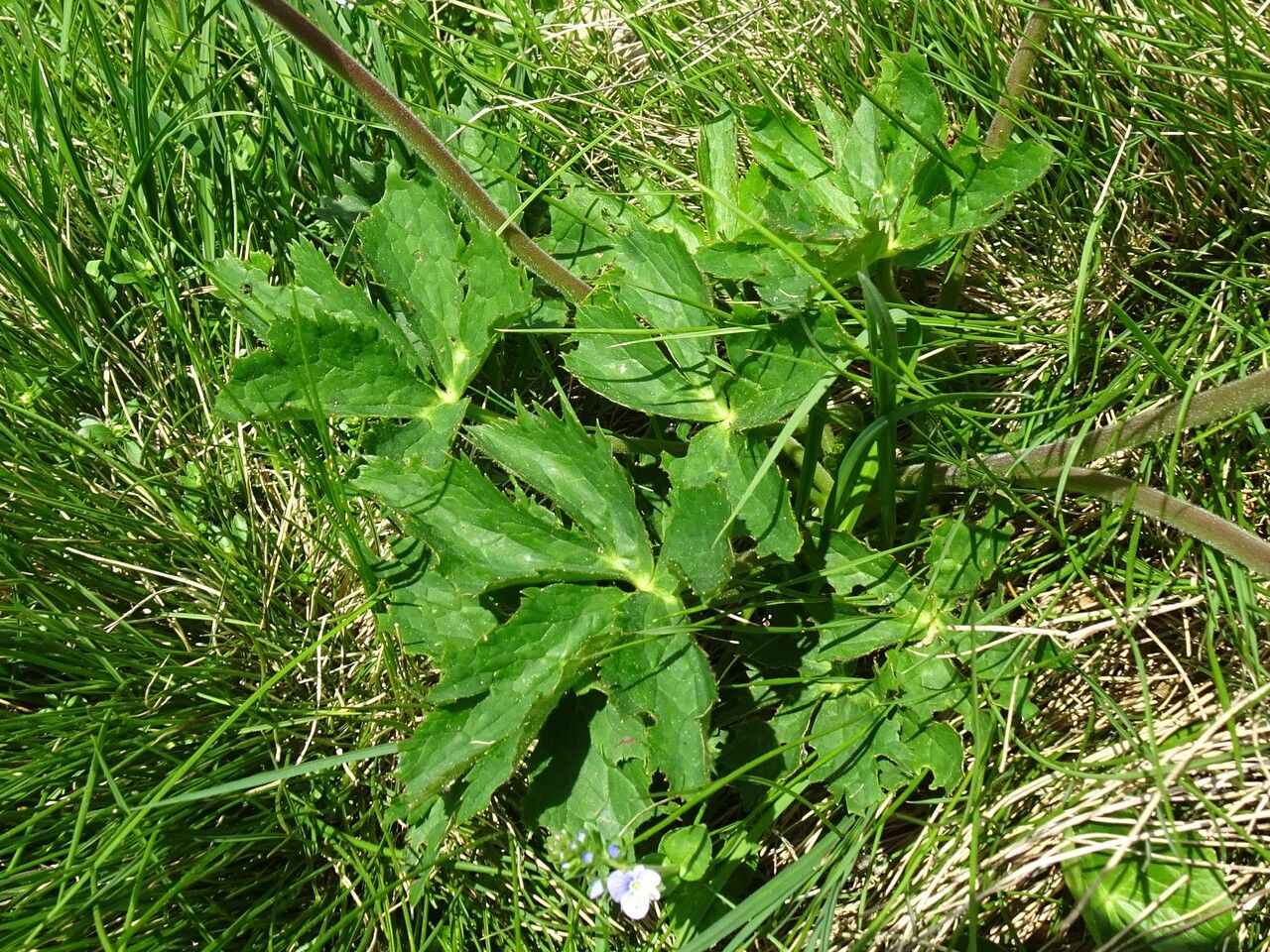
Ranunculus micranthus, commonly known as the small-flowered buttercup, is a perennial herbaceous plant belonging to the Ranunculaceae family. Native to Europe and Asia, it thrives in meadows, pastures, and open woodlands. The plant can grow up to 30 cm tall and features a basal rosette of deeply lobed and toothed leaves.
The small, yellow flowers of Ranunculus micranthus bloom from April to June on long stalks that rise above the foliage. Each flower has five petals that are shiny on the upper surface with a slightly hairy underside. After flowering, the plant produces seed heads containing numerous tiny seeds.
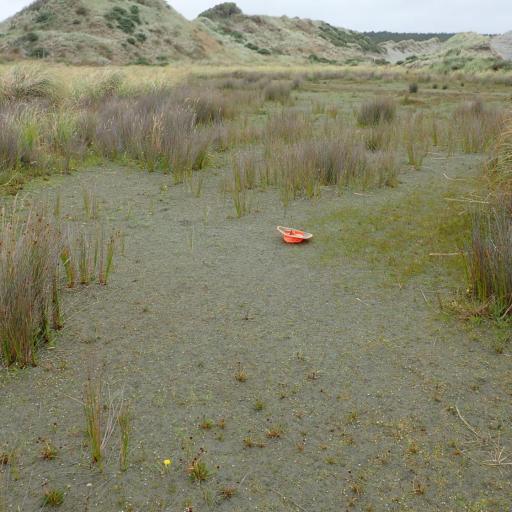
Ranunculus micranthus prefers moist soils in full sun or partial shade but can tolerate dry conditions once established. It is an attractive addition to wildflower gardens or naturalized areas due to its bright yellow blooms and ability to self-seed.
Although Ranunculus micranthus has no known medicinal uses, it is important to note that all parts of the plant contain toxic compounds such as protoanemonin. These compounds can cause skin irritation or gastrointestinal distress if ingested by humans or animals.
Overall, Ranunculus micranthus is an attractive wildflower species with bright yellow blooms that add color and interest to naturalized areas, while also providing important habitat for pollinators such as bees and butterflies.
Rock buttercup generally has strong resistance to disease and is not typically susceptible to illnesses. Still, it can be affected by pests and diseases present in its environment, though such infections are generally mild. Regarding care, this plant needs a moderate level of upkeep. Regular pruning is necessary to preserve its appearance and support healthy growth, and applying fertilizer can encourage more flowering. Rock buttercup is well-suited for anyone with outdoor space like a garden or patio and does not demand extensive care experience. It may, however, need extra attention when cultivated indoors.
How to keep Ranunculus Micranthus.
Water
Water the soil for rock buttercup only when it is dry during the seedling stage to prevent root decay. During the peak growing season, provide 9-10 mm of water weekly, reducing this amount by half in the winter. After the buds have formed, maintain slight moisture in the soil. Reduce watering during the summer, and in winter, minimize or withhold water altogether.
Fertilizer
Applying fertilizer once in spring is typically enough for Rock buttercup, though multiple applications can maximize growth. Fertilize every month to six weeks. Feeding improves leaf appearance and function, helping maintain consistent color and a healthy texture. It also promotes root development and nutrient uptake for long-term plant health.
Pruning
The rock buttercup is a low-growing perennial known for its vibrant yellow flowers. To promote growth and flowering, prune it from early to late spring. During this time, remove any dead stems and thin out dense areas to improve air circulation. This routine not only enhances the plant's vigor but also helps prevent disease, ensuring a stunning display when it blooms.
Botanical profile.
- Plant Type
- Herb
- Life Cycle
- Perennial
- Genus
- Ranunculus
- Family
- Ranunculaceae
- Hardiness Zone
- 3-11
- Leaf Type
- Deciduous
- Flower Color
- White, Yellow
Other names.
Reader questions.
What are the sunlight requirements for Rock Buttercup (Ranunculus micranthus)?
Rock Buttercup, scientifically known as Ranunculus micranthus, thrives in locations that receive full sun, which means the plant should be exposed to more than 6 hours of sunlight daily. It's important to observe how sunlight moves through your garden over the course of the day. Selecting spots that offer a good balance of light and shade is crucial for the well-being of your plants. This ensures that they receive the appropriate amount of sunlight they need to be happy and healthy.
What is Rock buttercup?
Rock buttercup, known botanically as Ranunculus micranthus, is a plant species identified by its unique characteristics. However, the specifics regarding its essentials and symptoms, such as general description, habitat preferences, and potential health impacts, were not provided in the data available.