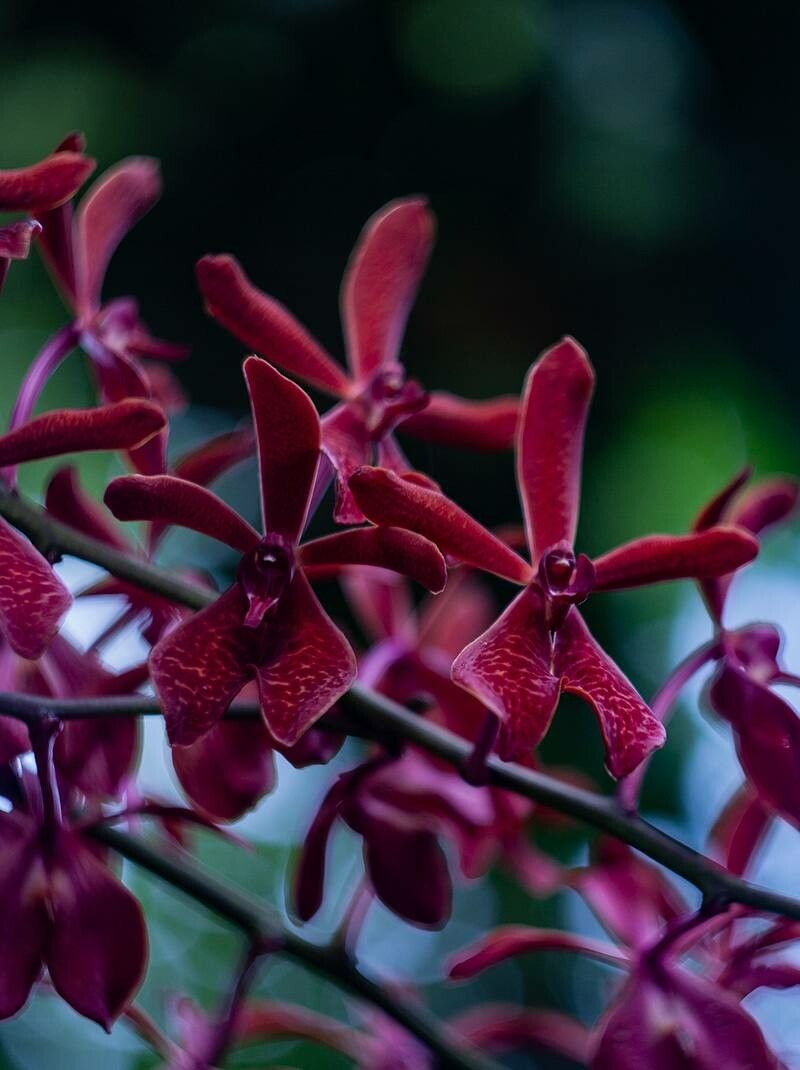
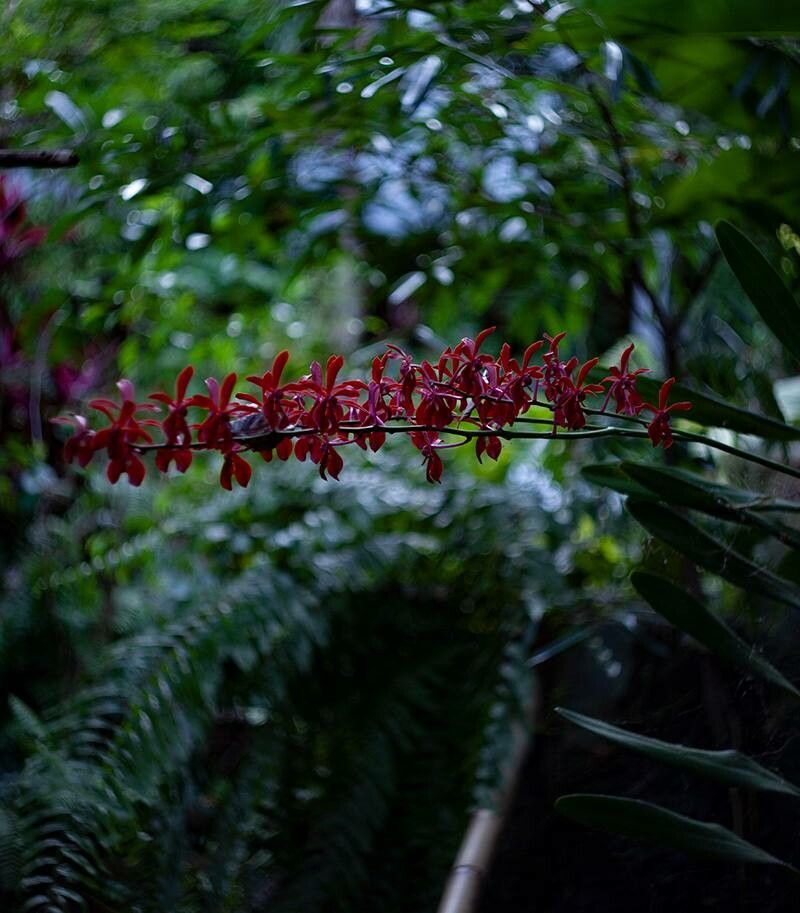
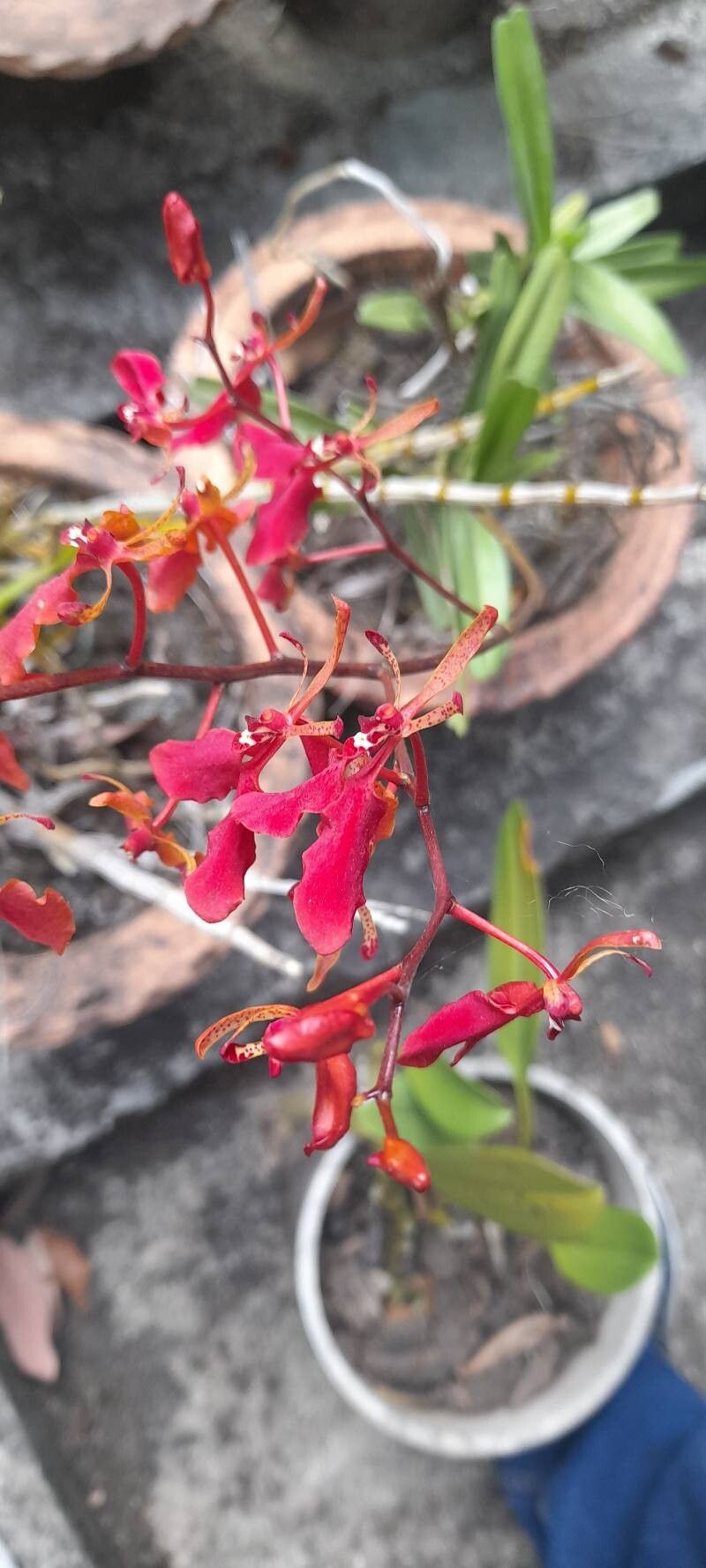
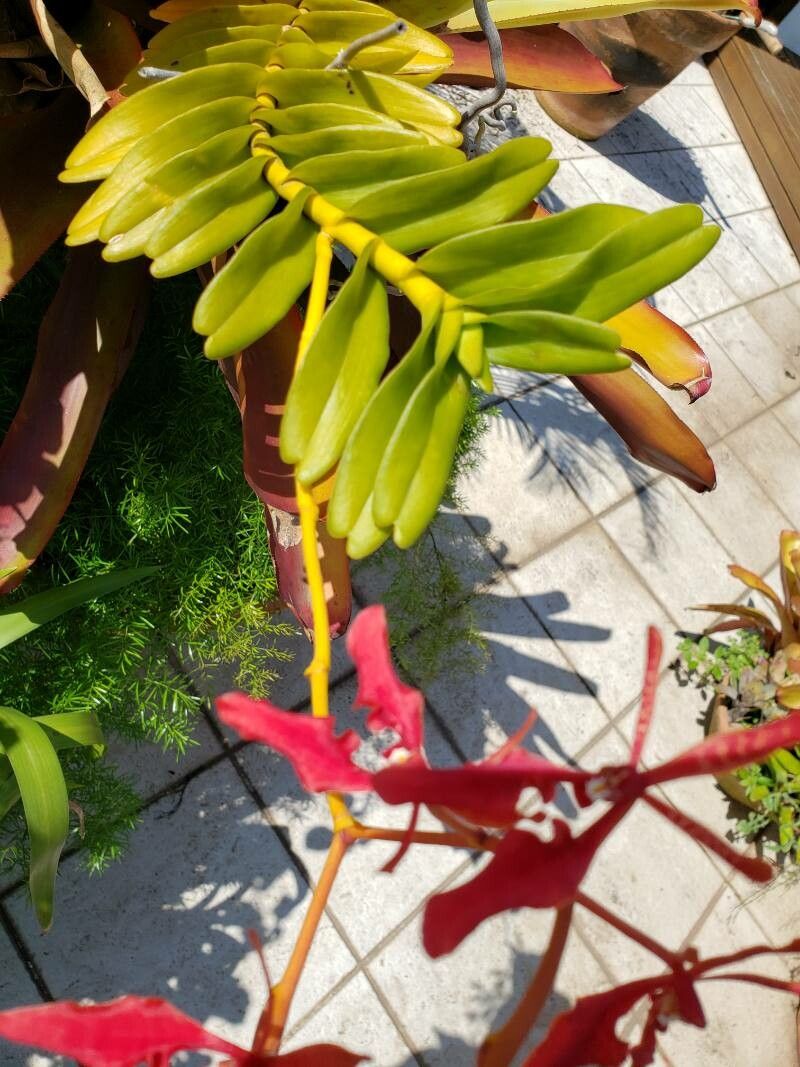
Renanthera coccinea is a species of flowering plant in the family Orchidaceae. This orchid is native to Cambodia, South-Central and Southeast China, Hainan, Laos, Myanmar, Thailand, and Vietnam. It is the type species of the genus Renanthera.
Renanthera orchids are generally disease-resistant and face relatively few insect pests. Their care is considered challenging because they need high humidity along with good ventilation and an environment with few harmful pathogens. Too much watering can cause root rot. While anyone can grow Renanthera orchids, keeping them healthy and getting them to bloom again requires more cultivation experience.
How to keep Renanthera Coccinea.
Light
The Renanthera orchid does best with unfiltered, continuous daily light and prefers locations that provide the strongest possible illumination. Although it can tolerate lower light levels, steady exposure is required for the best leaf and flower development. Excessively long or intense light, however, can scorch the leaves. In its native habitat it grows in well-lit areas.
Water
The Renanthera orchid comes from the humid tropics and thrives in moist environments. It prefers to have consistent moisture, so it requires watering once a week. Typically grown indoors, the Renanthera orchid benefits from high humidity, which encourages vibrant flowering.
Humidity
This plant needs special care because it loves high humidity levels of 60-80% or more. The best way to achieve this is by placing a humidifier near the plant. Daily misting is also essential! Make sure the room has good ventilation.
Temperature
The Renanthera orchid originates from areas with temperatures ranging from 68 to 95 °F (20 to 35 ℃). It prefers warmer climates, so maintain those temperatures during harsher seasons for optimal growth.
Fertilizer
Appropriate fertilization is essential for Renanthera orchid health and appearance. Fertilize Renanthera orchids in summer, repeating the treatment monthly throughout the season. Nutrients fuel growth and help maintain the plant's parts. Fertilization improves the Renanthera orchid's floral display, ensuring the best blooms.
Pruning
The Renanthera orchid is known for its vibrant red flowers and epiphytic growth style. For the best results, pruning should be done in early spring or late winter. Focus on removing dead stems and maintaining the plant's shape. Pruning not only enhances blooming but also helps prevent disease. It's important to use clean tools to minimize damage to the plant.
Pot & Repot
When repotting a Renanthera orchid, pick a pot that is only slightly larger and provides good drainage, preferably a clear orchid pot. Use a well-draining, orchid-specific potting mix that contains bark or moss. Carefully clean the roots and trim any that are dead or rotting. Repot after flowering, typically in spring or fall, water thoroughly, and keep the plant in bright, indirect light. Do not disturb the roots once repotted.
Botanical profile.
- Plant Type
- Herb
- Life Cycle
- Perennial
- Genus
- Renanthera
- Family
- Orchidaceae
- Hardiness Zone
- 10
- Mature Height
- 4.88 m
- Mature Spread
- 30 cm to 46 cm
- Leaf Color
- Forest Green
- Leaf Type
- Evergreen
- Flower Color
- Red
- Flower Size
- 5.08 cm to 6.35 cm
- Bloom Time
- All year round
- Planting Time
- Winter
- Harvest Time
- All year round
- Native Area
- Cambodia, Vietnam, Myanmar, Laos, Thailand, China
Reader questions.
What are the sunlight requirements for Renanthera orchids?
Renanthera orchids thrive in conditions that offer unfiltered, consistent daily illumination. They excel best in areas where they can receive maximum light intensity, crucial for optimal foliage and bloom development. These orchids require above 6 hours of sunlight daily (full sun) but can also grow in areas with about 3-6 hours of sunlight (partial sun). It's essential to watch how sunlight moves through your garden to find spots that provide a good balance of light and shade, ensuring the plants' health. Although they can endure some variations in light, prolonged exposure to intense light can lead to leaf scorching, indicating the necessity for careful placement.
What are the essential care instructions for Renanthera orchid?
The Renanthera orchid, scientifically known as Renanthera coccinea, is indigenous to regions with temperatures ranging from 68 to 95 °F (20 to 35 °C). It is a tropical plant that prefers warmer climates for optimal growth. During the winter or colder seasons, if the temperature drops below 5°C, it is advisable to bring the Renanthera orchid indoors. Keeping the indoor temperature above 20°C and locating the plant near a south-facing window for ample sunlight are beneficial practices. Additionally, to mimic its native humid environment, regularly misting the plant or using a humidifier is recommended. For orchids that must overwinter outdoors, they should be placed in a sheltered position that still receives sunlight. In colder temperatures, creating a temporary greenhouse or wrapping the plants with plastic film or fabric can provide necessary protection.
How does artificial lighting benefit indoor Renanthera orchids?
For indoor Renanthera orchids, especially during times or in locations where natural sunlight is insufficient, artificial lighting serves as a crucial substitute. It supports optimal growth by providing the necessary light intensity. LED lights are recommended for their ability to mimic the specific wavelengths required by the plants. The general guidance suggests that full sun plants need between 30-50W per square foot, partial sun plants require 20-30W per square foot, and full shade plants should have 10-20W per square foot. The lights should be placed 12-36 inches above the plants and kept on for 8-12 hours daily to simulate natural sunlight conditions effectively.
How does low temperature affect Renanthera orchid, and what should I do?
Renanthera orchid thrives in warm environments and is vulnerable to low temperatures. It grows best when the temperature remains above 20°C, and during winter, the temperature should not fall below 5°C to avoid damage. Exposure to temperatures below 1°C results in extensive water-soaked necrosis, wilting, and drooping of the leaves. If this occurs, trim off the frostbitten areas and bring the plant indoors to a warm setting promptly. Placing the plant near a south-facing window ensures access to ample sunlight. It's also important to avoid placing the plant near heat sources like heaters or air conditioning vents, as this could lead to excessively dry air, further stressing the plant.
What are the signs of insufficient light in Renanthera orchids?
When Renanthera orchids do not receive enough light, several symptoms can manifest, indicating stress and poor growth conditions. These include smaller new leaves compared to those of previous growths, leggy or sparse growth indicating a thin appearance due to the plant stretching out for more light, faster leaf drop as the plant conserves energy, and a halt in new growth showing the plant is under survival mode. Additionally, leaves may become lighter in color or develop chlorosis, turning yellow due to a breakdown in chlorophyll. Other symptoms like sunscald, leaf curling, wilting, and leaf scorching may also occur, pointing towards either overexposure or poor adaptation to light conditions.
What are the effects of high temperature on Renanthera orchid and how can I mitigate them?
During the hotter months, it is crucial to keep the Renanthera orchid's temperature below 35°C. Exposure to temperatures above 41°C halts the plant's growth and causes the leaves to wilt. Moreover, the orchid becomes more prone to root rot and sunburn when subjected to direct sunlight in such conditions. To mitigate these issues, trim away the sunburned and dried parts of the plant. Relocate the orchid to a spot that is shielded from the midday and afternoon sun, ensuring it receives shade during the hottest parts of the day. Watering the plant in the morning and evening helps keep both the orchid and its surrounding environment moist, which is essential for its health in high temperatures.
What solutions can support healthy growth in Renanthera orchids facing insufficient light?
To combat insufficient light, gradual adaptation to brighter conditions is advisable. For indoor plants, moving them progressively each week towards a south-facing window where they can get at least 6 hours of direct sunlight daily is beneficial. If moving the plant is challenging, providing artificial light for at least 8 hours a day can help. Outdoors, it's important to transition the plants gradually to sunnier spots to avoid shock and potential sunburn. Managing obstructions like pruning trees or transplanting to better-lit locations can significantly improve sunlight access. Though damaged parts may not recover, new growth should appear healthier with these adjustments.