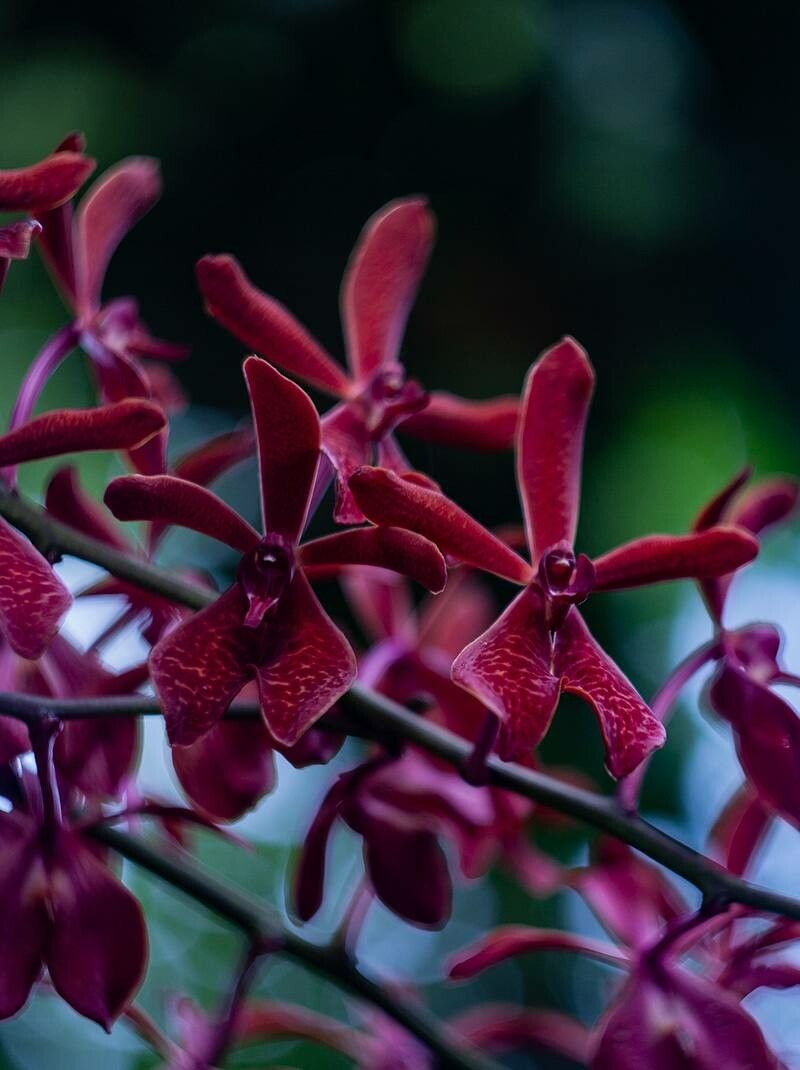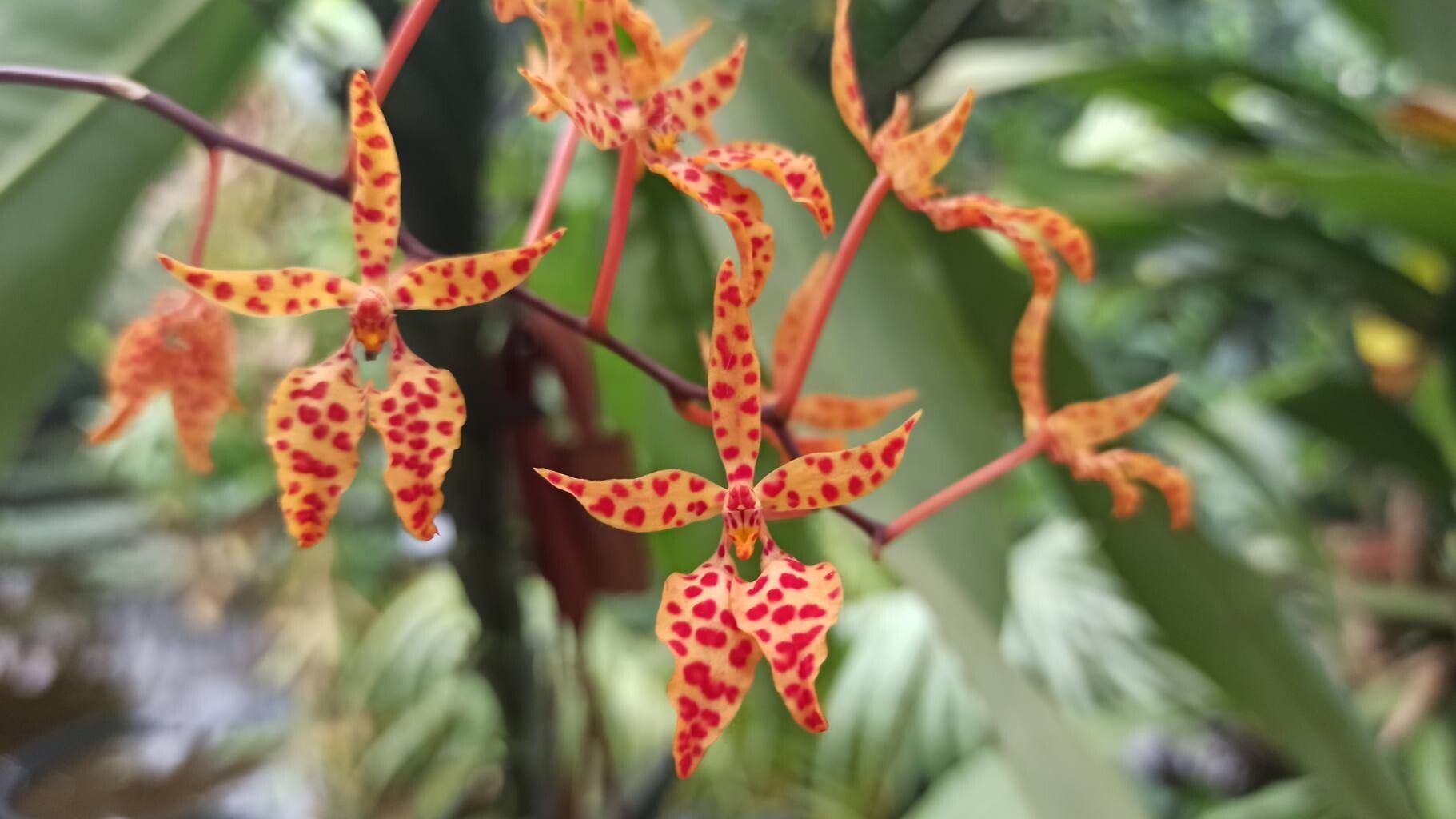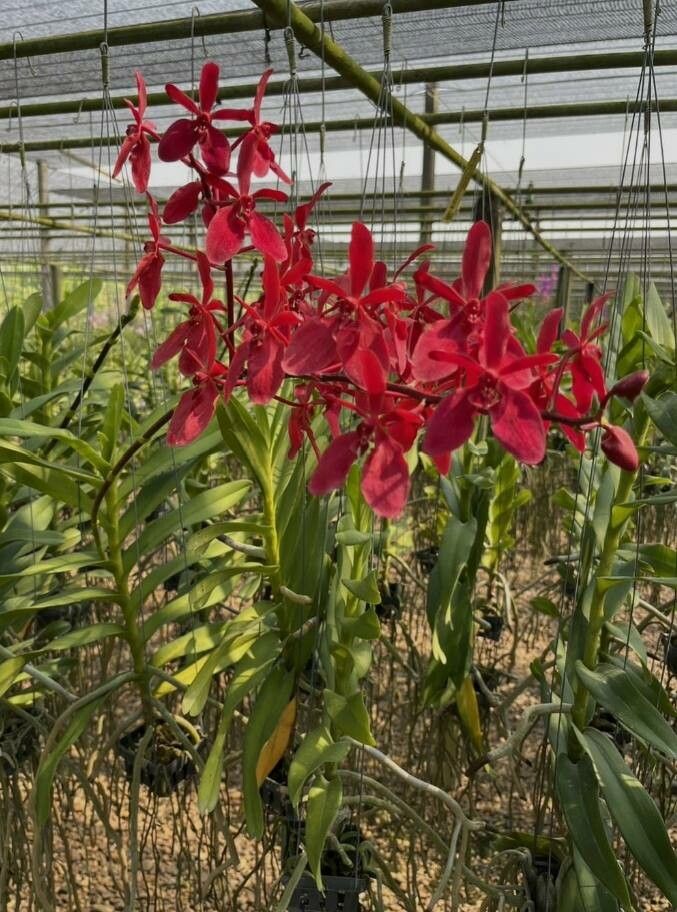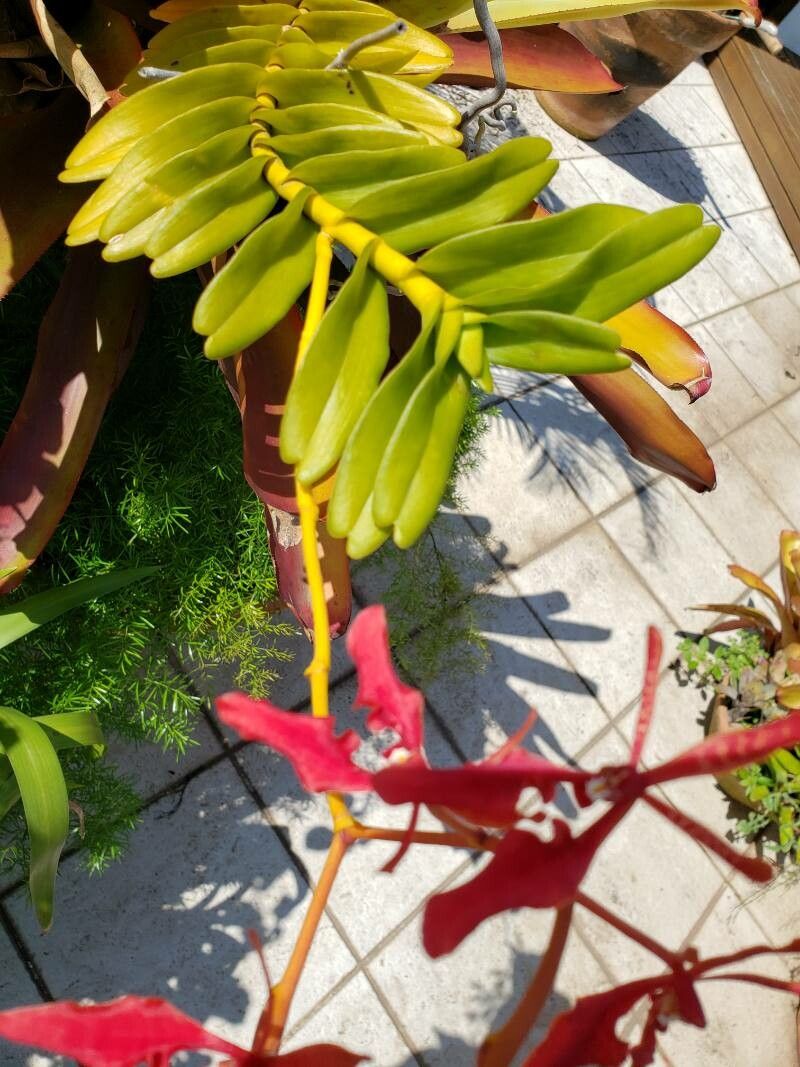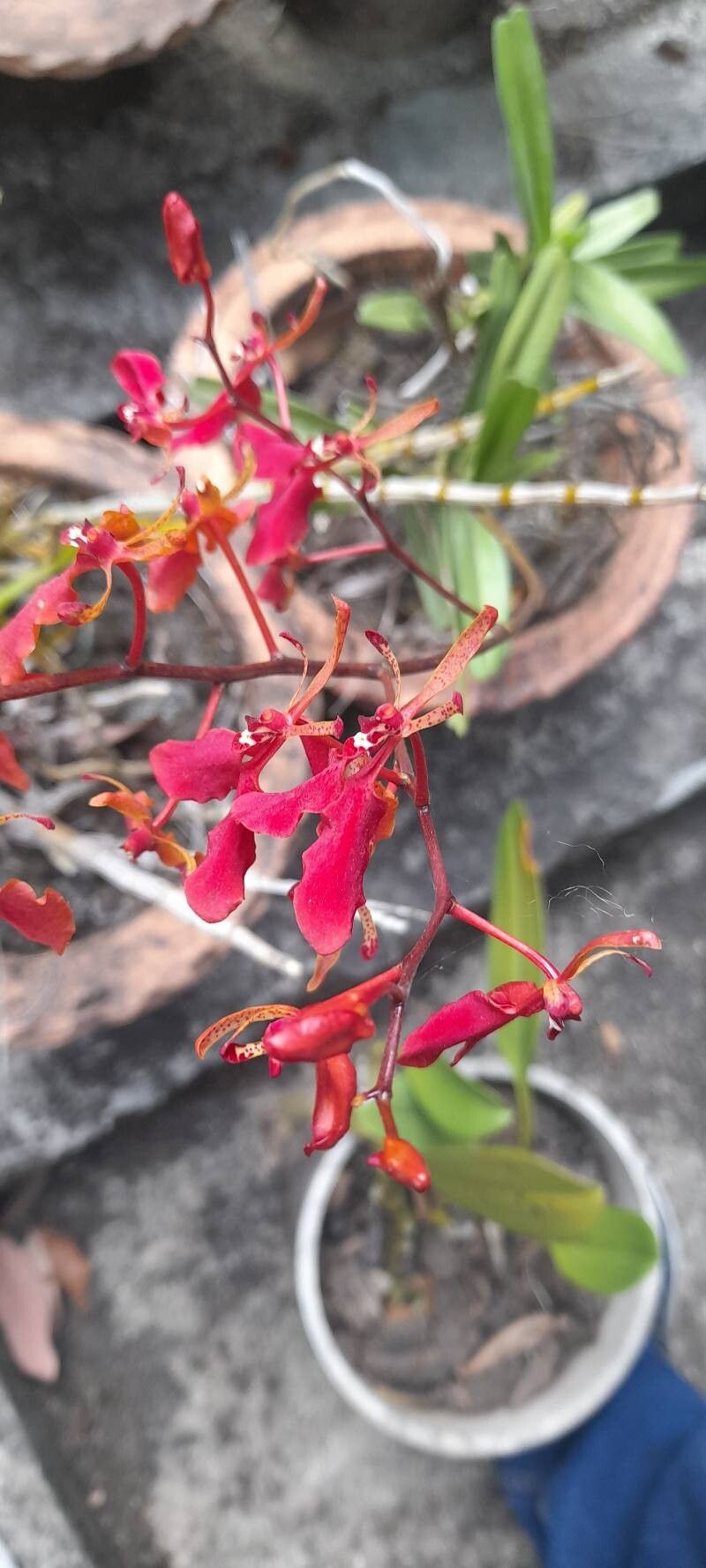
Renanthera imschootiana, also known as Red Vanda is a species of orchid occurring from the eastern Himalaya to China and Vietnam. It is listed under Schedule VI of Wildlife Protection Act, 1972 making it one of the plant species which is restricted from cultivation and planting and a special license is required to grow them.
Red vanda typically has strong resistance to diseases and is affected by relatively few insect pests. Its care is considered difficult because it needs high humidity combined with good ventilation and an environment low in harmful pathogens. Too much watering can cause root rot. Although anyone can grow Red vanda, keeping it healthy and getting it to bloom again requires more cultivation experience.
How to keep Renanthera Imschootiana.
Light
The red vanda is indigenous to habitats like forest undergrowth or stone terrains, where it is naturally sheltered from direct sunlight. It favors partially sunny conditions, yet it has the ability to adjust to intense sunlight or complete shadiness, showing its adaptable and robust character.
Temperature
The Red vanda flourishes in hot climates. It prefers environments that are reasonably warm but not overly hot and wet. The plant benefits from the warmth produced by sunlight, which also encourages blooming. Nonetheless, extended exposure to harsh sunlight in the summer may result in sunburn, so it's crucial to regulate the sunlight it gets during this time. This plant generally has a hard time withstanding cooler temperatures, and as a result, it demands sufficient shielding and warmer temperatures in the winter months to avoid frost damage.
Fertilizer
The optimal period to feed a Red vanda is at the onset of spring when it wakes up from dormancy. This fertilization significantly contributes to the overall growth and blooming of flowers. It amplifies the quality of foliage, stems, and branches while assuring large, beautifully colored, and enduring flowers. The feeding process facilitates the transportation of nutrients from the roots to the flowers, thus enrichening the plant's health and bolstering its resistance to disease.
Pot & Repot
During the repotting of the Red vanda, opt for a correspondingly bigger pot that guarantees adequate drainage, ideally a transparent orchid pot. Employ a highly permeable, orchid-designated blend that includes bark or moss. Delicately cleanse the roots and reduce any that have deceased or are decomposing. Typically, the best time to repot is after blooming, generally in the spring or autumn. Ensure to water abundantly and situate it in a locale with bright yet scattered light. Once repotted, steer clear of causing any disruption to the roots.
Botanical profile.
- Plant Type
- Vine
- Life Cycle
- Perennial
- Genus
- Renanthera
- Family
- Orchidaceae
- Hardiness Zone
- 11-12
- Mature Height
- 30 cm to 61 cm
- Mature Spread
- 20 cm to 30 cm
- Leaf Color
- Dark Green
- Leaf Type
- Evergreen
- Flower Color
- Red
- Flower Size
- 5.08 cm to 6.35 cm
- Bloom Time
- All year round
- Planting Time
- Spring, Autumn
- Harvest Time
- Late spring, Summer, Fall, Winter
- Native Area
- Myanmar, Vietnam, India, China