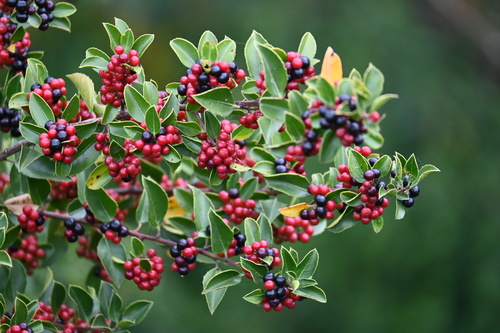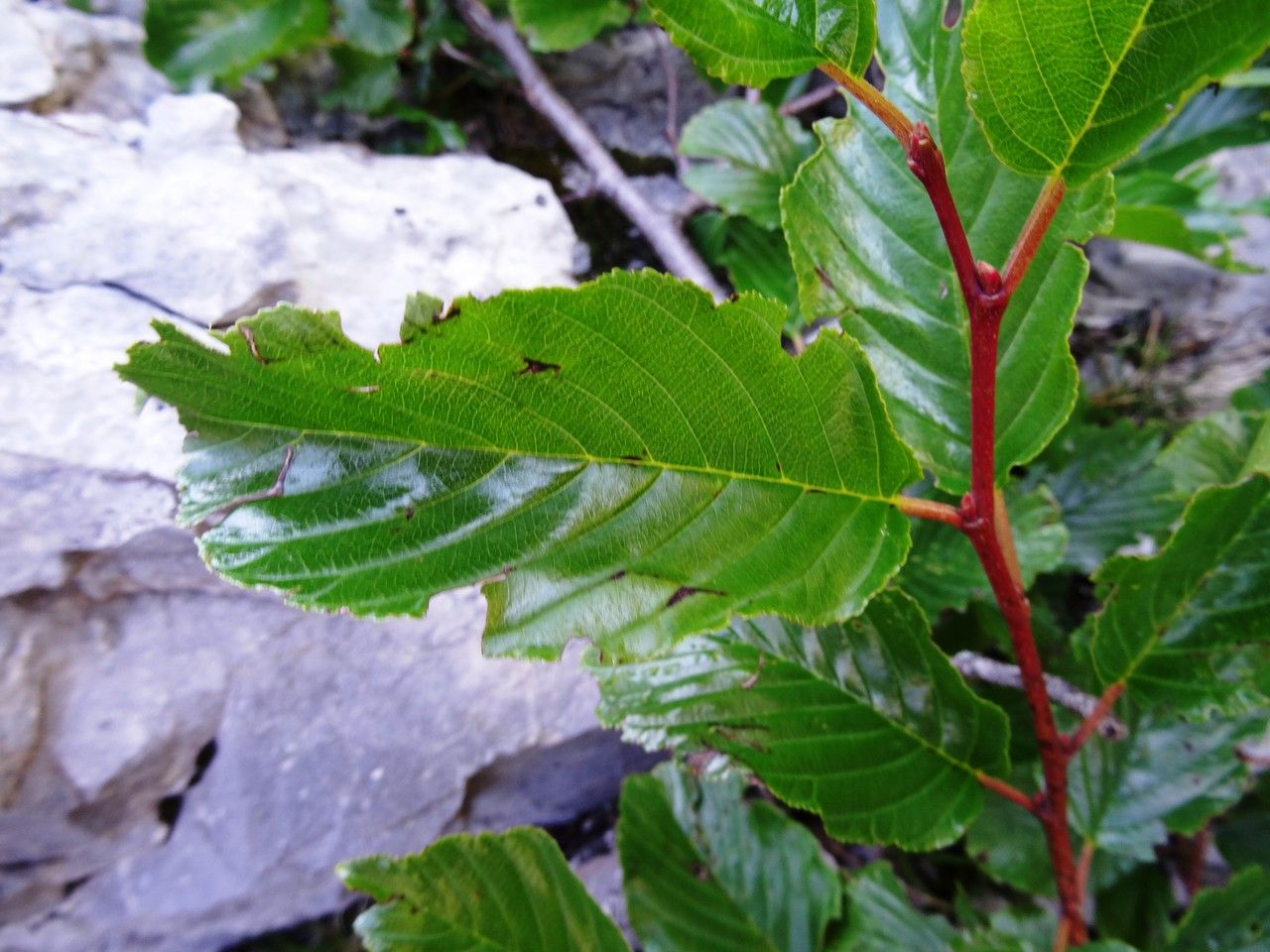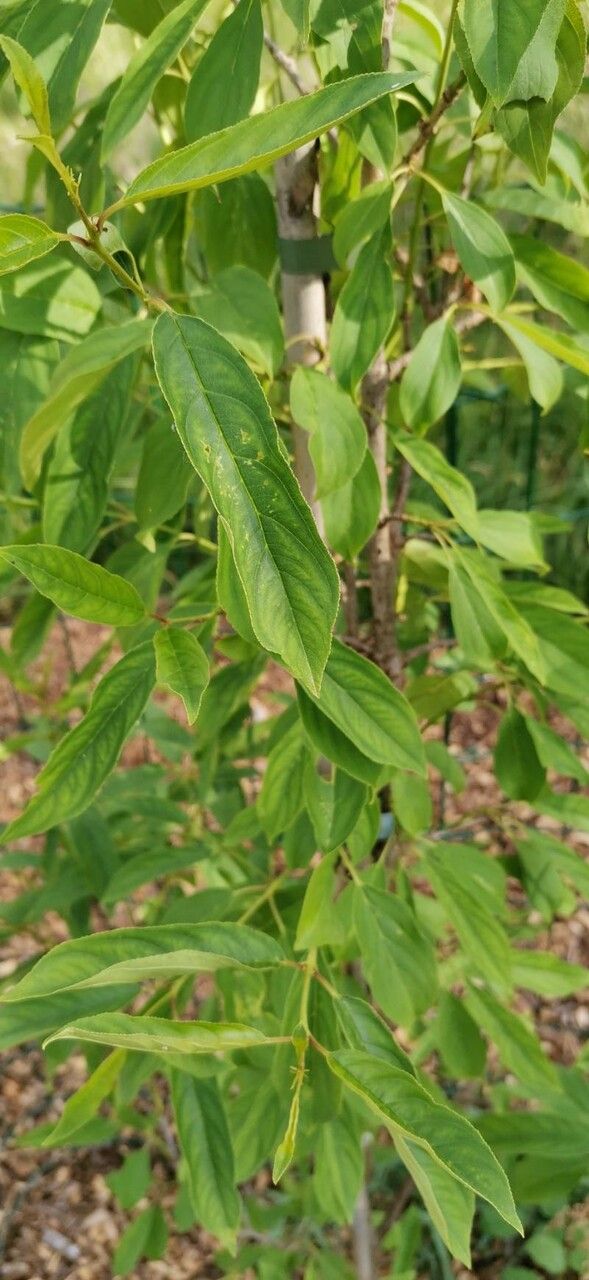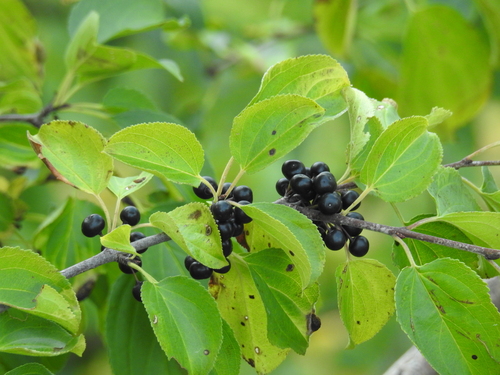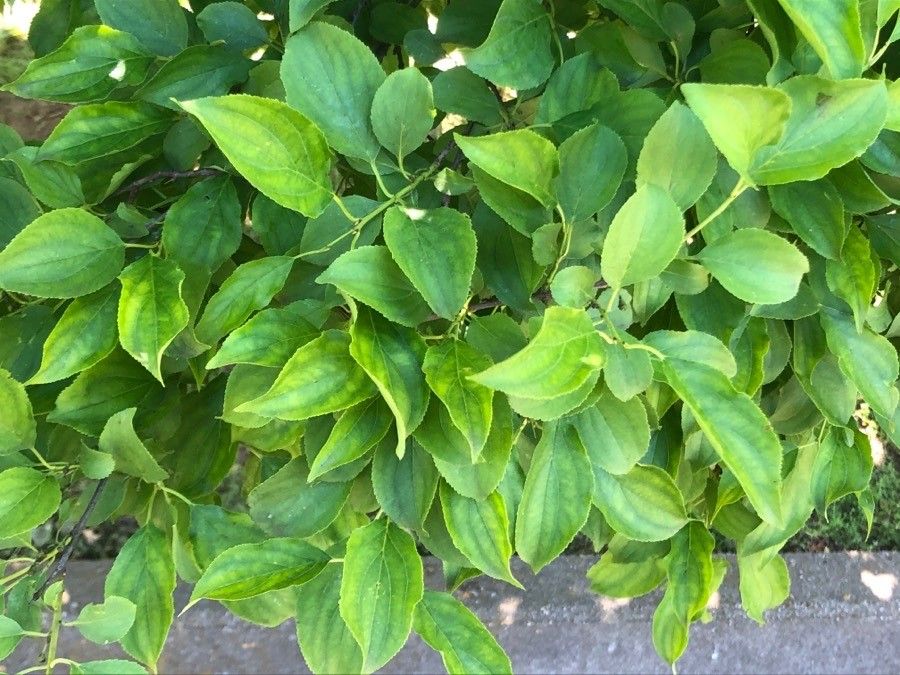
Rhamnus utilis, commonly known as Chinese buckthorn or Shiny-leaf buckthorn, is a deciduous shrub that belongs to the Rhamnaceae family. Native to China, it has been widely cultivated elsewhere for its ornamental value. This plant can grow up to 6 meters in height and features a spreading habit with arching branches.
The leaves of Rhamnus utilis are glossy green with a leathery texture and are arranged alternately on the stem. The small, inconspicuous flowers are greenish-yellow and appear in clusters during late spring or early summer. The fruit is a small black drupe that ripens in autumn.
Rhamnus utilis prefers well-drained soil and exposure to full sun or partial shade for optimal growth. While it can tolerate drought conditions, it requires regular watering during prolonged dry spells.
The plant's bark extract has several medicinal properties. It contains compounds such as emodin, chrysophanol, and rhein, which have been traditionally used to treat constipation and other ailments.
Overall, Rhamnus utilis is an attractive ornamental shrub that enhances the beauty of gardens. Its medicinal properties, primarily derived from its bark extract, make it an important plant species both aesthetically and medicinally.
How to keep Rhamnus Utilis.
Water
Chinese buckthorn comes from areas with moderate moisture levels and does best when water is readily available but not excessive. It can tolerate some drought, needing to be watered twice a week without becoming waterlogged. As an outdoor plant, it adjusts well to natural rainfall during the growing season.
Pruning
Pruning Chinese buckthorn in early spring, before new growth begins, promotes healthier and denser foliage. During this time, remove any dead branches to improve airflow and shape the plant. Be careful to avoid heavy pruning, as this can disrupt its natural form. Additionally, promptly remove any unwanted suckers to ensure optimal recovery and growth.
Botanical profile.
- Plant Type
- Shrub
- Life Cycle
- Perennial
- Genus
- Rhamnus
- Family
- Rhamnaceae