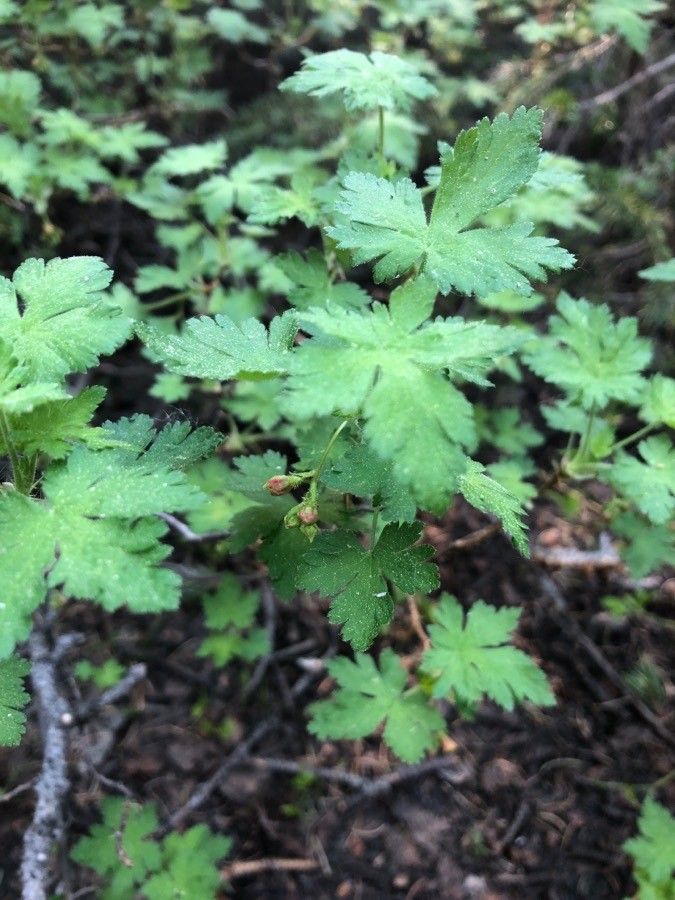
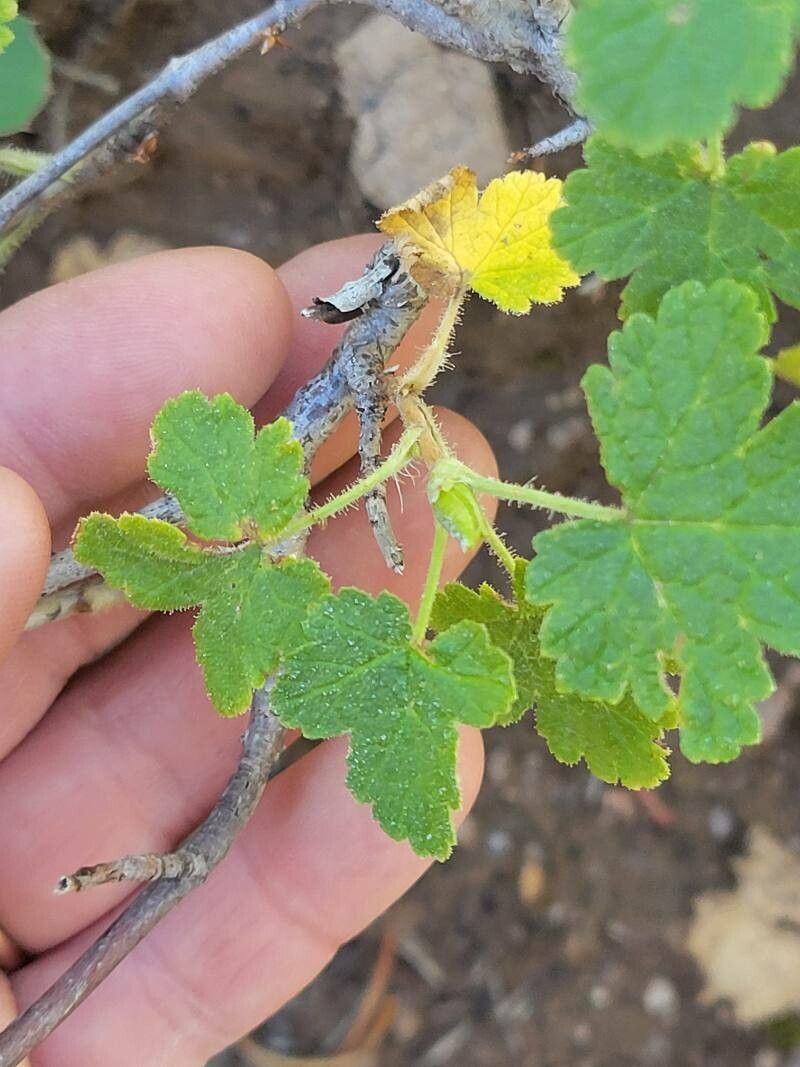
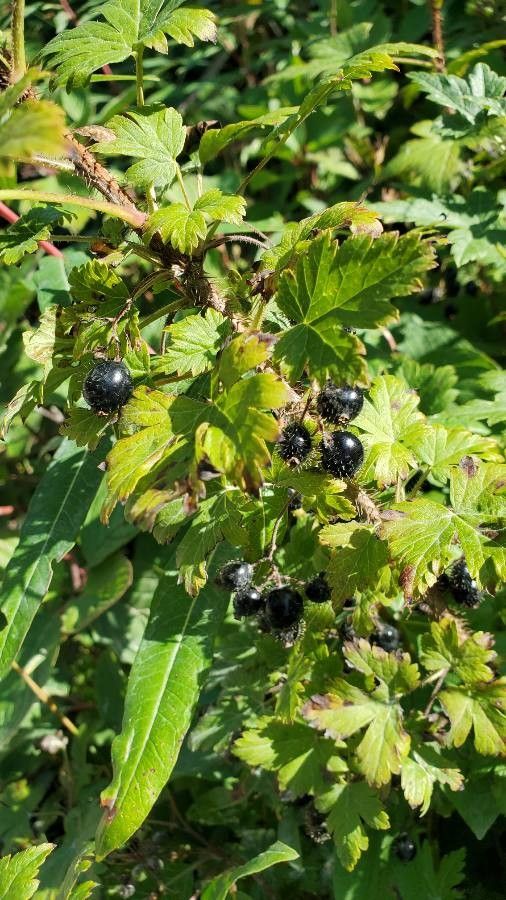
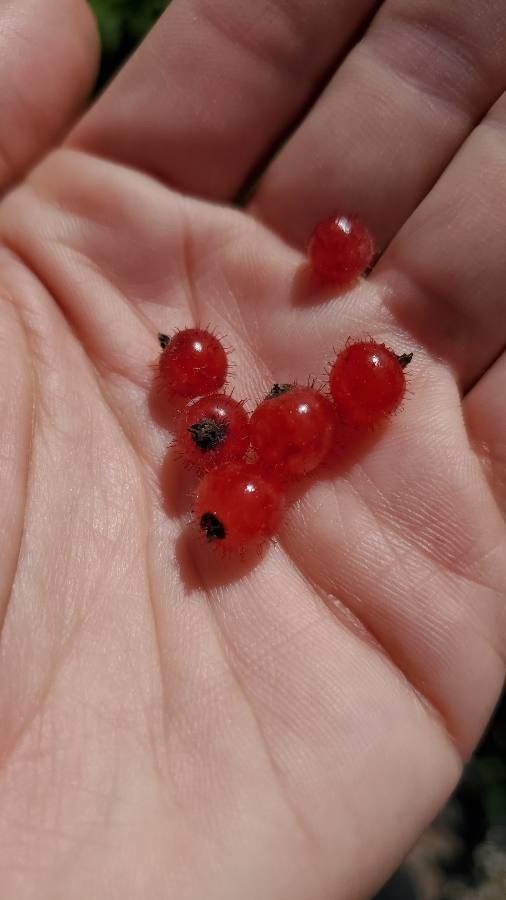
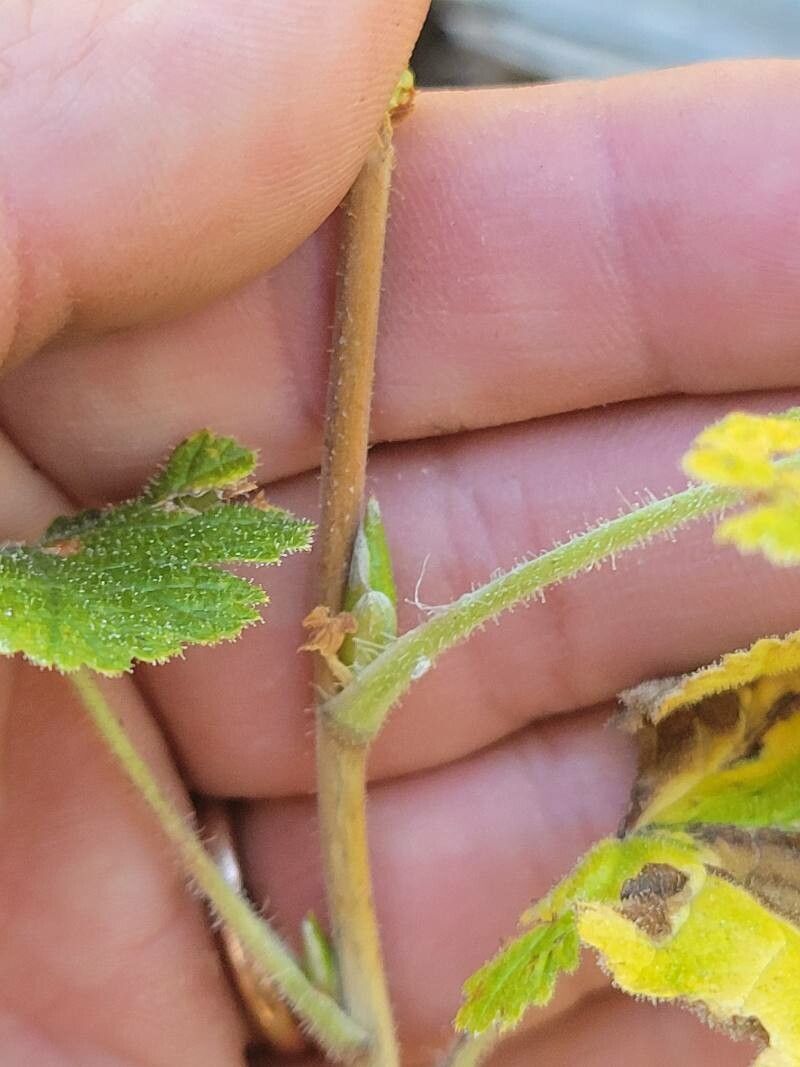
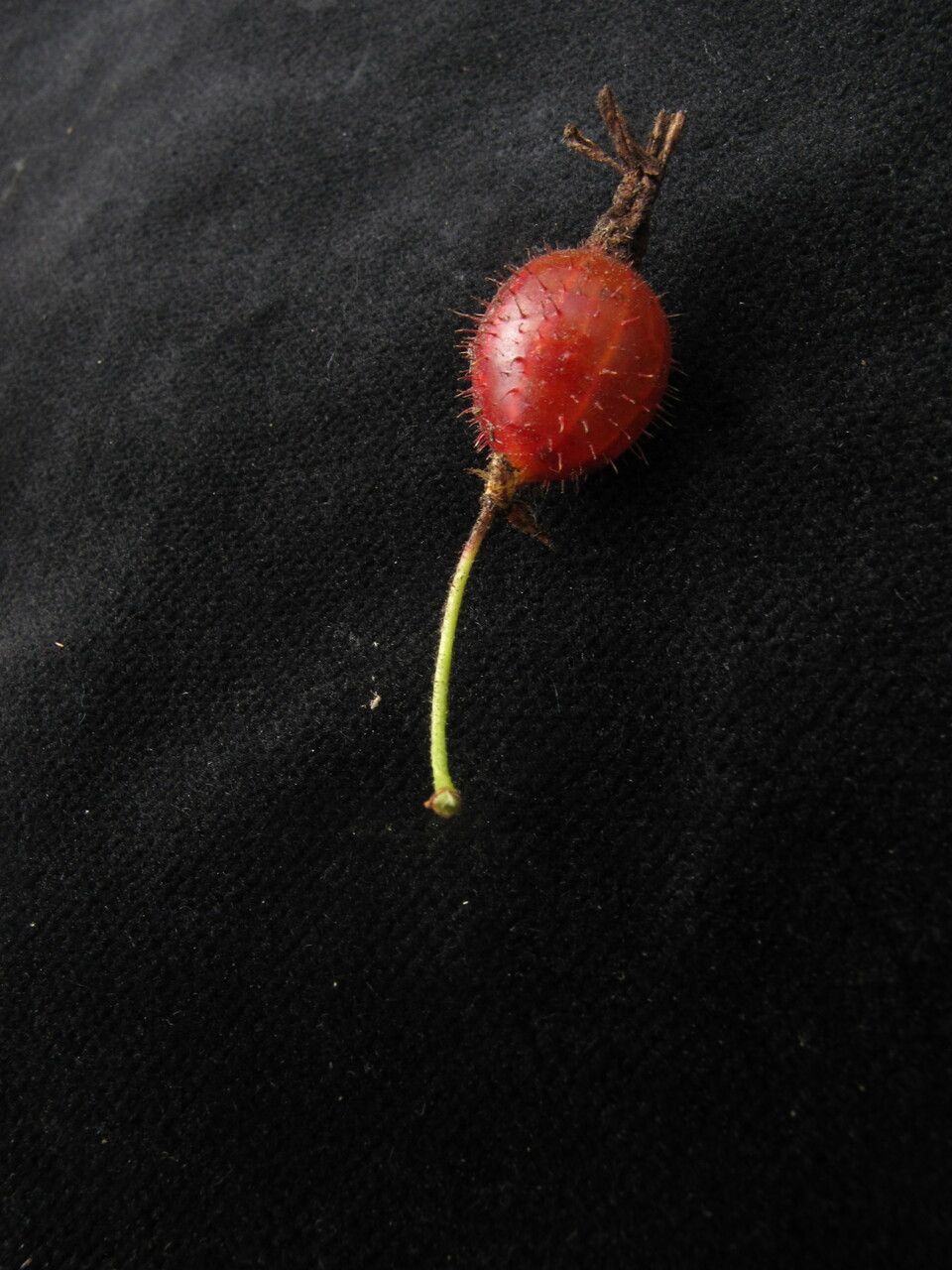
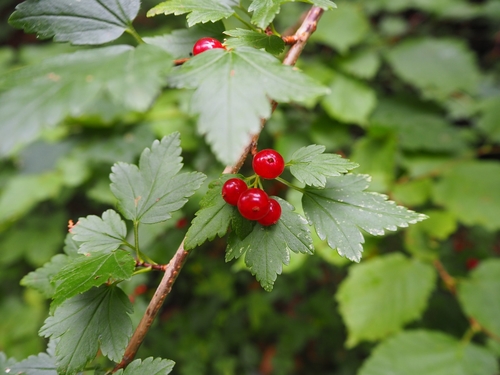
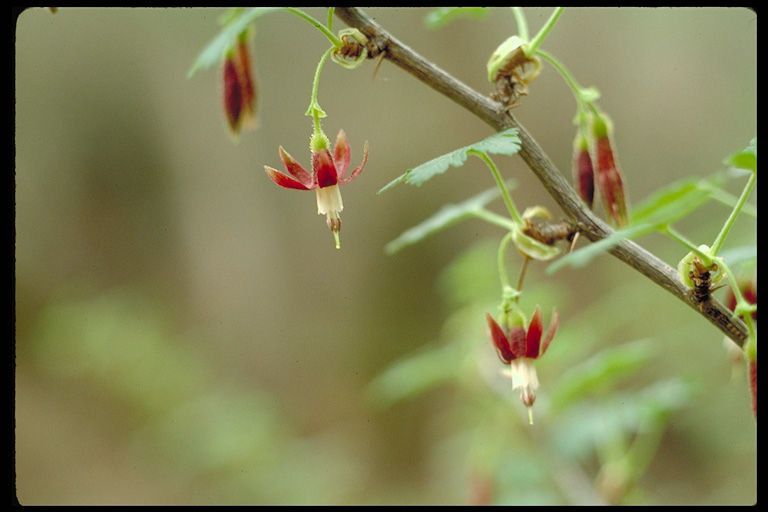
Ribes montigenum is a species of currant known by the common names mountain gooseberry, alpine prickly currant, western prickly gooseberry, and gooseberry currant. It is native to western North America from Washington south to California and east as far as the Rocky Mountains, where it grows in high mountain habitat types in subalpine and alpine climates, such as forests and talus. It is a spreading shrub growing up to 1.5 meters (5 feet) tall, the branching stems covered in prickles and hairs and bearing 1 to 5 sharp spines at intervals.The lightly hairy, glandular leaves are up to 4 centimeters (1.6 inches) long and are divided into about five deeply cut or toothed lobes. Each is borne on a petiole several centimeters in length. The inflorescence is a raceme of several flowers. Each flower has five sepals in shades of yellow-green or pale pink, orange, or yellow which spread into a corolla-like star. At the center are five smaller club-shaped red petals and purple-red stamens tipped with yellowish or cream anthers. The fruit is an acidic but tasty bright-red to orange-red edible berry up to a centimeter long, which is usually covered in soft bristles. It has only a small dried flower remnant at the end, compared with the long remnant found on wax currants (Ribes cereum).
Gooseberry currant has strong resistance to disease and is generally not susceptible to illnesses. With respect to care, this plant is fairly low-maintenance. When grown outdoors it needs only minimal watering, and larger plants typically do not require pruning. Smaller plants, however, should be pruned after they finish blooming. Gooseberry currantt is appropriate for anyone with outdoor space, like a garden or deck, and does not need much experience in plant care.
How to keep Ribes Montigenum.
Light
Gooseberry currant does best in locations that get a lot of sunlight during the day. It can tolerate areas where sunlight isn't constant all day. This mirrors its natural habitat, where it favors abundant sunshine. Too little light can restrict its growth, while too much can damage it.
Water
The gooseberry currant is well-adapted to infrequent watering, thriving with a schedule of watering every 2-3 weeks due to its resilience in dry conditions. This plant efficiently stores water, a trait developed in response to the sporadic rainfall of its native environment. As a result, it can survive droughts by relying on these stored reserves.
Temperature
Gooseberry currant originates from areas where temperatures generally range from 50 to 95 °F (10 to 35 ℃). It prefers moderate to hot conditions and can adapt to seasonal changes. In colder regions, consider creating a microclimate to meet its temperature needs.
Fertilizer
The gooseberry/currant plant needs adequate nutrients to achieve the best fruit production. Fertilize in early spring to encourage new growth and bloom development. Regular feeding keeps the plant healthy, yields tastier fruit, and prevents nutrient-deficiency problems like yellowing leaves and poor fruit set.
Pruning
Gooseberry currants are low-growing shrubs that produce edible berries. To improve air circulation, light penetration, and fruit quality, it is important to prune them in early spring. Remove dead branches and older wood to stimulate new growth, which enhances the overall health of the shrub and encourages higher yields.
Botanical profile.
- Plant Type
- Shrub
- Life Cycle
- Perennial
- Genus
- Ribes
- Family
- Grossulariaceae
- Hardiness Zone
- 6-9
- Mature Height
- 0.2 m to 1.07 m
- Mature Spread
- 1.52 m
- Leaf Color
- Green
- Leaf Type
- Deciduous
- Flower Color
- Pink, White
- Flower Size
- 0.76 cm
- Bloom Time
- Mid spring, Late spring
- Planting Time
- Spring, Summer
- Harvest Time
- Mid summer, Late summer, Early fall
Other names.
Reader questions.
What are the sun requirements for Gooseberry currant?
Gooseberry currant requires significant sun exposure throughout the day to thrive. It prospers in environments with over 6 hours of sunlight, considered 'full sun', and can also manage in 'partial sun' conditions, which provide about 3-6 hours of sunlight. The delicate balance of light and shade is crucial for ensuring the plant's well-being. Accurate observation of how sunlight traverses your garden will help you find the ideal locations that offer this balance, promoting the happiness and health of your plants.
What are the ideal temperature conditions for Gooseberry currant?
Gooseberry currant thrives in environments with temperatures typically ranging from 50 to 95 °F (10 to 35 °C). Native to moderate to hot conditions, it can adapt to seasonal changes. In colder climates, creating a microclimate that meets its temperature needs is beneficial. While the plant has strong cold resistance and usually doesn't require special frost protection measures, it's important to provide cold protection in winter if temperatures are expected to drop below -25°C. This can be done by wrapping the trunk and branches with materials such as non-woven fabric or cloth. Additionally, watering the plant abundantly before the first freeze in autumn to ensure the soil remains moist and enters a frozen state helps prevent drought and water scarcity during winter and early spring.
What essentials should be considered for growing Gooseberry currant?
For optimal growth, Gooseberry currant needs ample sunlight, mimicking its natural environment where it enjoys abundant sunshine. Although it can tolerate some variation in sunlight exposure, insufficient light can stunt its growth, while too much direct exposure can also be detrimental. In scenarios where natural light is limited, especially during winter or in less sunny locations, artificial lighting serves as an excellent alternative. LED lights are favored for indoor plants because they can be customized to provide specific light wavelengths needed for healthy growth. It's essential to ensure the plants receive 8-12 hours of light daily, placing artificial light sources 12-36 inches above the plant, and selecting the right wattage based on whether the plant prefers full sun, partial sun, or full shade conditions.
How do you handle Gooseberry currant in low temperatures?
Gooseberry currant is cold-tolerant and fares best when the temperature stays above 10°C. During winter, it's crucial to keep it above -15°C. If the temperature falls below -25°C, the plant may not show immediate changes but its branches can become brittle and dry come spring, with no new shoots emerging. To handle this, in spring, it's advised to prune away any dead branches that haven't produced new leaves, facilitating the plant's recovery and continued growth.
What are the common symptoms of inadequate sunlight in Gooseberry currant?
Gooseberry currant exhibits several symptoms when it doesn't receive sufficient sunlight, a condition it's sensitive to due to its full sunlight preference. These symptoms include smaller new leaves, longer spaces between leaves or stems leading to leggy or sparse growth, faster leaf drop, slow or stopped growth, pale new leaves indicating insufficient chlorophyll, and specific conditions like chlorosis (yellowing leaves), sunscald (damage from intense sun), leaf curling (as a defense against too much sun), wilting (due to excessive transpiration), and leaf scorching (brown, crispy leaf edges from too much sunlight). These symptoms show the plant's struggle to adapt to inadequate or excessive sunlight.
What should be done if Gooseberry currant experiences high temperatures?
During the summer months, it's best to ensure that Gooseberry currant's environment stays below 35°C. If temperatures climb above 38°C, the plant's leaves may lighten in color, tips may dry and wither, and it becomes more prone to sunburn. To mitigate damage from high temperatures, trim away sunburned and dried-up parts. Moving the plant to a shaded location or employing a shade cloth to protect it from the midday and afternoon sun is advisable. Additionally, watering the plant in the morning and evening will help maintain soil moisture and support the plant's health.
How can you manage and care for sunlight issues with Gooseberry currant?
Managing sunlight issues for Gooseberry currant involves a combination of strategies for outdoor, indoor, and ground-planted specimens. For indoors, gradually moving the plant to sunnier locations each week until it achieves at least 6 hours of sunlight or using artificial light sources like desk or ceiling lamps for a minimum of 8 hours daily can significantly help. Outdoors, it's crucial to adjust the plant gradually to brighter conditions to avoid sunburn. Removing obstructions and possibly transplanting to better-lit areas can enhance sunlight access for ground-planted currants. It's important to note that while parts of the plant that have suffered might not recover, ensuring adequate sunlight going forward will promote healthy new growth.