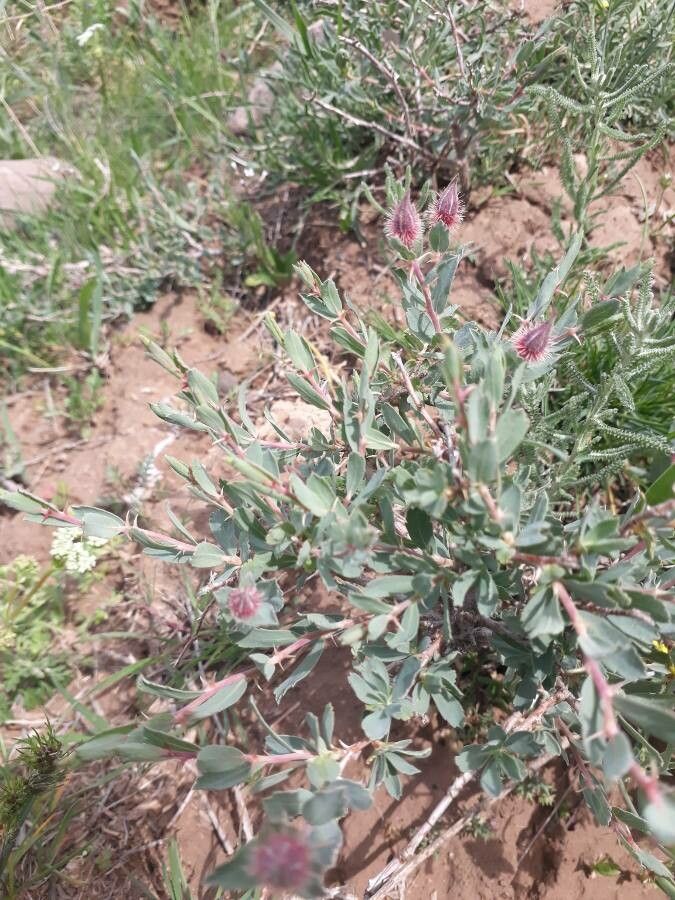
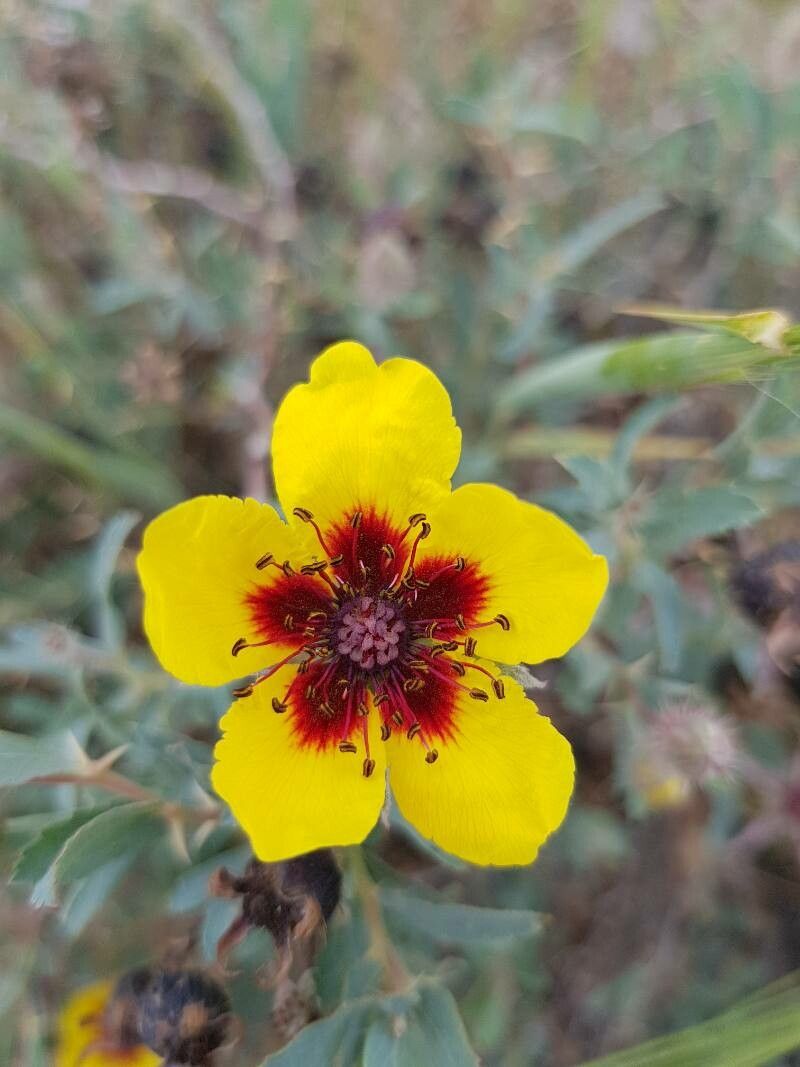
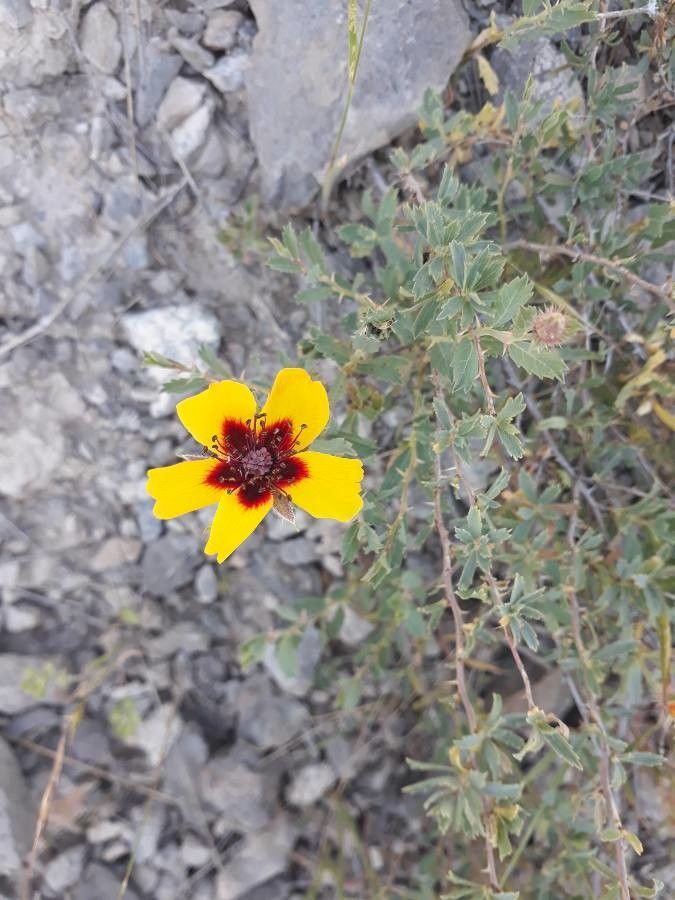
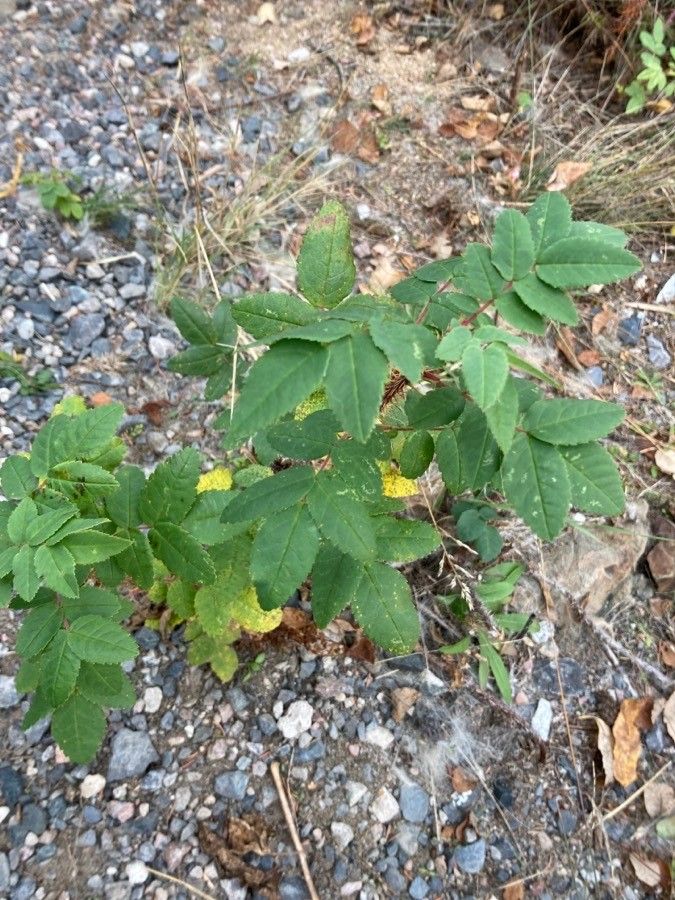
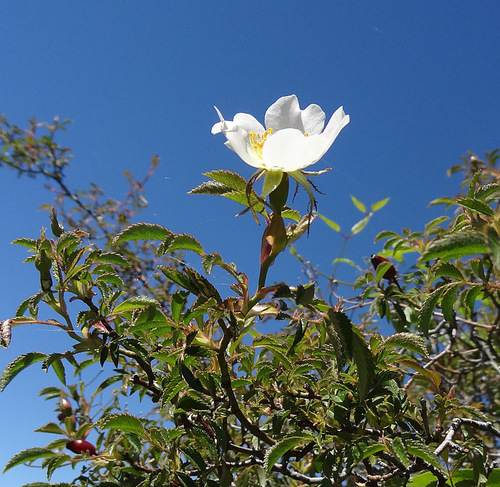
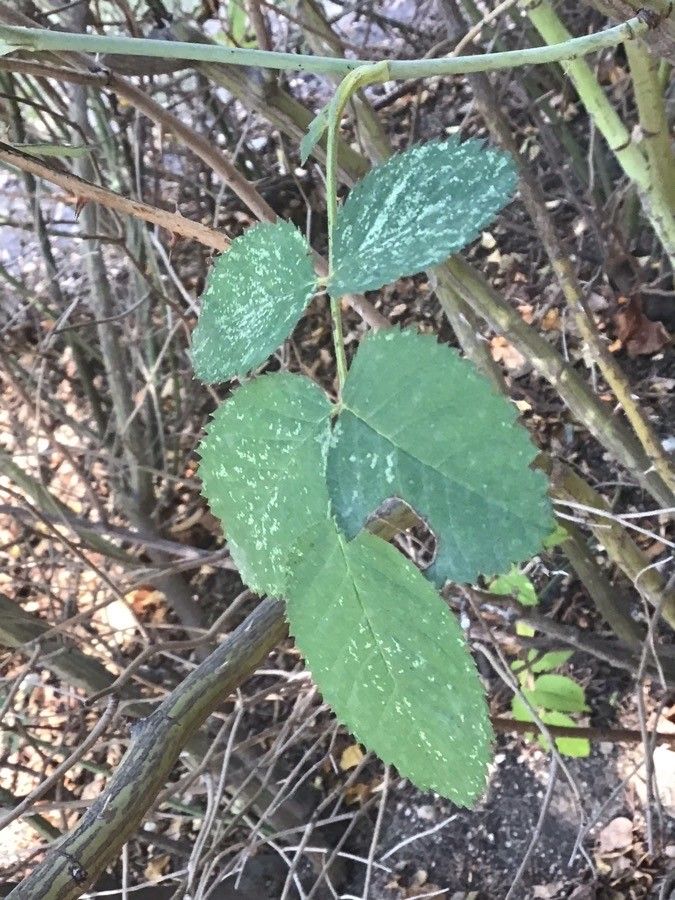
Rosa persica is an anomalous species of rose that at one time was placed in a separate genus Hulthemia. It is native to deserts and steppes from Iran and Afghanistan in the south, through Central Asia, to western Siberia in the north. Its distinctive characteristics include a simple leaf without stipules (most rose leaves are pinnate with 3 to 7 leaflets, and have stipules), and a distinctive flower with a darker coloured central zone. In its natural habitat it is a deep-rooted weed that suckers – growing in Iranian fields for example, where it is collected for fuel once the grain crop has been harvested – but it is difficult to grow in gardens and rarely cultivated. Rosa berberifolia is sometimes considered to be variety of this species, as R. persica var. berberifolia.
Rosa persica has weak resistance to disease and is highly prone to a wide range of leaf spot problems. It is also susceptible to various insect pests, and if an infestation is severe, most of its leaves may drop. The plant is regarded as difficult to care for because it needs regular watering, fertilizing before flowering, and pruning after flowering and in winter. Preventive spraying might be necessary, or treatment required if the plant becomes diseased. Rosa persica is appropriate for people who can devote some time and energy to plant care, but maintaining it in a healthy, thriving state may demand more growing experience and effort.
How to keep Rosa Persica.
Light
Rosa persica comes from open habitats, like sunny meadows and forest margins, which offer abundant light. It does best in Full Sun but can also tolerate Partial Sun, adjusting well to different light conditions.
Water
Rosa persica grows best when its soil is consistently moist, so it needs to be watered twice a week. Although it can withstand short periods of drought, using mulch helps retain moisture, decreasing the need for frequent watering and promoting healthy growth. This makes Rosa persica an excellent choice for gardeners who want to conserve water.
Temperature
Rosa persica is highly adaptable to a wide variety of climate conditions, from blazing summers to cold winters. Nevertheless, it has a preferred temperature range for growth. When temperatures become too high, the plant is vulnerable to heat and humidity stress, which can lead to its death. In areas where temperatures approach the lower limit of its cold tolerance, it is important to provide insulation to protect the plant.
Fertilizer
Timing is important for fertilizing Rosa persica. Apply fertilizer in early spring and continue monthly until early summer. Fertilizer encourages attractive blooms and supplies energy during both dormant and active growth phases.
Pruning
Rosa persica showcases vibrant blooms and distinctive foliage. For best results, prune in early spring to remove weak stems and encourage strong branching by cutting back one-third of the plant. Regular pruning not only improves air circulation but also reduces the risk of disease and enhances the plant's appearance. Be sure to use clean, sharp tools to minimize any potential damage.
Botanical profile.
- Plant Type
- Shrub
- Life Cycle
- Perennial
- Genus
- Rosa
- Family
- Rosaceae
- Hardiness Zone
- 5-9
- Mature Height
- 49 cm
- Mature Spread
- 91 cm
- Leaf Color
- Green
- Leaf Type
- Deciduous
- Flower Color
- Yellow
- Flower Size
- 2.03 cm to 2.54 cm
- Bloom Time
- Mid spring, Late spring
- Planting Time
- Spring, Autumn
- Harvest Time
- Early summer, Mid summer
- Native Area
- Uzbekistan, Afghanistan, Tajikistan, Kyrgyzstan, Kazakhstan, Iran, Turkmenistan, China
Reader questions.
What are the sunlight requirements for Rosa persica?
Rosa persica, known by its botanical name as Rosa persica, thrives under specific sunlight conditions to ensure its health and happiness. For 'Full sun' exposure, Rosa persica requires above 6 hours of direct sunlight daily. In situations of 'Partial sun,' the plant needs about 3-6 hours of sunlight. It's important to observe the movement of sunlight through your garden carefully to identify spots that provide the ideal balance of light and shade suited for your Rosa persica, fostering its growth and well-being.
What is Rosa persica?
Rosa persica, also known by its botanic name, is a species within the genus Rosa. Although the provided information does not include specifics about its essentials or symptoms, this plant is recognized for its unique characteristics within the Rosa genus.