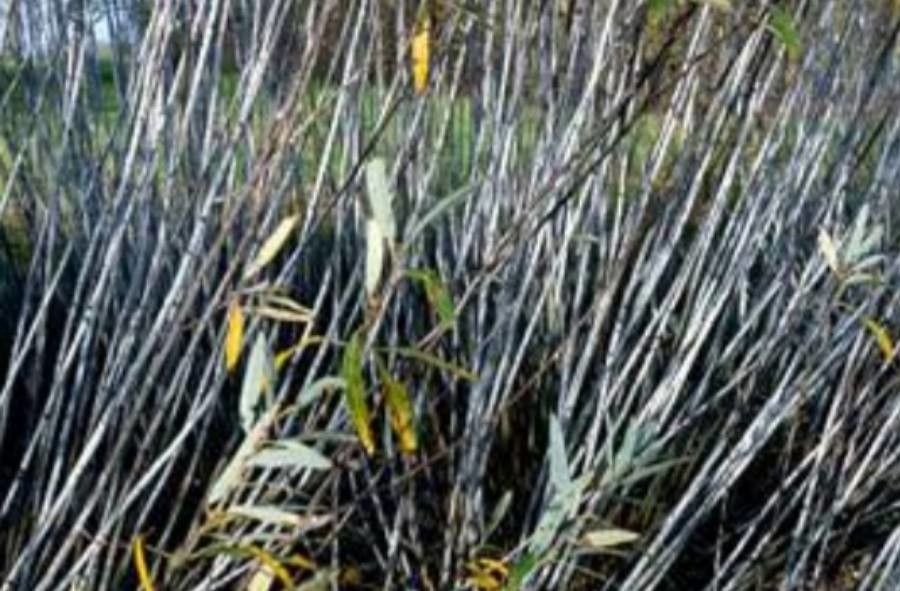
Salix irrorata, commonly known as the diamond willow or shining willow, is a deciduous shrub or small tree belonging to the Salicaceae family. Native to North America, it thrives in wetlands, swamps, and along riverbanks. The plant can reach heights of up to 10 meters, with trunk diameters of up to 30 centimeters.
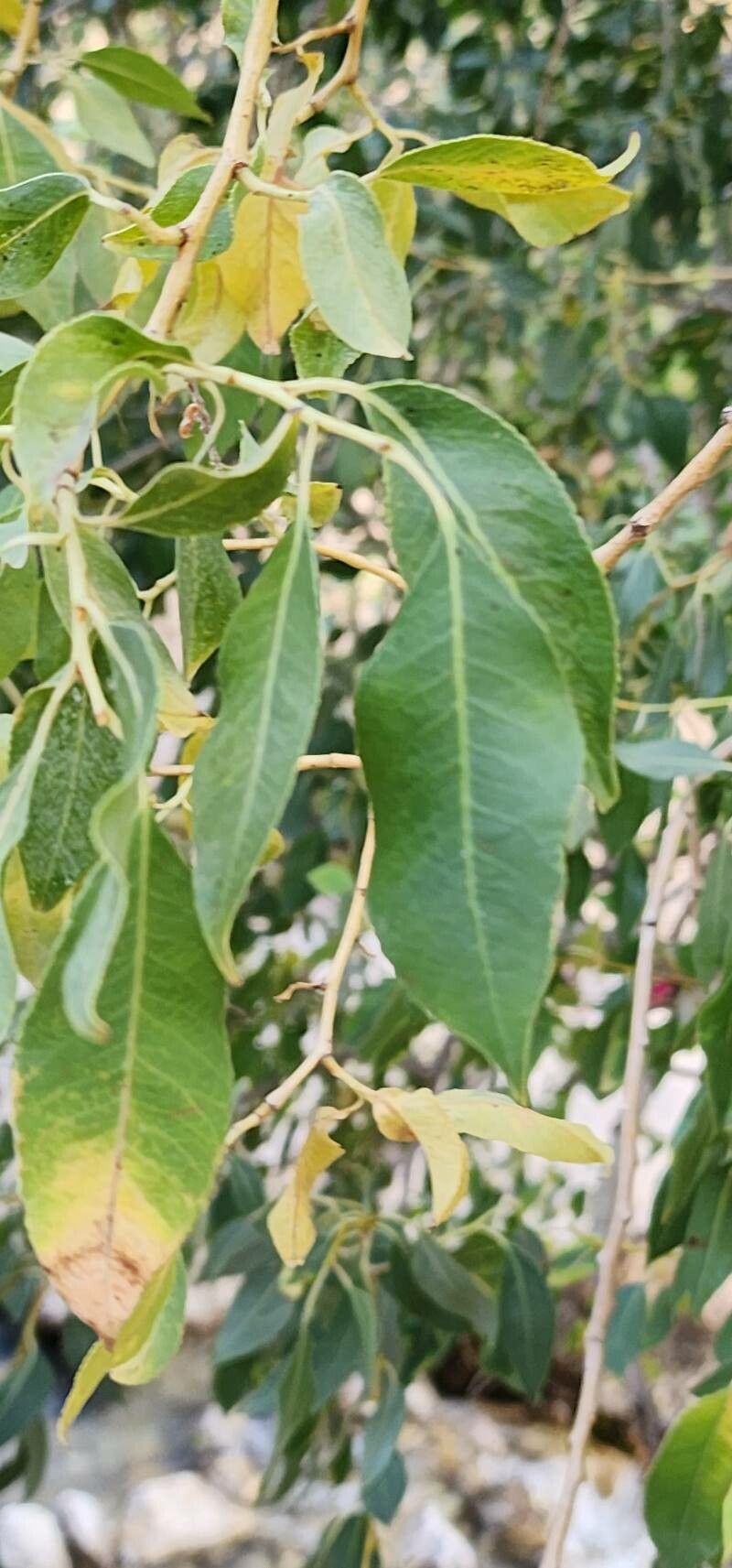
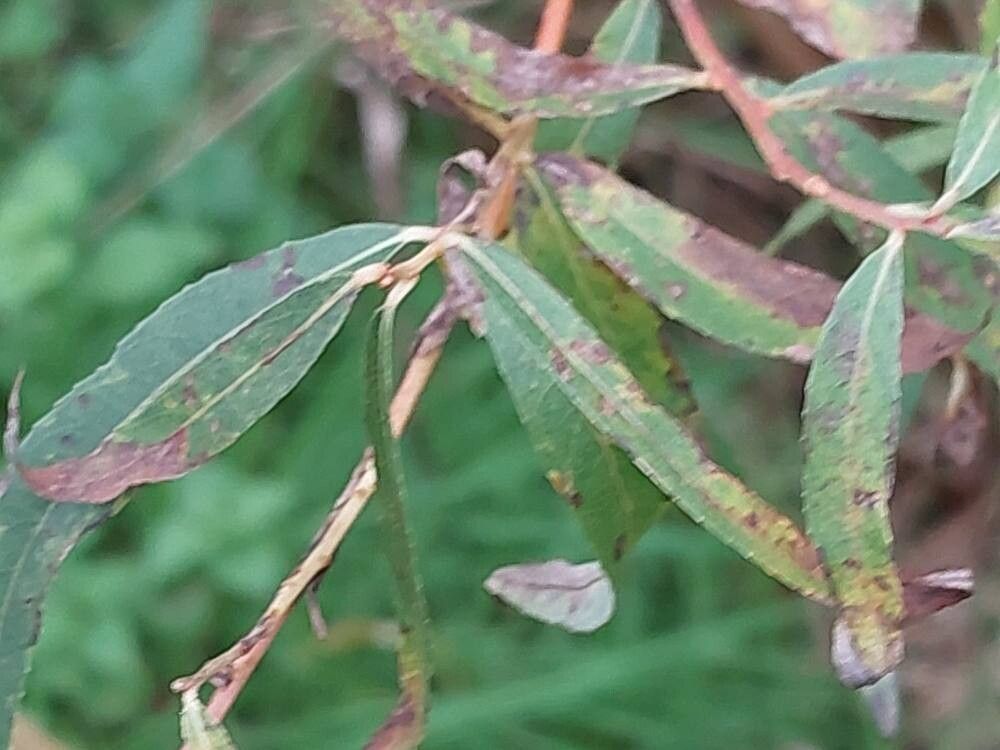
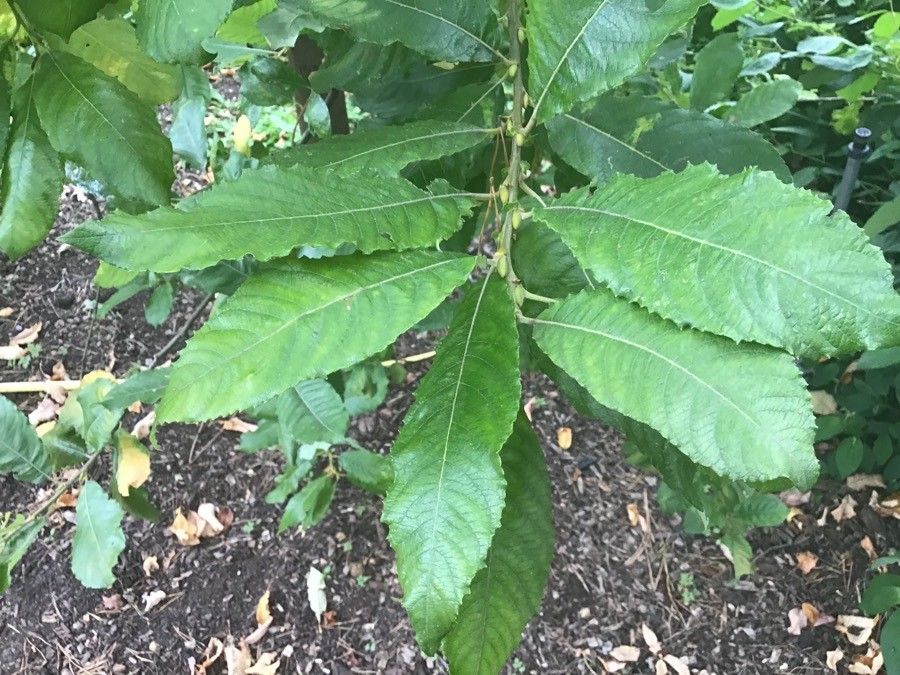
The diamond willow stands out due to its distinctive bark pattern, which resembles diamonds due to raised bumps on its surface. Its leaves are narrow, elongated, and green, with serrated edges.
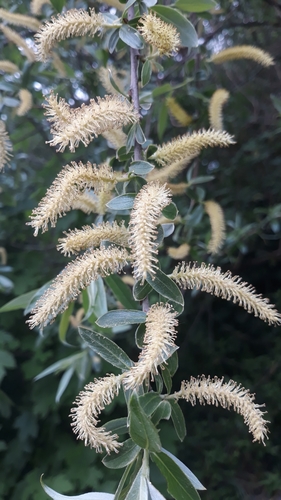
In early spring, before its leaves emerge, the plant produces catkins—cylindrical clusters of small flowers that contain both male and female reproductive organs.
Salix irrorata serves multiple purposes, including erosion control thanks to its rapid growth in wet soils. Its flexible branches make it suitable for basket weaving. Additionally, it provides food for wildlife, such as beavers, who use it to build dams.
Overall, Salix irrorata is a significant plant species with unique characteristics, making it an interesting and functional addition to the ecosystems where it naturally grows.
Botanical profile.
- Genus
- Salix
- Family
- Salicaceae