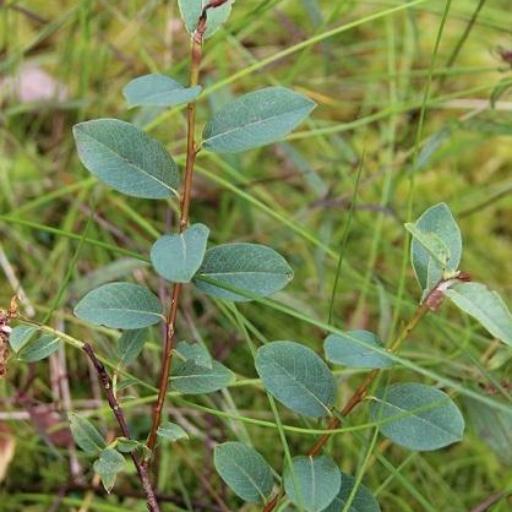
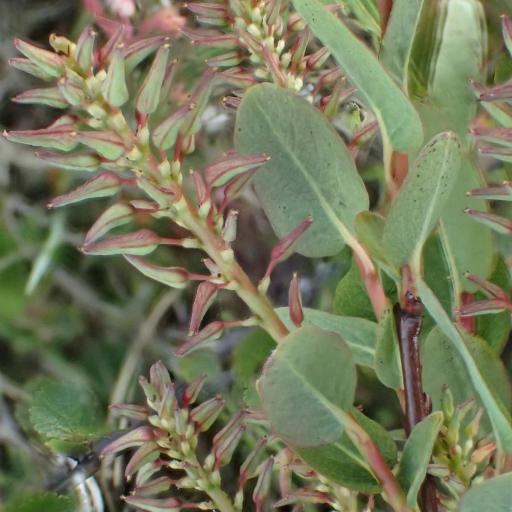
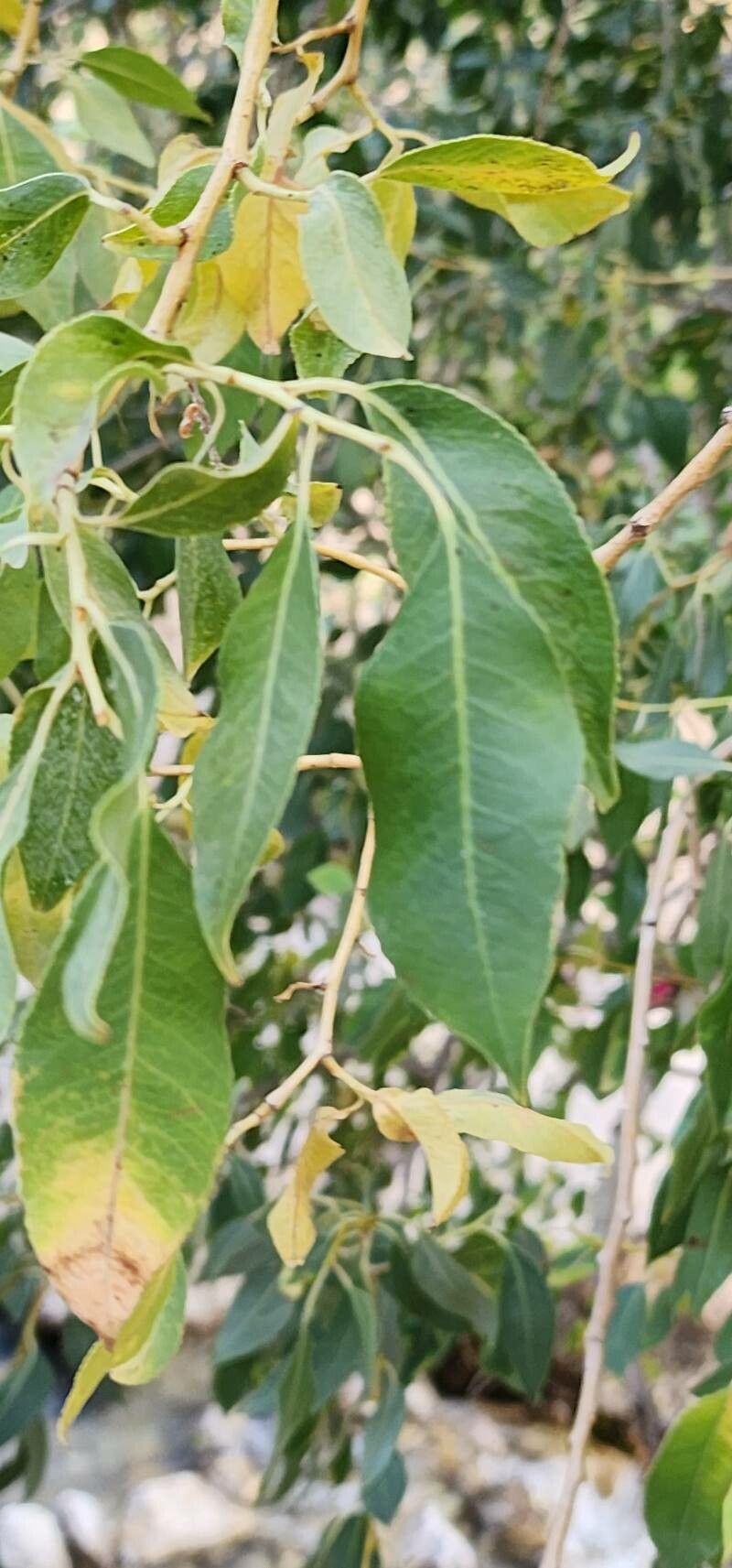
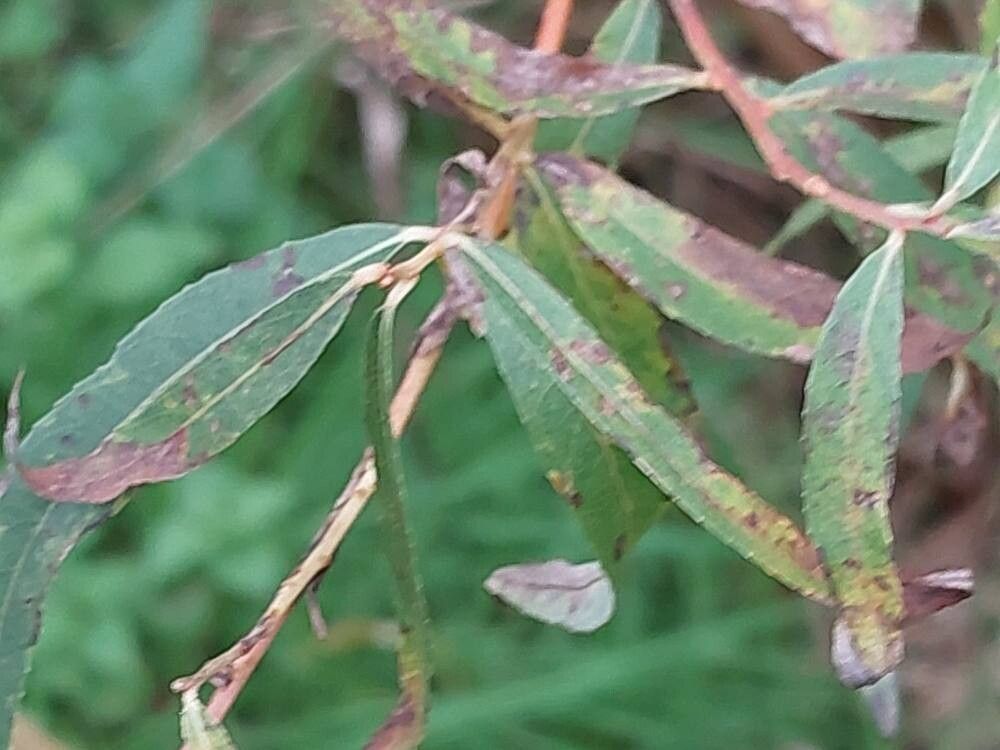
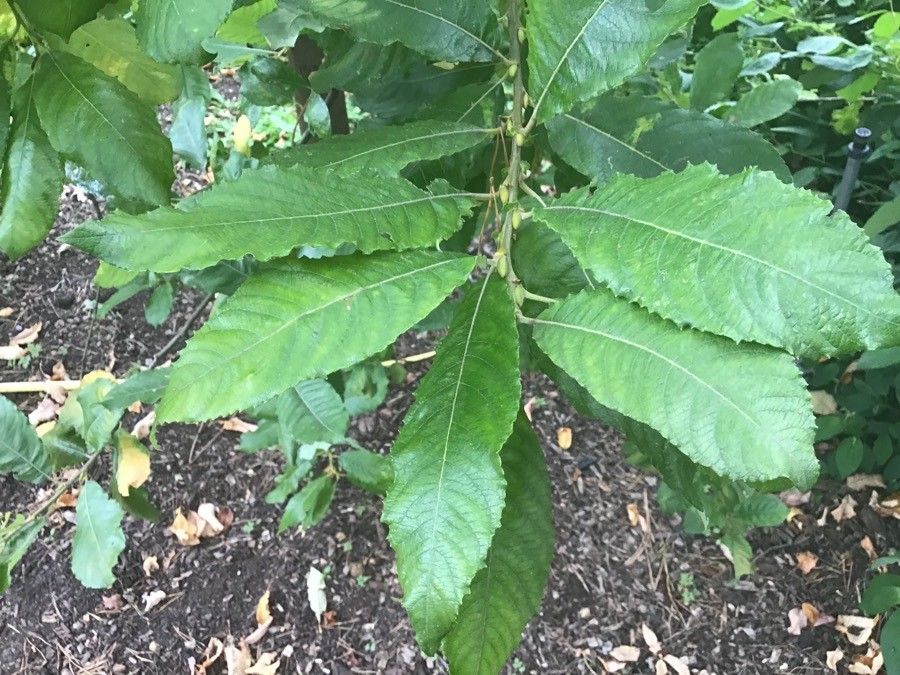
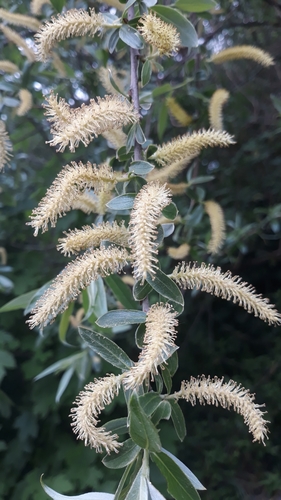
Salix myrtilloides, the swamp willow, is a willow native to boglands in cool temperate to subarctic regions of northeastern Europe and northern Asia from central Norway and Poland eastwards to the Pacific Ocean coasts, with isolated populations further south in mountain bogs in the Alps, Carpathians and Sikhote-Alin mountains.It is a deciduous small shrub growing to 15–60 cm (5.9–23.6 in) tall. The leaves are oval-acute, 15–20 mm long, with an entire or sparsely toothed margin, dark green above, paler glaucous or purple-tinged below. The flowers are produced in catkins 1–2 cm long in the spring at the same time as the new leaves appear.The leaves resemble bilberry (Vaccinium uliginosum) leaves in shape, hence the name in the Finnish and Swedish languages, which translates as "bog bilberry willow".A very similar, closely related species, Salix pedicellaris (bog willow), occurs in northern North America; it is classified as a variety of swamp willow S. myrtilloides var. pedicellaris by some botanists.
Bog willow has strong resistance to disease and is generally not prone to illness. Regarding care, the plant is fairly low-maintenance. When planted outdoors it needs little watering, and larger specimens usually do not require pruning. Smaller plants, however, should be trimmed after they have bloomed. Bog willow is suitable for anyone with an outdoor space, such as a garden or deck, and does not require a lot of care experience.
How to keep Salix Myrtilloides.
Light
Bog willow occurs naturally in habitats such as forest understories or rocky areas, where it grows in natural shade. It prefers partial sun but can adapt to full sun or full shade, demonstrating its versatile and hardy nature.
Temperature
Bog willow shows strong adaptability to a range of climatic conditions, whether in hot summers or cold winters. However, it has an optimal temperature range for growth. When temperatures become too high, the plant is susceptible to heat and humidity stress, which can cause it to die. In regions where temperatures approach the lower limit of its cold tolerance, it is important to apply insulation measures to protect the plant.
Fertilizer
Fertilize your Bog willow in early spring to encourage healthy growth. Regular feeding boosts overall vigor, leading to strong growth, greater resilience in challenging conditions, and enhanced resistance to pests and diseases. Follow a consistent fertilization schedule for your Bog willow to keep its foliage vibrant, richly colored, and lush.
Botanical profile.
- Plant Type
- Shrub
- Life Cycle
- Perennial
- Genus
- Salix
- Family
- Salicaceae
- Hardiness Zone
- 2-6
- Mature Height
- 30 cm to 91 cm
- Mature Spread
- 49 cm to 91 cm
- Leaf Color
- Dark Green, Green
- Leaf Type
- Deciduous
- Flower Size
- 1.02 cm to 2.03 cm
- Bloom Time
- Early spring, Mid spring
- Planting Time
- Spring, Summer
- Harvest Time
- Late spring, Early summer
Other names.