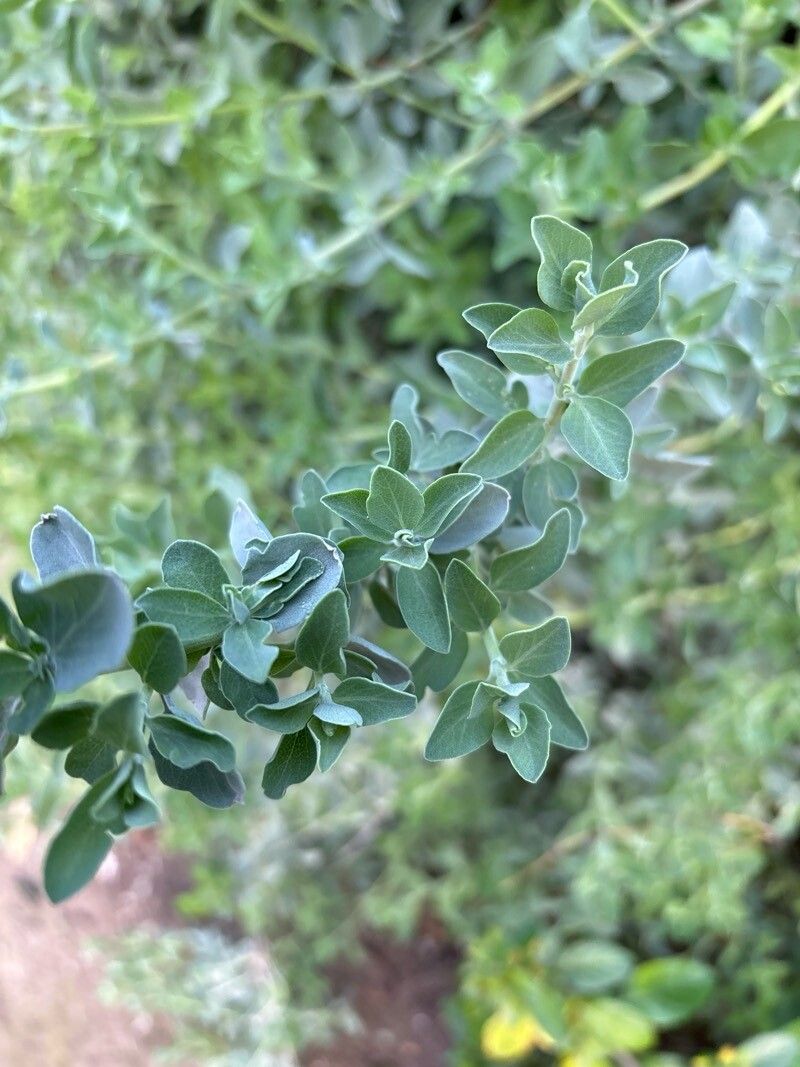
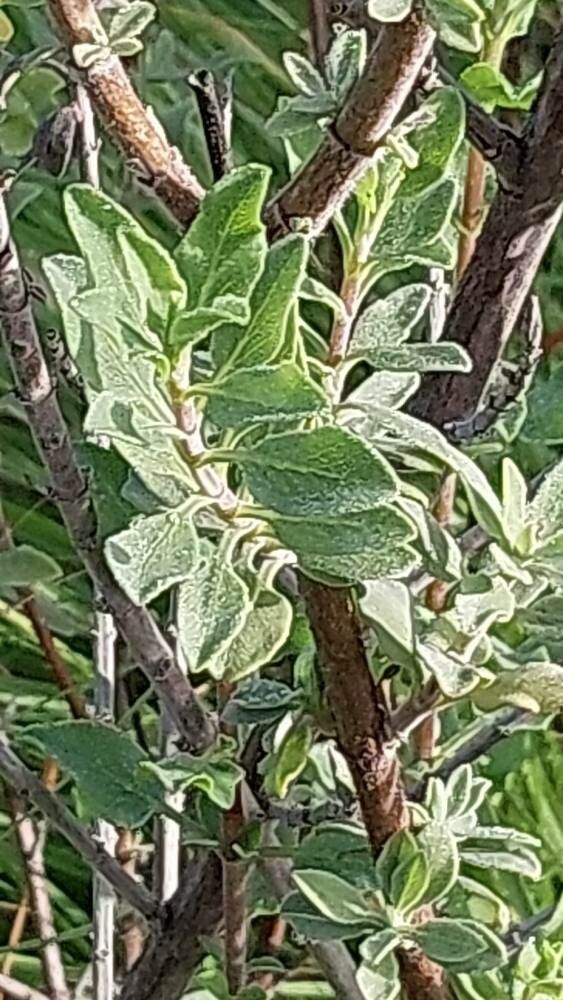
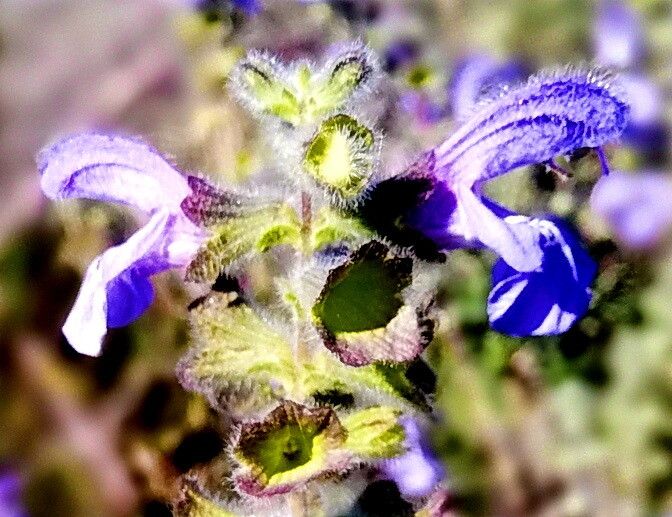
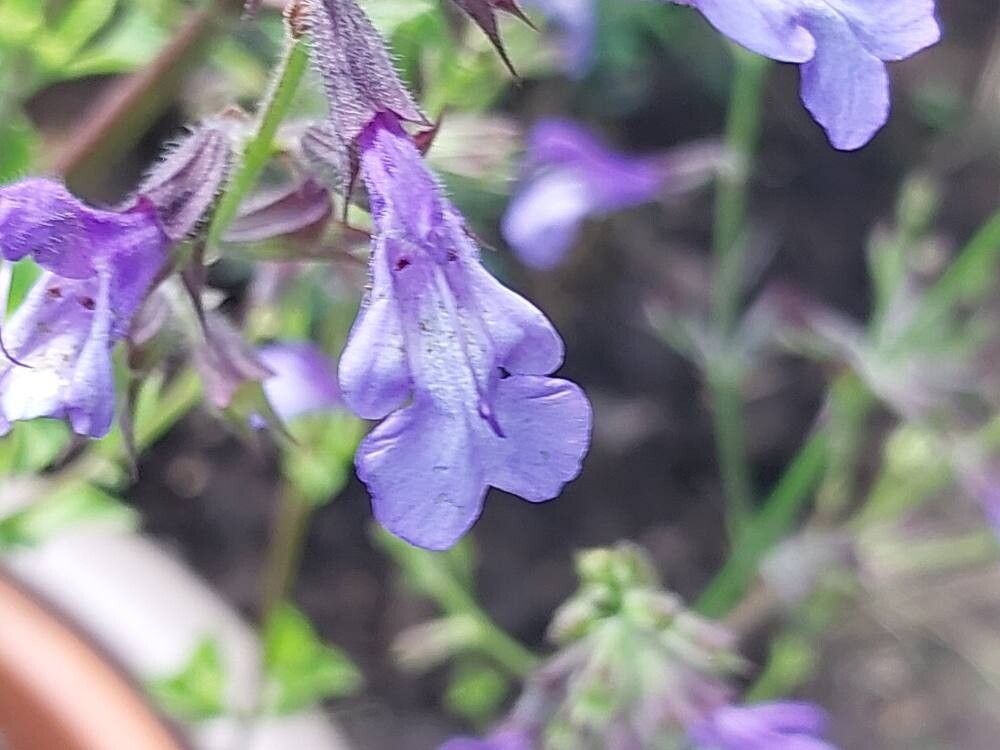
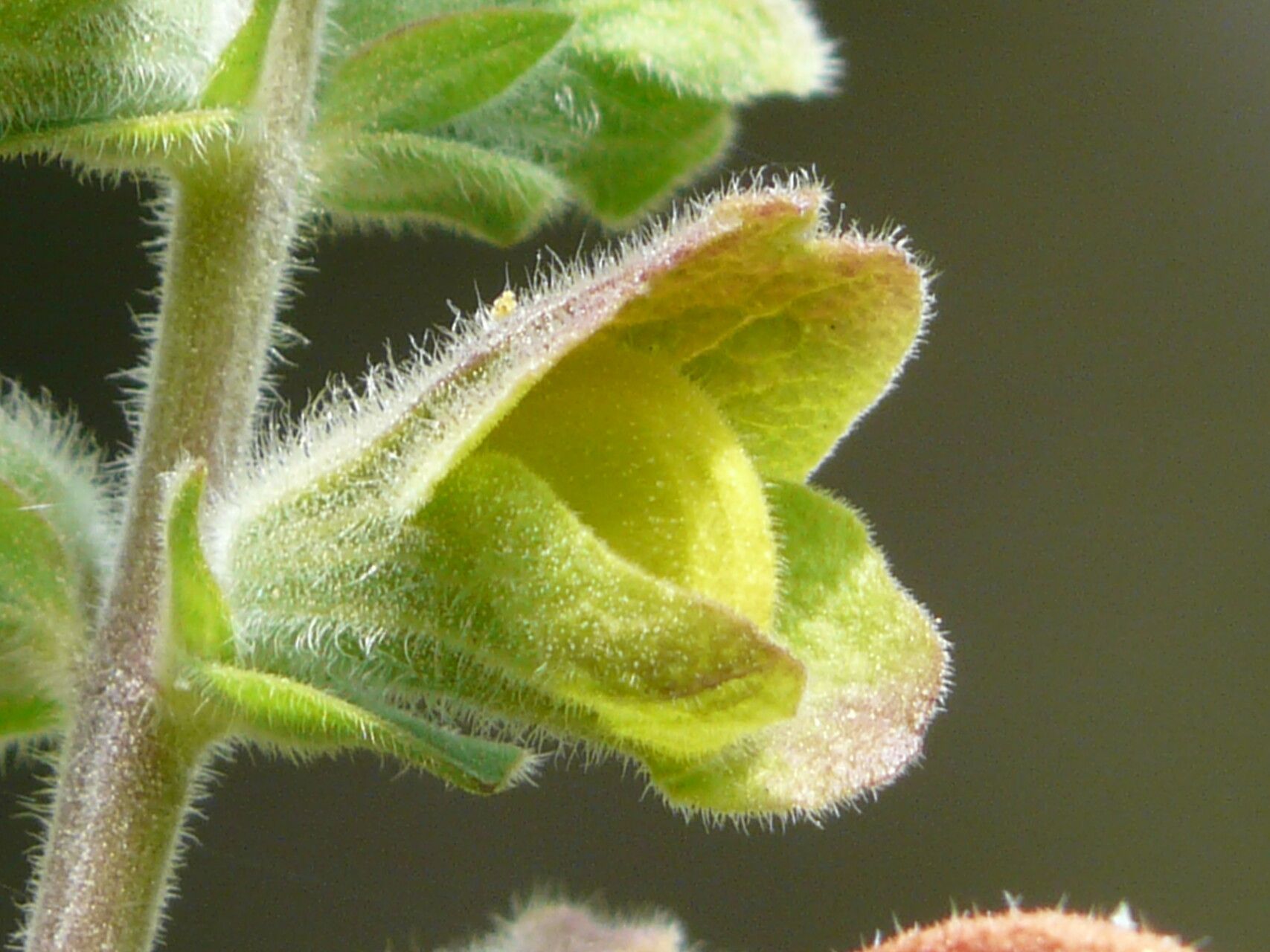
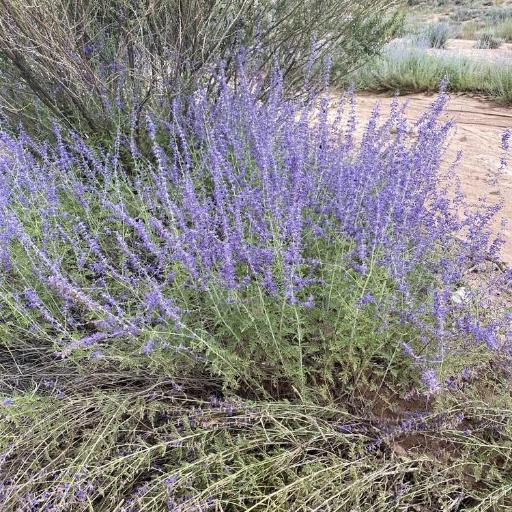
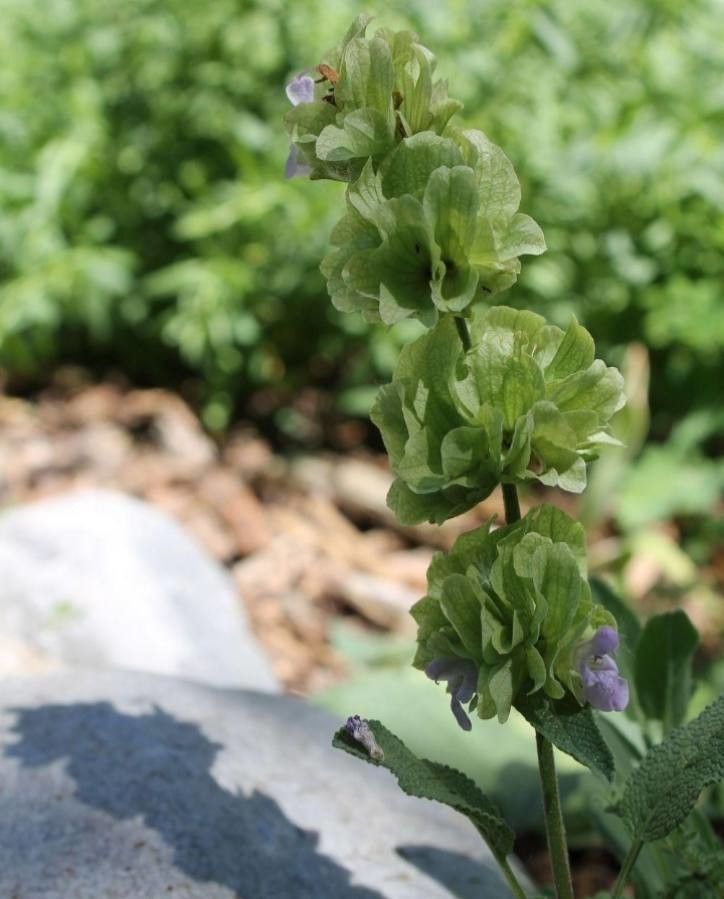
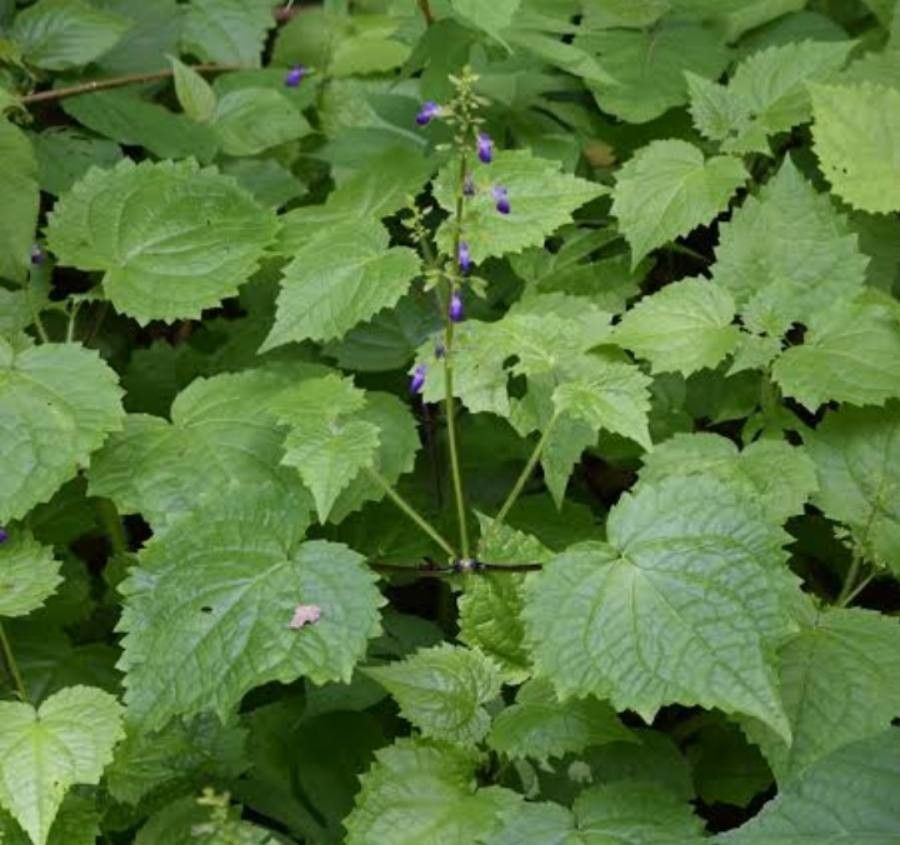
Salvia africana is a heavy branched aromatic perennial shrub native to the coast of the Cape Provinces of South Africa, found on coastal dunes and in nearby rocky hills up to 600 m elevation. It grows to 60–90 cm, with round grayish stems covered with hairs that release a strong scent when brushed. The leaves are a soft grey-green, lighter on the underside, and elliptical shaped. The inflorescences reach 30 cm long, with 2-6 flowers in each whorl, ranging from pale blue to pale violet or pink.The species was originally named by Carl Linnaeus in 1753 as Salvia africana caerulea, but as this name has two specific epithets, it is contrary to Article 23.6(c) of the International Code of Nomenclature for algae, fungi, and plants, and has been corrected to Salvia africana. The incorrect form Salvia africana-caerulea will also be found.
Salvia africana has strong resistance to disease and is typically not susceptible to ailments. Regarding care, this species is fairly low-maintenance. When grown outdoors it needs only light watering, and larger specimens usually do not require pruning. Smaller plants, however, should be trimmed after they finish flowering. Salvia africanat is appropriate for anyone with an outdoor area, like a garden or a deck, and does not demand extensive gardening experience.
How to keep Salvia Africana Caerulea.
Light
Salvia africana comes from open habitats, for example sunlit meadows and forest margins, which supply plenty of light. It does best in Full Sun but will also tolerate Partial Sun, showing good adaptability to different light conditions.
Temperature
Salvia africana shows good temperature adaptability, tolerating higher temperatures and greater temperature fluctuations. In hot weather, attention should be paid to watering and providing suitable shade to avoid sunburn. On the other hand, Salvia africana has relatively low tolerance for cold. While it can endure some cold, excessively low temperatures can cause frost damage.
Fertilizer
The timing of fertilizing Salvia africana is important. Apply fertilizer in early spring and continue once a month until early summer. Fertilizer encourages attractive blooms and supplies energy during both dormant and active growth phases.
Botanical profile.
- Plant Type
- Shrub
- Life Cycle
- Perennial
- Genus
- Salvia
- Family
- Lamiaceae
- Hardiness Zone
- 9-11
- Mature Height
- 0.91 m to 2.13 m
- Mature Spread
- 0.76 m to 1.22 m
- Leaf Color
- Silver
- Leaf Type
- Evergreen
- Flower Color
- Brown
- Flower Size
- 2.03 cm to 3.05 cm
- Bloom Time
- All year round
- Planting Time
- Spring, Summer, Autumn
- Harvest Time
- Late spring, Summer, Fall, Winter, Early spring, Mid spring
Other names.