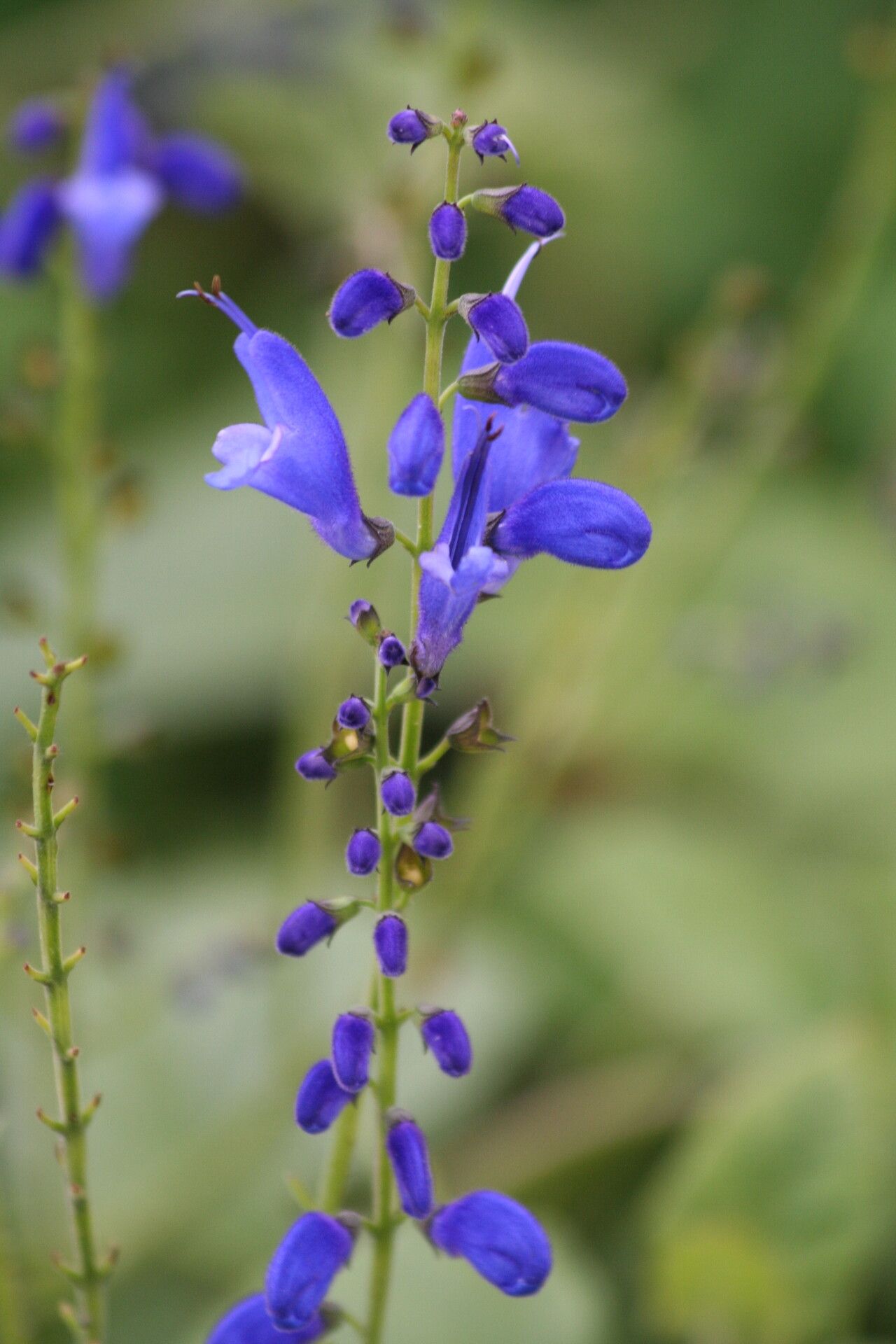
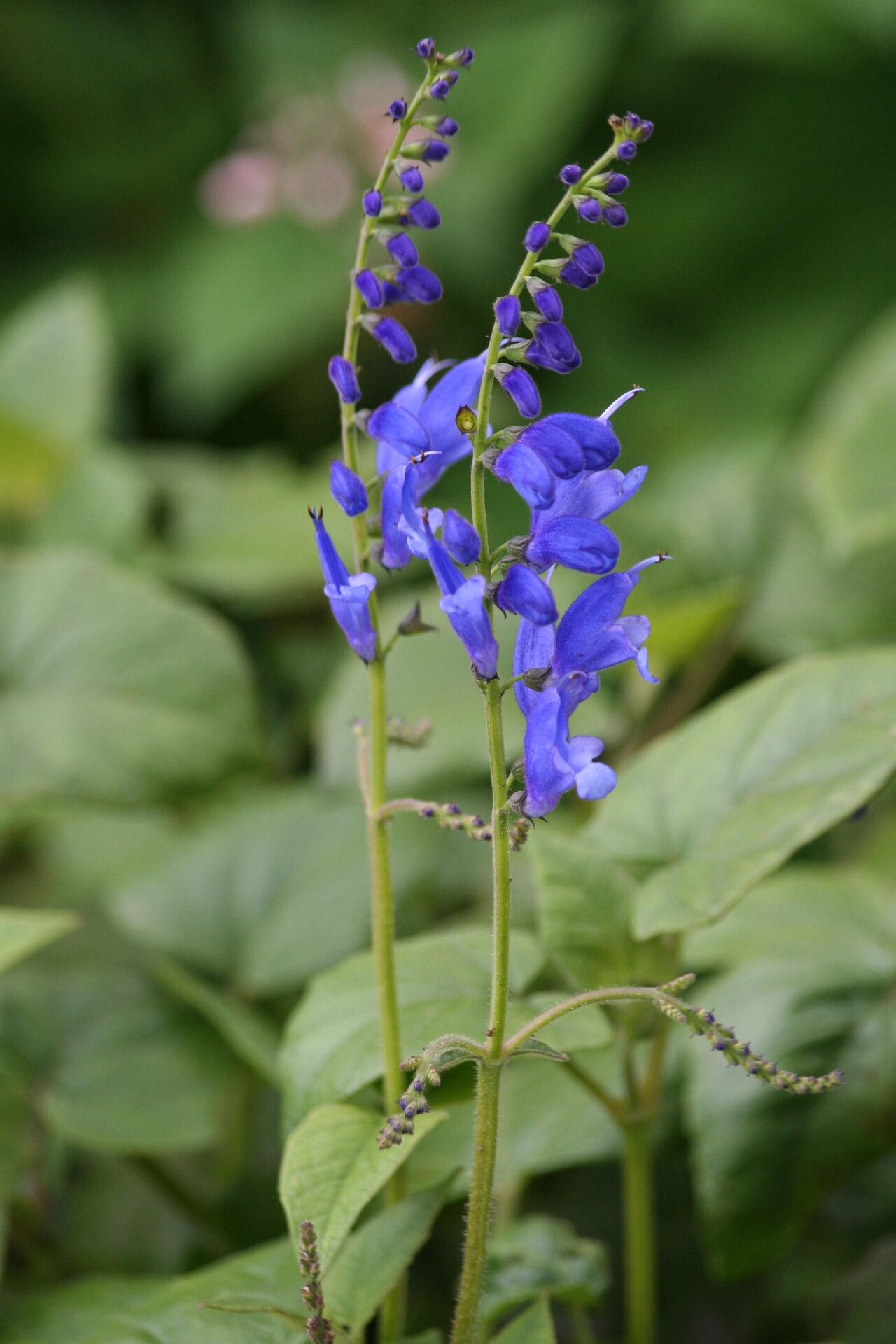
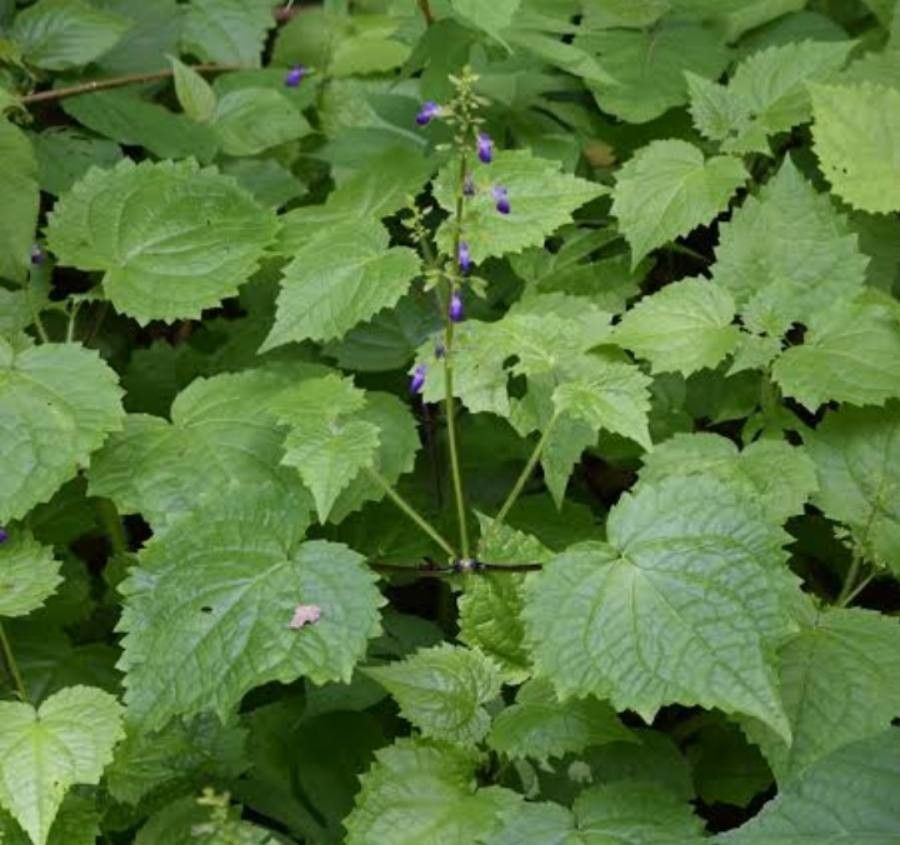
Salvia cacaliifolia, the blue vine sage or Guatemalan sage, is a species of flowering plant in the family Lamiaceae, native to the mountains of Chiapas, Mexico, and in Guatemala and Honduras, at 1,500–2,500 m (4,921–8,202 ft) elevation. It has been available in the United Kingdom for many years, after being recognized by Irish gardener and journalist William Robinson in 1933. Since the 1970s, it has been available in the United States, after Strybing Arboretum and Huntington Botanical Gardens introduced it to California growers.
Blue vine sage has strong disease resistance and is generally not prone to illnesses. However, it can be vulnerable to pests and diseases present in its surroundings, and these infections are usually not severe. Regarding care, this plant requires moderate maintenance. It should be pruned regularly to preserve a tidy appearance and support healthy growth. Fertilizing can also help encourage flowering. Blue vine sage is suitable for anyone with outdoor space, such as a garden or patio, and does not demand extensive care experience. It may require more attention when grown indoors.
How to keep Salvia Cacaliifolia.
Light
Blue vine sage is native to habitats like forest understories or rocky areas, where it grows in natural shade. It prefers partial sun but can adapt to full sun or full shade, illustrating its versatility and hardiness.
Water
Blue vine sage flourishes when it receives a moderate amount of water, as it prefers consistent moisture without experiencing drought or overwatering. To keep the plant healthy, it should be watered weekly, making it well-suited for outdoor environments with regular rainfall. It's important to maintain a balance, as both too much and too little water can damage this evergreen herb.
Temperature
Blue vine sage is quite adaptable to temperature, capable of withstanding higher heat and wider temperature fluctuations. During hot periods, you should monitor watering and give some shade as needed to avoid sunburn. On the other hand, Blue vine sage is not very tolerant of low temperatures. It can endure a certain amount of cold, but very low temperatures may cause frost injury.
Fertilizer
The best time to fertilize a Blue vine sage is in early spring, as it comes out of dormancy and begins active growth. Fertilization supplies essential nutrients for healthy development. Although Blue vine sage has fairly low fertilizer needs, applying fertilizer once a year can boost its survival and encourage better, longer-lasting flowers.
Pruning
The Blue Vine Sage is known for its vibrant blue flowers and climbing growth pattern. To promote healthy growth, improve air circulation, and increase the number of blooms, it is best to prune dead branches and excessive growth from early to late spring. Be sure to use clean, sharp tools for the task. You might also consider rejuvenation pruning to enhance the plant's vigor and appearance.
Pot & Repot
Blue vine sage benefits from repotting every 2–3 years during the spring. Use a medium-sized pot to allow the roots to expand. After repotting, place the plant in indirect light and water it sparingly until it starts growing again. Be sure to use well-draining soil to prevent root rot, as blue vine sage is semi-drought tolerant.
Botanical profile.
- Plant Type
- Herb
- Life Cycle
- Perennial
- Genus
- Salvia
- Family
- Lamiaceae
- Hardiness Zone
- 8-11
- Mature Height
- 91 cm
- Mature Spread
- 30 cm
- Leaf Color
- Green
- Leaf Type
- Evergreen
- Flower Color
- Blue
- Flower Size
- 2.03 cm to 3.05 cm
- Bloom Time
- Late spring, Summer, Fall
- Planting Time
- Spring
- Harvest Time
- Mid summer, Late summer, Fall, Early winter
- Native Area
- Honduras, Mexico