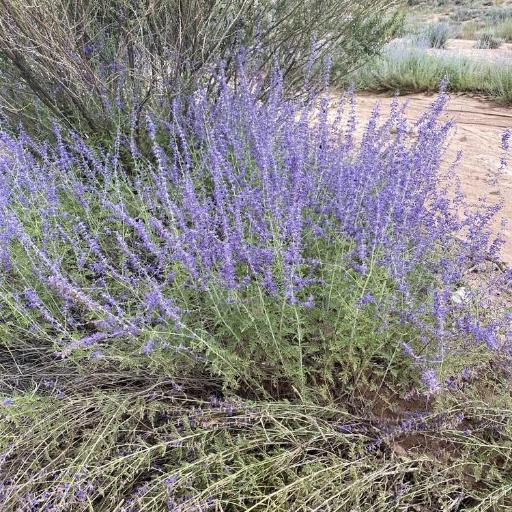
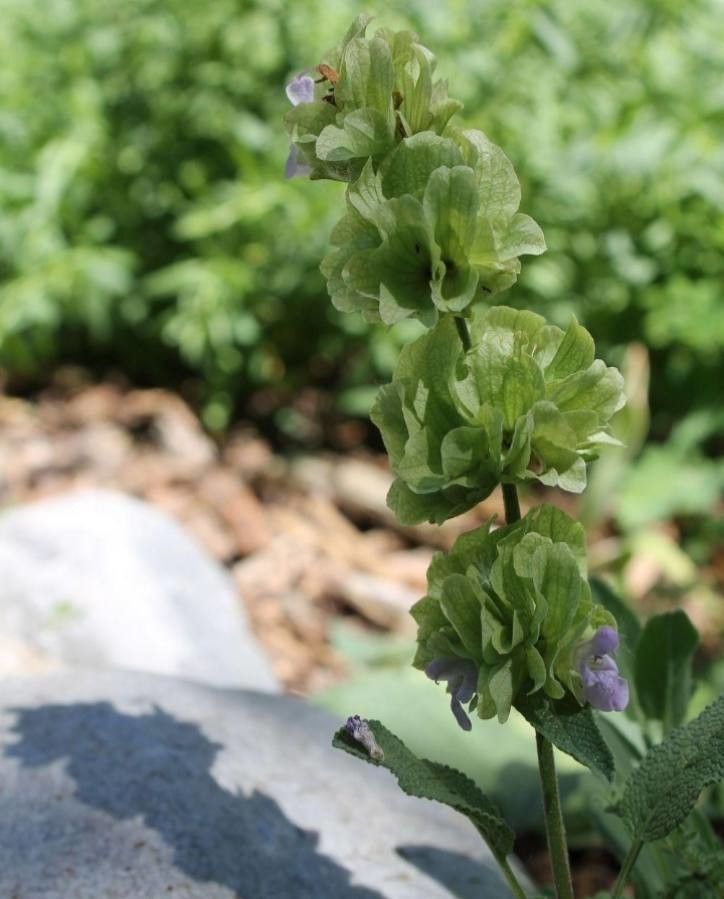
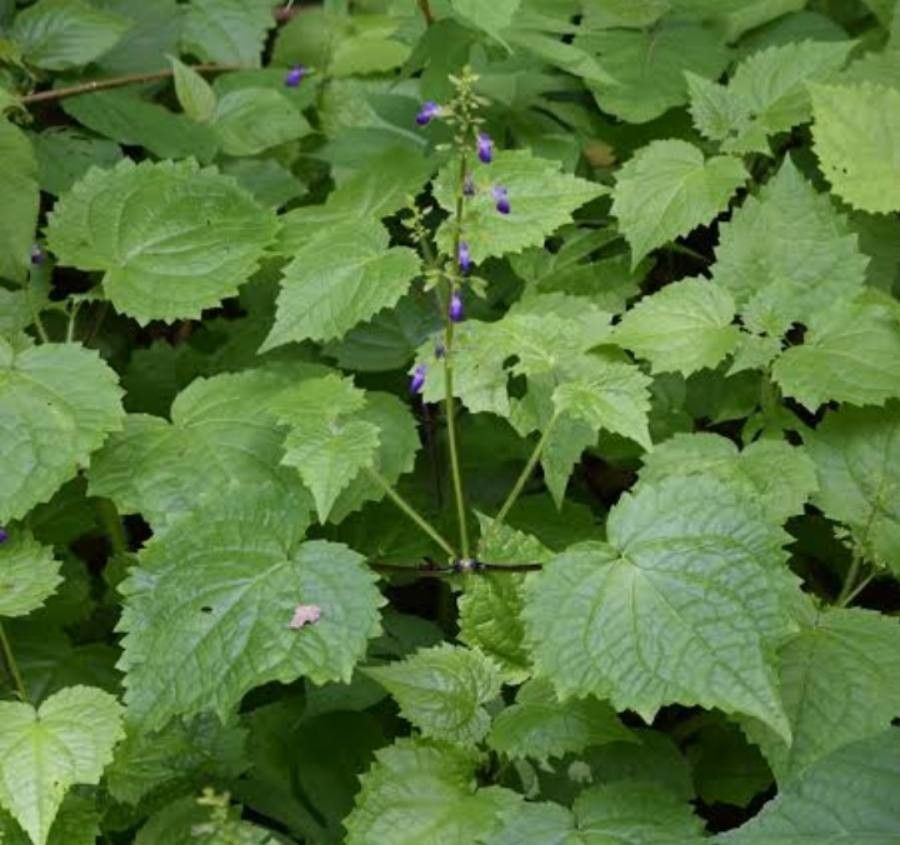
Salvia carduacea, the thistle sage, is a herbaceous perennial shrub native to California and Baja California, found up to 1400 m elevation. It responds drastically to its environment, growing anywhere from 15 cm to 1 m in height. The wooly white basal leaves resemble a thistle's, with long spines, while the flowers grow in whorls on calyces that are wooly and spiny. The flowers are a vibrant lavender with bright orange anthers. The foliage is pungent, with a scent similar to citronella.
Thistle sage has strong disease resistance and is generally not prone to illnesses. However, it can be vulnerable to pests and diseases present in its environment. Those infections are typically mild. Regarding care, this plant needs moderate maintenance. Regular pruning is necessary to preserve a neat appearance and support healthy growth. Fertilizing can also help encourage flowering. Thistle sage is appropriate for anyone with outdoor space, such as a garden or patio, and does not demand extensive care experience. It may require additional attention when grown indoors.
How to keep Salvia Carduacea.
Light
Thistle sage is a sun-loving perennial herbaceous plant that originates from open habitats and commonly thrives in meadows and grasslands. It prefers full sun but can also tolerate partial sun.
Water
Drought-resistant varieties of thistle sage require minimal watering and typically only need extra water during drought conditions. In contrast, tender varieties and young plants should be watered regularly, providing approximately 2.5 cm (1 inch) of water every 7 to 10 days to keep the soil consistently moist.
Temperature
Thistle sage can tolerate a wide spectrum of temperatures, but its range may still be restricted by particular combinations of moisture and heat. It does best in warm summer climates with sufficient rainfall or irrigation. Extended stretches of cloudy, rainy weather, as well as prolonged high temperatures, can raise the chance of Thistle sage dying. In winter, protecting it from the cold can improve its survival chances.
Fertilizer
For Thistle sage, the main time to apply fertilizer is in early spring when the flowers start to form. The proper fertilizer promotes healthier blooms and helps Thistle sage produce attractive flowers. Fertilizing in early spring ensures strong flowering during the season and supplies energy for dormant growth periods.
Pruning
Thistle sage is characterized by its stunning blue-purple flowers and spiny leaves. To encourage healthy growth and maintain its shape, prune the plant in early spring to remove dead stems and spent flowers. Regular pruning also helps improve air circulation and enhances the plant's ornamental appearance. Be sure to always use clean, sharp tools to prevent the spread of disease.
Botanical profile.
- Plant Type
- Herb
- Life Cycle
- Perennial
- Genus
- Salvia
- Family
- Lamiaceae
- Hardiness Zone
- 7-10
- Mature Height
- 30 cm to 61 cm
- Mature Spread
- 30 cm to 46 cm
- Leaf Color
- Gray, Light Gray
- Leaf Type
- Deciduous
- Flower Color
- Lavender
- Flower Size
- 2.03 cm to 3.05 cm
- Bloom Time
- Mid spring, Late spring, Early summer
- Planting Time
- Spring, Summer
- Harvest Time
- Summer
- Native Area
- Mexico