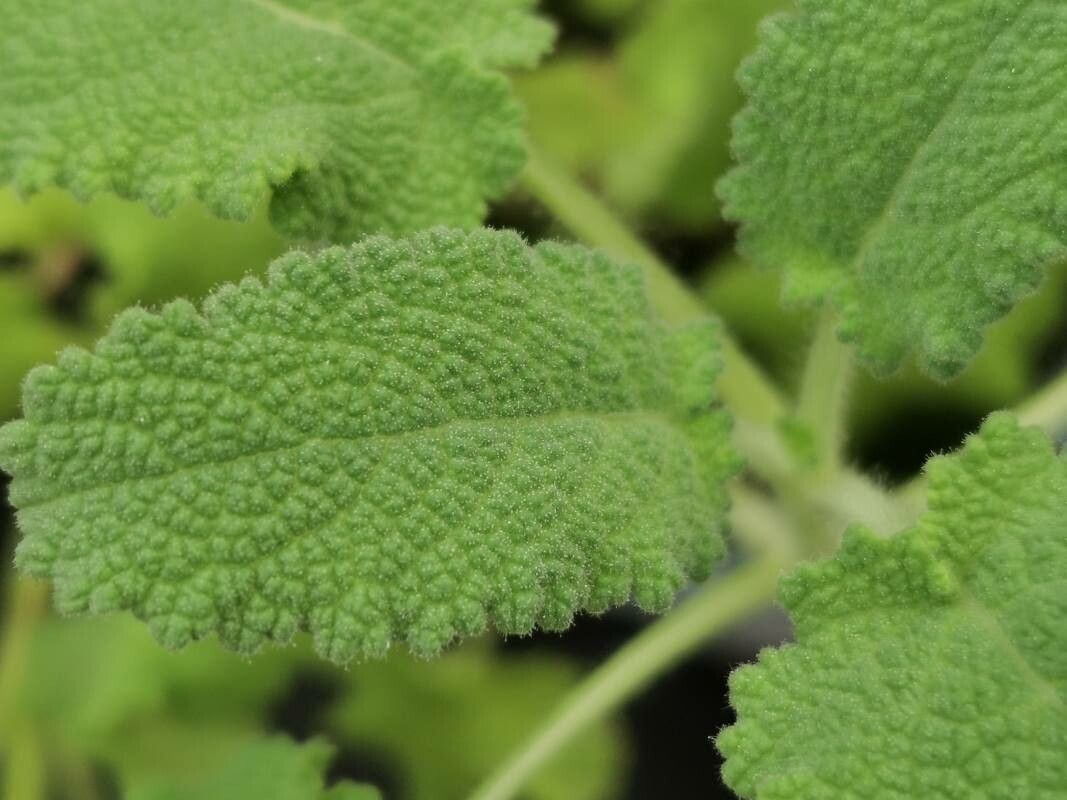
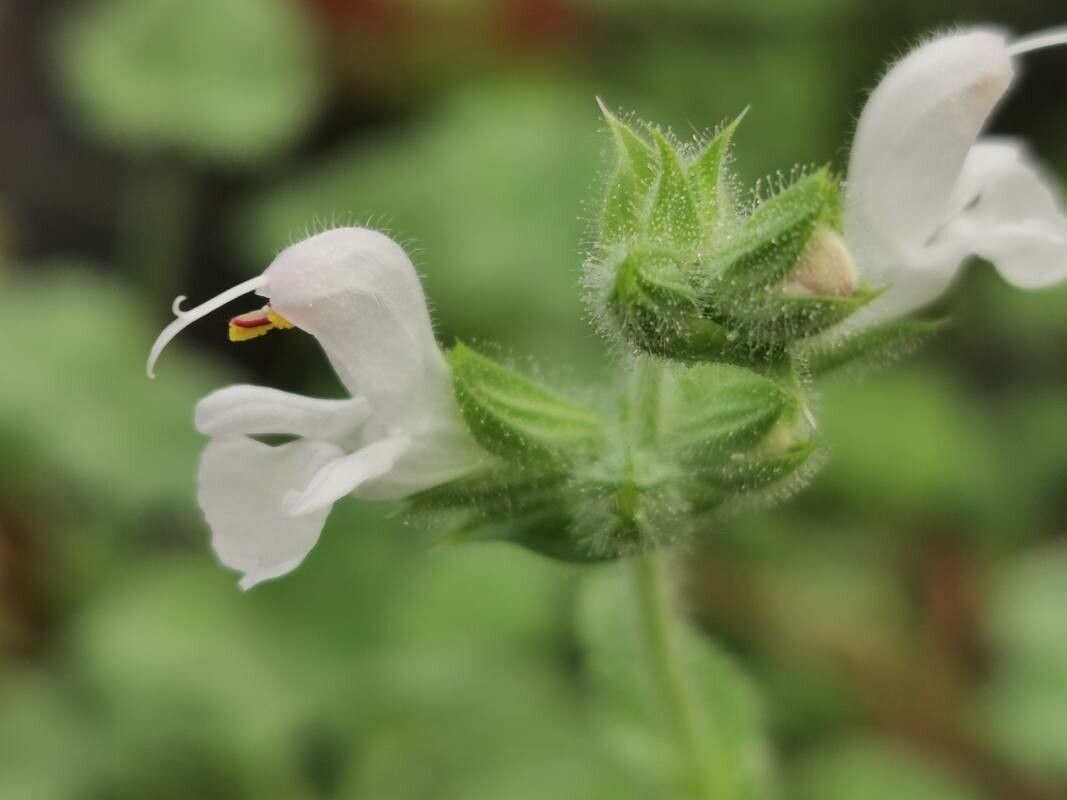
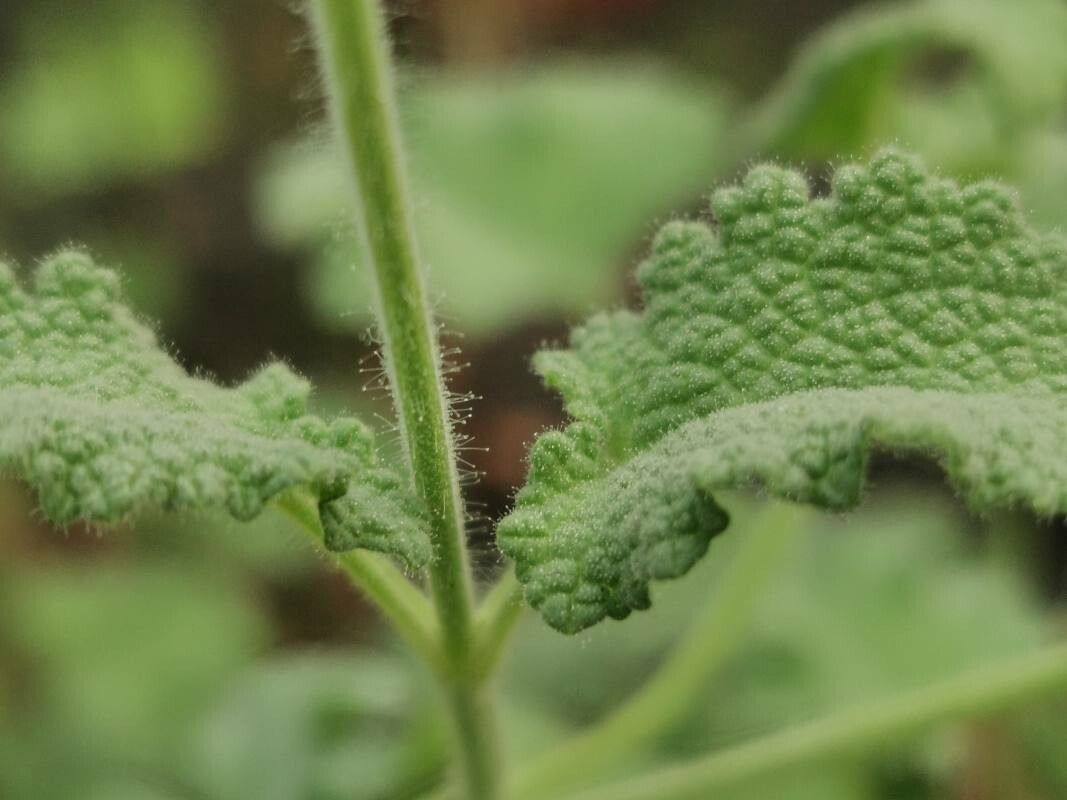
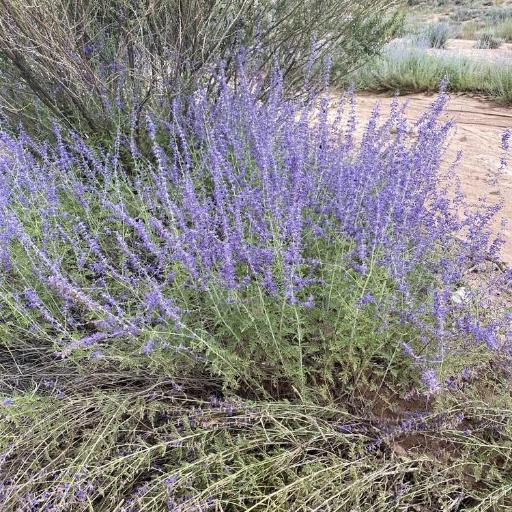
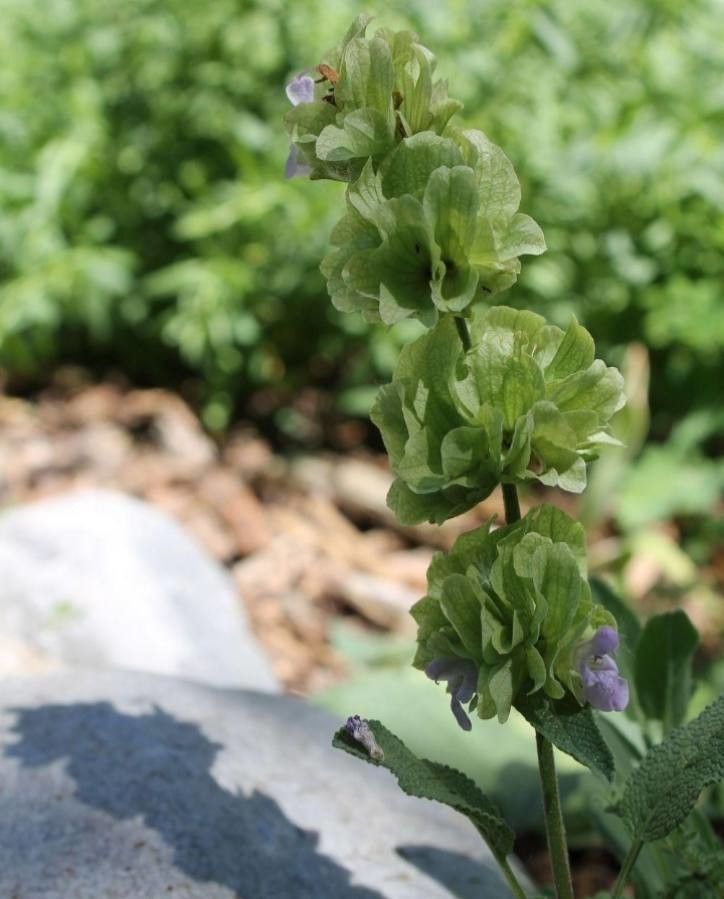
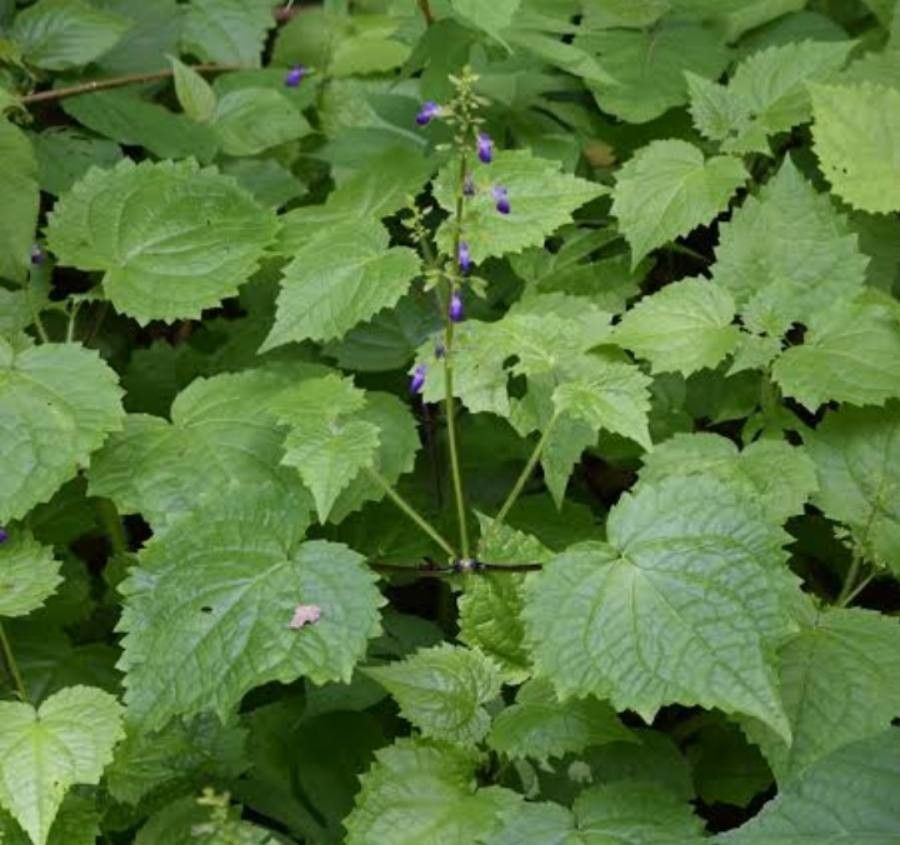
Salvia disermas is a herbaceous perennial shrub native to South Africa (the Cape Provinces, the Free State and the Northern Provinces), found in streambeds, moist forest, grassland, and disturbed ground. It was originally specified as rugosa, but was changed to disermas. It grows throughout west Africa, with its greatest concentration in South Africa, where it is used medicinally as a tea, and as a lotion for treating sores. Salvia disermas is an evergreen that reaches about 2 ft (0.61 m) in height and width, with numerous stems growing from the rootstock, each with multiple inflorescences that curve upward. The icy white to pale mauve flowers are less than 1.5 in (3.8 cm) long and held in a small green calyx. The individual flowers are not showy, but the plant blooms profusely, and is rarely out of bloom. The long narrow leaves are pale apple-green with a fragrance similar to hay.
Wild clary shows strong resistance to disease and is generally not prone to illnesses. Still, it can be affected by pests and diseases found nearby. Such infections are typically mild. Regarding care, this plant needs a moderate amount of attention. It should be trimmed on a regular basis to keep a tidy appearance and support healthy growth. Feeding it can also encourage flowering. Wild clary is appropriate for anyone with outdoor space, like a garden or patio, and does not demand extensive plant-care experience. It may need extra care when kept indoors.
How to keep Salvia Disermas.
Light
Wild clary flourishes in locations that receive unobstructed sunlight throughout the day. Its native habitat is naturally bright. In various stages of growth it requires ample sun exposure. Excessive shading can impede growth and overall health, while abundant sunshine is beneficial and not harmful.
Temperature
Wild clary is adapted to temperate regions where temperatures range from 41 to 95°F (5 to 35℃). It naturally prospers in these ambient temperatures. It is important to adjust temperatures, particularly during extreme seasons, to satisfy its needs.
Fertilizer
For Wild clary, the primary time to fertilize is in early spring when the flowers are forming. Using the appropriate fertilizer promotes better blooms and helps Wild clary produce attractive flowers. Fertilizing in early spring ensures strong flowering during the season and supplies energy for dormant growth phases.
Botanical profile.
- Plant Type
- Herb
- Life Cycle
- Perennial
- Genus
- Salvia
- Family
- Lamiaceae
- Hardiness Zone
- 5-9
- Mature Height
- 61 cm
- Mature Spread
- 46 cm
- Leaf Color
- Green, Gray
- Leaf Type
- Semi-evergreen, Deciduous
- Flower Color
- Purple, Violet
- Flower Size
- 0.76 cm to 1.27 cm
- Bloom Time
- Late spring, Early summer, Mid summer
- Planting Time
- Spring
- Harvest Time
- Mid summer
- Native Area
- Libya, Egypt, Turkey, Tunisia, Slovakia, Montenegro, Cyprus, Bulgaria, Greece, Croatia, Slovenia, Morocco, Lebanon, Russia, Serbia, Syria, Italy, Spain, France, Albania, Ireland, United Kingdom, Hungary, Algeria, Portugal
Other names.