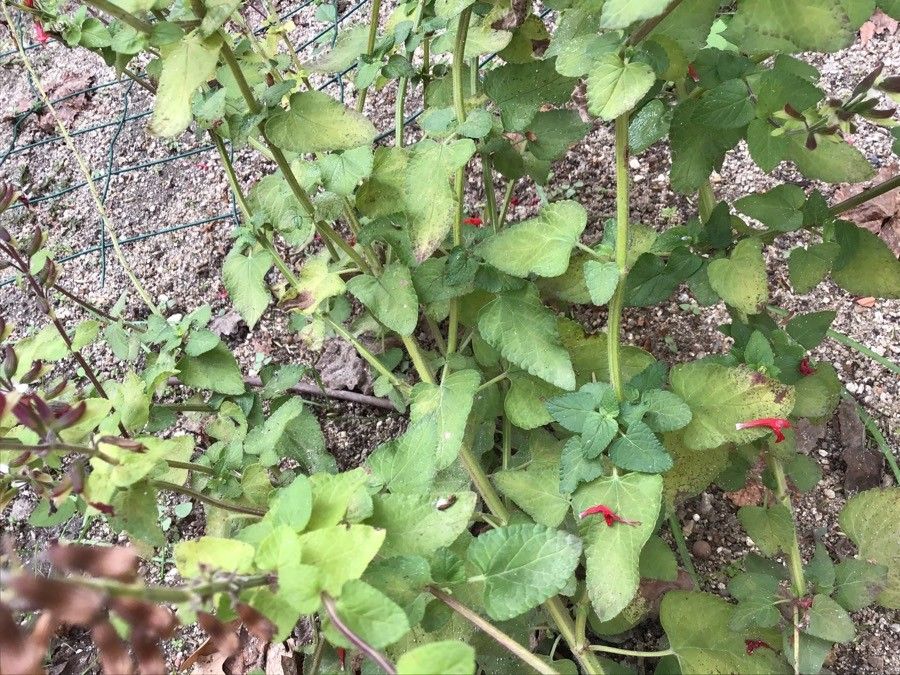
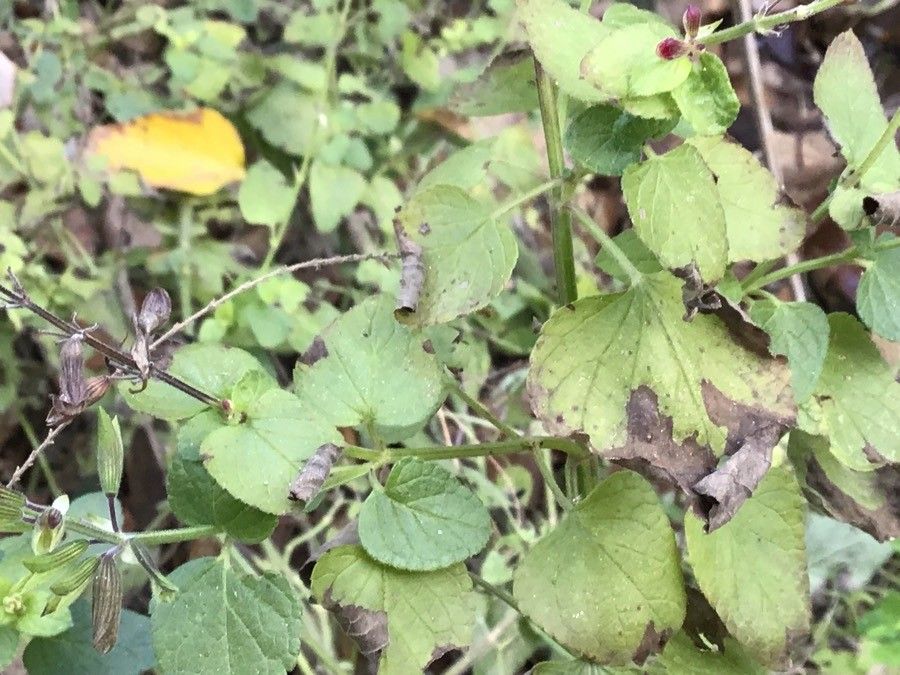
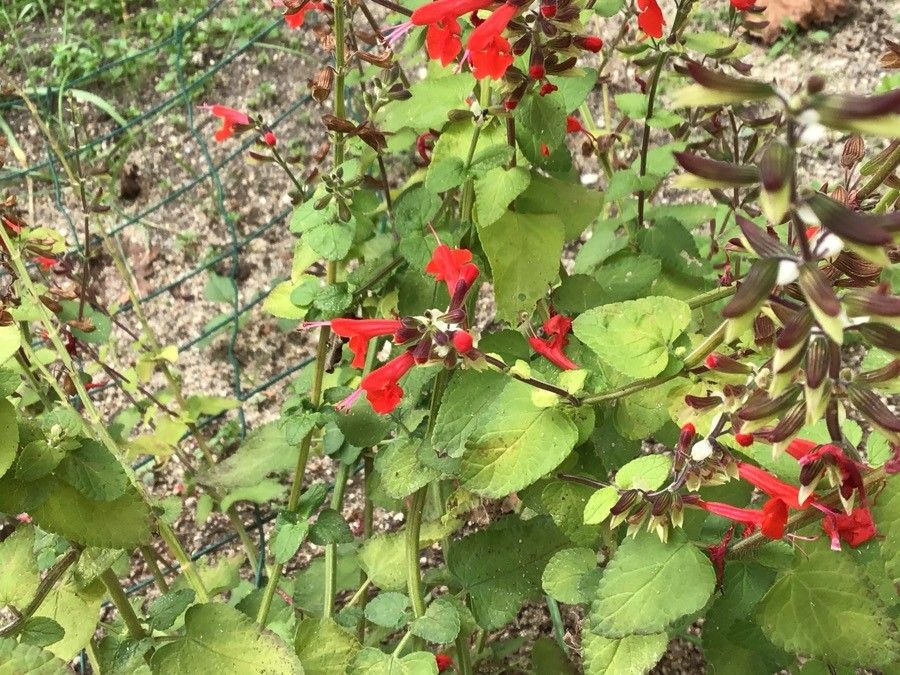
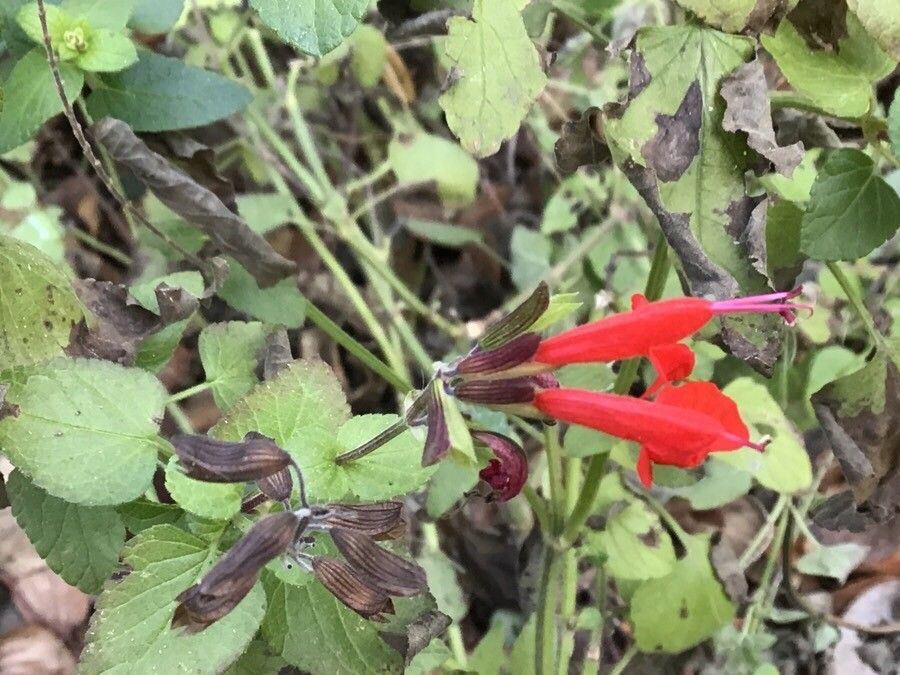
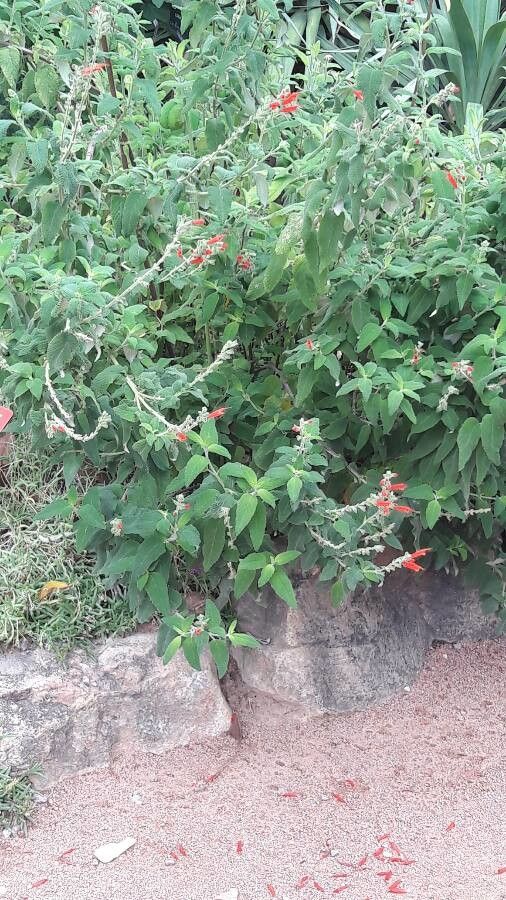
Salvia fulgens, the Cardinal sage or Mexican scarlet sage, is a species of flowering plant native to the Mexican mountains adjacent to the state of Puebla, growing at 8,700-11,000 ft elevation. It prefers the edge of oak and coniferous woodlands, especially in clearings of Abies religiosa. The mountains receive fog and rain nearly year-round.
Mexican red sage demonstrates strong disease resistance and is generally not susceptible to disease. As for upkeep, this plant is fairly low-maintenance. When grown outdoors it needs only light watering, and larger specimens typically do not require pruning. Smaller plants, however, should be trimmed after they finish blooming. Mexican red sage is appropriate for anyone with outdoor space, such as a garden or deck, and does not demand much gardening experience.
How to keep Salvia Fulgens.
Light
Mexican red sage comes from open habitats, such as sunlit meadows and forest edges, where light is abundant. It does best in Full Sun but can also tolerate Partial Sun, adapting well to a range of sunlight conditions.
Temperature
Mexican red sage is fairly adaptable to heat and can endure high temperatures and considerable temperature swings. In hot weather, care should be taken with watering and by offering adequate shade to avoid sunburn. Conversely, Mexican red sage has limited cold tolerance. While it can handle some chill, very cold conditions can cause frost damage.
Fertilizer
Proper timing is important when fertilizing Mexican red sage. Fertilize in early spring and continue monthly through early summer. Fertilizer promotes attractive blooms and provides energy during both dormant and active growth periods.
Botanical profile.
- Plant Type
- Shrub
- Life Cycle
- Perennial
- Genus
- Salvia
- Family
- Lamiaceae
- Hardiness Zone
- 8-11
- Mature Height
- 0.91 m to 1.52 m
- Mature Spread
- 61 cm to 91 cm
- Leaf Color
- Green
- Leaf Type
- Evergreen, Semi-evergreen
- Flower Color
- Red
- Flower Size
- 2.03 cm to 3.05 cm
- Bloom Time
- Late spring, Summer, Fall
- Planting Time
- Spring, Summer, Autumn
- Harvest Time
- Mid summer, Late summer, Fall, Early winter
- Native Area
- Honduras, Mexico