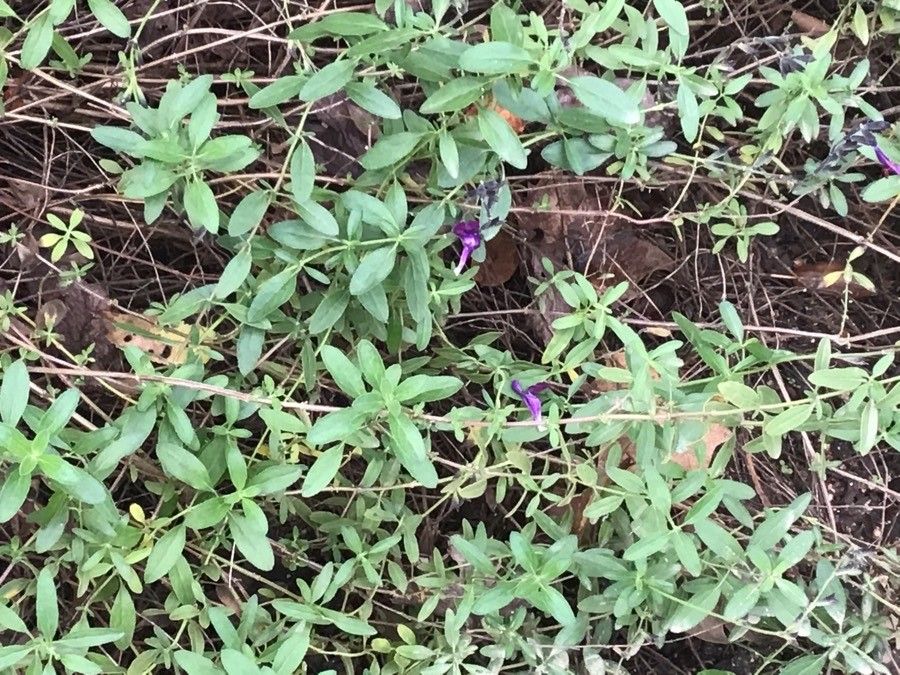
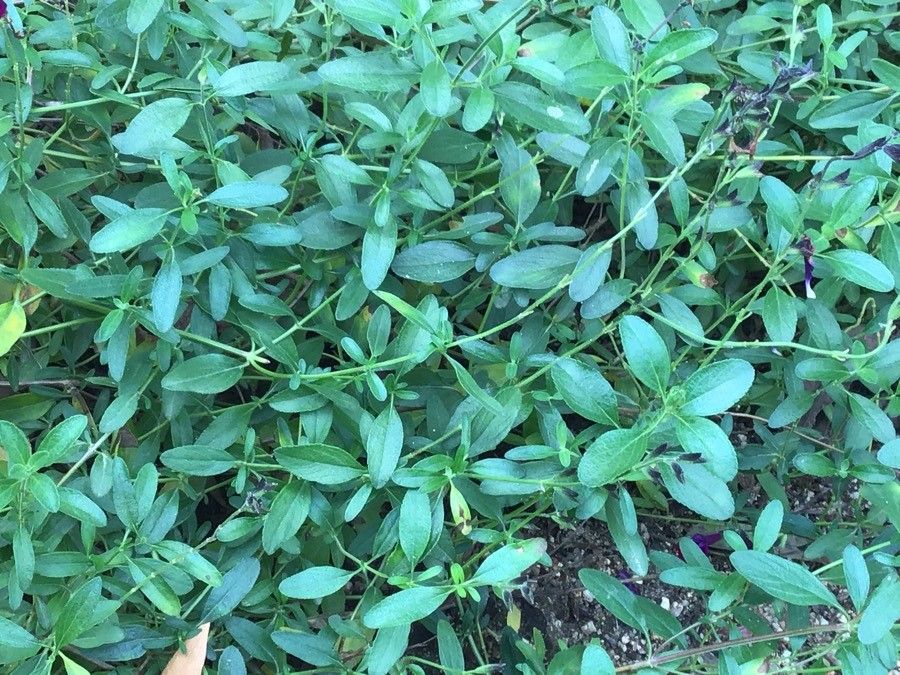
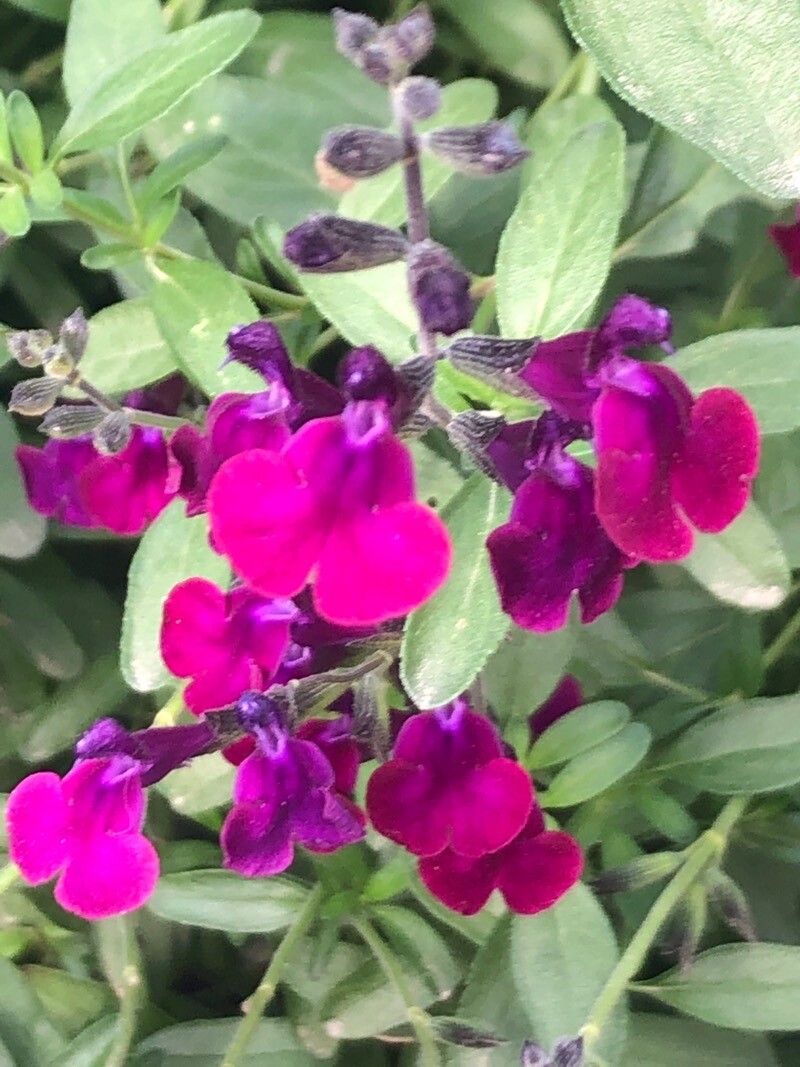
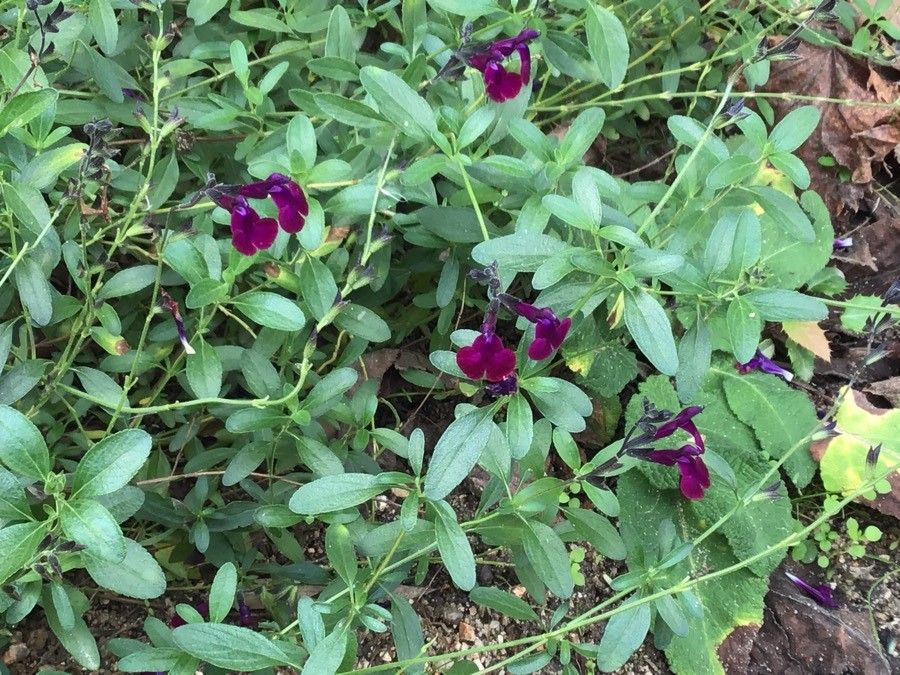
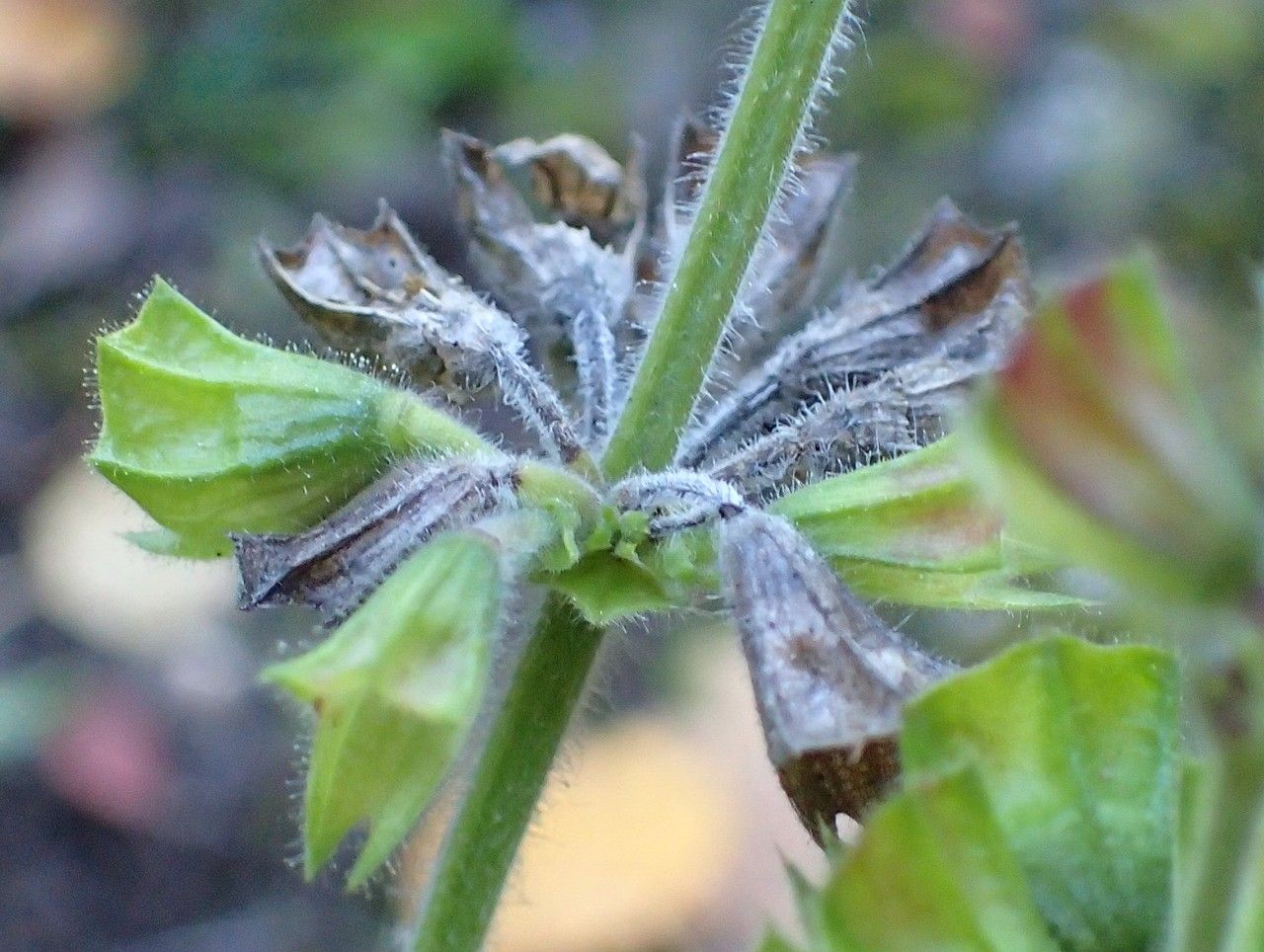
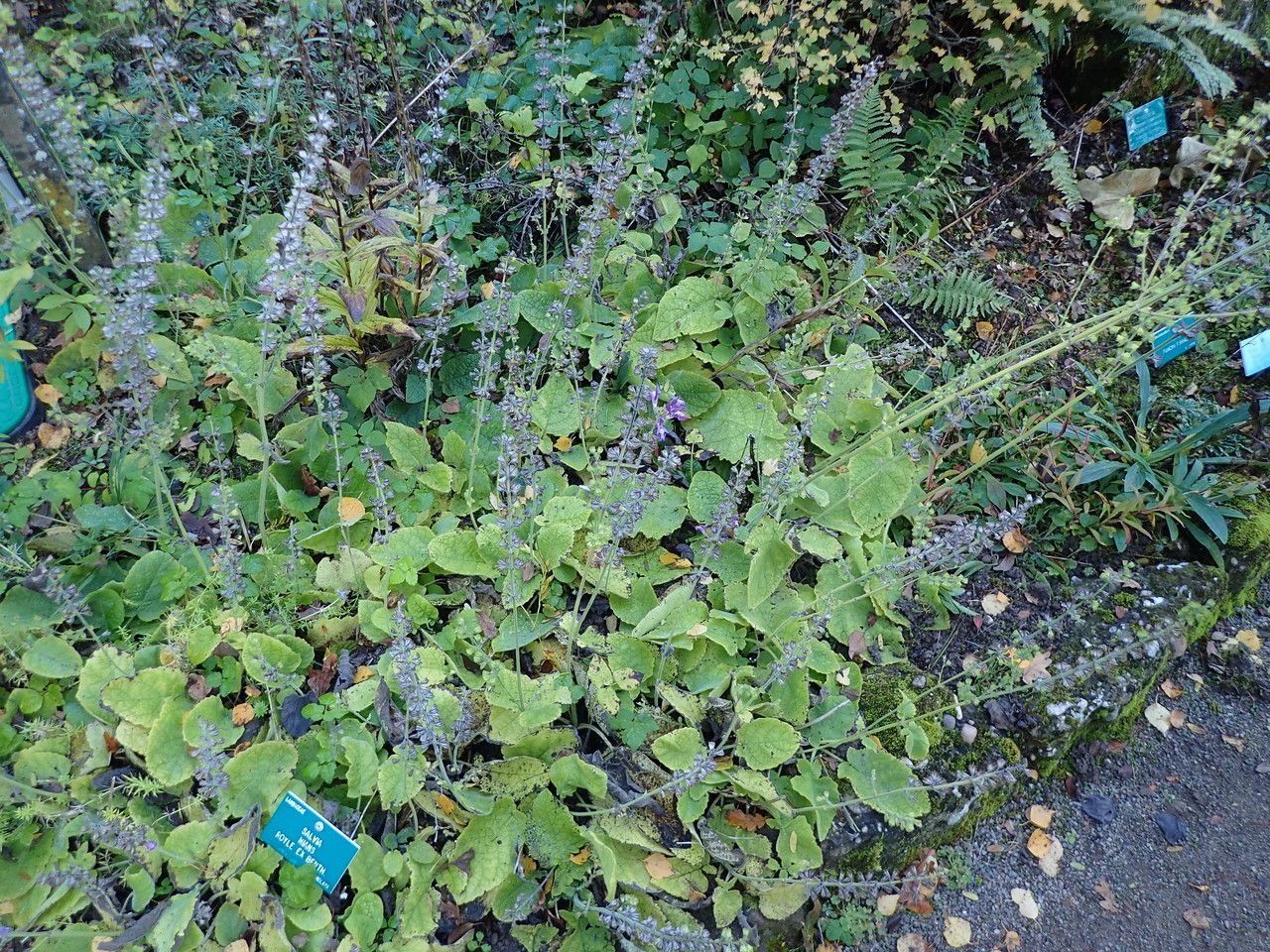
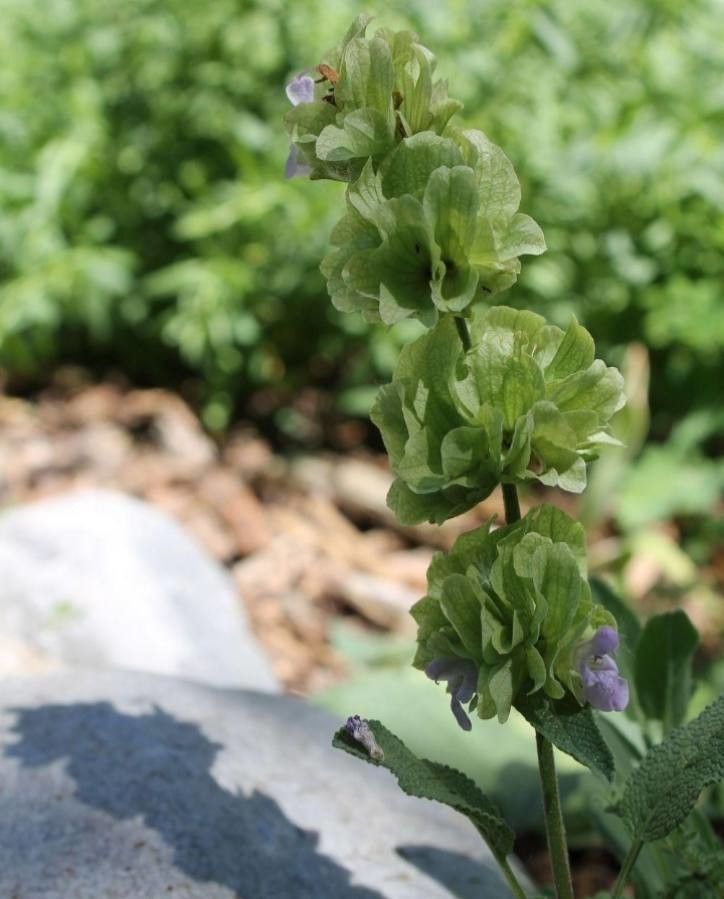
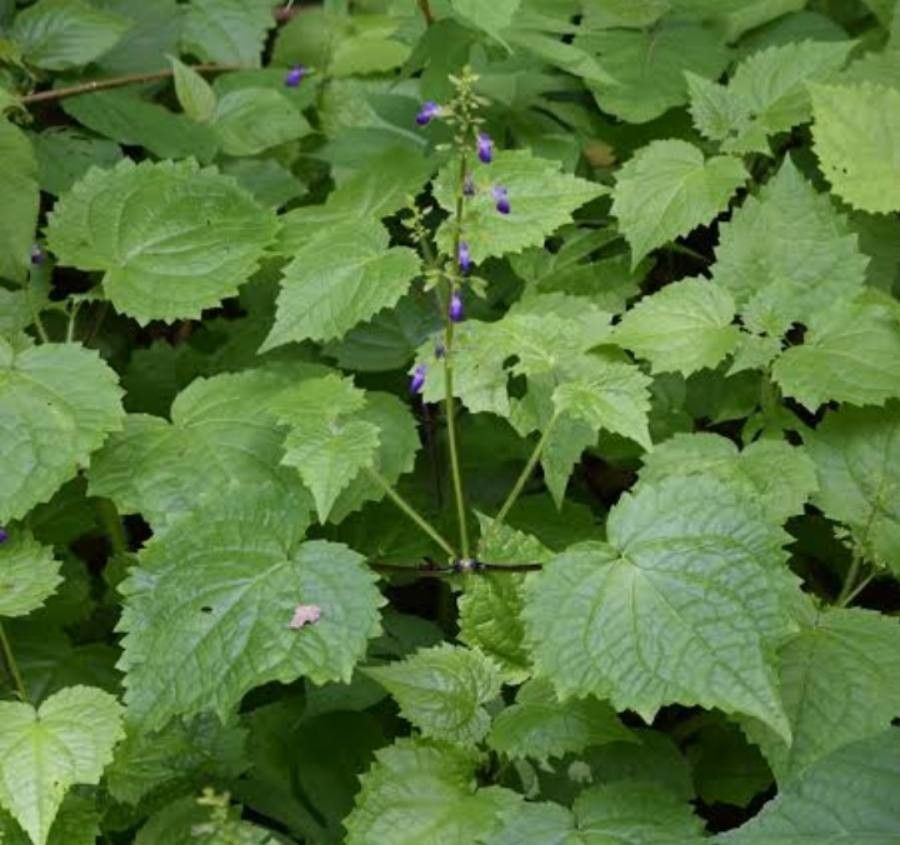
Salvia hians is a mound-forming perennial, native to the Himalayas from Pakistan to Bhutan. It is common in Kashmir, growing at elevations from 2,400 to 4,000 m (7,900 to 13,100 ft) on open slopes and forests. The plant was described in 1830 by John Forbes Royle, a British botanist living in India who studied the medicinal properties of Himalayan plants.Salvia hians forms a mound reaching 0.6 to 0.9 metres (2 to 3 ft) tall by 0.6 m (2 ft) wide. The leaves are broadly ovate and basally cordate to hastate, with the margins having a mixture of blunt and sharp teeth. The leaves are slightly hairy, and grow up to 25 cm (10 in) long. The flowering stems are held well above the foliage and are much branched, and the flowers are loosely arranged into 4 to 6 flowered whorls. The purple, violet to deep blue, or rarely white corolla is up to 50 mm long and 15 mm wide at the throat, and the tube is somewhat curved. The calyx is 12–15 mm, very sticky and often purple or violet, and broadly obovate to campanulate in shape, those plants common in cultivation have an unusual dark brownish red color. The flower has a gap between the two lips, described by the specific epithet, hians, which means 'gaping', with the lower lip larger than the upper. In India, the roots of S. hians are used as a stimulant; in Nepal they are reportedly used as a remedy for dysentery.
Gaping-flowered sage has strong disease resistance and generally does not suffer from many illnesses. However, it can be affected by pests and diseases present in its environment. These issues are usually minor. In terms of care, this plant needs moderate upkeep. It should be pruned regularly to maintain a tidy appearance and healthy growth. Fertilizing can also help encourage flowering. Gaping-flowered sage is suitable for anyone with outdoor space, such as a garden or patio, and does not demand extensive care experience. It may need extra attention when grown indoors.
How to keep Salvia Hians.
Light
Gaping-flowered sage is a herbaceous perennial that prefers sunny, open habitats and commonly grows in meadows and grasslands. It favors full sun but can also tolerate partial sun.
Water
Gaping-flowered sage thrives in well-drained soil with moderate moisture levels. It requires watering every 1-2 weeks, allowing the soil to dry slightly between waterings. Its resilience to different rain patterns makes it suitable for a variety of climates, and it is often grown outdoors because of its hardiness.
Fertilizer
For Gaping-flowered sage, the primary time to apply fertilizer is in early spring when flowers are forming. The proper fertilizer promotes better blooms and helps Gaping-flowered sage produce attractive flowers. Fertilizing in early spring ensures excellent flowering during the season and supplies energy for dormant growth phases.
Pruning
Gaping-flowered sage is known for its large, vibrant blooms. To keep the plant healthy and looking its best, prune it from early to late spring. Trimming the stems encourages bushy growth, helps remove dead wood, and maintains the plant's shape. By pruning at the right time, you promote healthy foliage and an abundance of flowers, enhancing the plant's overall appearance.
Botanical profile.
- Plant Type
- Herb
- Life Cycle
- Perennial
- Genus
- Salvia
- Family
- Lamiaceae
- Hardiness Zone
- 5-9
- Mature Height
- 61 cm
- Mature Spread
- 61 cm
- Leaf Color
- Green, Gray
- Leaf Type
- Deciduous
- Flower Color
- Lavender
- Flower Size
- 2.03 cm to 3.05 cm
- Bloom Time
- Summer
- Planting Time
- Spring, Summer, Autumn
- Harvest Time
- Late summer, Early fall, Mid fall
- Native Area
- Nepal, Pakistan, India
Reader questions.
What are the sunlight requirements for Gaping-flowered sage?
Gaping-flowered sage, or Salvia hians, thrives in varying amounts of sunlight, depending on your garden's layout and its specific needs. For optimal growth, it requires full sun, which means the plant should receive above 6 hours of sunlight daily. However, it can also grow well in partial sun, defined as about 3-6 hours of sunlight daily. It's important to observe your garden throughout the day to determine the best spots that offer a harmonious balance of light and shade. This observation will ensure the best possible growth conditions for your plants, guaranteeing their wellbeing in your garden.