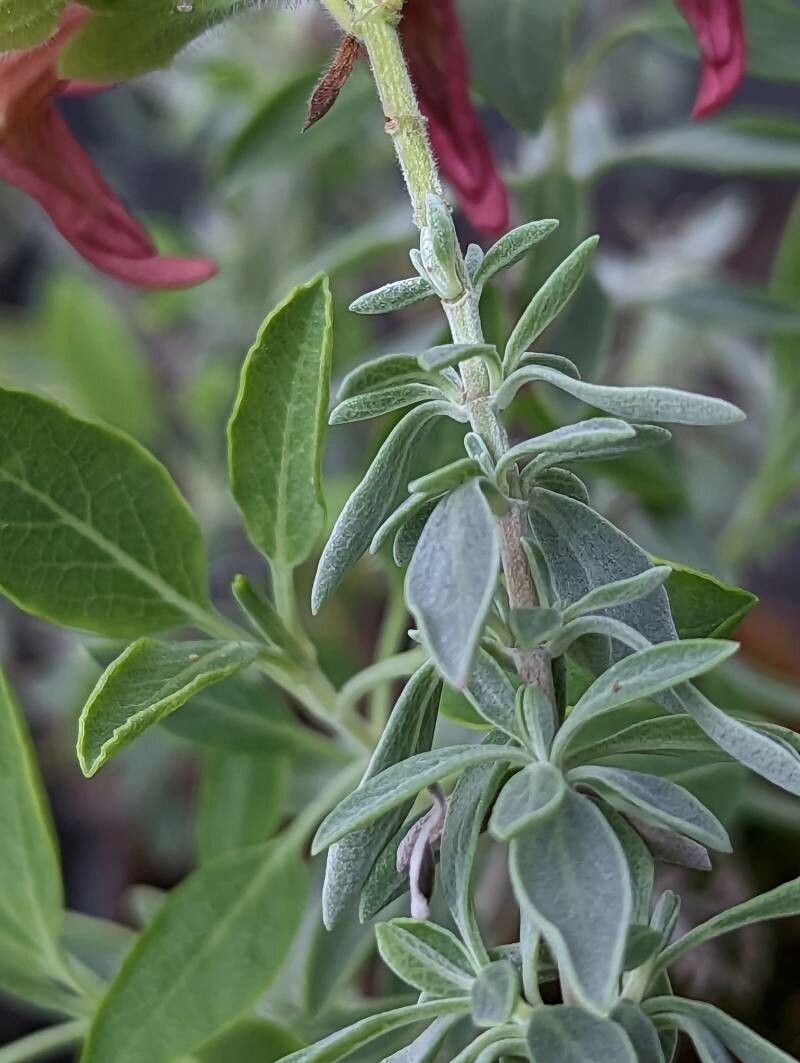
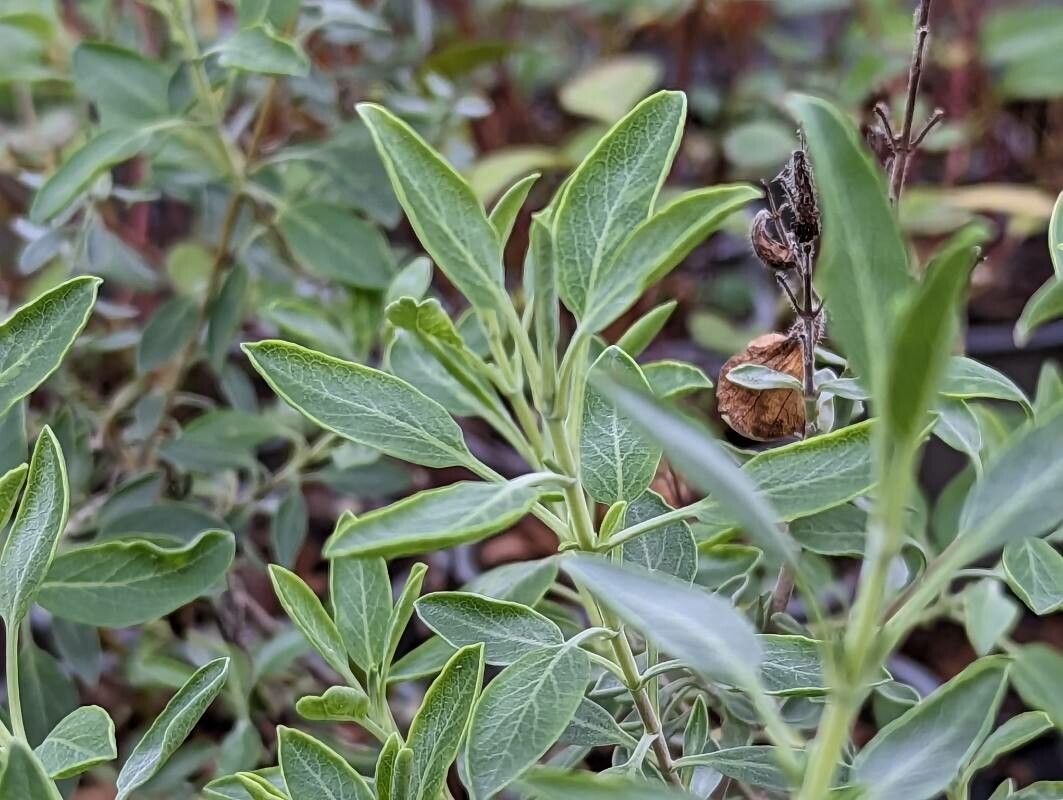
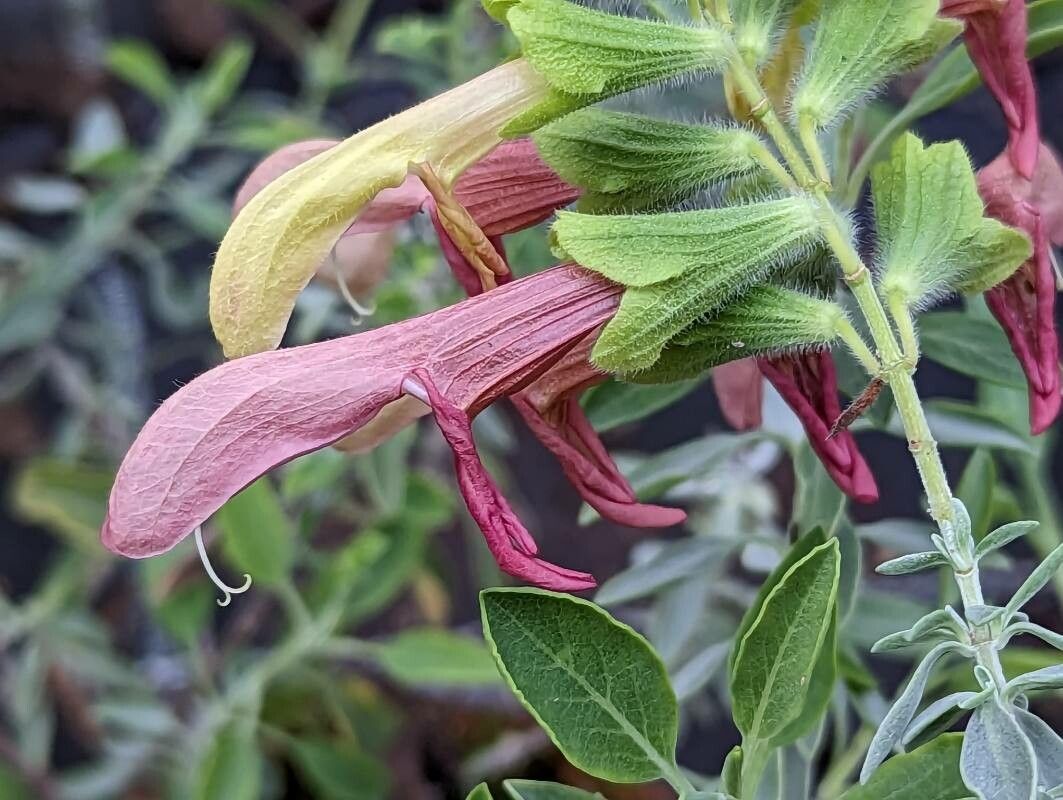
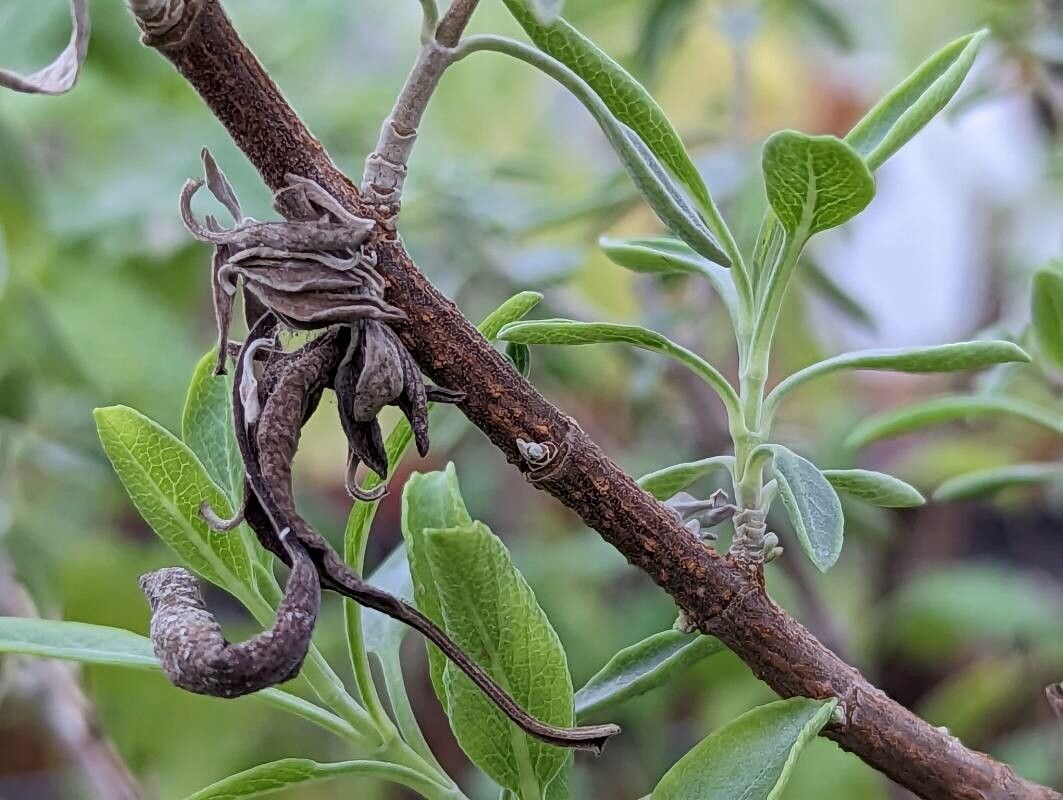
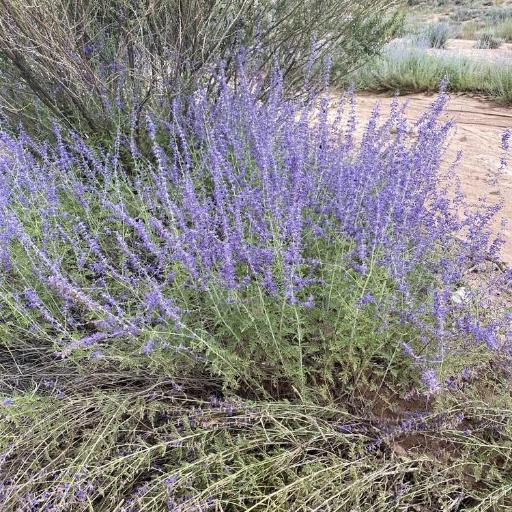
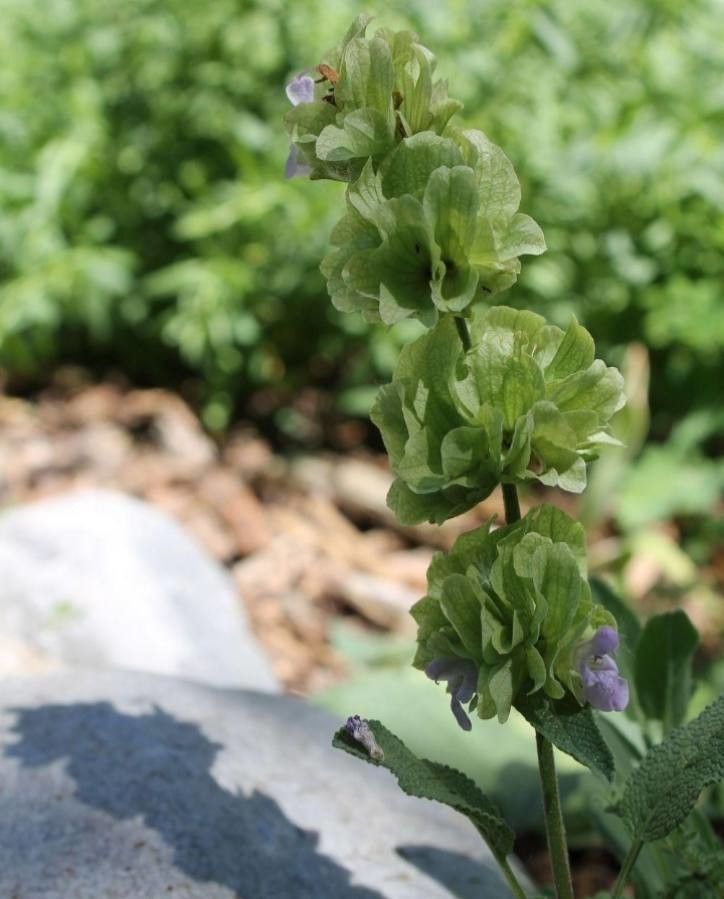
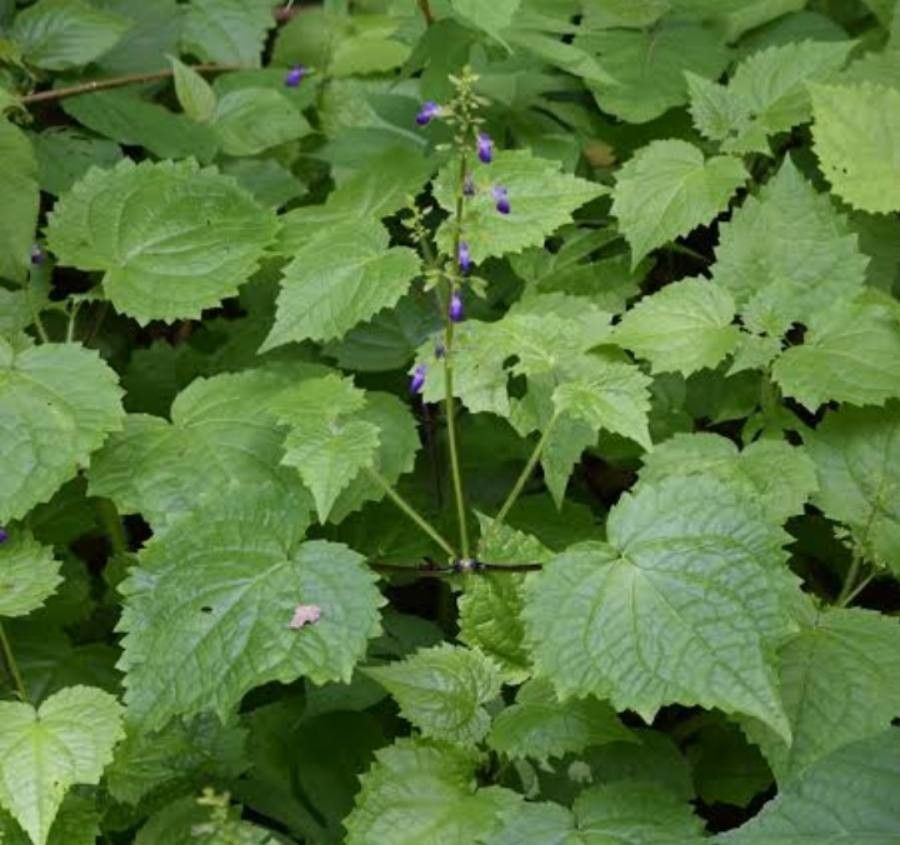
Salvia lanceolata is a perennial shrub native to a small area of coast on the Cape of Good Hope in South Africa. It is typically found growing in sandy ground at sea level, and on dry hills and flat ground up to 1000 feet elevation. Jean-Baptiste Lamarck, a pioneer in evolutionary theory, first described and named the plant "lanceolata" in 1791. Swedish botanist Carl Peter Thunberg, who was delayed in South Africa on the way to Japan, first collected it nearly twenty years earlier, along with approximately 3,000 plants that he later described. It wasn't until 1800 that Thunberg gave the plant the specific epithet "nivea", meaning 'snowy' in Latin, referring to the color of the foliage. Because of the rules of nomenclature, Lamarck's name had precedence because he was the first to name it.
Bog sage has strong resistance to disease and is generally not highly susceptible to illnesses. However, it can be affected by pests and diseases present in its surroundings. These infections are usually mild. In terms of care, this plant requires a moderate amount of maintenance. It should be pruned regularly to preserve its appearance and encourage healthy growth. Fertilizing can also help promote flowering. Bog sage is suitable for anyone with outdoor space, such as a garden or patio, and does not demand extensive plant-care experience. It may need more attention when grown indoors.
How to keep Salvia Lanceolata.
Light
Bog sage needs large amounts of sunlight to flourish, though it can tolerate moderate sun exposure. Ongoing exposure to abundant light promotes healthy growth. Native to sunlit habitats, it can handle reduced light levels but excessive shade will impede its growth.
Temperature
Bog sage is native to areas where temperatures generally range from 68 to 95 °F (20 to 35 ℃). These plants favor warmer conditions and may require protection or be brought indoors during cooler months.
Fertilizer
The best time to fertilize a Bog sage is early in the spring, as it comes out of dormancy and begins active growth. Fertilizing supplies essential nutrients for healthy development. Although Bog sage has relatively low fertilizer requirements, yearly fertilization can improve its survival and result in better, longer-lasting flowers.
Botanical profile.
- Plant Type
- Herb
- Life Cycle
- Perennial, Annual
- Genus
- Salvia
- Family
- Lamiaceae
- Hardiness Zone
- 6-10
- Mature Height
- 1.22 m to 1.52 m
- Mature Spread
- 1.22 m to 2.44 m
- Leaf Color
- Green
- Leaf Type
- Deciduous
- Flower Color
- Blue
- Flower Size
- 2.54 cm
- Bloom Time
- Mid summer, Late summer, Fall
- Planting Time
- Spring
- Harvest Time
- Late summer, Fall, Early winter