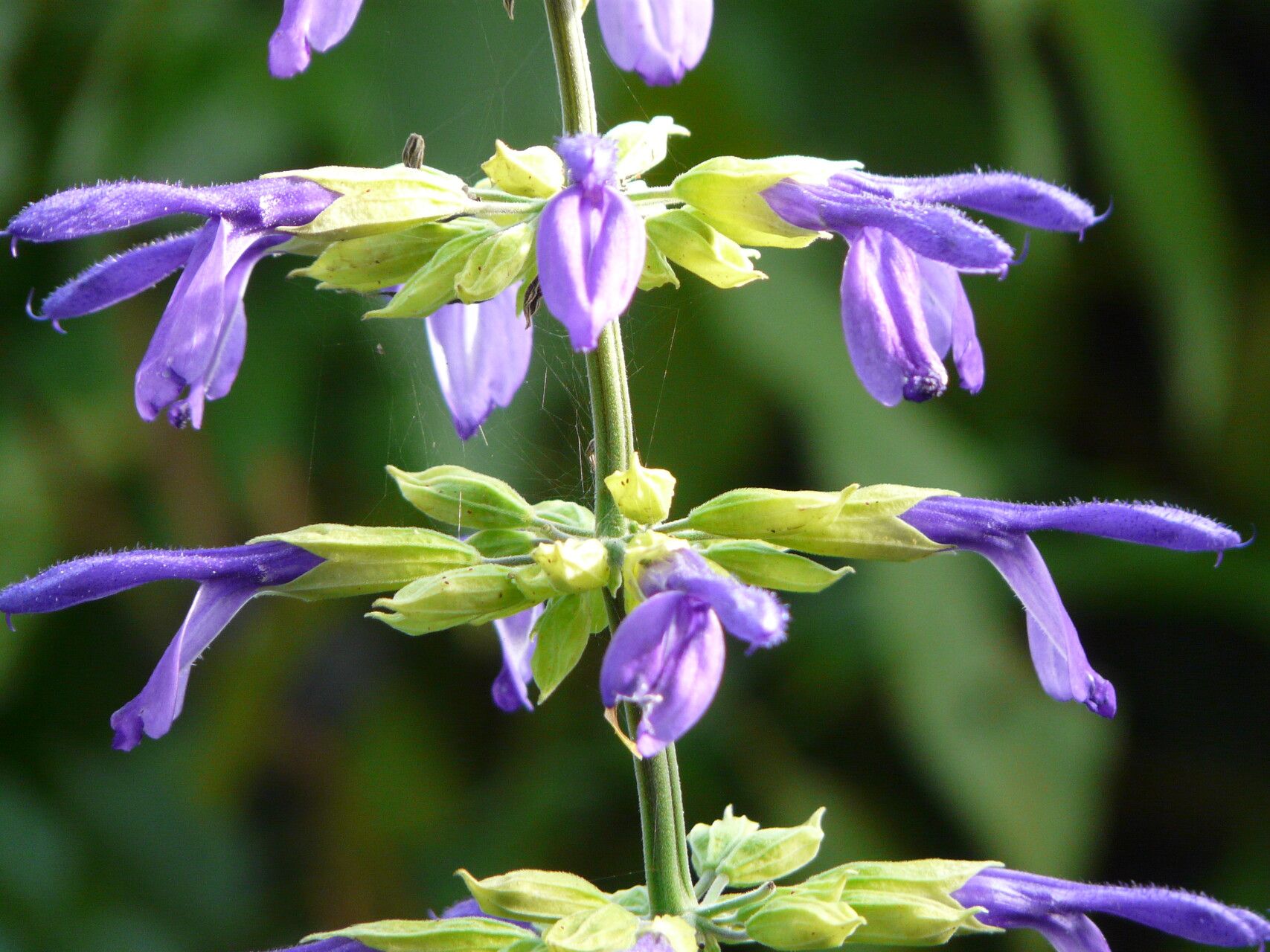
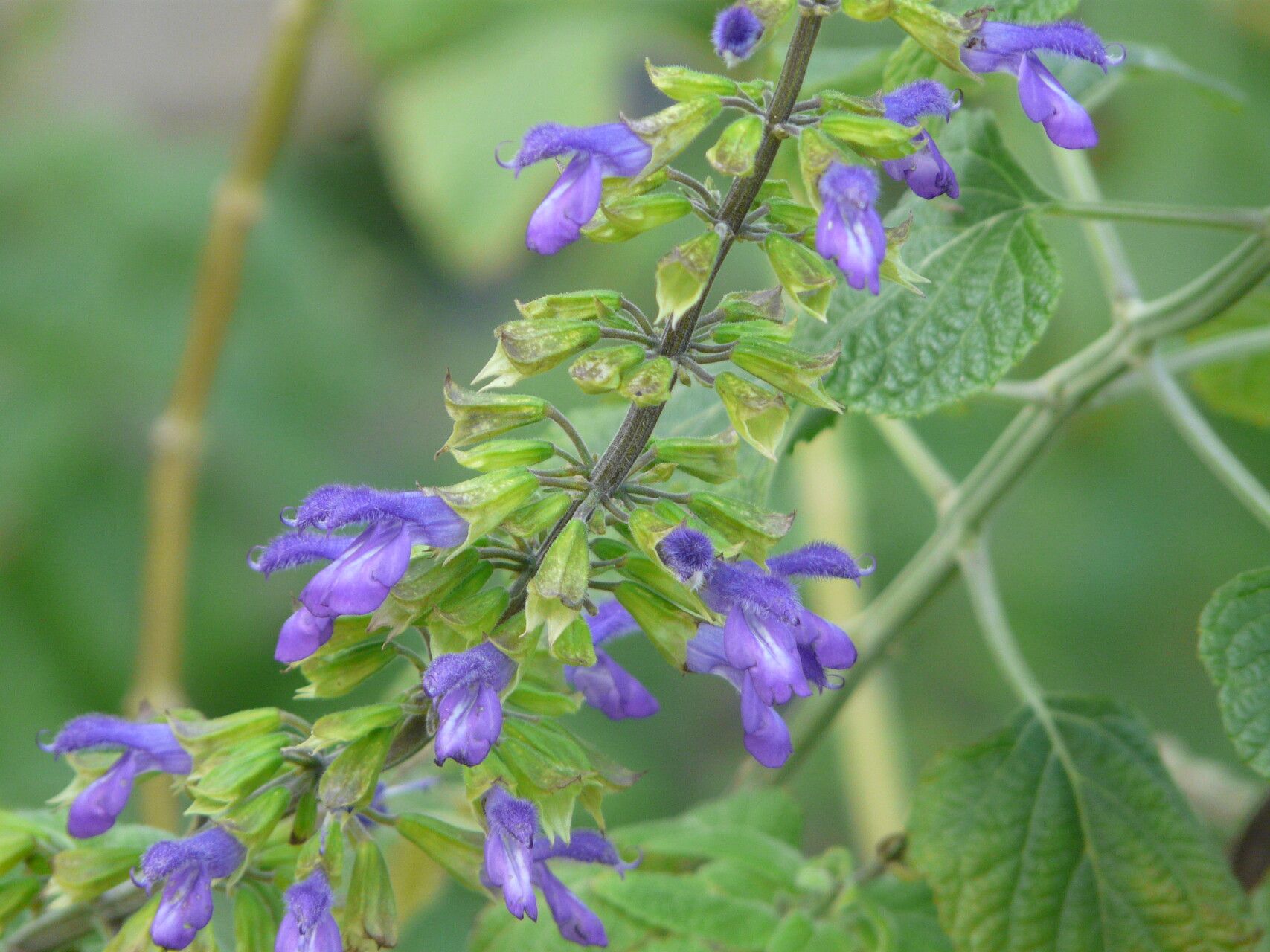
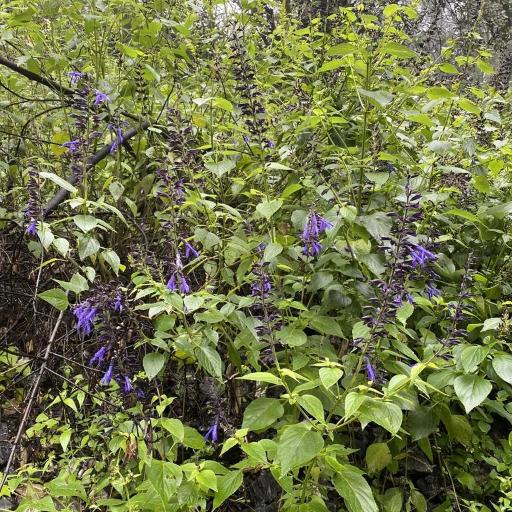
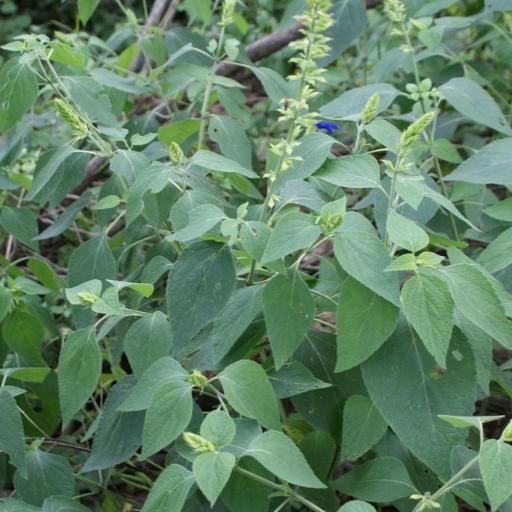
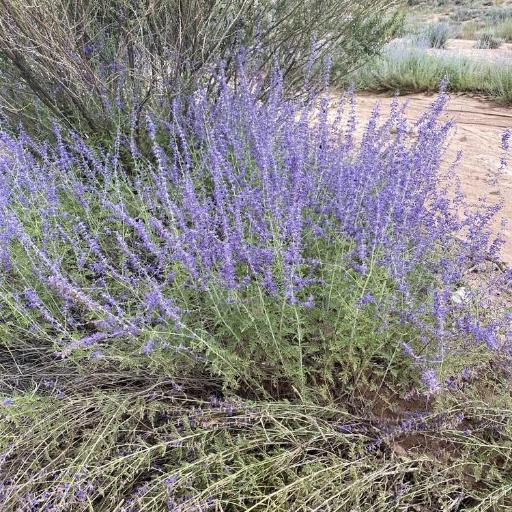
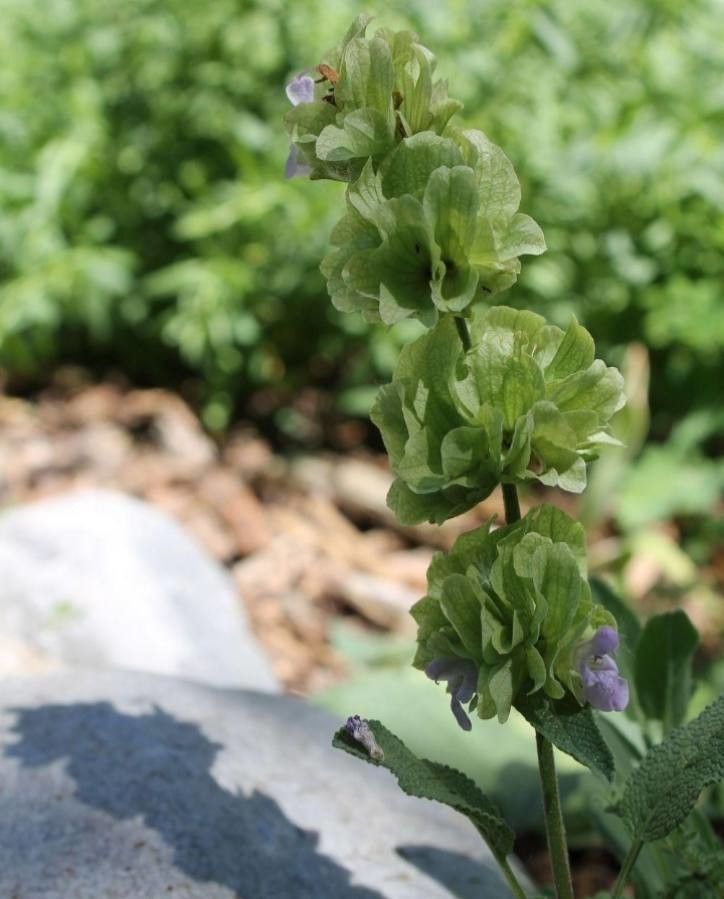
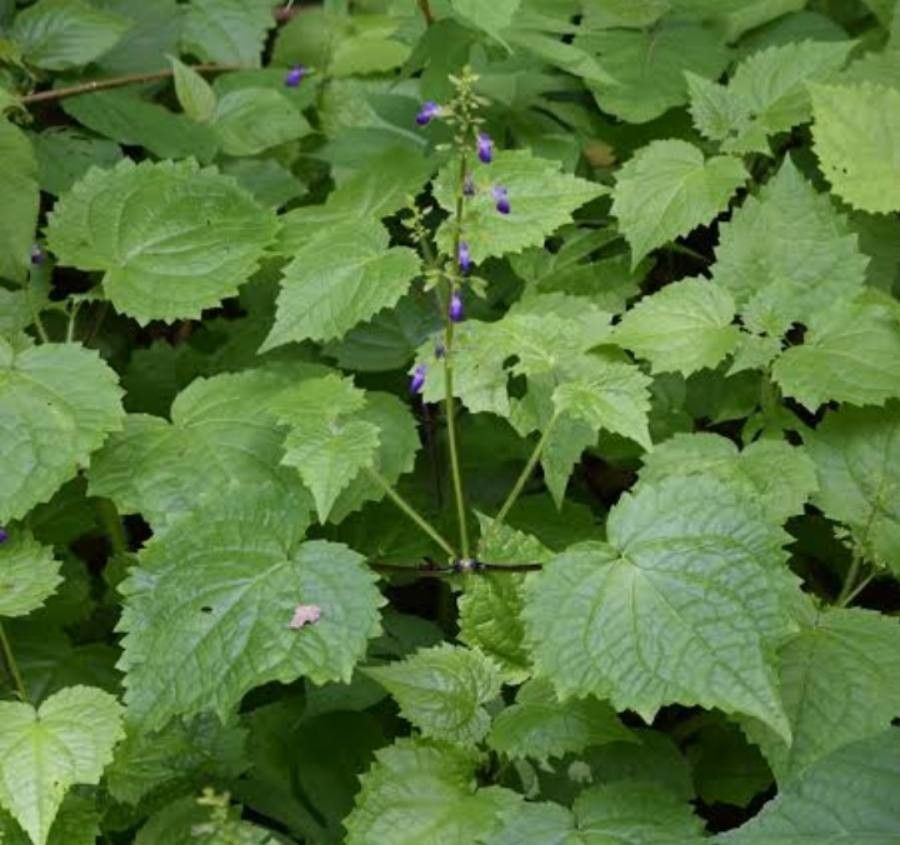
Salvia mexicana (Mexican sage) is a herbaceous shrubby perennial native to a wide area of central Mexico, growing at elevations from 2,600 to 8,500 feet (800 to 2,600 metres). It grows in tropical areas in the south and arid subtropical habitats in the north, often at the edges of forests.Salvia mexicana grows 3 to 9 feet (0.9 to 2.7 metres) tall and 3 to 4 feet (0.9 to 1.2 metres) wide in cultivation, with leaves ranging from mid-green and glabrous, to gray green with short hairs. The inflorescences also vary, in length and in size of flower. The color of flowers and calyces range from midnight-purple to purple-blue. The flowers bloom in late summer, in whorls that are produced abundantly for several months. The earliest records of Salvia mexicana in horticulture are beginning in the 1970s at several botanical gardens. One popular cultivar is 'Limelight' (pictured at right), collected in the state of Querétaro, which has violet-blue flowers with large chartreuse-green calyces. 'Lollie Jackson' is a compact cultivar; 'Ocampo' is an upright cultivar growing to 7 feet (2 metres) — both are commonly sold in nurseries.
Mexican Sage: As indicated by both its common and scientific names, Mexican sage (Salvia mexicana) is a type of ornamental sage native to various regions of central Mexico. One notable cultivar, Salvia mexicana 'Limelight,' earns its name from its vibrant chartreuse foliage, which contrasts beautifully with its deep bluish-purple flowers.
Mexican sage is fairly disease-resistant and typically does not suffer from diseases. However, it can be affected by pests and diseases present in its surroundings. These problems are usually mild. In terms of care, this plant needs moderate maintenance. It should be pruned regularly to maintain a neat appearance and healthy growth. Fertilizing can also help encourage flowering. Mexican sage is suitable for anyone with an outdoor area, such as a garden or patio, and does not demand much care experience. It may need more attention when kept indoors.
How to keep Salvia Mexicana.
Light
The mexican sage thrives with abundant sunlight, which is essential for its growth and survival. Originating in sun-rich environments, it usually needs those conditions throughout its various growth stages. Too much sun wouldn't harm it, but too little can lead to a decline in health.
Water
Mexican sage thrives in tropical climates, where it prefers regular hydration and consistent moisture. It requires watering on a weekly basis. Although it can withstand short periods of dryness, receiving rainwater during the growing season greatly enhances its vitality and blooming. This quality makes Mexican sage a popular choice for outdoor gardens.
Temperature
Mexican sage is native to climates where temperatures usually fall between 68 and 95°F (20 to 35℃). It prefers warmer conditions, but with proper seasonal adjustments it can also acclimate to cooler areas.
Fertilizer
The optimal period to nourish a Mexican sage is during early spring when it transitions from dormancy into its growth phase. Enriching the soil provides essential nutrients required for robust growth. Even though the Mexican sage's demand for fertilization is fairly low, administering it annually can improve its lifespan and contribute to more vibrant and long-lasting blooms.
Pruning
Mexican sage is a beautiful perennial known for its vibrant blue flowers and fragrant leaves. To maintain its health and appearance, prune it in early spring to remove any dead stems and thin out crowded areas, which will improve air circulation. Regular pruning, along with rejuvenation pruning every few years, encourages compact growth and abundant blooming.
Pot & Repot
To ensure optimal growth, repot Mexican sage every 2 to 3 years during the spring. Choose larger pots with well-draining soil and maintain a regular watering schedule to support the plant's recovery. With proper care, Mexican sage will produce vibrant blooms and aromatic leaves.
Botanical profile.
- Plant Type
- Herb
- Life Cycle
- Perennial, Annual
- Genus
- Salvia
- Family
- Lamiaceae
- Hardiness Zone
- 7-10
- Mature Height
- 0.91 m to 2.74 m
- Mature Spread
- 0.91 m to 1.22 m
- Leaf Color
- Green, Gray
- Leaf Type
- Deciduous
- Flower Color
- Blue, Purple
- Flower Size
- 2.03 cm to 3.05 cm
- Bloom Time
- Mid summer, Late summer, Early fall
- Planting Time
- Spring
- Harvest Time
- Fall
- Native Area
- Mexico
Other names.