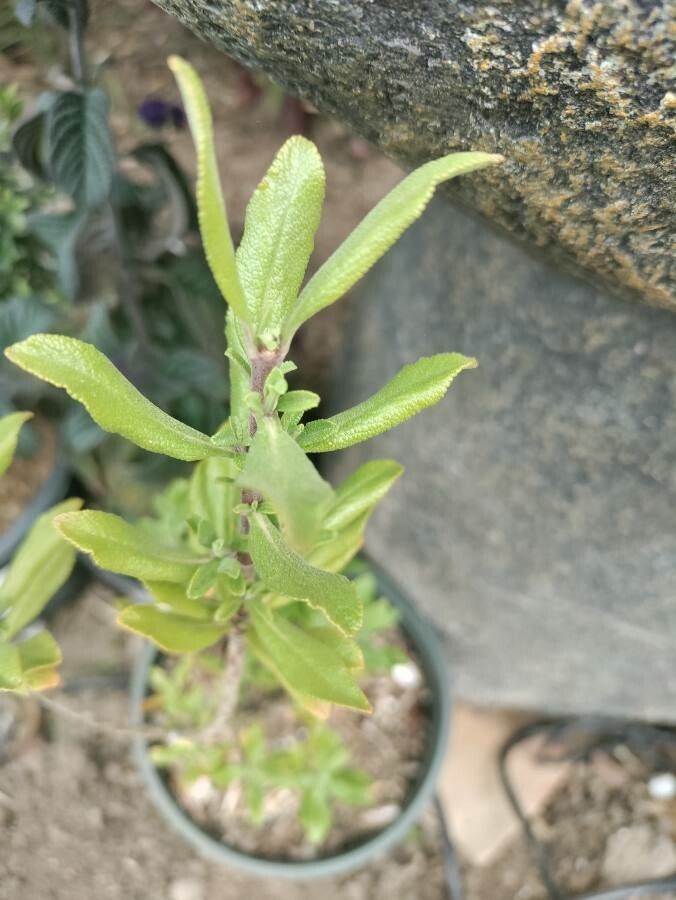
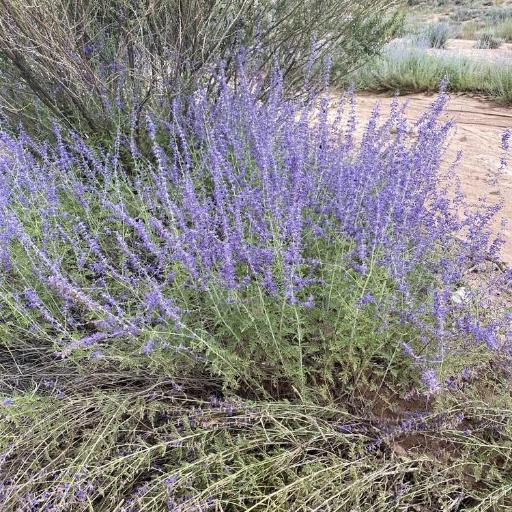
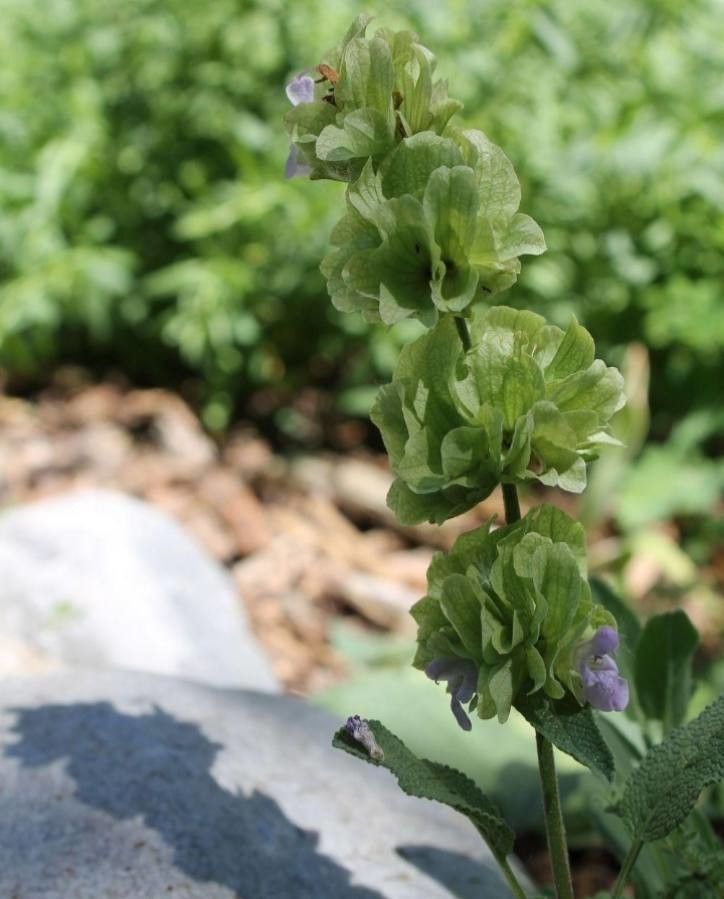
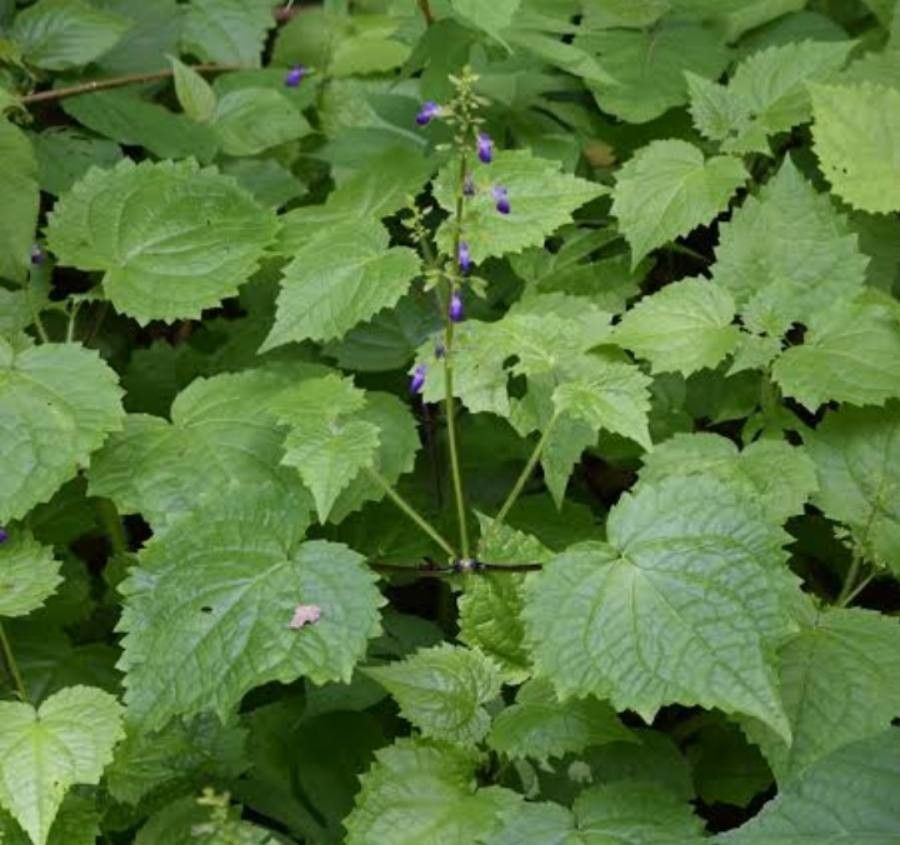
Salvia munzii is a semi-evergreen perennial species of sage known by the common name Munz's sage or San Miguel Mountain sage. It is native to northern Baja California, Mexico, and it can be found in a few locations just north of the border in San Diego County, California, where it is particularly rare. It is characterized by small leaves and clear blue flowers. It is a member of the coastal sage scrub and chaparral plant communities.
Munz's sage resists disease well and is generally not prone to illnesses. Regarding care, this plant is relatively low-maintenance. When planted outdoors it needs minimal watering, and larger plants generally do not require pruning. Smaller plants should be pruned after they have bloomed. Munz's sage is suitable for anyone with an outdoor space, such as a garden or deck, and does not require much care experience.
How to keep Salvia Munzii.
Light
Munz's sage comes from open habitats, like sunny meadows and forest margins, where plenty of light is available. It performs best in Full Sun but can withstand Partial Sun, showing good adaptability to different light conditions.
Water
Drought-resistant varieties of Munz's sage require minimal watering, typically needing more attention only during drought periods. In contrast, young and tender Munz's sage plants should be watered approximately 2.5 cm (1 inch) every 7 to 10 days to keep the soil from completely drying out.
Temperature
Munz's sage is highly adaptable to a range of climate conditions, from blazing summers to cold winters. Nevertheless, it has a preferred temperature range for optimal growth. If temperatures get too high, the plant can suffer heat and humidity stress that may kill it. In locations where temperatures near its lower cold-tolerance limit, providing insulation to protect the plant is necessary.
Fertilizer
Timing is important when feeding Munz's sage. Start in early spring and continue once a month through early summer. Fertilizer encourages attractive blooms and supplies energy during both dormant and active growth periods.
Pruning
To improve the growth and bloom production of Munz's sage, it's important to prune it properly in early spring. Begin by removing any dead or damaged stems. Next, trim up to one-third of the plant, being careful not to cut into old wood. This helps preserve new growth and ensures the plant has a revitalized and healthy appearance.
Botanical profile.
- Plant Type
- Shrub
- Life Cycle
- Perennial
- Genus
- Salvia
- Family
- Lamiaceae
- Hardiness Zone
- 8-11
- Mature Height
- 0 cm to 30 cm
- Mature Spread
- 0.61 m to 1.22 m
- Leaf Color
- Gray, Light Gray
- Leaf Type
- Evergreen
- Flower Color
- Blue, Purple
- Flower Size
- 1.02 cm to 1.52 cm
- Bloom Time
- Late winter, Early spring, Mid spring
- Planting Time
- Spring, Summer, Autumn
- Harvest Time
- Late spring, Early summer, Mid summer
- Native Area
- Mexico
Other names.